
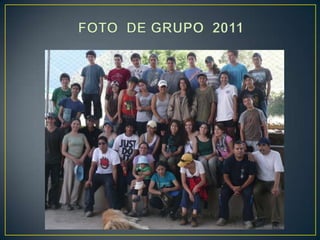
2012
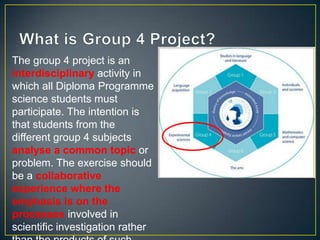
The group 4 project is an
interdisciplinary activity in
which all Diploma Programme
science students must
participate. The intention is
that students from the
different group 4 subjects
analyse a common topic or
problem. The exercise should
be a collaborative
experience where the
emphasis is on the
processes involved in
scientific investigation rather
• Aim 7—“develop and apply the students’ information and
  communication technology skills in the study of science”.
•
• Aim 8—“raise awareness of the moral, ethical, social,
  economic and environmental implications of using
  science and technology”.
•
• Aim 10—“encourage an understanding of the
  relationships between scientific disciplines and the
  overarching nature of the scientific method”.
• Students who take only biology + students who take only
  physics + students who take both subjects.
• Work in groups with one member from each class (A, B
  and C)
• Groups have to have a minimum of 3 and a maximum of
  5 people.
• You only need to do the G4P once.
• It has its own evaluation criteria.
• It takes 10 hours to complete and it counts towards the
  40-hour requisite of practical work for physics AND
  biology.
• 1. Planning phase:
• The planning stage consist of two or three
  shorter sessions. This needs to happen before
  the trip:
  • Get together in a house or by facebook, or skype.
• This stage must involve all group 4 students
  meeting to “brainstorm” and discuss the central
  topic, sharing ideas and information:
  • Decide exactly what you will investigate during the trip
    based on the ideas given in the handout. You can
    research the internet for ideas as well.
• 1. Planning phase: Avoid repeated topics.
• After selecting a topic or issue, the activities to be
  carried out must be clearly defined before moving
  from the planning stage to the action and evaluation
  stages.
• A possible strategy is that you define specific tasks and
  investigate various aspects of the chosen topic.
  • For example: each of the members can assume the role of a
    physicist, a biologist and a chemist. Or you can decide who will
    investigate which part specifically.
• At this stage, you must decide what you will need to take
  to the trip. A notebook is mandatory, a camera might be
  handy.
• This stage should last around six hours.
• • You should investigate the topic you chose in mixed
  subject groups.
• • There has to be collaboration during the action stage;
  findings of investigations should be shared with other
  students within the mixed subject group during the walk or
  during camping times.
• During the trip, try to spend as much time as possible with
  your group while walking.
• During camping time, you must meet with your
  group and share your findings. At this time
  decide whether changes must be made. All your
  findings, observations and ideas must be written
  in your notebook as evidence of your work.
  Include insightful thoughts about possibilities and
  limitations of your group.
• All the investigation has to be done in situ, that
  means during the trip. You can research a few
  details at home after we get back, like reference
  data, but it should be kept at a minimum.
• The emphasis during this stage is on students sharing
  their findings, both successes and failures, with other
  students.
• We will devote a morning, afternoon or evening to a
  symposium where all the students, as individuals or as
  groups, give brief presentations (5 to 7 minutes).
• Some of the findings might influence the way students
  interact with their environment or local community.
• You must also fill out a self-evaluation form and show
  your notebook to your teacher with signatures collected
  during the trip.
• The effect of altitude on the characteristic of a biome / abiotic
  factors
• Adaptations of the human body to different terrains
• The effect of energizing drinks on hiking
• The perfect trekking shoe
• The effect of abiotic factors on plant populations
• Bird watching / classifying
• Plant watching / classifying
• Quality of water and its influence on landscape
• Effects on the behavior of nocturnal insects
   • Remember that the topic you choose must be investigated from the
     various aspects of science and technology
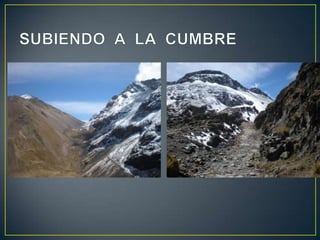
• Salida del colegio aprox. 8:30
• Salida de Mina San Francisco
               10:30
• Almuerzo Bajando la Cumbre
               13:30
• LLEGADA AL CAMPAMENTO
              16:30
Saliendo de Mina san Francisco
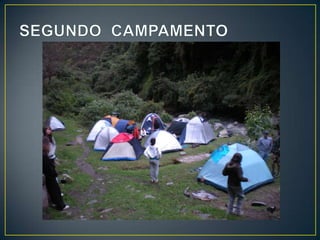
• Un poco de frio en la noche.
• Comida de forma individual o
  grupal.
• Carpa de forma individual o
  grupal.
• Botiquín individual.
• Levantar el campamento
• Salida aprox. 8:30
    • Mejor clima. Descanso Sr.
       Primitivo para almorzar.
        • Camita en la tarde hasta el
              segundo campamento
• Levantar campamento y salida
          hasta las 8:00

• Camita hasta Mina La Chojlla

 • Llegando a Yanacachi 10:30
- Se debe prever el uso de las baterías y rollo de la
  cámara fotográfica o cámara digital, misma que estará
  bajo la única responsabilidad del portador.

- NO están permitidos machetes,
  dagas, puñales o parecidos,
  únicamente cortaplumas tipo suizo o
  semejante que se acompañen con su
  estuche de seguridad.
• Trajes de baño y toallas dependerán de
  la comodidad del usuario; no es
  obligatorio.
• El botiquín de primeros auxilios debe
  contener lo necesario de uso inmediato,
  como ser antihistamínicos, vendas,
  pomadas para quemaduras...etc. NO
  mandar relajantes musculares fuertes.
• Deben repartirse los pesos lo más
  equitativamente posible (Nota: el
  peso de la mochila no deberá exceder
  los 10 kilos).
• Zapatos cómodos para caminar.
  NO CHAPULINES.
• Llevar sólo lo necesario.
Group 4 project
Group 4 project
Group 4 project
Group 4 project
Group 4 project
Group 4 project
Group 4 project
Group 4 project
Group 4 project
Group 4 project
Group 4 project
Group 4 project
Group 4 project

Group 4 project

  • 1.
  • 2.
    The group 4project is an interdisciplinary activity in which all Diploma Programme science students must participate. The intention is that students from the different group 4 subjects analyse a common topic or problem. The exercise should be a collaborative experience where the emphasis is on the processes involved in scientific investigation rather
  • 3.
    • Aim 7—“developand apply the students’ information and communication technology skills in the study of science”. • • Aim 8—“raise awareness of the moral, ethical, social, economic and environmental implications of using science and technology”. • • Aim 10—“encourage an understanding of the relationships between scientific disciplines and the overarching nature of the scientific method”.
  • 4.
    • Students whotake only biology + students who take only physics + students who take both subjects. • Work in groups with one member from each class (A, B and C) • Groups have to have a minimum of 3 and a maximum of 5 people. • You only need to do the G4P once. • It has its own evaluation criteria. • It takes 10 hours to complete and it counts towards the 40-hour requisite of practical work for physics AND biology.
  • 5.
    • 1. Planningphase: • The planning stage consist of two or three shorter sessions. This needs to happen before the trip: • Get together in a house or by facebook, or skype. • This stage must involve all group 4 students meeting to “brainstorm” and discuss the central topic, sharing ideas and information: • Decide exactly what you will investigate during the trip based on the ideas given in the handout. You can research the internet for ideas as well.
  • 6.
    • 1. Planningphase: Avoid repeated topics. • After selecting a topic or issue, the activities to be carried out must be clearly defined before moving from the planning stage to the action and evaluation stages. • A possible strategy is that you define specific tasks and investigate various aspects of the chosen topic. • For example: each of the members can assume the role of a physicist, a biologist and a chemist. Or you can decide who will investigate which part specifically. • At this stage, you must decide what you will need to take to the trip. A notebook is mandatory, a camera might be handy.
  • 7.
    • This stageshould last around six hours. • • You should investigate the topic you chose in mixed subject groups. • • There has to be collaboration during the action stage; findings of investigations should be shared with other students within the mixed subject group during the walk or during camping times. • During the trip, try to spend as much time as possible with your group while walking.
  • 8.
    • During campingtime, you must meet with your group and share your findings. At this time decide whether changes must be made. All your findings, observations and ideas must be written in your notebook as evidence of your work. Include insightful thoughts about possibilities and limitations of your group. • All the investigation has to be done in situ, that means during the trip. You can research a few details at home after we get back, like reference data, but it should be kept at a minimum.
  • 9.
    • The emphasisduring this stage is on students sharing their findings, both successes and failures, with other students. • We will devote a morning, afternoon or evening to a symposium where all the students, as individuals or as groups, give brief presentations (5 to 7 minutes). • Some of the findings might influence the way students interact with their environment or local community. • You must also fill out a self-evaluation form and show your notebook to your teacher with signatures collected during the trip.
  • 10.
    • The effectof altitude on the characteristic of a biome / abiotic factors • Adaptations of the human body to different terrains • The effect of energizing drinks on hiking • The perfect trekking shoe • The effect of abiotic factors on plant populations • Bird watching / classifying • Plant watching / classifying • Quality of water and its influence on landscape • Effects on the behavior of nocturnal insects • Remember that the topic you choose must be investigated from the various aspects of science and technology
  • 12.
    • Salida delcolegio aprox. 8:30 • Salida de Mina San Francisco 10:30 • Almuerzo Bajando la Cumbre 13:30 • LLEGADA AL CAMPAMENTO 16:30
  • 13.
    Saliendo de Minasan Francisco
  • 16.
    • Un pocode frio en la noche. • Comida de forma individual o grupal. • Carpa de forma individual o grupal. • Botiquín individual.
  • 18.
    • Levantar elcampamento • Salida aprox. 8:30 • Mejor clima. Descanso Sr. Primitivo para almorzar. • Camita en la tarde hasta el segundo campamento
  • 21.
    • Levantar campamentoy salida hasta las 8:00 • Camita hasta Mina La Chojlla • Llegando a Yanacachi 10:30
  • 22.
    - Se debeprever el uso de las baterías y rollo de la cámara fotográfica o cámara digital, misma que estará bajo la única responsabilidad del portador. - NO están permitidos machetes, dagas, puñales o parecidos, únicamente cortaplumas tipo suizo o semejante que se acompañen con su estuche de seguridad.
  • 23.
    • Trajes debaño y toallas dependerán de la comodidad del usuario; no es obligatorio. • El botiquín de primeros auxilios debe contener lo necesario de uso inmediato, como ser antihistamínicos, vendas, pomadas para quemaduras...etc. NO mandar relajantes musculares fuertes.
  • 24.
    • Deben repartirselos pesos lo más equitativamente posible (Nota: el peso de la mochila no deberá exceder los 10 kilos). • Zapatos cómodos para caminar. NO CHAPULINES. • Llevar sólo lo necesario.