VACUOLE
STRUCTURE AND FUNCTIONS
DR. DILIP V. HANDE
ASSOCIATE PROFESSOR DEPT OF BOTANY
SHRI SHIVAJI SCIENCE COLLEGE, AMRAVATI MS.
C
E
L
L
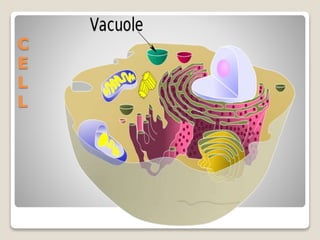
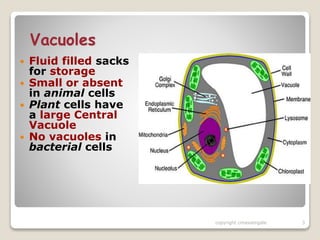
Vacuoles
 Fluid filled sacks
for storage
 Small or absent
in animal cells
 Plant cells have
a large Central
Vacuole
 No vacuoles in
bacterial cells
copyright cmassengale 3
Introduction
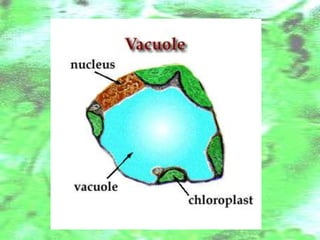
 The vacuoles ( Vacuus-empty) are non-living, most
conspicuous components of the plant cells.
 They are very large, filled with fluid called as
vacuolar sap.
 In young cell the vacuoles are smaller in size and
many in numbers but in mature cells their number
decreases and size increases.
 Sometimes only one vacuole is presents in a cell. The
shape of vacuole is variable.
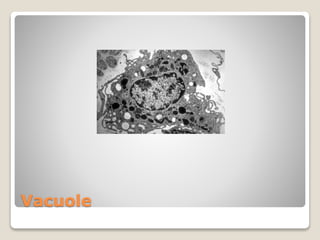
Vacuole
Vacuoles
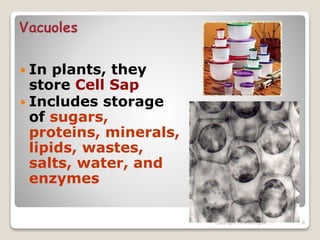
 In plants, they
store Cell Sap
 Includes storage
of sugars,
proteins, minerals,
lipids, wastes,
salts, water, and
enzymes
copyright cmassengale 6
Vacuoles
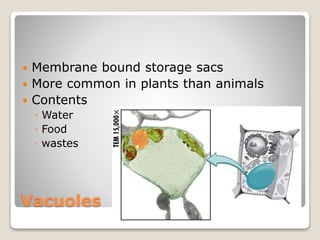
 Membrane bound storage sacs
 More common in plants than animals
 Contents
◦ Water
◦ Food
◦ wastes
Structure
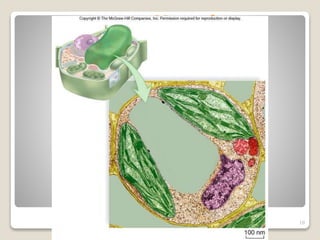
 Each vacuole is separated from a cytoplasm
by a single unit membrane called tonoplast
or vacuolar membrane.
 The tonoplast encloses the liquid substance
which includes carbohydrates (sugars),
amides, amino acids, proteins, organic acids,
anthocyanin pigments, waste products of
mineral salts like chlorides and phosphates
etc.
Vacuoles
10
Structure
 Vacuoles are structurally and functionally related to
lysosomes in animal cells and may contain a wide
range of hydrolytic enzymes.
 The pH of vacuole may be as high as 8-10 due to
large quantity of alkaline substances as low as 3 due
to the accumulation of acids (citric oxalic and malic
acid).
Contractile Vacuole
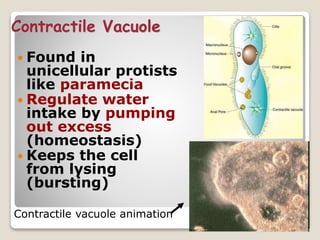
 Found in
unicellular protists
like paramecia
 Regulate water
intake by pumping
out excess
(homeostasis)
 Keeps the cell
from lysing
(bursting)
copyright cmassengale 12
Contractile vacuole animation
Functions :
 Vacuole act as storage organelles for various
substances.
 Vacuolar sap maintain the turger pressure
of a cell.
 Vacuoles also store anthocyanin pigment
which gives various colors to flowers, fruits
that helps in the pollination and ornamental
value.
 Plant vacuole also contain the product such
as rubber latex (Hevea brazilensis) or opium
(Papaver sominiferum).
Functions
 They also help in enlargement of cell.
 Several metabolic activities takes place in
the cell sap or vacuole.
 Isolating materials that might be harmful
or a threat to the cell
 Containing waste products
 Containing water in plant cells
 Maintaining internal hydrostatic pressure
( pressure exerted by liquid) within the cell.
Functions
 Maintaining an acidic internal pH
 Containing small molecules
 Exporting unwanted substances from the
cell
 Allows plants to support structures such
as leaves and flowers due to the pressure
of the central vacuole
 In seeds, stored proteins needed for
germination are kept in 'protein bodies',
which are modified vacuoles.
Functions
 Vacuoles also play a major role in
autophagy maintaining a balance between
biogenesis (production) and degradation
(or turnover), of many substances and cell
structures in certain organisms.

Vacuole

  • 1.
    VACUOLE STRUCTURE AND FUNCTIONS DR.DILIP V. HANDE ASSOCIATE PROFESSOR DEPT OF BOTANY SHRI SHIVAJI SCIENCE COLLEGE, AMRAVATI MS.
  • 2.
  • 3.
    Vacuoles  Fluid filledsacks for storage  Small or absent in animal cells  Plant cells have a large Central Vacuole  No vacuoles in bacterial cells copyright cmassengale 3
  • 4.
    Introduction  The vacuoles( Vacuus-empty) are non-living, most conspicuous components of the plant cells.  They are very large, filled with fluid called as vacuolar sap.  In young cell the vacuoles are smaller in size and many in numbers but in mature cells their number decreases and size increases.  Sometimes only one vacuole is presents in a cell. The shape of vacuole is variable.
  • 5.
  • 6.
    Vacuoles  In plants,they store Cell Sap  Includes storage of sugars, proteins, minerals, lipids, wastes, salts, water, and enzymes copyright cmassengale 6
  • 8.
    Vacuoles  Membrane boundstorage sacs  More common in plants than animals  Contents ◦ Water ◦ Food ◦ wastes
  • 9.
    Structure  Each vacuoleis separated from a cytoplasm by a single unit membrane called tonoplast or vacuolar membrane.  The tonoplast encloses the liquid substance which includes carbohydrates (sugars), amides, amino acids, proteins, organic acids, anthocyanin pigments, waste products of mineral salts like chlorides and phosphates etc.
  • 10.
  • 11.
    Structure  Vacuoles arestructurally and functionally related to lysosomes in animal cells and may contain a wide range of hydrolytic enzymes.  The pH of vacuole may be as high as 8-10 due to large quantity of alkaline substances as low as 3 due to the accumulation of acids (citric oxalic and malic acid).
  • 12.
    Contractile Vacuole  Foundin unicellular protists like paramecia  Regulate water intake by pumping out excess (homeostasis)  Keeps the cell from lysing (bursting) copyright cmassengale 12 Contractile vacuole animation
  • 13.
    Functions :  Vacuoleact as storage organelles for various substances.  Vacuolar sap maintain the turger pressure of a cell.  Vacuoles also store anthocyanin pigment which gives various colors to flowers, fruits that helps in the pollination and ornamental value.  Plant vacuole also contain the product such as rubber latex (Hevea brazilensis) or opium (Papaver sominiferum).
  • 14.
    Functions  They alsohelp in enlargement of cell.  Several metabolic activities takes place in the cell sap or vacuole.  Isolating materials that might be harmful or a threat to the cell  Containing waste products  Containing water in plant cells  Maintaining internal hydrostatic pressure ( pressure exerted by liquid) within the cell.
  • 15.
    Functions  Maintaining anacidic internal pH  Containing small molecules  Exporting unwanted substances from the cell  Allows plants to support structures such as leaves and flowers due to the pressure of the central vacuole  In seeds, stored proteins needed for germination are kept in 'protein bodies', which are modified vacuoles.
  • 16.
    Functions  Vacuoles alsoplay a major role in autophagy maintaining a balance between biogenesis (production) and degradation (or turnover), of many substances and cell structures in certain organisms.