The document outlines the key steps in qualitative research:
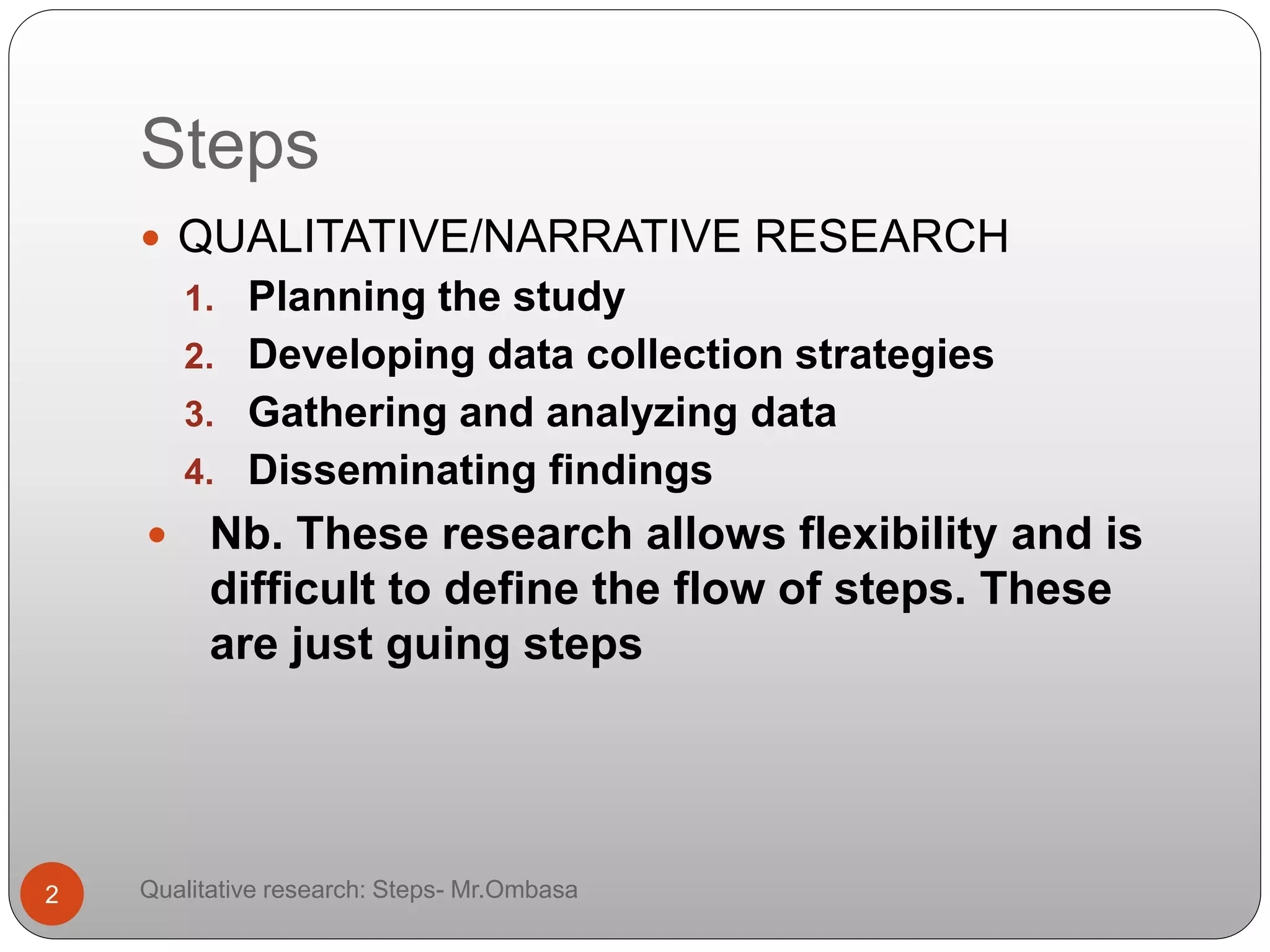
1. Planning the study, which involves identifying the research problem, conducting a literature review, developing an approach, and addressing ethical issues.
2. Developing data collection strategies, such as what data to gather and from whom.
3. Gathering and analyzing data, including collecting, organizing, and evaluating data, looking for themes until reaching saturation.
4. Disseminating findings by communicating and utilizing the results in practice or further research.
Qualitative research: Steps-Mr.Ombasa
1
Qualitative/Narrative research
• By the end of this section you should be
able to:
• Describe the key steps of qualitatibe
research
• Describe the analysis and interpretation of
interpretation of qualitative data
• Reporting qualitative research
Objectives
2.
Steps
QUALITATIVE/NARRATIVE RESEARCH
1.Planning the study
2. Developing data collection strategies
3. Gathering and analyzing data
4. Disseminating findings
Nb. These research allows flexibility and is
difficult to define the flow of steps. These
are just guing steps
2 Qualitative research: Steps- Mr.Ombasa
3.
Steps
1. Planning thestudy
Planning the study
Identifying the research problem:
usually a broad topic area that is refined as the study progresses
in most cases viewpoints of researchers
Doing a literature review-
is ongoing. Sometimes prior review is not helpful cz little relevant
information is available to answer the unique qs asked by the
researcher
dvping an overall approach
Estimate time for field work
Hire and train assistants
Secure interviewers
Hire consultants and support staff
Selecting and gaining entry to the study area
Addressing the ethical issues
3 Qualitative research: Steps- Mr.Ombasa
4.
Steps
2. Developing datacollection strategies
Deciding what type of data to gather and how to gather
them
Deciding from whom to collect data
Deciding how to enhance trustworthiness
4 Qualitative research: Steps- Mr.Ombasa
5.
Steps
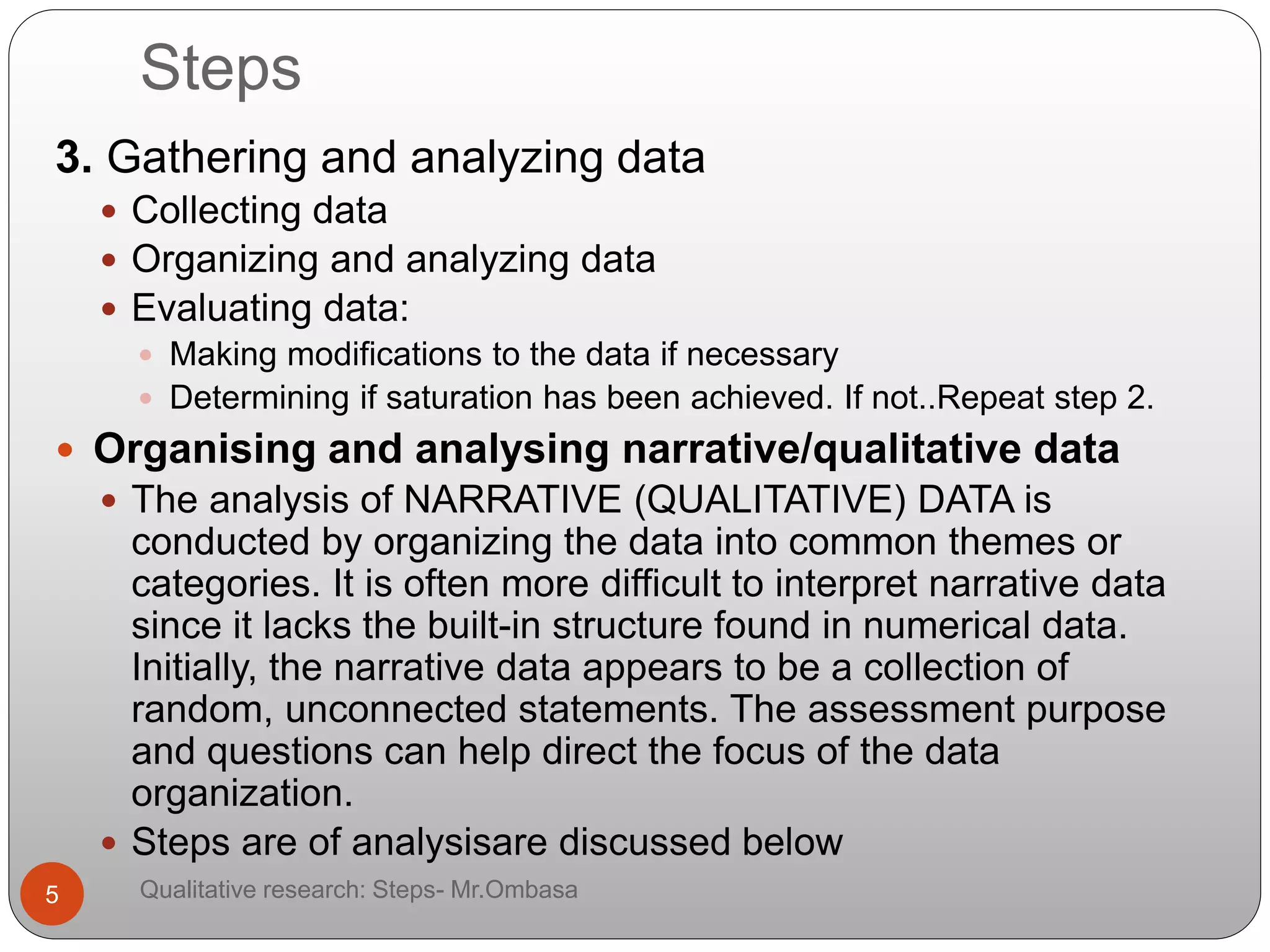
3. Gathering andanalyzing data
Collecting data
Organizing and analyzing data
Evaluating data:
Making modifications to the data if necessary
Determining if saturation has been achieved. If not..Repeat step 2.
Organising and analysing narrative/qualitative data
The analysis of NARRATIVE (QUALITATIVE) DATA is
conducted by organizing the data into common themes or
categories. It is often more difficult to interpret narrative data
since it lacks the built-in structure found in numerical data.
Initially, the narrative data appears to be a collection of
random, unconnected statements. The assessment purpose
and questions can help direct the focus of the data
organization.
Steps are of analysisare discussed below
5 Qualitative research: Steps- Mr.Ombasa
6.
Organising and analysisingqualitative
data
A. Focus groups and Interviews:
• Read and organize the data from each question
separately. This approach permits focusing on one
question at a time (e.g., experiences with tutoring
services, characteristics of tutor, student responsibility
in the tutoring process).
• Group the comments by themes, topics, or categories.
This approach allows for focusing on one area at a time
(e.g., characteristics of tutor – level of preparation,
knowledge of content area, availability).
6 Qualitative research: Steps- Mr.Ombasa
7.
Organising and analysisingqualitative
data
B. Documents
Code content and characteristics of documents into
various categories (e.g., training manual – policies and
procedures, communication, responsibilities).
C. Observations
• Code patterns from the focus of the observation (e.g.,
behavioral patterns – amount of time engaged/not
engaged in activity, type of engagement,
communication, interpersonal skills).
D. Interpret the observations
Interpreting the analyzed data from the appropriate
perspective allows for determination of the significance
and implications of the assessment
7 Qualitative research: Steps- Mr.Ombasa
8.
Steps
4. Disseminating findings.
Communicate the findings
Utilize the findings in practice or further research or
make recommendations for such utilization.
N.b: follow same formatting guide as quantitative.
Note that this report is mostly a narrative tables are
rare or unless ‘borrowed’ from quantitative studies
during citations
8 Qualitative research: Steps- Mr.Ombasa
9.
Qs
End ofCourse
9 Qualitative research: Steps- Mr.Ombasa