Method of Data
Collection and Analysis
 in Grounded Theory
         by Pray
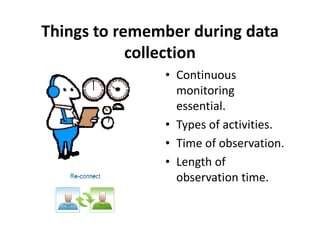
Things to remember during data
            collection
               • Continuous
                 monitoring
                 essential.
               • Types of activities.
               • Time of observation.
               • Length of
                 observation time.
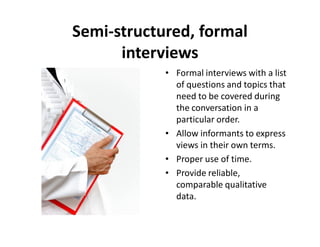
Semi-structured, formal
      interviews
            • Formal interviews with a list
              of questions and topics that
              need to be covered during
              the conversation in a
              particular order.
            • Allow informants to express
              views in their own terms.
            • Proper use of time.
            • Provide reliable,
              comparable qualitative
              data.
Informal interviews
          • Most relaxed type of
            interview and will nearly
            always require a second
            meeting before any sort of
            firm decision is made.
          • Cordial interactions that
            allow respondents to speak
            more freely and openly.
          • Informants are selected
            based on the evolving
            needs of the research.
          • Focused on their learning
            and change processes.
How to plan for interview
• Preparing for interview involves
  remembering issues before the interview.
• Explaining the focus of the interview to
  informant.
• Developing an interview checklist is very
  helpful.
• Success depends on the art of questioning.
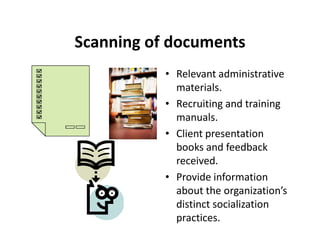
Scanning of documents
           • Relevant administrative
             materials.
           • Recruiting and training
             manuals.
           • Client presentation
             books and feedback
             received.
           • Provide information
             about the organization’s
             distinct socialization
             practices.
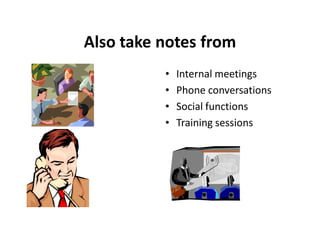
Also take notes from
          •   Internal meetings
          •   Phone conversations
          •   Social functions
          •   Training sessions
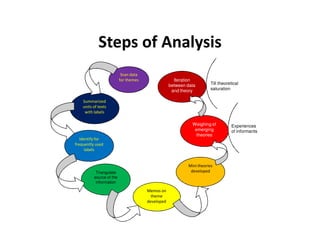
Steps of Analysis
                           Scan data
                          for themes                 Iteration
                                                   between data       Till theoretical
                                                    and theory        saturation

    Summarized
    units of texts
     with labels

                                                             Weighing of          Experiences
                                                              emerging            of informants
                                                               theories
   Identify for
frequently used
      labels


                                                           Mini theories
           Triangulate                                      developed
          source of the
           information

                                       Memos on
                                         theme
                                       developed
Warning
    Be aware of
Transcription Errors!
Method of data collection and analysis based in Grounded Theory

Method of data collection and analysis based in Grounded Theory

  • 1.
    Method of Data Collectionand Analysis in Grounded Theory by Pray
  • 2.
    Things to rememberduring data collection • Continuous monitoring essential. • Types of activities. • Time of observation. • Length of observation time.
  • 3.
    Semi-structured, formal interviews • Formal interviews with a list of questions and topics that need to be covered during the conversation in a particular order. • Allow informants to express views in their own terms. • Proper use of time. • Provide reliable, comparable qualitative data.
  • 4.
    Informal interviews • Most relaxed type of interview and will nearly always require a second meeting before any sort of firm decision is made. • Cordial interactions that allow respondents to speak more freely and openly. • Informants are selected based on the evolving needs of the research. • Focused on their learning and change processes.
  • 5.
    How to planfor interview • Preparing for interview involves remembering issues before the interview. • Explaining the focus of the interview to informant. • Developing an interview checklist is very helpful. • Success depends on the art of questioning.
  • 6.
    Scanning of documents • Relevant administrative materials. • Recruiting and training manuals. • Client presentation books and feedback received. • Provide information about the organization’s distinct socialization practices.
  • 7.
    Also take notesfrom • Internal meetings • Phone conversations • Social functions • Training sessions
  • 8.
    Steps of Analysis Scan data for themes Iteration between data Till theoretical and theory saturation Summarized units of texts with labels Weighing of Experiences emerging of informants theories Identify for frequently used labels Mini theories Triangulate developed source of the information Memos on theme developed
  • 9.
    Warning Be aware of Transcription Errors!