helpdesk@construction-productivity.co.uk
htt://www.construction-productivity.
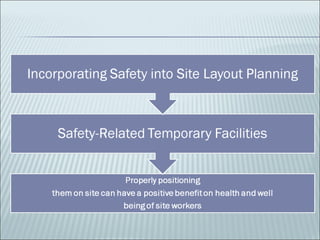
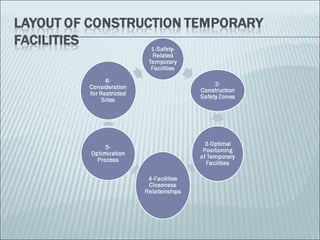
Four aspects are considered during site-layout
planning:
 defining the safety-related temporary
facilities needed on construction sites;
 defining proper safety zones around the
construction space;
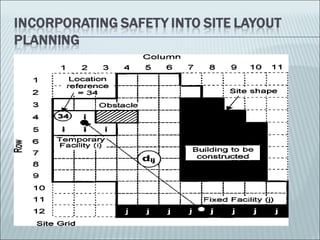
 considering safety in determining the optimum
placement of temporary facilities on the site;
 utilizing parts of the constructed space as
temporary facilities to relieve congestion on
restricted sites.
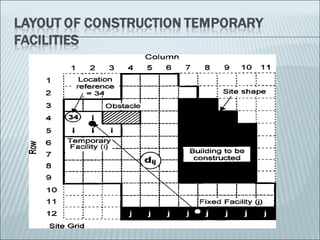
Site layout planning is an important task that
involves:
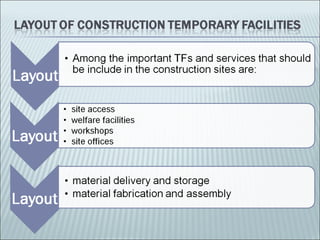
 Identifying the temporary facilities (TFs) needed
to support construction operations,
 determining their size and shape, and
appropriately positioning them within the
boundaries of a construction site.
TFs include:
 Warehouses,
 Job offices
 Workshops
 Batch plant
 Equipment (cranes)
 The primary consideration in effective site
layout planning is safety and high productivity.
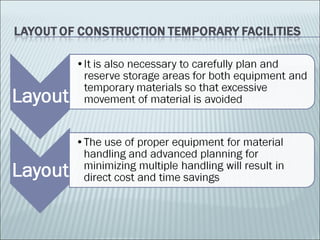
 In addition to the smooth and low-cost flow of
materials, labour, and Equipment within the
site.
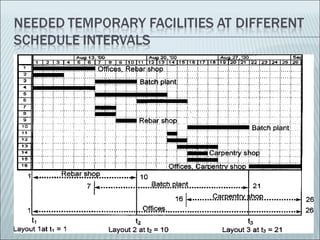
 dynamic site layout planning can
be defined as the reorganization
of the location and/or areas of the
needed TFs on site at various
schedule intervals, along project
duration to suit the activities’
dynamic need of TFs.
 Access roads, warehouses, and welfare
facilities which include:
 first aid station
 Toilet on site
 labour rest area
 washing facilities
 canteen.
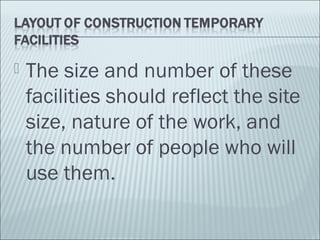
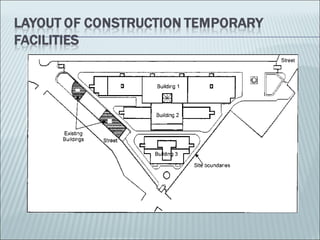
 The size and number of these
facilities should reflect the site
size, nature of the work, and
the number of people who will
use them.
Consideration for Restricted Sites
 The layout planning of site space on restricted
sites, becomes more important than any other
resource.
 In many situations, construction managers use
part of the constructed facility e.g., some floors
in a high rise building for storage purposes or
other uses.
 At any time interval, the management team
can select which part of the constructed space
can be used to place a TF.
Two conditions must be satisfied in this situation:
 1-the constructed space has to be available
i.e., its finish date is earlier than the service
start date of the needed TF
 2-the constructed space area has to be large
enough to accommodate the TF.
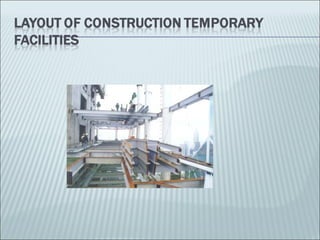
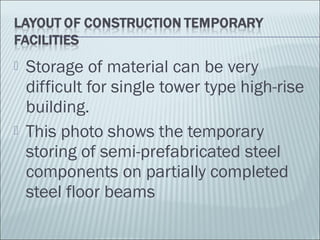
 Storage of material can be very
difficult for single tower type high-rise
building.
 This photo shows the temporary
storing of semi-prefabricated steel
components on partially completed
steel floor beams

114 site layout

  • 1.
  • 5.
    Four aspects areconsidered during site-layout planning:  defining the safety-related temporary facilities needed on construction sites;  defining proper safety zones around the construction space;
  • 6.
     considering safetyin determining the optimum placement of temporary facilities on the site;  utilizing parts of the constructed space as temporary facilities to relieve congestion on restricted sites.
  • 7.
    Site layout planningis an important task that involves:  Identifying the temporary facilities (TFs) needed to support construction operations,  determining their size and shape, and appropriately positioning them within the boundaries of a construction site.
  • 8.
    TFs include:  Warehouses, Job offices  Workshops  Batch plant  Equipment (cranes)
  • 9.
     The primaryconsideration in effective site layout planning is safety and high productivity.  In addition to the smooth and low-cost flow of materials, labour, and Equipment within the site.
  • 10.
     dynamic sitelayout planning can be defined as the reorganization of the location and/or areas of the needed TFs on site at various schedule intervals, along project duration to suit the activities’ dynamic need of TFs.
  • 14.
     Access roads,warehouses, and welfare facilities which include:  first aid station  Toilet on site  labour rest area  washing facilities  canteen.
  • 15.
     The sizeand number of these facilities should reflect the site size, nature of the work, and the number of people who will use them.
  • 24.
    Consideration for RestrictedSites  The layout planning of site space on restricted sites, becomes more important than any other resource.  In many situations, construction managers use part of the constructed facility e.g., some floors in a high rise building for storage purposes or other uses.
  • 25.
     At anytime interval, the management team can select which part of the constructed space can be used to place a TF. Two conditions must be satisfied in this situation:  1-the constructed space has to be available i.e., its finish date is earlier than the service start date of the needed TF  2-the constructed space area has to be large enough to accommodate the TF.
  • 27.
     Storage ofmaterial can be very difficult for single tower type high-rise building.  This photo shows the temporary storing of semi-prefabricated steel components on partially completed steel floor beams