System Development Models
System Development Model
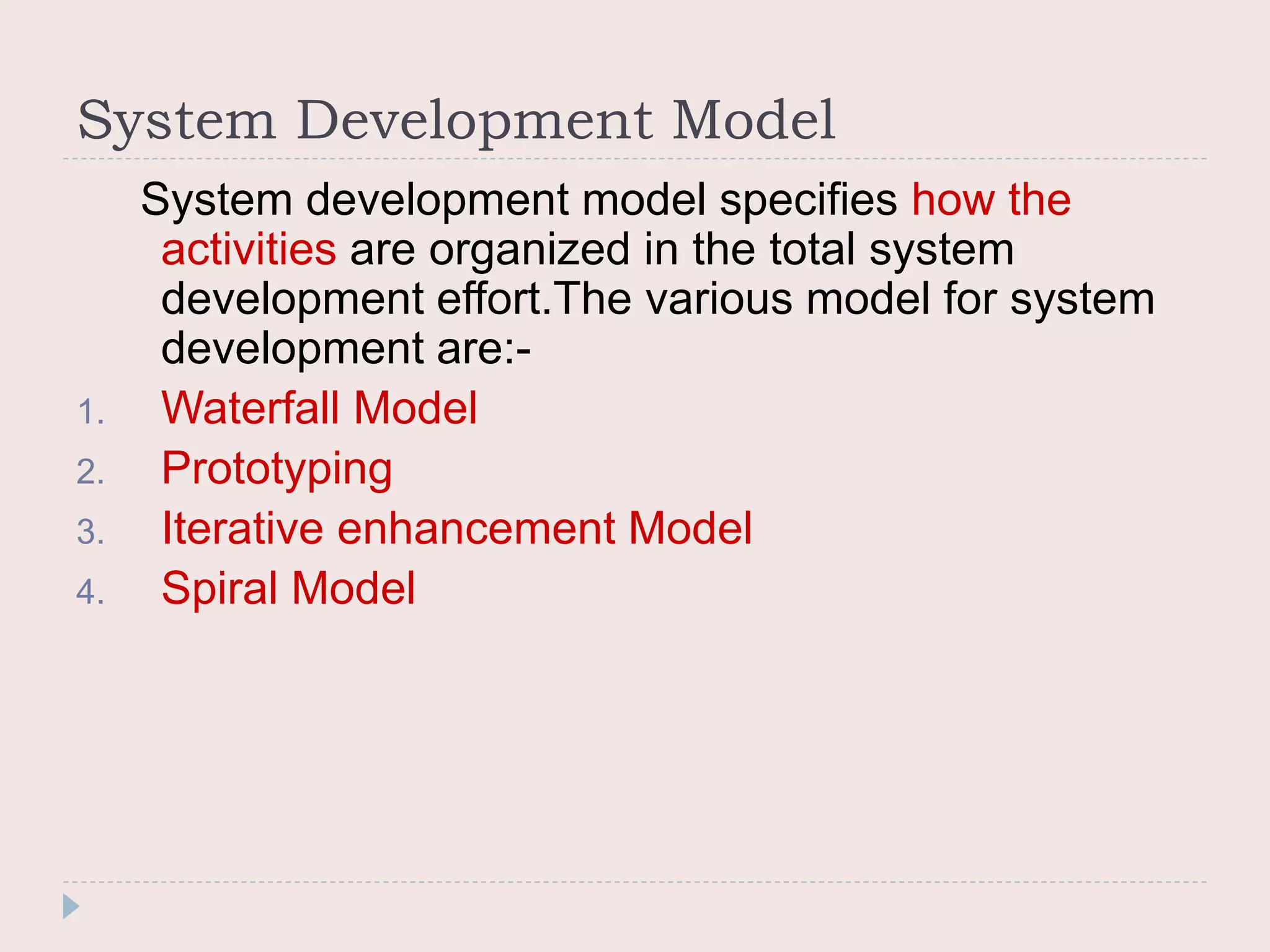
System development model specifies how the
activities are organized in the total system
development effort.The various model for system
development are:-
1. Waterfall Model
2. Prototyping
3. Iterative enhancement Model
4. Spiral Model
Waterfall Model
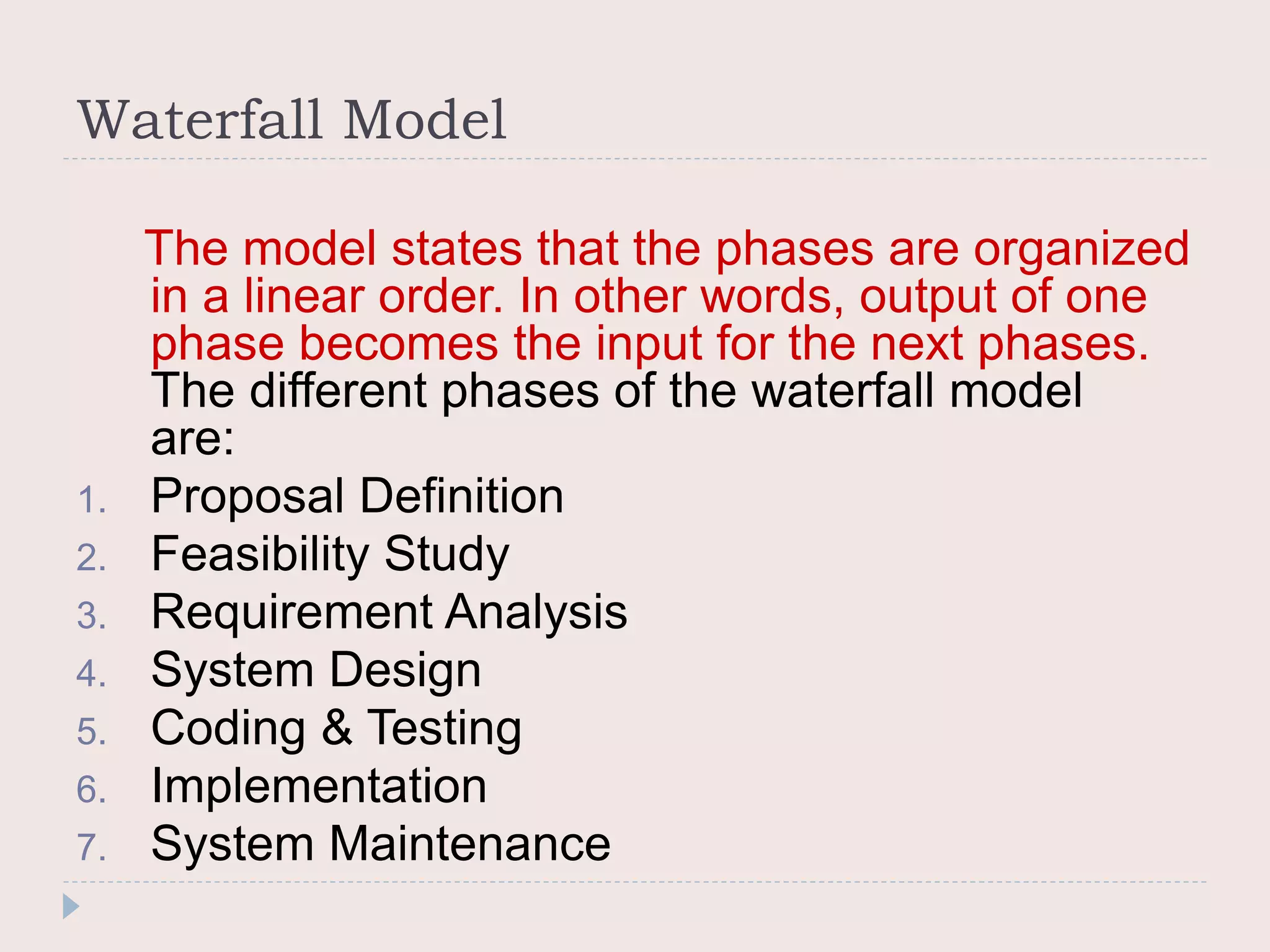
The model states that the phases are organized
in a linear order. In other words, output of one
phase becomes the input for the next phases.
The different phases of the waterfall model
are:
1. Proposal Definition
2. Feasibility Study
3. Requirement Analysis
4. System Design
5. Coding & Testing
6. Implementation
7. System Maintenance
INFO1409 Systems Analysis
SDLC L05.ppt
© Copyright De Montfort University 2000
All Rights Reserved
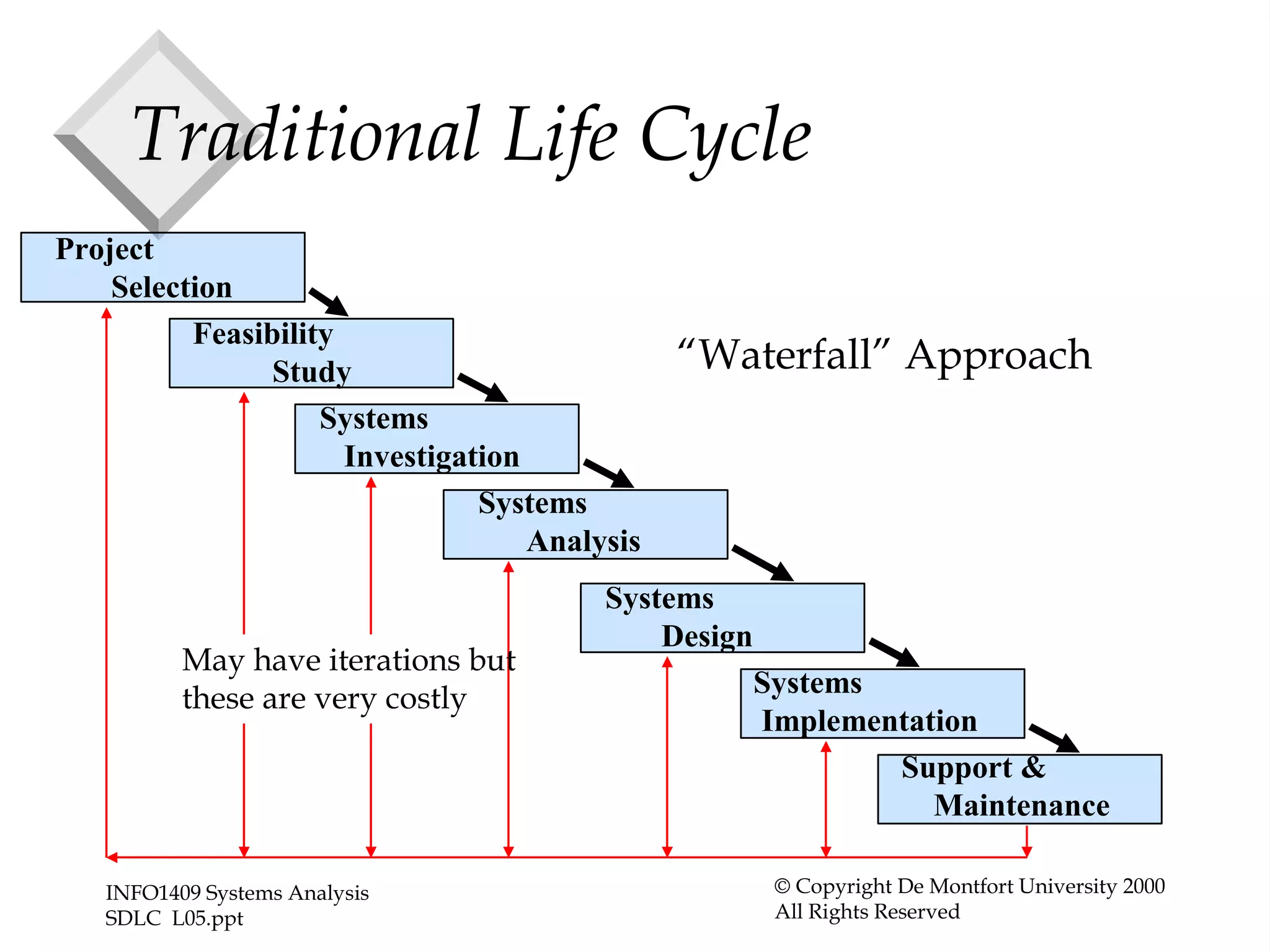
Traditional Life Cycle
Systems
Investigation
Systems
Analysis
Systems
Design
Systems
Implementation
Support &
Maintenance
Feasibility
Study
Project
Selection
“Waterfall” Approach
May have iterations but
these are very costly
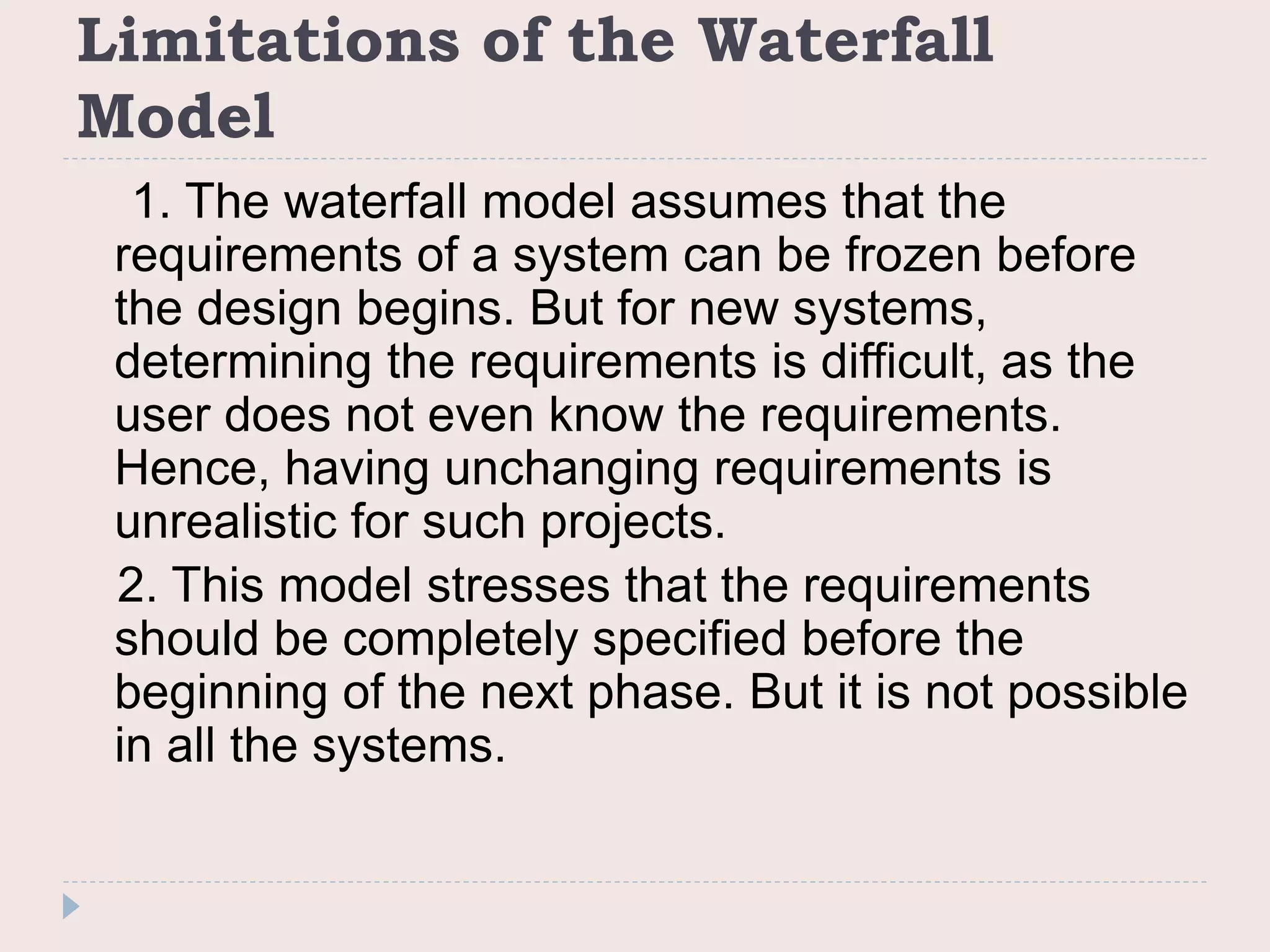
Limitations of the Waterfall
Model
1. The waterfall model assumes that the
requirements of a system can be frozen before
the design begins. But for new systems,
determining the requirements is difficult, as the
user does not even know the requirements.
Hence, having unchanging requirements is
unrealistic for such projects.
2. This model stresses that the requirements
should be completely specified before the
beginning of the next phase. But it is not possible
in all the systems.
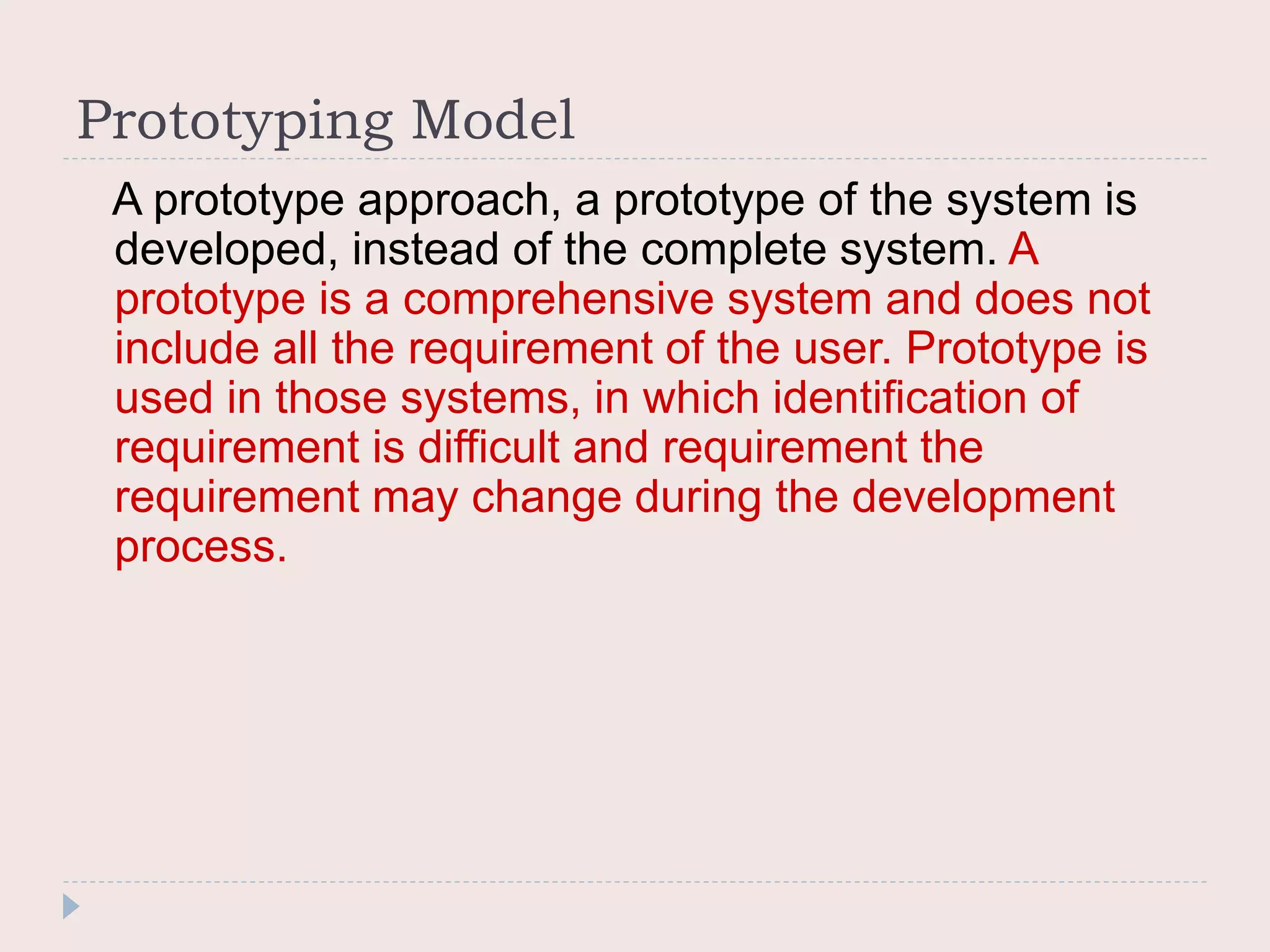
Prototyping Model
A prototype approach, a prototype of the system is
developed, instead of the complete system. A
prototype is a comprehensive system and does not
include all the requirement of the user. Prototype is
used in those systems, in which identification of
requirement is difficult and requirement the
requirement may change during the development
process.
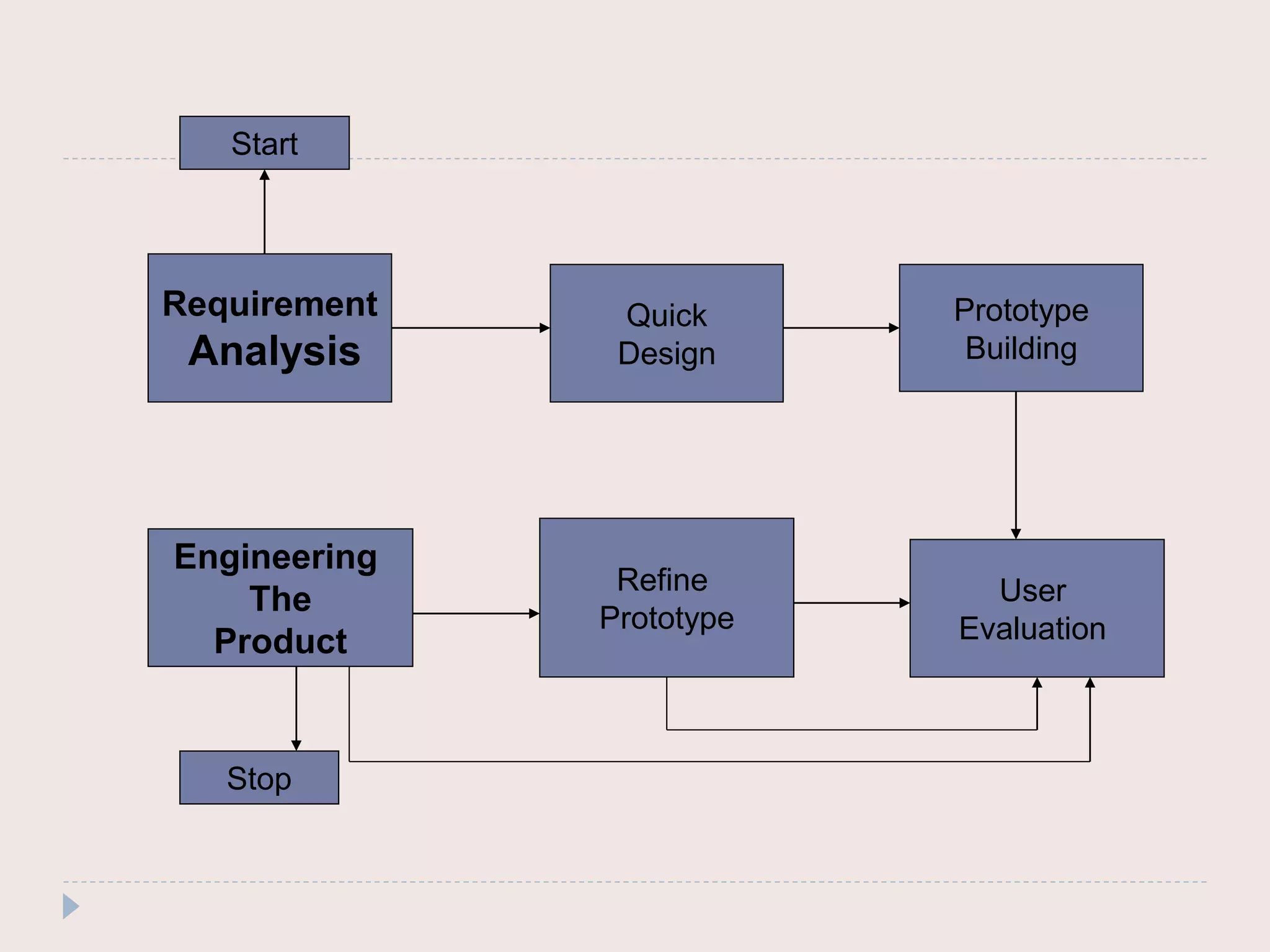
Requirement
Analysis
Quick
Design
Prototype
Building
User
Evaluation
Refine
Prototype
Engineering
The
Product
Start
Stop
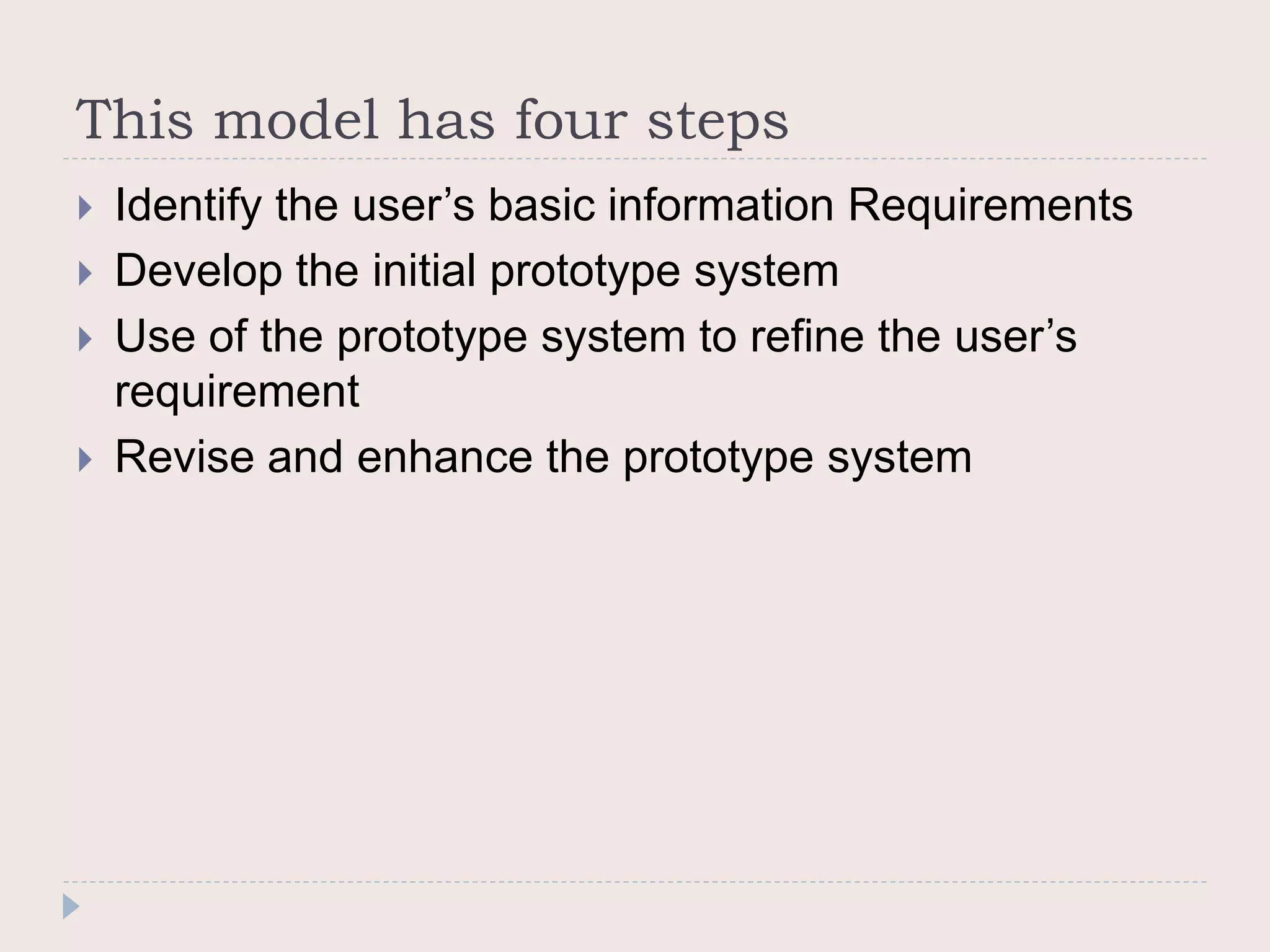
This model has four steps
 Identify the user’s basic information Requirements
 Develop the initial prototype system
 Use of the prototype system to refine the user’s
requirement
 Revise and enhance the prototype system
Limitations
 This approach requires at least two iterations. It may
become an unending process of refinement, which
may take too much time, effort and money.
 Due to frequent changes, management of the
development process also becomes difficult.
Iterative Enhancement Model
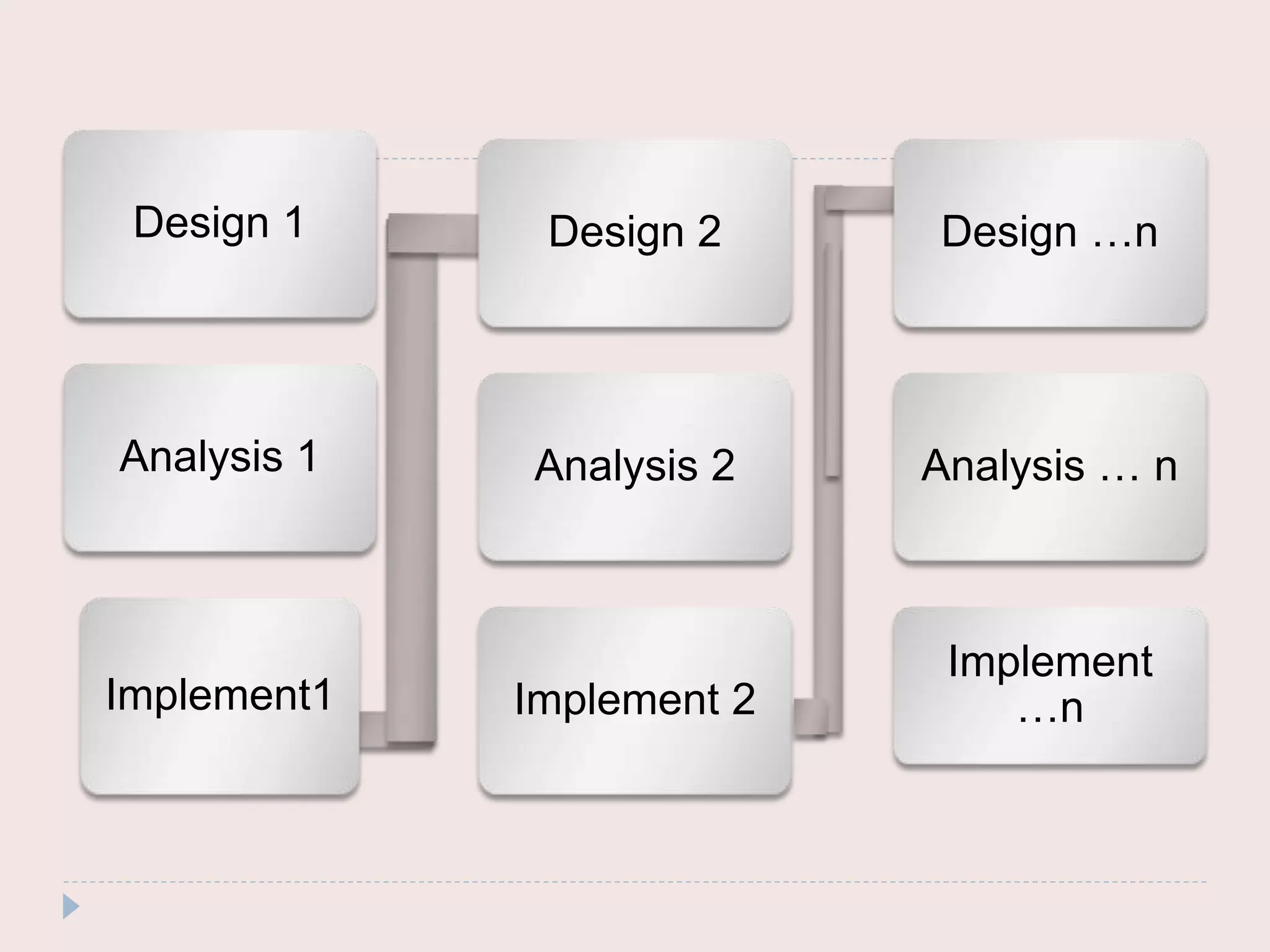
In an iterative enhancement model, the system is
developed in increments and each increment adds
some functional capabilities to the system, until the
full system is developed. Additions and Modifications
is done at each step.
Design 1
Analysis 1
Implement1 Implement 2
Analysis 2
Design 2 Design …n
Analysis … n
Implement
…n
Limitations
 The model does not give the complete information
system and thus many of the details may not be
incorporated in the development system.
 As the model is based on modify-it-again approach it
may be time consuming and is not cost-effective.
Spiral Model
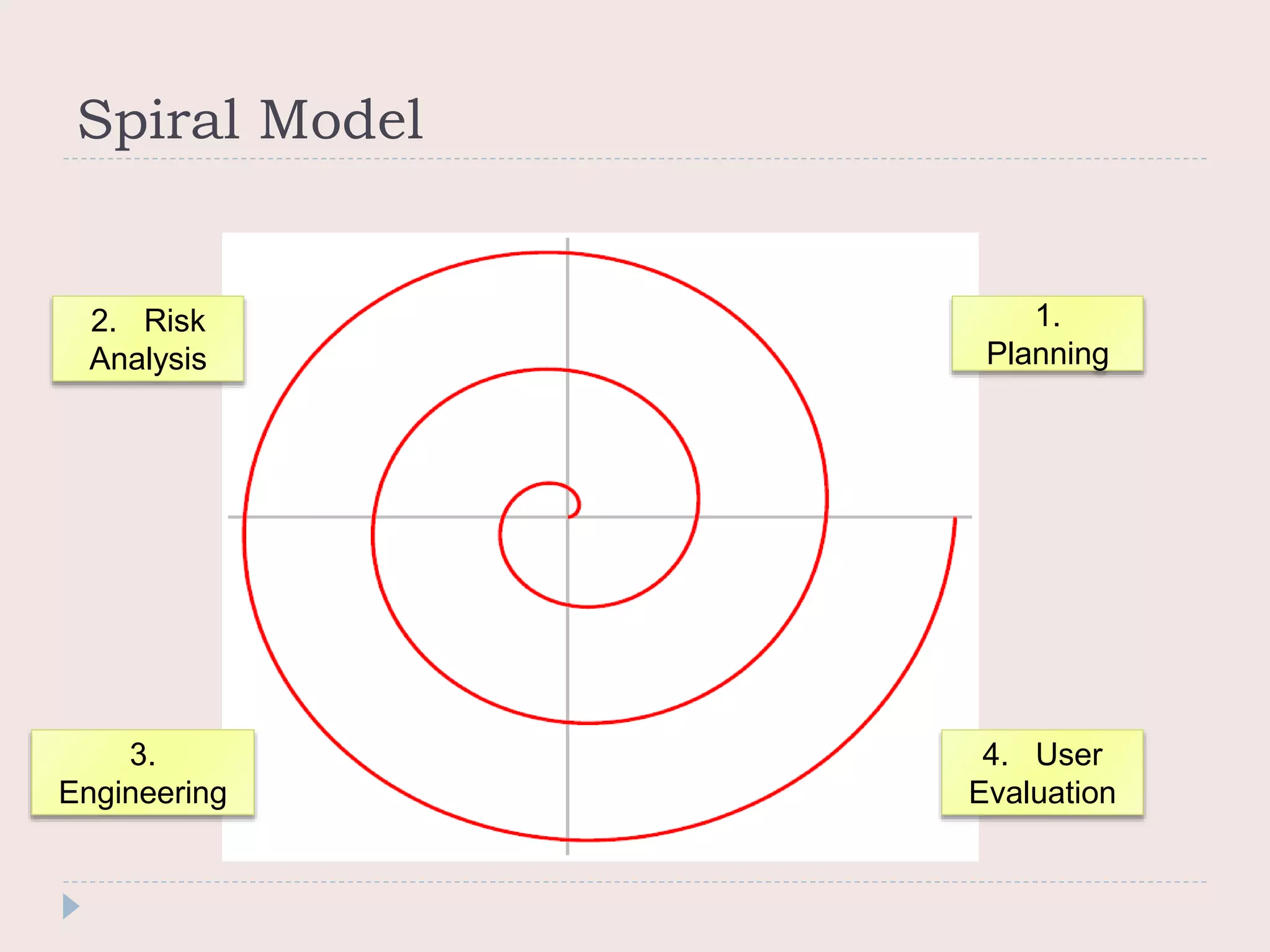
This model, as the indicates is cyclic in nature. Each
cycle of the spiral consists of four stages
represented by one quadrant each. The angular
dimension represents the progress in the
development process, where as the radius of the
spiral represent the cost involved.
Spiral Model
1.
Planning
4. User
Evaluation
3.
Engineering
2. Risk
Analysis
Limitations
The spiral model is more suitable for high risky
projects. For small projects, this model may not be
time and cost effective.

11 system development models

  • 1.
  • 2.
    System Development Model Systemdevelopment model specifies how the activities are organized in the total system development effort.The various model for system development are:- 1. Waterfall Model 2. Prototyping 3. Iterative enhancement Model 4. Spiral Model
  • 3.
    Waterfall Model The modelstates that the phases are organized in a linear order. In other words, output of one phase becomes the input for the next phases. The different phases of the waterfall model are: 1. Proposal Definition 2. Feasibility Study 3. Requirement Analysis 4. System Design 5. Coding & Testing 6. Implementation 7. System Maintenance
  • 4.
    INFO1409 Systems Analysis SDLCL05.ppt © Copyright De Montfort University 2000 All Rights Reserved Traditional Life Cycle Systems Investigation Systems Analysis Systems Design Systems Implementation Support & Maintenance Feasibility Study Project Selection “Waterfall” Approach May have iterations but these are very costly
  • 5.
    Limitations of theWaterfall Model 1. The waterfall model assumes that the requirements of a system can be frozen before the design begins. But for new systems, determining the requirements is difficult, as the user does not even know the requirements. Hence, having unchanging requirements is unrealistic for such projects. 2. This model stresses that the requirements should be completely specified before the beginning of the next phase. But it is not possible in all the systems.
  • 6.
    Prototyping Model A prototypeapproach, a prototype of the system is developed, instead of the complete system. A prototype is a comprehensive system and does not include all the requirement of the user. Prototype is used in those systems, in which identification of requirement is difficult and requirement the requirement may change during the development process.
  • 7.
  • 8.
    This model hasfour steps  Identify the user’s basic information Requirements  Develop the initial prototype system  Use of the prototype system to refine the user’s requirement  Revise and enhance the prototype system
  • 9.
    Limitations  This approachrequires at least two iterations. It may become an unending process of refinement, which may take too much time, effort and money.  Due to frequent changes, management of the development process also becomes difficult.
  • 10.
    Iterative Enhancement Model Inan iterative enhancement model, the system is developed in increments and each increment adds some functional capabilities to the system, until the full system is developed. Additions and Modifications is done at each step.
  • 11.
    Design 1 Analysis 1 Implement1Implement 2 Analysis 2 Design 2 Design …n Analysis … n Implement …n
  • 12.
    Limitations  The modeldoes not give the complete information system and thus many of the details may not be incorporated in the development system.  As the model is based on modify-it-again approach it may be time consuming and is not cost-effective.
  • 13.
    Spiral Model This model,as the indicates is cyclic in nature. Each cycle of the spiral consists of four stages represented by one quadrant each. The angular dimension represents the progress in the development process, where as the radius of the spiral represent the cost involved.
  • 14.
  • 15.
    Limitations The spiral modelis more suitable for high risky projects. For small projects, this model may not be time and cost effective.