Software Myths
Software is easy to change
Computers provide greater reliability than the devices they
replace.
Testing software or ‘proving’ software correct can remove all
the errors.
Reusing software increases safety.
Software can work right the first time.
Software can be designed thoroughly enough to avoid most
integration problems.
Software with more features is better software.
Aim is to develop working programs.
Generic Software Process Models
There are many different software process models. Here are just
four
The waterfall model
Separate and distinct phases of specification and development;
(more below)
 Evolutionary development
Specification and development are interleaved (more below)
 Formal transformation
A mathematical system model is formally transformed to an
implementation
Reuse-based development
The system is assembled from existing components
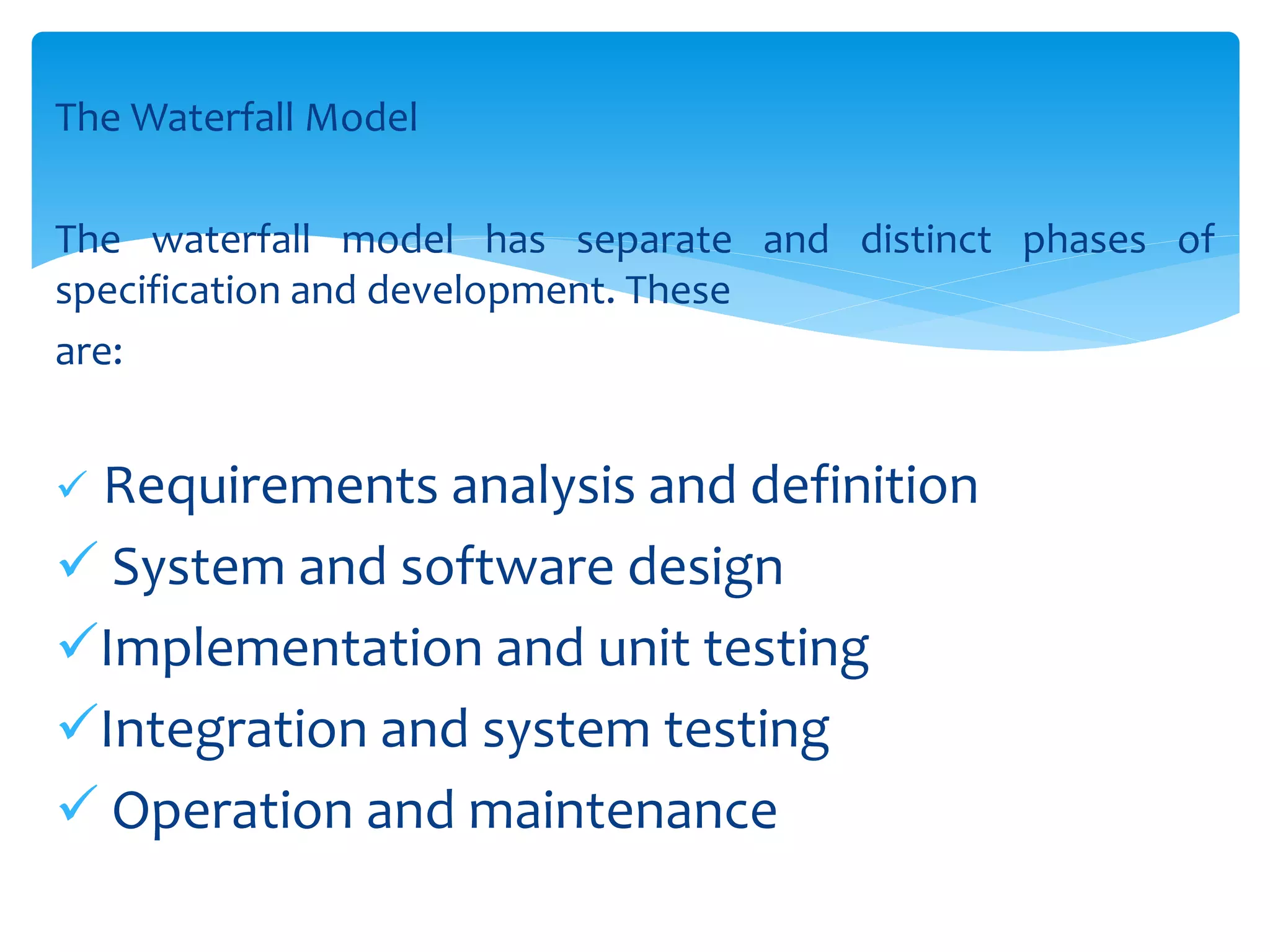
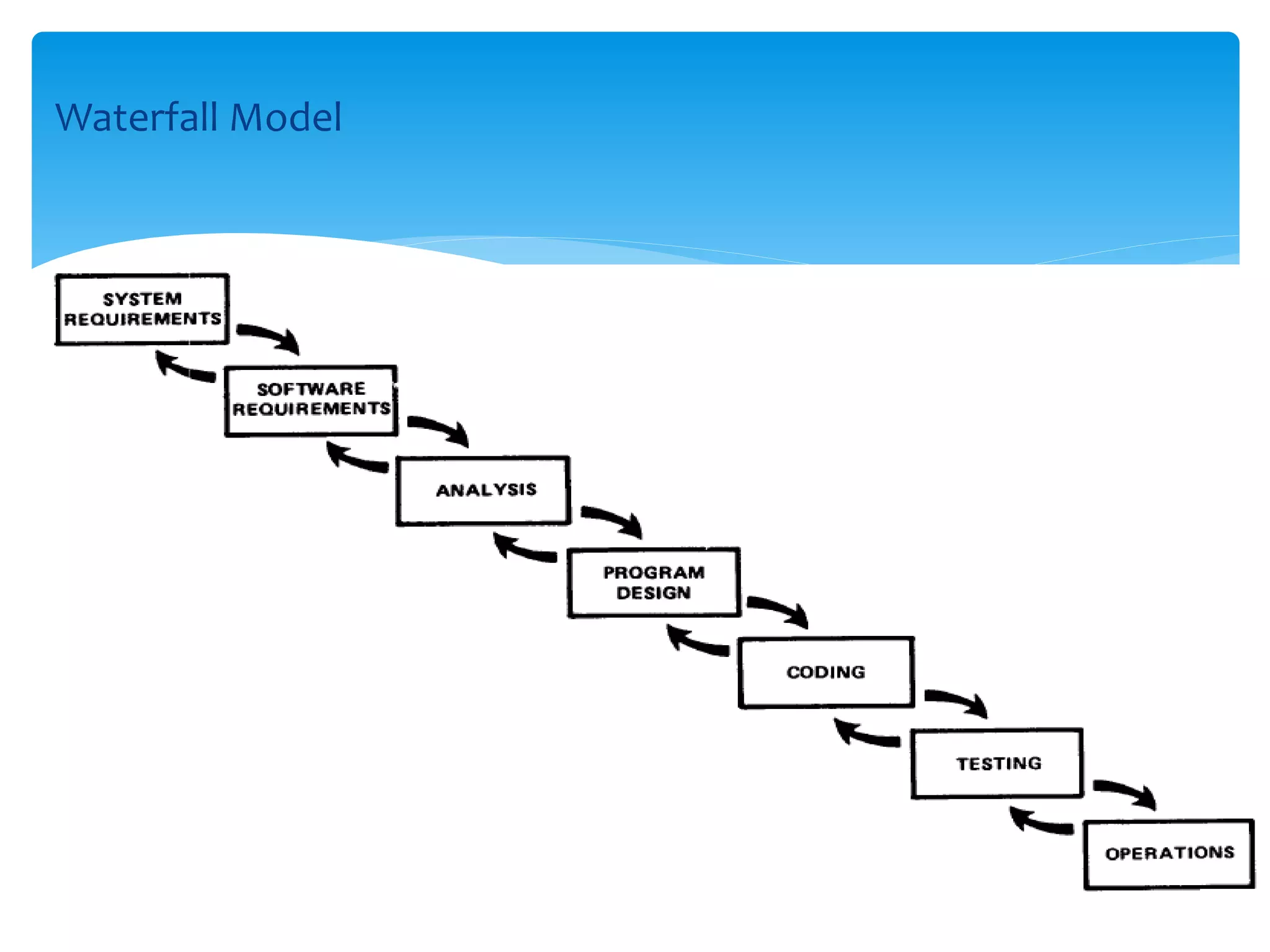
The Waterfall Model
The waterfall model has separate and distinct phases of
specification and development. These
are:
 Requirements analysis and definition
 System and software design
Implementation and unit testing
Integration and system testing
 Operation and maintenance
Waterfall Model
Advantage
Progress can be conclusively identified
(through the use of milestones) by both
vendor and client.
Ensures minimal wastage of time and effort.
Reduces the risk of schedule slippage, or of
customer expectations not being met.
Prototyping Model
A type of development in which
emphasis is placed on developing
prototypes early in the development
process to permit early feedback and
analysis in support of the
development process.”
Need for prototyping
As a requirements artifact to initially envision
the system.
As a design artifact that enables us to explore the
solution space of your system.
 A vehicle for you to communicate the possible
UI design(s) of your system.
 A potential foundation from which to continue
developing the system
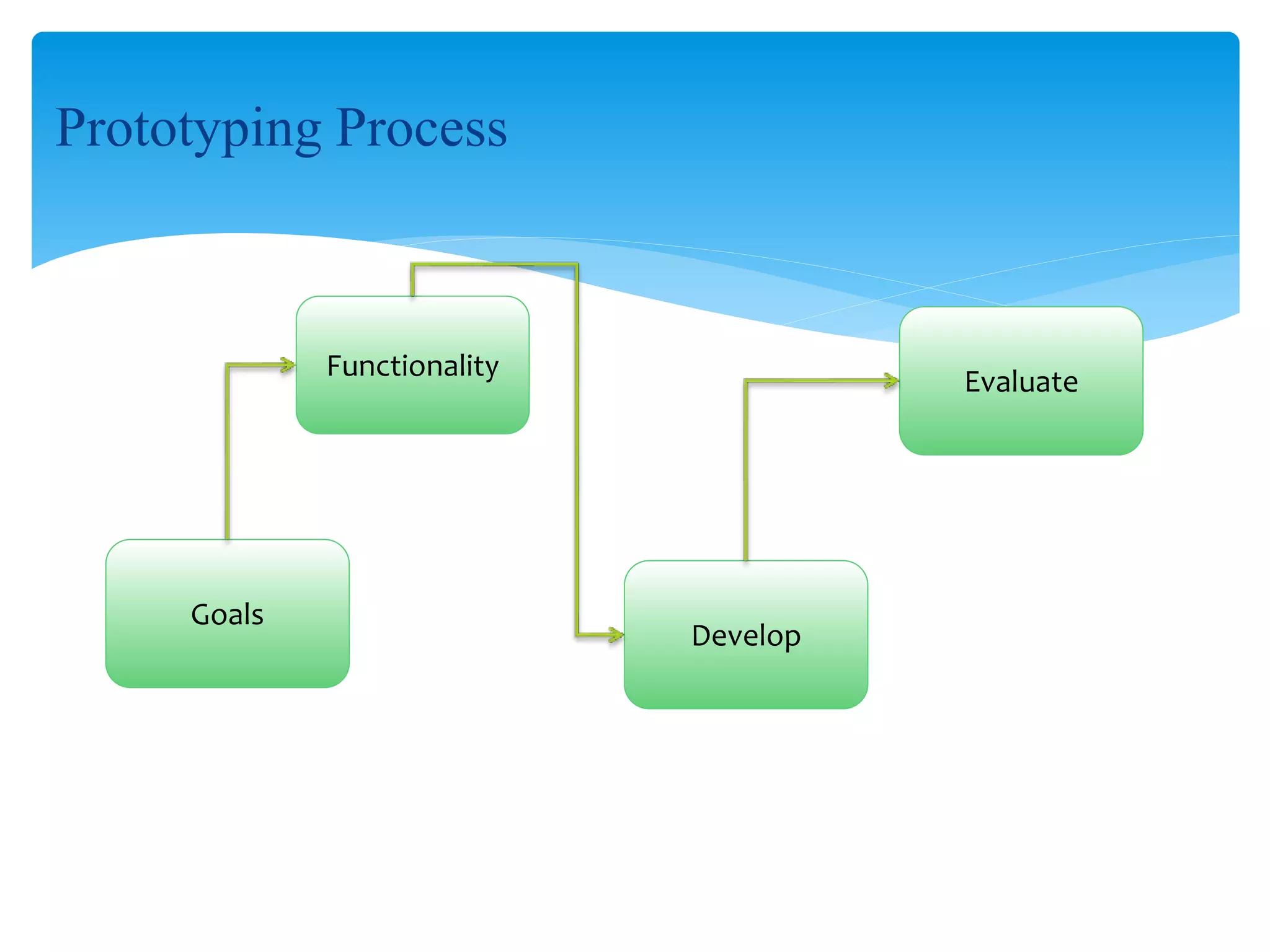
Prototyping Process
Goals
Functionality
Evaluate
Develop
Spiral Model
The Spiral Development ( or Lifecycle)
Model is a systems development method
used in information technology.
It combines the features of the
prototyping model and the waterfall
model.
It is favored for large, expensive, and
complicated models.
Steps of the Spiral Model
Define the problem with as much detail as
possible by interviewing the client and
potential users of the system, as well as,
studying any existing system.
A preliminary design is created for the new
system.
A first prototype of the new system is
constructed from the preliminary design and is
a scaled down version of the final product.

generic-software-process-models.ppt

  • 1.
    Software Myths Software iseasy to change Computers provide greater reliability than the devices they replace. Testing software or ‘proving’ software correct can remove all the errors. Reusing software increases safety. Software can work right the first time. Software can be designed thoroughly enough to avoid most integration problems. Software with more features is better software. Aim is to develop working programs.
  • 2.
    Generic Software ProcessModels There are many different software process models. Here are just four The waterfall model Separate and distinct phases of specification and development; (more below)  Evolutionary development Specification and development are interleaved (more below)  Formal transformation A mathematical system model is formally transformed to an implementation Reuse-based development The system is assembled from existing components
  • 3.
    The Waterfall Model Thewaterfall model has separate and distinct phases of specification and development. These are:  Requirements analysis and definition  System and software design Implementation and unit testing Integration and system testing  Operation and maintenance
  • 4.
  • 5.
    Advantage Progress can beconclusively identified (through the use of milestones) by both vendor and client. Ensures minimal wastage of time and effort. Reduces the risk of schedule slippage, or of customer expectations not being met.
  • 6.
    Prototyping Model A typeof development in which emphasis is placed on developing prototypes early in the development process to permit early feedback and analysis in support of the development process.”
  • 7.
    Need for prototyping Asa requirements artifact to initially envision the system. As a design artifact that enables us to explore the solution space of your system.  A vehicle for you to communicate the possible UI design(s) of your system.  A potential foundation from which to continue developing the system
  • 8.
  • 9.
    Spiral Model The SpiralDevelopment ( or Lifecycle) Model is a systems development method used in information technology. It combines the features of the prototyping model and the waterfall model. It is favored for large, expensive, and complicated models.
  • 10.
    Steps of theSpiral Model Define the problem with as much detail as possible by interviewing the client and potential users of the system, as well as, studying any existing system. A preliminary design is created for the new system. A first prototype of the new system is constructed from the preliminary design and is a scaled down version of the final product.