Value Chain Analysis 
Presented By: 
Narayan Gaonkar
Introduction: 
The idea of a value chain was first suggested by Michael Porter 
(1985) to depict how customer value accumulates along a chain 
of activities that lead to an end product or service. Porter 
describes the value chain as the internal processes or an activity a 
company performs “to design, produce, market, deliver and 
support its product.”
Definition: 
“Value chain analysis (VCA) is a process where a 
firm identifies its primary and support activities 
that add value to its final product and then analyse 
these activities to reduce costs or increase 
differentiation.” 
“Value chain represents the internal activities a 
firm engages in when transforming inputs into 
outputs.”
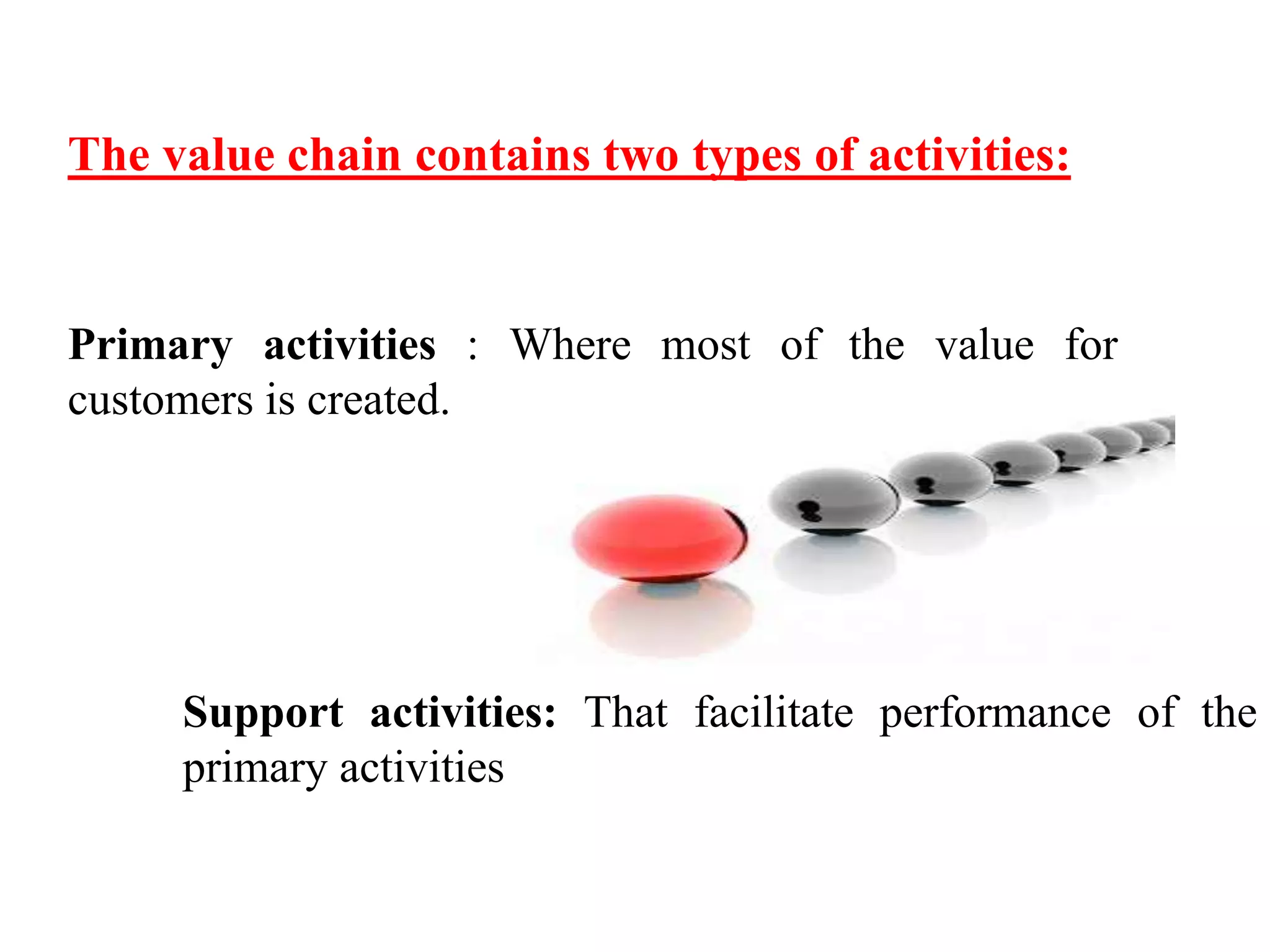
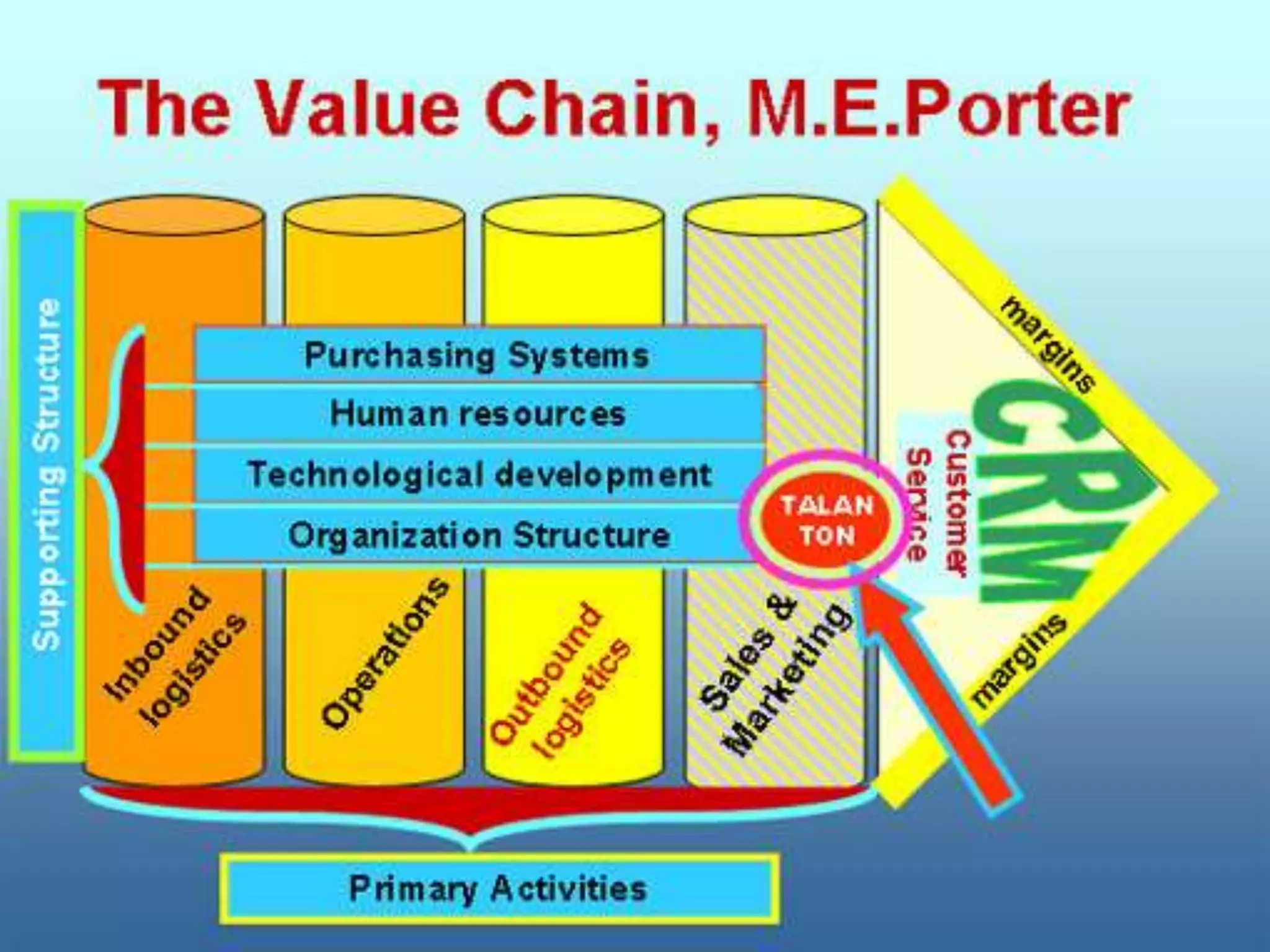
The value chain contains two types of activities: 
Primary activities : Where most of the value for 
customers is created. 
Support activities: That facilitate performance of the 
primary activities
Primary Activities: 
• Inbound logistics: Material handling and warehousing. 
• Operations: Transforming inputs into the final product. 
• Outbound logistics: Order processing and distribution. 
• Marketing and sales: Communication, pricing and 
channel management 
• Service: Installation, repair and parts.
Support activities 
● Procurement: Purchasing of raw materials, supplies 
and other consumable items as well as assets. 
● Technology development: Know-how, procedures and 
technological inputs needed in every value chain activity. 
● Human resource management: Selection, promotion 
and placement, appraisal, rewards management 
development and labour or employee relations. 
● Firm infrastructure: General management, planning, 
finance, accounting, legal, government affairs and quality 
management.
Objective value chain analysis: 
The objective is to analyse competitive advantage by 
disintegrating an organisation into discrete activities or 
processes and examine how each activity contributes to the 
organisation’s relative cost position or the customer’s 
comparative willingness to pay.
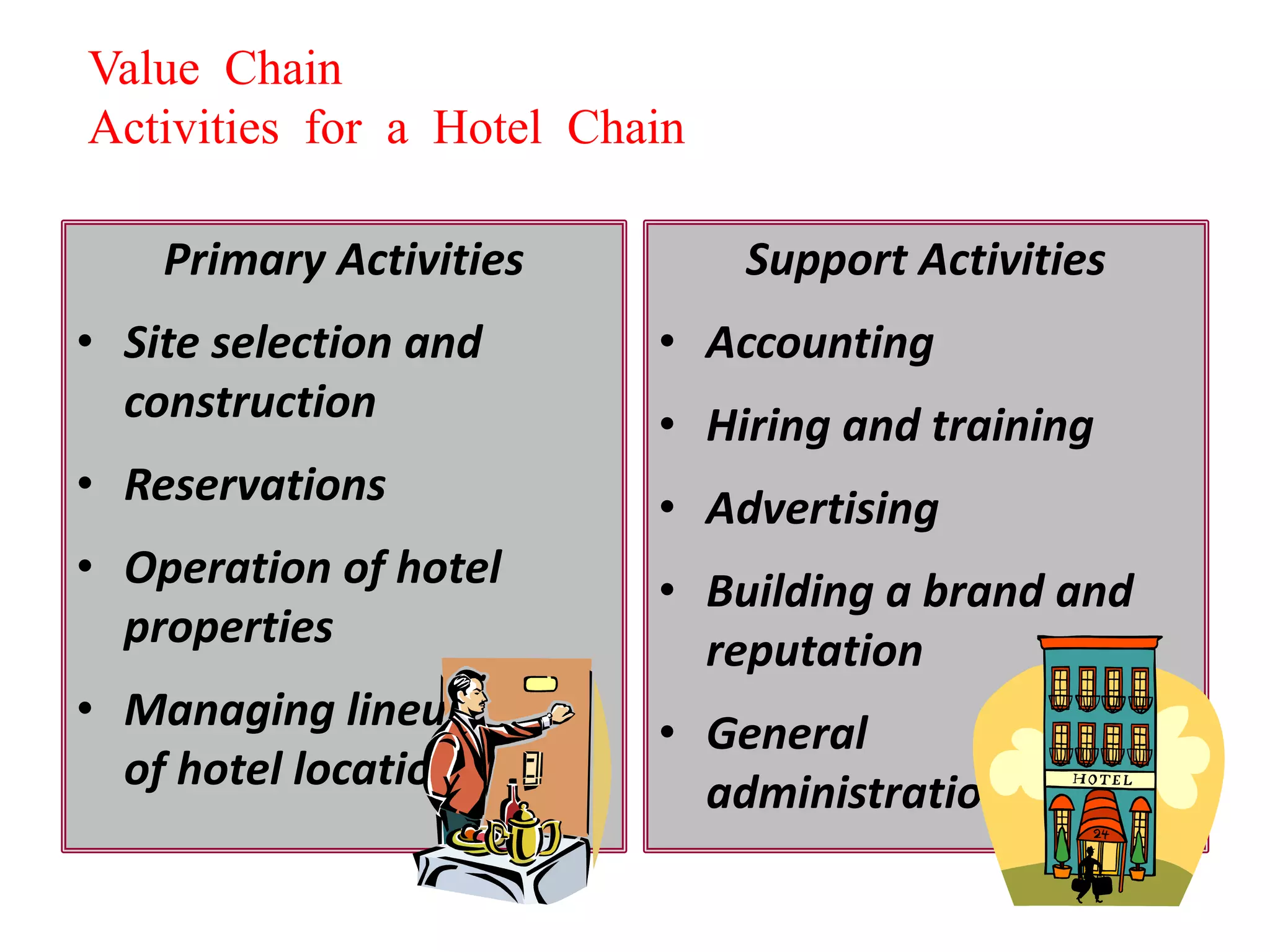
Value Chain 
Activities for a Hotel Chain 
Primary Activities 
• Site selection and 
construction 
• Reservations 
• Operation of hotel 
properties 
• Managing lineup 
of hotel locations 
Support Activities 
• Accounting 
• Hiring and training 
• Advertising 
• Building a brand and 
reputation 
• General 
administration
Cost Advantage and the Value Chain: 
A firm may create a cost advantage either by reducing the 
cost of individual value chain activities or by reconfiguring 
the value chain. It include, 
 Economies of scale 
 Learning 
 Capacity utilization 
 Linkages among activities 
 Interrelationships among business units 
 Degree of vertical integration 
 Timing of market entry 
 Firm's policy of cost or differentiation 
 Geographic location 
 Institutional factors (regulation, union activity, taxes, etc.)
Differentiation and the Value Chain: 
A differentiation advantage can arise from any part of the value 
chain. It may, 
 Policies and decisions 
 Linkages among activities 
 Timing 
 Location 
 Interrelationships 
 Learning 
 Integration 
 Scale (e.g. better service as a result of large scale) 
 Institutional factors 
Many of these also serve as cost drivers. Differentiation often 
results in greater costs, resulting in trade-offs between cost and 
differentiation
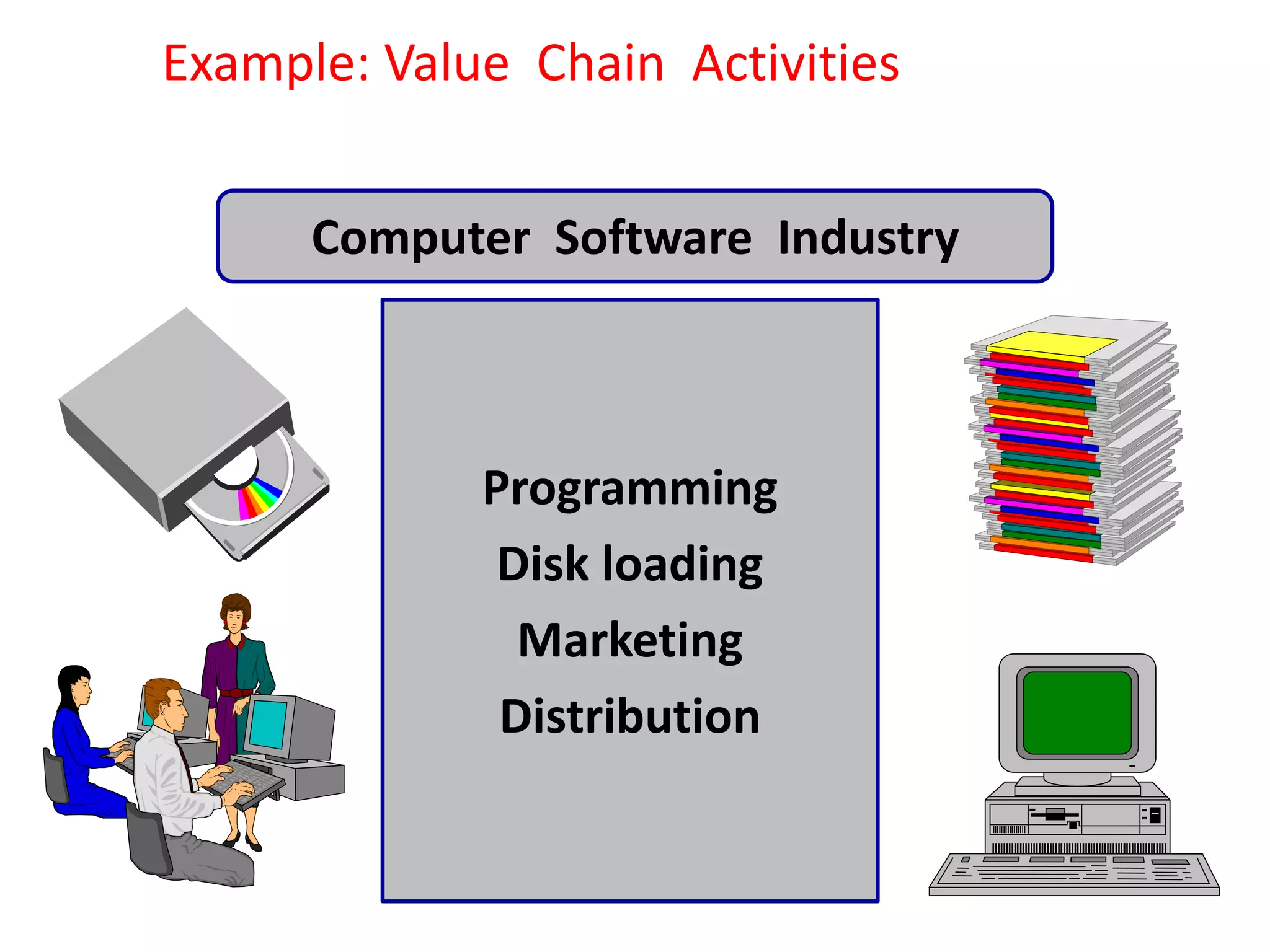
Example: Value Chain Activities 
Computer Software Industry 
Programming 
Disk loading 
Marketing 
Distribution
Limitations of Value Chain Analysis : 
 Difficulty in implementation 
and interpretation 
 Problem of 
Traditional Accounting system 
 Difficulty in decision making
Value chain analysis

Value chain analysis

  • 1.
    Value Chain Analysis Presented By: Narayan Gaonkar
  • 2.
    Introduction: The ideaof a value chain was first suggested by Michael Porter (1985) to depict how customer value accumulates along a chain of activities that lead to an end product or service. Porter describes the value chain as the internal processes or an activity a company performs “to design, produce, market, deliver and support its product.”
  • 3.
    Definition: “Value chainanalysis (VCA) is a process where a firm identifies its primary and support activities that add value to its final product and then analyse these activities to reduce costs or increase differentiation.” “Value chain represents the internal activities a firm engages in when transforming inputs into outputs.”
  • 4.
    The value chaincontains two types of activities: Primary activities : Where most of the value for customers is created. Support activities: That facilitate performance of the primary activities
  • 6.
    Primary Activities: •Inbound logistics: Material handling and warehousing. • Operations: Transforming inputs into the final product. • Outbound logistics: Order processing and distribution. • Marketing and sales: Communication, pricing and channel management • Service: Installation, repair and parts.
  • 7.
    Support activities ●Procurement: Purchasing of raw materials, supplies and other consumable items as well as assets. ● Technology development: Know-how, procedures and technological inputs needed in every value chain activity. ● Human resource management: Selection, promotion and placement, appraisal, rewards management development and labour or employee relations. ● Firm infrastructure: General management, planning, finance, accounting, legal, government affairs and quality management.
  • 8.
    Objective value chainanalysis: The objective is to analyse competitive advantage by disintegrating an organisation into discrete activities or processes and examine how each activity contributes to the organisation’s relative cost position or the customer’s comparative willingness to pay.
  • 9.
    Value Chain Activitiesfor a Hotel Chain Primary Activities • Site selection and construction • Reservations • Operation of hotel properties • Managing lineup of hotel locations Support Activities • Accounting • Hiring and training • Advertising • Building a brand and reputation • General administration
  • 10.
    Cost Advantage andthe Value Chain: A firm may create a cost advantage either by reducing the cost of individual value chain activities or by reconfiguring the value chain. It include,  Economies of scale  Learning  Capacity utilization  Linkages among activities  Interrelationships among business units  Degree of vertical integration  Timing of market entry  Firm's policy of cost or differentiation  Geographic location  Institutional factors (regulation, union activity, taxes, etc.)
  • 11.
    Differentiation and theValue Chain: A differentiation advantage can arise from any part of the value chain. It may,  Policies and decisions  Linkages among activities  Timing  Location  Interrelationships  Learning  Integration  Scale (e.g. better service as a result of large scale)  Institutional factors Many of these also serve as cost drivers. Differentiation often results in greater costs, resulting in trade-offs between cost and differentiation
  • 12.
    Example: Value ChainActivities Computer Software Industry Programming Disk loading Marketing Distribution
  • 13.
    Limitations of ValueChain Analysis :  Difficulty in implementation and interpretation  Problem of Traditional Accounting system  Difficulty in decision making