Disruptive Innovation1
Pioneers2
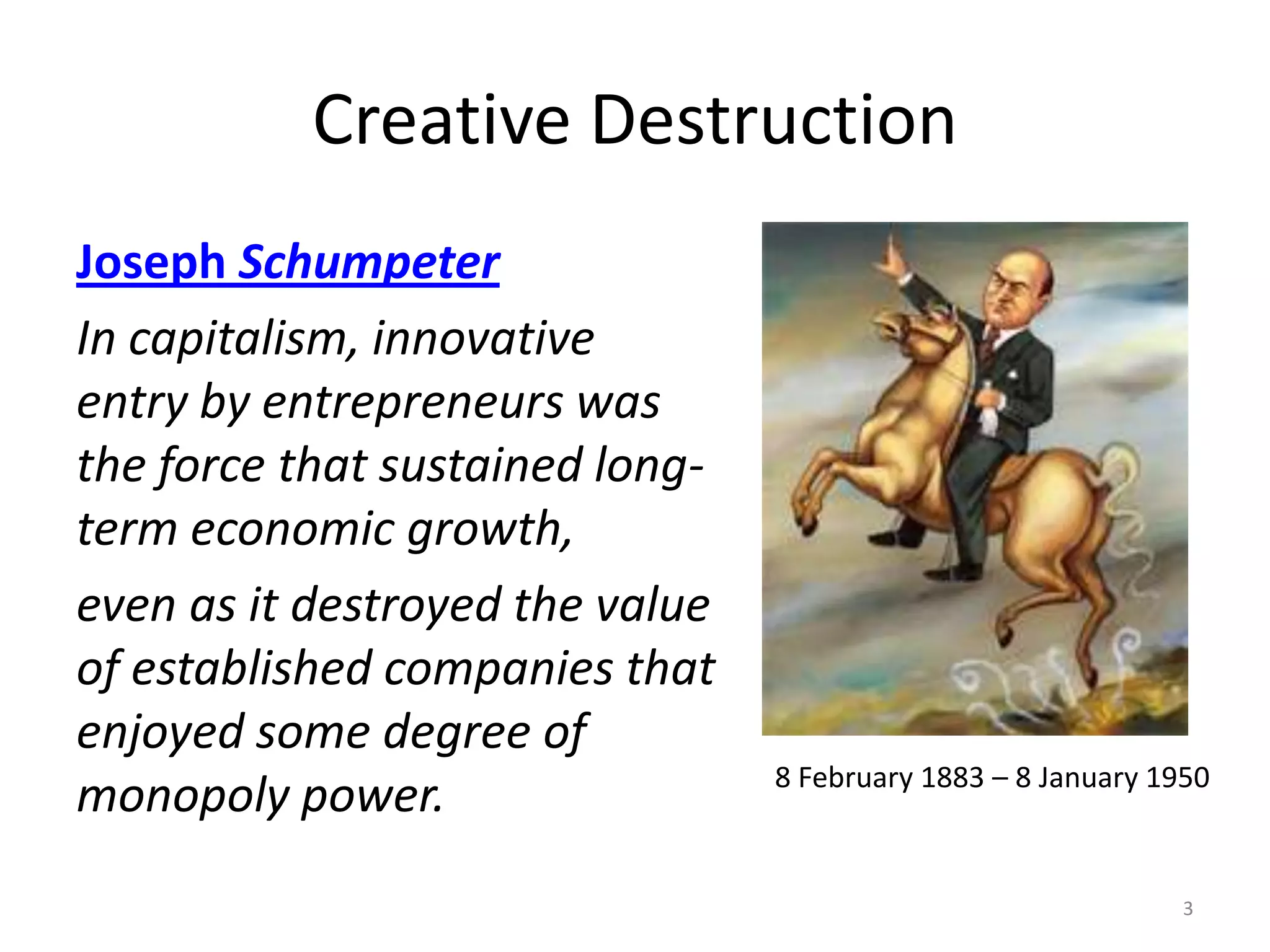
Creative DestructionJoseph SchumpeterIn capitalism, innovative entry by entrepreneurs was the force that sustained long-term economic growth,even as it destroyed the value of established companies that enjoyed some degree of monopoly power.38 February 1883 – 8 January 1950
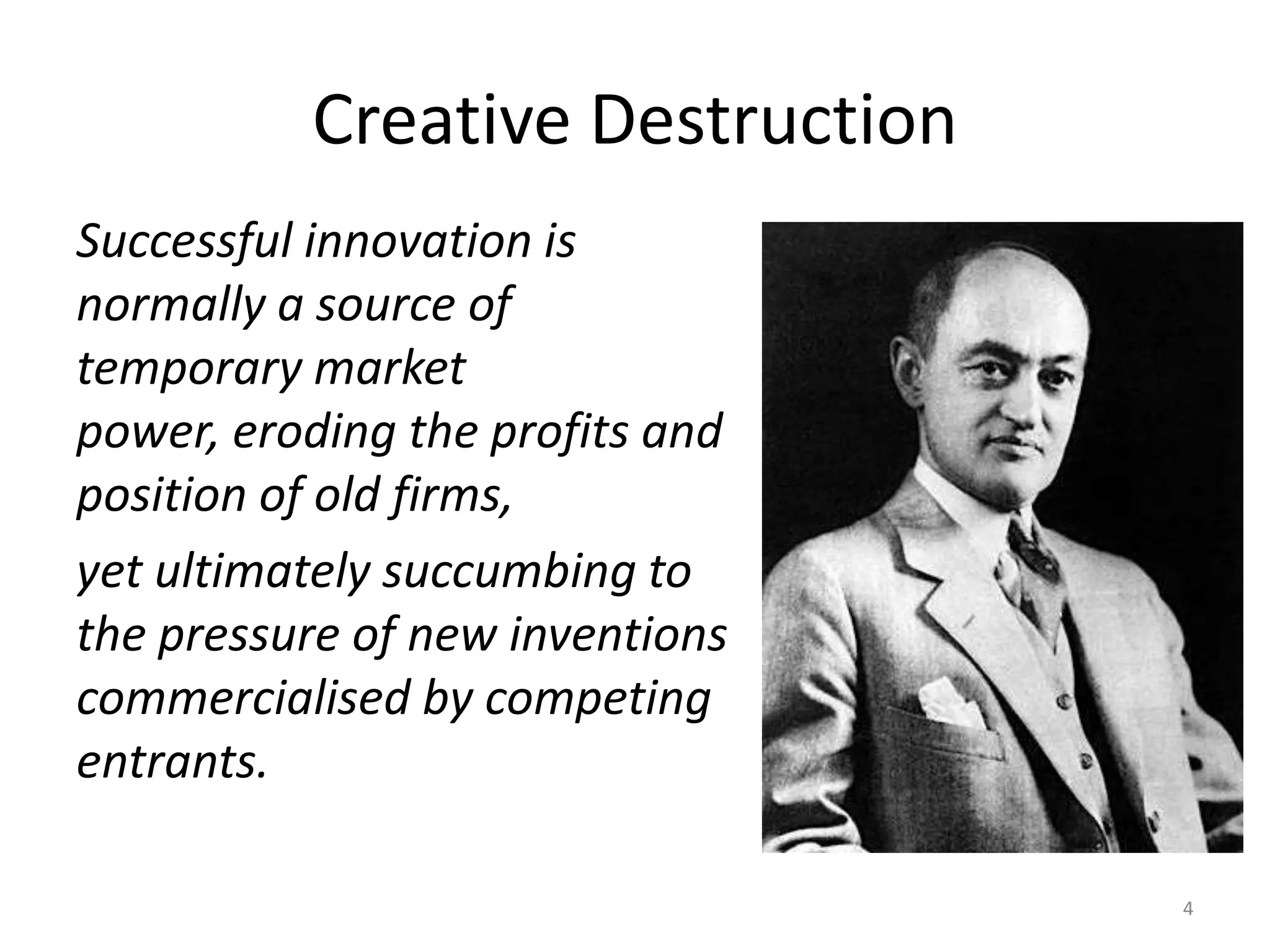
Creative DestructionSuccessful innovation is normally a source of temporary market power, eroding the profits and position of old firms, yet ultimately succumbing to the pressure of new inventions commercialised by competing entrants. 4
The Use of Knowledge in SocietyFriedrich von HayekTwo types of knowledge: scientific knowledge, “knowledge of the particular circumstances of time and place”5
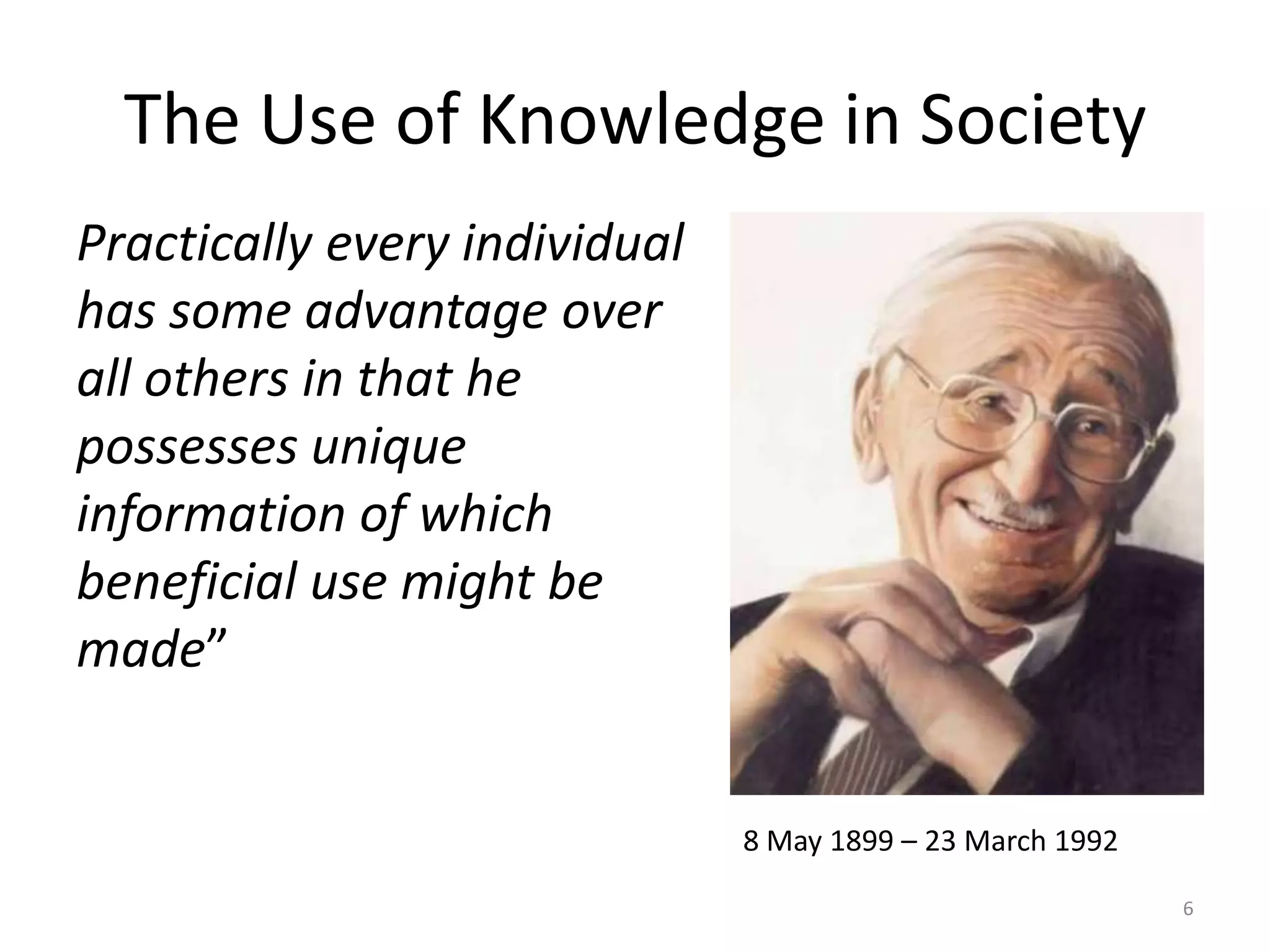
The Use of Knowledge in SocietyPractically every individual has some advantage over all others in that he possesses unique information of which beneficial use might be made”68 May 1899 – 23 March 1992
The Use of Knowledge in Societybecause every individual only processes a small piece of the puzzle, no central planner can ever run the economy efficiently.7
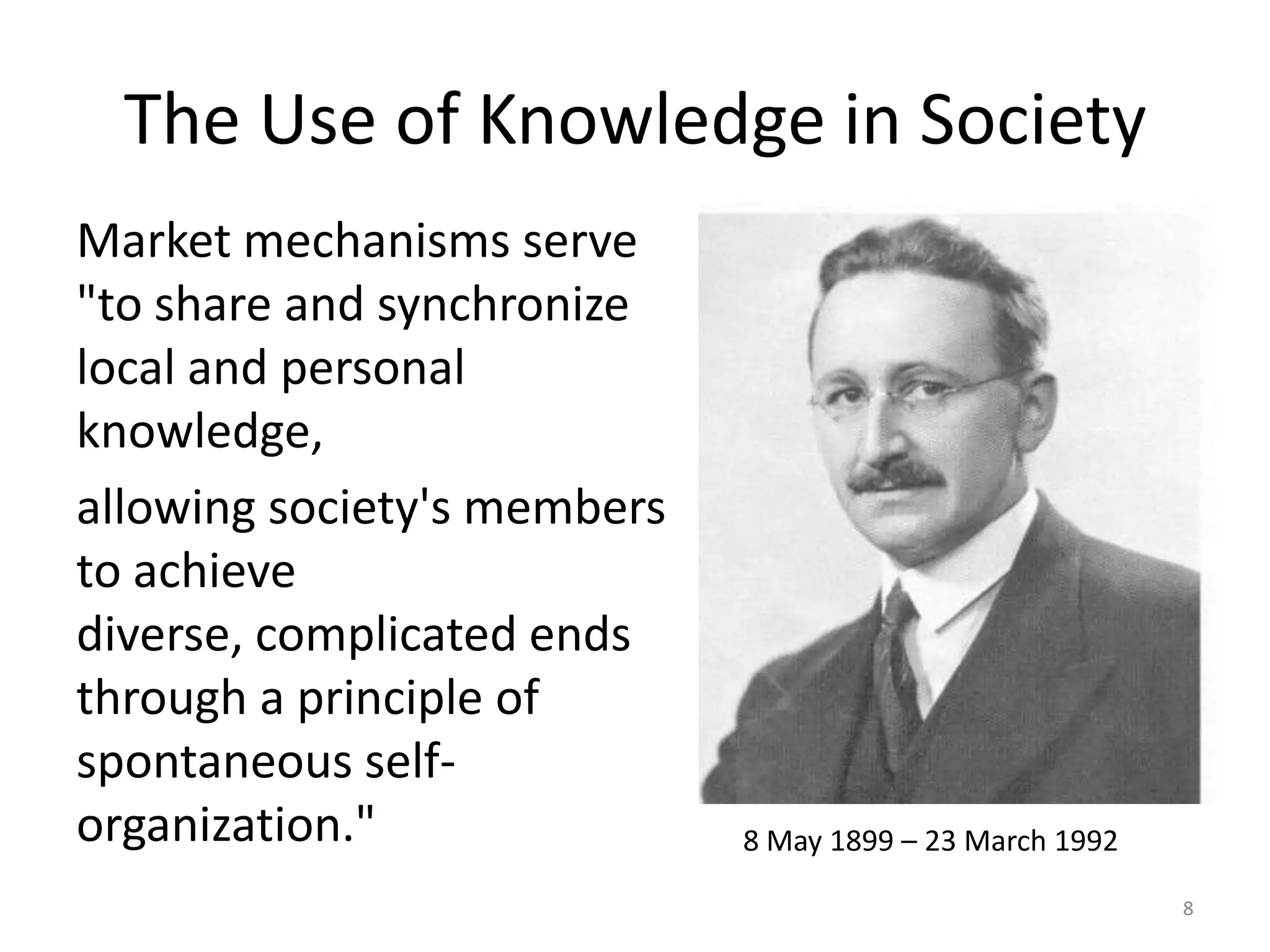
The Use of Knowledge in SocietyMarket mechanisms serve "to share and synchronize local and personal knowledge, allowing society's members to achieve diverse, complicated ends through a principle of spontaneous self-organization."88 May 1899 – 23 March 1992
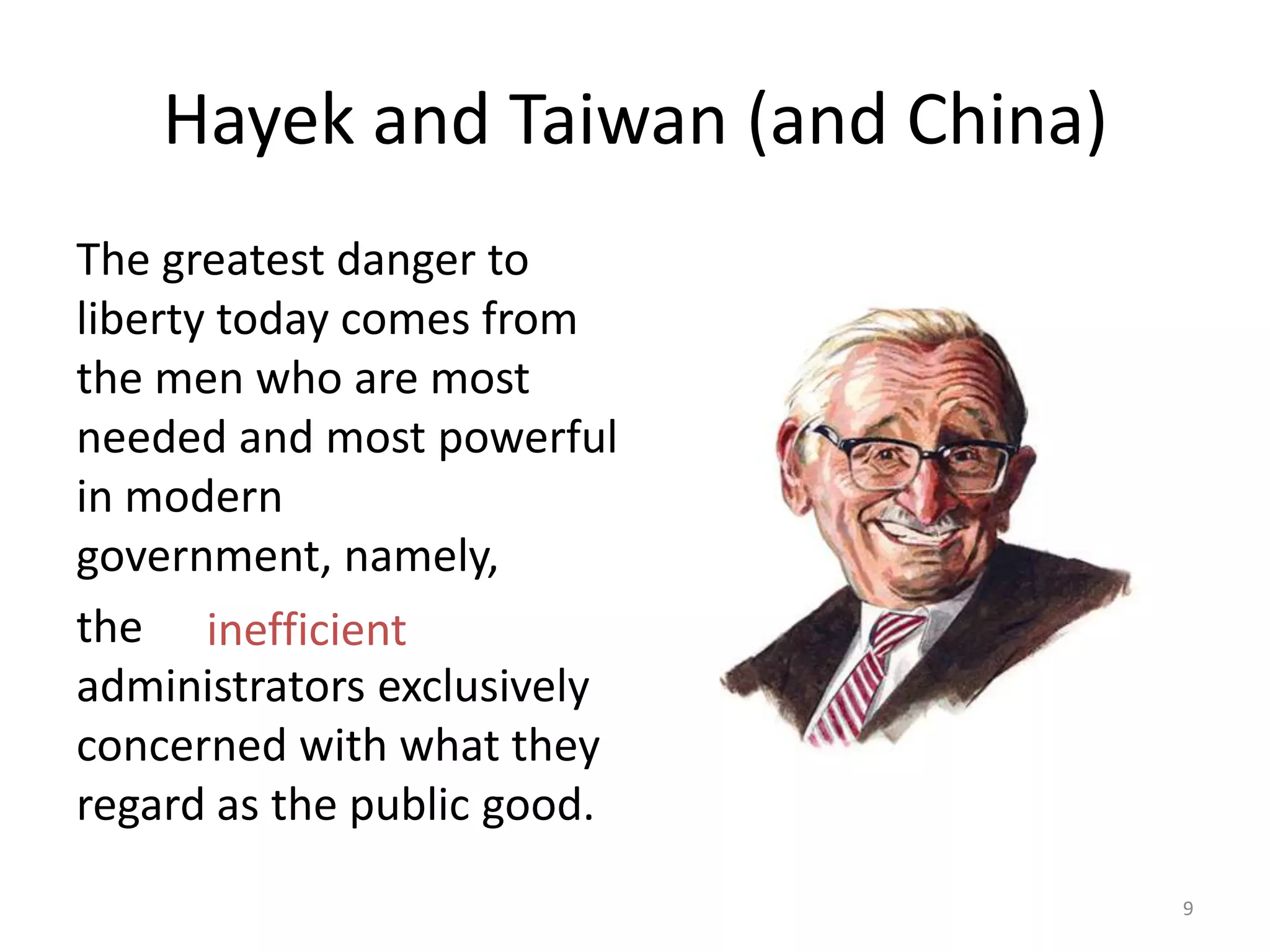
The greatest danger to liberty today comes from the men who are most needed and most powerful in modern government, namely, the efficient expert administrators exclusively concerned with what they regard as the public good.Hayek and Taiwan (and China)9inefficient
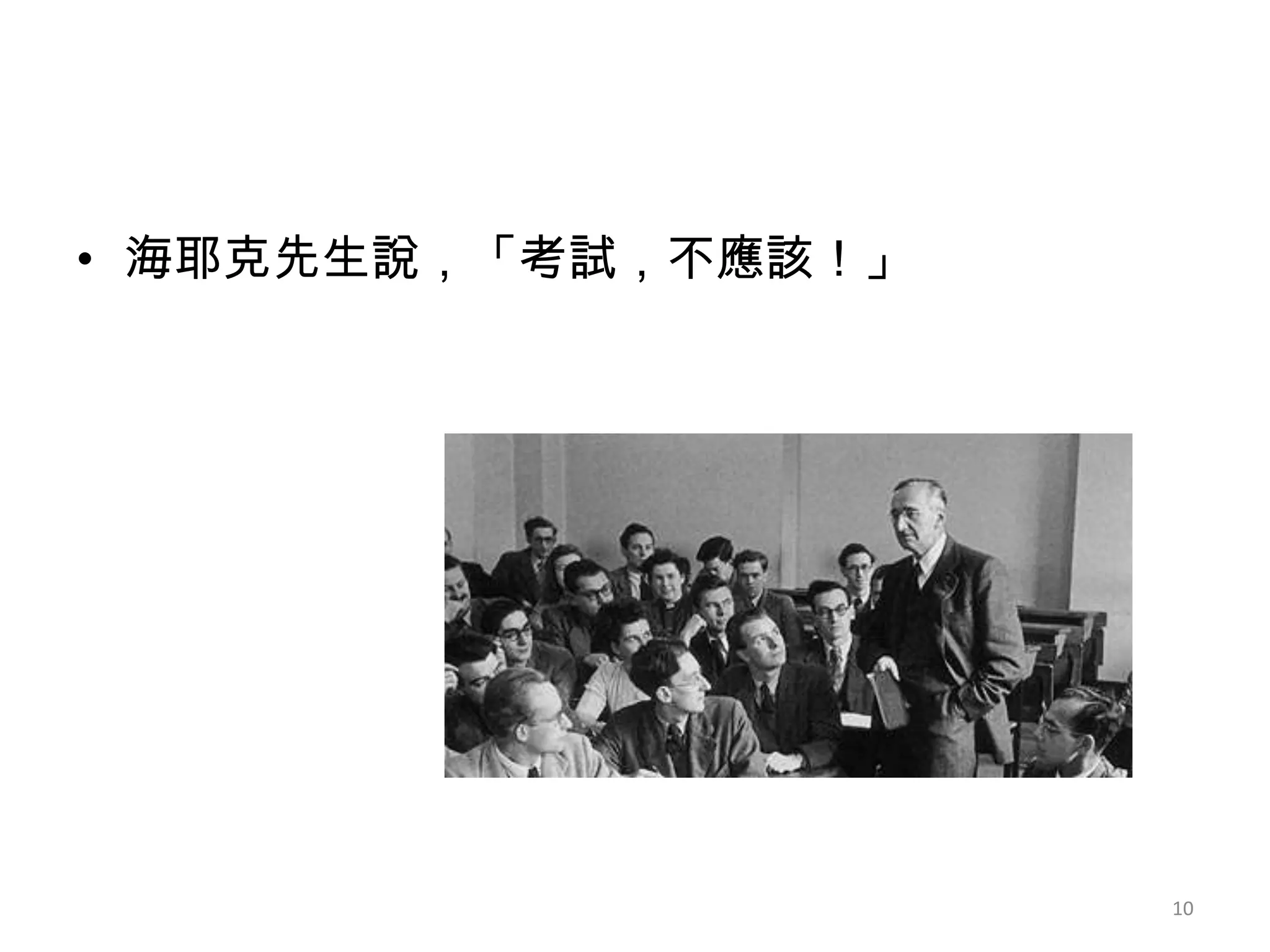
海耶克先生說,「考試,不應該!」10
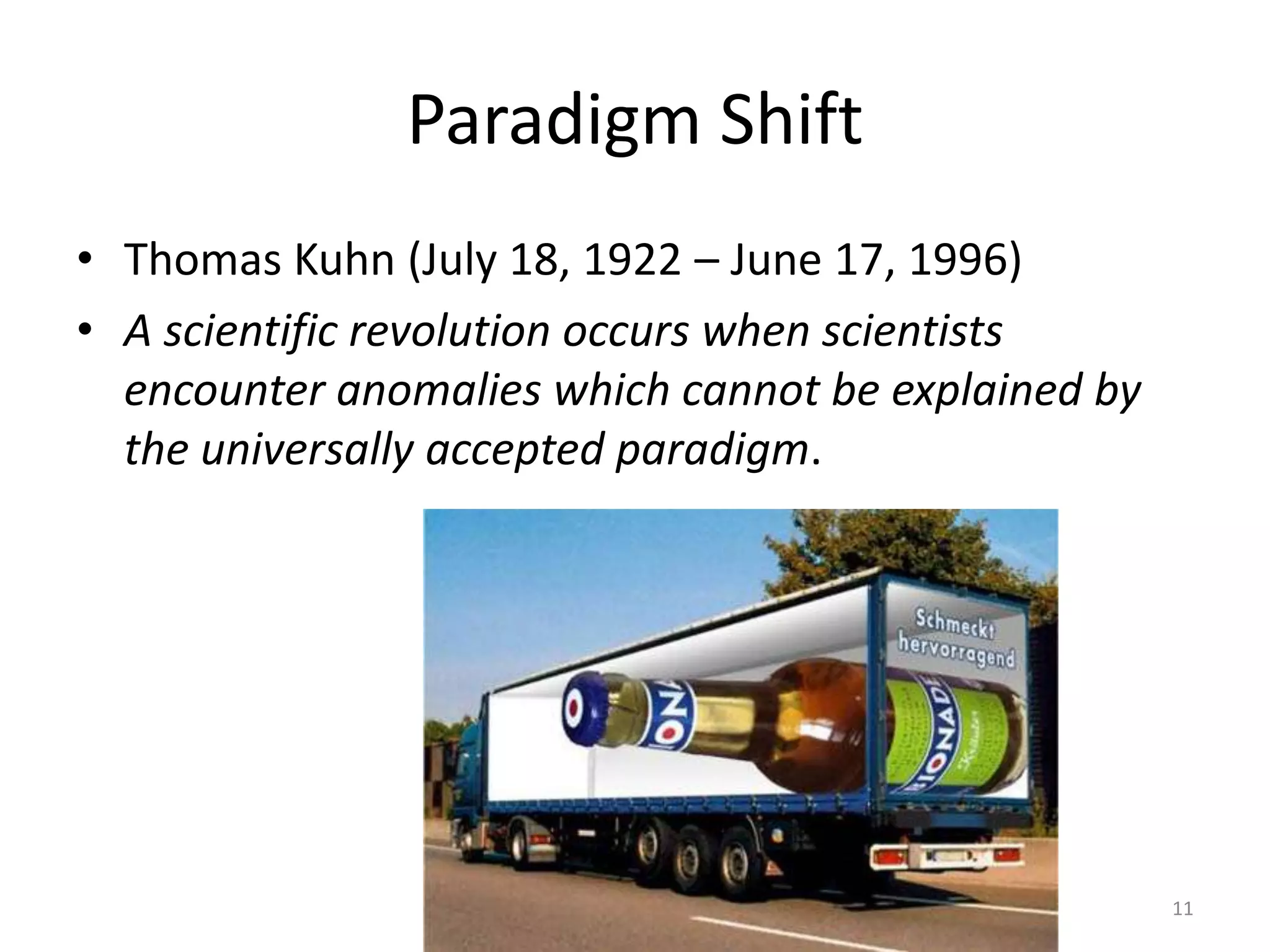
Paradigm ShiftThomas Kuhn (July 18, 1922 – June 17, 1996)A scientific revolution occurs when scientists encounter anomalies which cannot be explained by the universally accepted paradigm.11
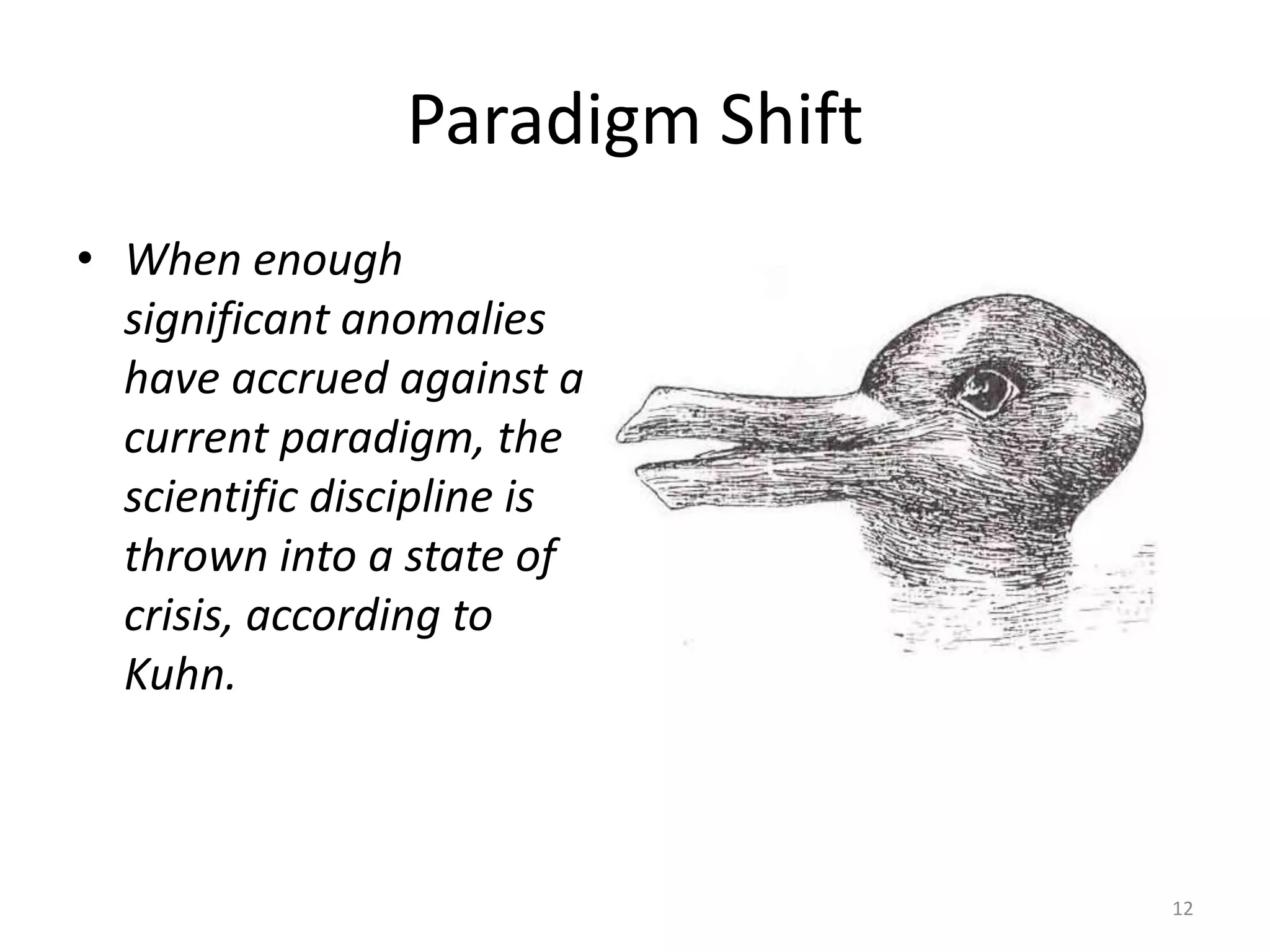
Paradigm ShiftWhen enough significant anomalies have accrued against a current paradigm, the scientific discipline is thrown into a state of crisis, according to Kuhn.12
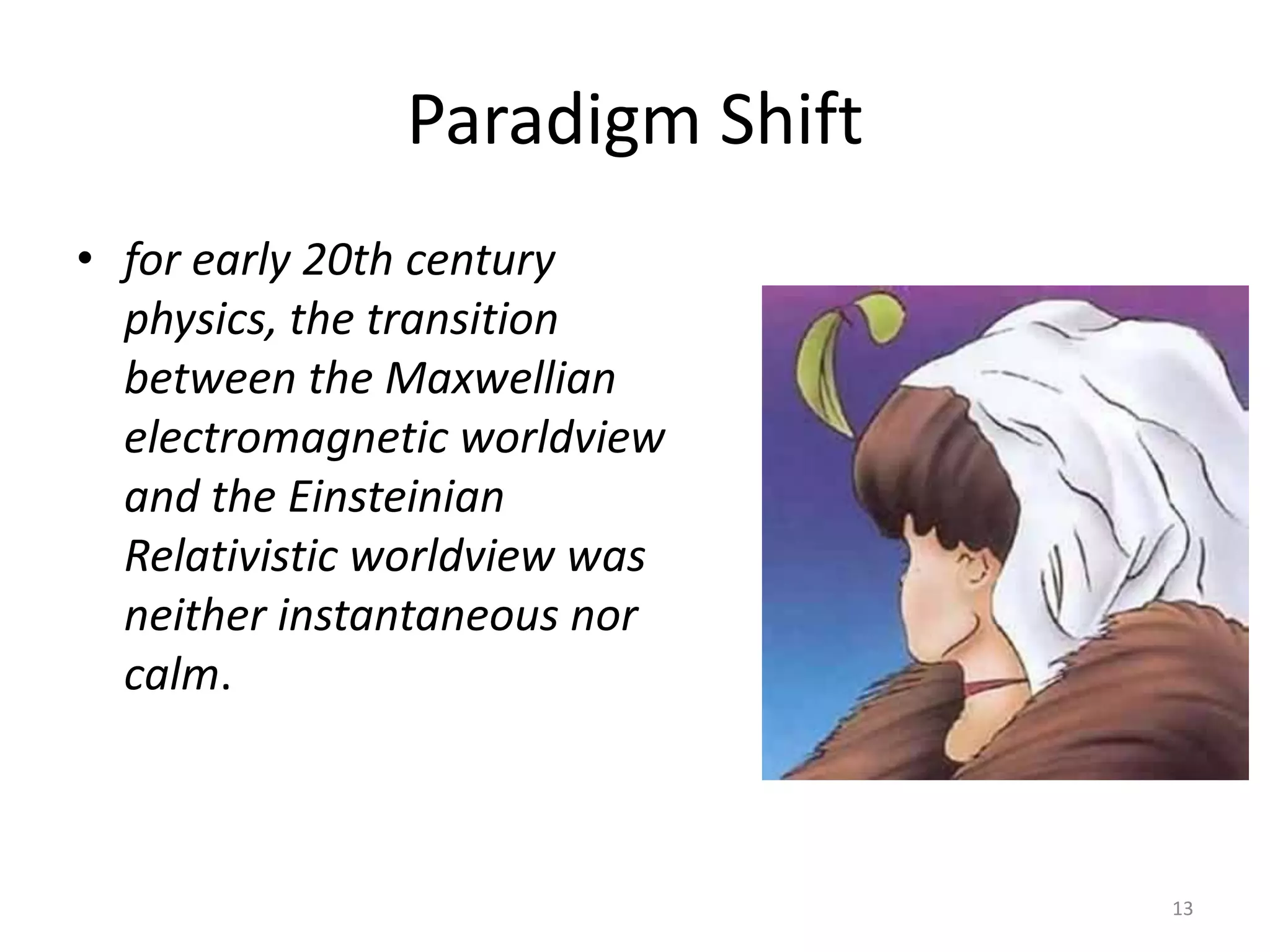
Paradigm Shift13for early 20th century physics, the transition between the Maxwellianelectromagnetic worldview and the EinsteinianRelativistic worldview was neither instantaneous nor calm.
Paradigm Shift14"a new scientific truth does not triumph by convincing its opponents and making them see the light, but rather because its opponents eventually die, and a new generation grows up that is familiar with it.“Thomas Kuhn quoting Max Planck
15
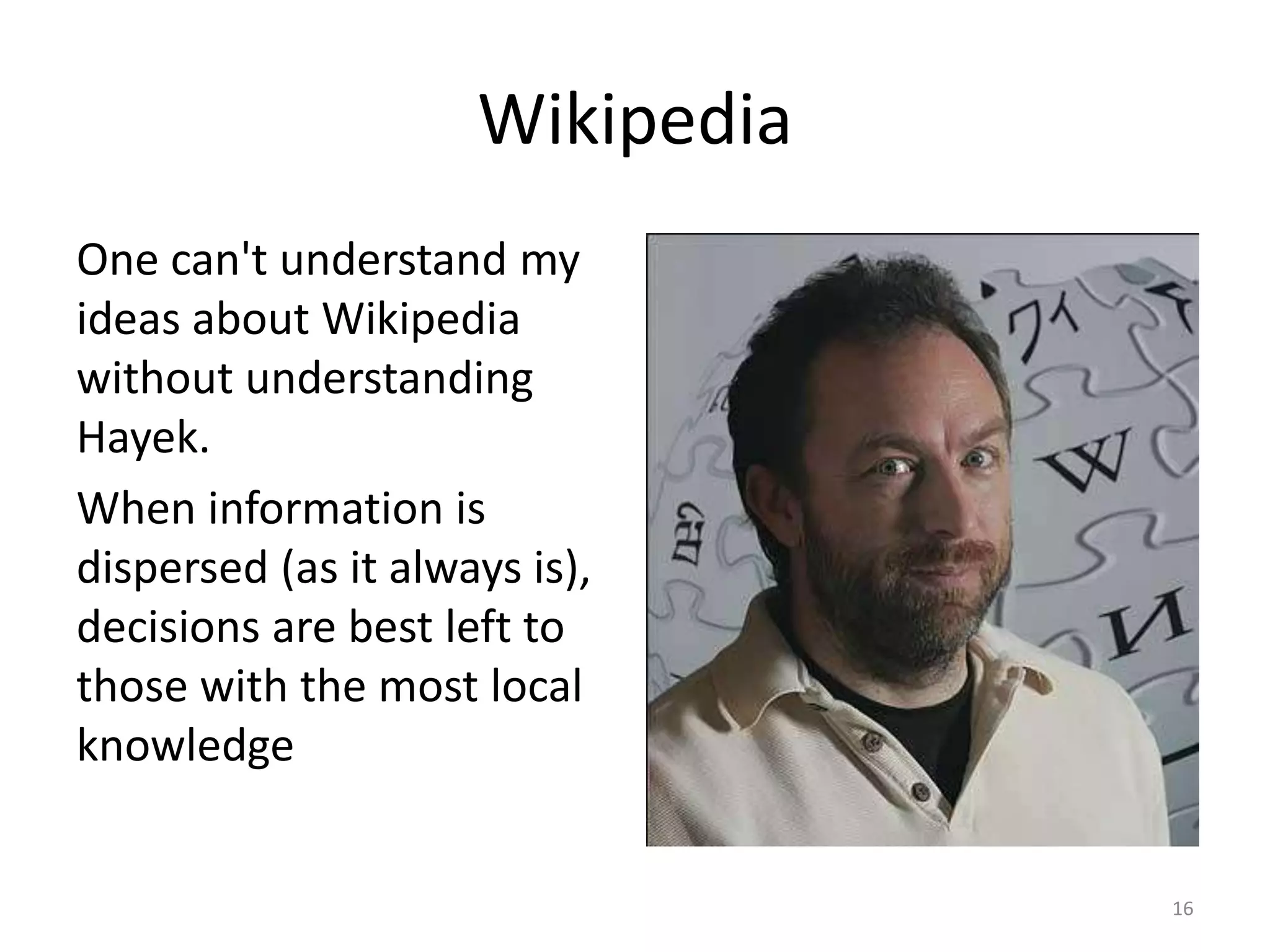
WikipediaOne can't understand my ideas about Wikipedia without understanding Hayek.When information is dispersed (as it always is), decisions are best left to those with the most local knowledge16
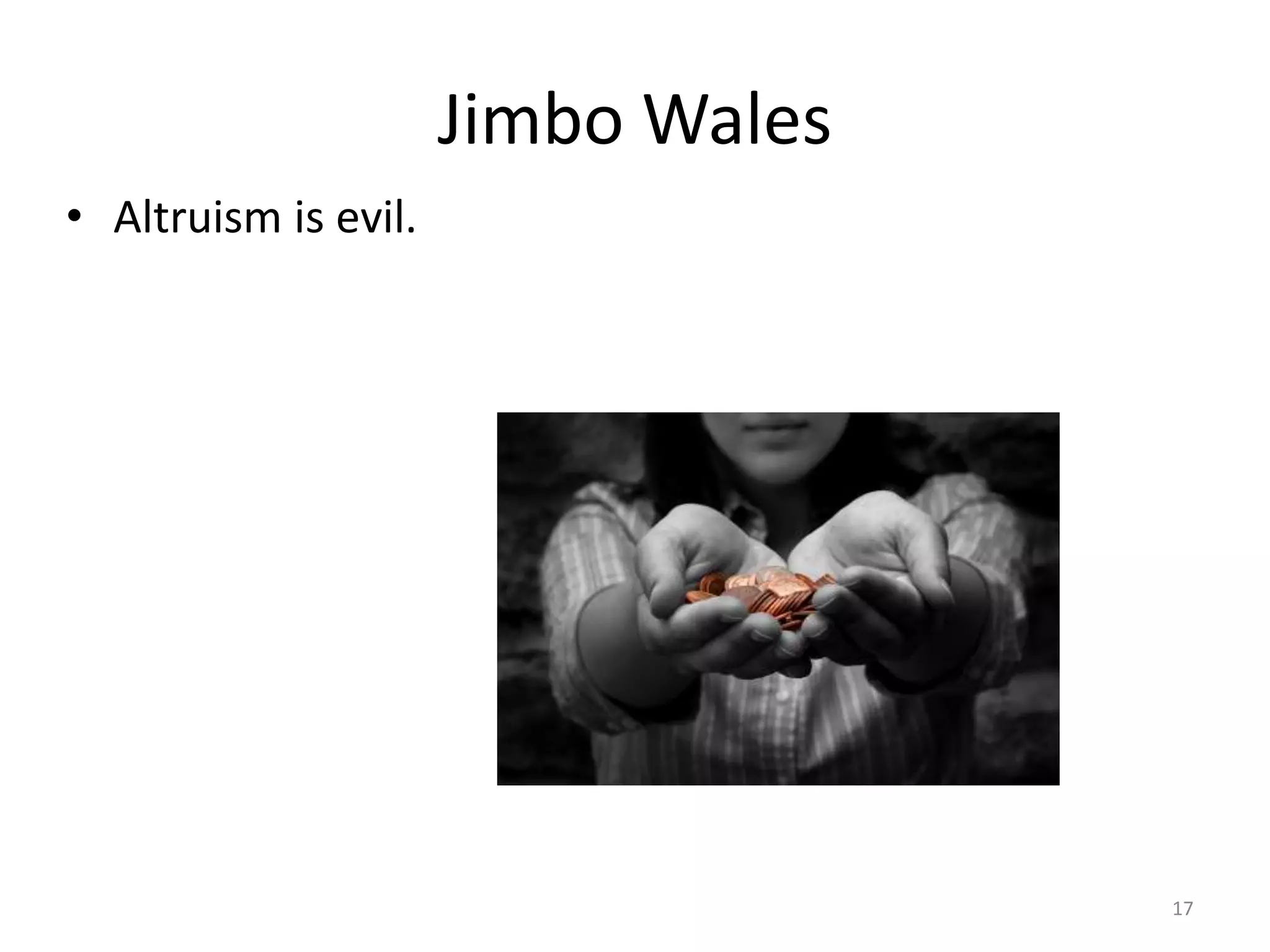
Jimbo WalesAltruism is evil.17
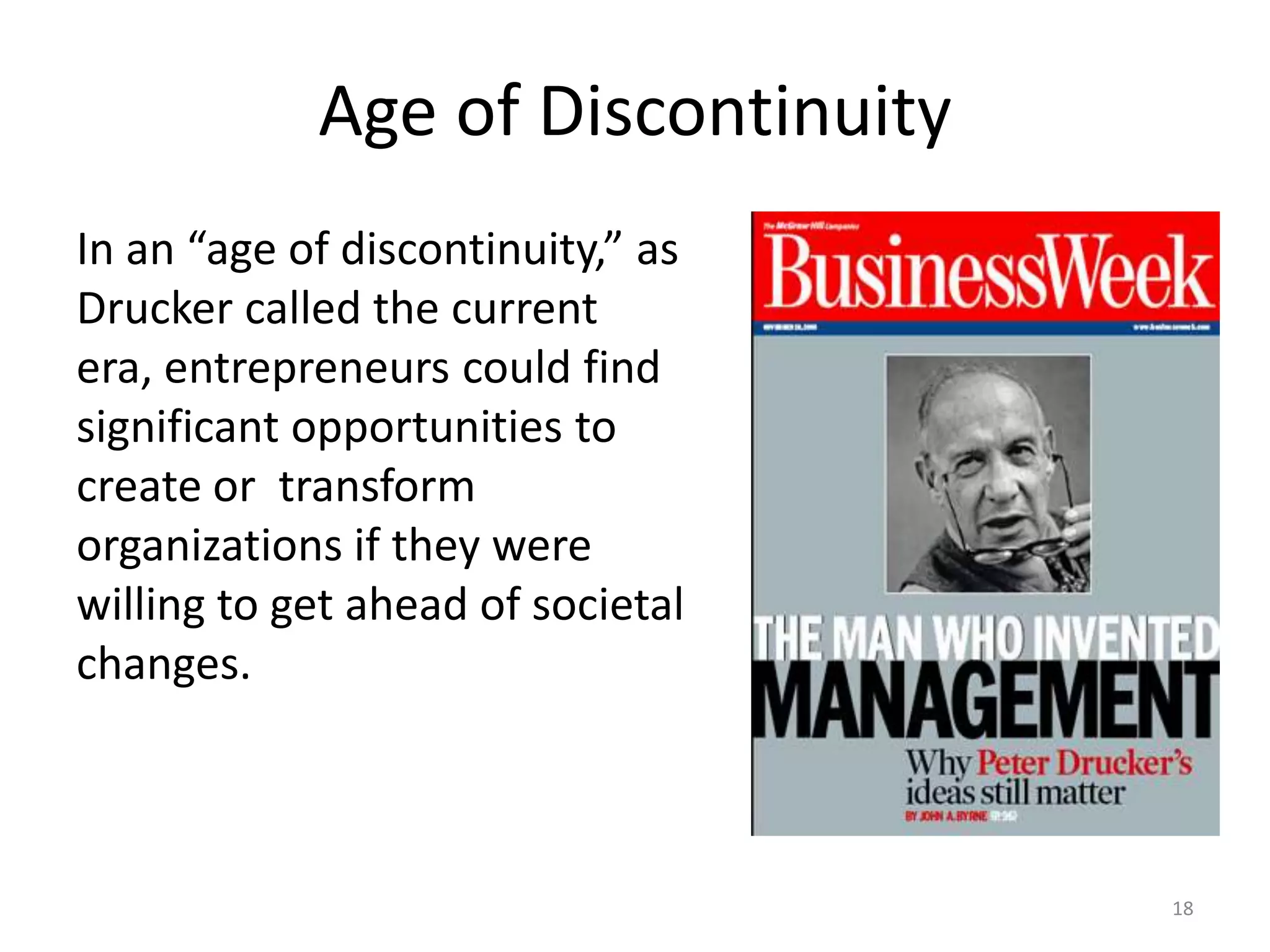
Age of DiscontinuityIn an “age of discontinuity,” as Drucker called the currentera, entrepreneurs couldfindsignificantopportunitiesto create or  transform organizations if they were willing to get ahead of societal changes.18
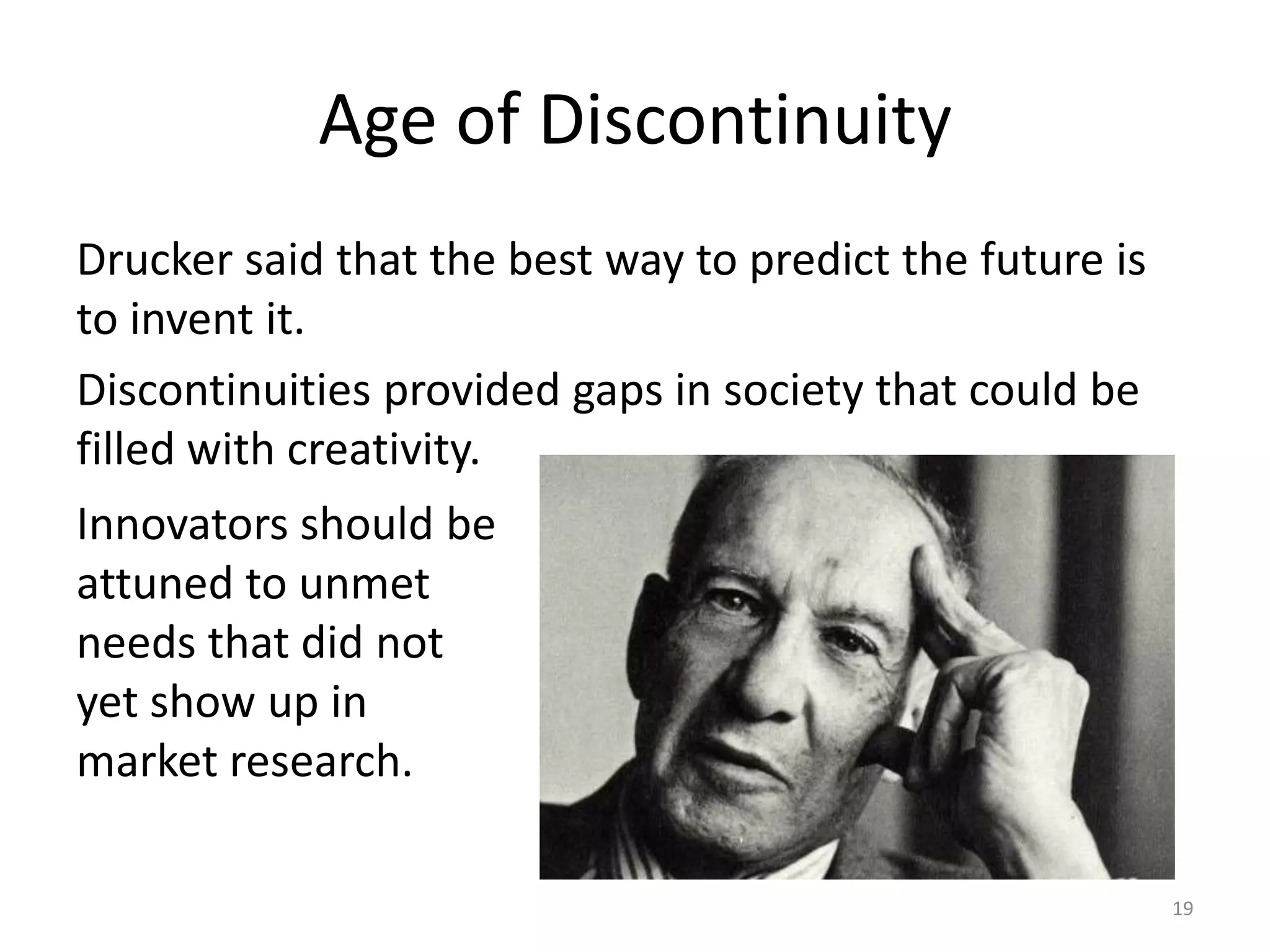
Age of DiscontinuityDrucker said that the best way to predict the future is to invent it. Discontinuities provided gaps in society that could be filled with creativity. Innovators should be attuned to unmet needs that did not yet show up in market research.19
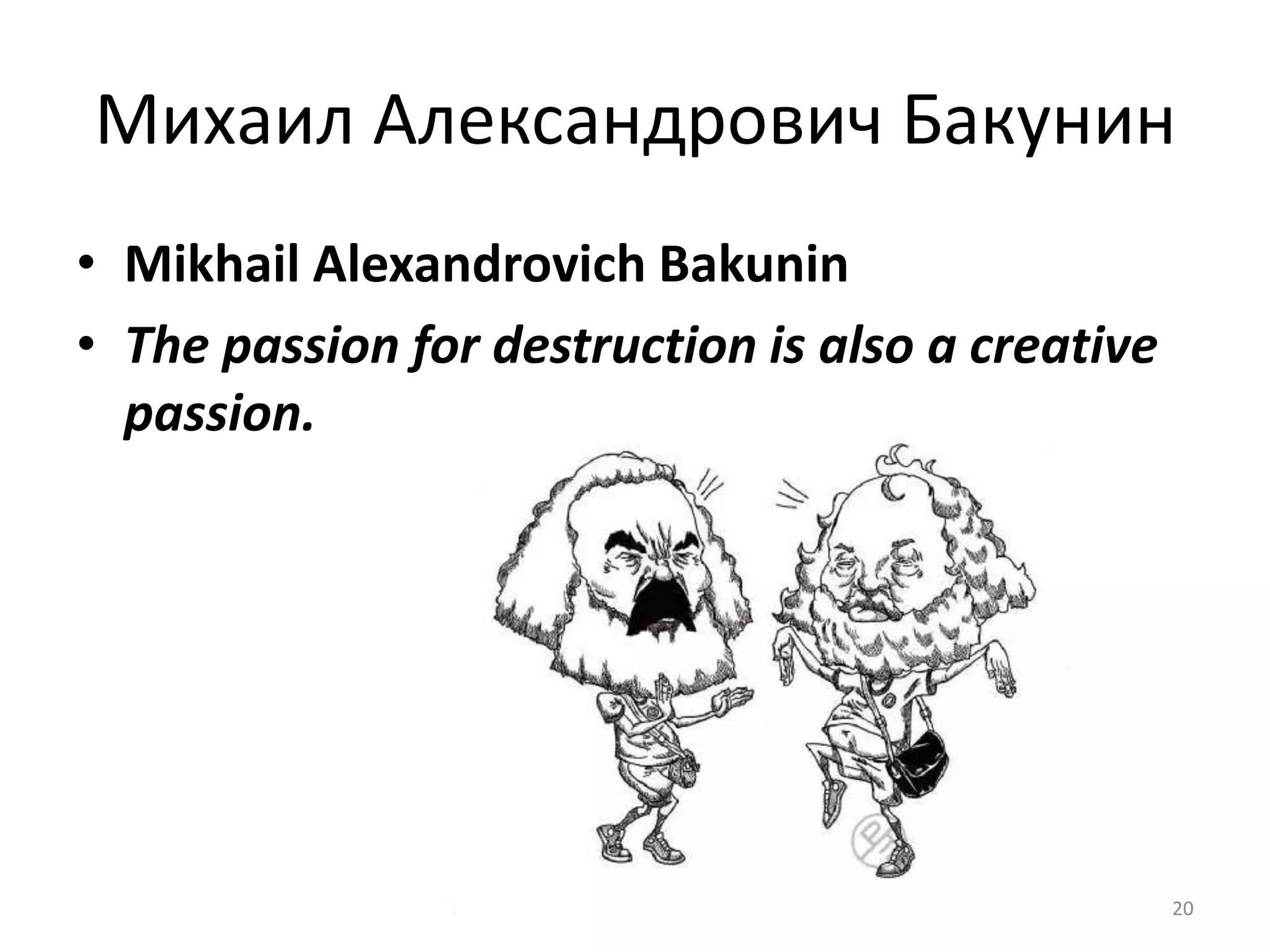
Михаил Александрович БакунинMikhail Alexandrovich BakuninThe passion for destruction is also a creative passion.20
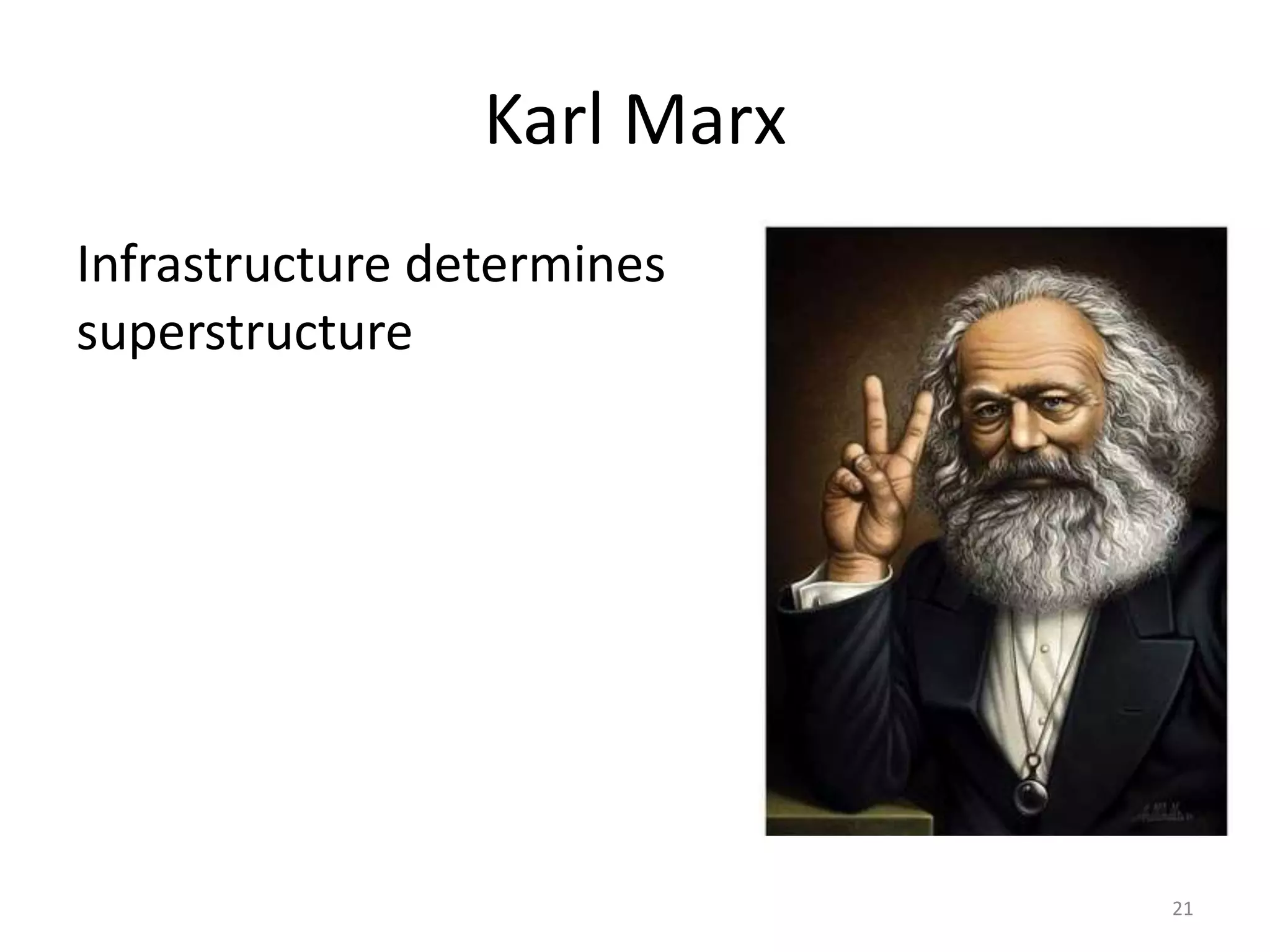
Karl MarxInfrastructure determines superstructure21
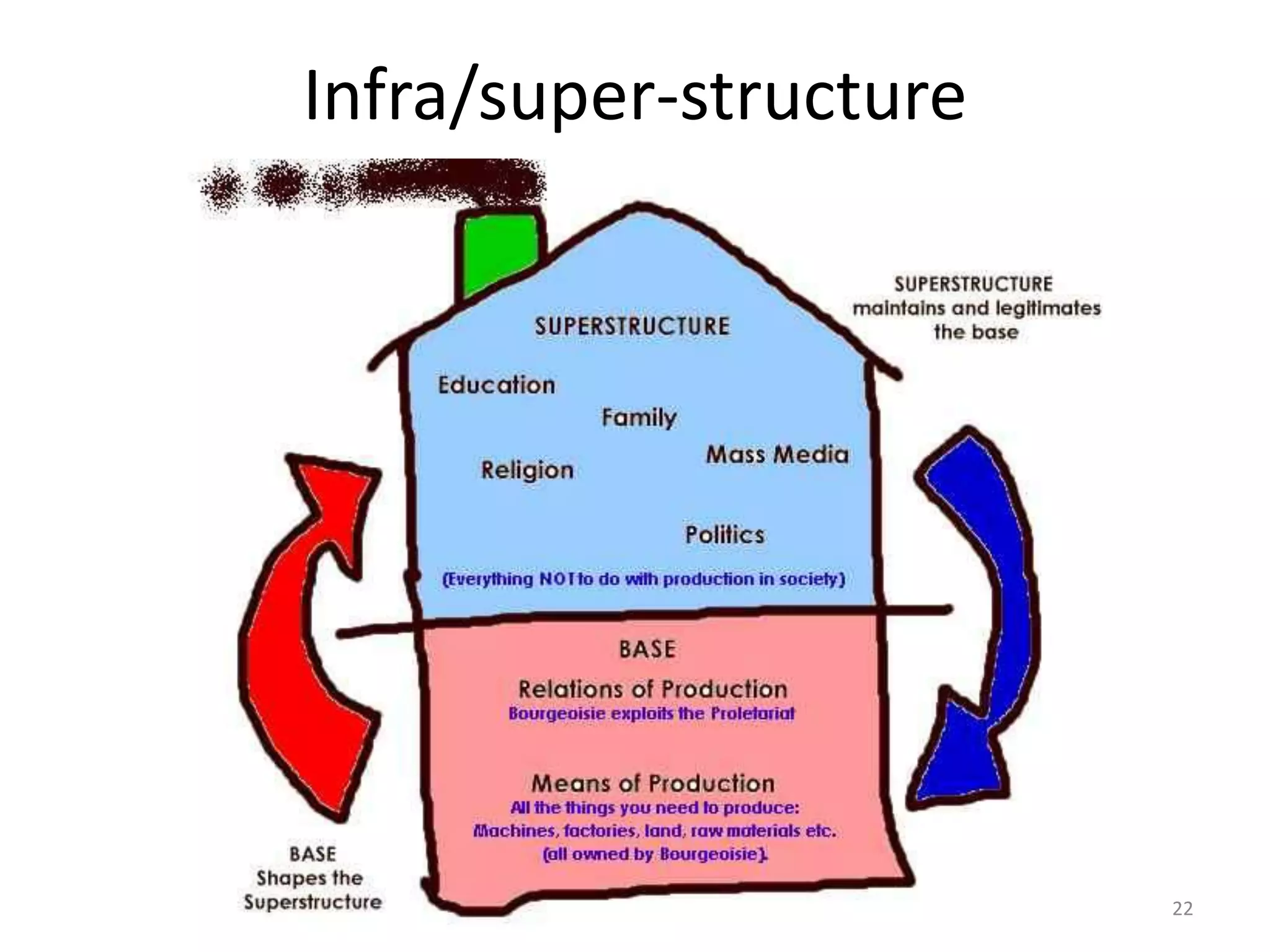
Infra/super-structure22
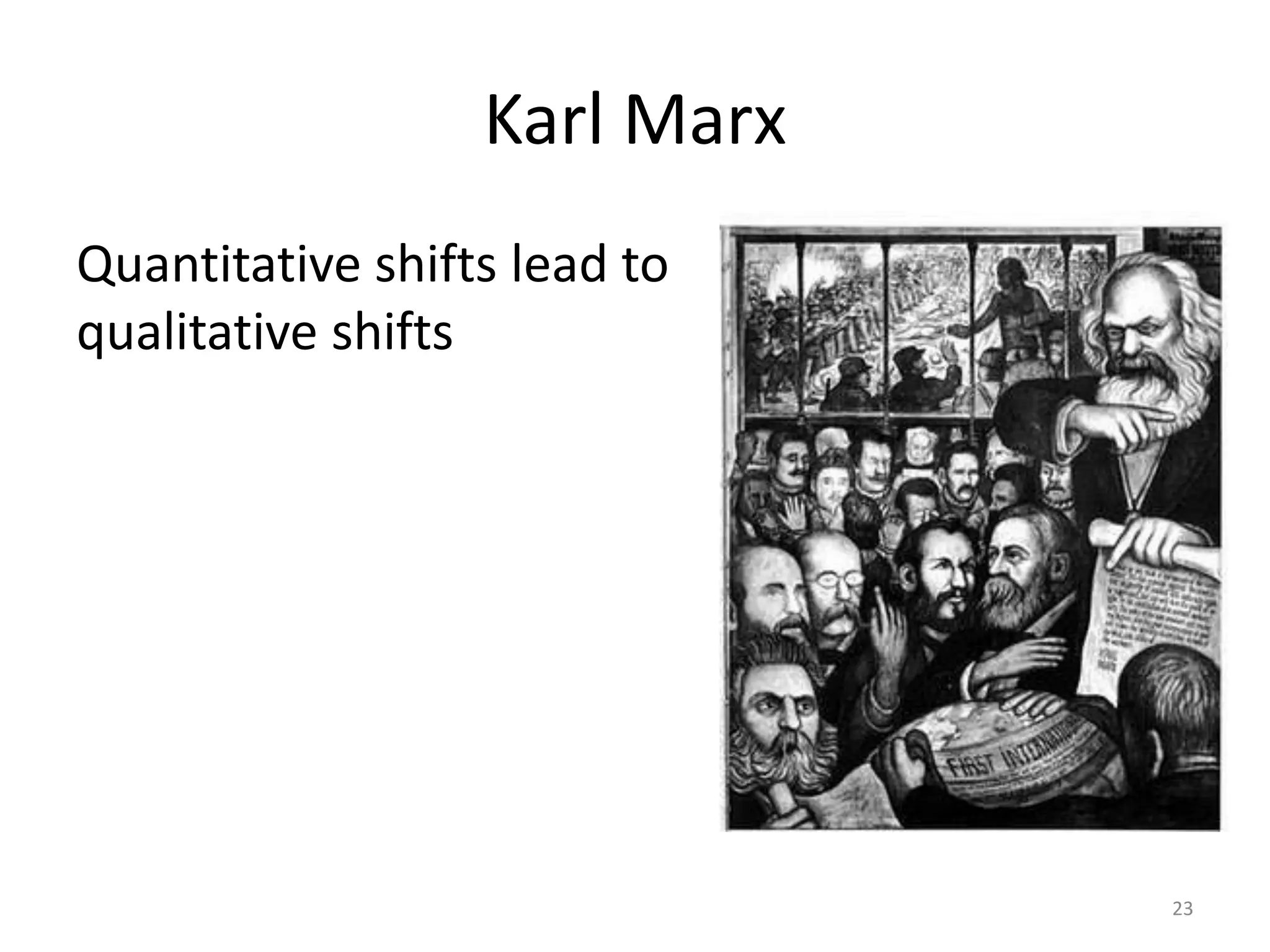
Karl MarxQuantitative shifts lead to qualitative shifts23
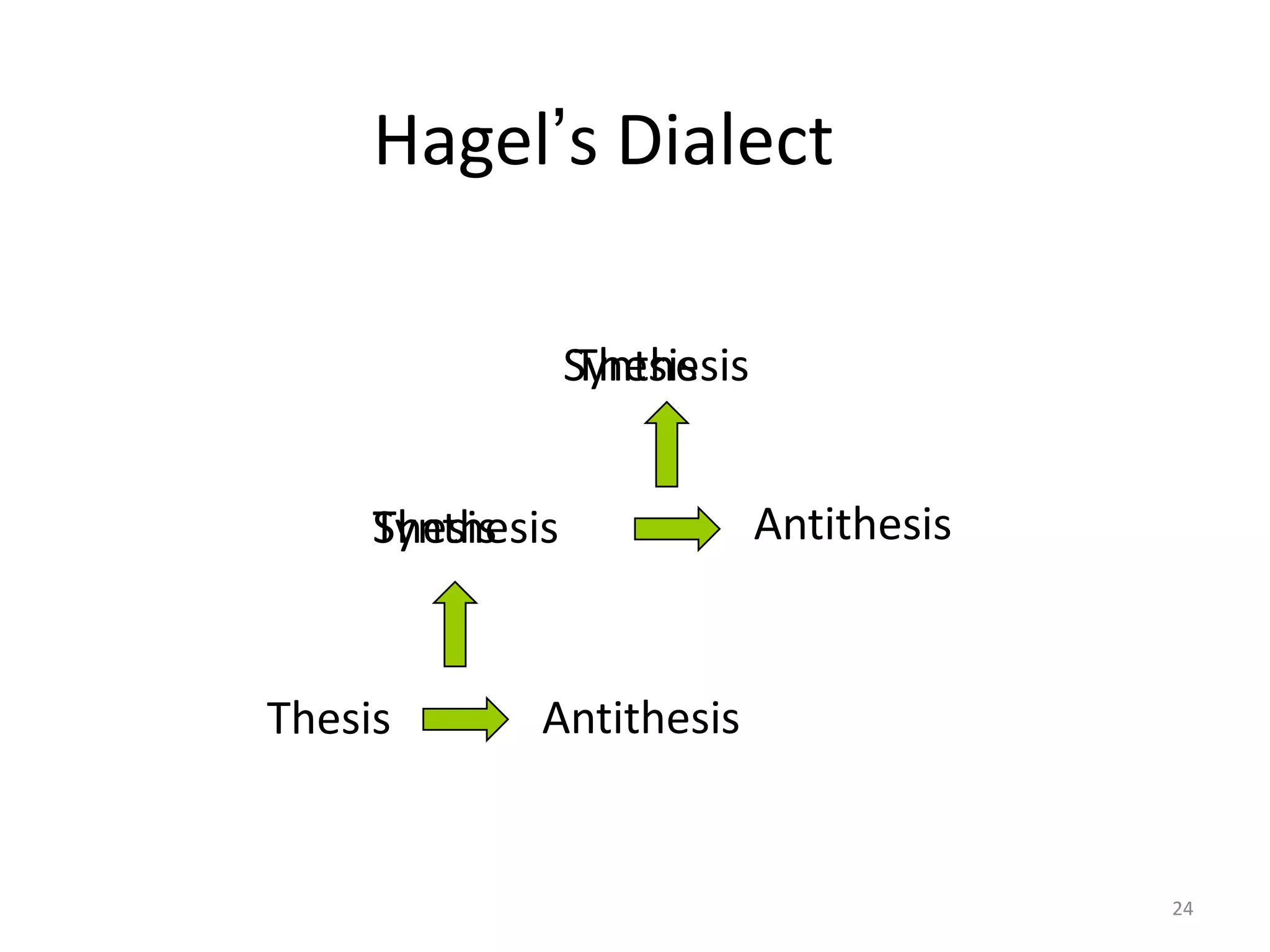
24Hagel’s DialectSynthesisThesisAntithesisSynthesisThesisAntithesisThesis
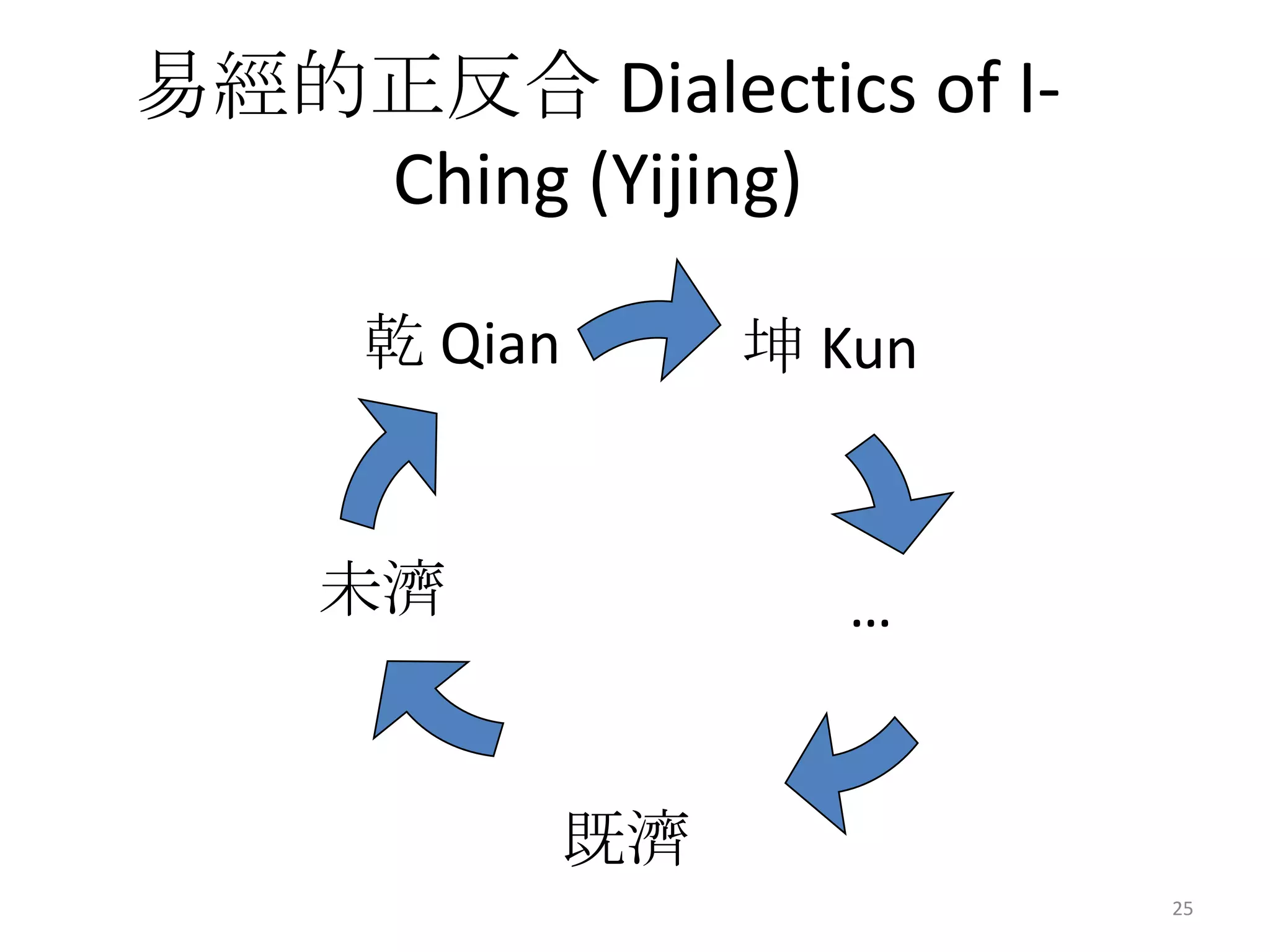
25易經的正反合 Dialectics of I-Ching (Yijing)乾 Qian坤 Kun未濟…既濟
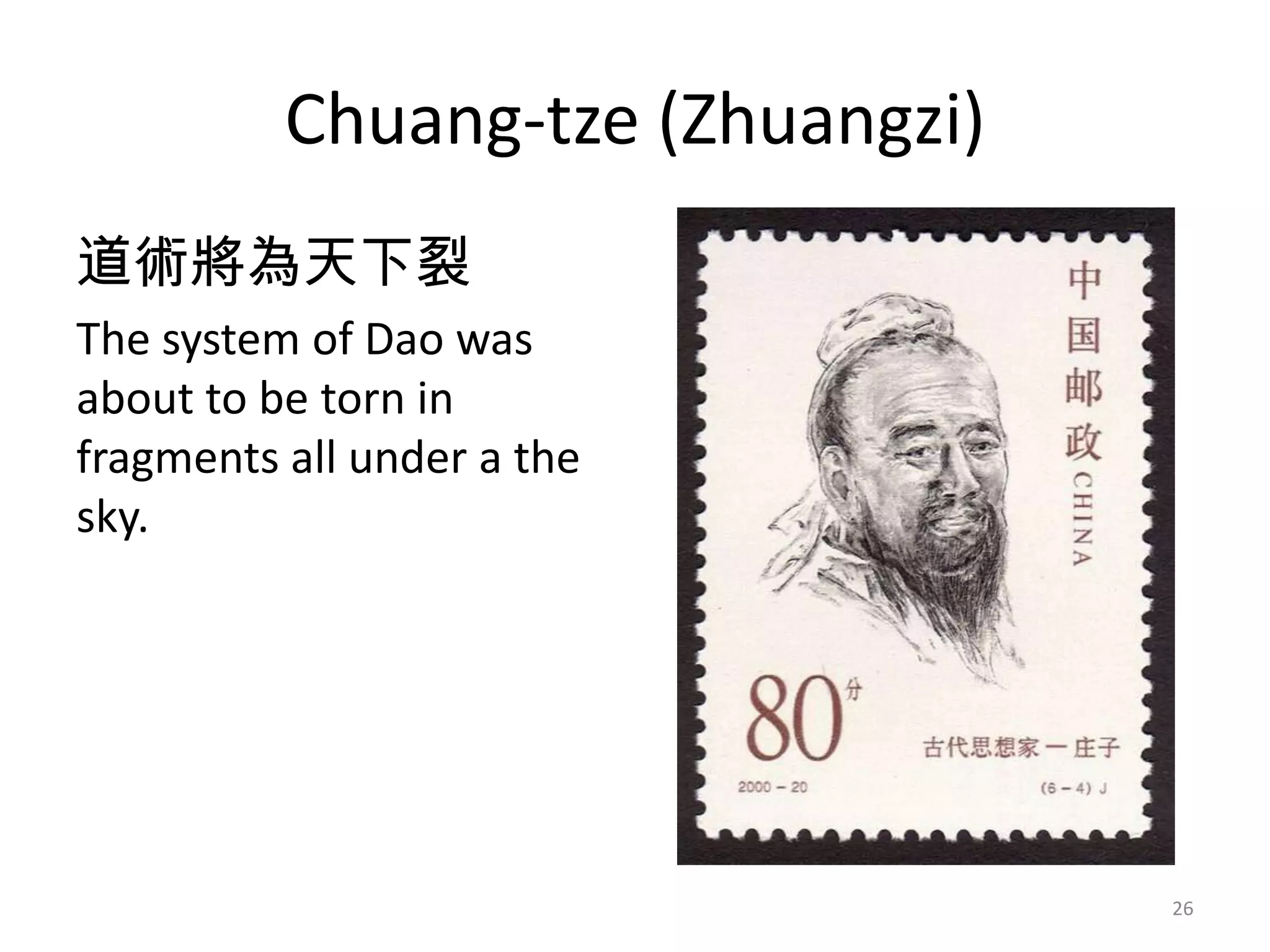
Chuang-tze (Zhuangzi)道術將為天下裂The system of Dao was about to be torn in fragments all under a the sky.26
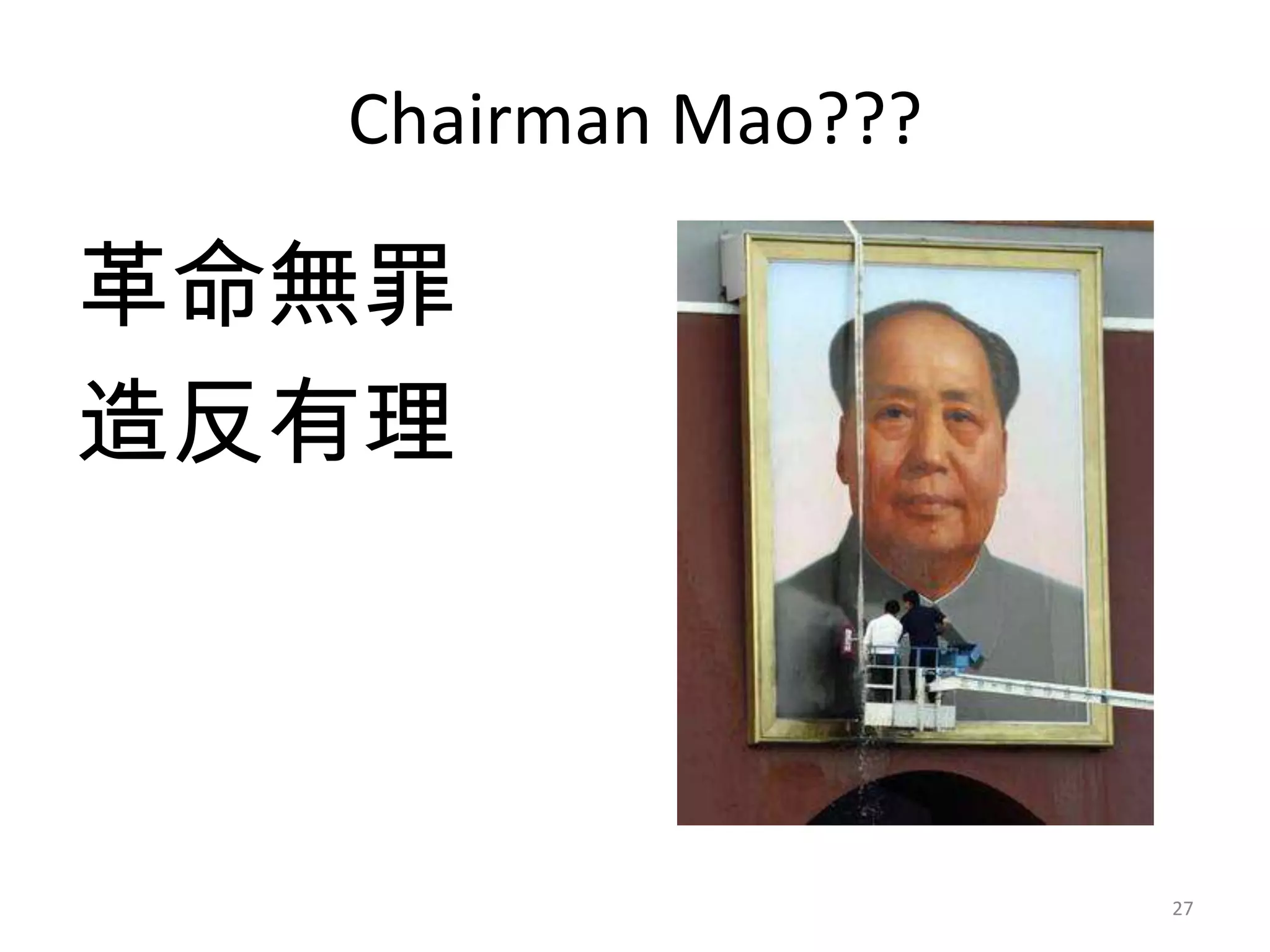
Chairman Mao???革命無罪 造反有理27
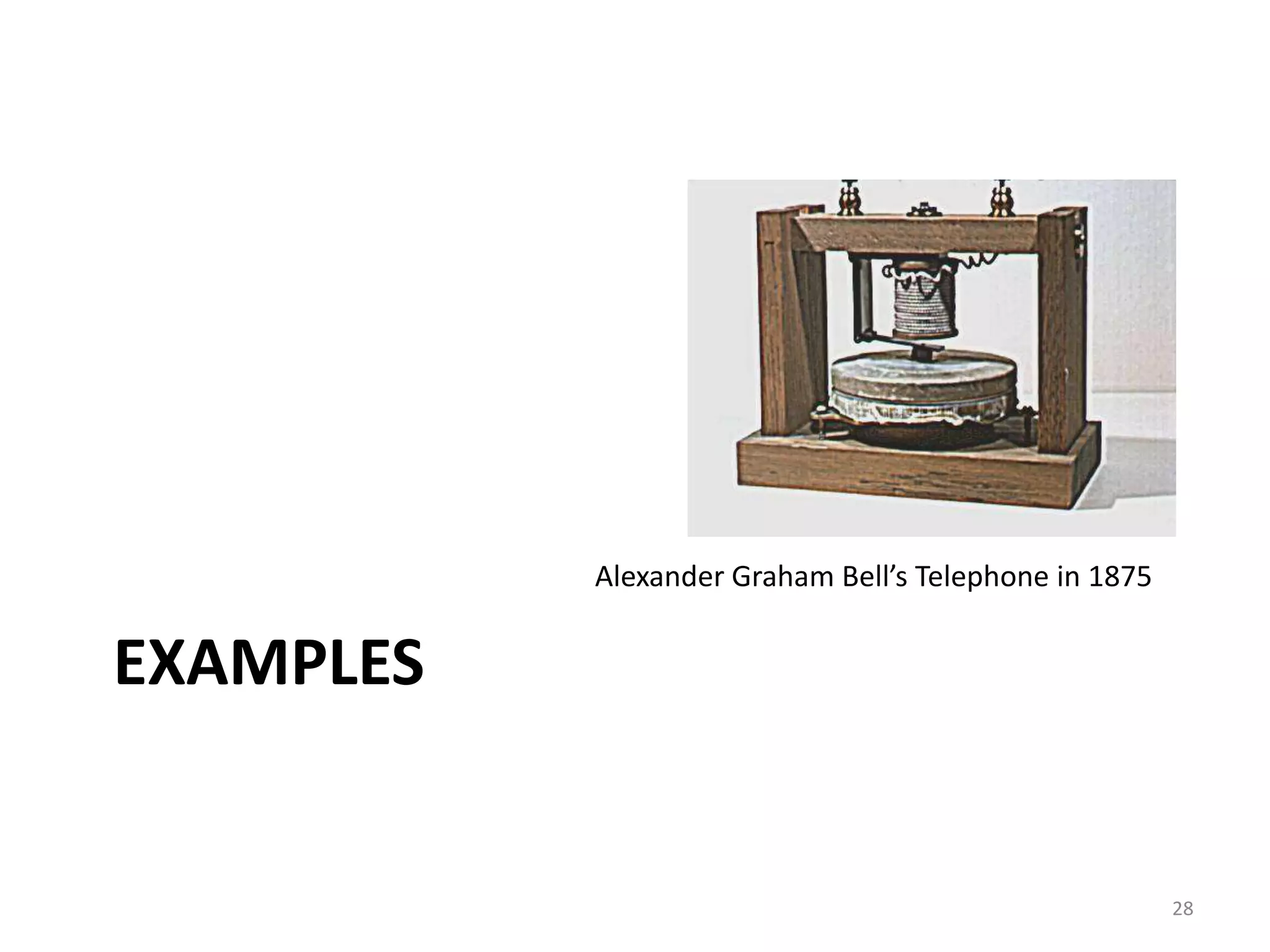
ExamplesAlexander Graham Bell’s Telephone in 187528
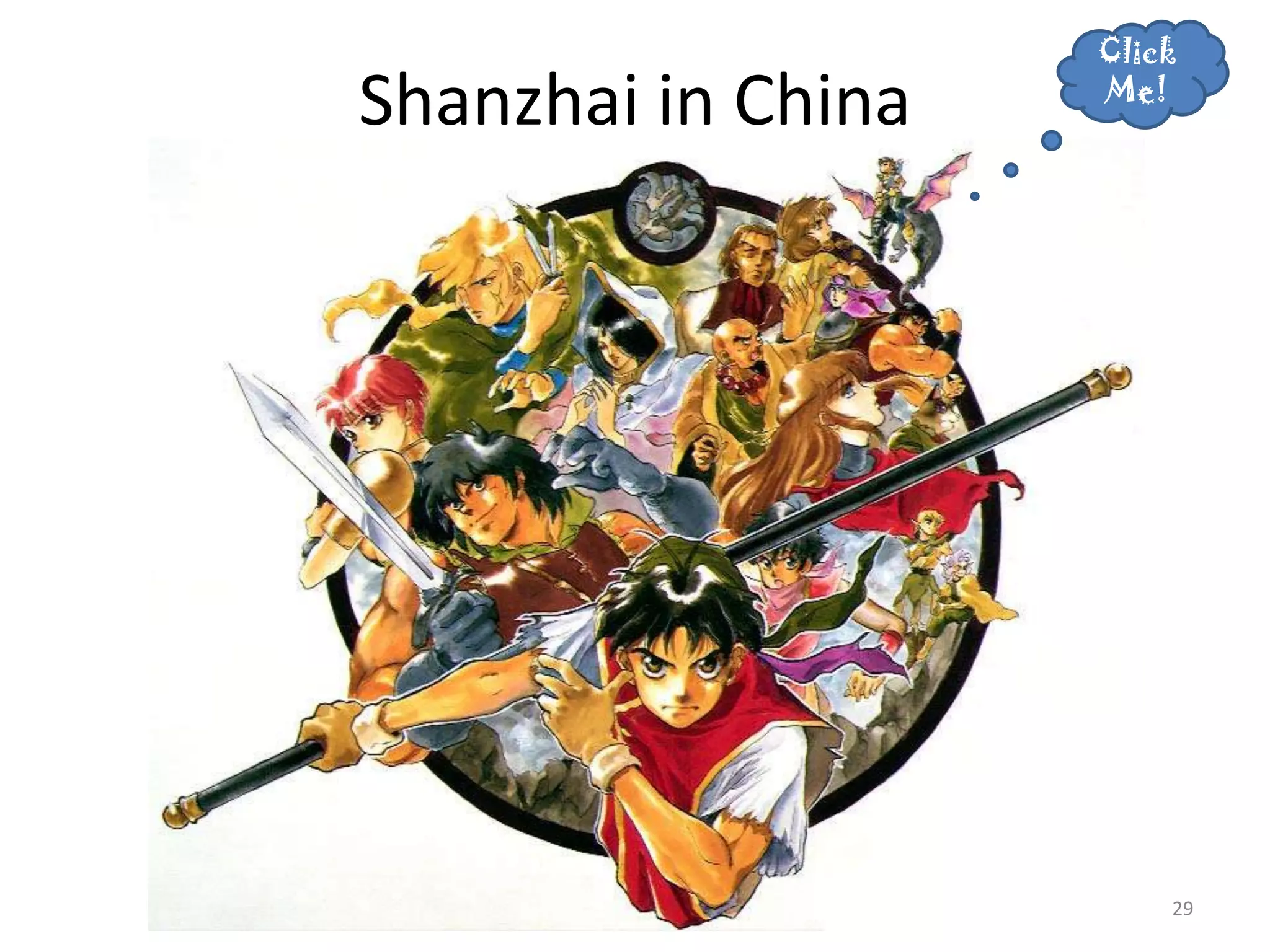
Shanzhai in China29Click Me!
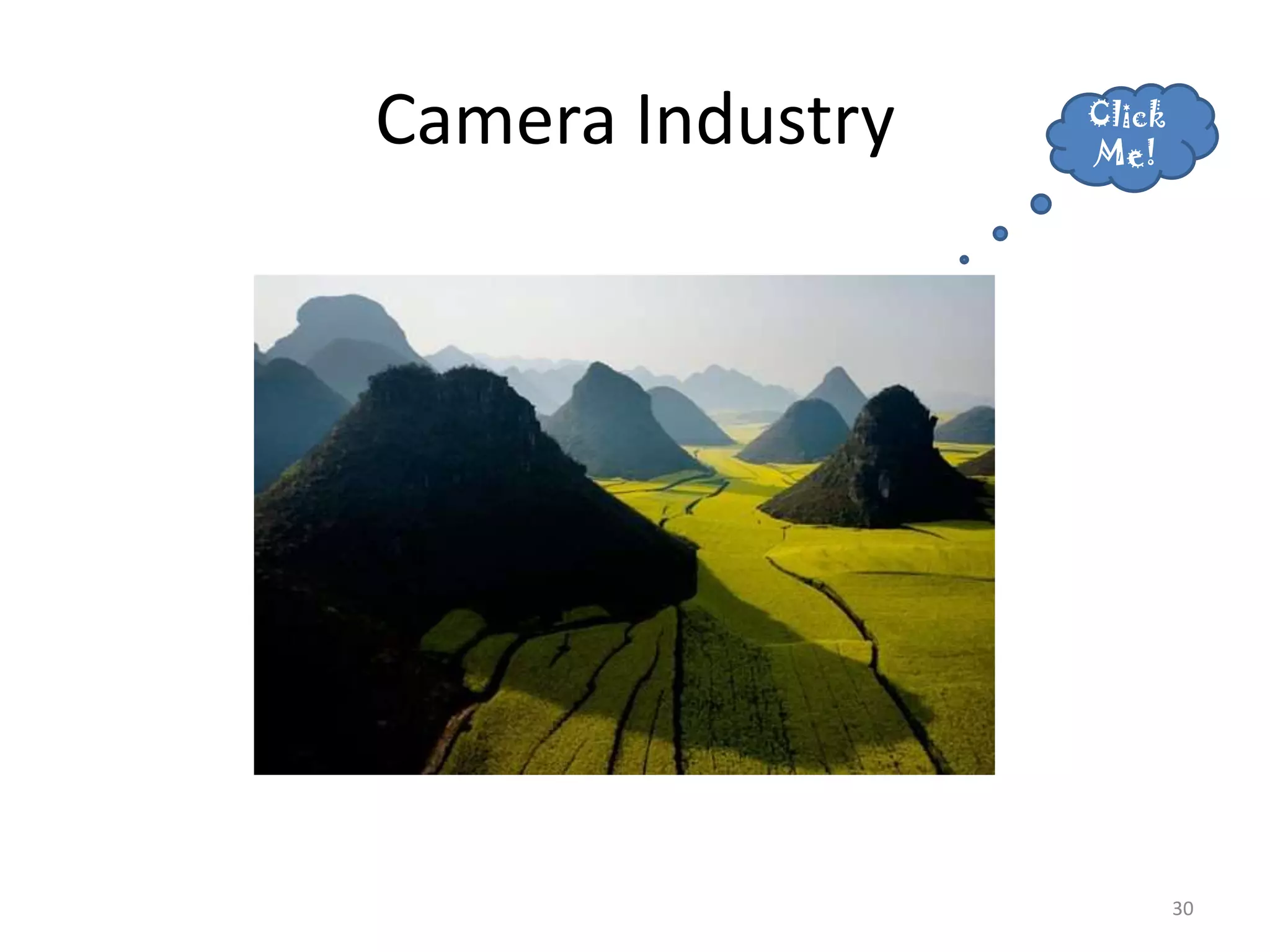
Camera Industry30Click Me!
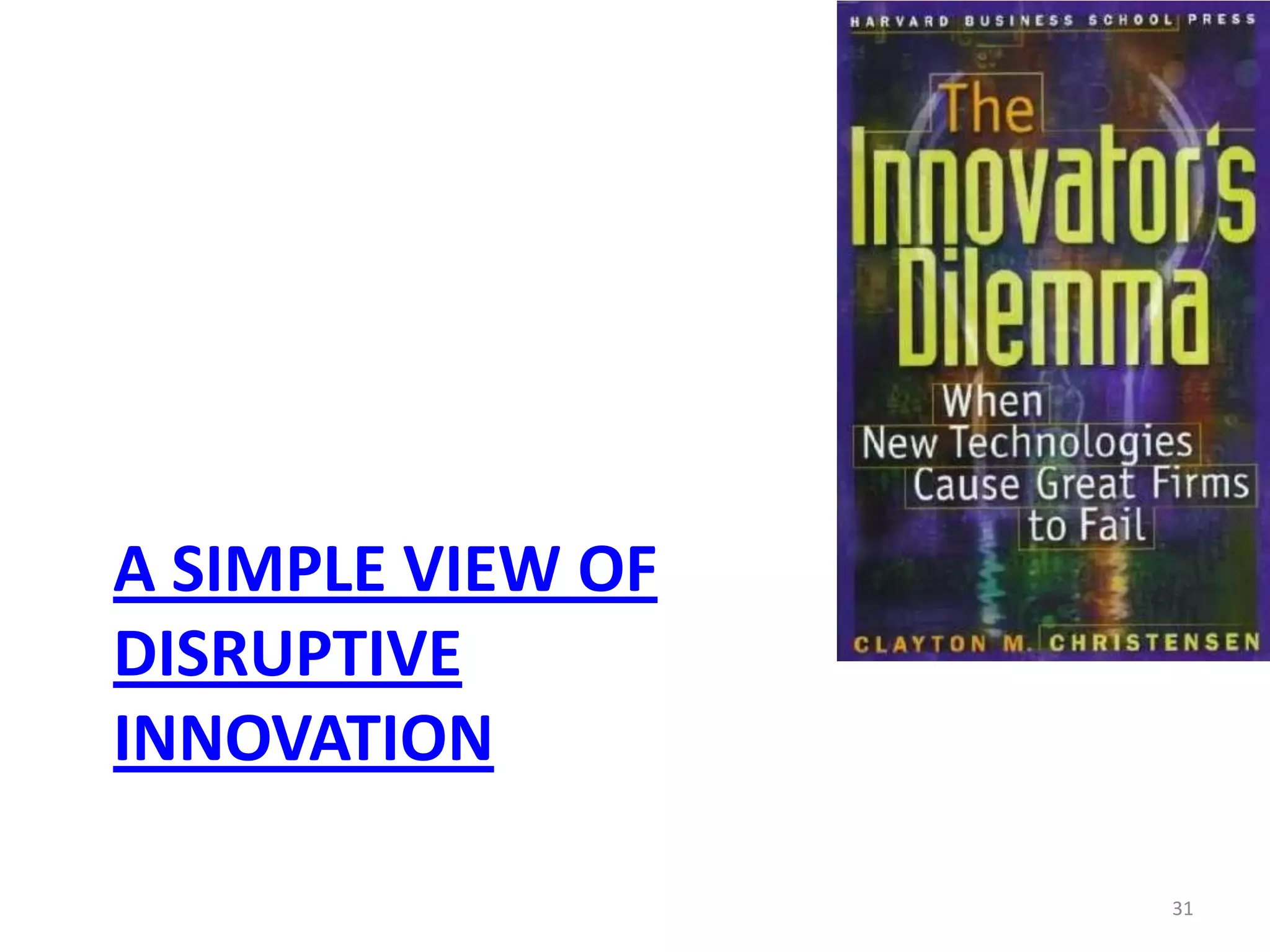
A Simple View of Disruptive Innovation31
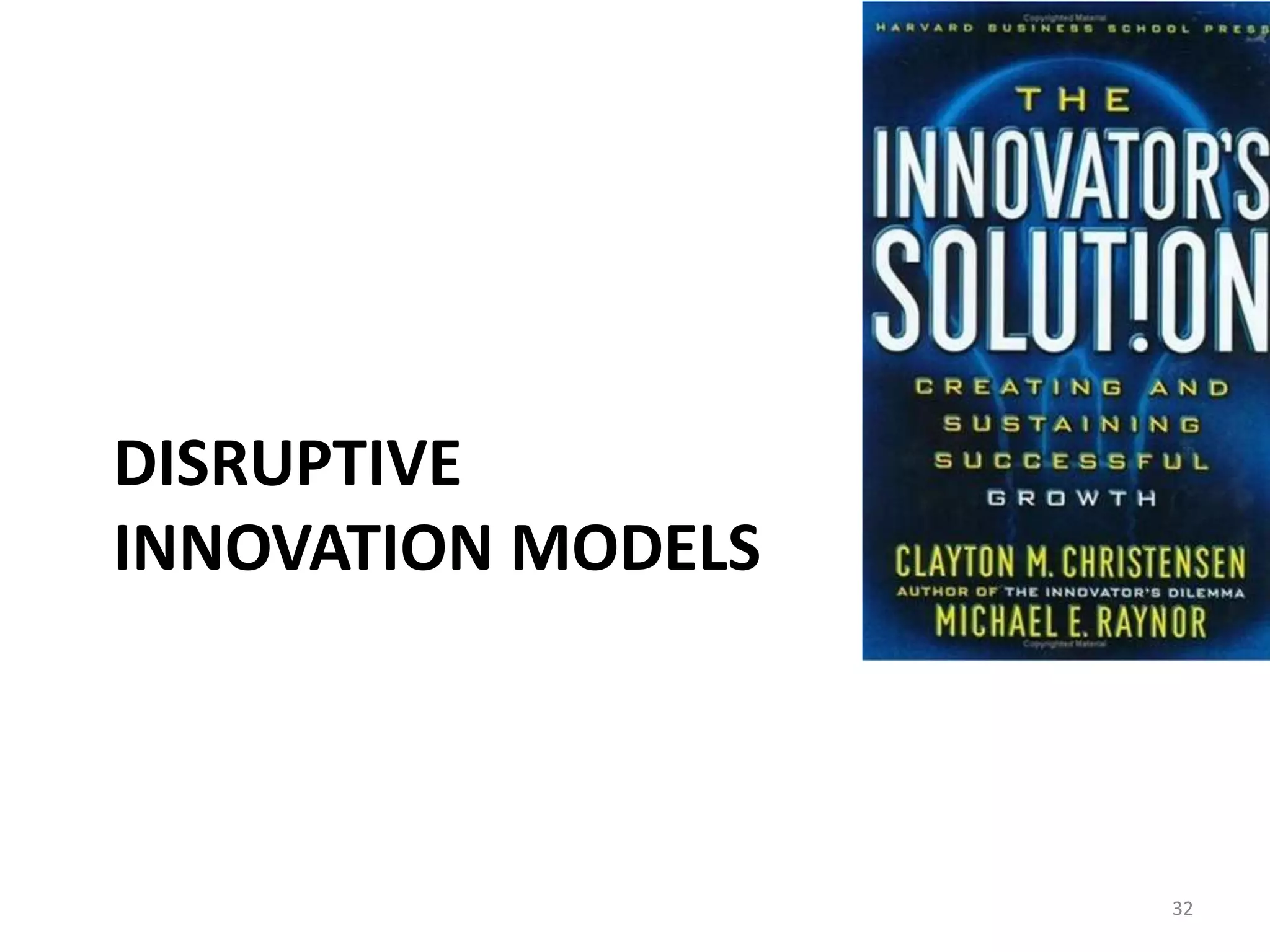
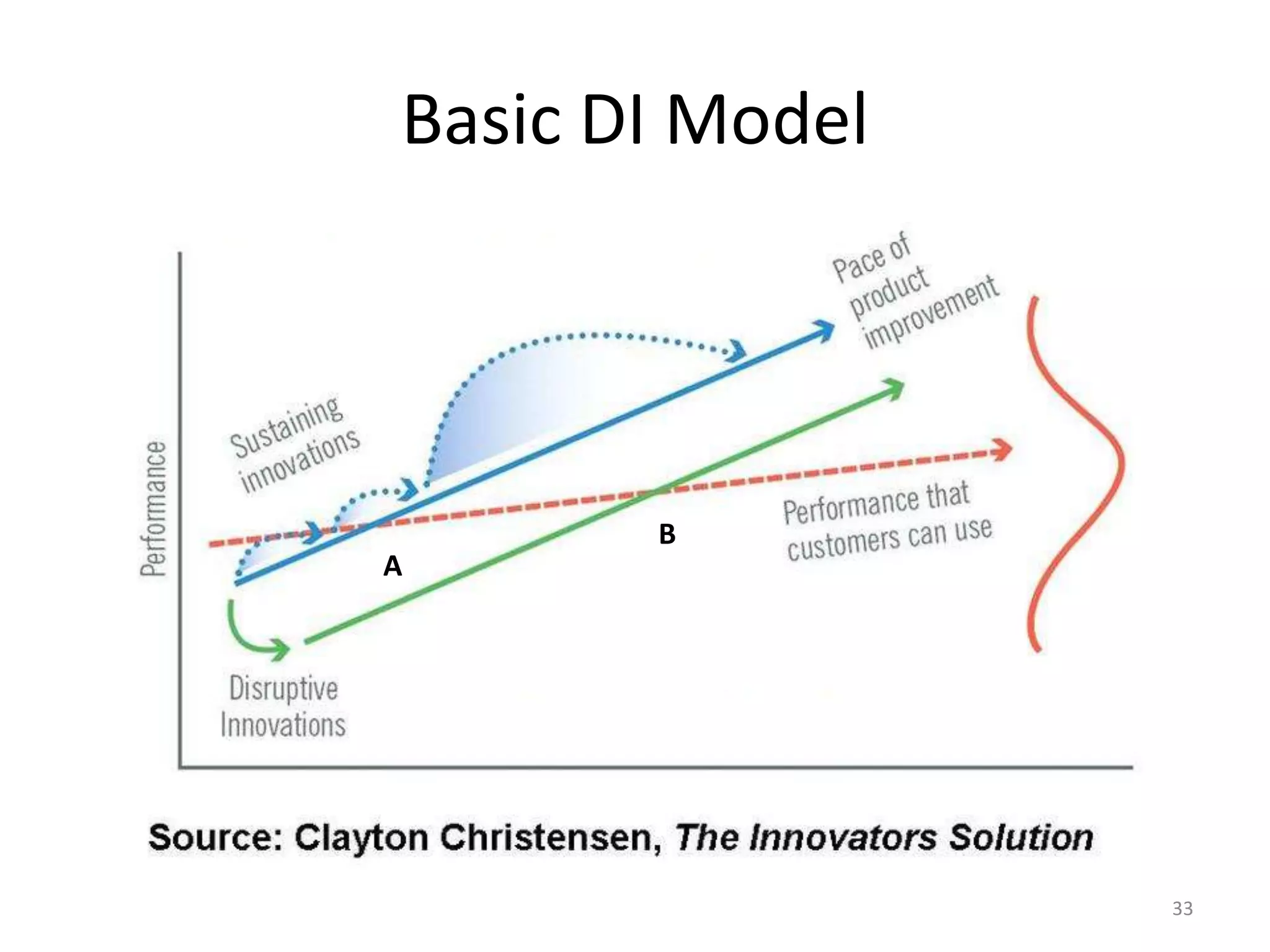
Disruptive Innovation Models32
BABasic DI Model33
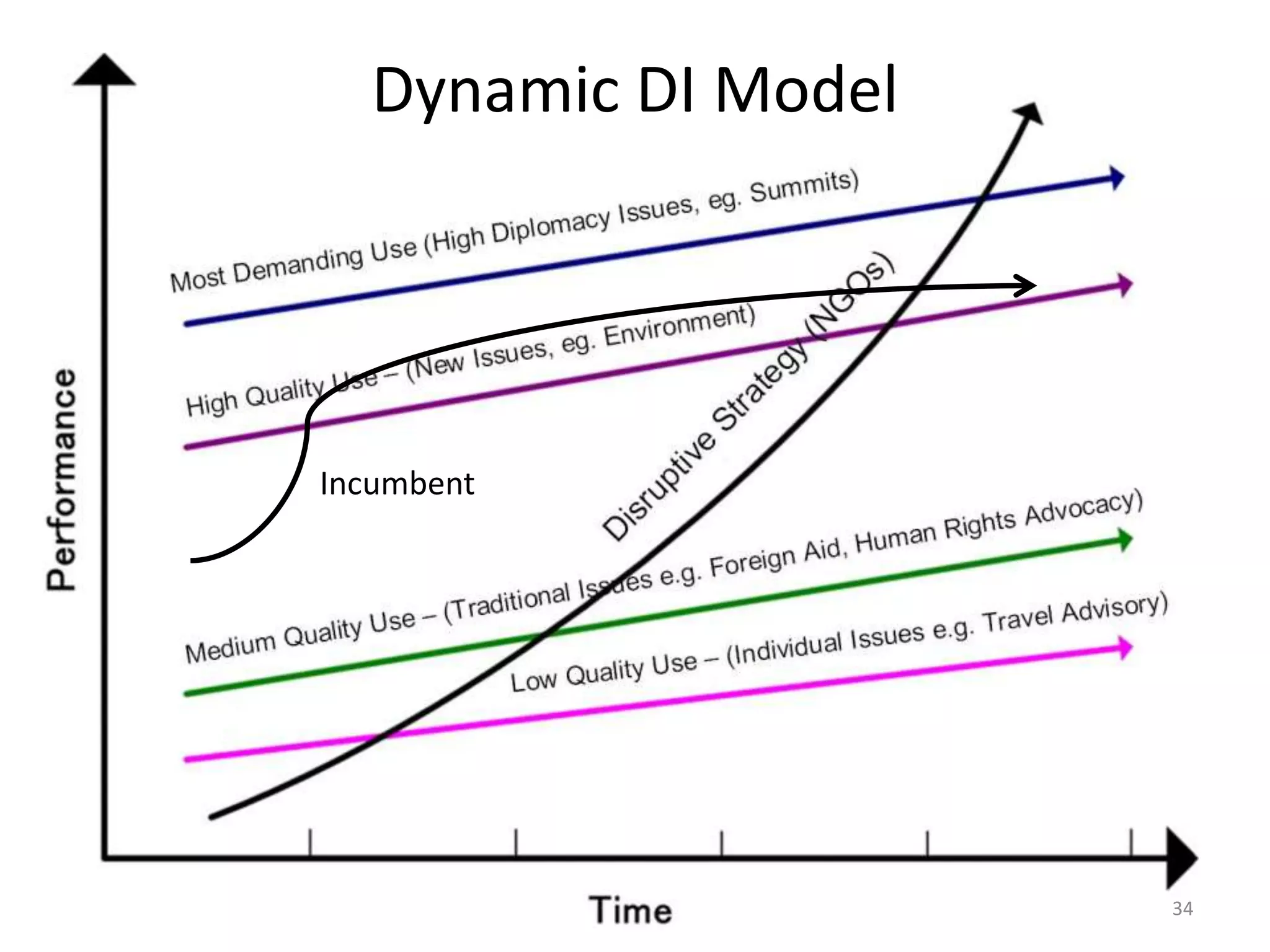
Dynamic DI ModelIncumbent34
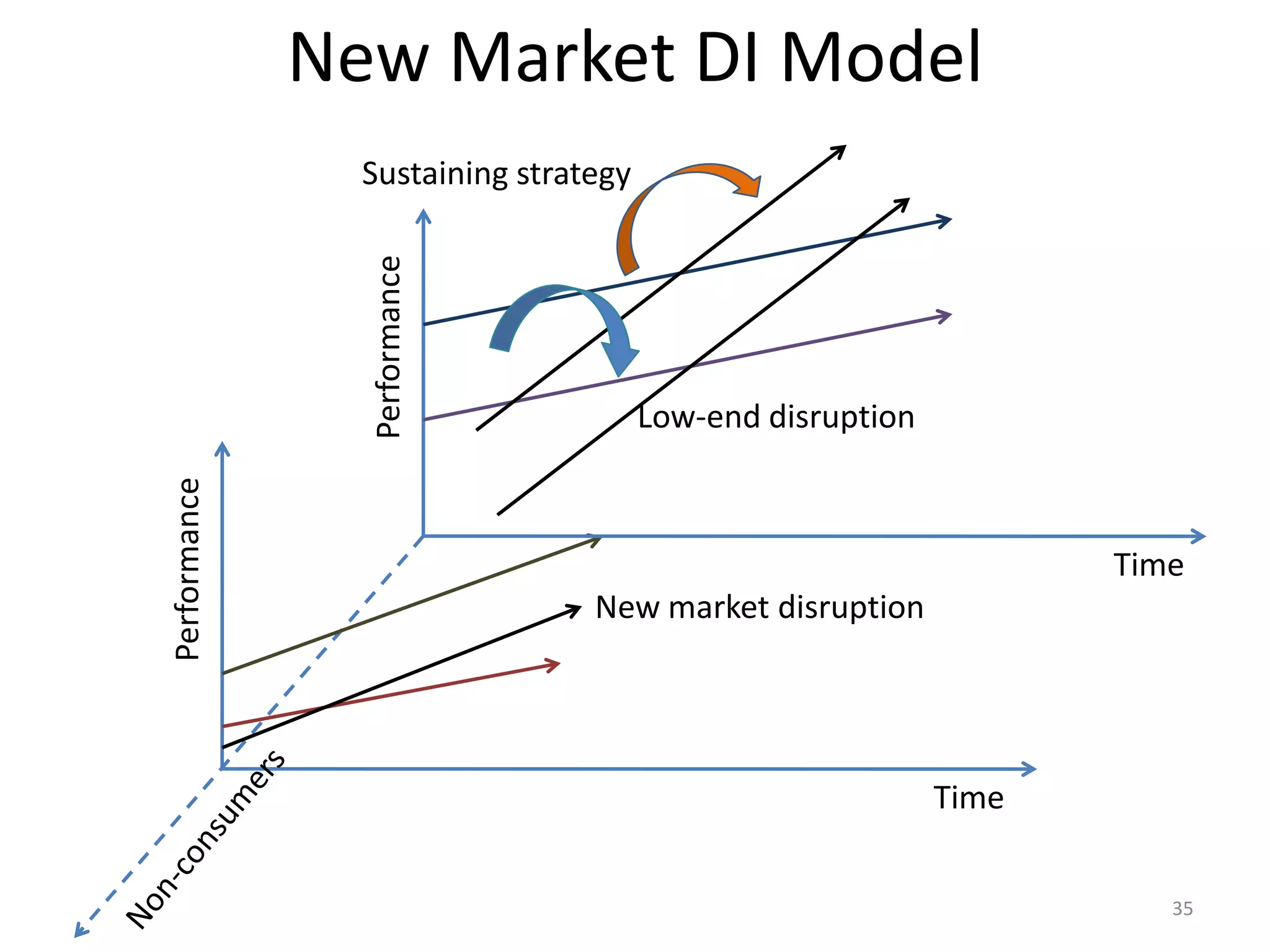
New Market DI ModelSustaining strategyPerformanceLow-end disruptionTimePerformanceNew market disruptionTimeNon-consumers35
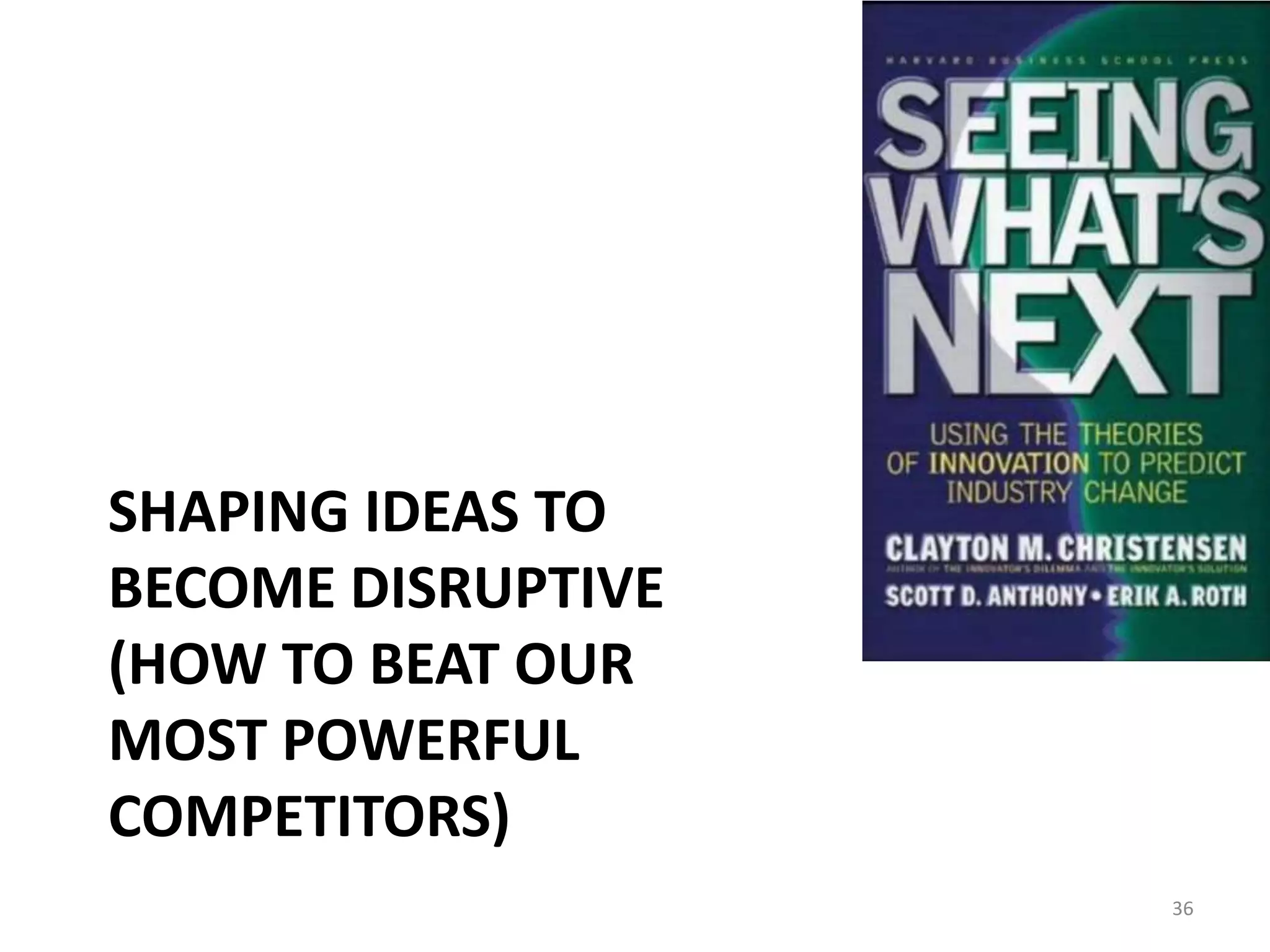
Shaping ideas to become disruptive (How to Beat Our Most Powerful Competitors)36
Explore whether the idea can become a new market disruptionIs there a large population of people who historically have not had the money, equipment, or skill to do this thing for themselves, and
as a result have gone without it altogether or have needed to pay someone with more expertise to do it for them?37
Explores the potential for a low-end disruptionAre there customers at the low end of the market who would be happy to purchase a product with less (but good enough) performance if they could get it at a lower price?
Can we create a business model that enables us to earn attractive profits at the discount prices required to win the business of these over-served customers at the low end?38
Is the innovation disruptive to all of the significant incumbent firms in the industry?If it (the innovation) appears to be sustaining to one or more significant players in the industry, then the odds will be stacked in that firm’s favor, and the entrant is unlikely to win.39
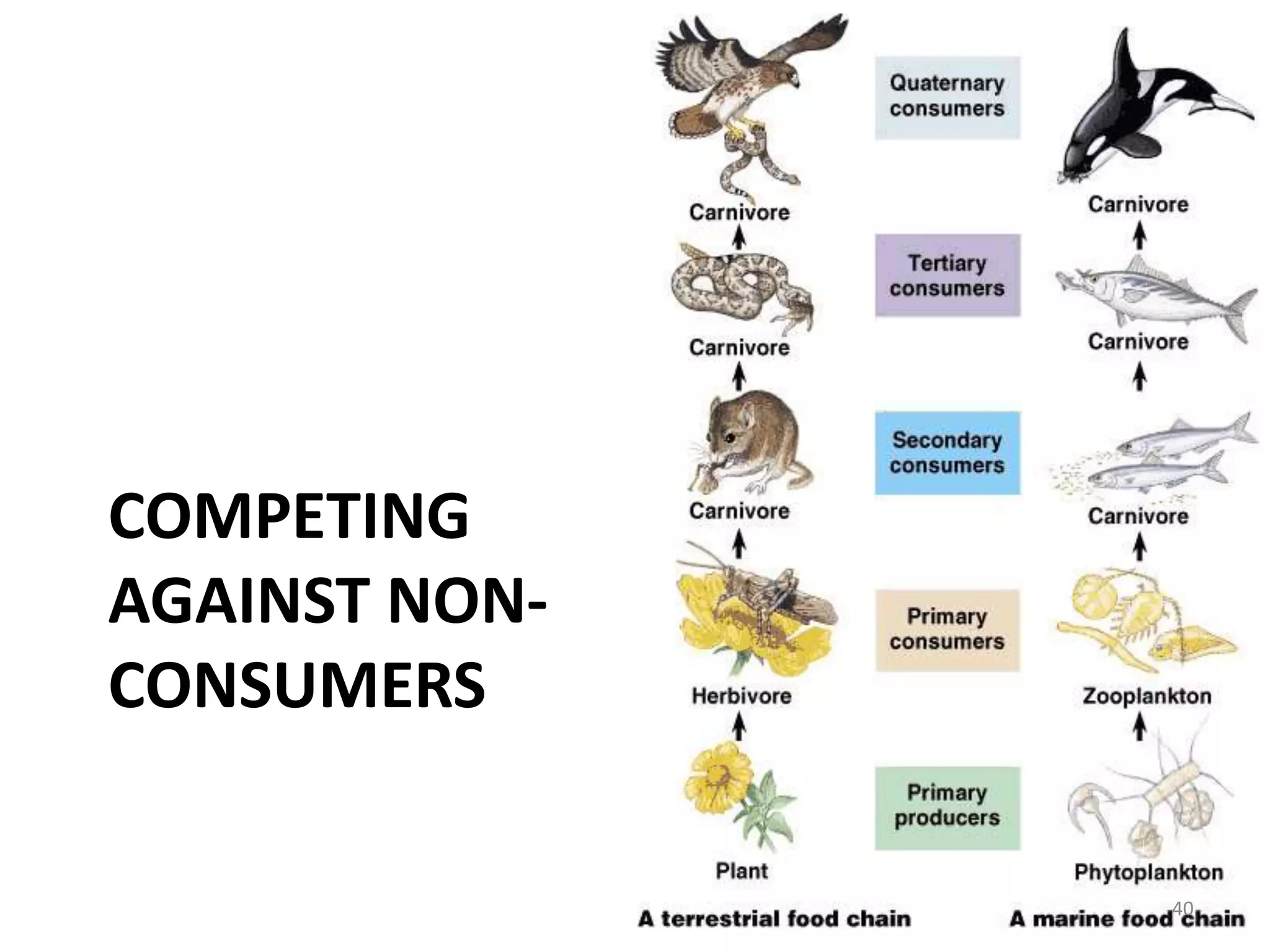
Competing Against Non-consumers40
Competing Against Non-consumptionThe logic of competing against non-consumption as the means for creating new-growth markets seems obvious.Despite this, established companies repeatedly do just the opposite.41
What Makes Competing Against Non-consumption So Hard?Not see disruption coming in.  Even if,Threat rigidity - Threat elicits more intense and energetic response than opportunity, and then focus on countering the threat to survive.42
How to Avoid Hard Non-Consumption CompetitionFirst, get top-level commitment by framing a threat as an innovation during the resource allocation process. 	ex. Newspapers embraced online editions to give existing customers additional choice43
How to Avoid Hard Non-Consumption CompetitionLater, shift responsibility for the project to an autonomous organization that can frame it as an opportunity.	ex. Place the responsibility to commercialize the disruption in an independent unit for which the innovation represents pure opportunity – newspaper’s online group44
Immelt’s approachShift power to where the growth is.Build new offerings from the ground up.Customize objectives, targets, and metrics.Build the DI unit from the ground up, like new companies. Have the DI unit report to someone high in the organization. 45

10 disruptive innovation

  • 1.
  • 2.
  • 3.
    Creative DestructionJoseph SchumpeterIncapitalism, innovative entry by entrepreneurs was the force that sustained long-term economic growth,even as it destroyed the value of established companies that enjoyed some degree of monopoly power.38 February 1883 – 8 January 1950
  • 4.
    Creative DestructionSuccessful innovationis normally a source of temporary market power, eroding the profits and position of old firms, yet ultimately succumbing to the pressure of new inventions commercialised by competing entrants. 4
  • 5.
    The Use ofKnowledge in SocietyFriedrich von HayekTwo types of knowledge: scientific knowledge, “knowledge of the particular circumstances of time and place”5
  • 6.
    The Use ofKnowledge in SocietyPractically every individual has some advantage over all others in that he possesses unique information of which beneficial use might be made”68 May 1899 – 23 March 1992
  • 7.
    The Use ofKnowledge in Societybecause every individual only processes a small piece of the puzzle, no central planner can ever run the economy efficiently.7
  • 8.
    The Use ofKnowledge in SocietyMarket mechanisms serve "to share and synchronize local and personal knowledge, allowing society's members to achieve diverse, complicated ends through a principle of spontaneous self-organization."88 May 1899 – 23 March 1992
  • 9.
    The greatest dangerto liberty today comes from the men who are most needed and most powerful in modern government, namely, the efficient expert administrators exclusively concerned with what they regard as the public good.Hayek and Taiwan (and China)9inefficient
  • 10.
  • 11.
    Paradigm ShiftThomas Kuhn(July 18, 1922 – June 17, 1996)A scientific revolution occurs when scientists encounter anomalies which cannot be explained by the universally accepted paradigm.11
  • 12.
    Paradigm ShiftWhen enoughsignificant anomalies have accrued against a current paradigm, the scientific discipline is thrown into a state of crisis, according to Kuhn.12
  • 13.
    Paradigm Shift13for early20th century physics, the transition between the Maxwellianelectromagnetic worldview and the EinsteinianRelativistic worldview was neither instantaneous nor calm.
  • 14.
    Paradigm Shift14"a newscientific truth does not triumph by convincing its opponents and making them see the light, but rather because its opponents eventually die, and a new generation grows up that is familiar with it.“Thomas Kuhn quoting Max Planck
  • 15.
  • 16.
    WikipediaOne can't understandmy ideas about Wikipedia without understanding Hayek.When information is dispersed (as it always is), decisions are best left to those with the most local knowledge16
  • 17.
  • 18.
    Age of DiscontinuityInan “age of discontinuity,” as Drucker called the currentera, entrepreneurs couldfindsignificantopportunitiesto create or transform organizations if they were willing to get ahead of societal changes.18
  • 19.
    Age of DiscontinuityDruckersaid that the best way to predict the future is to invent it. Discontinuities provided gaps in society that could be filled with creativity. Innovators should be attuned to unmet needs that did not yet show up in market research.19
  • 20.
    Михаил Александрович БакунинMikhailAlexandrovich BakuninThe passion for destruction is also a creative passion.20
  • 21.
  • 22.
  • 23.
    Karl MarxQuantitative shiftslead to qualitative shifts23
  • 24.
  • 25.
    25易經的正反合 Dialectics ofI-Ching (Yijing)乾 Qian坤 Kun未濟…既濟
  • 26.
    Chuang-tze (Zhuangzi)道術將為天下裂The systemof Dao was about to be torn in fragments all under a the sky.26
  • 27.
  • 28.
  • 29.
  • 30.
  • 31.
    A Simple Viewof Disruptive Innovation31
  • 32.
  • 33.
  • 34.
  • 35.
    New Market DIModelSustaining strategyPerformanceLow-end disruptionTimePerformanceNew market disruptionTimeNon-consumers35
  • 36.
    Shaping ideas tobecome disruptive (How to Beat Our Most Powerful Competitors)36
  • 37.
    Explore whether theidea can become a new market disruptionIs there a large population of people who historically have not had the money, equipment, or skill to do this thing for themselves, and
  • 38.
    as a resulthave gone without it altogether or have needed to pay someone with more expertise to do it for them?37
  • 39.
    Explores the potentialfor a low-end disruptionAre there customers at the low end of the market who would be happy to purchase a product with less (but good enough) performance if they could get it at a lower price?
  • 40.
    Can we createa business model that enables us to earn attractive profits at the discount prices required to win the business of these over-served customers at the low end?38
  • 41.
    Is the innovationdisruptive to all of the significant incumbent firms in the industry?If it (the innovation) appears to be sustaining to one or more significant players in the industry, then the odds will be stacked in that firm’s favor, and the entrant is unlikely to win.39
  • 42.
  • 43.
    Competing Against Non-consumptionThelogic of competing against non-consumption as the means for creating new-growth markets seems obvious.Despite this, established companies repeatedly do just the opposite.41
  • 44.
    What Makes CompetingAgainst Non-consumption So Hard?Not see disruption coming in. Even if,Threat rigidity - Threat elicits more intense and energetic response than opportunity, and then focus on countering the threat to survive.42
  • 45.
    How to AvoidHard Non-Consumption CompetitionFirst, get top-level commitment by framing a threat as an innovation during the resource allocation process. ex. Newspapers embraced online editions to give existing customers additional choice43
  • 46.
    How to AvoidHard Non-Consumption CompetitionLater, shift responsibility for the project to an autonomous organization that can frame it as an opportunity. ex. Place the responsibility to commercialize the disruption in an independent unit for which the innovation represents pure opportunity – newspaper’s online group44
  • 47.
    Immelt’s approachShift powerto where the growth is.Build new offerings from the ground up.Customize objectives, targets, and metrics.Build the DI unit from the ground up, like new companies. Have the DI unit report to someone high in the organization. 45
  • 48.
    Why DI IsEven More Important Today?46
  • 49.
    Two Articles fromHBRThe world is in constant disruption – new technologies create new platformsJohn Hagel III, John Seely Brown, and Lang Davison, “Shaping Strategy in a World of Constant Disruption,” Harvard Business Review, October 2008.The big emerging markets provide good chance for disruptive technologiesJeffrey R. Immelt, Vijay Govindarajan, and Chris Trimble, “How GE Is Disrupting Itself?” Harvard Busness Review, October 2009.47