Mehdi Mahfoud
Mehdi Mahfoud
 CEO & Founder ofTassiliConsultancy &Training, Libya
 Member ofAdvisory Board, MyTrusted will, USA
 MSP Practitioner. Egypt
 PRINCE2 Practitioner, UK
 MPM Master Project Manager, AAPM, USA
 CSMA Certified Strategic Management Analyst IMCB, USA
 Member of Presidential board ofAAPM, USA
 Member of international Board of standards IBS, USA
 MSc Project Management Lancaster University Management school (LUMS 6*), UK
 BSc Petroleum Engineering. Libya.
 Previously Portfolio Manager ofAurelia, Bluemoon Properties, Egypt
 Head of business and projects department at PESSING Libya,
 Previously Special Advisor to H.E. Ambassador of South Korea in Libya on Energy,
Economy and PD.
 Extensive experience in Program & Project management consultancy, organizational
development, Risk & business analysis, Libya, United Kingdom and Egypt
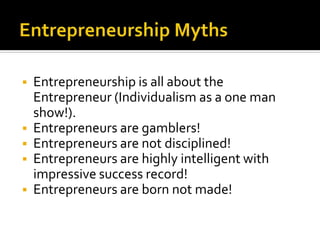
▪ Entrepreneurship is all about the
Entrepreneur (Individualism as a one man
show!).
▪ Entrepreneurs are gamblers!
▪ Entrepreneurs are not disciplined!
▪ Entrepreneurs are highly intelligent with
impressive success record!
▪ Entrepreneurs are born not made!
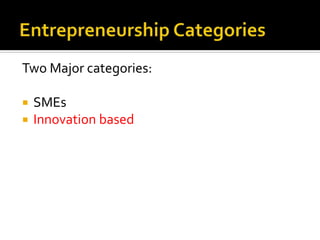
Two Major categories:
 SMEs
 Innovation based
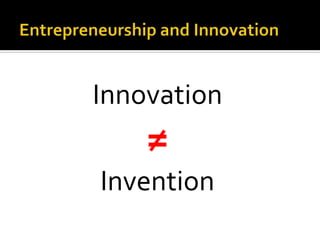
Innovation
≠
Invention
Has characteristics of both SMEs and Innovation
driven entrepreneurship
▪ Target (mainly locally and occasionally global)
▪ Innovation driven (serving community needs)
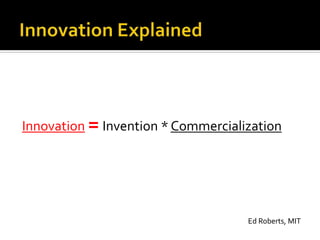
Innovation = Invention * Commercialization
Ed Roberts, MIT
Innovation
=
Entrepreneurship
▪ Incremental Innovation.
▪ Business model Innovation.
▪ Process Innovation.
▪ Red ocean innovation.
▪ Blue ocean innovation.
▪ Sustainable Innovation.
▪ Frugal Innovation.
▪ Open-Source Innovation.
▪ Disruptive Innovation.
▪ Radical Innovation.
 Choose an existing model (yours or others),
 Analyze existing innovation strategy,
 explore one type or a combination of different
innovation types (justify your choice).
 Write your recommendations
(roadmap to reach your thoughts if any)
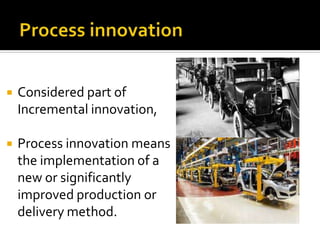
 Considered part of
Incremental innovation,
 Process innovation means
the implementation of a
new or significantly
improved production or
delivery method.
 Applicable to the known market
space, i.e. all the industries in
existence today. In red oceans,
industry boundaries are defined and
accepted, and the competitive rules
of the game are known.
 Companies try to outperform their
rivals to grab a greater share of
existing demand.
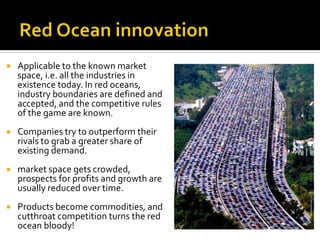
 market space gets crowded,
prospects for profits and growth are
usually reduced over time.
 Products become commodities, and
cutthroat competition turns the red
ocean bloody!
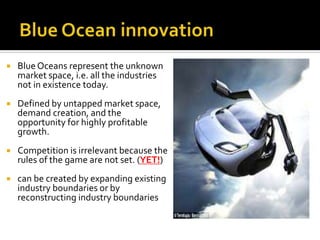
 Blue Oceans represent the unknown
market space, i.e. all the industries
not in existence today.
 Defined by untapped market space,
demand creation, and the
opportunity for highly profitable
growth.
 Competition is irrelevant because the
rules of the game are not set. (YET!)
 can be created by expanding existing
industry boundaries or by
reconstructing industry boundaries
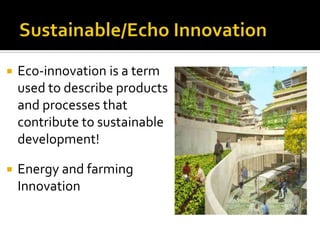
 Eco-innovation is a term
used to describe products
and processes that
contribute to sustainable
development!
 Energy and farming
Innovation
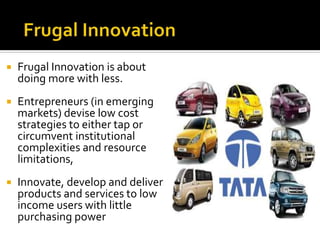
 Frugal Innovation is about
doing more with less.
 Entrepreneurs (in emerging
markets) devise low cost
strategies to either tap or
circumvent institutional
complexities and resource
limitations,
 Innovate, develop and deliver
products and services to low
income users with little
purchasing power
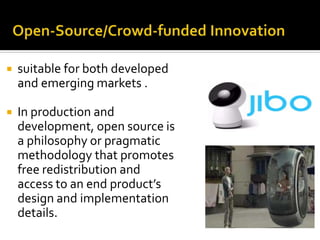
 suitable for both developed
and emerging markets .
 In production and
development, open source is
a philosophy or pragmatic
methodology that promotes
free redistribution and
access to an end product’s
design and implementation
details.
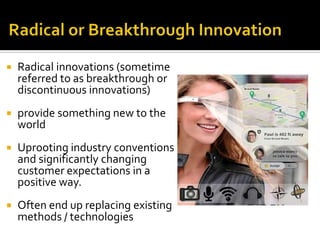
 Radical innovations (sometime
referred to as breakthrough or
discontinuous innovations)
 provide something new to the
world
 Uprooting industry conventions
and significantly changing
customer expectations in a
positive way.
 Often end up replacing existing
methods / technologies
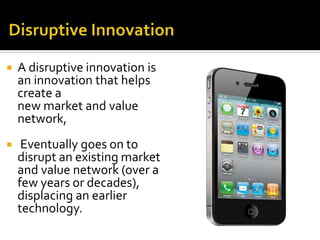
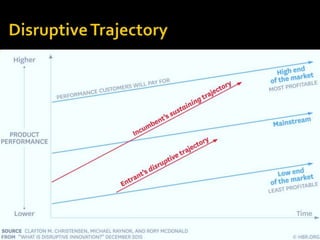
 A disruptive innovation is
an innovation that helps
create a
new market and value
network,
 Eventually goes on to
disrupt an existing market
and value network (over a
few years or decades),
displacing an earlier
technology.
“ Many researchers, writers, and consultants
use ‘disruptive innovation’ to describe any
situation in which an industry is shaken up
and previously successful incumbents
stumble. But that’s much too broad a usage.”
Clayton Christensen, HBR December 2015
 Toyota
 Tesla
 Uber
 Broke into the market
with economy
models then moved
up market with luxury
vehicles
 Initially: No
 Entered the market
with luxury vehicles
 Now: Maybe Disrupted
itself with planned low
cost offerings that are
still high quality
 “Disrupted” an
already low-market
industry with a
quality product to
start
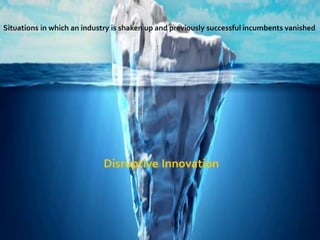
Situations in which an industry is shaken up and previously successful incumbents vanished
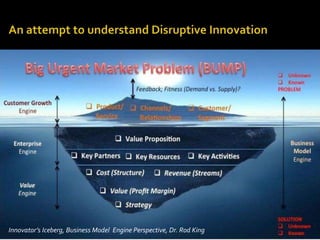
Innovator’s Iceberg, Business Model Engine Perspective, Dr. Rod King
Thank You
If you would like to explore our top corporate and business solutions or redefining your
organization’s competence or strategies of growth , let us hear from you!
OUR SUCCESS ISYOURS
www.TassiliLibya.com
Info@TassiliLibya.com
+218 21 723 44 94 /+218 91 101 16 95 / +218 91 781 14 18

Understanding disruptive innovation

  • 1.
  • 2.
     CEO &Founder ofTassiliConsultancy &Training, Libya  Member ofAdvisory Board, MyTrusted will, USA  MSP Practitioner. Egypt  PRINCE2 Practitioner, UK  MPM Master Project Manager, AAPM, USA  CSMA Certified Strategic Management Analyst IMCB, USA  Member of Presidential board ofAAPM, USA  Member of international Board of standards IBS, USA  MSc Project Management Lancaster University Management school (LUMS 6*), UK  BSc Petroleum Engineering. Libya.  Previously Portfolio Manager ofAurelia, Bluemoon Properties, Egypt  Head of business and projects department at PESSING Libya,  Previously Special Advisor to H.E. Ambassador of South Korea in Libya on Energy, Economy and PD.  Extensive experience in Program & Project management consultancy, organizational development, Risk & business analysis, Libya, United Kingdom and Egypt
  • 5.
    ▪ Entrepreneurship isall about the Entrepreneur (Individualism as a one man show!). ▪ Entrepreneurs are gamblers! ▪ Entrepreneurs are not disciplined! ▪ Entrepreneurs are highly intelligent with impressive success record! ▪ Entrepreneurs are born not made!
  • 6.
    Two Major categories: SMEs  Innovation based
  • 7.
  • 8.
    Has characteristics ofboth SMEs and Innovation driven entrepreneurship ▪ Target (mainly locally and occasionally global) ▪ Innovation driven (serving community needs)
  • 9.
    Innovation = Invention* Commercialization Ed Roberts, MIT
  • 10.
  • 11.
    ▪ Incremental Innovation. ▪Business model Innovation. ▪ Process Innovation. ▪ Red ocean innovation. ▪ Blue ocean innovation. ▪ Sustainable Innovation. ▪ Frugal Innovation. ▪ Open-Source Innovation. ▪ Disruptive Innovation. ▪ Radical Innovation.
  • 12.
     Choose anexisting model (yours or others),  Analyze existing innovation strategy,  explore one type or a combination of different innovation types (justify your choice).  Write your recommendations (roadmap to reach your thoughts if any)
  • 13.
     Considered partof Incremental innovation,  Process innovation means the implementation of a new or significantly improved production or delivery method.
  • 14.
     Applicable tothe known market space, i.e. all the industries in existence today. In red oceans, industry boundaries are defined and accepted, and the competitive rules of the game are known.  Companies try to outperform their rivals to grab a greater share of existing demand.  market space gets crowded, prospects for profits and growth are usually reduced over time.  Products become commodities, and cutthroat competition turns the red ocean bloody!
  • 15.
     Blue Oceansrepresent the unknown market space, i.e. all the industries not in existence today.  Defined by untapped market space, demand creation, and the opportunity for highly profitable growth.  Competition is irrelevant because the rules of the game are not set. (YET!)  can be created by expanding existing industry boundaries or by reconstructing industry boundaries
  • 16.
     Eco-innovation isa term used to describe products and processes that contribute to sustainable development!  Energy and farming Innovation
  • 17.
     Frugal Innovationis about doing more with less.  Entrepreneurs (in emerging markets) devise low cost strategies to either tap or circumvent institutional complexities and resource limitations,  Innovate, develop and deliver products and services to low income users with little purchasing power
  • 18.
     suitable forboth developed and emerging markets .  In production and development, open source is a philosophy or pragmatic methodology that promotes free redistribution and access to an end product’s design and implementation details.
  • 19.
     Radical innovations(sometime referred to as breakthrough or discontinuous innovations)  provide something new to the world  Uprooting industry conventions and significantly changing customer expectations in a positive way.  Often end up replacing existing methods / technologies
  • 20.
     A disruptiveinnovation is an innovation that helps create a new market and value network,  Eventually goes on to disrupt an existing market and value network (over a few years or decades), displacing an earlier technology.
  • 21.
    “ Many researchers,writers, and consultants use ‘disruptive innovation’ to describe any situation in which an industry is shaken up and previously successful incumbents stumble. But that’s much too broad a usage.” Clayton Christensen, HBR December 2015
  • 22.
  • 23.
     Broke intothe market with economy models then moved up market with luxury vehicles
  • 24.
     Initially: No Entered the market with luxury vehicles  Now: Maybe Disrupted itself with planned low cost offerings that are still high quality
  • 25.
     “Disrupted” an alreadylow-market industry with a quality product to start
  • 27.
    Situations in whichan industry is shaken up and previously successful incumbents vanished
  • 28.
    Innovator’s Iceberg, BusinessModel Engine Perspective, Dr. Rod King
  • 29.
  • 30.
    If you wouldlike to explore our top corporate and business solutions or redefining your organization’s competence or strategies of growth , let us hear from you! OUR SUCCESS ISYOURS www.TassiliLibya.com Info@TassiliLibya.com +218 21 723 44 94 /+218 91 101 16 95 / +218 91 781 14 18