Brain Abscess
YOUMANS Chapter 43
Outline
• Epidemiology
• Etiology
• Initiation of infection
• Stage of infection
• Clinical finding
• Diagnosis
• Management
Epidemiology
• 0.3 -1.3 cases per 100,000 person
• Male : Female 2:1
• Median age 30-40 years
– Otitic focus : < 20 Yrs , >40 Yrs
– Paranasal sinus : 30 – 40 Yrs
• After cranial operation : 0.2 % of 1587 , 10 of 16540
• Commonly in Immunocompromised : infected with
HIV, receiving chemotherapy for cancer, receiving
immunosuppressive therapy after organ
transplantation, or after prolonged use of
corticosteroids.
Risk factor
• Pulmonary abnormality
– Infection
– AV fistula
• Congenital cyanotic heart disease
• Bacterial endocarditis
• Penetrating trauma
• Chronic sinusitis or otitis media
• AIDS
Pathogenesis
• Organism transmit
– contiguous source of infection, 25-30 % of case
– hematogenous dissemination 20-35% of cases
– trauma
Pathogenesis
• Contiguous source : middle ear, mastoid cells,
paranasal sinuses
• From purulent sinusitis : spread by osteomyelitis or
by phlebitis of emissary vein
• Rare in infant because they lack aerated paranasal
and mastoid air cells
• Localize of Contiguous source
– Otitis media : temporal lobe or cerebellum
– Paranasal sinusitis : frontal lobe
– Sphenoid sinusitis(less common for sinusitis ) : temporal
lobe, sella turcica
Pathogenesis
• Hematogenous dissemination : multiple,
multiloculated abscesses, higher mortality rate
• Most common source in adult
– Most common : pyogenic lung diseases (especially lung
abscess)
– bronchiectasis
– Empyema
– cystic fibrosis
– Skin infection, osteomyelitis, pelvic infections, and intra-
abdominal infections
Pathogenesis
• In children
• Cyanotic congenital heart disease (tetralogy of Fallot)
because increase Hct and low PO2 provide and hypoxic
environment suitable for abscess proliferation
• Right to left shunt
• Streptococcal oral flora from oral dental procedure
Pathogenesis
• Trauma : open cranial fracture with dural breach or
foreign body injury or as a sequela of neurosurgery
• Nosocomial brain abscess : halo pin insertion,after
electrode insertion to localize seizure foci,and in
malignant glioma patients treated by placement
of Gliadel wafers in the tumor bed to release
carmustine
Etiology
• Bacterial : most common, streptococci (aerobic,
anaerobic, and microaerophilic), 70%
• Streptococcus anginosus (milleri) : oral cavity,
appendix, and female genital tract
• Staphylococcus aureus : cranial trauma or infective
endocarditis
• Enteric gram-negative bacilli ,25-30% (e.g., Proteus
spp., Escherichia coli, Klebsiellaspp., Pseudomonas
aeruginosa, and Enterobacterspp.) : otitis media,
bacteremia, neurosurgical procedures, and the
immunocompromised state
• Negative culture : 0-43% (previous use ATB)
• Listeria monocytogenesis uncommon (<1% of cases),
considered in patient who are immunocompromised
(e.g., leukemia, lymphoma, HIV infection, and
conditions requiring corticosteroids or other agents
that cause immunosuppression)
• Salmonella, Nocardia, Streptococcus pneumoniae,
Haemophilus influenzae, Burkholderia pseudomallei,
and Actinomyces species
Etiology
Etiology
• the incidence of fungal brain abscess has been
rising as a result of the increased use of
corticosteroid therapy, broad-spectrum
antimicrobial therapy, and immunosuppressive
agents
• Candida : microabscesses, macroabscesses,
noncaseating granulomas, and diffuse glial nodule
Etiology
• Risk factors for candidal brain abscess include the
use of broad-spectrum antimicrobial agents,
corticosteroids, and hyperalimentation; premature
birth; malignancy; neutropenia; chronic
granulomatous disease; diabetes mellitus; thermal
injury; and the presence of a central venous catheter
• Aspergillosis : neutropenia, hepatic disease, diabetes
mellitus, chronic granulomatous disease, Cushing’s
syndrome, HIV infection, injection drug use, organ
transplantation, and bone marrow transplantation
Etiology
• Mucorales group : Diabetes mellitus, patients with
acidemia from profound systemic illness (e.g., sepsis,
severe dehydration, severe diarrhea, chronic
kidney disease)
• Scedosporium : immunocompetent and
immunocompromised hosts
• Cryptococcus neoformans, the endemic mycoses
(Coccidioides spp., Histoplasma spp., and
Blastomyces dermatitidis)
Etiology
Initiation of infection
• The brain appears to be significantly more sensitive
to infection than many other tissues.
• The brain may also be more susceptible to
infection by different organisms
Stages of infection
Stages of infection
Host defence mechanism
• Although the brain is generally protected from
infection by an intact blood-brain barrier, once
infection is established, immune defenses are
usually inadequate to control the infection
• Encapsulate bacteria : E.coli, B.fragilis
Clinical finding
Clinical finding
• Newborn
– Patent suture
– Seizure
– Meningitis
– Irritabilitiy
– Increasing OFC(occipital-frontal circumference)
– Failure to thrive
– May afebrile
Clinical finding
Clinical finding
• Intraventricular rupture of brain abscess : severe
headaches and signs of meningeal irritation were
prominent findings before rupture
• Intraventricular rupture appears to be more likely
if the abscess is deep-seated, multiloculated, and in
close proximity to the ventricular wall
Clinical finding
• Related to pathogen
– Nocardia : concomitant pulmonary, skin, or muscle
lesions
– Aspergillus brain abscess : commonly manifest signs of a
stroke syndrome as a result of ischemia or intracerebral
hemorrhage, or both
– rhinocerebral mucormycosis : symptoms referable to
the eyes or sinuses and complaints of headache, facial
pain, diplopia, lacrimation, and nasal stuffiness or epistaxis
 cranial nerve involvement  blindness
Clinical finding
• Related to pathogen
– Scedosporium apiospermum brain abscess :
• occur in immunocompromised patients or in
individuals 15 to 30 days after an episode of near-
drowning
• cerebrum, cerebellum, or brainstem
• Clinical finding : seizures, altered consciousness,
headache, meningeal irritation, focal neurological
deficits, abnormal behavior, and aphasi
Diagnosis
• WBC : mildly elevate (>10,000)
• Blood C/S : should be obtain (usually negative)
• ESR : may be normal
• CRP : may arise
• LP : dubious, OP increase, WBC count, Protein
elevate, risk for tantentorial herniation
Diagnosis
• MRI is more sensitivity than CT, early detection of
cerebritis, more conspicuous spread of inflammation
into the ventricles and subarachnoid space, and
earlier detection of satellite lesions
• T1 : the abscess capsule often appears as a discrete
rim that is isointense to mildly hyperintense
• T1 c Gad : rim enhancement, cerebral edema
• T2 : zone of edema : hyperintensity, capsule : ill-
defined hypointensity
• DWI : restricted diffusion (bright signal) may be seen
• ADC : Dark
Diagnosis
Diagnosis
• Aspergillosis : finding of a cerebral infarct, which
typically develops into either single or multiple
abscesses, in immunocompromised patients, there
may be little or no contrast enhancement on MRI
• Rhinocerebral mucormycosis : sinus opacification,
erosion of bone, and obliteration of deep fascial
planes; cavernous sinus thrombosis
Diagnosis
• stereotactic MRI- or CT-guided aspiration
• Specimens sent for : Gram stain, routine aerobic
and anaerobic culture, modified acid-fast smears,
acidfast smears and culture, and fungal smears and
culture
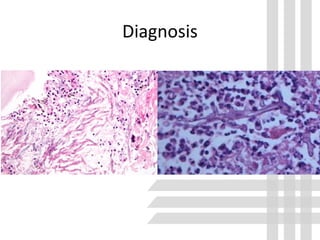
• Aspergillus brain abscess : septate hyphae with
acute-angle, dichotomous branching
• Mucormycosis : irregular hyphae with right-angle
branching.
Diagnosis
Diagnosis
• Scedosporiumspecies are indistinguishable from
those caused by Aspergillus species. The hyphae of
dematiaceous fungi may be brownish on
hematoxylin-eosin staining but are not
distinguishable from those of other molds.
Management
• Multidisciplinary, neuroradiologist, neurosurgeon,
and infectious disease specialist
• Larger than 2.5 cm : excision
• Smaller than 2.5 cm : aspiration for definite diagnosis
• Empirical ATB : metronidazole + third-generation
cephalosporin
• S.aureus consider : add vancomycin
• gram-negative bacilli such as P. aeruginosa :
ceftazidime, cefepime, or meropenem
Management
• no clear predisposing factors : combination of
vancomycin, metronidazole, and a third- or fourth-
generation cephalosporin
• Once the infecting pathogen is isolated, antimicrobial
therapy can be modified for optimal treatment
Medical management alone
• Treatment began in cerebritis
• Small lesion 0.8-2.5 cm
• Duration of symptom < 2 Wk
• Patient show clinical improvement in 1 wk
Surgical treatment
• Significant mass effect exerted by lesion
• Difficult in diagnosis
• Proximity to ventricle
• Evedence of significane increase intracranial
pressure
• Poor neurological condition
• Traumatic abscees associated with foreign
material
• Fungal abscess
Management
Bacterial brain abscess
• The principles of antimicrobial therapy for bacterial
brain abscess
– penetrate the abscess cavity
– in vitro activity against the isolated pathogen
• Metronidazole
– excellent in vitro activity against strict anaerobes
– an excellent pharmacokinetic profile
– good oral absorption
– penetration into brain abscess cavities
– must always be used in combination with an agent
effective against streptococci
Bacterial brain abscess
• Vancomycin, The third generation cephalosporins
are common used
• Imipenem : pyogenic and nocardial brain abscess,
beware seizure
• Meropenem : Enterobacter cloacae
Bacterial brain abscess
• Surgical therapy : aspiration after bur-hole
placement or complete excision after craniotomy
• Stereotactic aspiration : eloquent or inaccessible
regions
• Complete excision by craniotomy
– patients with multiloculated abscesses in whom
aspiration techniques have failed
– for abscesses containing gas
– for abscesses that fail to resolve
– posttraumatic abscesses that contain foreign bodies or
retained bone fragments to prevent recurrence
Bacterial brain abscess
• In patients with intraventricular rupture of a
purulent brain abscess :
– rapid evacuation and débridement of the abscess cavity
via urgent craniotomy and ventricular drainage
– intravenous or intrathecal ATB
• groups of patients may be treated with medical
therapy alone
– medical conditions that increase the risk associated with
surgery
– multiple abscesses
Bacterial brain abscess
• groups of patients may be treated with medical
therapy alone
– abscesses in a deep or dominant location
– the presence of coexisting meningitis or ependymitis
– early reduction of the abscess with clinical improvement
after antimicrobial therapy
– abscess size less than 3 cm
Bacterial brain abscess
• ATB optimal duration : 6-8 Wk IV then follow by oral
ATB for 2-3 Mo
• Repeat neuroimaging studies performed biweekly for
up to 3 months after completion of therapy has been
suggested to monitor for reexpansion of the abscess
or failure of resolution
Nocardial brain abscess
• Sulfonamide with or without trimethoprim is
recommend
• Alternative agent : minocycline, imipenem, amikacin,
third-generation cephalosporins, and linezolid
• In immunocompromised patients or those in whom
therapy fails : combination treatment with
regimens + a third-generation cephalosporin or
imipenem + a sulfonamide or amikacin
Nocardial brain abscess
• Craniotomy with total excision is difficult in
patients with Nocardia brain abscess because
these abscesses are often multiloculated
• ATB duration : 3-12 Mo but in immunocompromised
should be up to 1 Yr
Fungal brain abscess
• Candidal brain abscess : amphotericin B preparation
plus 5-flucytosine
• Aspergillusbrain abscess : voricazole
• CNS mucormycosis : amphotericin B deoxycholate
or a lipid formulation of amphotericin B with
aggressive surgical debridment
• Scedosporiumspecies : surgery
Management
Adjunctive Therapy
• Steroid effect
– Reduced edema
– Decrese likehood of fibrous encapsulation
– May be reduced penetration of antibiotic into abscess
• Corticosteroid use
– edema and mass effect
– progressive neurological deterioration
– impending cerebral herniation
• High dose : dexamethasone 10 mg q 6 hr and
then tapered
Cranial Subdural empyema and
Epidural abscess
YOUMANS Chapter 43
Epidemiology and Etiology
• Cranial subdural empyema : collection of pus
between the space of the dura and arachnoid, 15-20
% intracranial lesion
• Less common than brain abscess
• SDE may be complicated by cerebral brain abcess,
cortical vein thrombosis, localized cerebritis
• Location : 70-80 % convexity, 10-20% parafalcine
Epidemiology and Etiology
• most common predisposing conditions :
otorhinologic infections, especially of the
paranasal sinuses
• Other predisposing conditions : skull trauma,
neurosurgical procedures, and infection of a
preexisting subdural hematoma
Epidemiology and Etiology
• Organisms
– aerobic streptococci (25% to 45%)
– staphylococci (10% to 15%)
– aerobic gram-negative bacilli (3% to 10%)
– anaerobic streptococci
– other anaerobes
• If the predisposing condition is postoperative or
posttraumatics : staphylococci and aerobic gram-
negative bacilli
Clinical finding
• Clinical manisfestation of subdural empyema
– rapidly progressive, with symptoms and signs related to
increased intracranial pressure (headache, vomiting)
– meningeal irritation
– focal cortical inflammation (hemiparesis and hemiplegia,
ocular palsies, dysphasia, homonymous hemianopia,
dilated pupils, and cerebellar signs
– Altered mental status
– Seizure
– Fever
Clinical finding
• Clinical manisfestation of cranial epidural abscess
– Insidious onset
– Abscess enlarge too slowly to produce a sudden onset of
major neurological deficits, as is seen in patients with
cranial subdural empyema
– Most common : fever, headache
– If the location of the epidural abscess is near the petrous
bone, Gradenigo’s syndrome may develop (involvement
of cranial nerves V and VI and manifested clinically as
unilateral facial pain and weakness of the lateral
rectus muscle)
Diagnosis
• Cranial subdural empyema should be suspected in
any patient with meningeal signs and a focal
neurological deficit
• CT brain : iv contrast : hypodense crescentric
• LP : potential hazardous for herniation
Diagnosis
• MRI in Cranial subdural empyema : crescentic or
elliptical area of hypointensity (on T1 images) below
the cranial vault or adjacent to the falx cerebri, high
signal on T2
• MRI in cranial epidural abscess : superficial,
circumscribed area of diminished intensity with
pachymeningeal enhancement.
Management of
Cranial subdural empyema
• Cranial subdural empyema is a surgical emergency
because antimicrobial therapy alone does not
reliably sterilize the empyema
• The goals of surgical therapy are to achieve adequate
decompression of the brain and to evacuate the
empyema completely.
• The optimal surgical approach is controversial.
Management of
Cranial subdural empyema
• Patients who underwent drainage via bur holes or
craniectomy required more frequent operations to
drain recurrent or remaining pus and exhibited
higher mortality rates and worse outcomes
• Drainage via bur holes or craniectomy is therefore
recommended only for
– patients in septic shock, those with localized parafalcine
collections
– children with subdural empyema secondary to
meningitis because there is usually no brain swelling and
the pus is thin
Management of
Cranial subdural empyema
• S. aureusis suspected : vancomycin
• suspected anaerobes : metronidazole
• aerobic gram-negative bacilli are suspected,
empirical : ceftazidime, cefepime, or meropenem
• ATB continued for 3-4 wk after drainage
Management of
Cranial subdural empyema
• ATB alone in
– patients with cranial subdural empyema who have
minimal or no impairment of consciousness
– no major neurological deficit
– limited extension of the empyema with no
midline shift
– early improvement with antimicrobial therapy
Management of
Cranial epidural abscess
• combined medical and surgical approach
• Empirical antimicrobial therapy is similar to that for
cranial subdural empyema
• For surgical drainage, craniotomy or craniectomy
is generally preferred over bur-hole placement or
aspiration of purulent material through the scalp
• ATN length 3-6 wk or longer in osteomyelitis
Thank you

043 Brain abscess

  • 1.
  • 2.
    Outline • Epidemiology • Etiology •Initiation of infection • Stage of infection • Clinical finding • Diagnosis • Management
  • 3.
    Epidemiology • 0.3 -1.3cases per 100,000 person • Male : Female 2:1 • Median age 30-40 years – Otitic focus : < 20 Yrs , >40 Yrs – Paranasal sinus : 30 – 40 Yrs • After cranial operation : 0.2 % of 1587 , 10 of 16540 • Commonly in Immunocompromised : infected with HIV, receiving chemotherapy for cancer, receiving immunosuppressive therapy after organ transplantation, or after prolonged use of corticosteroids.
  • 4.
    Risk factor • Pulmonaryabnormality – Infection – AV fistula • Congenital cyanotic heart disease • Bacterial endocarditis • Penetrating trauma • Chronic sinusitis or otitis media • AIDS
  • 5.
    Pathogenesis • Organism transmit –contiguous source of infection, 25-30 % of case – hematogenous dissemination 20-35% of cases – trauma
  • 6.
    Pathogenesis • Contiguous source: middle ear, mastoid cells, paranasal sinuses • From purulent sinusitis : spread by osteomyelitis or by phlebitis of emissary vein • Rare in infant because they lack aerated paranasal and mastoid air cells • Localize of Contiguous source – Otitis media : temporal lobe or cerebellum – Paranasal sinusitis : frontal lobe – Sphenoid sinusitis(less common for sinusitis ) : temporal lobe, sella turcica
  • 7.
    Pathogenesis • Hematogenous dissemination: multiple, multiloculated abscesses, higher mortality rate • Most common source in adult – Most common : pyogenic lung diseases (especially lung abscess) – bronchiectasis – Empyema – cystic fibrosis – Skin infection, osteomyelitis, pelvic infections, and intra- abdominal infections
  • 8.
    Pathogenesis • In children •Cyanotic congenital heart disease (tetralogy of Fallot) because increase Hct and low PO2 provide and hypoxic environment suitable for abscess proliferation • Right to left shunt • Streptococcal oral flora from oral dental procedure
  • 9.
    Pathogenesis • Trauma :open cranial fracture with dural breach or foreign body injury or as a sequela of neurosurgery • Nosocomial brain abscess : halo pin insertion,after electrode insertion to localize seizure foci,and in malignant glioma patients treated by placement of Gliadel wafers in the tumor bed to release carmustine
  • 10.
    Etiology • Bacterial :most common, streptococci (aerobic, anaerobic, and microaerophilic), 70% • Streptococcus anginosus (milleri) : oral cavity, appendix, and female genital tract • Staphylococcus aureus : cranial trauma or infective endocarditis • Enteric gram-negative bacilli ,25-30% (e.g., Proteus spp., Escherichia coli, Klebsiellaspp., Pseudomonas aeruginosa, and Enterobacterspp.) : otitis media, bacteremia, neurosurgical procedures, and the immunocompromised state
  • 11.
    • Negative culture: 0-43% (previous use ATB) • Listeria monocytogenesis uncommon (<1% of cases), considered in patient who are immunocompromised (e.g., leukemia, lymphoma, HIV infection, and conditions requiring corticosteroids or other agents that cause immunosuppression) • Salmonella, Nocardia, Streptococcus pneumoniae, Haemophilus influenzae, Burkholderia pseudomallei, and Actinomyces species Etiology
  • 12.
    Etiology • the incidenceof fungal brain abscess has been rising as a result of the increased use of corticosteroid therapy, broad-spectrum antimicrobial therapy, and immunosuppressive agents • Candida : microabscesses, macroabscesses, noncaseating granulomas, and diffuse glial nodule
  • 13.
    Etiology • Risk factorsfor candidal brain abscess include the use of broad-spectrum antimicrobial agents, corticosteroids, and hyperalimentation; premature birth; malignancy; neutropenia; chronic granulomatous disease; diabetes mellitus; thermal injury; and the presence of a central venous catheter • Aspergillosis : neutropenia, hepatic disease, diabetes mellitus, chronic granulomatous disease, Cushing’s syndrome, HIV infection, injection drug use, organ transplantation, and bone marrow transplantation
  • 14.
    Etiology • Mucorales group: Diabetes mellitus, patients with acidemia from profound systemic illness (e.g., sepsis, severe dehydration, severe diarrhea, chronic kidney disease) • Scedosporium : immunocompetent and immunocompromised hosts • Cryptococcus neoformans, the endemic mycoses (Coccidioides spp., Histoplasma spp., and Blastomyces dermatitidis)
  • 15.
  • 16.
    Initiation of infection •The brain appears to be significantly more sensitive to infection than many other tissues. • The brain may also be more susceptible to infection by different organisms
  • 17.
  • 18.
  • 19.
    Host defence mechanism •Although the brain is generally protected from infection by an intact blood-brain barrier, once infection is established, immune defenses are usually inadequate to control the infection • Encapsulate bacteria : E.coli, B.fragilis
  • 20.
  • 21.
    Clinical finding • Newborn –Patent suture – Seizure – Meningitis – Irritabilitiy – Increasing OFC(occipital-frontal circumference) – Failure to thrive – May afebrile
  • 22.
  • 23.
    Clinical finding • Intraventricularrupture of brain abscess : severe headaches and signs of meningeal irritation were prominent findings before rupture • Intraventricular rupture appears to be more likely if the abscess is deep-seated, multiloculated, and in close proximity to the ventricular wall
  • 24.
    Clinical finding • Relatedto pathogen – Nocardia : concomitant pulmonary, skin, or muscle lesions – Aspergillus brain abscess : commonly manifest signs of a stroke syndrome as a result of ischemia or intracerebral hemorrhage, or both – rhinocerebral mucormycosis : symptoms referable to the eyes or sinuses and complaints of headache, facial pain, diplopia, lacrimation, and nasal stuffiness or epistaxis  cranial nerve involvement  blindness
  • 25.
    Clinical finding • Relatedto pathogen – Scedosporium apiospermum brain abscess : • occur in immunocompromised patients or in individuals 15 to 30 days after an episode of near- drowning • cerebrum, cerebellum, or brainstem • Clinical finding : seizures, altered consciousness, headache, meningeal irritation, focal neurological deficits, abnormal behavior, and aphasi
  • 26.
    Diagnosis • WBC :mildly elevate (>10,000) • Blood C/S : should be obtain (usually negative) • ESR : may be normal • CRP : may arise • LP : dubious, OP increase, WBC count, Protein elevate, risk for tantentorial herniation
  • 27.
    Diagnosis • MRI ismore sensitivity than CT, early detection of cerebritis, more conspicuous spread of inflammation into the ventricles and subarachnoid space, and earlier detection of satellite lesions • T1 : the abscess capsule often appears as a discrete rim that is isointense to mildly hyperintense • T1 c Gad : rim enhancement, cerebral edema • T2 : zone of edema : hyperintensity, capsule : ill- defined hypointensity • DWI : restricted diffusion (bright signal) may be seen • ADC : Dark
  • 28.
  • 29.
    Diagnosis • Aspergillosis :finding of a cerebral infarct, which typically develops into either single or multiple abscesses, in immunocompromised patients, there may be little or no contrast enhancement on MRI • Rhinocerebral mucormycosis : sinus opacification, erosion of bone, and obliteration of deep fascial planes; cavernous sinus thrombosis
  • 30.
    Diagnosis • stereotactic MRI-or CT-guided aspiration • Specimens sent for : Gram stain, routine aerobic and anaerobic culture, modified acid-fast smears, acidfast smears and culture, and fungal smears and culture • Aspergillus brain abscess : septate hyphae with acute-angle, dichotomous branching • Mucormycosis : irregular hyphae with right-angle branching.
  • 31.
  • 32.
    Diagnosis • Scedosporiumspecies areindistinguishable from those caused by Aspergillus species. The hyphae of dematiaceous fungi may be brownish on hematoxylin-eosin staining but are not distinguishable from those of other molds.
  • 34.
    Management • Multidisciplinary, neuroradiologist,neurosurgeon, and infectious disease specialist • Larger than 2.5 cm : excision • Smaller than 2.5 cm : aspiration for definite diagnosis • Empirical ATB : metronidazole + third-generation cephalosporin • S.aureus consider : add vancomycin • gram-negative bacilli such as P. aeruginosa : ceftazidime, cefepime, or meropenem
  • 35.
    Management • no clearpredisposing factors : combination of vancomycin, metronidazole, and a third- or fourth- generation cephalosporin • Once the infecting pathogen is isolated, antimicrobial therapy can be modified for optimal treatment
  • 36.
    Medical management alone •Treatment began in cerebritis • Small lesion 0.8-2.5 cm • Duration of symptom < 2 Wk • Patient show clinical improvement in 1 wk
  • 37.
    Surgical treatment • Significantmass effect exerted by lesion • Difficult in diagnosis • Proximity to ventricle • Evedence of significane increase intracranial pressure • Poor neurological condition • Traumatic abscees associated with foreign material • Fungal abscess
  • 38.
  • 39.
    Bacterial brain abscess •The principles of antimicrobial therapy for bacterial brain abscess – penetrate the abscess cavity – in vitro activity against the isolated pathogen • Metronidazole – excellent in vitro activity against strict anaerobes – an excellent pharmacokinetic profile – good oral absorption – penetration into brain abscess cavities – must always be used in combination with an agent effective against streptococci
  • 40.
    Bacterial brain abscess •Vancomycin, The third generation cephalosporins are common used • Imipenem : pyogenic and nocardial brain abscess, beware seizure • Meropenem : Enterobacter cloacae
  • 41.
    Bacterial brain abscess •Surgical therapy : aspiration after bur-hole placement or complete excision after craniotomy • Stereotactic aspiration : eloquent or inaccessible regions • Complete excision by craniotomy – patients with multiloculated abscesses in whom aspiration techniques have failed – for abscesses containing gas – for abscesses that fail to resolve – posttraumatic abscesses that contain foreign bodies or retained bone fragments to prevent recurrence
  • 42.
    Bacterial brain abscess •In patients with intraventricular rupture of a purulent brain abscess : – rapid evacuation and débridement of the abscess cavity via urgent craniotomy and ventricular drainage – intravenous or intrathecal ATB • groups of patients may be treated with medical therapy alone – medical conditions that increase the risk associated with surgery – multiple abscesses
  • 43.
    Bacterial brain abscess •groups of patients may be treated with medical therapy alone – abscesses in a deep or dominant location – the presence of coexisting meningitis or ependymitis – early reduction of the abscess with clinical improvement after antimicrobial therapy – abscess size less than 3 cm
  • 44.
    Bacterial brain abscess •ATB optimal duration : 6-8 Wk IV then follow by oral ATB for 2-3 Mo • Repeat neuroimaging studies performed biweekly for up to 3 months after completion of therapy has been suggested to monitor for reexpansion of the abscess or failure of resolution
  • 45.
    Nocardial brain abscess •Sulfonamide with or without trimethoprim is recommend • Alternative agent : minocycline, imipenem, amikacin, third-generation cephalosporins, and linezolid • In immunocompromised patients or those in whom therapy fails : combination treatment with regimens + a third-generation cephalosporin or imipenem + a sulfonamide or amikacin
  • 46.
    Nocardial brain abscess •Craniotomy with total excision is difficult in patients with Nocardia brain abscess because these abscesses are often multiloculated • ATB duration : 3-12 Mo but in immunocompromised should be up to 1 Yr
  • 47.
    Fungal brain abscess •Candidal brain abscess : amphotericin B preparation plus 5-flucytosine • Aspergillusbrain abscess : voricazole • CNS mucormycosis : amphotericin B deoxycholate or a lipid formulation of amphotericin B with aggressive surgical debridment • Scedosporiumspecies : surgery
  • 48.
  • 50.
    Adjunctive Therapy • Steroideffect – Reduced edema – Decrese likehood of fibrous encapsulation – May be reduced penetration of antibiotic into abscess • Corticosteroid use – edema and mass effect – progressive neurological deterioration – impending cerebral herniation • High dose : dexamethasone 10 mg q 6 hr and then tapered
  • 51.
    Cranial Subdural empyemaand Epidural abscess YOUMANS Chapter 43
  • 52.
    Epidemiology and Etiology •Cranial subdural empyema : collection of pus between the space of the dura and arachnoid, 15-20 % intracranial lesion • Less common than brain abscess • SDE may be complicated by cerebral brain abcess, cortical vein thrombosis, localized cerebritis • Location : 70-80 % convexity, 10-20% parafalcine
  • 53.
    Epidemiology and Etiology •most common predisposing conditions : otorhinologic infections, especially of the paranasal sinuses • Other predisposing conditions : skull trauma, neurosurgical procedures, and infection of a preexisting subdural hematoma
  • 54.
    Epidemiology and Etiology •Organisms – aerobic streptococci (25% to 45%) – staphylococci (10% to 15%) – aerobic gram-negative bacilli (3% to 10%) – anaerobic streptococci – other anaerobes • If the predisposing condition is postoperative or posttraumatics : staphylococci and aerobic gram- negative bacilli
  • 55.
    Clinical finding • Clinicalmanisfestation of subdural empyema – rapidly progressive, with symptoms and signs related to increased intracranial pressure (headache, vomiting) – meningeal irritation – focal cortical inflammation (hemiparesis and hemiplegia, ocular palsies, dysphasia, homonymous hemianopia, dilated pupils, and cerebellar signs – Altered mental status – Seizure – Fever
  • 56.
    Clinical finding • Clinicalmanisfestation of cranial epidural abscess – Insidious onset – Abscess enlarge too slowly to produce a sudden onset of major neurological deficits, as is seen in patients with cranial subdural empyema – Most common : fever, headache – If the location of the epidural abscess is near the petrous bone, Gradenigo’s syndrome may develop (involvement of cranial nerves V and VI and manifested clinically as unilateral facial pain and weakness of the lateral rectus muscle)
  • 57.
    Diagnosis • Cranial subduralempyema should be suspected in any patient with meningeal signs and a focal neurological deficit • CT brain : iv contrast : hypodense crescentric • LP : potential hazardous for herniation
  • 58.
    Diagnosis • MRI inCranial subdural empyema : crescentic or elliptical area of hypointensity (on T1 images) below the cranial vault or adjacent to the falx cerebri, high signal on T2 • MRI in cranial epidural abscess : superficial, circumscribed area of diminished intensity with pachymeningeal enhancement.
  • 59.
    Management of Cranial subduralempyema • Cranial subdural empyema is a surgical emergency because antimicrobial therapy alone does not reliably sterilize the empyema • The goals of surgical therapy are to achieve adequate decompression of the brain and to evacuate the empyema completely. • The optimal surgical approach is controversial.
  • 60.
    Management of Cranial subduralempyema • Patients who underwent drainage via bur holes or craniectomy required more frequent operations to drain recurrent or remaining pus and exhibited higher mortality rates and worse outcomes • Drainage via bur holes or craniectomy is therefore recommended only for – patients in septic shock, those with localized parafalcine collections – children with subdural empyema secondary to meningitis because there is usually no brain swelling and the pus is thin
  • 61.
    Management of Cranial subduralempyema • S. aureusis suspected : vancomycin • suspected anaerobes : metronidazole • aerobic gram-negative bacilli are suspected, empirical : ceftazidime, cefepime, or meropenem • ATB continued for 3-4 wk after drainage
  • 62.
    Management of Cranial subduralempyema • ATB alone in – patients with cranial subdural empyema who have minimal or no impairment of consciousness – no major neurological deficit – limited extension of the empyema with no midline shift – early improvement with antimicrobial therapy
  • 63.
    Management of Cranial epiduralabscess • combined medical and surgical approach • Empirical antimicrobial therapy is similar to that for cranial subdural empyema • For surgical drainage, craniotomy or craniectomy is generally preferred over bur-hole placement or aspiration of purulent material through the scalp • ATN length 3-6 wk or longer in osteomyelitis
  • 64.

Editor's Notes

  • #6 ติดเชื้อได้ 3 ทาง คือ
  • #10 Breach ฉีกขาด Gliadel wafers วาง water drug ซึ่งเป็น chemotherapy เข้าไปใน brain cavity
  • #13 Fungal brain abscess ได้เพิ่มขึ้นจากการใช้ stearoid, broas spectrum ATB และ immunosuppressive agent
  • #14 Hyperalimentation หรือ overnutrition ได้สารอาหารมากไป
  • #17 จากการทดลองของจากหนุที่ใช้ปรืมาณเชื้อเมื่อเทียบกับทางผิวหนัง ตัวสมองก็ทนต่อเชื้อแต่ชนิดไม่เท่ากัน
  • #20 ในสมองจะมี BBB ค่อยป้องกันการติดเชื้อ แต่บาง immune defense ก็ไม่มีในการกำจัดเชื้อบางตัว เช่นเชื้อที่มี capsule
  • #21 Clinical fing ขึ้นกับขนาดและตำแหน่ง อาการปวดศรีษะพบได้บ่อยที่สุด
  • #23 Neurological finding ที่พบได้จากการเกิด brain abscess ตำแหน่งต่างๆ
  • #24 IVRBA จะมีอาการปวดกัวร่วมกับอาการ memenigeal ก่อนตามลักษณะที่มีแนวโน้มโอกาสเกิด คือ ลึก มีหลายก้อน แล้วอย่ใกล้ ventricular wall
  • #25 อาการบางอย่างจะสัมพันธ์กับเชื้อด้วย
  • #28 T1 จะเห็นขอบเป็น ลักษณะ isointense และ hyperintense
  • #36 Cephalosporin รุ่นที่ 3Cefixime Cefpodoxime Cefdinir Ceftibuten Cefoperazone Cefotaxime Ceftazidime Ceftizoxime Ceftriaxone Cephalosporin รุ่นที่ 4 Cefepime Cefpirome
  • #40 Pharmacokinetics หมายถึง การศึกษาอิทธิพลของร่างกายที่มีผลต่อยาหรือสารต่าง ๆ เมื่อเข้าสู่ ร่างกายประกอบด้วย การดูดซึมยา (Absorption) การแพร่กระจาย (Distribution) การเปลี่ยนแปลงทางเม ตาบอลิซึม (Biotransformation, Metabolism) การขับยาออกนอกร่างกาย (Excretion)
  • #42 การผ่าตัดมีสองวิธียัง ยังไม่มี study ว่าวิธีไหนดีกว่ากัน
  • #48 CNS mucormycosis ต้องทำการ debriment ด้วยเพราะ invade blood vessel ทำให้ตัว antifungal ไปไม่ถึงตรง infection
  • #53 Infection มาจาก pulmonary source, meningitis เป็นสาเหตุหลักใน infant