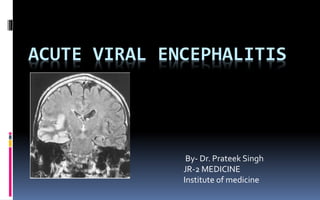
ACUTE VIRAL ENCEPHALITIS
By- Dr. Prateek Singh
JR-2 MEDICINE
Institute of medicine
Introduction
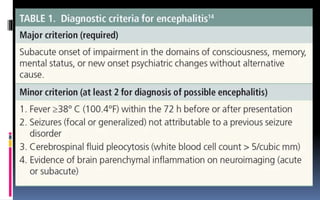
 Encephalitis is defined as an inflammation of the brain caused either
by infection, usually with a virus, or from a primary autoimmune
process .
 Many patients with encephalitis also have evidence of associated
meningitis (meningoencephalitis) and, in some cases, involvement of
the spinal cord or nerve roots (encephalomyelitis,
encephalomyeloradiculitis)
Definitions
 Meningoencephalitis - is an acute inflammatory process involving
the meninges and to a variable degree, brain tissue. Is a common
term that recognizes the overlap
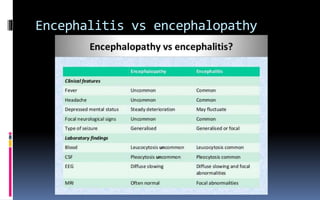
 Encephalopathy - describes a clinical syndrome of altered mental
status, manifesting as reduced consciousness or altered behaviour.
Encephalitis vs encephalopathy
Causes of encephalopathy
 Systemic infection,
 Metabolic derangement (e.g. DKA)
 Toxins
 Drugs & Poisoning
 Hypoxia
 Trauma
 Vasculitis
 CNS infection.
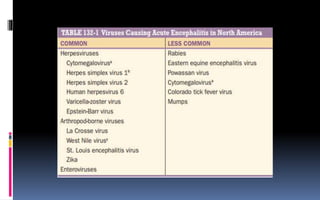
Causes of encephalitis
 Infectious causes:
– Viral
Herpesvirus.- Hsv 1,2,6 , varicella-zoster, epstein bar ,
Alpha virus -eastern equine encephalitis
Flaviviruses -west nile virus, st. louis virus, japanese encephalitis ,
Mumps. RSV, Rubeola, Rubella or Rabies (Occasionally)
Bunyaviruses -California encephalitis virus serogroup, La Crosse
virus)
DengueVirus
Measles virus
Bacterial (TBM)
Ricketssial,
Fungal
Parasites - pl falciparum , Naegleria,Acanthamoeba,
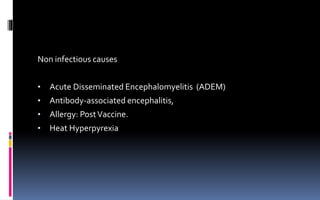
Non infectious causes
• Acute Disseminated Encephalomyelitis (ADEM)
• Antibody-associated encephalitis,
• Allergy: PostVaccine.
• Heat Hyperpyrexia
Viral encephalitis
 WHO Clinical case definition of acute encephalitis syndrome
• Person of any age, at any time of year, with
• Acute onset of fever AND
• Change in mental status (including symptoms such as confusion,
disorientation, coma, or inability to talk)AND/OR
• New onset of seizures (excluding simple febrile seizures)
• Other early clinical findings can include an increase in irritability,
somnolence or abnormal behaviour greater than that seen with usual
febrile illness
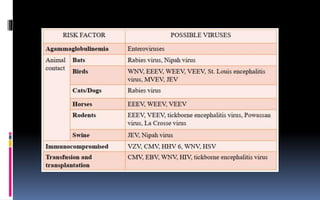
 herpes simplex virus type 1 (HSV1) is reportedly the commonest
cause of adult sporadic encephalitis while varicella zoster virus (VZV)
account for most of paediatric encephalitis
 Recent studies have identified many emerging encephalitic viruses
such as Chandipura and Nipah viruses particularly in South Asia
Scenario in Nepal
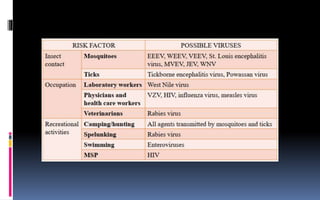
 Although Japanese encephalitis virus (JEV) was thought to be a
major cause for acute encephalitis syndrome, more non-Japanese
encephalitis virus cases are reported.
 N 52 –
 Encephalitis 9
JE -33%
HSV 1- 22.2%
cause not known – 44.8%(4)
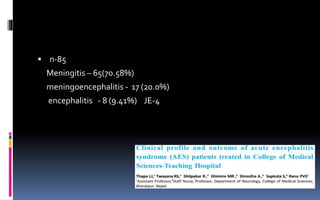
 n-85
Meningitis – 65(70.58%)
meningoencephalitis - 17 (20.0%)
encephalitis - 8 (9.41%) JE-4
Pathogenesis
 Entry
Respiratory/olfactory,GI, GU, skin, conjunctiva, blood
Entry into the CNS
Hematogenous dissemination
Intraneural spread
Neurovirulence
Direct cytopathic effect
Immune-mediated injury
Histopathologic Changes
• Perivascular infiltration of mononuclear inflammatory cells
• Reactive astrocytosis
• Formation of glial nodules “owls eye”
• Neuronophagia
 Specific sites of viral predilection
Temporal and inferior frontal lobes (HSV)
Periventricular areas (CMV)
Limbic system (RV)
Cerebellum (VZV)
Basal ganglia (JEV)
Clinical manifestations
 Fever
 Headache
 Lethargy
 Vomiting
 Impairment of consciousness (confusion, behavioral abnormalities,
lethargy to coma )
 Focal neurological signs aphasia, ataxia, upper or lower motor neuron
patterns of weakness, involuntary movements (e.g., myoclonic jerks,
tremor), and cranial nerve deficits (e.g., ocular palsies, facial weakness).
 Seizures.
 may have hallucinations, agitation, personality change, behavioral
disorders, and, at times, a frankly psychotic state.
 Involvement of the hypothalamic-pituitary axis may result in
temperature dysregulation, diabetes insipidus, or the development
of SIADH
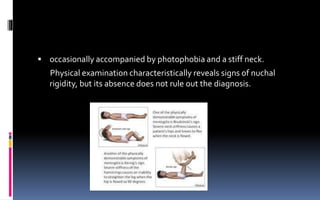
 occasionally accompanied by photophobia and a stiff neck.
Physical examination characteristically reveals signs of nuchal
rigidity, but its absence does not rule out the diagnosis.
Clinical clues
 Encephalitis associated with GIT symptoms
-Enteroviruses,
-Rotavirus,
- Parechovirus.
 Encephalitis associated with respiratory illness
-Influenza viruses: Myositis may also be associated.
-Paramyxoviruses,
- Bacteria.
 Skin rash:
– Meningococcemia,
– Dengue,
– Measles,
–Varicella,
– Rickettsial diseases,
– Arboviral diseases,
– Enteroviral encephalitis.
Parotitis (mumps)
Pharyngitis & lymphadenopathy (EBV)
Dermatomal rash (VZV)
Herpangina (Coxsackie virus)
Pneumonitis (LCMV)
CSF examination
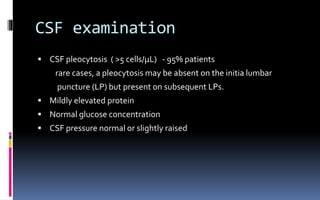
 CSF pleocytosis ( >5 cells/μL) - 95% patients
rare cases, a pleocytosis may be absent on the initia lumbar
puncture (LP) but present on subsequent LPs.
 Mildly elevated protein
 Normal glucose concentration
 CSF pressure normal or slightly raised
 Arboviruses (e.g., EEE virus or California encephalitis virus), mumps,
and lymphocytic choriomeningitis virus (LCMV) may occasionally
cell counts >1000/μL
 Atypical lymphocytes -EBV , CMV, HSV
 plasmacytoid or Mollaret-like large mononuclear cells –WNV
 About 20% of patients with encephalitis will have a significant
number of red blood cells (>500/μL) in the CSF in a nontraumatic tap.
hemorrhagic encephalitis of the type seen with HSV
CSF PCR
 primary diagnostic test for CNS infections caused by CMV, EBV, HHV-6,
and enteroviruses.
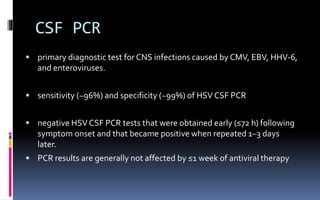
 sensitivity (~96%) and specificity (~99%) of HSV CSF PCR
 negative HSV CSF PCR tests that were obtained early (≤72 h) following
symptom onset and that became positive when repeated 1–3 days
later.
 PCR results are generally not affected by ≤1 week of antiviral therapy
 CSF culture is generally of limited utility in the diagnosis of acute
viral encephalitis.
 Serum antibody determination is less useful for viruses with high
seroprevalence rates in the general population such as HSV,VZV,
CMV, and EBV
 antibodies to HSV-1 glycoproteins and HSV glycoprotein antigens
have been detected in the CSF. Optimal detection of both HSV
antibodies and antigen typically occurs after the first week of illness,
limiting the utility of these tests in acute diagnosis.
 Useful in detecting illness is >1 week in duration and who are CSF
PCR–negative for HSV .
EEG
 EEG is strongly recommended in any suspected case of acute
encephalitis since it may help in distinguishing focal encephalitis
from generalised encephalopathy.
 non-specific (slowing) with more characteristic changes (2–3 Hz
periodic lateralised epileptiform discharges originating from the
temporal lobes) limited to about half the cases in the later stages
Imaging
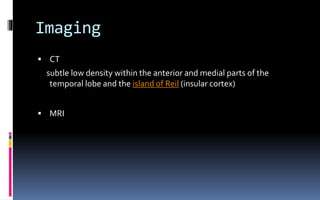
 CT
subtle low density within the anterior and medial parts of the
temporal lobe and the island of Reil (insular cortex)
 MRI
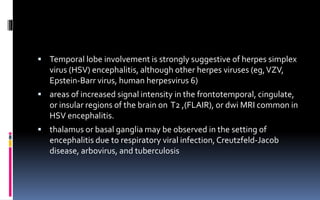
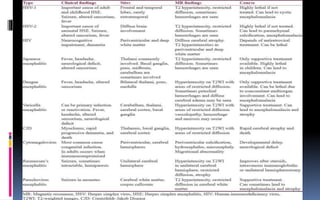
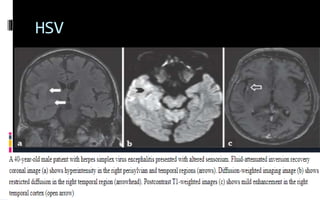
 Temporal lobe involvement is strongly suggestive of herpes simplex
virus (HSV) encephalitis, although other herpes viruses (eg,VZV,
Epstein-Barr virus, human herpesvirus 6)
 areas of increased signal intensity in the frontotemporal, cingulate,
or insular regions of the brain on T2 ,(FLAIR), or dwi MRI common in
HSV encephalitis.
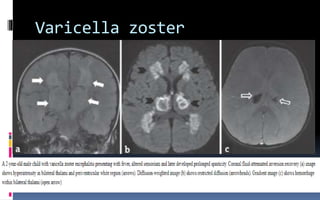
 thalamus or basal ganglia may be observed in the setting of
encephalitis due to respiratory viral infection, Creutzfeld-Jacob
disease, arbovirus, and tuberculosis
HSV
Varicella zoster
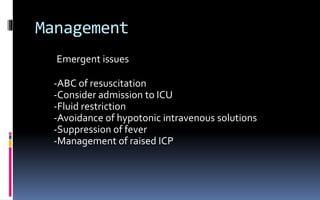
Management
Emergent issues
-ABC of resuscitation
-Consider admission to ICU
-Fluid restriction
-Avoidance of hypotonic intravenous solutions
-Suppression of fever
-Management of raised ICP
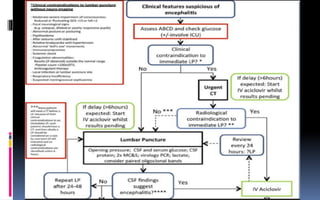
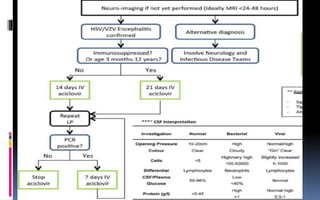
 Acyclovir is of benefit in the treatment of HSV and should be
started empirically in patients with suspected viral encephalitis .
deoxypyrimidine (thymidine) kinase
acyclovir acyclovir-5′-monophosphate
inhibiting viral DNA polymerase and by causing premature
termination of nascent viral DNA chains
 IV Acyclovir 10mg/kg every 8 hrly ( 30mg/kg total daily dose)
* 21 days
 acyclovir should be diluted to a concentration ≤7 mg/mL , Each dose
should be infused slowly over 1 h minimize the risk of renal
dysfunction .
 Oral antiviral drugs with efficacy against HSV,VZV, and EBV,
including acyclovir, famciclovir, and valacyclovir, have not been
evaluated
 IV Dexamethasone (10 mg every 6 h intravenously for 4 days) is
efficacious .
 Ganciclovir and foscarnet, either alone or in combination, are
often used in the treatment of CMV-related CNS infection.
-Induction Ganciclovir 5 mg/kg every 12 h given IV over 1 h. -
maintenance therapy of 5 mg/kg every day for an indefinite period
-induction Foscarnet 60 mg/kg every 8 h administered by constant
infusion over 1 h. For 14-21 days
maintenance therapy (60–120 mg/kg per day) cont.
 Intravenous ribavirin (15–25 mg/kg per day in divided doses given every
8 h) California encephalitis (LaCrosse) virus.
 No specific antiviral therapy of proven efficacy is currently available for
treatment of WNV encephalitis
Patients have been treated with interferon-α, ribavirin, an Israeli IVIg
preparation that contains high-titer anti-WNV antibody (Omr-IgG-am)
 Seizures should be treated with standard anticonvulsant regimens,
and prophylactic therapy should be considered in view of the high
frequency of seizures in severe cases of encephalitis
Features of raised ICP
 Asymmetric pupil,
 Tonic posturing,
 Papilloedema
 Managemant
- Proper positioning: Head elevated 15-300.
-Fluid Restriction: 2/3rd of maintenance.
• 20% Mannitol 5 ml/kg over 10 – 15 min followed by 3
ml/kg every 6 hourly for 48 hrs then SOS, or
-Acetazolamide: 50 – 75 mg/kg/day, or
-Glycerin: 1 ml/kg/day through NGTube
Japanese encephalitis
 JEV is the most important cause of viral encephalitis in Asia.
 Primarily affects children under age 15 .
 Most JEV infections are mild (fever and headache) or without
apparent symptoms
 transmitted to humans through bites from infected mosquitoes of
the Culex species
 WHO recommends testing for JEV-specific IgM antibody in a single
sample of cerebrospinal fluid (CSF)
 There is no antiviral treatment for patients with JE
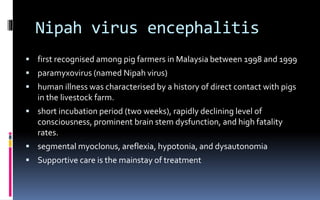
Nipah virus encephalitis
 first recognised among pig farmers in Malaysia between 1998 and 1999
 paramyxovirus (named Nipah virus)
 human illness was characterised by a history of direct contact with pigs
in the livestock farm.
 short incubation period (two weeks), rapidly declining level of
consciousness, prominent brain stem dysfunction, and high fatality
rates.
 segmental myoclonus, areflexia, hypotonia, and dysautonomia
 Supportive care is the mainstay of treatment
Sequele
Behavioural and psychiatric disturbances
Epilepsy
Post-encephalitic parkinsonism
Memory difficulties
Speech disturbances
Permanent home care
Prognosis
 Factors of bad prognosis
• Severe neurologic impairment
• Older age
• High viral load in CSF
• Delay in initiation of therapy
Rehabilitation
Periodic neuropsychiatric evaluation
Speech therapy
Physiotherapy
Occupational rehabilitation
Take home message
-Acute viral encephalitis is frequently devastating-
-All patients with a febrile illness and altered behaviour or
consciousness should be investigated promptly for viral
encephalitis
-Patients suspected need a lumbar puncture as soon as
possible
-Early institution of therapy improves prognosis
 Thank you

Viral encephalitis

  • 1.
    ACUTE VIRAL ENCEPHALITIS By-Dr. Prateek Singh JR-2 MEDICINE Institute of medicine
  • 2.
    Introduction  Encephalitis isdefined as an inflammation of the brain caused either by infection, usually with a virus, or from a primary autoimmune process .  Many patients with encephalitis also have evidence of associated meningitis (meningoencephalitis) and, in some cases, involvement of the spinal cord or nerve roots (encephalomyelitis, encephalomyeloradiculitis)
  • 3.
    Definitions  Meningoencephalitis -is an acute inflammatory process involving the meninges and to a variable degree, brain tissue. Is a common term that recognizes the overlap  Encephalopathy - describes a clinical syndrome of altered mental status, manifesting as reduced consciousness or altered behaviour.
  • 4.
  • 5.
    Causes of encephalopathy Systemic infection,  Metabolic derangement (e.g. DKA)  Toxins  Drugs & Poisoning  Hypoxia  Trauma  Vasculitis  CNS infection.
  • 6.
    Causes of encephalitis Infectious causes: – Viral Herpesvirus.- Hsv 1,2,6 , varicella-zoster, epstein bar , Alpha virus -eastern equine encephalitis Flaviviruses -west nile virus, st. louis virus, japanese encephalitis , Mumps. RSV, Rubeola, Rubella or Rabies (Occasionally) Bunyaviruses -California encephalitis virus serogroup, La Crosse virus) DengueVirus Measles virus
  • 7.
    Bacterial (TBM) Ricketssial, Fungal Parasites -pl falciparum , Naegleria,Acanthamoeba,
  • 8.
    Non infectious causes •Acute Disseminated Encephalomyelitis (ADEM) • Antibody-associated encephalitis, • Allergy: PostVaccine. • Heat Hyperpyrexia
  • 9.
    Viral encephalitis  WHOClinical case definition of acute encephalitis syndrome • Person of any age, at any time of year, with • Acute onset of fever AND • Change in mental status (including symptoms such as confusion, disorientation, coma, or inability to talk)AND/OR • New onset of seizures (excluding simple febrile seizures) • Other early clinical findings can include an increase in irritability, somnolence or abnormal behaviour greater than that seen with usual febrile illness
  • 10.
     herpes simplexvirus type 1 (HSV1) is reportedly the commonest cause of adult sporadic encephalitis while varicella zoster virus (VZV) account for most of paediatric encephalitis  Recent studies have identified many emerging encephalitic viruses such as Chandipura and Nipah viruses particularly in South Asia
  • 13.
    Scenario in Nepal Although Japanese encephalitis virus (JEV) was thought to be a major cause for acute encephalitis syndrome, more non-Japanese encephalitis virus cases are reported.  N 52 –  Encephalitis 9 JE -33% HSV 1- 22.2% cause not known – 44.8%(4)
  • 14.
     n-85 Meningitis –65(70.58%) meningoencephalitis - 17 (20.0%) encephalitis - 8 (9.41%) JE-4
  • 17.
    Pathogenesis  Entry Respiratory/olfactory,GI, GU,skin, conjunctiva, blood Entry into the CNS Hematogenous dissemination Intraneural spread Neurovirulence Direct cytopathic effect Immune-mediated injury
  • 18.
    Histopathologic Changes • Perivascularinfiltration of mononuclear inflammatory cells • Reactive astrocytosis • Formation of glial nodules “owls eye” • Neuronophagia
  • 19.
     Specific sitesof viral predilection Temporal and inferior frontal lobes (HSV) Periventricular areas (CMV) Limbic system (RV) Cerebellum (VZV) Basal ganglia (JEV)
  • 20.
    Clinical manifestations  Fever Headache  Lethargy  Vomiting  Impairment of consciousness (confusion, behavioral abnormalities, lethargy to coma )  Focal neurological signs aphasia, ataxia, upper or lower motor neuron patterns of weakness, involuntary movements (e.g., myoclonic jerks, tremor), and cranial nerve deficits (e.g., ocular palsies, facial weakness).  Seizures.
  • 21.
     may havehallucinations, agitation, personality change, behavioral disorders, and, at times, a frankly psychotic state.  Involvement of the hypothalamic-pituitary axis may result in temperature dysregulation, diabetes insipidus, or the development of SIADH
  • 22.
     occasionally accompaniedby photophobia and a stiff neck. Physical examination characteristically reveals signs of nuchal rigidity, but its absence does not rule out the diagnosis.
  • 23.
    Clinical clues  Encephalitisassociated with GIT symptoms -Enteroviruses, -Rotavirus, - Parechovirus.  Encephalitis associated with respiratory illness -Influenza viruses: Myositis may also be associated. -Paramyxoviruses, - Bacteria.
  • 24.
     Skin rash: –Meningococcemia, – Dengue, – Measles, –Varicella, – Rickettsial diseases, – Arboviral diseases, – Enteroviral encephalitis.
  • 25.
    Parotitis (mumps) Pharyngitis &lymphadenopathy (EBV) Dermatomal rash (VZV) Herpangina (Coxsackie virus) Pneumonitis (LCMV)
  • 27.
    CSF examination  CSFpleocytosis ( >5 cells/μL) - 95% patients rare cases, a pleocytosis may be absent on the initia lumbar puncture (LP) but present on subsequent LPs.  Mildly elevated protein  Normal glucose concentration  CSF pressure normal or slightly raised
  • 28.
     Arboviruses (e.g.,EEE virus or California encephalitis virus), mumps, and lymphocytic choriomeningitis virus (LCMV) may occasionally cell counts >1000/μL  Atypical lymphocytes -EBV , CMV, HSV  plasmacytoid or Mollaret-like large mononuclear cells –WNV  About 20% of patients with encephalitis will have a significant number of red blood cells (>500/μL) in the CSF in a nontraumatic tap. hemorrhagic encephalitis of the type seen with HSV
  • 29.
    CSF PCR  primarydiagnostic test for CNS infections caused by CMV, EBV, HHV-6, and enteroviruses.  sensitivity (~96%) and specificity (~99%) of HSV CSF PCR  negative HSV CSF PCR tests that were obtained early (≤72 h) following symptom onset and that became positive when repeated 1–3 days later.  PCR results are generally not affected by ≤1 week of antiviral therapy
  • 30.
     CSF cultureis generally of limited utility in the diagnosis of acute viral encephalitis.  Serum antibody determination is less useful for viruses with high seroprevalence rates in the general population such as HSV,VZV, CMV, and EBV  antibodies to HSV-1 glycoproteins and HSV glycoprotein antigens have been detected in the CSF. Optimal detection of both HSV antibodies and antigen typically occurs after the first week of illness, limiting the utility of these tests in acute diagnosis.  Useful in detecting illness is >1 week in duration and who are CSF PCR–negative for HSV .
  • 31.
    EEG  EEG isstrongly recommended in any suspected case of acute encephalitis since it may help in distinguishing focal encephalitis from generalised encephalopathy.  non-specific (slowing) with more characteristic changes (2–3 Hz periodic lateralised epileptiform discharges originating from the temporal lobes) limited to about half the cases in the later stages
  • 32.
    Imaging  CT subtle lowdensity within the anterior and medial parts of the temporal lobe and the island of Reil (insular cortex)  MRI
  • 33.
     Temporal lobeinvolvement is strongly suggestive of herpes simplex virus (HSV) encephalitis, although other herpes viruses (eg,VZV, Epstein-Barr virus, human herpesvirus 6)  areas of increased signal intensity in the frontotemporal, cingulate, or insular regions of the brain on T2 ,(FLAIR), or dwi MRI common in HSV encephalitis.  thalamus or basal ganglia may be observed in the setting of encephalitis due to respiratory viral infection, Creutzfeld-Jacob disease, arbovirus, and tuberculosis
  • 35.
  • 37.
  • 38.
    Management Emergent issues -ABC ofresuscitation -Consider admission to ICU -Fluid restriction -Avoidance of hypotonic intravenous solutions -Suppression of fever -Management of raised ICP
  • 39.
     Acyclovir isof benefit in the treatment of HSV and should be started empirically in patients with suspected viral encephalitis . deoxypyrimidine (thymidine) kinase acyclovir acyclovir-5′-monophosphate inhibiting viral DNA polymerase and by causing premature termination of nascent viral DNA chains
  • 40.
     IV Acyclovir10mg/kg every 8 hrly ( 30mg/kg total daily dose) * 21 days  acyclovir should be diluted to a concentration ≤7 mg/mL , Each dose should be infused slowly over 1 h minimize the risk of renal dysfunction .  Oral antiviral drugs with efficacy against HSV,VZV, and EBV, including acyclovir, famciclovir, and valacyclovir, have not been evaluated
  • 41.
     IV Dexamethasone(10 mg every 6 h intravenously for 4 days) is efficacious .  Ganciclovir and foscarnet, either alone or in combination, are often used in the treatment of CMV-related CNS infection. -Induction Ganciclovir 5 mg/kg every 12 h given IV over 1 h. - maintenance therapy of 5 mg/kg every day for an indefinite period -induction Foscarnet 60 mg/kg every 8 h administered by constant infusion over 1 h. For 14-21 days maintenance therapy (60–120 mg/kg per day) cont.
  • 42.
     Intravenous ribavirin(15–25 mg/kg per day in divided doses given every 8 h) California encephalitis (LaCrosse) virus.  No specific antiviral therapy of proven efficacy is currently available for treatment of WNV encephalitis Patients have been treated with interferon-α, ribavirin, an Israeli IVIg preparation that contains high-titer anti-WNV antibody (Omr-IgG-am)
  • 43.
     Seizures shouldbe treated with standard anticonvulsant regimens, and prophylactic therapy should be considered in view of the high frequency of seizures in severe cases of encephalitis
  • 44.
    Features of raisedICP  Asymmetric pupil,  Tonic posturing,  Papilloedema  Managemant - Proper positioning: Head elevated 15-300. -Fluid Restriction: 2/3rd of maintenance. • 20% Mannitol 5 ml/kg over 10 – 15 min followed by 3 ml/kg every 6 hourly for 48 hrs then SOS, or -Acetazolamide: 50 – 75 mg/kg/day, or -Glycerin: 1 ml/kg/day through NGTube
  • 47.
    Japanese encephalitis  JEVis the most important cause of viral encephalitis in Asia.  Primarily affects children under age 15 .  Most JEV infections are mild (fever and headache) or without apparent symptoms  transmitted to humans through bites from infected mosquitoes of the Culex species  WHO recommends testing for JEV-specific IgM antibody in a single sample of cerebrospinal fluid (CSF)  There is no antiviral treatment for patients with JE
  • 48.
    Nipah virus encephalitis first recognised among pig farmers in Malaysia between 1998 and 1999  paramyxovirus (named Nipah virus)  human illness was characterised by a history of direct contact with pigs in the livestock farm.  short incubation period (two weeks), rapidly declining level of consciousness, prominent brain stem dysfunction, and high fatality rates.  segmental myoclonus, areflexia, hypotonia, and dysautonomia  Supportive care is the mainstay of treatment
  • 49.
    Sequele Behavioural and psychiatricdisturbances Epilepsy Post-encephalitic parkinsonism Memory difficulties Speech disturbances Permanent home care
  • 50.
    Prognosis  Factors ofbad prognosis • Severe neurologic impairment • Older age • High viral load in CSF • Delay in initiation of therapy
  • 51.
    Rehabilitation Periodic neuropsychiatric evaluation Speechtherapy Physiotherapy Occupational rehabilitation
  • 52.
    Take home message -Acuteviral encephalitis is frequently devastating- -All patients with a febrile illness and altered behaviour or consciousness should be investigated promptly for viral encephalitis -Patients suspected need a lumbar puncture as soon as possible -Early institution of therapy improves prognosis
  • 53.