

Theoretical
 Perspectives
How Sociologists Attempt to Make
 Sense of the World We Live In
Objectives


• Students will identify the three major
  theoretical perspectives in sociology today.
Vocabulary
•   theoretical perspective: a set of assumptions accepted as true.
•   functionalism: approach that emphasizes the contributions made by each part of society.
•   manifest functions: intended and recognized consequences of an aspect of society.
•   latent functions: unintended and unrecognized consequences of an aspect of society.
•   dysfunction: negative consequences of an aspect of society.

•   conflict perspective: approach emphasizing the role of conflict, competition, and
    constraint within a society.
•   power: the ability to control the behavior of others.
•   symbol: anything that stands for something else and has an agreed upon meaning attached to
    it.
•   symbolic interactionism: approach that focuses on the interactions among people based
    on mutually understood symbols.
•   dramaturgy: approach that depicts human interaction as theatrical performances.
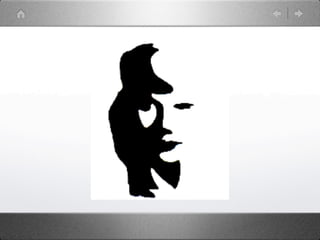
Role of Theoretical Perspectives
• Perception is the way the brain interprets an image or
  event
  • Also how you interpret the meaning of an image or
    event
• Which image you see depends on your focus
 • Your perspective influences what you see
   • One perspective of an event vs. another
Video at
http://www.youtube.com/watch?v=n8zBC2dvERM
Theoretical Perspective
• Set of assumptions about an area of study
 • About the workings of society
• Sometimes theories are competing or
  conflicting with each other
• Sociology has three overarching
  perspectives: functionalism, conflict theory
  and symbolic interactionism
Functionalism
•   Emphasizes the contributions (functions) of each part of a
    society
•   Family, economy, religion, etc.
•   See parts of a society as an integrated whole
    •   Change in one part leads to changes in others
        •   e.g. Major change in the economy may change the family
            (Industrial Revolution)
•   Consensus on values - most Americans believe in desirablity
    of some values
Stability
•   Functionalism assumes societies return to a state of stability after
    some upheaval has occurred
•   1960s: Student unrest and protest
    •   American public no longer accepts involvement in all wars as
        legitimate
    •   Universities are now more responsive to students’ needs and
        goals
    •   Public is more aware of the importance of environmental
        protection
•   Revolutionized America?
Functional Aspects
• Most aspects of society exist to promote a society’s
  survival and welfare.
• Two kinds of positive function: manifest and latent
• Manifest functions are intended and recognized
  (schools: manifest function ➙ teach math skills)
• Latent functions are unintended and unrecognized
  (schools: latent functions ➙ develop close friendships)
• Negative consequences: dysfunction (bureaucracies)
Conflict Perspective
• Emphasizes conflict, competition, change and
  constraint within society
• Reverse of functionalism
 • Functionalism emphasizes ways people cooperate
    to reach common goals
• Conflict perspective focuses on disagreements in
  society or between societies
Power
• Social living is a contest; those who have power have
  the most wealth, power and privileges
  • Have the most motivation to constrain, or limit the
    less powerful
• As balance of power among groups shift, change
  occurs
  • e.g. women’s movement
Symbolic Interactionism
• Charles Cooley and George Mead, late 19th century
  sociologists developed the insight that members of
  groups influence each other’s behavior
• Symbolic Interactionism focuses on actual
  interaction among people
• Focuses on symbols, that represent something else
• American flag, school mascot, etc
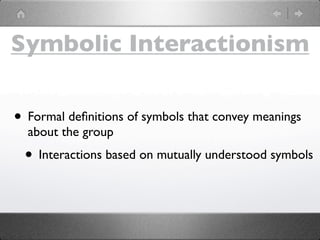
Symbolic Interactionism


• Formal definitions of symbols that convey meanings
  about the group
 • Interactions based on mutually understood symbols
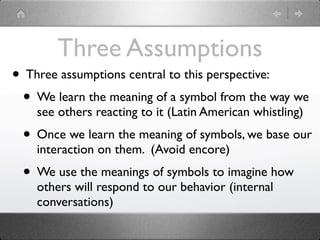
Three Assumptions
• Three assumptions central to this perspective:
 • We learn the meaning of a symbol from the way we
    see others reacting to it (Latin American whistling)
 • Once we learn the meaning of symbols, we base our
    interaction on them. (Avoid encore)
 • We use the meanings of symbols to imagine how
    others will respond to our behavior (internal
    conversations)
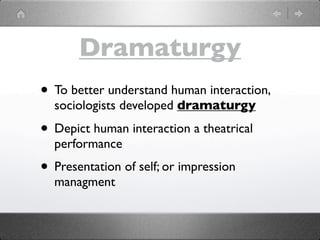
Dramaturgy
• To better understand human interaction,
  sociologists developed dramaturgy

• Depict human interaction a theatrical
  performance
• Presentation of self; or impression
  managment

03 - Theoretical Perspective

  • 1.
    Theoretical Perspectives How SociologistsAttempt to Make Sense of the World We Live In
  • 2.
    Objectives • Students willidentify the three major theoretical perspectives in sociology today.
  • 3.
    Vocabulary • theoretical perspective: a set of assumptions accepted as true. • functionalism: approach that emphasizes the contributions made by each part of society. • manifest functions: intended and recognized consequences of an aspect of society. • latent functions: unintended and unrecognized consequences of an aspect of society. • dysfunction: negative consequences of an aspect of society. • conflict perspective: approach emphasizing the role of conflict, competition, and constraint within a society. • power: the ability to control the behavior of others. • symbol: anything that stands for something else and has an agreed upon meaning attached to it. • symbolic interactionism: approach that focuses on the interactions among people based on mutually understood symbols. • dramaturgy: approach that depicts human interaction as theatrical performances.
  • 4.
    Role of TheoreticalPerspectives • Perception is the way the brain interprets an image or event • Also how you interpret the meaning of an image or event • Which image you see depends on your focus • Your perspective influences what you see • One perspective of an event vs. another
  • 7.
  • 8.
    Theoretical Perspective • Setof assumptions about an area of study • About the workings of society • Sometimes theories are competing or conflicting with each other • Sociology has three overarching perspectives: functionalism, conflict theory and symbolic interactionism
  • 9.
    Functionalism • Emphasizes the contributions (functions) of each part of a society • Family, economy, religion, etc. • See parts of a society as an integrated whole • Change in one part leads to changes in others • e.g. Major change in the economy may change the family (Industrial Revolution) • Consensus on values - most Americans believe in desirablity of some values
  • 10.
    Stability • Functionalism assumes societies return to a state of stability after some upheaval has occurred • 1960s: Student unrest and protest • American public no longer accepts involvement in all wars as legitimate • Universities are now more responsive to students’ needs and goals • Public is more aware of the importance of environmental protection • Revolutionized America?
  • 11.
    Functional Aspects • Mostaspects of society exist to promote a society’s survival and welfare. • Two kinds of positive function: manifest and latent • Manifest functions are intended and recognized (schools: manifest function ➙ teach math skills) • Latent functions are unintended and unrecognized (schools: latent functions ➙ develop close friendships) • Negative consequences: dysfunction (bureaucracies)
  • 12.
    Conflict Perspective • Emphasizesconflict, competition, change and constraint within society • Reverse of functionalism • Functionalism emphasizes ways people cooperate to reach common goals • Conflict perspective focuses on disagreements in society or between societies
  • 13.
    Power • Social livingis a contest; those who have power have the most wealth, power and privileges • Have the most motivation to constrain, or limit the less powerful • As balance of power among groups shift, change occurs • e.g. women’s movement
  • 14.
    Symbolic Interactionism • CharlesCooley and George Mead, late 19th century sociologists developed the insight that members of groups influence each other’s behavior • Symbolic Interactionism focuses on actual interaction among people • Focuses on symbols, that represent something else • American flag, school mascot, etc
  • 15.
    Symbolic Interactionism • Formaldefinitions of symbols that convey meanings about the group • Interactions based on mutually understood symbols
  • 16.
    Three Assumptions • Threeassumptions central to this perspective: • We learn the meaning of a symbol from the way we see others reacting to it (Latin American whistling) • Once we learn the meaning of symbols, we base our interaction on them. (Avoid encore) • We use the meanings of symbols to imagine how others will respond to our behavior (internal conversations)
  • 17.
    Dramaturgy • To betterunderstand human interaction, sociologists developed dramaturgy • Depict human interaction a theatrical performance • Presentation of self; or impression managment