Renaissance Men/
    Women
  What it takes to be a maestro
Objectives


❖   Students will discuss aspects of Renaissance figures and
    identify what it means to be a Renaissance Person

❖   Students will analyze the changes in European thought and
    culture resulting from the Renaissance.
Vocabulary

❖   Francesco Petarch

❖   Filippo Brunelleschi

❖   Leonardo da Vinci

❖   Michelangelo Buonarroti

❖   Niccolo Machiavelli
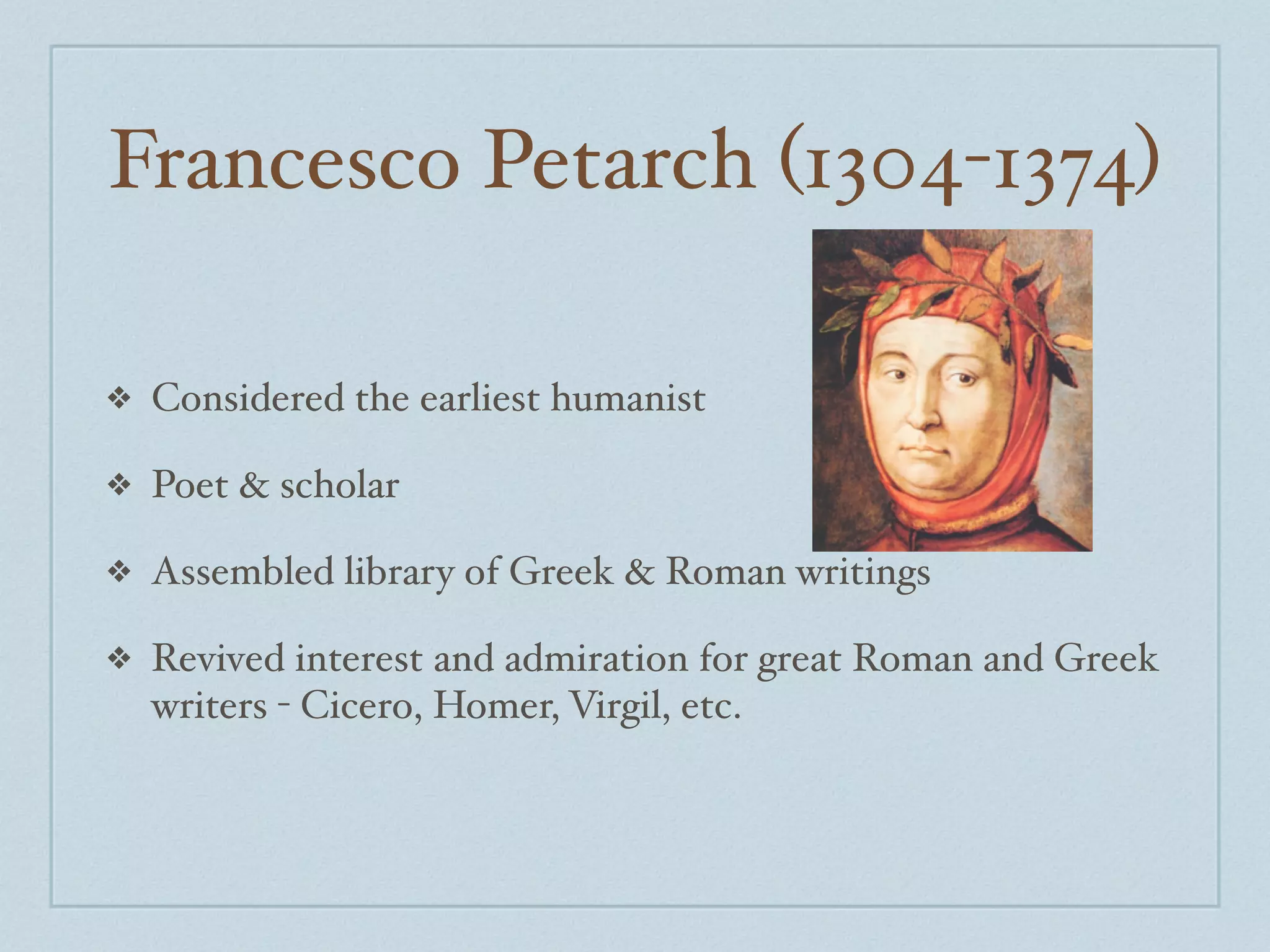
Francesco Petarch (1304-1374)

❖   Considered the earliest humanist

❖   Poet & scholar

❖   Assembled library of Greek & Roman writings

❖   Revived interest and admiration for great Roman and Greek
    writers - Cicero, Homer, Virgil, etc.
Greek & Roman Influence

❖   Renaissance artists still continued to portray religious
    scenes

    ❖   Used Greek or Roman backgrounds to set them

❖   Focus was on realism and perspective

    ❖   Mixture of Greek and Roman influence with
        contemporary imagery
Change from
           Gothic Architecture

❖   Renaissance architecture into a ‘social art’.

❖   From height and arches to a reflection of classical style of
    columns, arches and domes

❖   Cathedrals and other important buildings reflected this
    ideal
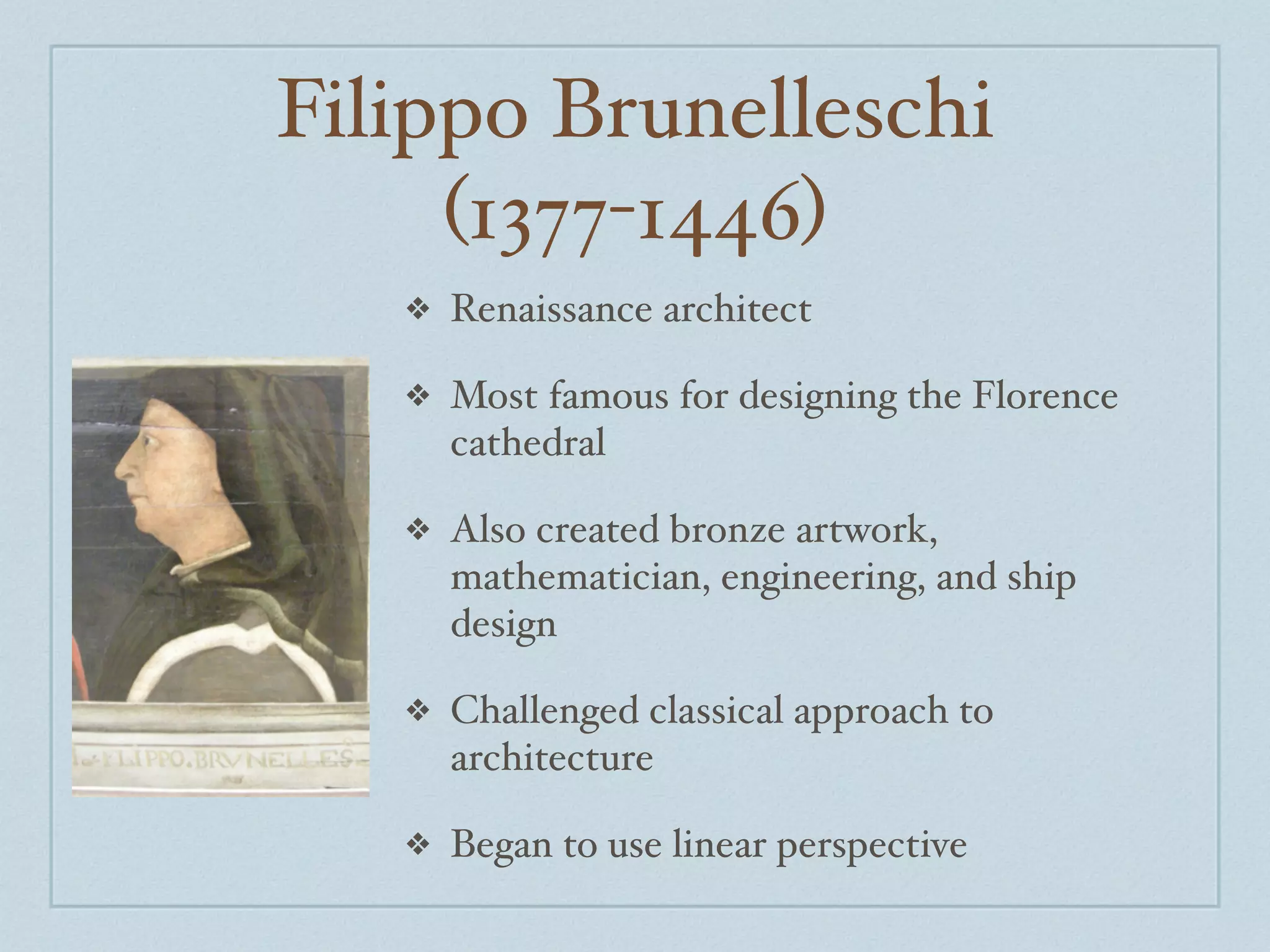
Filippo Brunelleschi
     (1377-1446)
   ❖   Renaissance architect

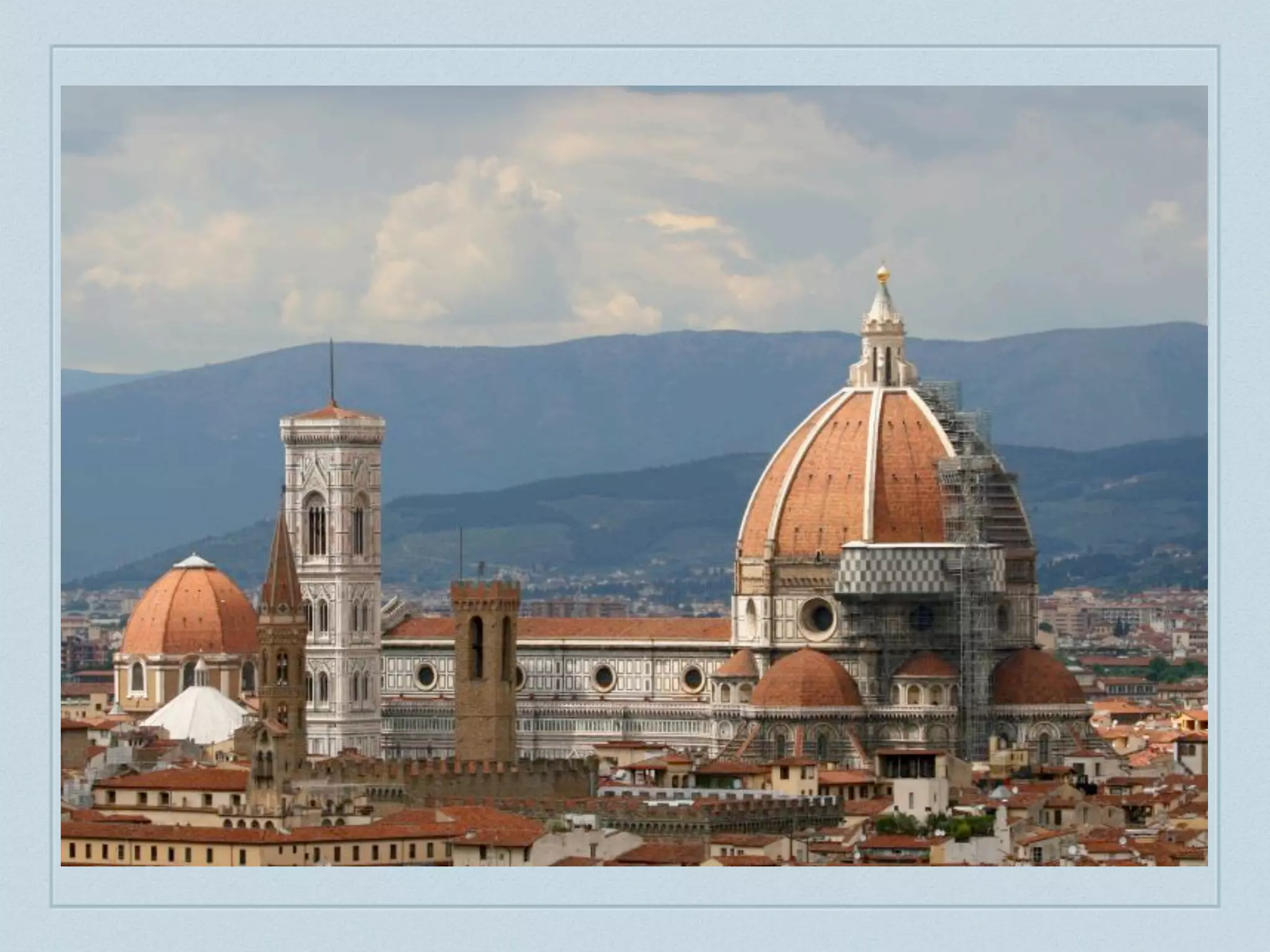
   ❖   Most famous for designing the Florence
       cathedral

   ❖   Also created bronze artwork,
       mathematician, engineering, and ship
       design

   ❖   Challenged classical approach to
       architecture

   ❖   Began to use linear perspective
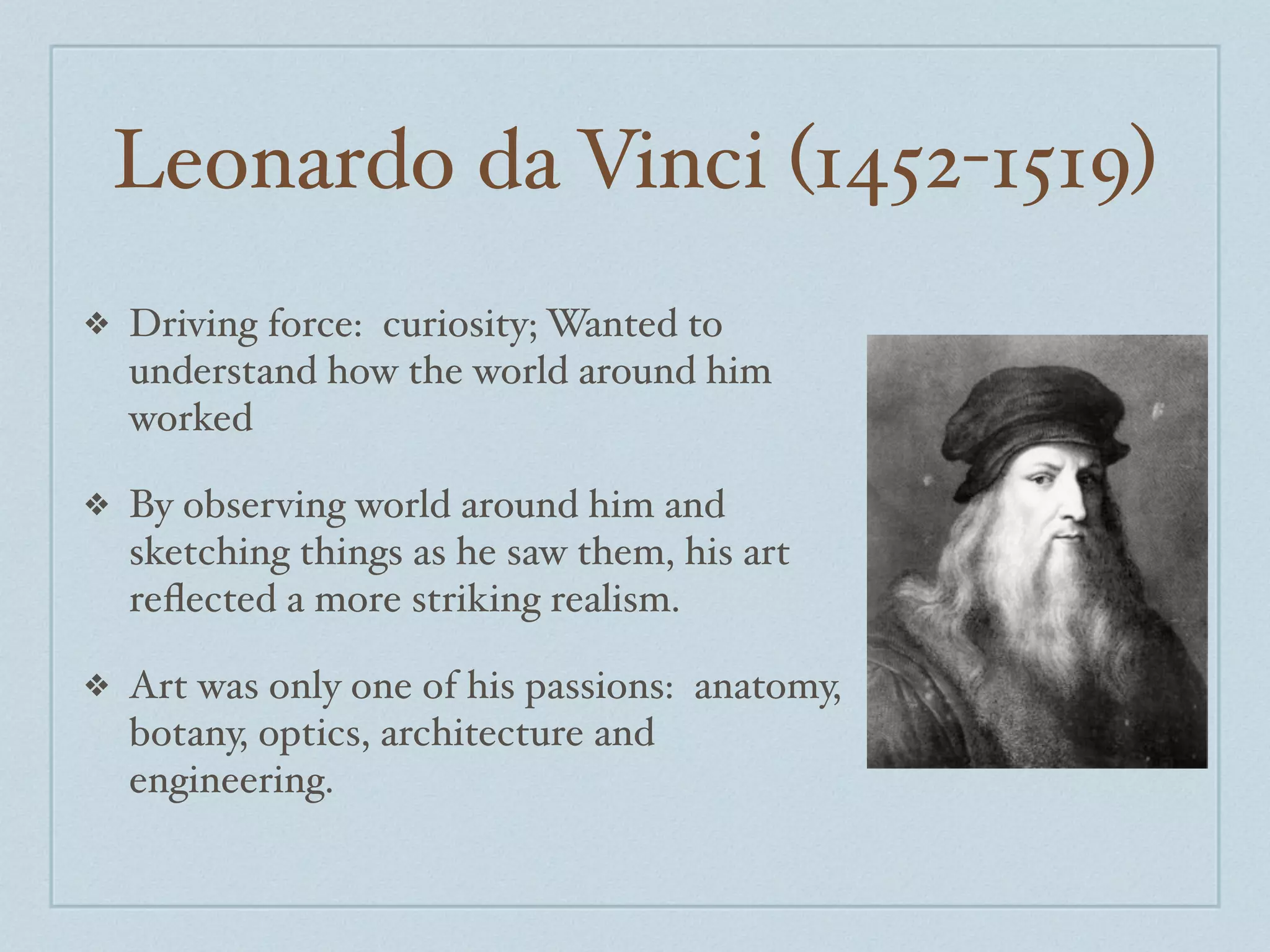
Leonardo da Vinci (1452-1519)
❖   Driving force: curiosity; Wanted to
    understand how the world around him
    worked

❖   By observing world around him and
    sketching things as he saw them, his art
    reflected a more striking realism.

❖   Art was only one of his passions: anatomy,
    botany, optics, architecture and
    engineering.
Video at:
http://www.youtube.com/watch?v=oG6kVqMb8pk
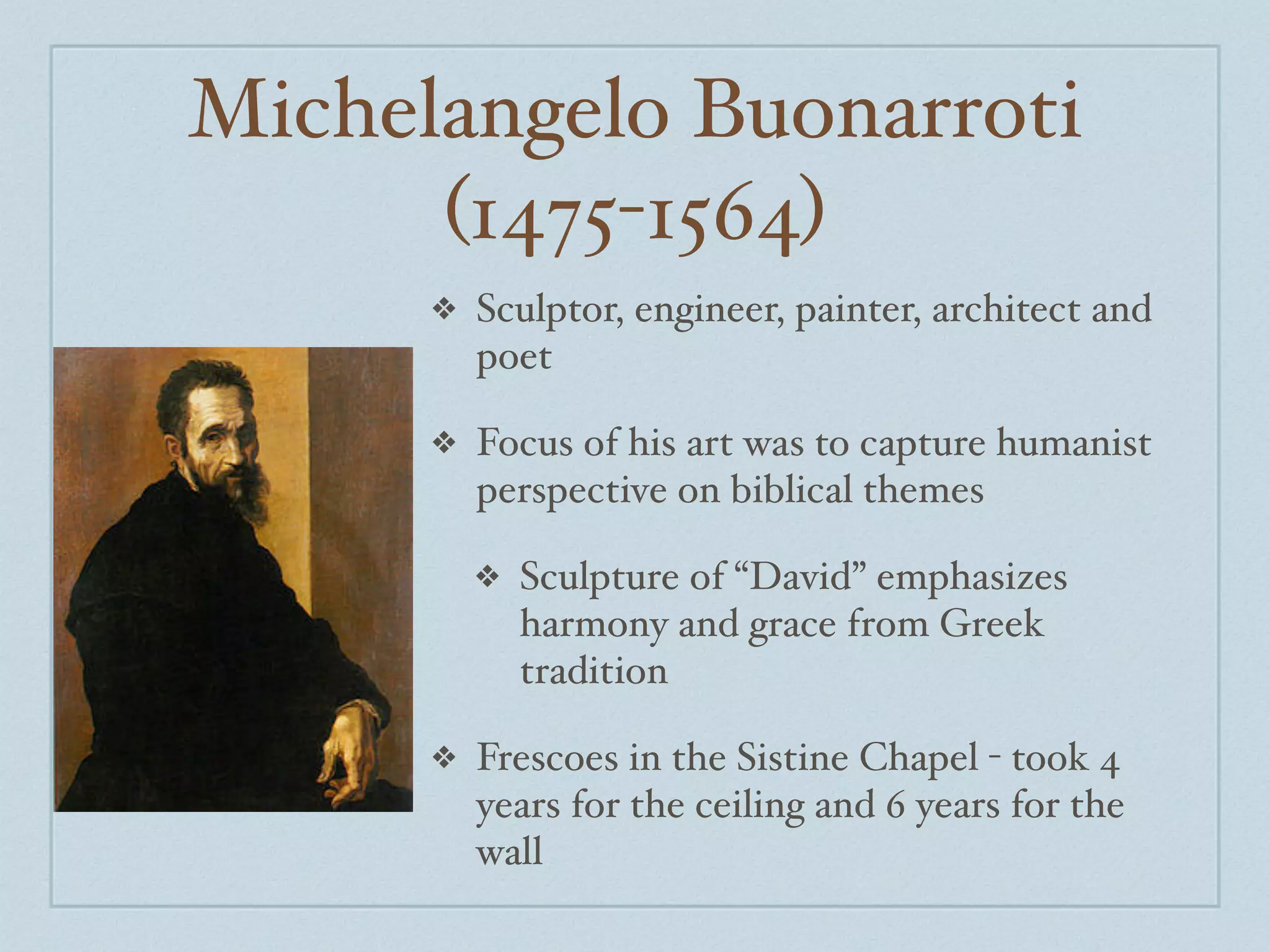
Michelangelo Buonarroti
      (1475-1564)
      ❖   Sculptor, engineer, painter, architect and
          poet

      ❖   Focus of his art was to capture humanist
          perspective on biblical themes

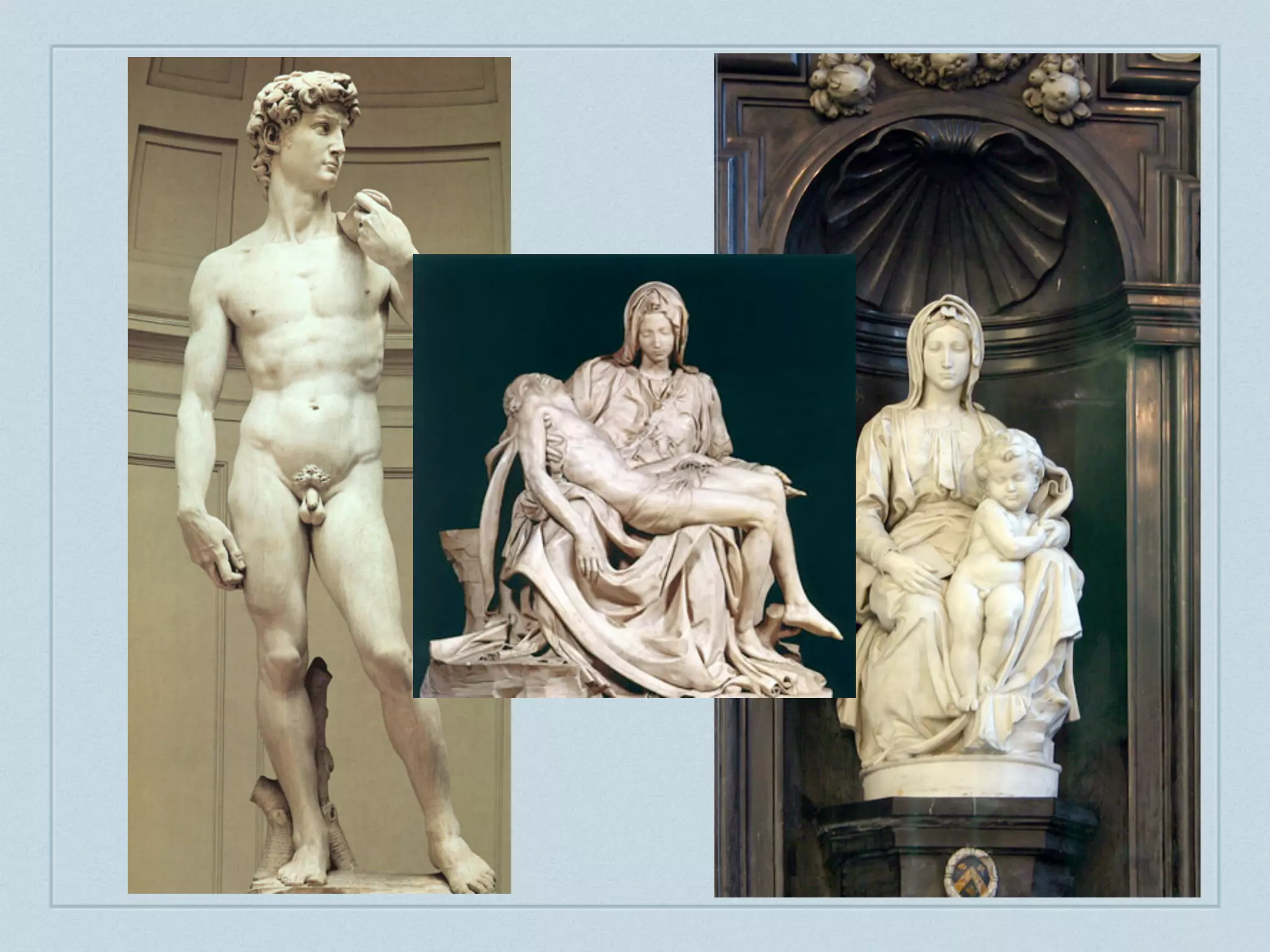
          ❖   Sculpture of “David” emphasizes
              harmony and grace from Greek
              tradition

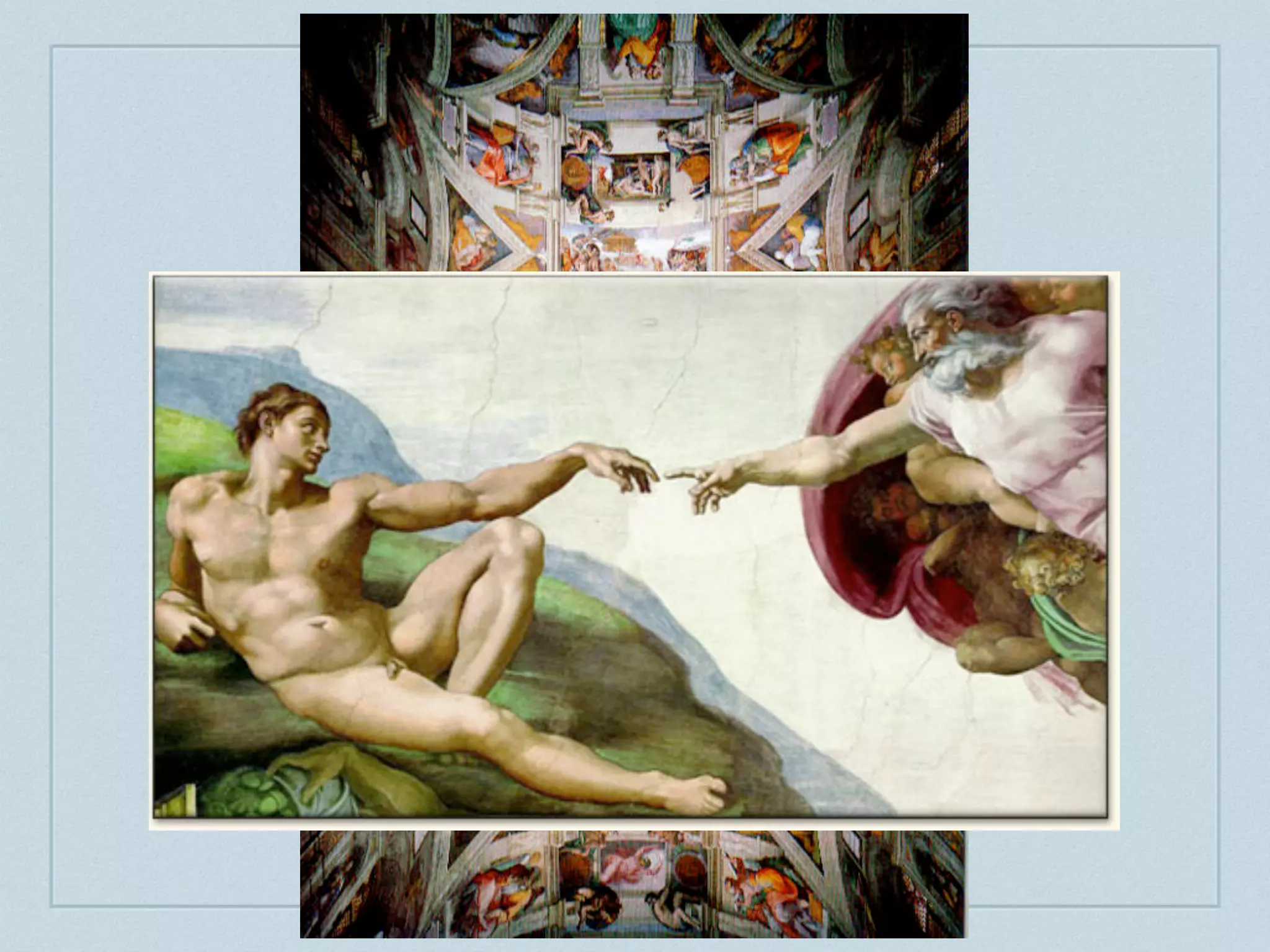
      ❖   Frescoes in the Sistine Chapel - took 4
          years for the ceiling and 6 years for the
          wall
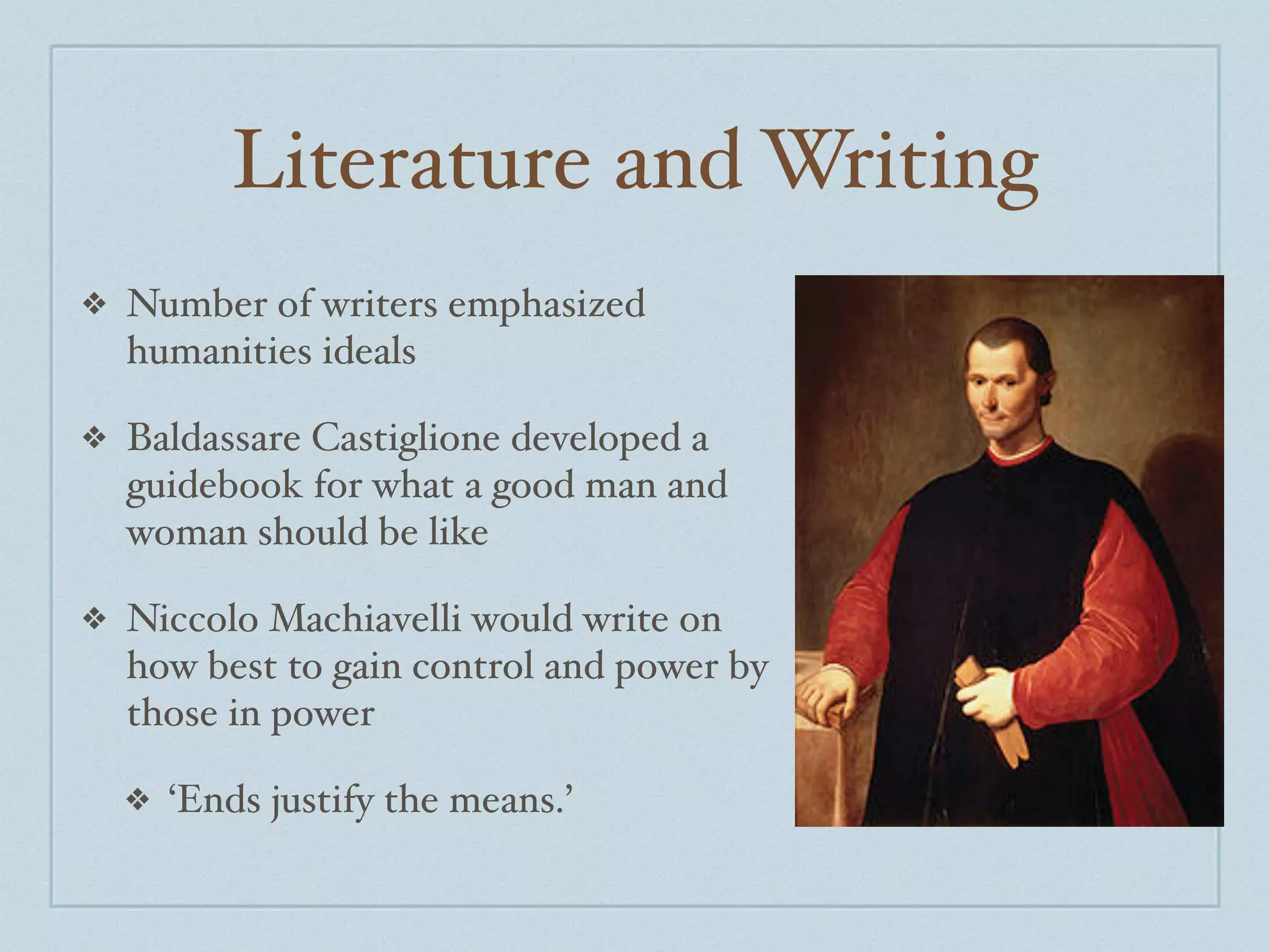
Literature and Writing
❖   Number of writers emphasized
    humanities ideals

❖   Baldassare Castiglione developed a
    guidebook for what a good man and
    woman should be like

❖   Niccolo Machiavelli would write on
    how best to gain control and power by
    those in power

    ❖   ‘Ends justify the means.’
Video at:
http://www.youtube.com/watch?v=s25kX24j250

02 - Renaissance II

  • 1.
    Renaissance Men/ Women What it takes to be a maestro
  • 2.
    Objectives ❖ Students will discuss aspects of Renaissance figures and identify what it means to be a Renaissance Person ❖ Students will analyze the changes in European thought and culture resulting from the Renaissance.
  • 3.
    Vocabulary ❖ Francesco Petarch ❖ Filippo Brunelleschi ❖ Leonardo da Vinci ❖ Michelangelo Buonarroti ❖ Niccolo Machiavelli
  • 4.
    Francesco Petarch (1304-1374) ❖ Considered the earliest humanist ❖ Poet & scholar ❖ Assembled library of Greek & Roman writings ❖ Revived interest and admiration for great Roman and Greek writers - Cicero, Homer, Virgil, etc.
  • 5.
    Greek & RomanInfluence ❖ Renaissance artists still continued to portray religious scenes ❖ Used Greek or Roman backgrounds to set them ❖ Focus was on realism and perspective ❖ Mixture of Greek and Roman influence with contemporary imagery
  • 6.
    Change from Gothic Architecture ❖ Renaissance architecture into a ‘social art’. ❖ From height and arches to a reflection of classical style of columns, arches and domes ❖ Cathedrals and other important buildings reflected this ideal
  • 7.
    Filippo Brunelleschi (1377-1446) ❖ Renaissance architect ❖ Most famous for designing the Florence cathedral ❖ Also created bronze artwork, mathematician, engineering, and ship design ❖ Challenged classical approach to architecture ❖ Began to use linear perspective
  • 9.
    Leonardo da Vinci(1452-1519) ❖ Driving force: curiosity; Wanted to understand how the world around him worked ❖ By observing world around him and sketching things as he saw them, his art reflected a more striking realism. ❖ Art was only one of his passions: anatomy, botany, optics, architecture and engineering.
  • 10.
  • 11.
    Michelangelo Buonarroti (1475-1564) ❖ Sculptor, engineer, painter, architect and poet ❖ Focus of his art was to capture humanist perspective on biblical themes ❖ Sculpture of “David” emphasizes harmony and grace from Greek tradition ❖ Frescoes in the Sistine Chapel - took 4 years for the ceiling and 6 years for the wall
  • 15.
    Literature and Writing ❖ Number of writers emphasized humanities ideals ❖ Baldassare Castiglione developed a guidebook for what a good man and woman should be like ❖ Niccolo Machiavelli would write on how best to gain control and power by those in power ❖ ‘Ends justify the means.’
  • 16.