Lesson 2
Sociocultural and Political
Evolution:
The Development of Societies
from the Hunting and
Gathering to the Agricultural,
Industrial, and Post-Industrial
Stages
Gerhard Lenski- an
American Sociologist argued
that human society
undergoes transformation
and evolution and in the
process develops
technological advancement.
“the more technology a
society has, the faster it
changes”
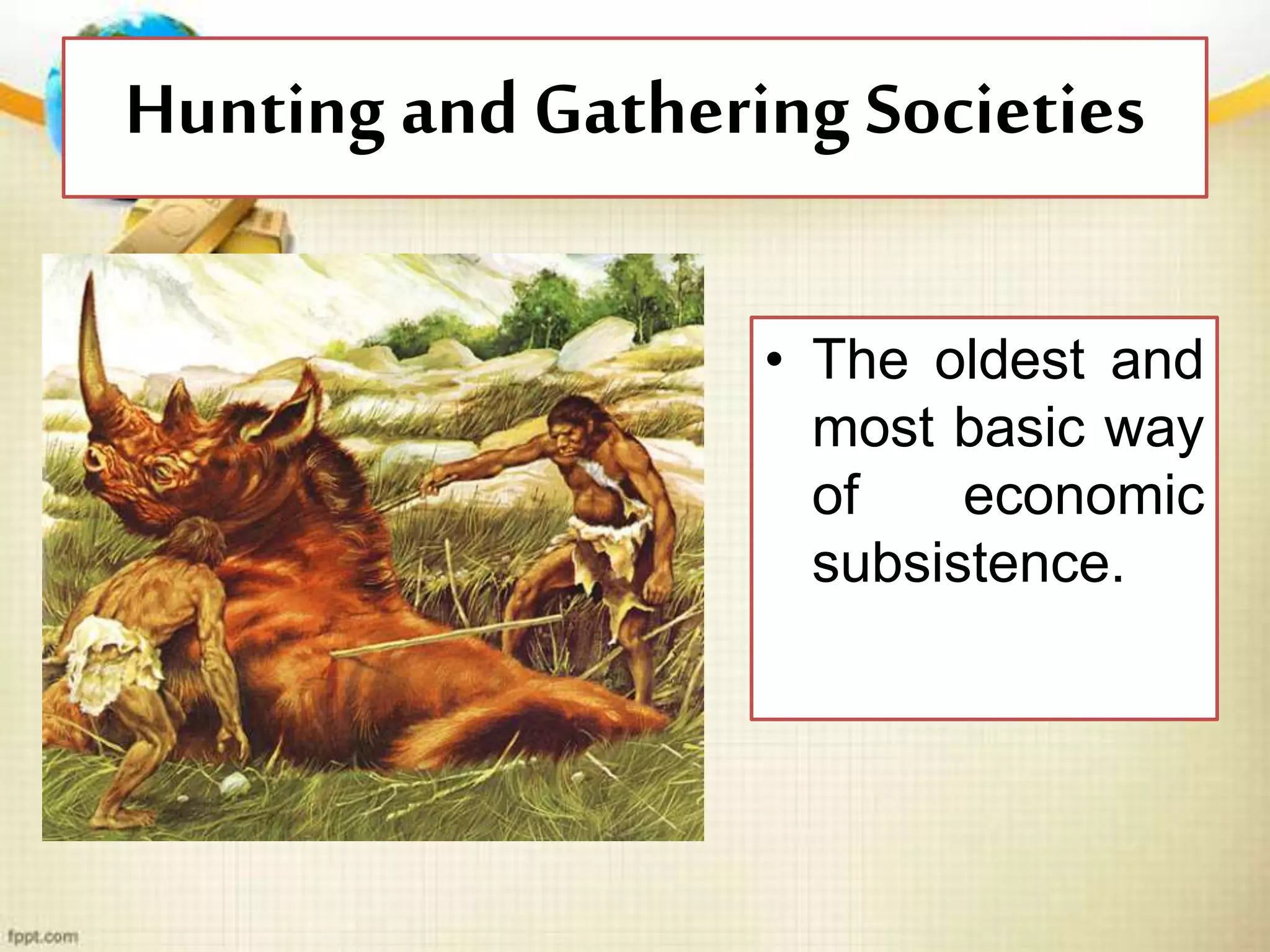
Hunting and Gathering Societies
• The oldest and
most basic way
of economic
subsistence.
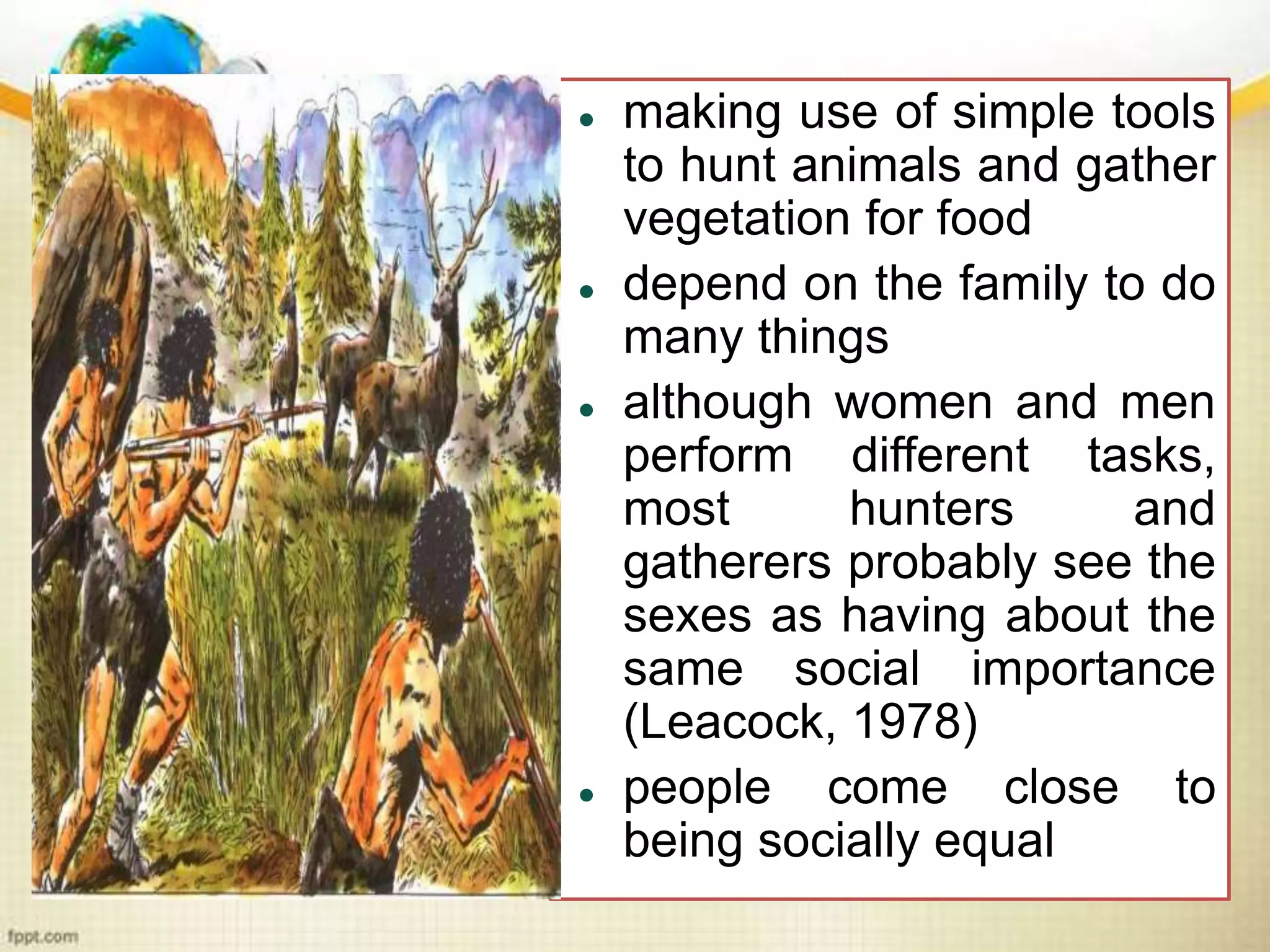
 making use of simple tools
to hunt animals and gather
vegetation for food
 depend on the family to do
many things
 although women and men
perform different tasks,
most hunters and
gatherers probably see the
sexes as having about the
same social importance
(Leacock, 1978)
 people come close to
being socially equal
`
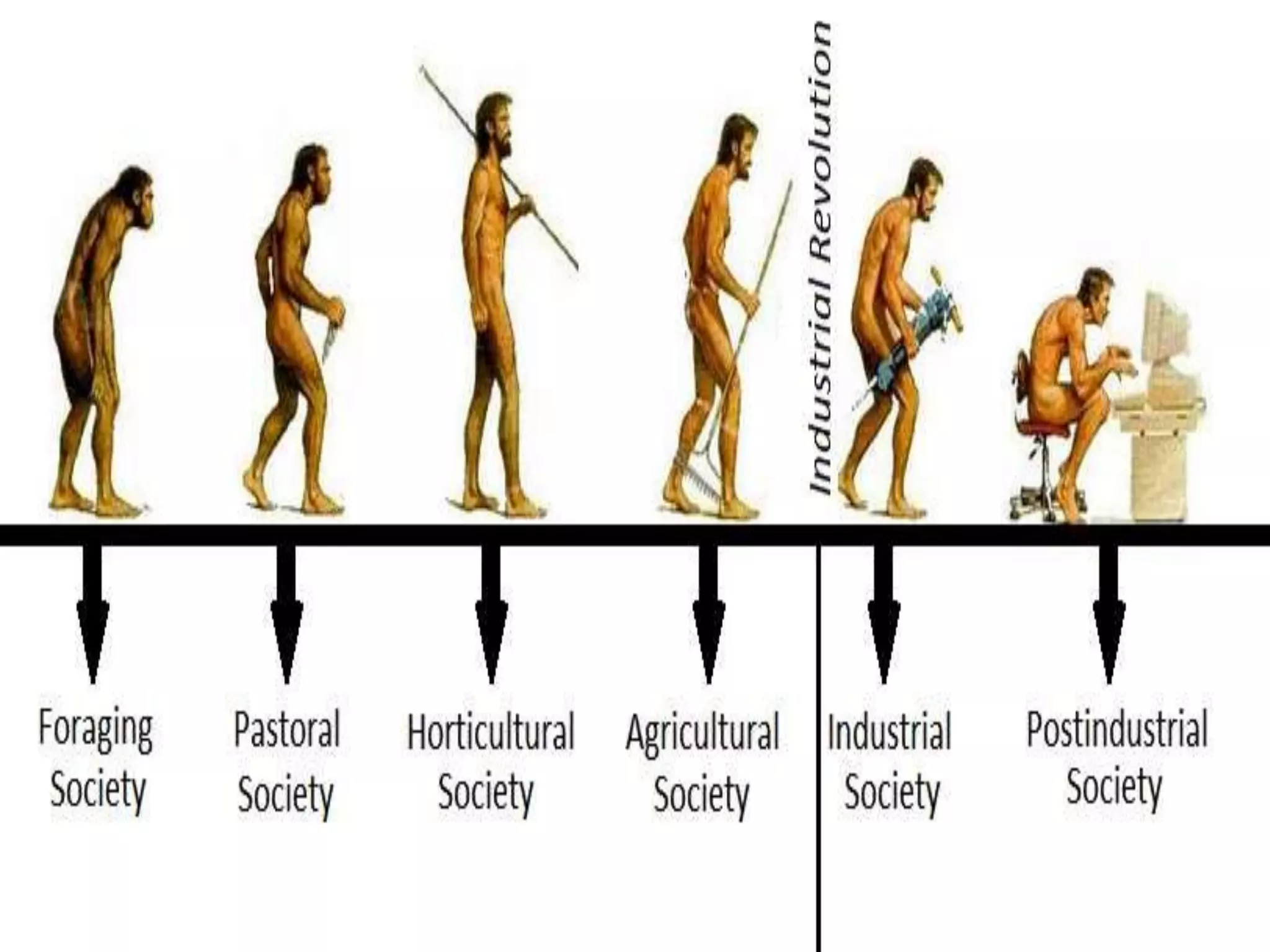
 large-scale cultivation using plows
harnessed to animals or more
powerful energy sources
 money as a common standard of
exchange, and the old barter
system was abandoned
 extreme social inequality, typically
more than modern societies such
as our own
 agriculture raises men to a
position of social dominance
 religion reinforces the power of
elites
Horticultural and Pastoral Societies
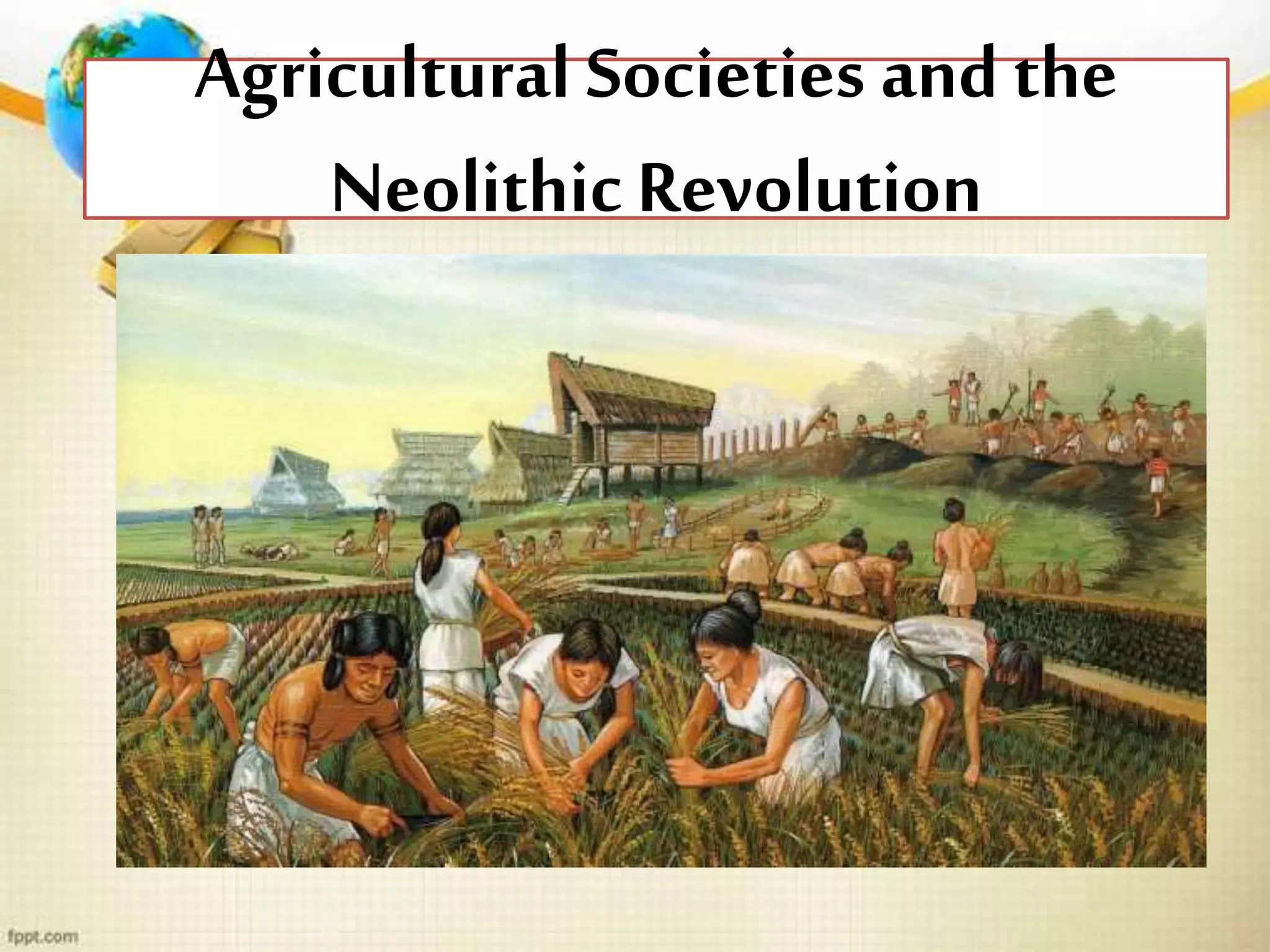
Agricultural Societies and the
Neolithic Revolution
• Human began to farm and domesticate
animals.
• Animal domestication provided important
contributions to the Neolithic people.
• The development of agriculture also led to
an increase in social inequality
• the production of goods using
advanced sources of energy to
drive large machinery
• water power and then steam
boilers to operate mills and
factories filled with large
machines
• change was so rapid that it
sparked the birth of sociology
itself
• weakening of close working
relationships, strong family ties,
and many of the traditional
Industrial Societies
 the production of information
using computer technology
 less and less labour force
 the postindustrial society is at
the heart of globalization
 technology has improved life
and brought the world's people
closer but establishing peace,
ensuring justice, and protecting
the environment are problems
that technology alone cannot
solve
Post-Industrial Societies
Characteristics:
• Transfer of labor workforce from
manufacturing to service
• A significant increase in the number of
professional and technical employment
and a decline in the number of skilled and
semiskilled workers
• Education as the basis of social mobility
• Human capital
• Application of “intellectual technology”
• Focus on communication infrastructure
• Knowledge as source of invention and
innovation
Political Evolution
and the Development of
Early Civilization
Four Major Civilizations
• Sumerian
• Indus Valley
• Shang
• Egyptian
• Developed and highly advanced cities
• Well-defined city centers
• Complex and systematic institutions
• Organized and centralized system of
government
• Formalized and complex form of religion
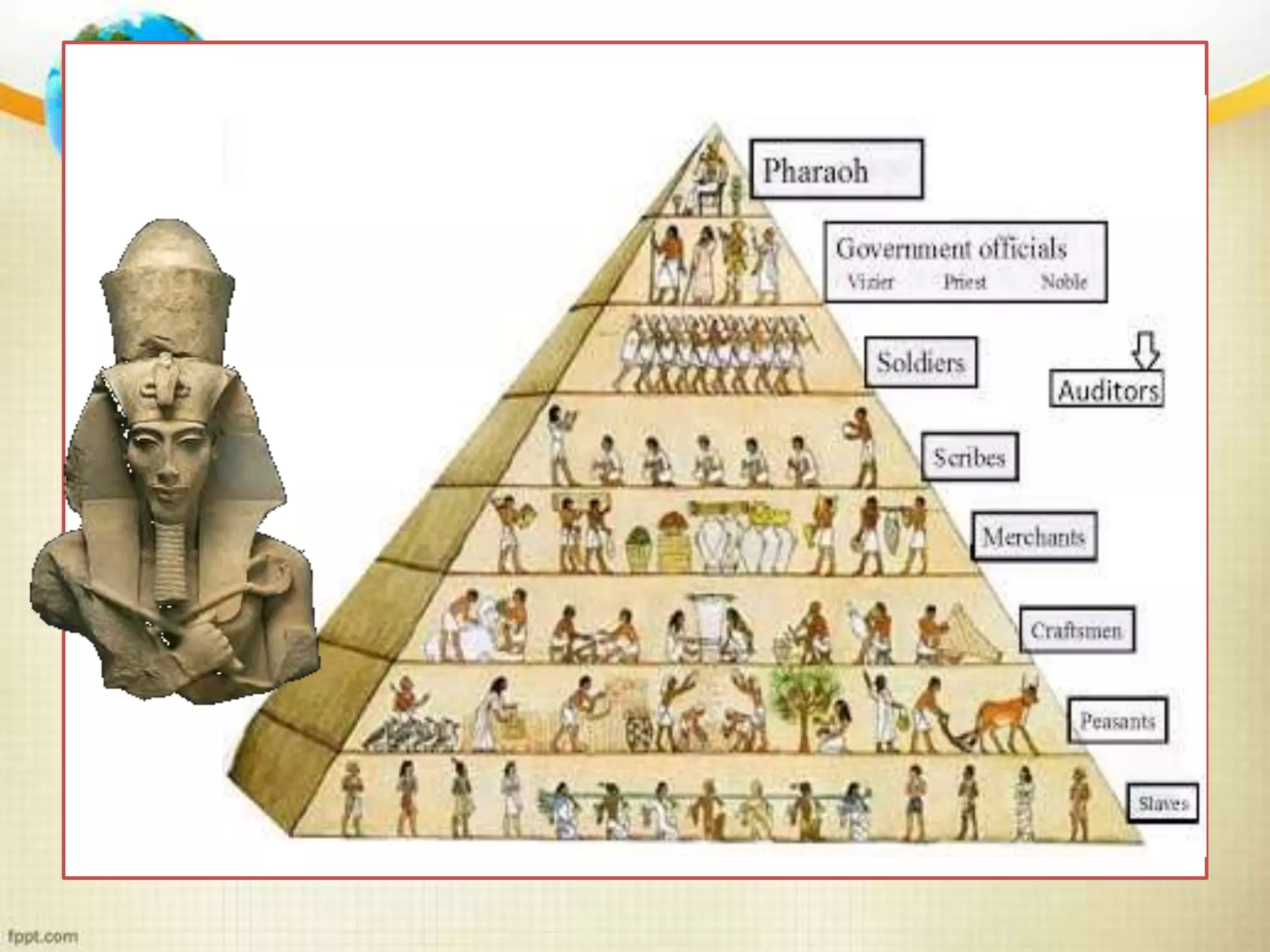
• Job specialization
• Development of Social classes
• Advance technology
• System of writing and recording
As a Political leader….
• Craft laws
• Implement laws
• Impose justice and punishment
• Collect taxes
• Sometimes act as religious leaders as well
Social and PoliticalSystems
Sociocultural and political evolution

Sociocultural and political evolution

  • 3.
    Lesson 2 Sociocultural andPolitical Evolution: The Development of Societies from the Hunting and Gathering to the Agricultural, Industrial, and Post-Industrial Stages
  • 4.
    Gerhard Lenski- an AmericanSociologist argued that human society undergoes transformation and evolution and in the process develops technological advancement. “the more technology a society has, the faster it changes”
  • 5.
    Hunting and GatheringSocieties • The oldest and most basic way of economic subsistence.
  • 6.
     making useof simple tools to hunt animals and gather vegetation for food  depend on the family to do many things  although women and men perform different tasks, most hunters and gatherers probably see the sexes as having about the same social importance (Leacock, 1978)  people come close to being socially equal
  • 7.
    `  large-scale cultivationusing plows harnessed to animals or more powerful energy sources  money as a common standard of exchange, and the old barter system was abandoned  extreme social inequality, typically more than modern societies such as our own  agriculture raises men to a position of social dominance  religion reinforces the power of elites Horticultural and Pastoral Societies
  • 8.
    Agricultural Societies andthe Neolithic Revolution
  • 11.
    • Human beganto farm and domesticate animals. • Animal domestication provided important contributions to the Neolithic people. • The development of agriculture also led to an increase in social inequality
  • 12.
    • the productionof goods using advanced sources of energy to drive large machinery • water power and then steam boilers to operate mills and factories filled with large machines • change was so rapid that it sparked the birth of sociology itself • weakening of close working relationships, strong family ties, and many of the traditional Industrial Societies
  • 13.
     the productionof information using computer technology  less and less labour force  the postindustrial society is at the heart of globalization  technology has improved life and brought the world's people closer but establishing peace, ensuring justice, and protecting the environment are problems that technology alone cannot solve Post-Industrial Societies
  • 14.
    Characteristics: • Transfer oflabor workforce from manufacturing to service • A significant increase in the number of professional and technical employment and a decline in the number of skilled and semiskilled workers • Education as the basis of social mobility • Human capital
  • 15.
    • Application of“intellectual technology” • Focus on communication infrastructure • Knowledge as source of invention and innovation
  • 16.
    Political Evolution and theDevelopment of Early Civilization
  • 17.
    Four Major Civilizations •Sumerian • Indus Valley • Shang • Egyptian
  • 18.
    • Developed andhighly advanced cities • Well-defined city centers • Complex and systematic institutions • Organized and centralized system of government • Formalized and complex form of religion • Job specialization • Development of Social classes • Advance technology • System of writing and recording
  • 19.
    As a Politicalleader…. • Craft laws • Implement laws • Impose justice and punishment • Collect taxes • Sometimes act as religious leaders as well
  • 20.