Challenges to the
         Church
Unintended Consequences From the Renaissance?
Objectives


❖   Students will analyze factors that encouraged the Protestant
    Reformation.

❖   Students will analyze the changes in European thought and
    culture resulting from the Renaissance.
Vocabulary

❖   indulgences: pardon for sins committed during a person’s
    lifetime

❖   diet: assembly or legislature; assembly of Princes

❖   predestination: Calvinist belief that God long ago determined
    who would gain salvation

❖   theocracy: government run by religious leaders
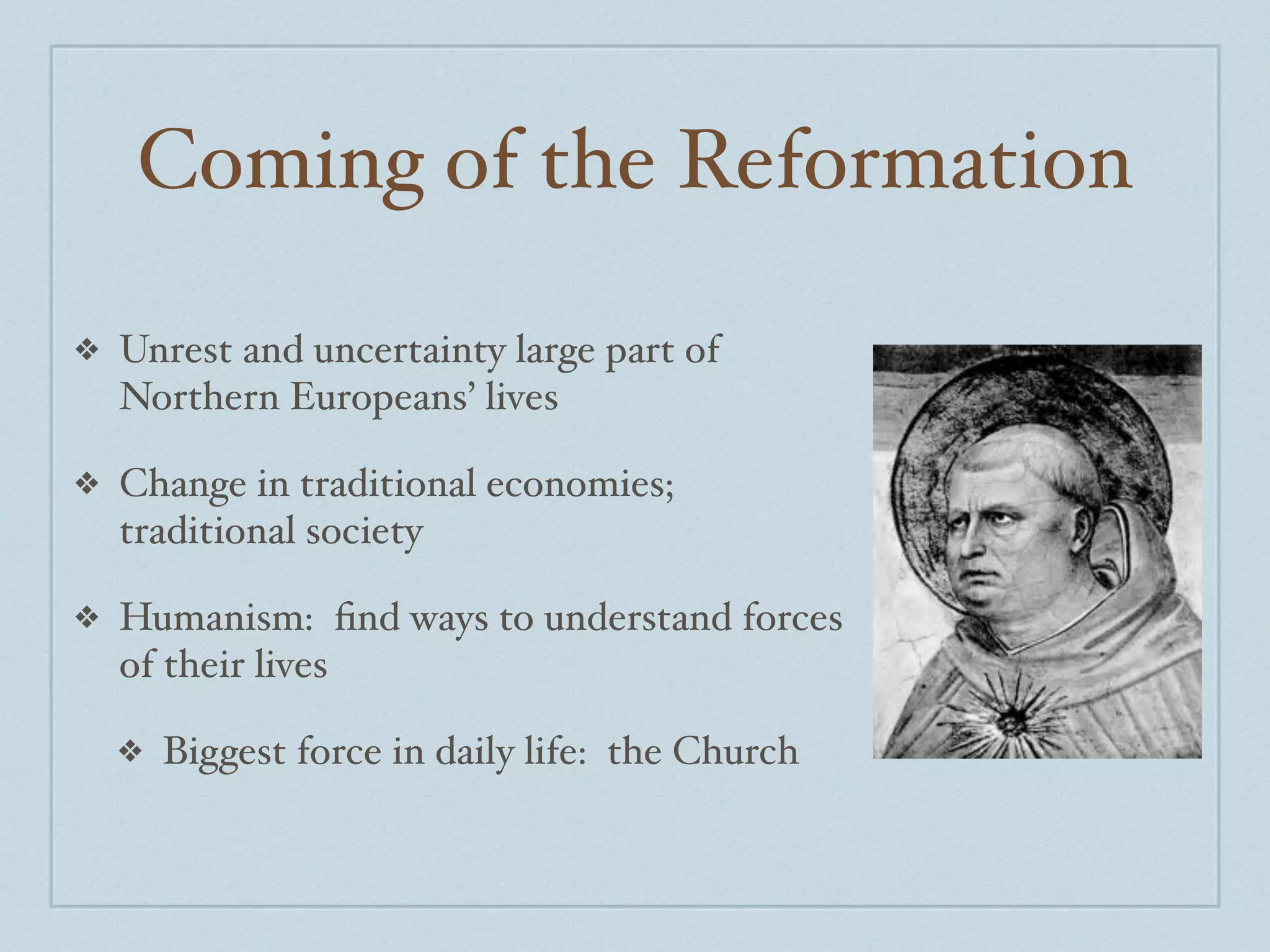
Coming of the Reformation

❖   Unrest and uncertainty large part of
    Northern Europeans’ lives

❖   Change in traditional economies;
    traditional society

❖   Humanism: find ways to understand forces
    of their lives

    ❖   Biggest force in daily life: the Church
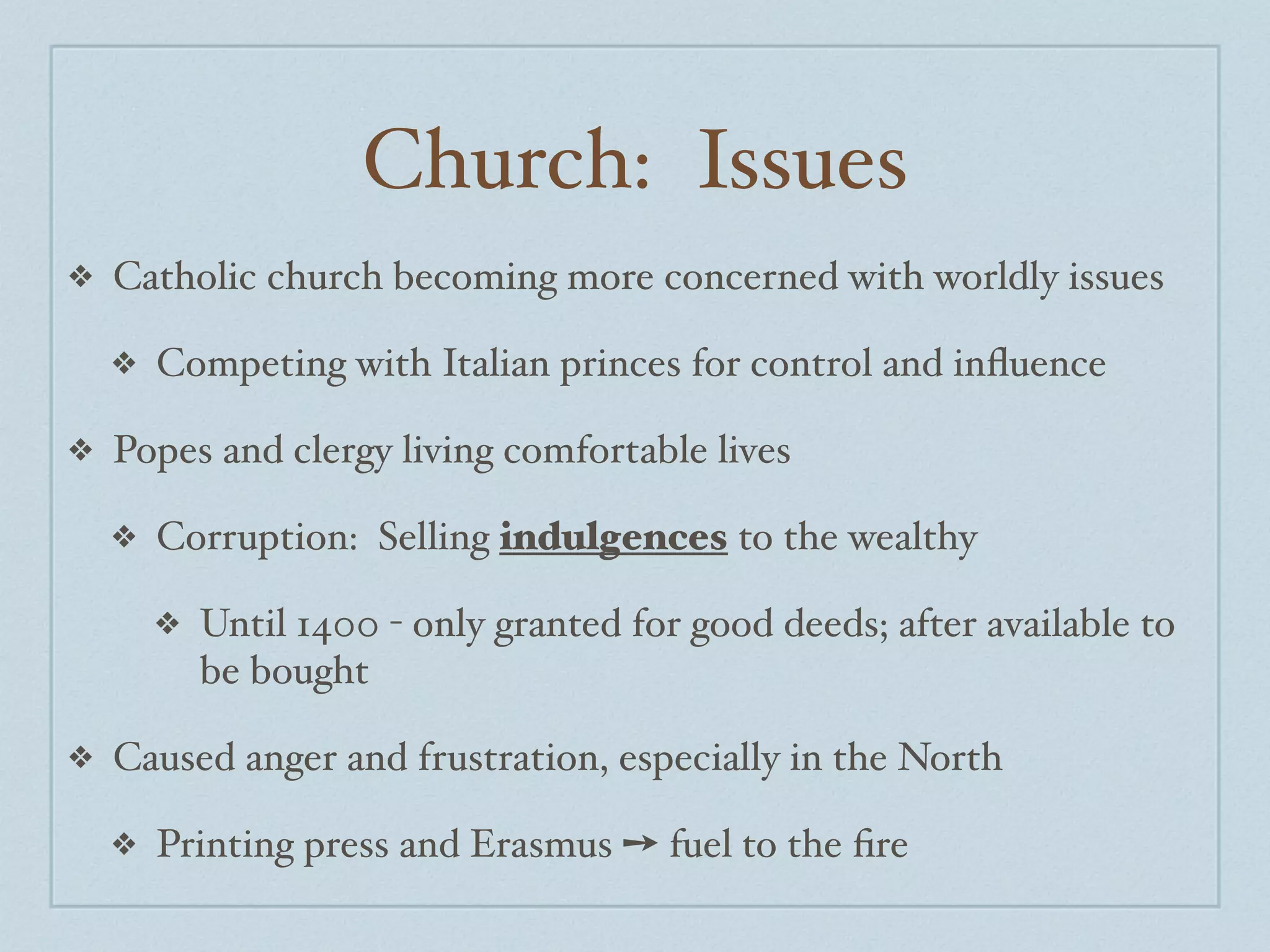
Church: Issues
❖   Catholic church becoming more concerned with worldly issues

    ❖   Competing with Italian princes for control and influence

❖   Popes and clergy living comfortable lives

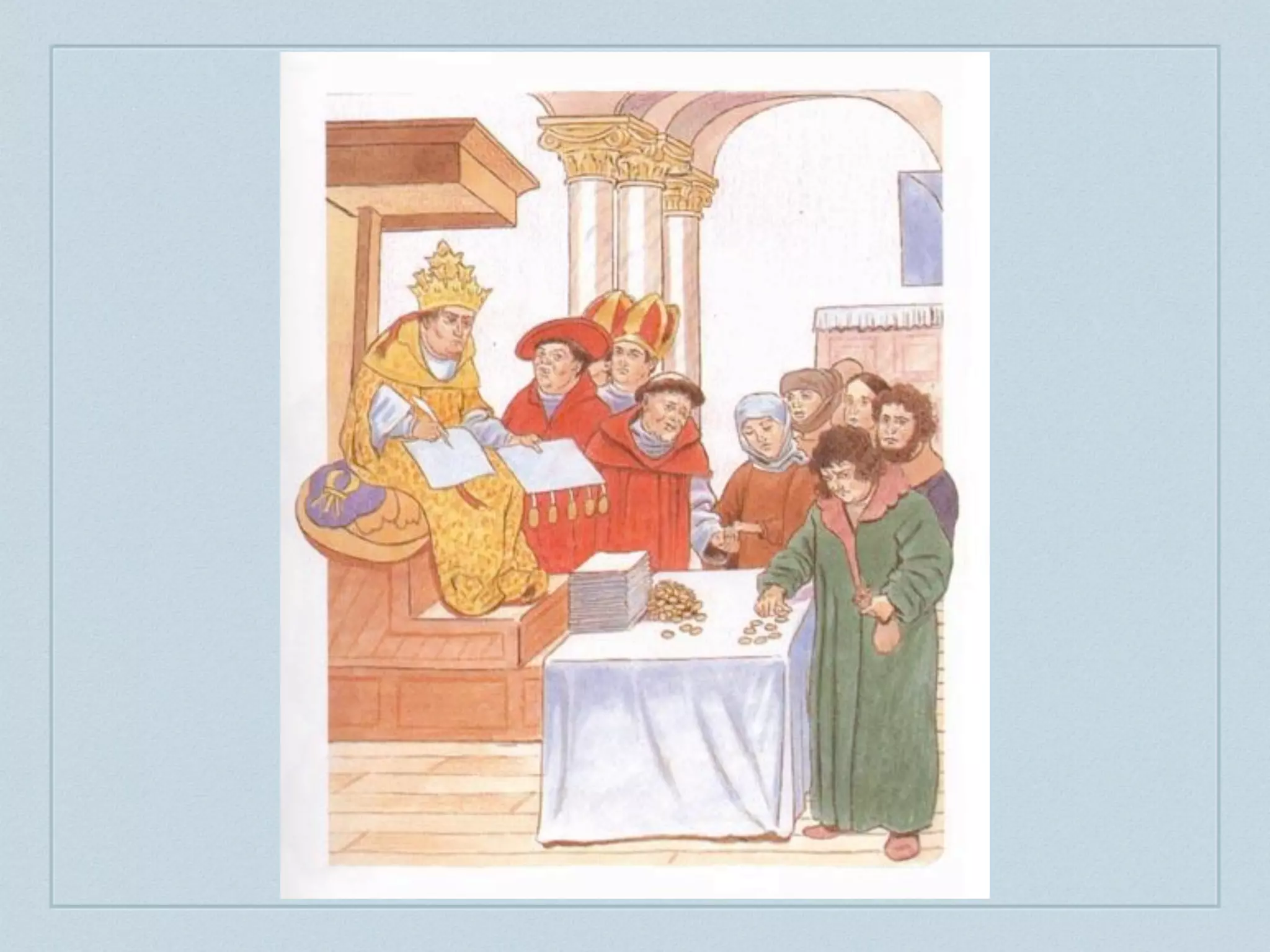
    ❖   Corruption: Selling indulgences to the wealthy

        ❖   Until 1400 - only granted for good deeds; after available to
            be bought

❖   Caused anger and frustration, especially in the North

    ❖   Printing press and Erasmus ➙ fuel to the fire
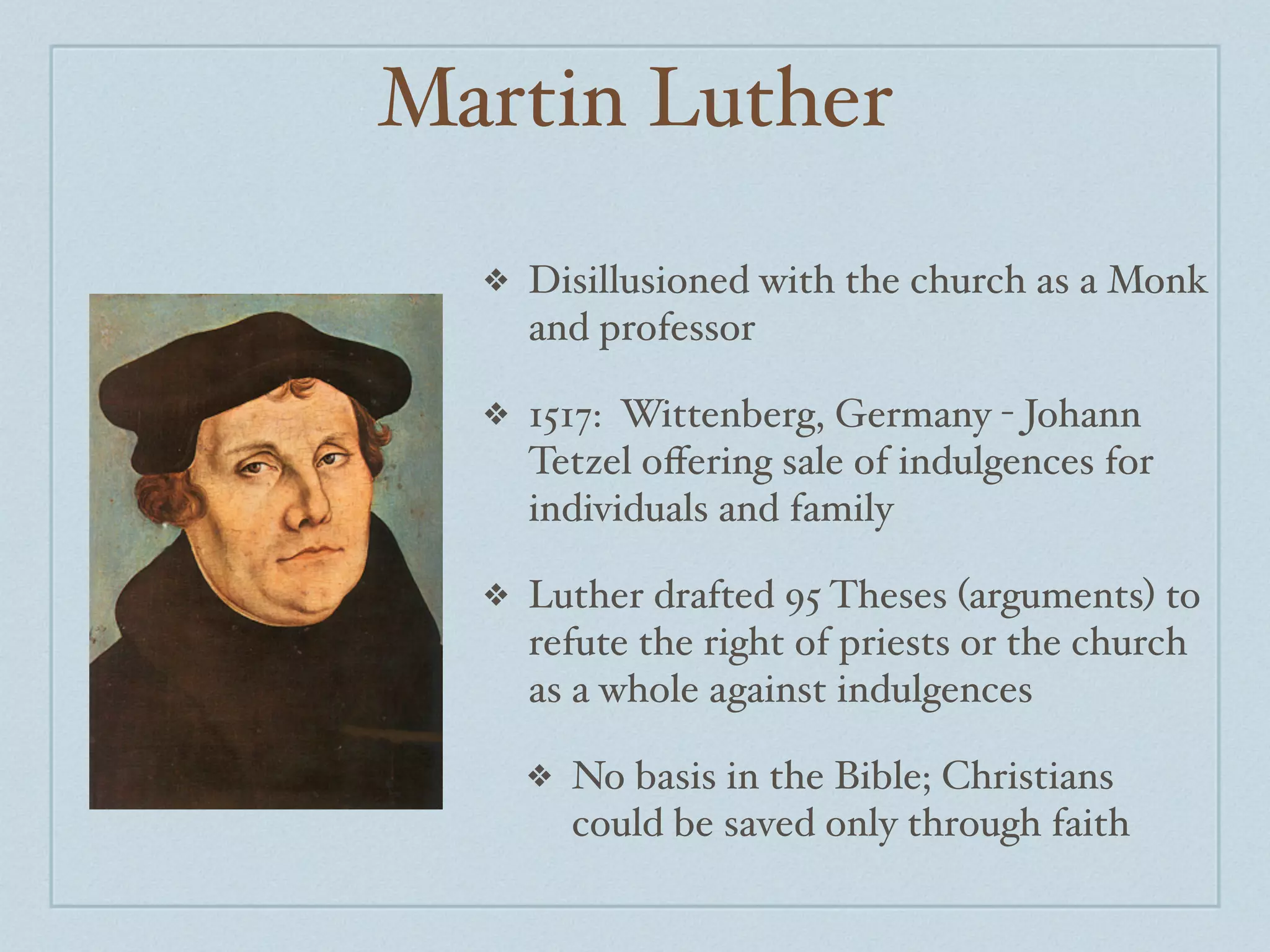
Martin Luther
  ❖   Disillusioned with the church as a Monk
      and professor

  ❖   1517: Wittenberg, Germany - Johann
      Tetzel offering sale of indulgences for
      individuals and family

  ❖   Luther drafted 95 Theses (arguments) to
      refute the right of priests or the church
      as a whole against indulgences

      ❖   No basis in the Bible; Christians
          could be saved only through faith
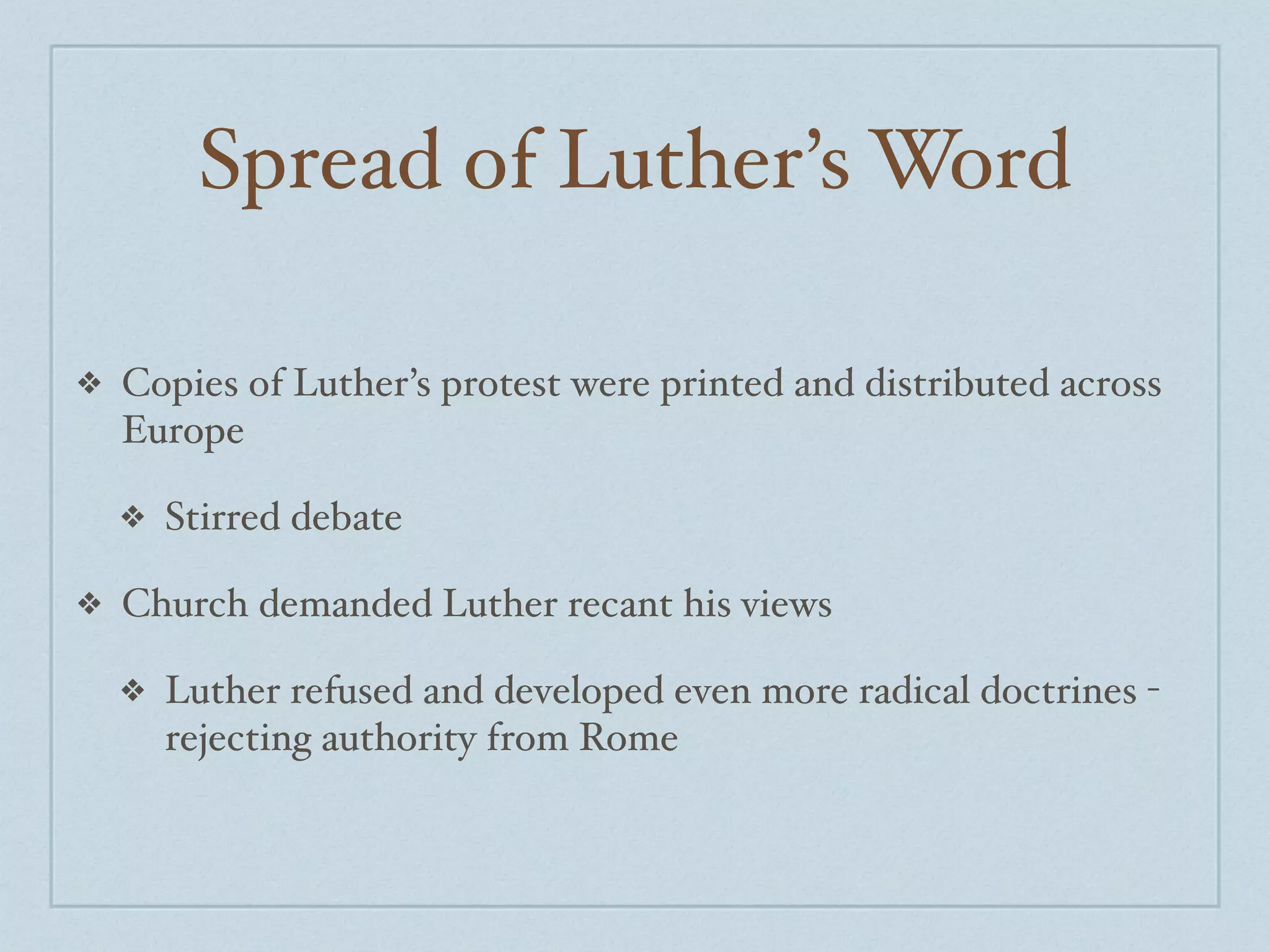
Spread of Luther’s Word

❖   Copies of Luther’s protest were printed and distributed across
    Europe

    ❖   Stirred debate

❖   Church demanded Luther recant his views

    ❖   Luther refused and developed even more radical doctrines -
        rejecting authority from Rome
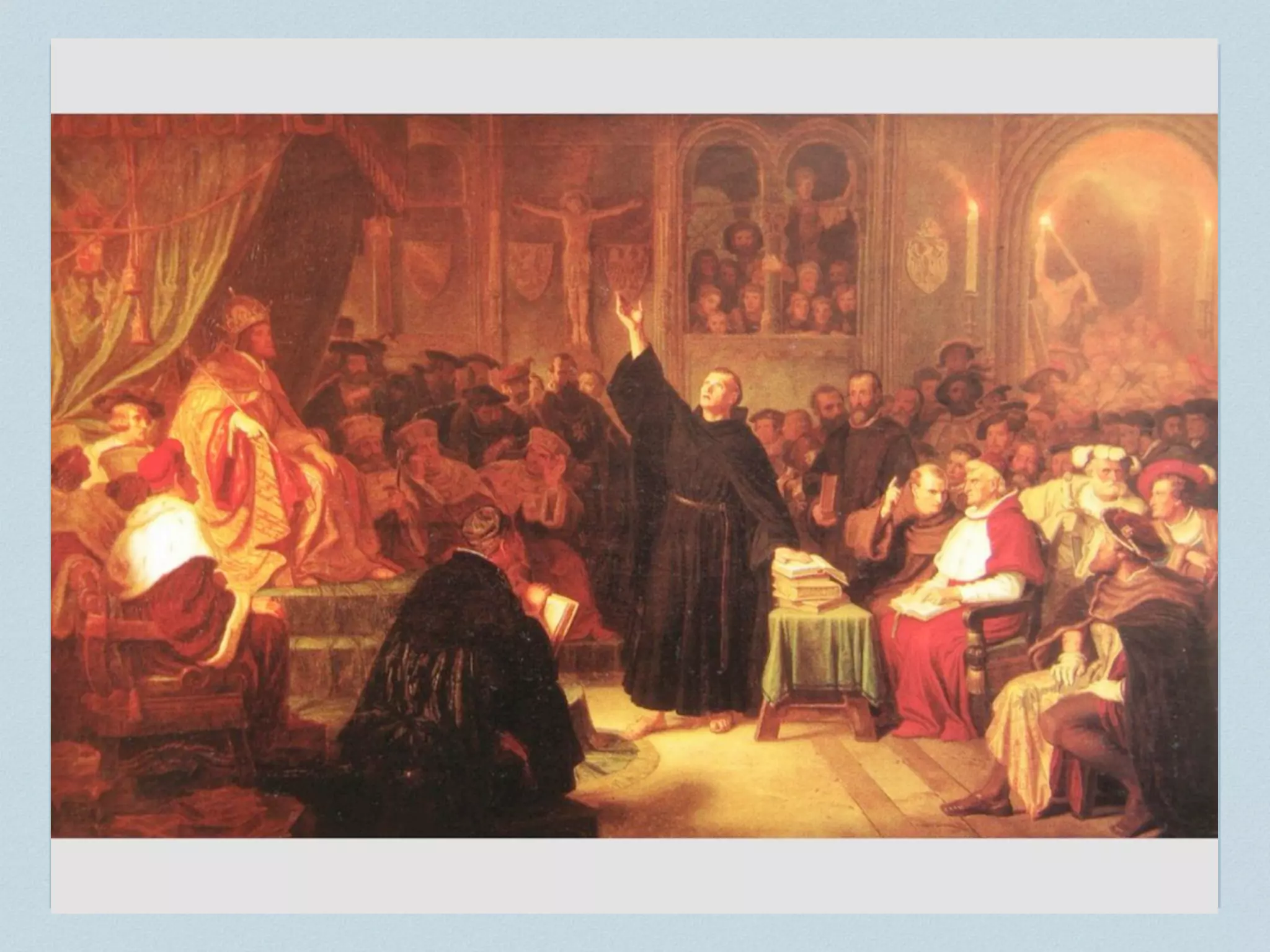
Outlaw or Hero?

❖   1521: Pope Leo X excommunicated Luther

    ❖   Charles V summoned Luther to the diet to demand he give
        up his views; Luther refused.

❖   Charles V declared Luther an outlaw; a crime to give him food
    or shelter

❖   Luther still had many friends and supporters; support grew
Luther’s Movement
❖   New ideas spread quickly throughout the land

❖   Many denouncements of the Church abuses and the hypocrisy
    that was seen

❖   Lutherans became Protestants

❖   At the grassroots level: Change of peasants life (Peasants Revolt
    - 1524)

    ❖   For many German Princes: opportunity to throw off rule by
        Church and Holy Roman Emperor
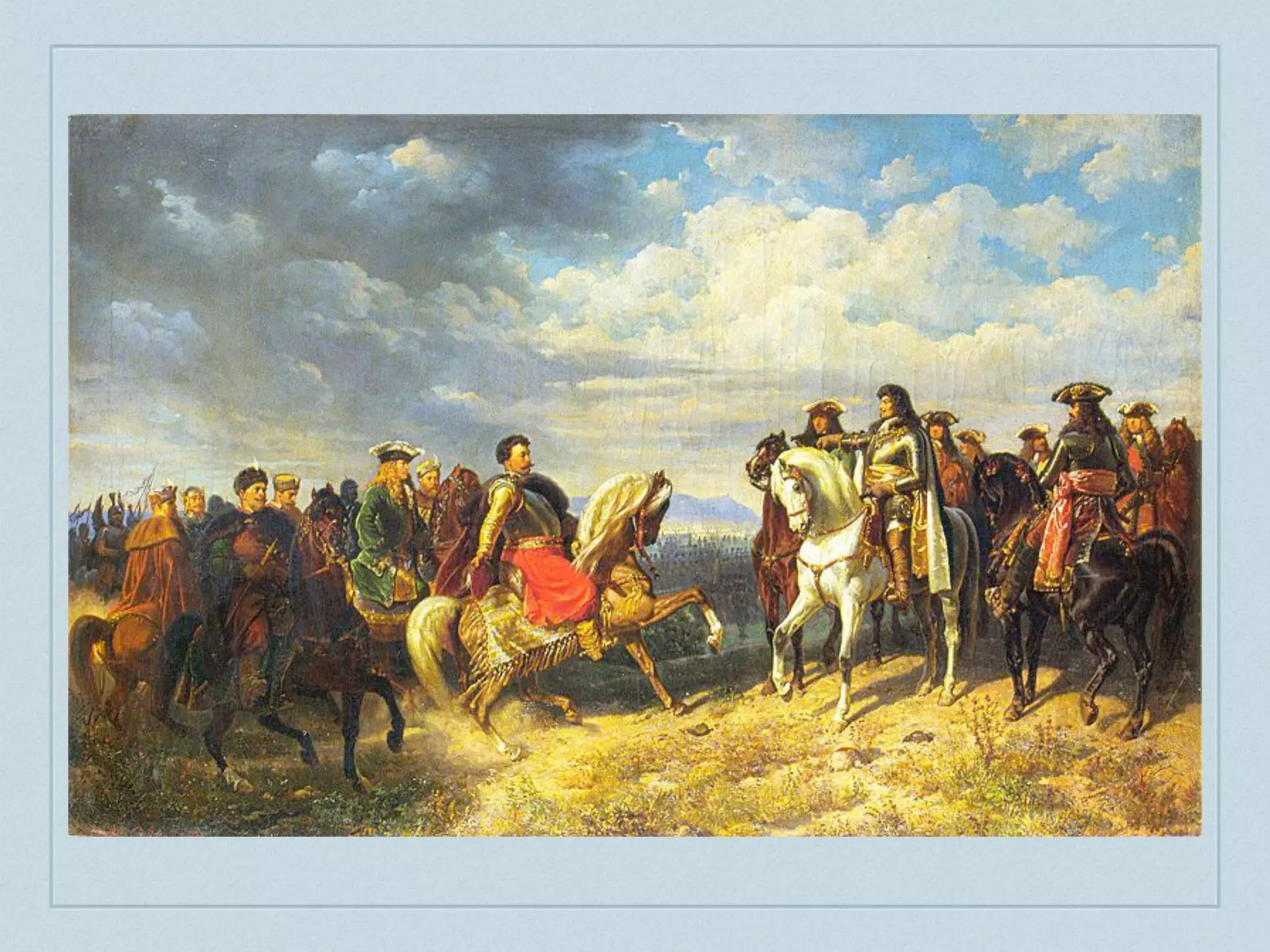
Peace of Augsburg (1555)

❖   Charles V tried to force princes back into the church

❖   Resulted in wars - costly

❖   Peace of Augsburg allowed princes to decide religion for
    themselves

    ❖   North: Protestant; South: Catholic
Switzerland Reformation
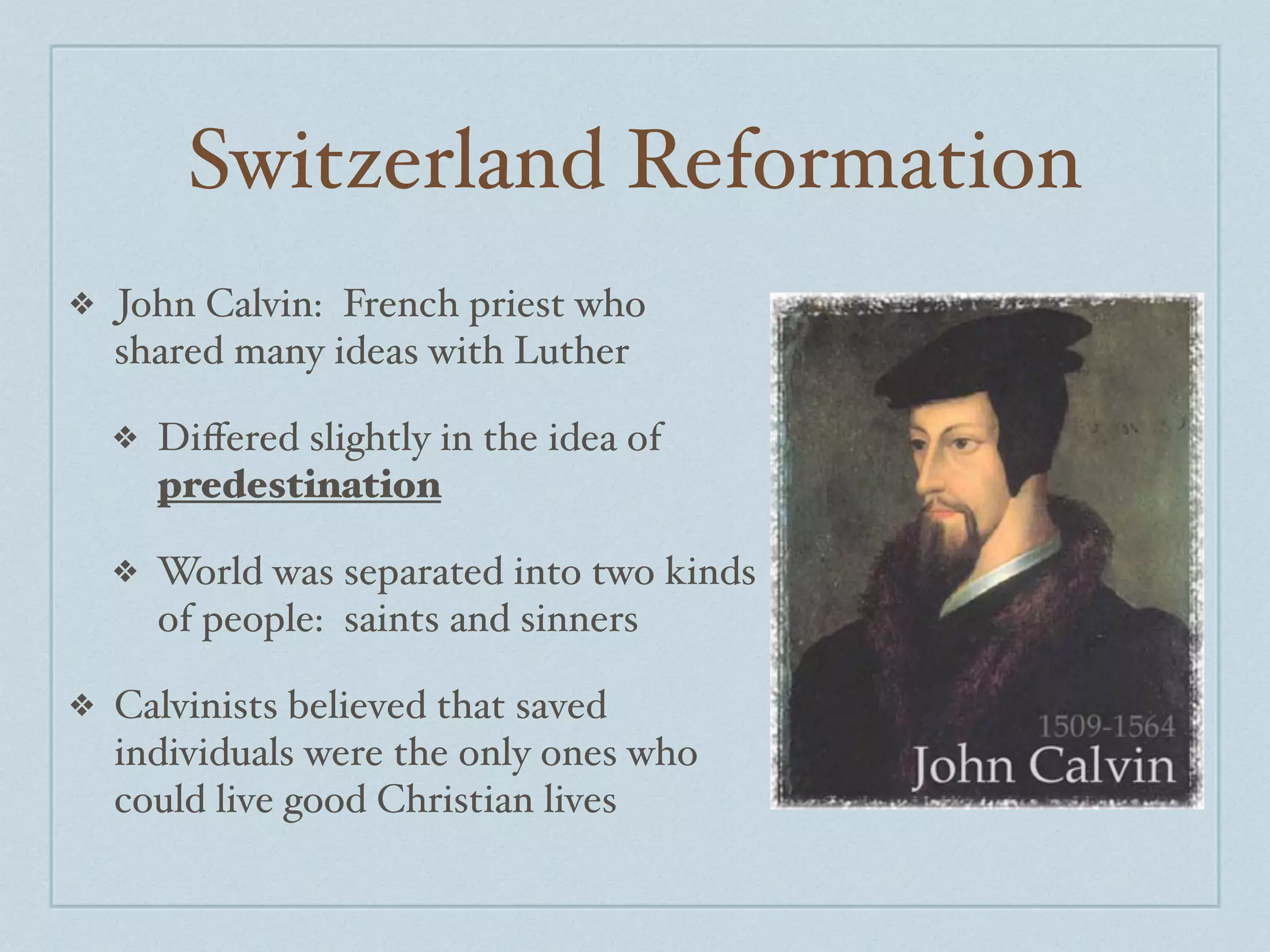
❖   John Calvin: French priest who
    shared many ideas with Luther

    ❖   Differed slightly in the idea of
        predestination

    ❖   World was separated into two kinds
        of people: saints and sinners

❖   Calvinists believed that saved
    individuals were the only ones who
    could live good Christian lives
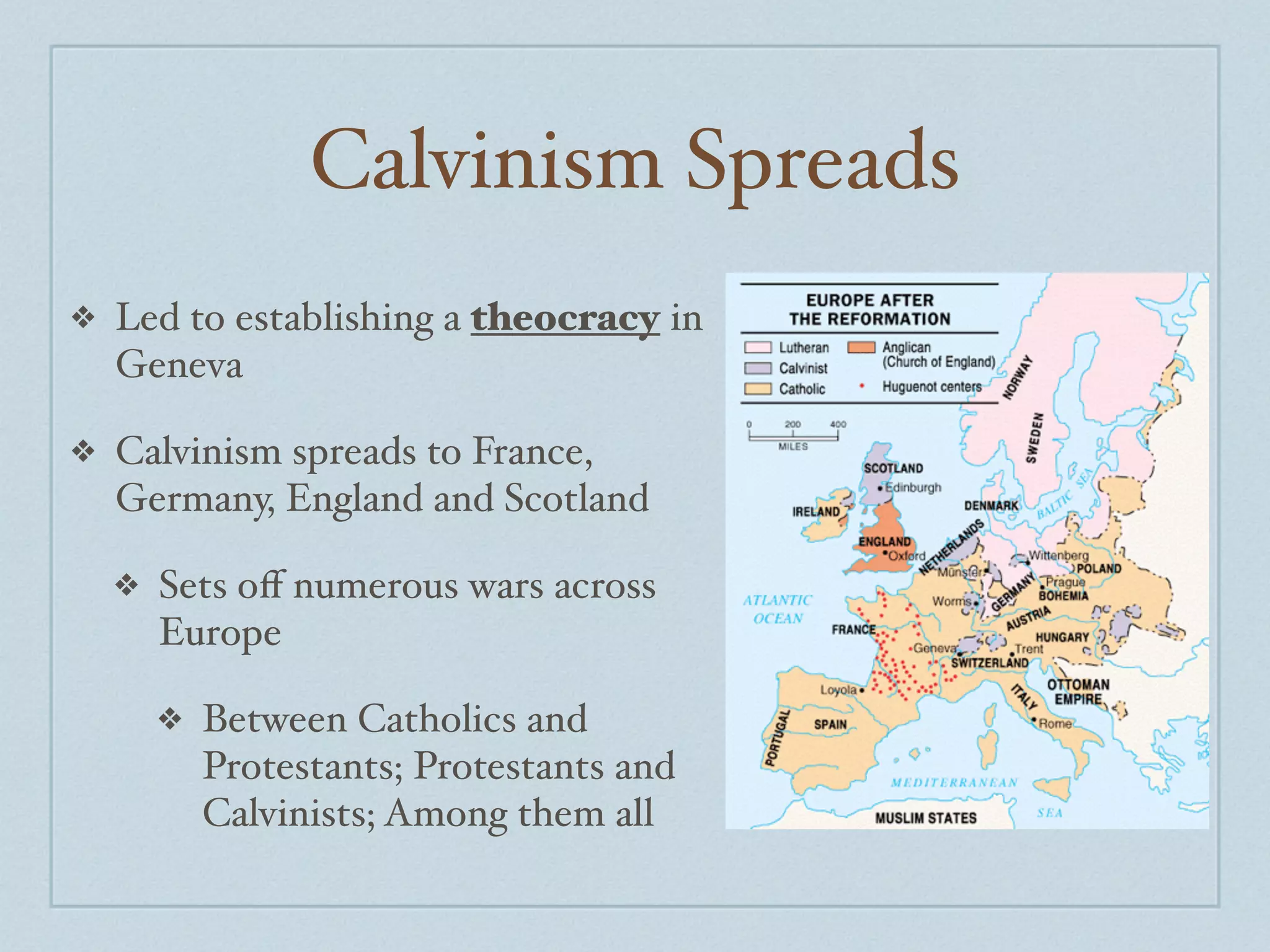
Calvinism Spreads
❖   Led to establishing a theocracy in
    Geneva

❖   Calvinism spreads to France,
    Germany, England and Scotland

    ❖   Sets off numerous wars across
        Europe

        ❖   Between Catholics and
            Protestants; Protestants and
            Calvinists; Among them all
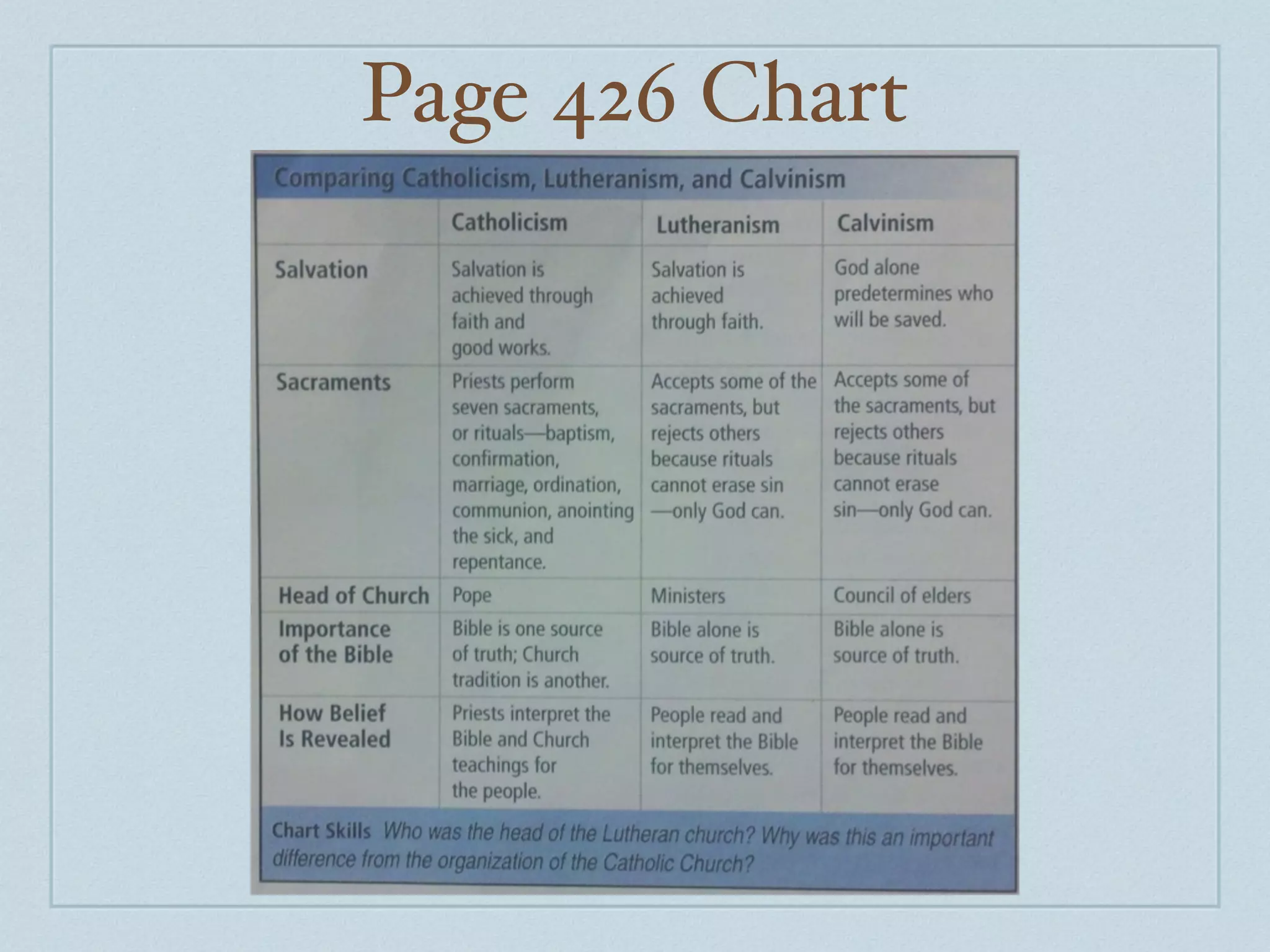
Page 426 Chart
Video at
http://www.youtube.com/watch?v=gi5qR7tflG0

Reformation I

  • 1.
    Challenges to the Church Unintended Consequences From the Renaissance?
  • 2.
    Objectives ❖ Students will analyze factors that encouraged the Protestant Reformation. ❖ Students will analyze the changes in European thought and culture resulting from the Renaissance.
  • 3.
    Vocabulary ❖ indulgences: pardon for sins committed during a person’s lifetime ❖ diet: assembly or legislature; assembly of Princes ❖ predestination: Calvinist belief that God long ago determined who would gain salvation ❖ theocracy: government run by religious leaders
  • 4.
    Coming of theReformation ❖ Unrest and uncertainty large part of Northern Europeans’ lives ❖ Change in traditional economies; traditional society ❖ Humanism: find ways to understand forces of their lives ❖ Biggest force in daily life: the Church
  • 5.
    Church: Issues ❖ Catholic church becoming more concerned with worldly issues ❖ Competing with Italian princes for control and influence ❖ Popes and clergy living comfortable lives ❖ Corruption: Selling indulgences to the wealthy ❖ Until 1400 - only granted for good deeds; after available to be bought ❖ Caused anger and frustration, especially in the North ❖ Printing press and Erasmus ➙ fuel to the fire
  • 7.
    Martin Luther ❖ Disillusioned with the church as a Monk and professor ❖ 1517: Wittenberg, Germany - Johann Tetzel offering sale of indulgences for individuals and family ❖ Luther drafted 95 Theses (arguments) to refute the right of priests or the church as a whole against indulgences ❖ No basis in the Bible; Christians could be saved only through faith
  • 8.
    Spread of Luther’sWord ❖ Copies of Luther’s protest were printed and distributed across Europe ❖ Stirred debate ❖ Church demanded Luther recant his views ❖ Luther refused and developed even more radical doctrines - rejecting authority from Rome
  • 10.
    Outlaw or Hero? ❖ 1521: Pope Leo X excommunicated Luther ❖ Charles V summoned Luther to the diet to demand he give up his views; Luther refused. ❖ Charles V declared Luther an outlaw; a crime to give him food or shelter ❖ Luther still had many friends and supporters; support grew
  • 12.
    Luther’s Movement ❖ New ideas spread quickly throughout the land ❖ Many denouncements of the Church abuses and the hypocrisy that was seen ❖ Lutherans became Protestants ❖ At the grassroots level: Change of peasants life (Peasants Revolt - 1524) ❖ For many German Princes: opportunity to throw off rule by Church and Holy Roman Emperor
  • 13.
    Peace of Augsburg(1555) ❖ Charles V tried to force princes back into the church ❖ Resulted in wars - costly ❖ Peace of Augsburg allowed princes to decide religion for themselves ❖ North: Protestant; South: Catholic
  • 14.
    Switzerland Reformation ❖ John Calvin: French priest who shared many ideas with Luther ❖ Differed slightly in the idea of predestination ❖ World was separated into two kinds of people: saints and sinners ❖ Calvinists believed that saved individuals were the only ones who could live good Christian lives
  • 15.
    Calvinism Spreads ❖ Led to establishing a theocracy in Geneva ❖ Calvinism spreads to France, Germany, England and Scotland ❖ Sets off numerous wars across Europe ❖ Between Catholics and Protestants; Protestants and Calvinists; Among them all
  • 16.
  • 17.