Chapter  4 Dimensions of Culture American University of Sharjah  College of Arts and Sciences Department of Mass Communication Dr. Ibahrine Hofstede’s model
Chapter 4 Objectives Discuss how the sociocultural environment will affect the attractiveness of a potential market Define culture and name some of its elements Discuss whether the world’s cultures are converging or diverging Explain the ‘4+1’ dimensions in Hofstede’s model Discuss the strengths and weaknesses of Hofstede’s model
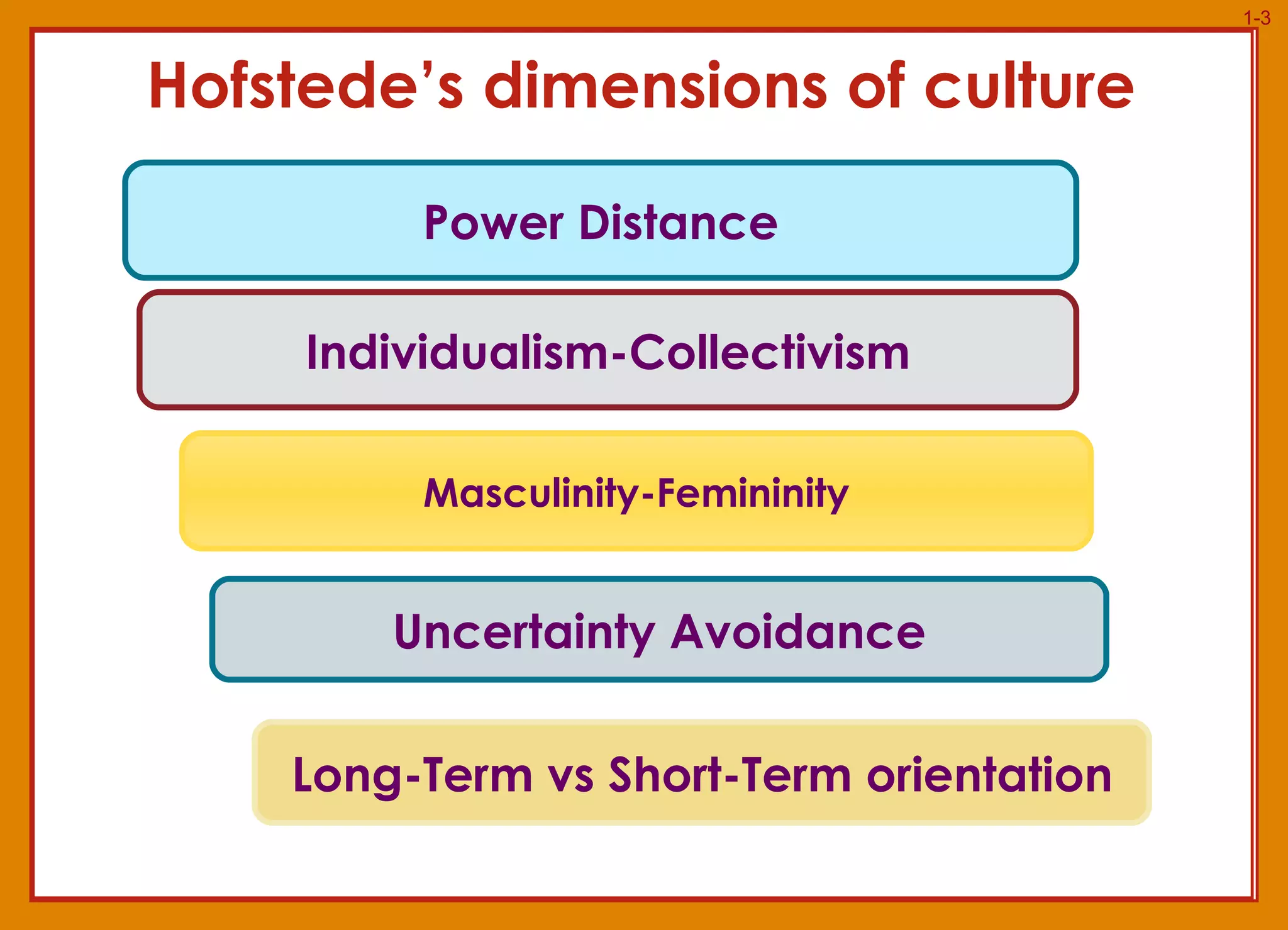
Hofstede’s dimensions of culture Power Distance Masculinity-Femininity Long-Term vs Short-Term orientation Uncertainty Avoidance Individualism-Collectivism
Hofstede’s dimensions of national culture Power Distance Individualism-Collectivism Masculinity-Femininity Uncertainty Avoidance Long-Term vs Short-Term orientation
Power Distance The extent to which the less powerful members within a society accept - even expect- that power is unevenly distributed High power distance societies Children expected to be obedient to parents Subordinates are less likely to contradict bosses
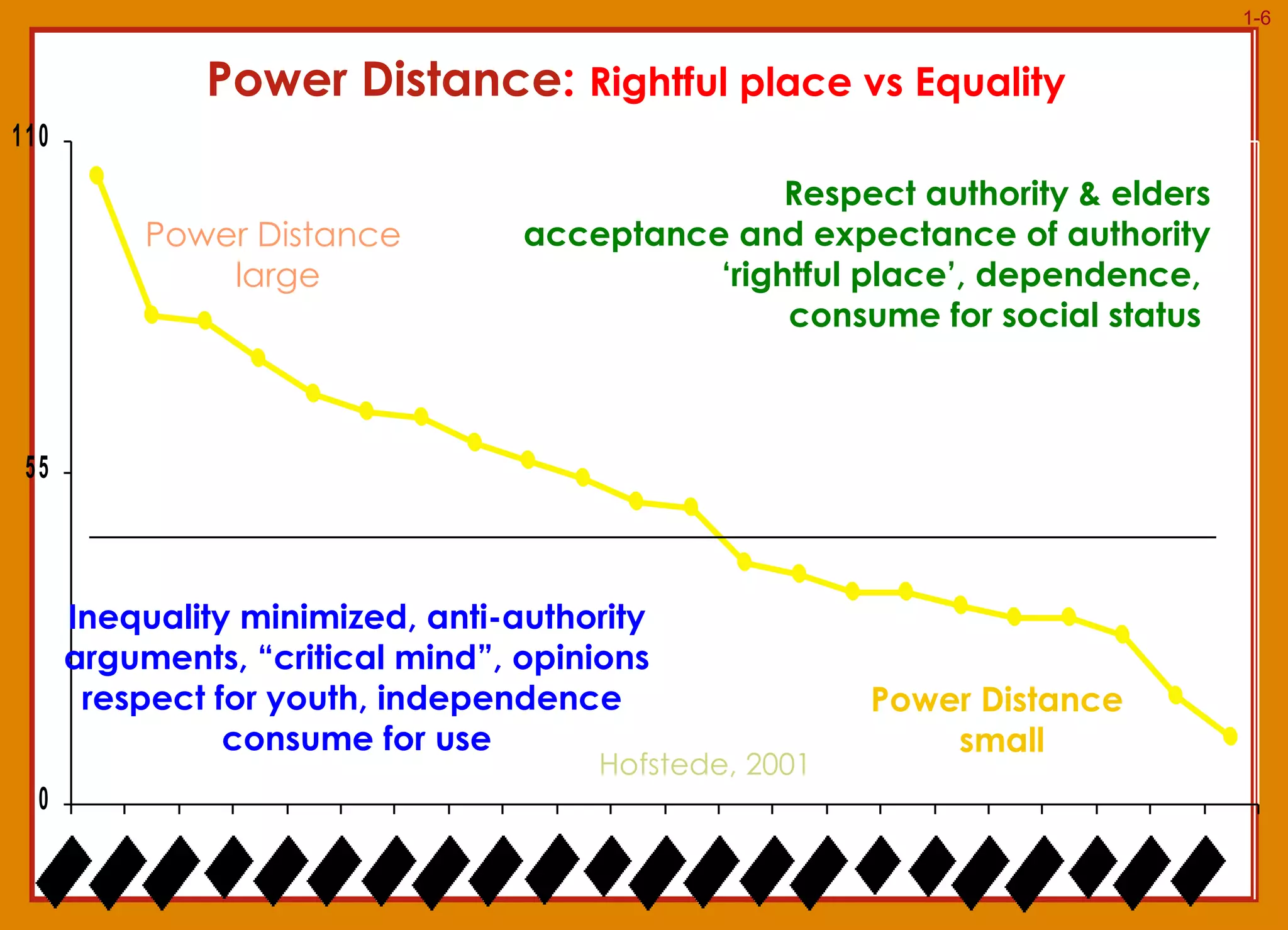
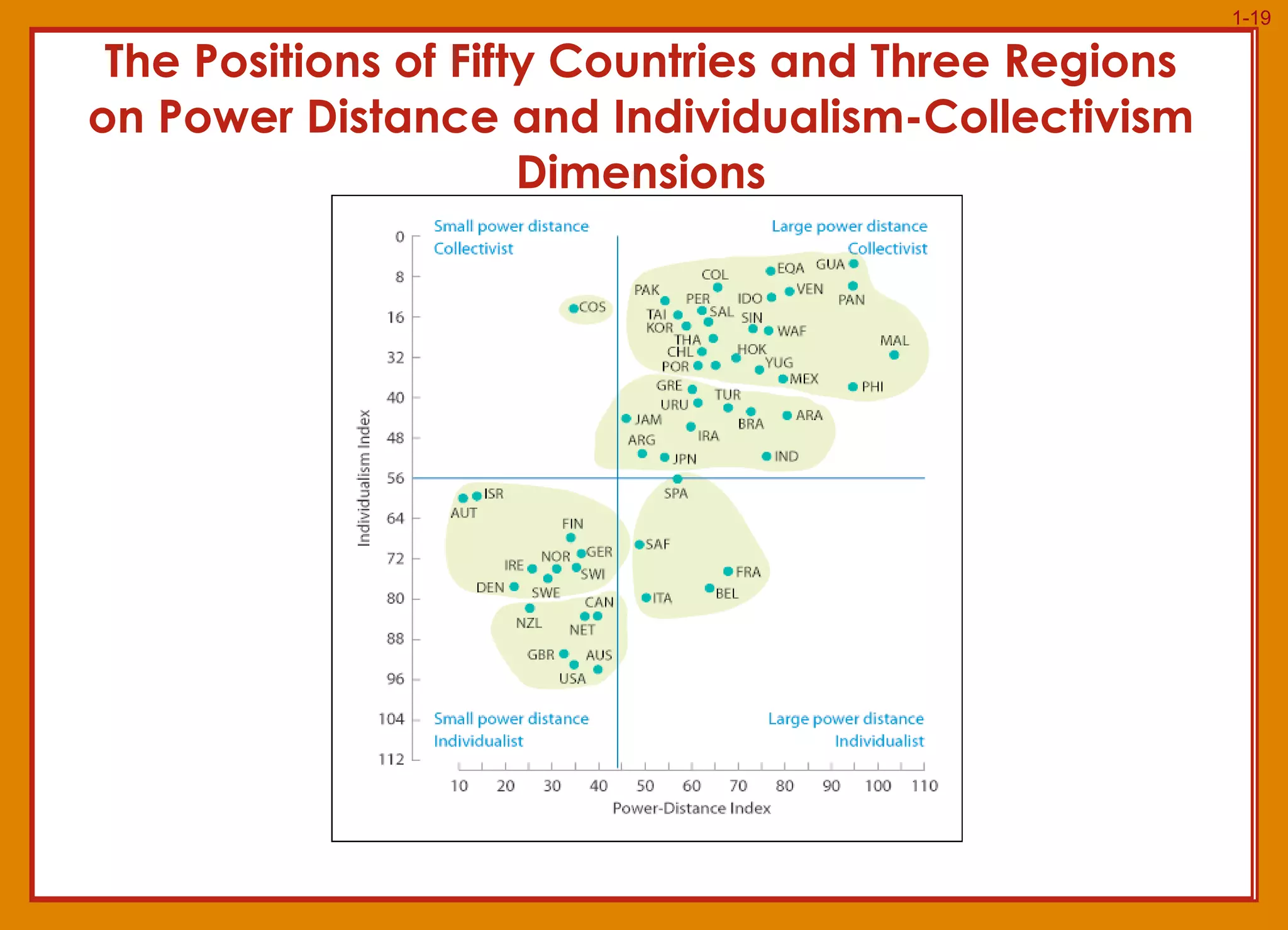
Power Distance :  Rightful place vs Equality P ower Distance   large Respect authority & elders acceptance and expectance of authority ‘ rightful place’, dependence,  consume for  social  status  Inequality minimized, anti-authority arguments, “critical mind”, opinions respect for youth, independence  consume for use P ower Distance   small Hofstede, 2001
It is important to understand the difference between the  context  cultures to avoid misunderstanding of messages and intentions. Culture Defined 0
High-context culture  - The social context in which what is said strongly affects the meaning of the message.  Low-context culture  - The meaning of the message is explicitly expressed by the words and is less affected by the social context .  Culture Defined 0
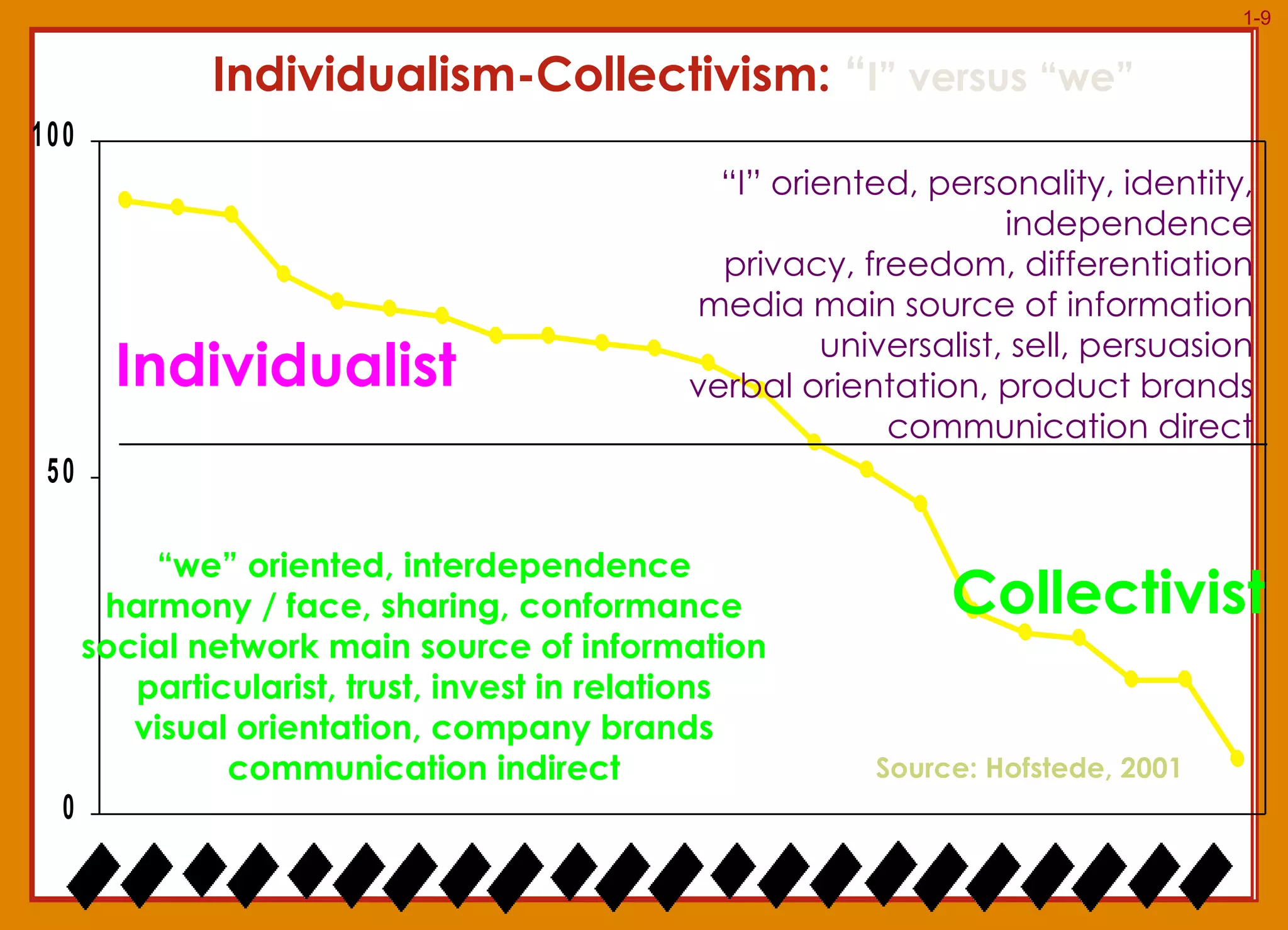
Individualism-Collectivism:  “ I” versus “we” “ I” oriented , personality, identity, independence privacy, freedom, differentiation media main source of information universalist, sell, persuasion verbal orientation , product brands communication direct “ w e” oriented , interdependence harmony / face, sharing, conformance social network main source of information particularist, trust, invest in relations visual orientation , company brands communication indirect Source: Hofstede, 2001 Individualist Collectivist
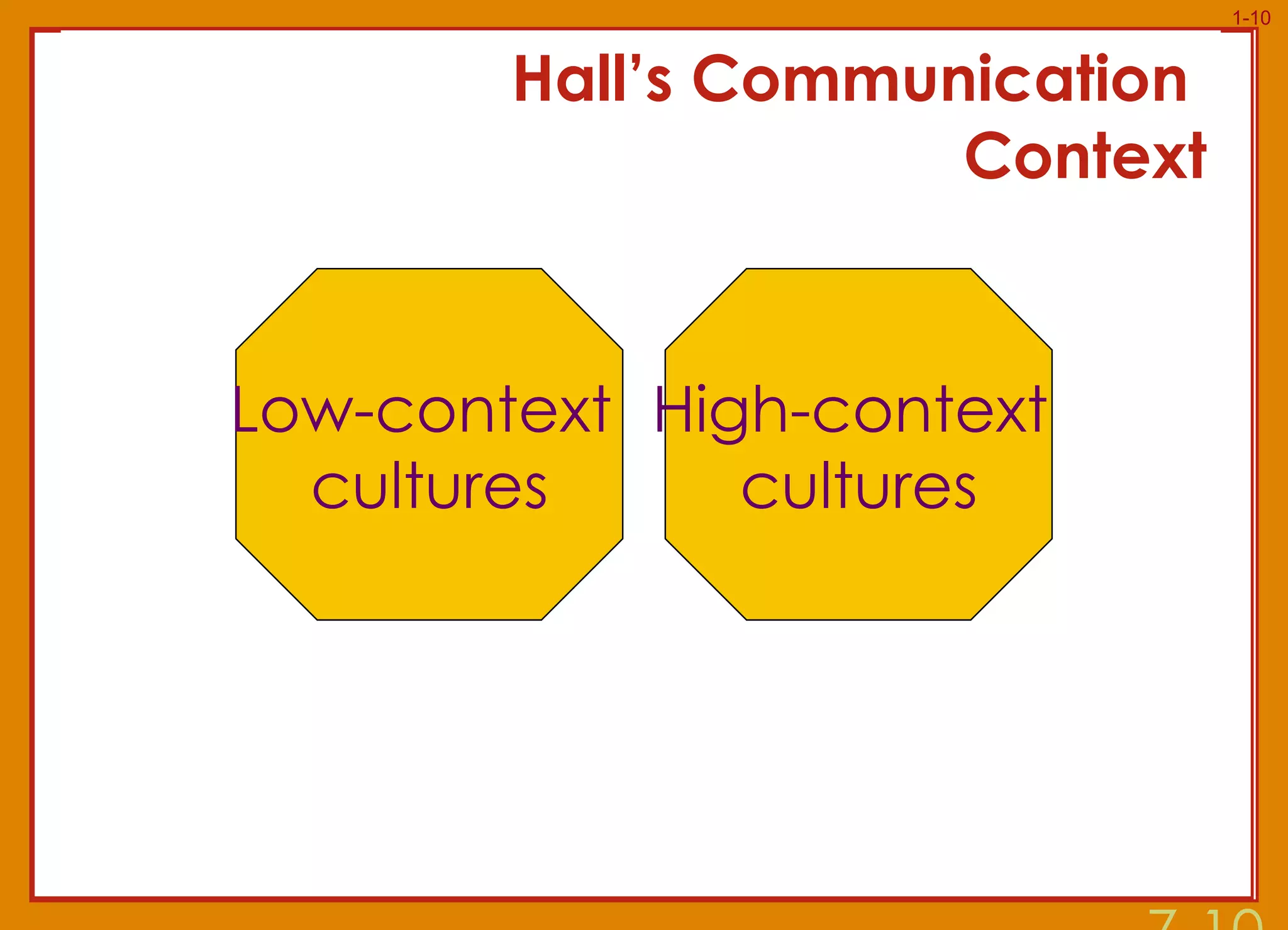
Hall’s Communication  Context 7- Low-context  cultures High-context  cultures
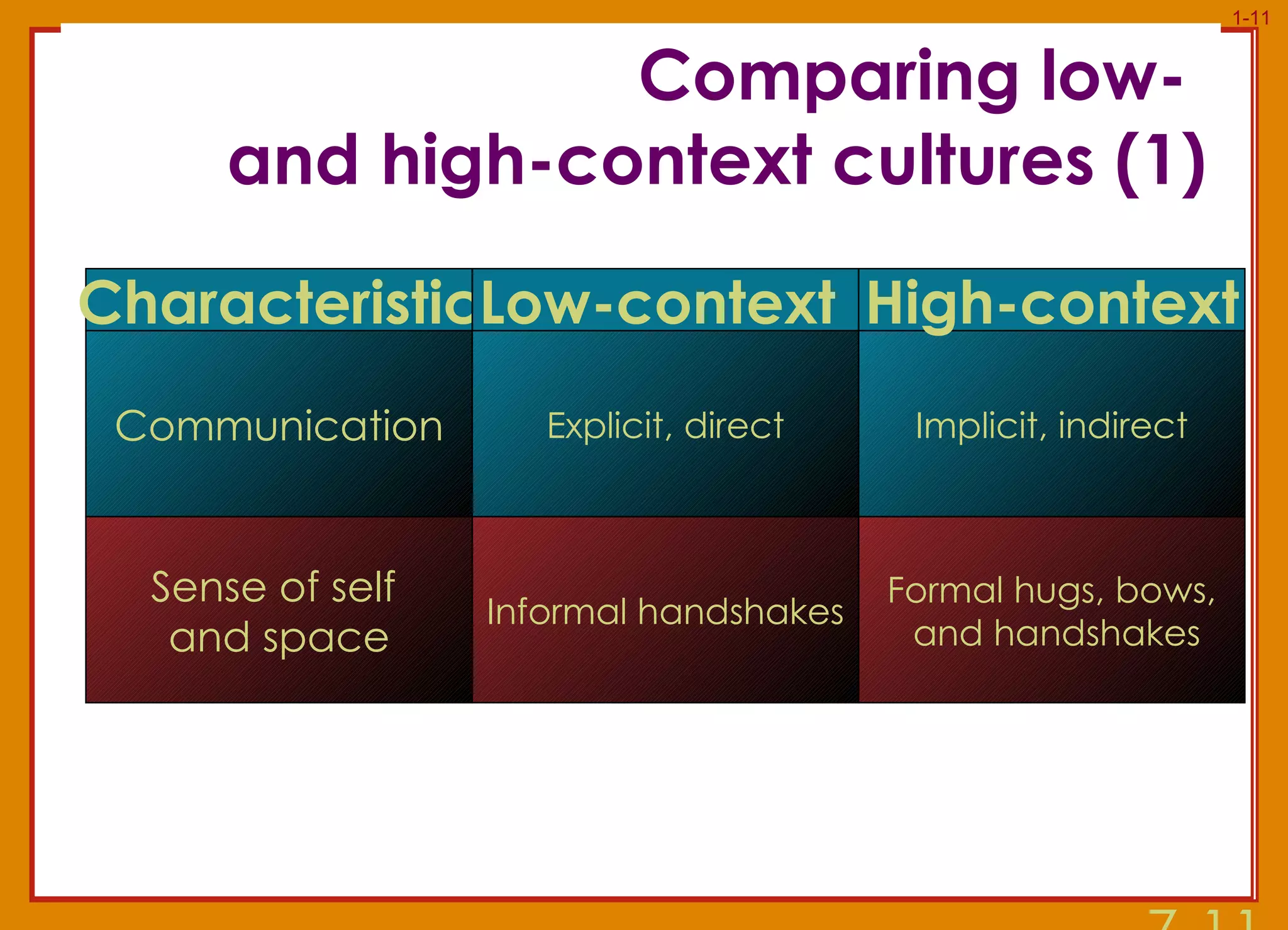
Comparing low-  and high-context cultures (1) 7- Communication Explicit, direct Implicit, indirect Characteristic Low-context  High-context Informal handshakes Formal hugs, bows, and handshakes Sense of self  and space
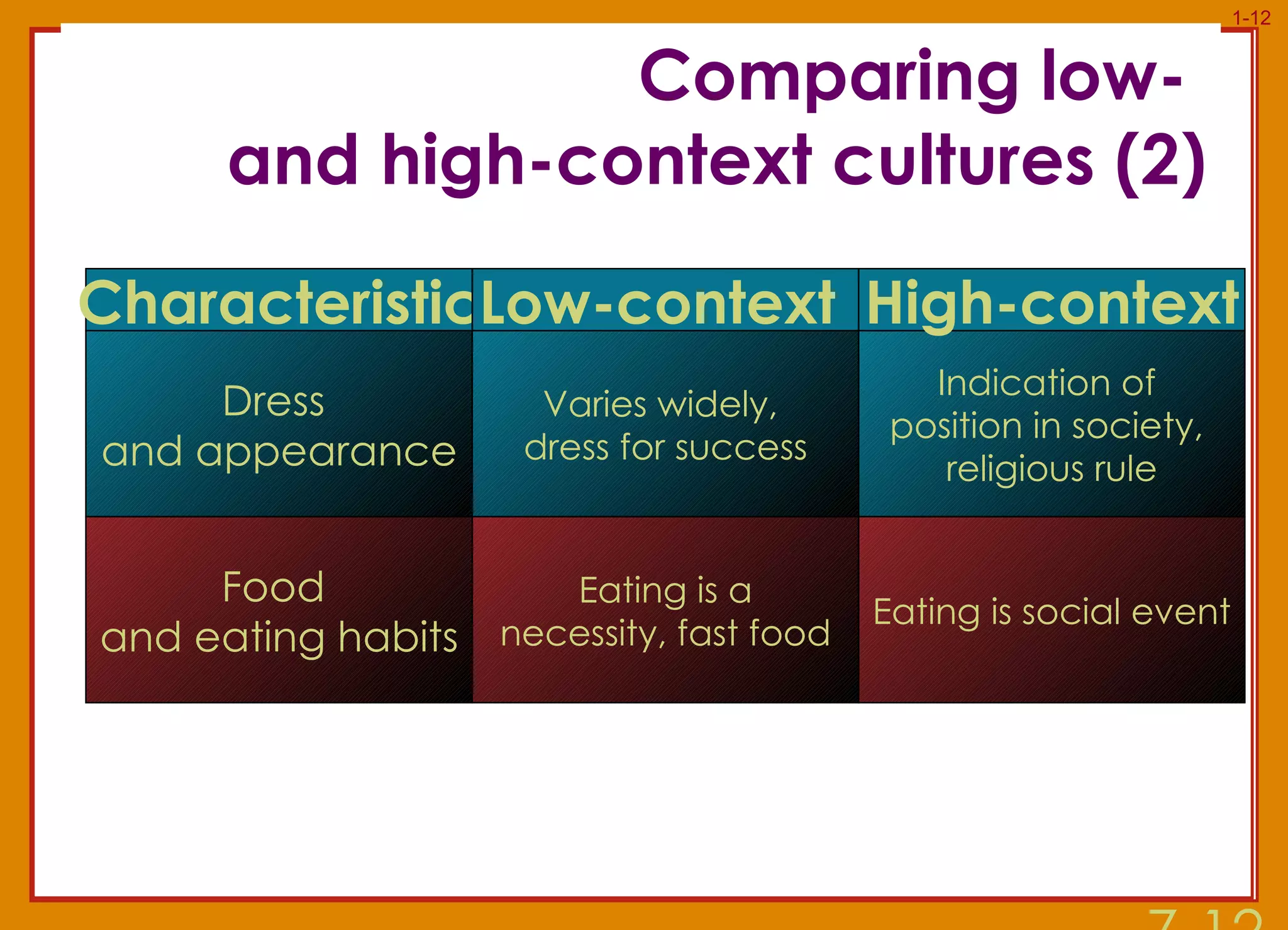
Comparing low-  and high-context cultures (2) 7- Dress  and appearance Varies widely,  dress for success Indication of  position in society,  religious rule Characteristic Low-context  High-context Eating is a necessity, fast food Eating is social event Food  and eating habits
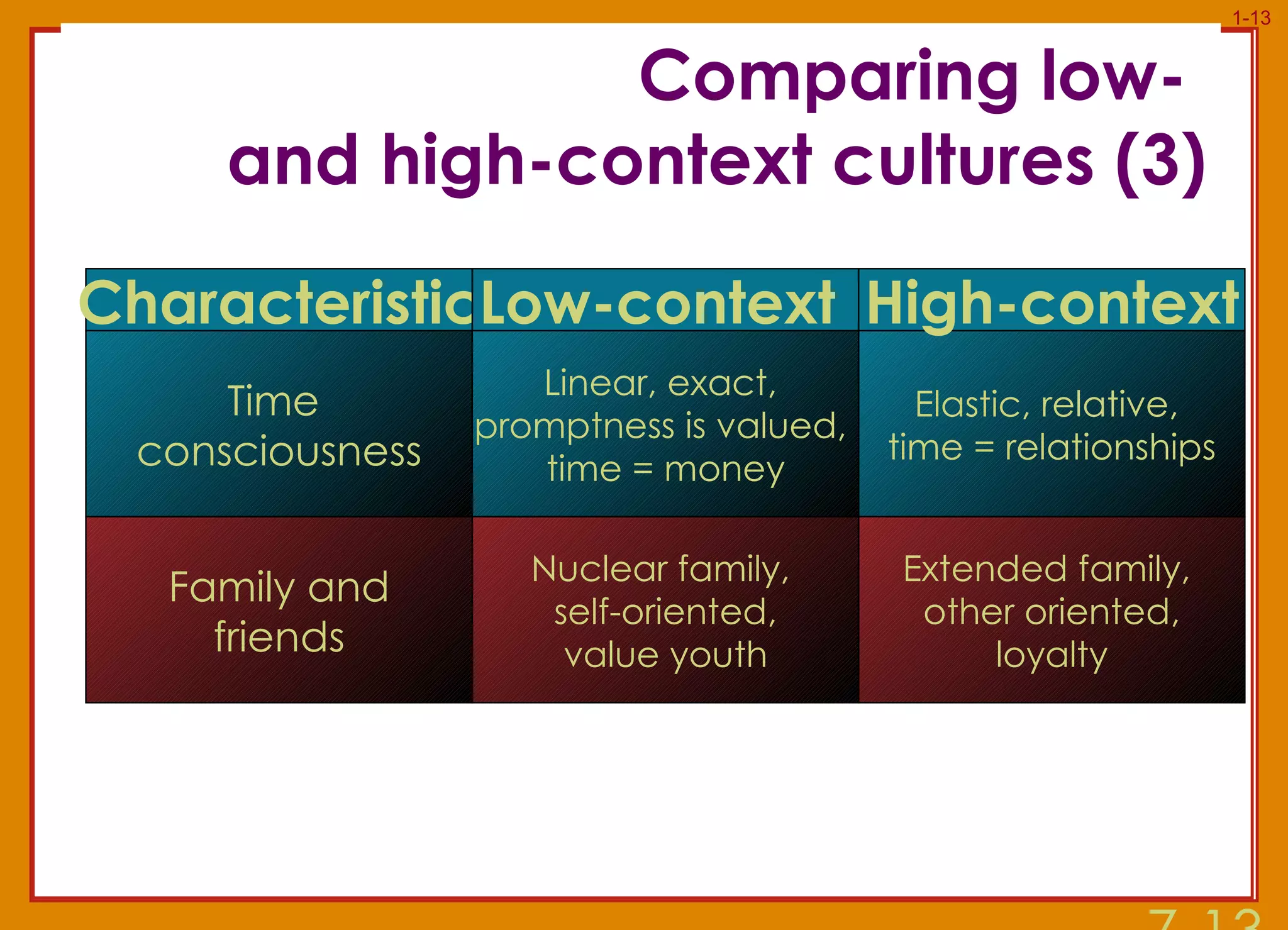
Comparing low-  and high-context cultures (3) 7- Time  consciousness Linear, exact,  promptness is valued,  time = money Elastic, relative,  time = relationships Characteristic Low-context  High-context Nuclear family,  self-oriented, value youth Extended family,  other oriented, loyalty Family and friends
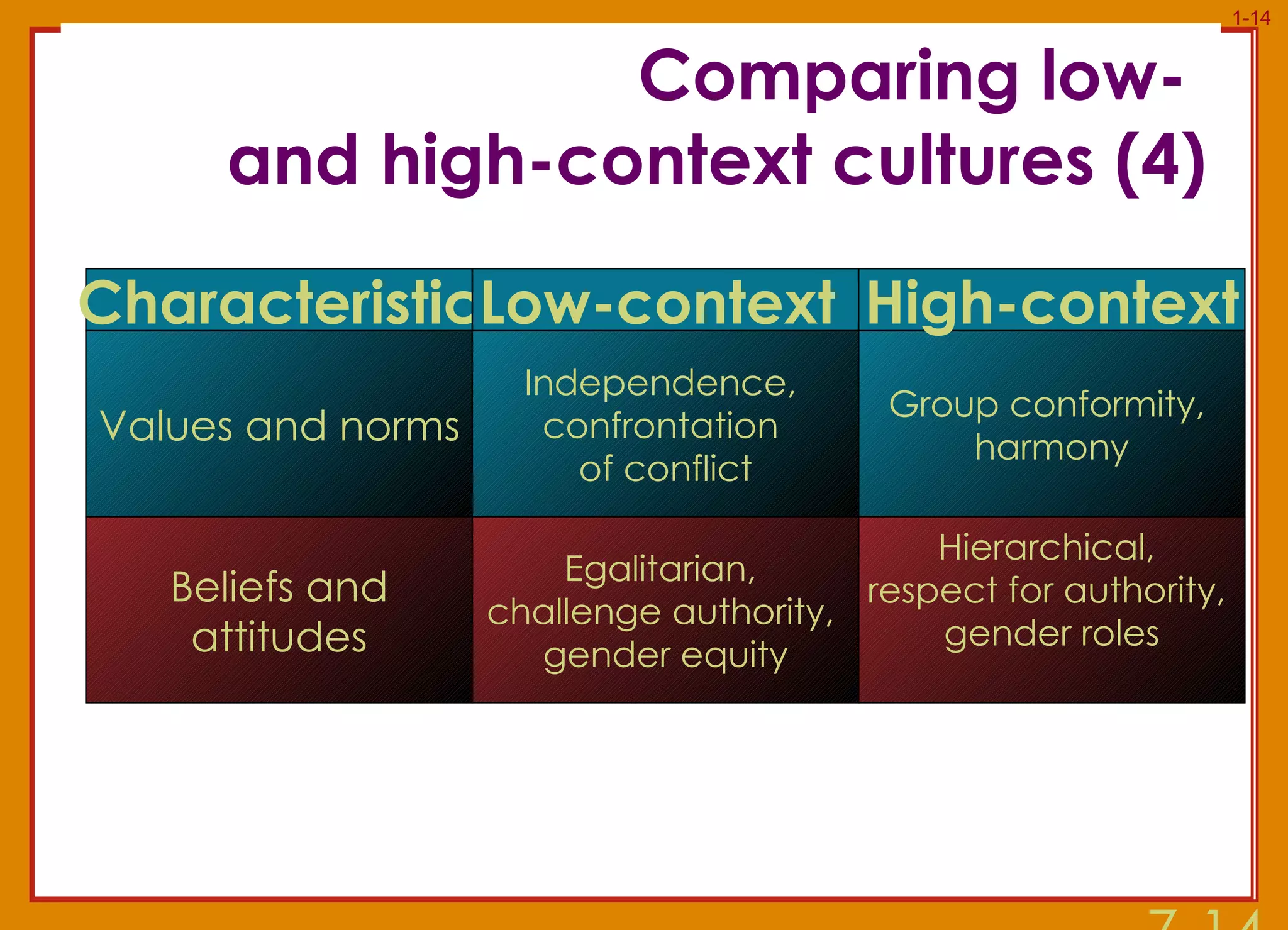
Comparing low-  and high-context cultures (4) 7- Values and norms Independence,  confrontation  of conflict Group conformity,  harmony Characteristic Low-context  High-context Egalitarian,  challenge authority,  gender equity Hierarchical,  respect for authority,  gender roles Beliefs and attitudes
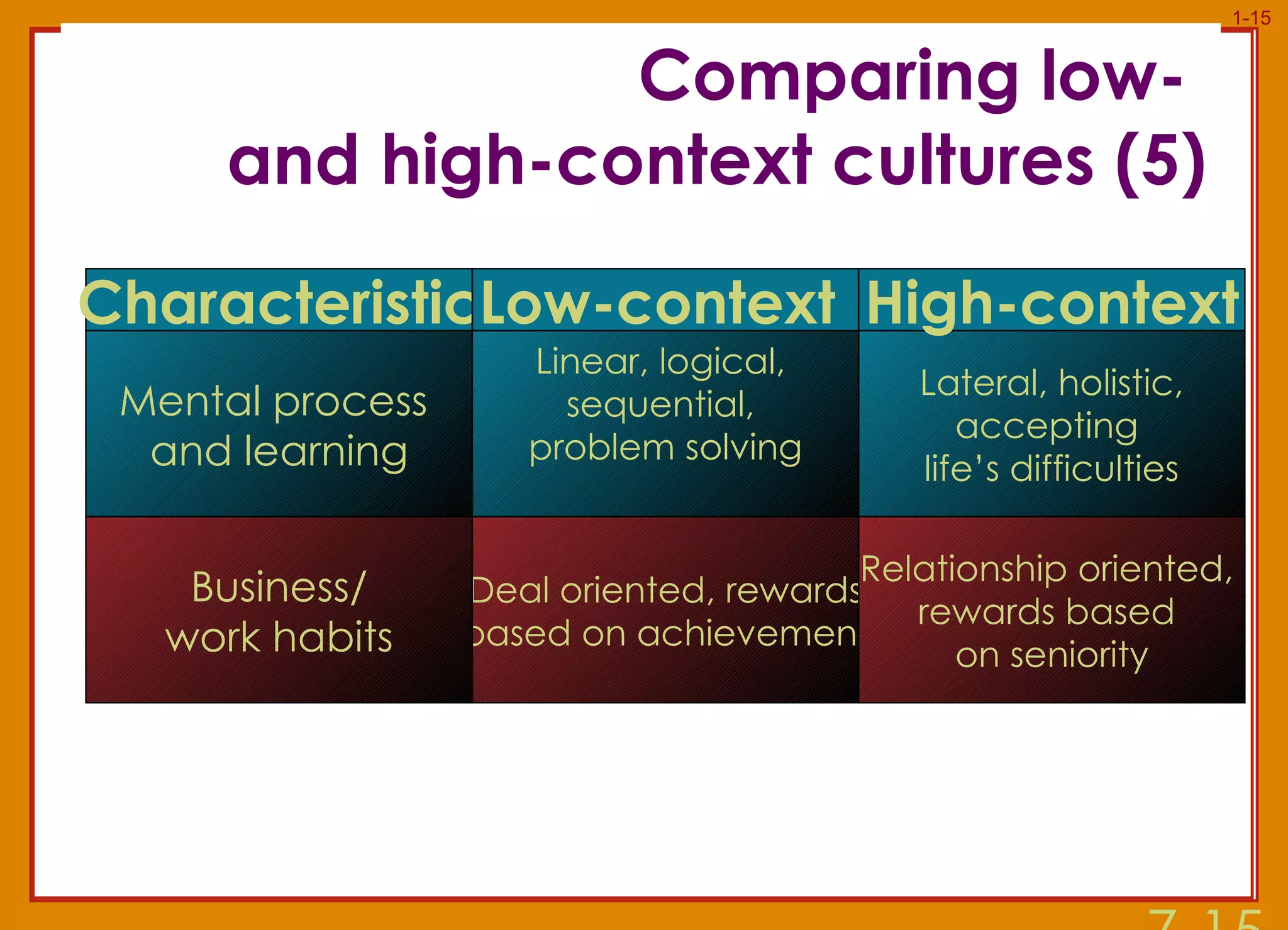
Comparing low-  and high-context cultures (5) 7- Mental process  and learning Linear, logical,  sequential,  problem solving Lateral, holistic, accepting  life’s difficulties Characteristic Low-context  High-context Deal oriented, rewards based on achievement Relationship oriented,  rewards based  on seniority Business/ work habits
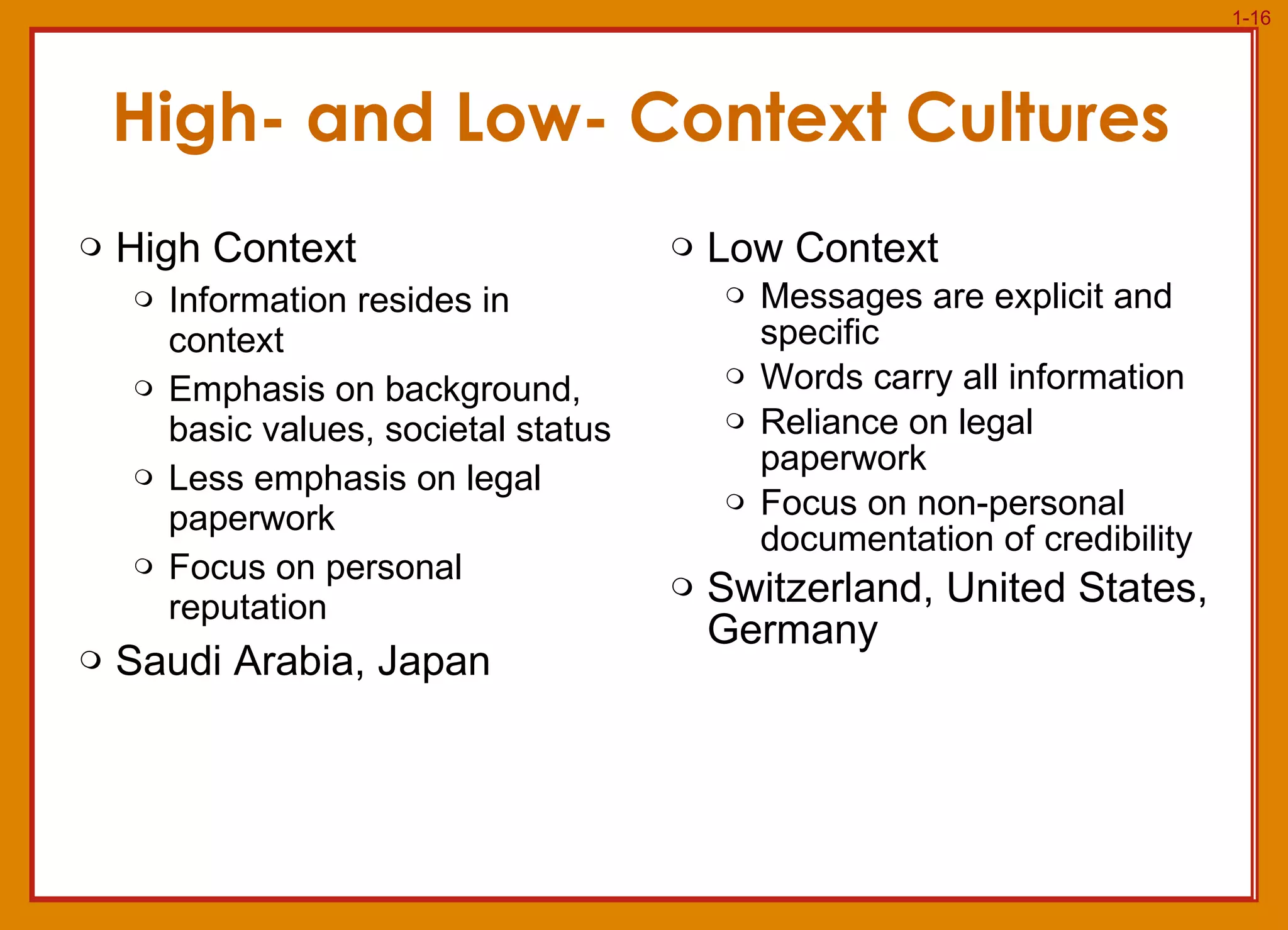
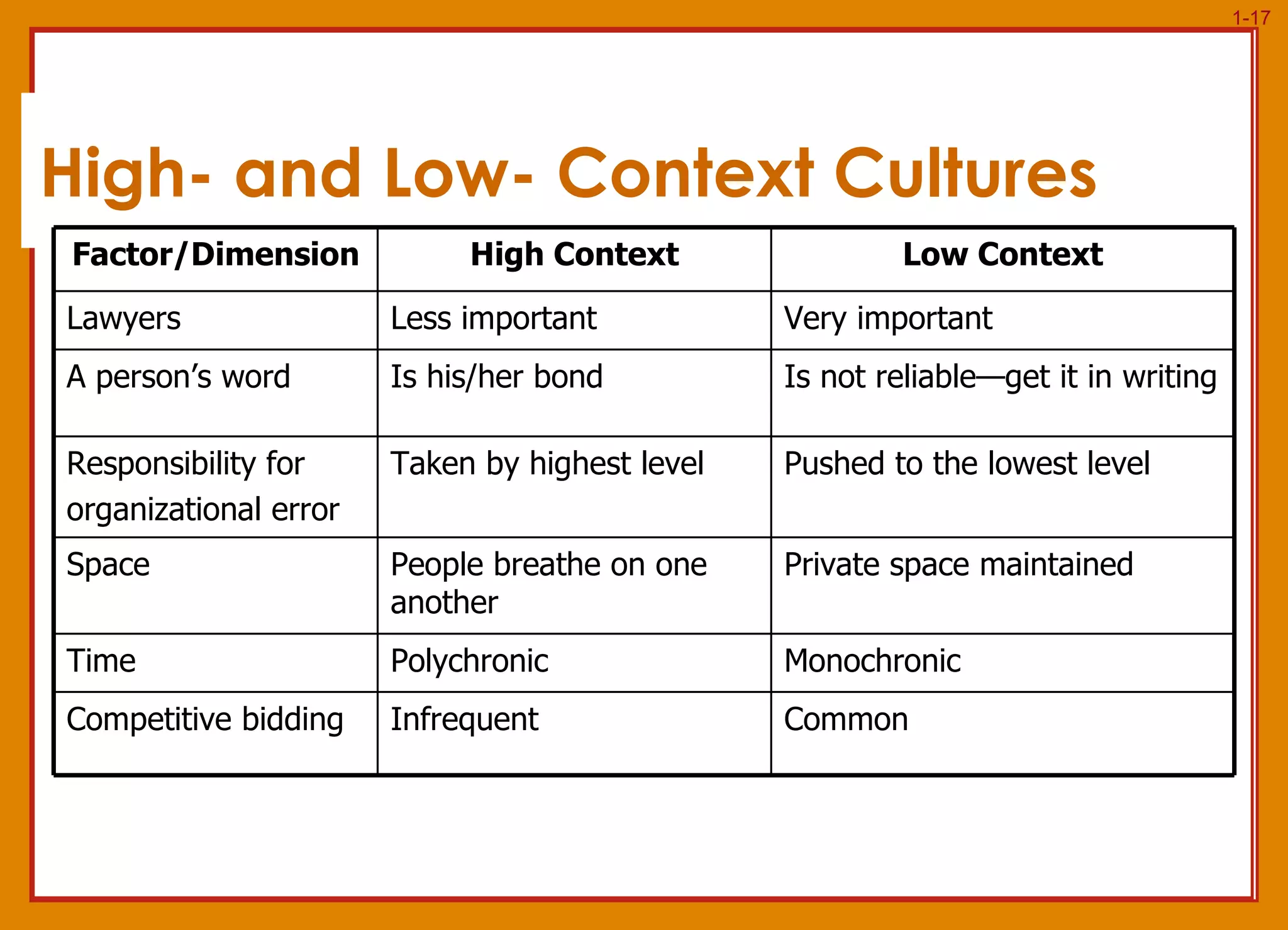
High- and Low- Context Cultures High Context Information resides in context Emphasis on background, basic values, societal status Less emphasis on legal paperwork Focus on personal reputation Saudi Arabia, Japan Low Context Messages are explicit and specific Words carry all information Reliance on legal paperwork Focus on non-personal documentation of credibility Switzerland, United States, Germany
High- and Low- Context Cultures Factor/Dimension High Context Low Context Lawyers Less important Very important A person’s word Is his/her bond Is not reliable — get it in writing Responsibility for organizational error Taken by highest level Pushed to the lowest level Space People breathe on one another Private space maintained Time Polychronic Monochronic Competitive bidding Infrequent Common
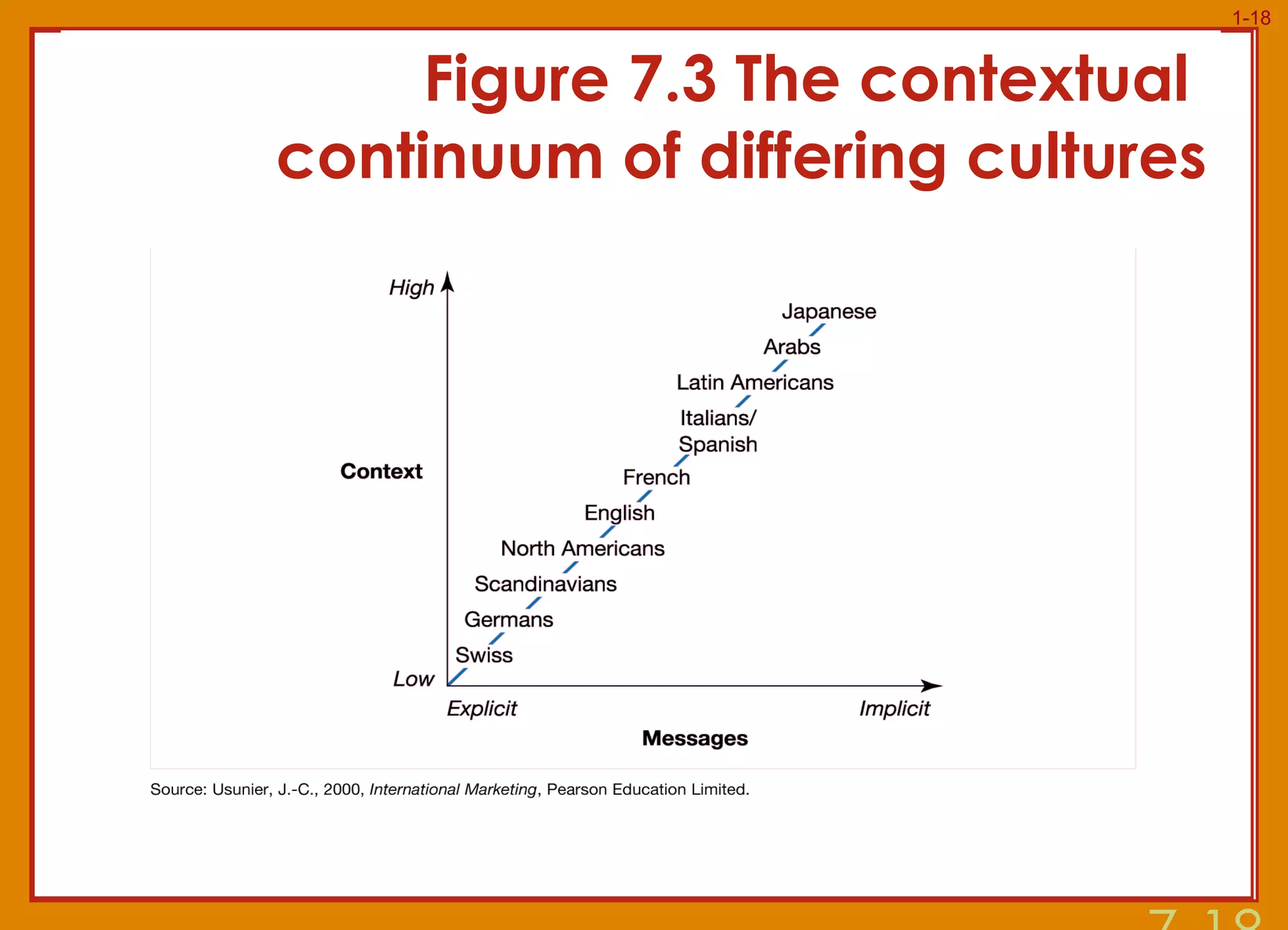
Figure 7.3 The contextual  continuum of differing cultures 7-
Add figure 3.3, p.80 here  The Positions of Fifty Countries and Three Regions on Power Distance and Individualism-Collectivism Dimensions
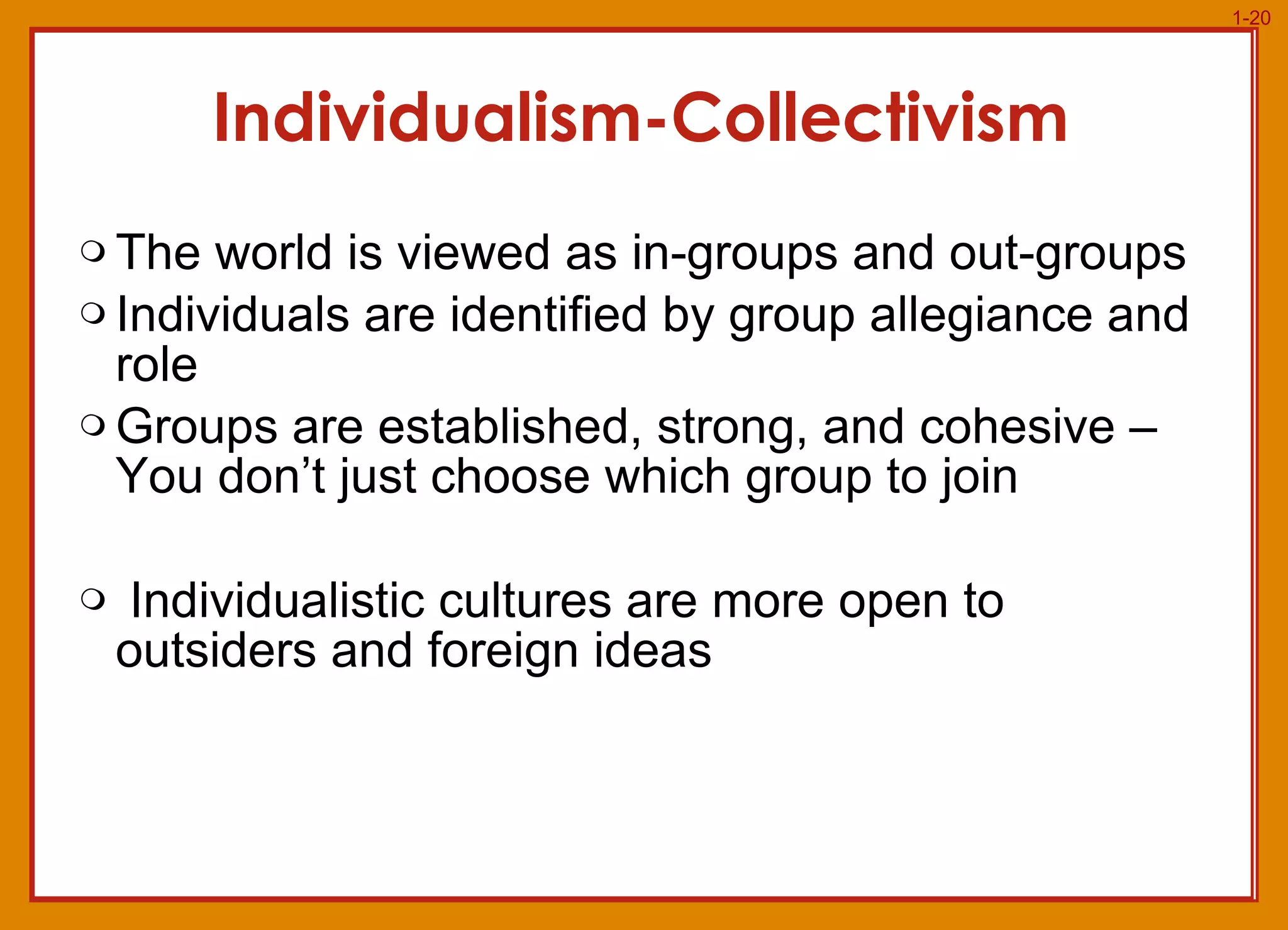
Individualism-Collectivism The world is viewed as in-groups and out-groups Individuals are identified by group allegiance and role Groups are established, strong, and cohesive – You don’t just choose which group to join Individualistic cultures are more open to outsiders and foreign ideas
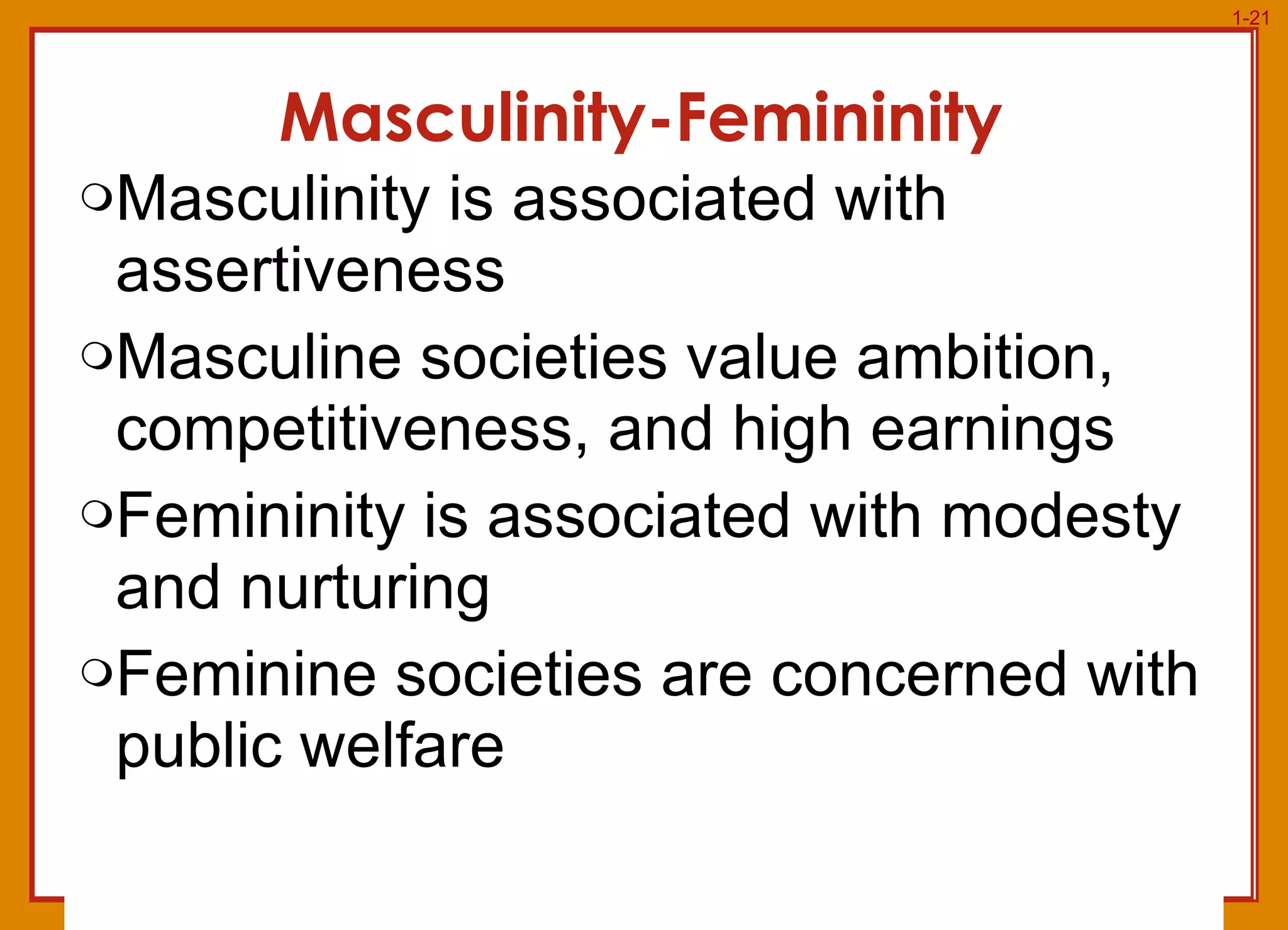
Masculinity-Femininity Masculinity is associated with assertiveness Masculine societies value ambition, competitiveness, and high earnings Femininity is associated with modesty and nurturing Feminine societies are concerned with public welfare
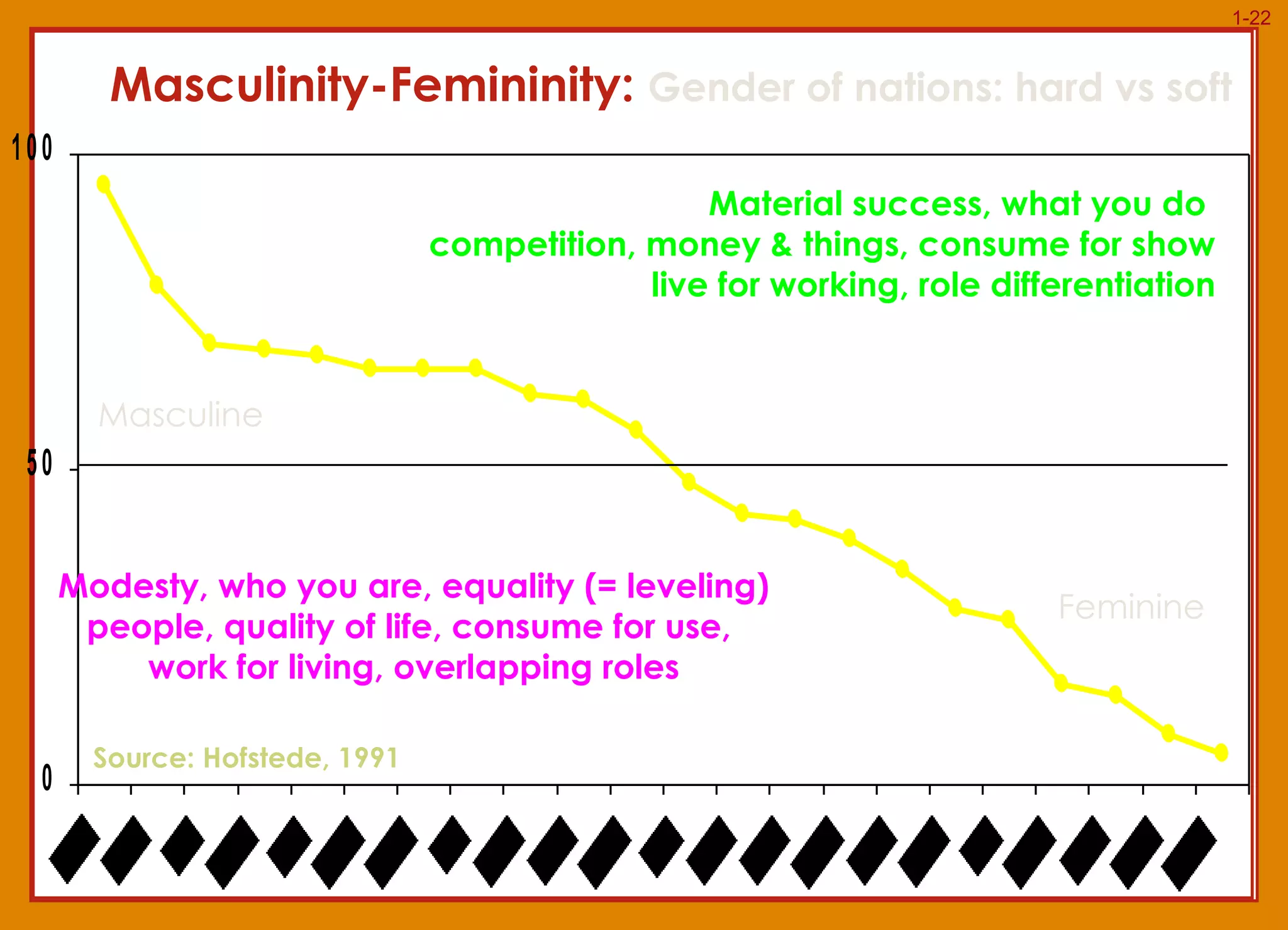
Masculinity-Femininity:  Gender of nations: hard vs soft Material success, what you do  competition, money & things, consume for show live for working, role differentiation Modesty, who you are , equality (= leveling) people, quality of life, consume for use,  work for living, overlapping roles Source: Hofstede, 1991 Masculine Feminine
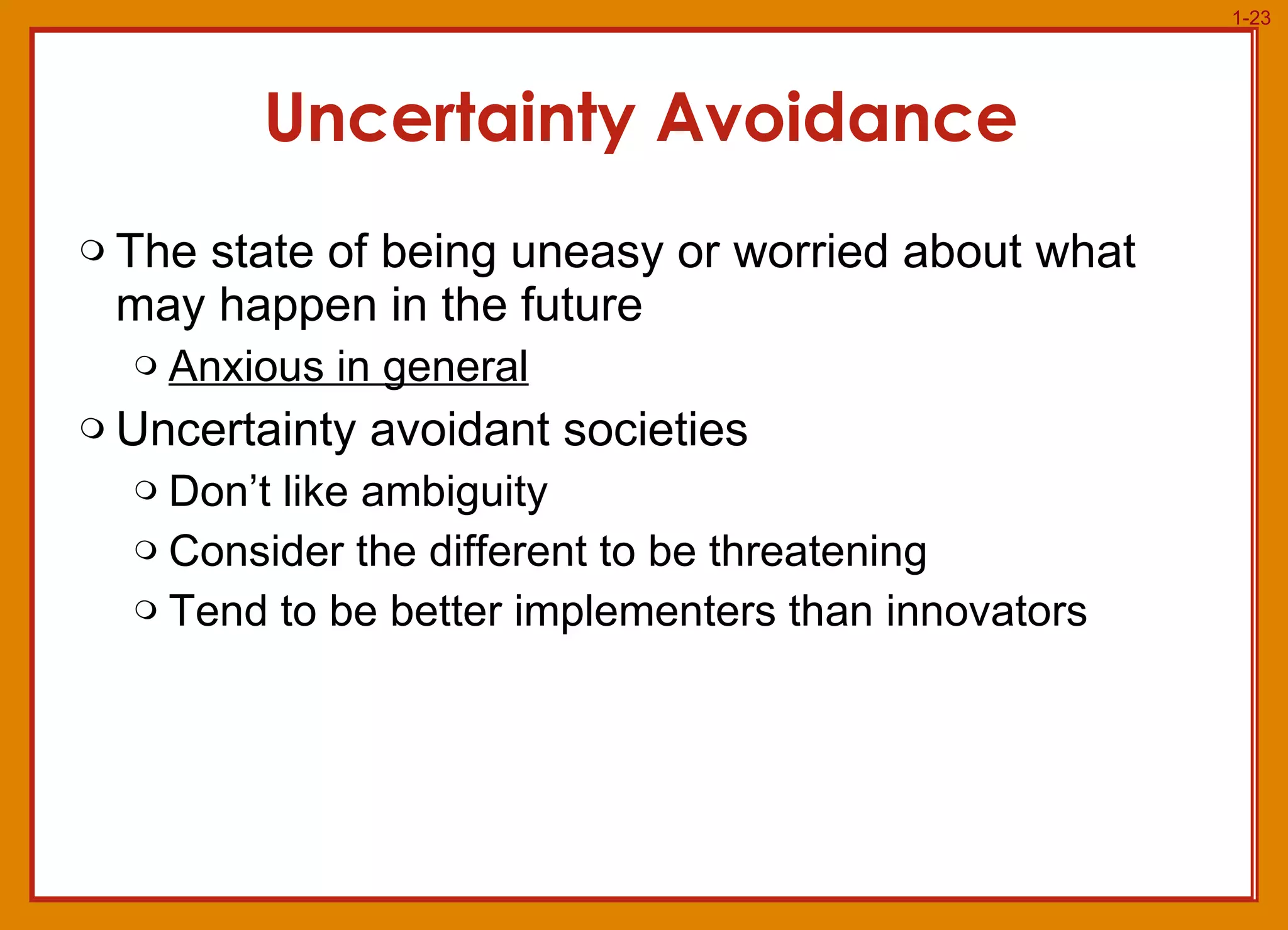
Uncertainty Avoidance The state of being uneasy or worried about what may happen in the future Anxious in general Uncertainty avoidant societies Don’t like ambiguity Consider the different to be threatening Tend to be better implementers than innovators
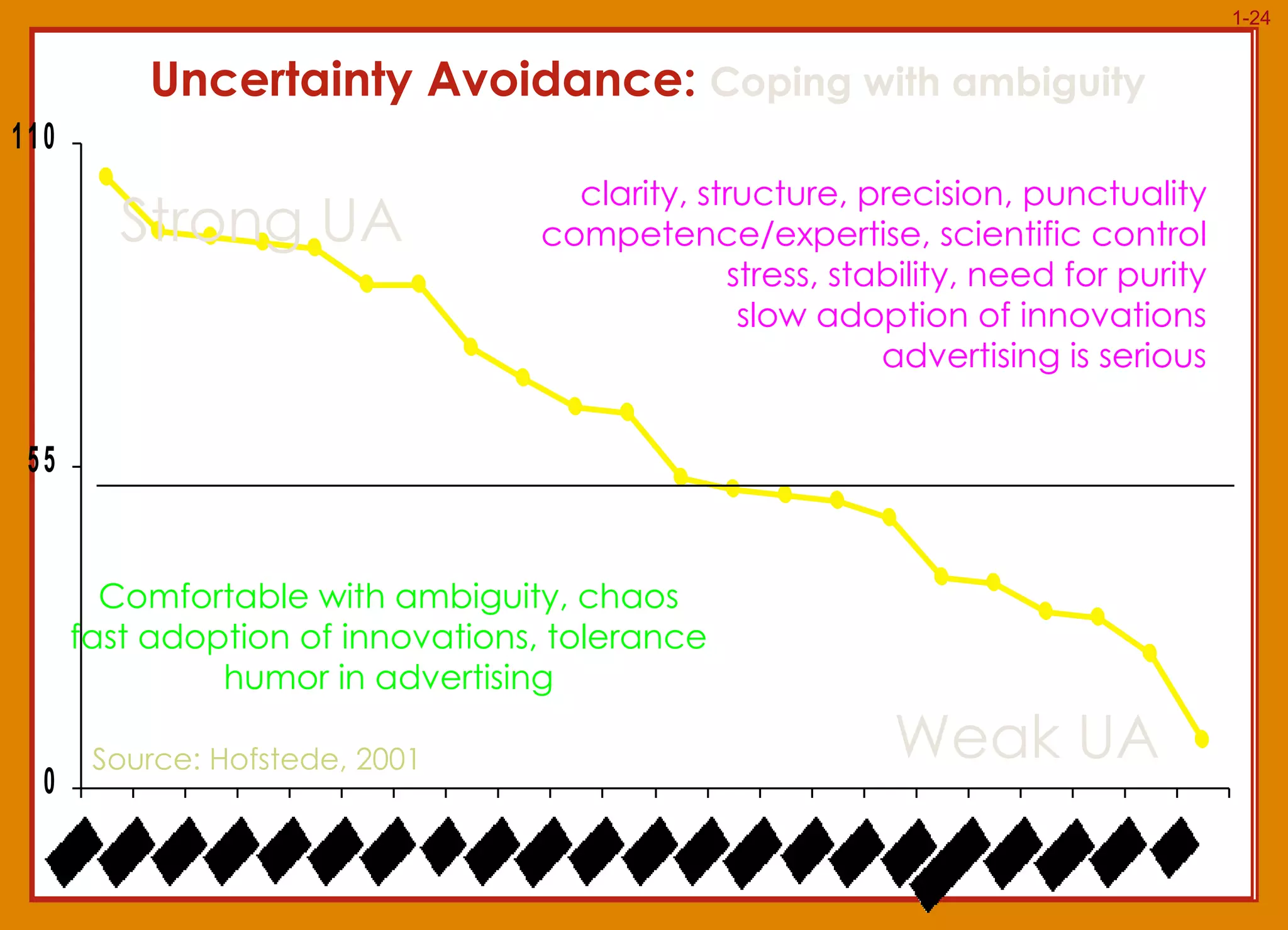
Uncertainty Avoidance:  Coping with ambiguity clarity ,  structure , precision, punctuality competence/expertise, scientific control stress, stability , need for purity slow adoption of innovations advertising is serious Comfortable with ambiguity, chaos fast adoption of innovations, tolerance humor in advertising Source: Hofstede, 2001 Strong UA Weak UA
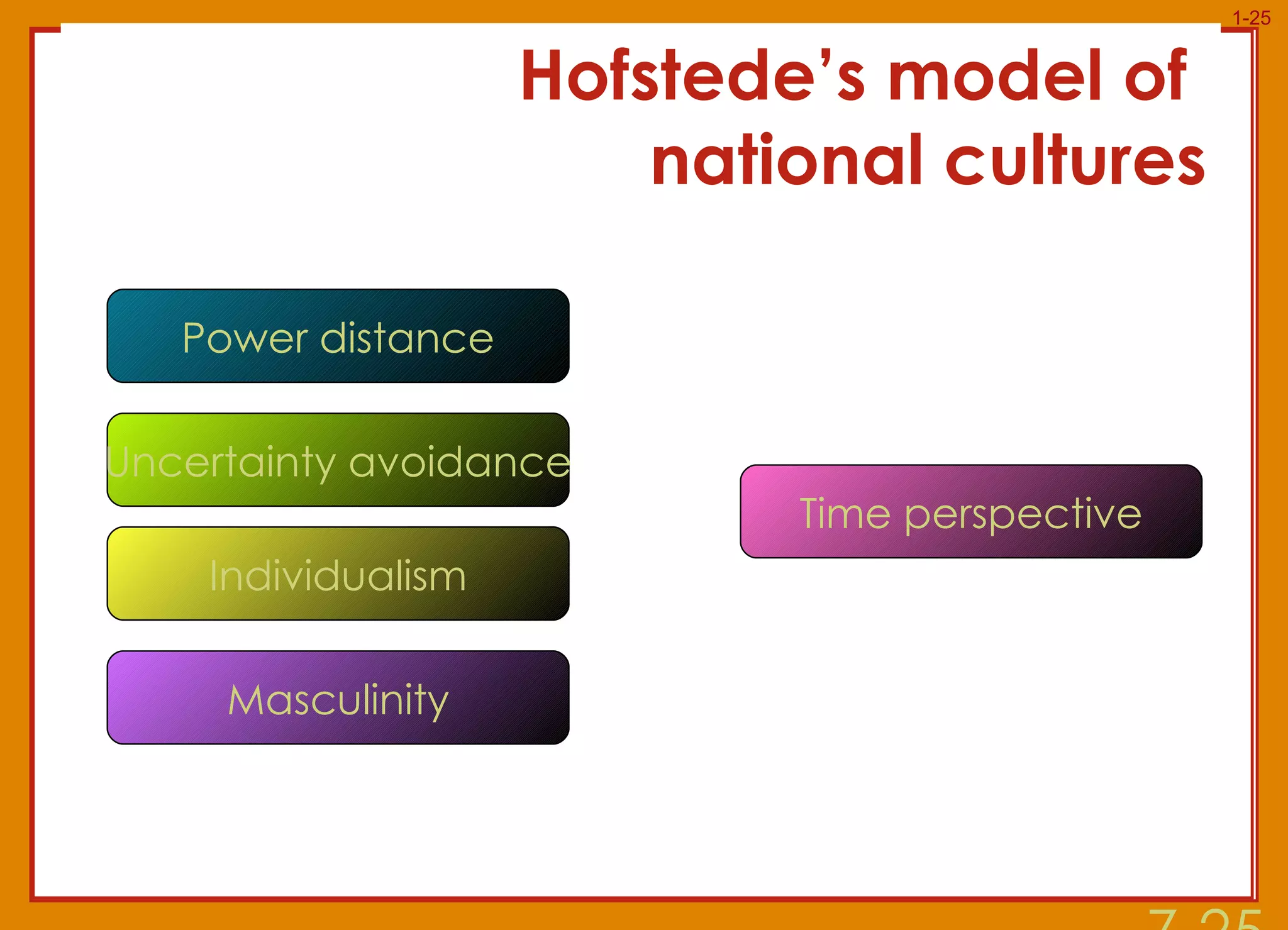
Hofstede’s model of  national cultures 7- Power distance Uncertainty avoidance Individualism Masculinity Time perspective
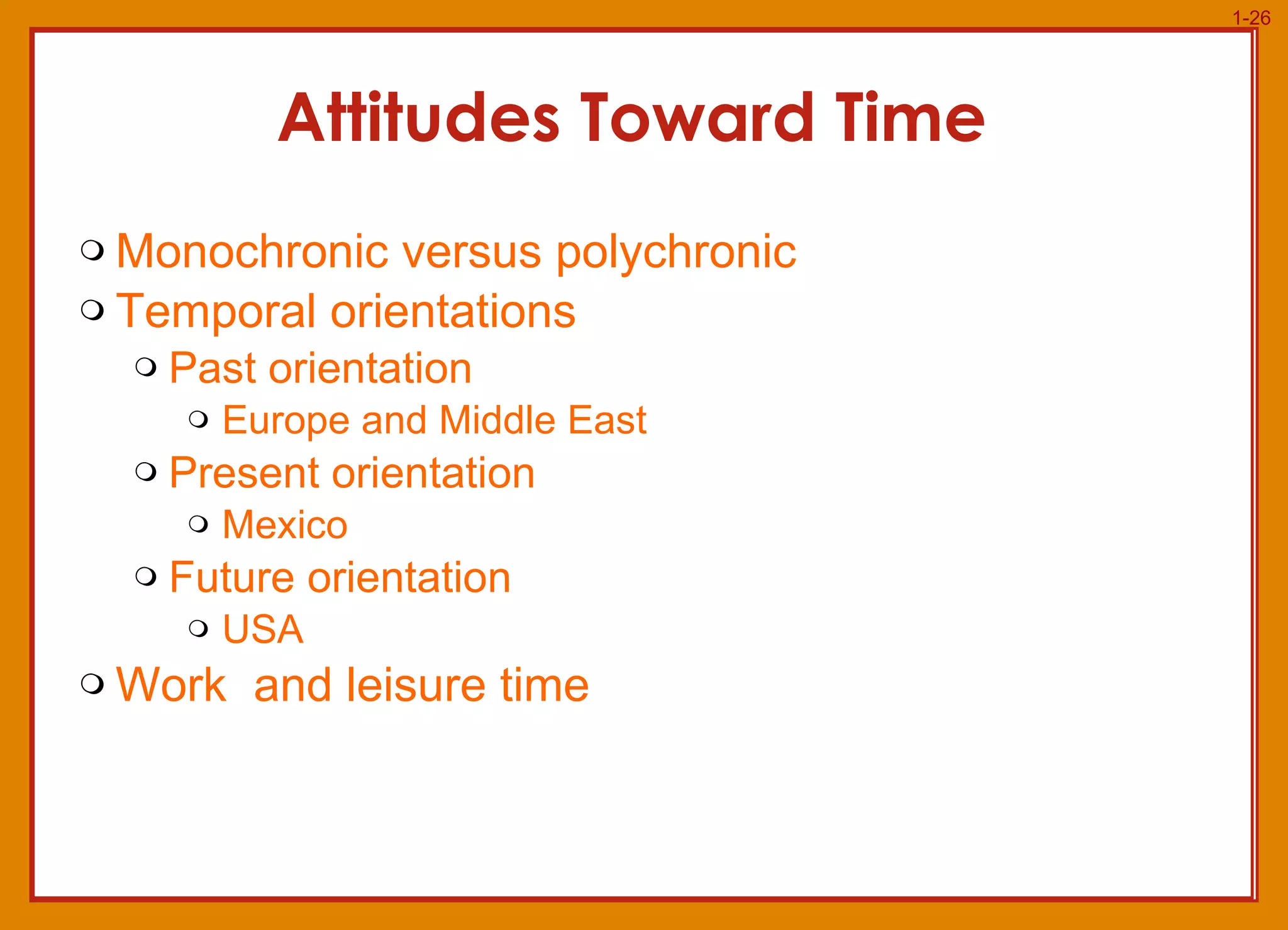
Attitudes Toward Time  Monochronic versus polychronic Temporal orientations Past orientation Europe and Middle East Present orientation Mexico Future orientation USA Work  and leisure time
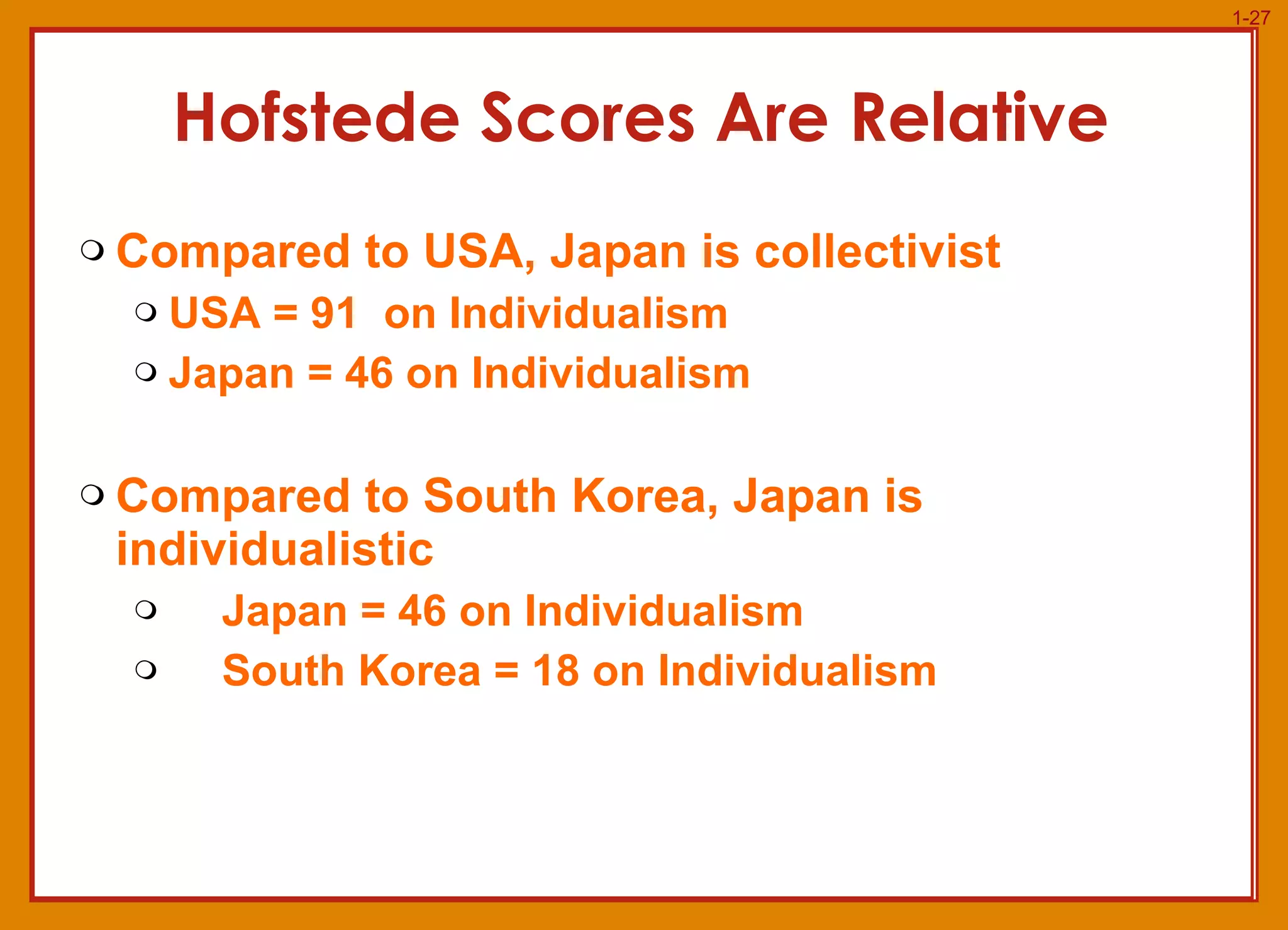
Hofstede Scores Are Relative Compared to USA, Japan is collectivist USA = 91  on Individualism Japan = 46 on Individualism Compared to South Korea, Japan is individualistic Japan = 46 on Individualism South Korea = 18 on Individualism
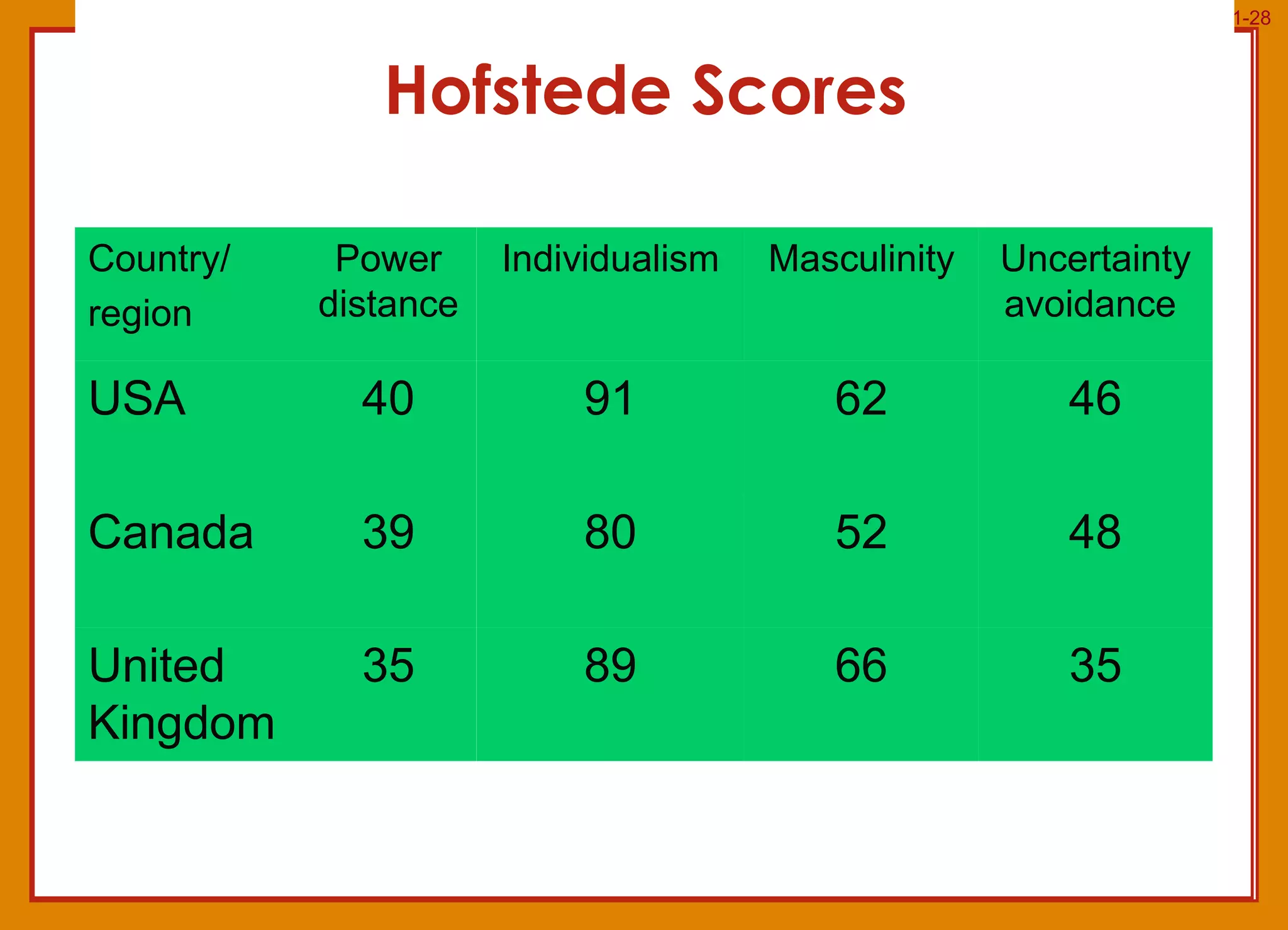
Hofstede Scores  Country/ region Power distance Individualism Masculinity Uncertainty avoidance  USA 40 91 62 46 Canada 39 80 52 48 United Kingdom 35 89 66 35
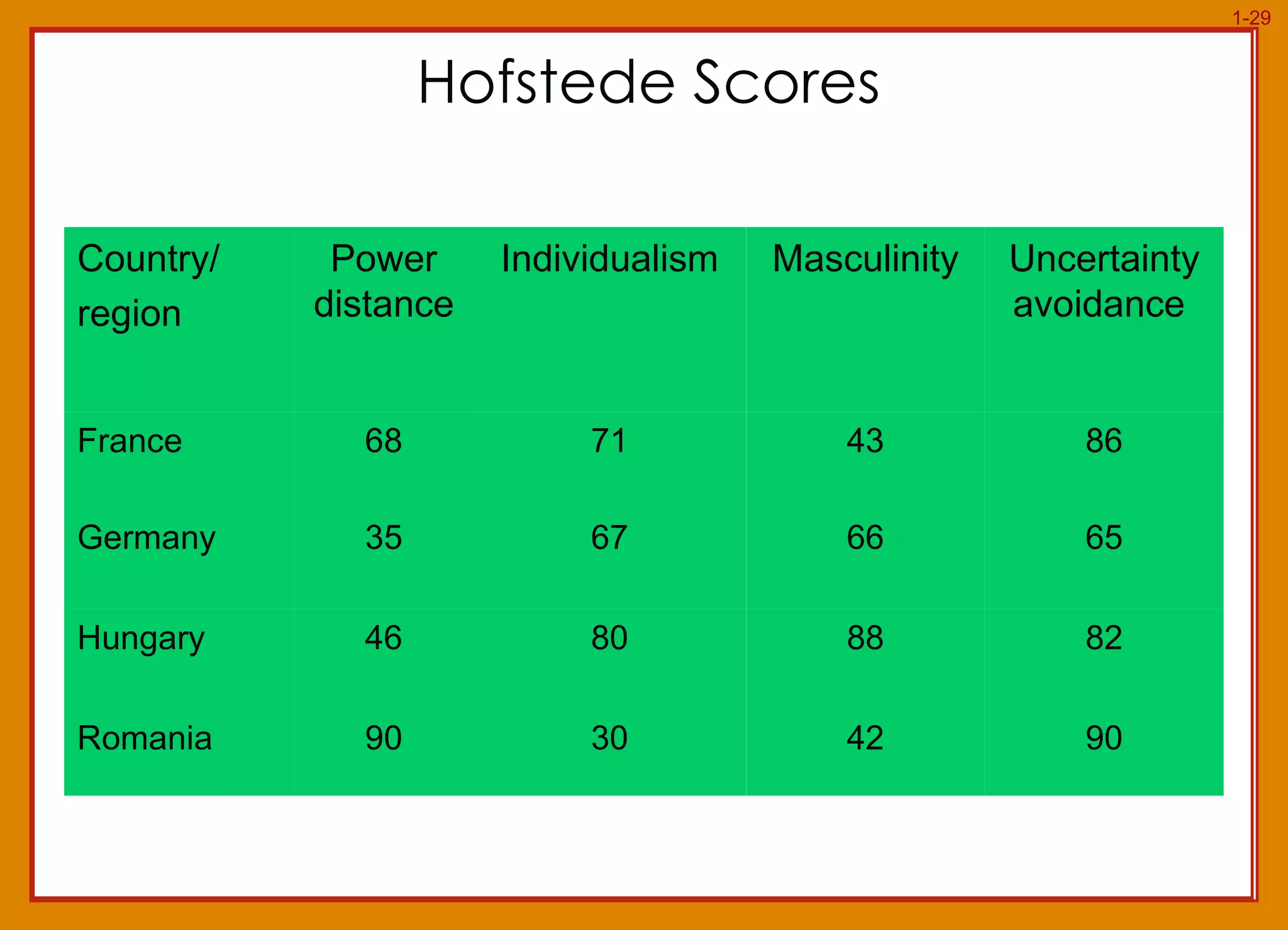
Hofstede Scores  Country/ region Power distance Individualism Masculinity Uncertainty avoidance  France  68 71 43 86 Germany 35 67 66 65 Hungary 46 80 88 82 Romania 90 30 42 90
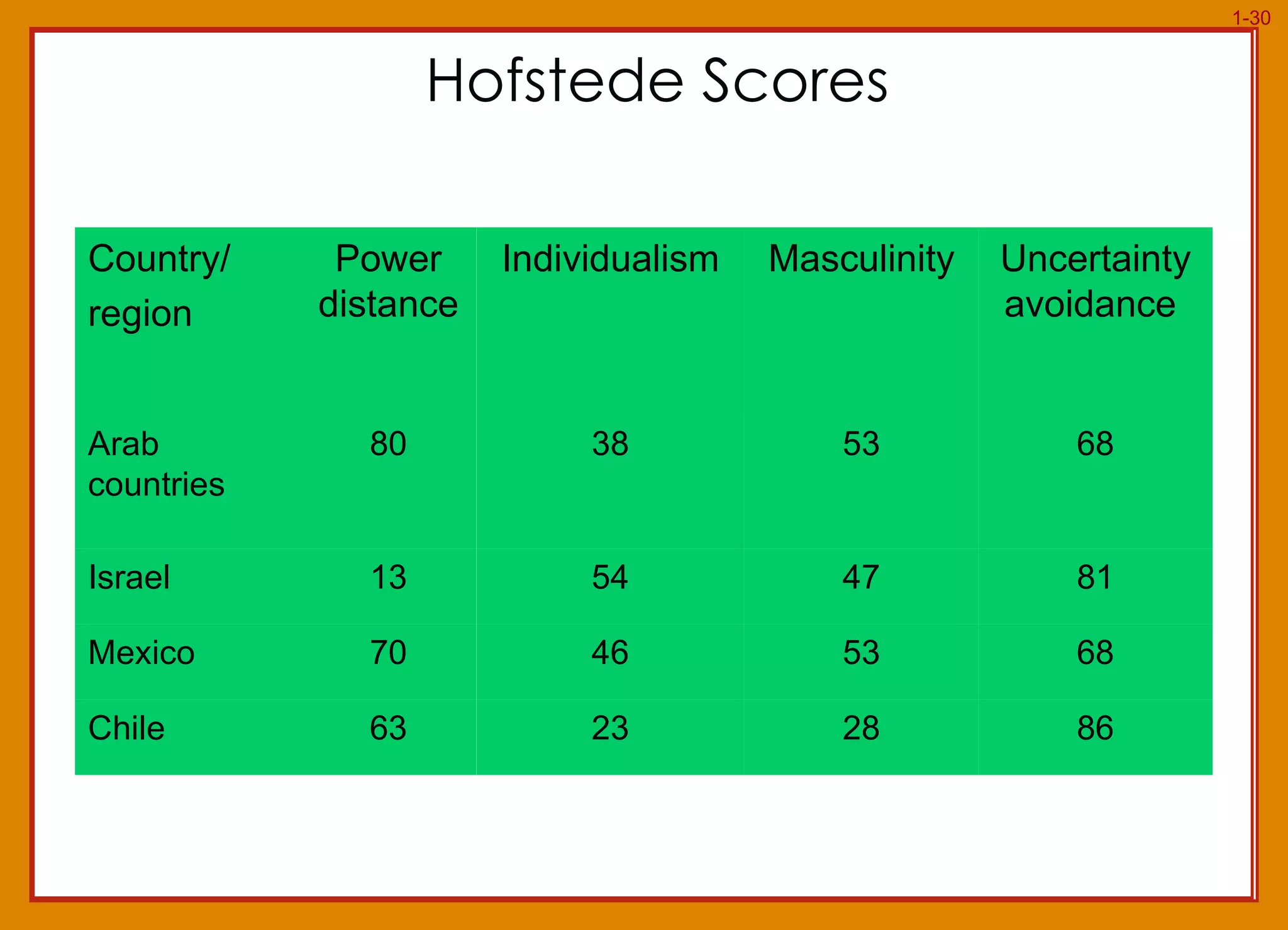
Hofstede Scores  Country/ region Power distance Individualism Masculinity Uncertainty avoidance  Arab countries 80 38 53 68 Israel 13 54 47 81 Mexico 70 46 53 68 Chile  63 23 28 86
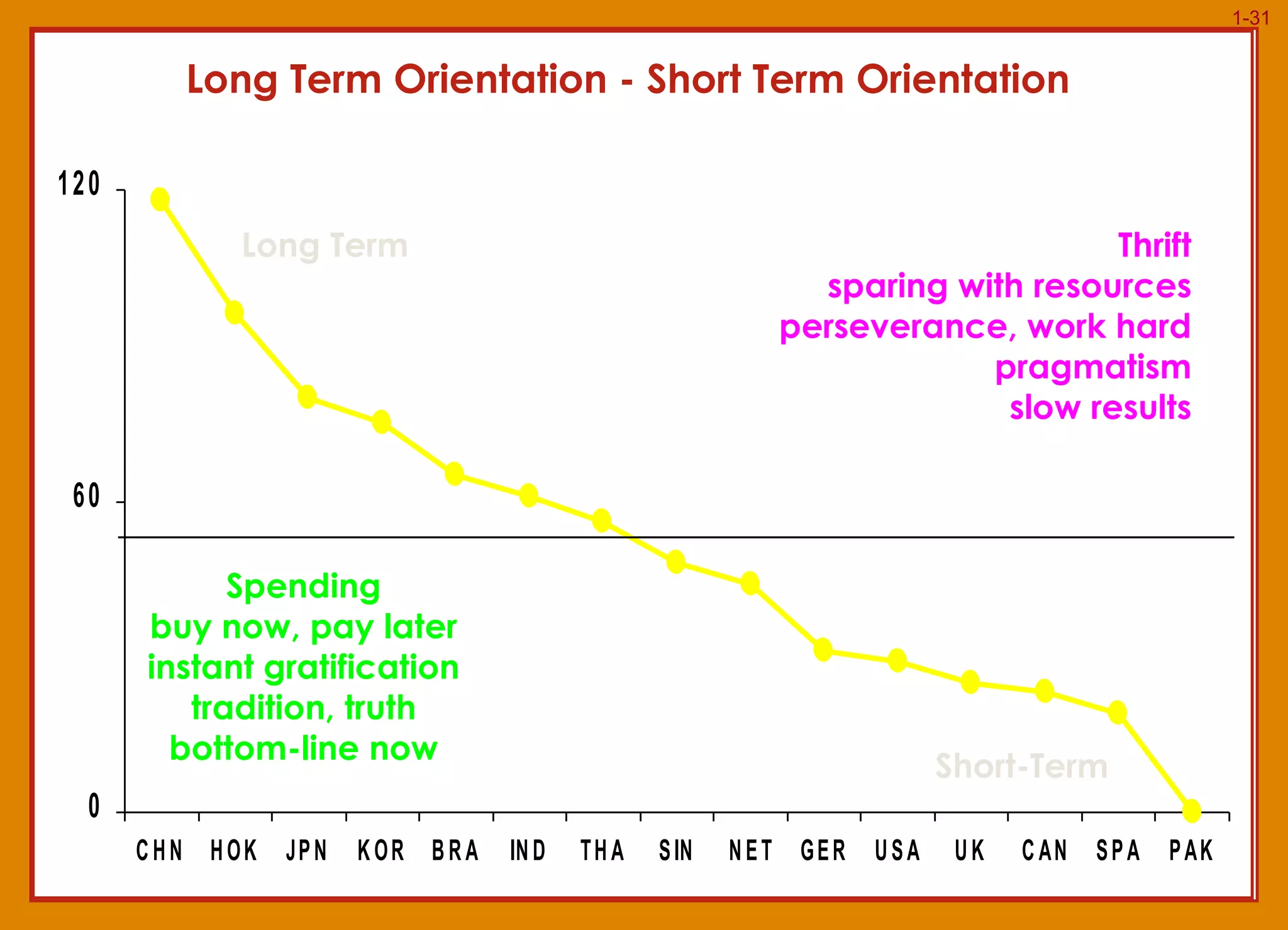
Long Term Orientation - Short Term Orientation Thrift sparing with resources perseverance, work hard p ragmatism slow results Spending buy now, pay later instant gratification tradition, truth bottom-line now Short-Term Long Term
WATCH VIDEO 7-
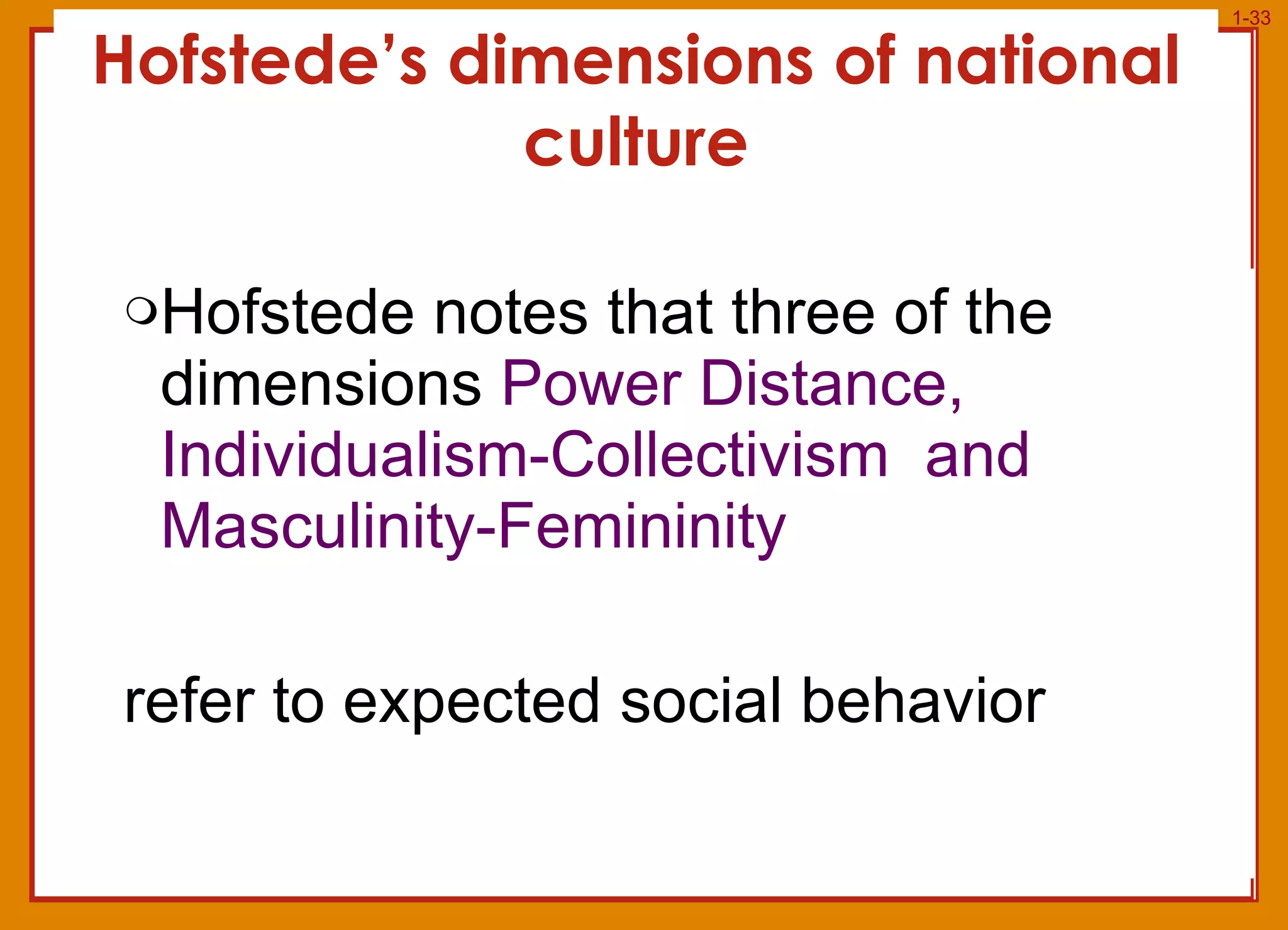
Hofstede’s dimensions of national culture Hofstede notes that three of the dimensions  Power Distance,  Individualism-Collectivism  and Masculinity-Femininity refer to expected social behavior
Hofstede’s dimensions of national culture The fourth dimension   Uncertainty Avoidance  is concerned with “man’s search for Truth,” and a fifth reflects the importance of time.
Hofstede’s dimensions of national culture The  fifth  Long-Term vs Short-Term orientation reflects the importance of time.
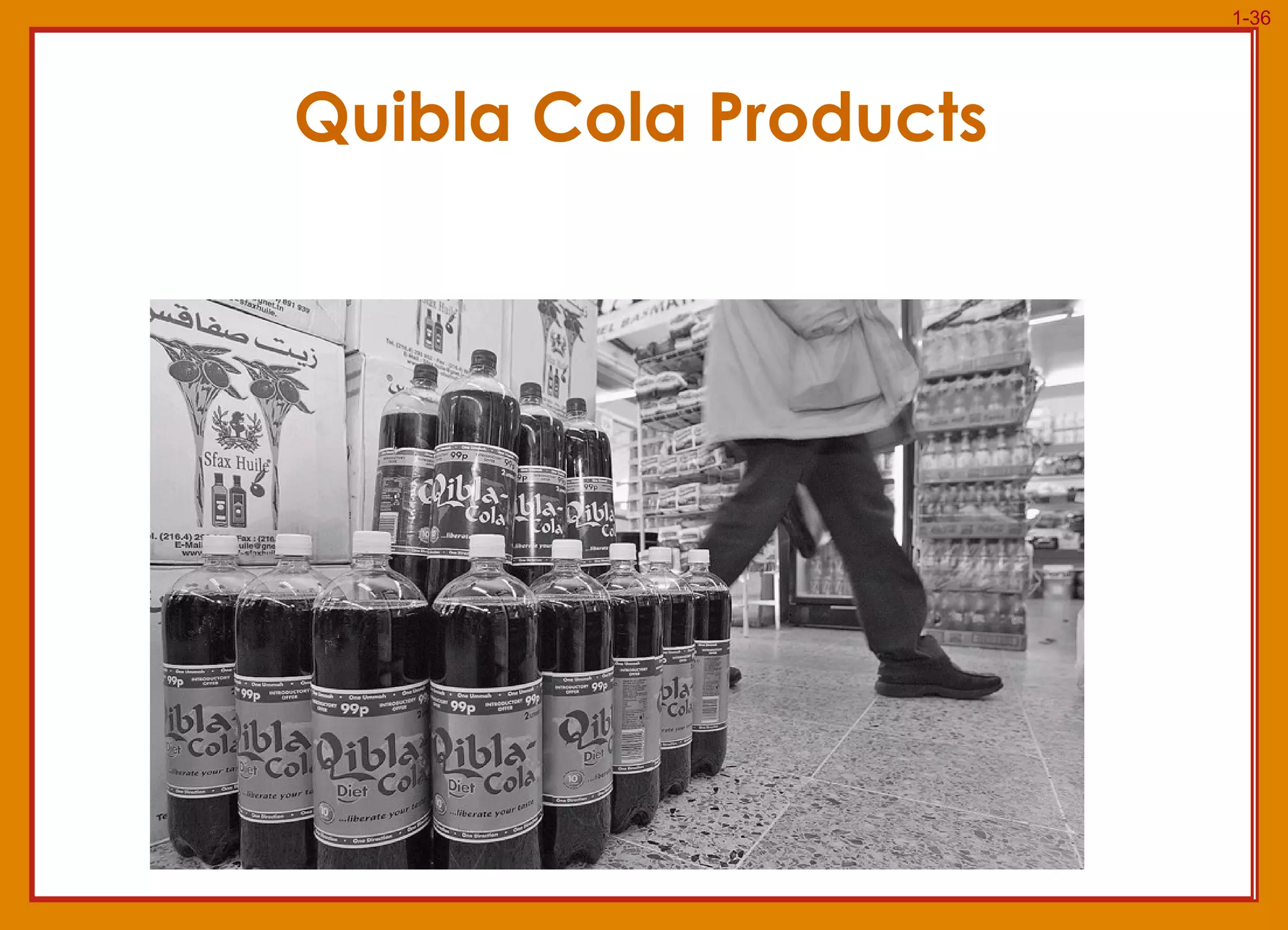
Quibla Cola Products
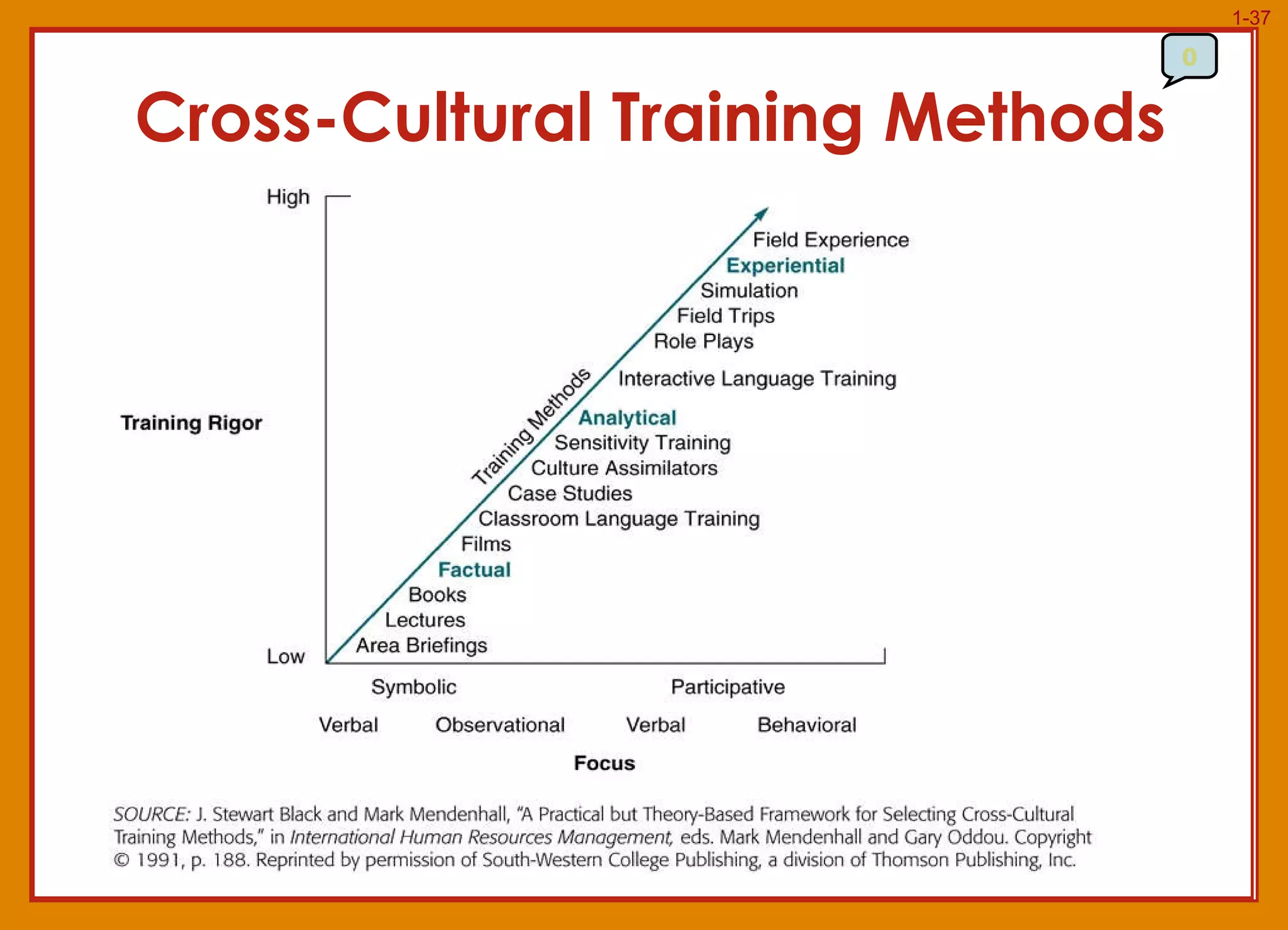
Cross-Cultural Training Methods 0
Assignments Making Culture Work for Marketing Success Embrace local culture. Build relationships. Employ locals to gain cultural knowledge. Help employees understand you. Adapt products and processes to local markets. Coordinate by region. 4-
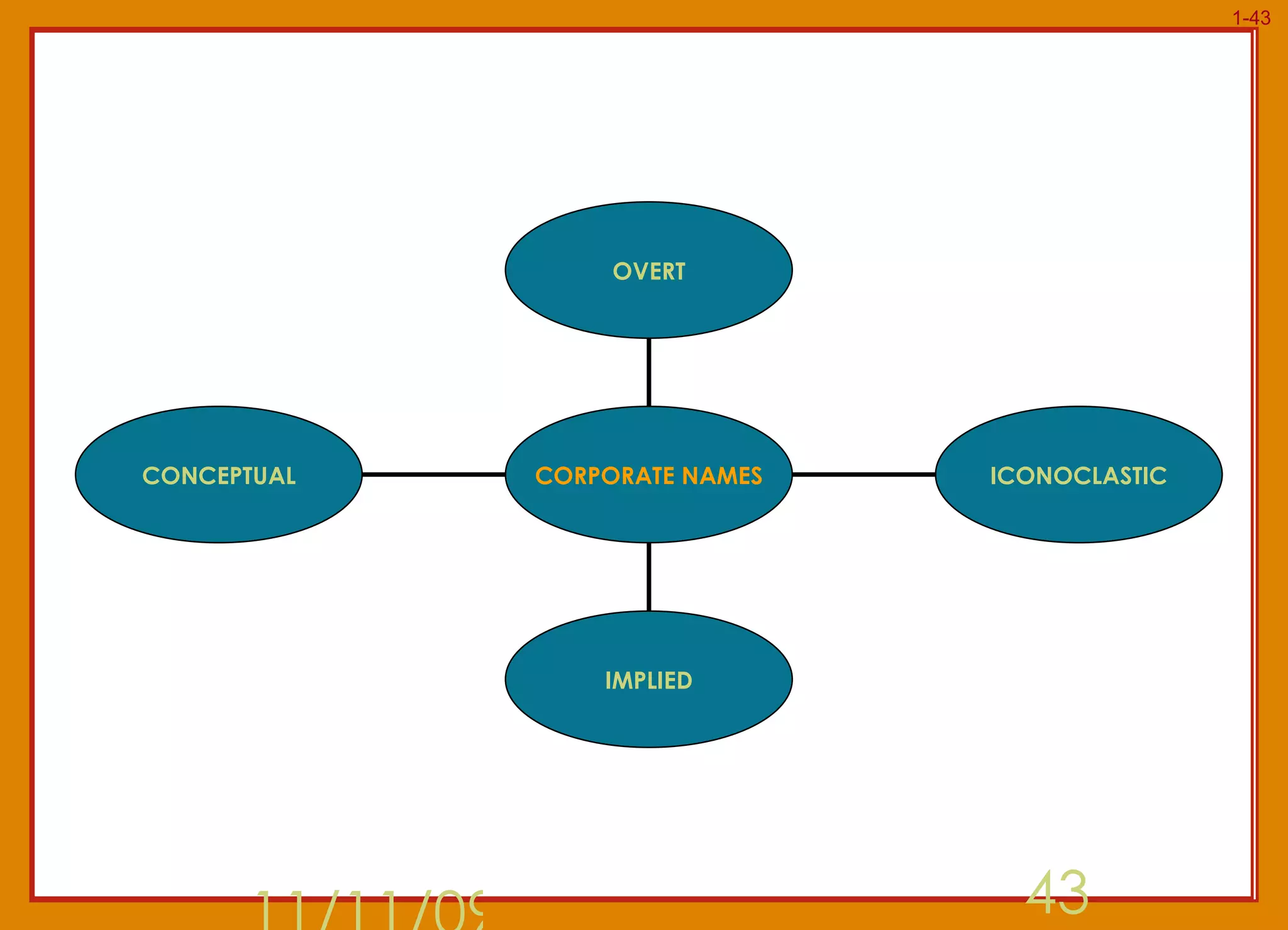
OVERT  NAMES Reveal what the company 11/11/09 does
IMPLIED NAMES Contain recognizable words or word parts that imply what the company is about 11/11/09
C O N C E P T U A L   N A M E S T r y   t o   c a p t u r e   t h e   e s s e n c e  o f   the   idea   behind   the   brand 11/11/09
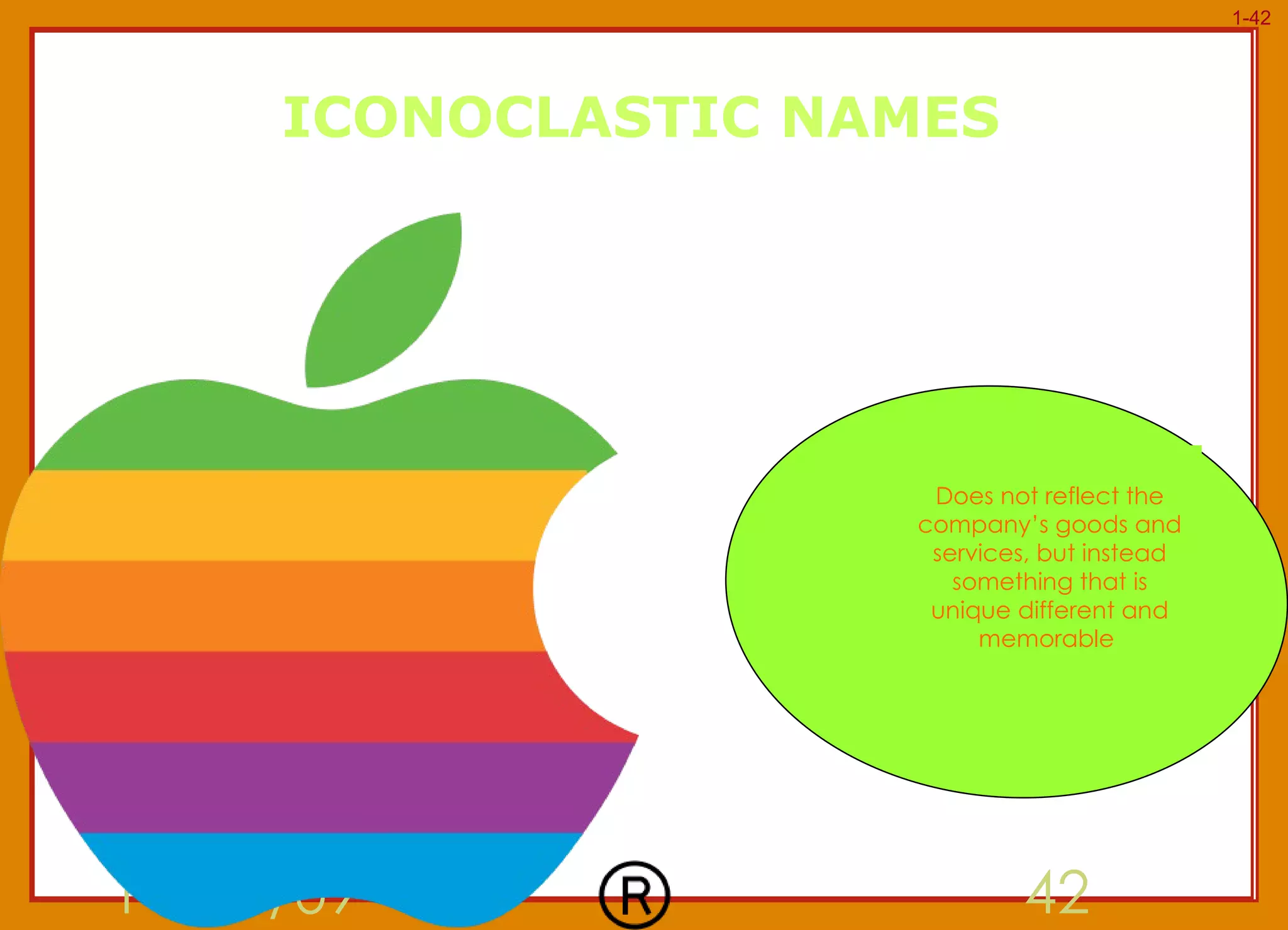
ICONOCLASTIC NAMES 11/11/09 Does not reflect the company’s goods and services, but instead something that is unique different and memorable
11/11/09 CONCEPTUAL IMPLIED ICONOCLASTIC OVERT CORPORATE NAMES

Ibahrine Chapter 4 Dimensions Of Culture

  • 1.
    Chapter 4Dimensions of Culture American University of Sharjah College of Arts and Sciences Department of Mass Communication Dr. Ibahrine Hofstede’s model
  • 2.
    Chapter 4 ObjectivesDiscuss how the sociocultural environment will affect the attractiveness of a potential market Define culture and name some of its elements Discuss whether the world’s cultures are converging or diverging Explain the ‘4+1’ dimensions in Hofstede’s model Discuss the strengths and weaknesses of Hofstede’s model
  • 3.
    Hofstede’s dimensions ofculture Power Distance Masculinity-Femininity Long-Term vs Short-Term orientation Uncertainty Avoidance Individualism-Collectivism
  • 4.
    Hofstede’s dimensions ofnational culture Power Distance Individualism-Collectivism Masculinity-Femininity Uncertainty Avoidance Long-Term vs Short-Term orientation
  • 5.
    Power Distance Theextent to which the less powerful members within a society accept - even expect- that power is unevenly distributed High power distance societies Children expected to be obedient to parents Subordinates are less likely to contradict bosses
  • 6.
    Power Distance : Rightful place vs Equality P ower Distance large Respect authority & elders acceptance and expectance of authority ‘ rightful place’, dependence, consume for social status Inequality minimized, anti-authority arguments, “critical mind”, opinions respect for youth, independence consume for use P ower Distance small Hofstede, 2001
  • 7.
    It is importantto understand the difference between the context cultures to avoid misunderstanding of messages and intentions. Culture Defined 0
  • 8.
    High-context culture - The social context in which what is said strongly affects the meaning of the message. Low-context culture - The meaning of the message is explicitly expressed by the words and is less affected by the social context . Culture Defined 0
  • 9.
    Individualism-Collectivism: “I” versus “we” “ I” oriented , personality, identity, independence privacy, freedom, differentiation media main source of information universalist, sell, persuasion verbal orientation , product brands communication direct “ w e” oriented , interdependence harmony / face, sharing, conformance social network main source of information particularist, trust, invest in relations visual orientation , company brands communication indirect Source: Hofstede, 2001 Individualist Collectivist
  • 10.
    Hall’s Communication Context 7- Low-context cultures High-context cultures
  • 11.
    Comparing low- and high-context cultures (1) 7- Communication Explicit, direct Implicit, indirect Characteristic Low-context High-context Informal handshakes Formal hugs, bows, and handshakes Sense of self and space
  • 12.
    Comparing low- and high-context cultures (2) 7- Dress and appearance Varies widely, dress for success Indication of position in society, religious rule Characteristic Low-context High-context Eating is a necessity, fast food Eating is social event Food and eating habits
  • 13.
    Comparing low- and high-context cultures (3) 7- Time consciousness Linear, exact, promptness is valued, time = money Elastic, relative, time = relationships Characteristic Low-context High-context Nuclear family, self-oriented, value youth Extended family, other oriented, loyalty Family and friends
  • 14.
    Comparing low- and high-context cultures (4) 7- Values and norms Independence, confrontation of conflict Group conformity, harmony Characteristic Low-context High-context Egalitarian, challenge authority, gender equity Hierarchical, respect for authority, gender roles Beliefs and attitudes
  • 15.
    Comparing low- and high-context cultures (5) 7- Mental process and learning Linear, logical, sequential, problem solving Lateral, holistic, accepting life’s difficulties Characteristic Low-context High-context Deal oriented, rewards based on achievement Relationship oriented, rewards based on seniority Business/ work habits
  • 16.
    High- and Low-Context Cultures High Context Information resides in context Emphasis on background, basic values, societal status Less emphasis on legal paperwork Focus on personal reputation Saudi Arabia, Japan Low Context Messages are explicit and specific Words carry all information Reliance on legal paperwork Focus on non-personal documentation of credibility Switzerland, United States, Germany
  • 17.
    High- and Low-Context Cultures Factor/Dimension High Context Low Context Lawyers Less important Very important A person’s word Is his/her bond Is not reliable — get it in writing Responsibility for organizational error Taken by highest level Pushed to the lowest level Space People breathe on one another Private space maintained Time Polychronic Monochronic Competitive bidding Infrequent Common
  • 18.
    Figure 7.3 Thecontextual continuum of differing cultures 7-
  • 19.
    Add figure 3.3,p.80 here The Positions of Fifty Countries and Three Regions on Power Distance and Individualism-Collectivism Dimensions
  • 20.
    Individualism-Collectivism The worldis viewed as in-groups and out-groups Individuals are identified by group allegiance and role Groups are established, strong, and cohesive – You don’t just choose which group to join Individualistic cultures are more open to outsiders and foreign ideas
  • 21.
    Masculinity-Femininity Masculinity isassociated with assertiveness Masculine societies value ambition, competitiveness, and high earnings Femininity is associated with modesty and nurturing Feminine societies are concerned with public welfare
  • 22.
    Masculinity-Femininity: Genderof nations: hard vs soft Material success, what you do competition, money & things, consume for show live for working, role differentiation Modesty, who you are , equality (= leveling) people, quality of life, consume for use, work for living, overlapping roles Source: Hofstede, 1991 Masculine Feminine
  • 23.
    Uncertainty Avoidance Thestate of being uneasy or worried about what may happen in the future Anxious in general Uncertainty avoidant societies Don’t like ambiguity Consider the different to be threatening Tend to be better implementers than innovators
  • 24.
    Uncertainty Avoidance: Coping with ambiguity clarity , structure , precision, punctuality competence/expertise, scientific control stress, stability , need for purity slow adoption of innovations advertising is serious Comfortable with ambiguity, chaos fast adoption of innovations, tolerance humor in advertising Source: Hofstede, 2001 Strong UA Weak UA
  • 25.
    Hofstede’s model of national cultures 7- Power distance Uncertainty avoidance Individualism Masculinity Time perspective
  • 26.
    Attitudes Toward Time Monochronic versus polychronic Temporal orientations Past orientation Europe and Middle East Present orientation Mexico Future orientation USA Work and leisure time
  • 27.
    Hofstede Scores AreRelative Compared to USA, Japan is collectivist USA = 91 on Individualism Japan = 46 on Individualism Compared to South Korea, Japan is individualistic Japan = 46 on Individualism South Korea = 18 on Individualism
  • 28.
    Hofstede Scores Country/ region Power distance Individualism Masculinity Uncertainty avoidance USA 40 91 62 46 Canada 39 80 52 48 United Kingdom 35 89 66 35
  • 29.
    Hofstede Scores Country/ region Power distance Individualism Masculinity Uncertainty avoidance France 68 71 43 86 Germany 35 67 66 65 Hungary 46 80 88 82 Romania 90 30 42 90
  • 30.
    Hofstede Scores Country/ region Power distance Individualism Masculinity Uncertainty avoidance Arab countries 80 38 53 68 Israel 13 54 47 81 Mexico 70 46 53 68 Chile 63 23 28 86
  • 31.
    Long Term Orientation- Short Term Orientation Thrift sparing with resources perseverance, work hard p ragmatism slow results Spending buy now, pay later instant gratification tradition, truth bottom-line now Short-Term Long Term
  • 32.
  • 33.
    Hofstede’s dimensions ofnational culture Hofstede notes that three of the dimensions Power Distance, Individualism-Collectivism and Masculinity-Femininity refer to expected social behavior
  • 34.
    Hofstede’s dimensions ofnational culture The fourth dimension Uncertainty Avoidance is concerned with “man’s search for Truth,” and a fifth reflects the importance of time.
  • 35.
    Hofstede’s dimensions ofnational culture The fifth Long-Term vs Short-Term orientation reflects the importance of time.
  • 36.
  • 37.
  • 38.
    Assignments Making CultureWork for Marketing Success Embrace local culture. Build relationships. Employ locals to gain cultural knowledge. Help employees understand you. Adapt products and processes to local markets. Coordinate by region. 4-
  • 39.
    OVERT NAMESReveal what the company 11/11/09 does
  • 40.
    IMPLIED NAMES Containrecognizable words or word parts that imply what the company is about 11/11/09
  • 41.
    C O NC E P T U A L N A M E S T r y t o c a p t u r e t h e e s s e n c e o f the idea behind the brand 11/11/09
  • 42.
    ICONOCLASTIC NAMES 11/11/09Does not reflect the company’s goods and services, but instead something that is unique different and memorable
  • 43.
    11/11/09 CONCEPTUAL IMPLIEDICONOCLASTIC OVERT CORPORATE NAMES

Editor's Notes

  • #17 Japan, Saudi Arabia, and other high-context cultures place a great deal of emphasis on a person's values and position or place in society. In such cultures, a business loan is more likely to be based on “who you are” than on formal analysis of pro forma financial documents. In a low-context culture such as the United States, Switzerland, or Germany, deals are made with much less information about the character, background, and values of the participants. Much more reliance is placed upon the words and numbers in the loan application. Similarly, Japanese companies such as Sony traditionally paid a great deal of attention to the university background of a new hire; preference would be given to graduates of Tokyo University. Specific elements on a resume were less important. Insisting on competitive bidding can cause complications in low-context cultures. In a high-context culture, the job is given to the person who will do the best work and who you can trust and control. In a low-context culture, one tries to make the specifications so precise that a builder is forced by the threat of legal sanction to do a good job.
  • #37 Tunisian–born Tawfik Mathlouthi launched the Mecca Cola brand as an alternative to Coca-Cola for Muslims living in the United Kingdom and France. The name is both an intentional reference to the holy city of Islam as well as an ironic swipe at Coca-Cola, which the founder calls “the Mecca of capitalism.” London’s Sunday Times calls the brand “the drink now seen as politically preferable to Pepsi or Coke.” Qibla Cola was launched in 2003; company executives hope to position Qibla as an alternative to mainstream American brands. As one executive noted, “We want to show that you can develop a brand that is global, ethical, quality, and commercially viable. We are not trying to do so by being anti-American but by being anti-injustice.” As of mid-2004, Qibla Cola was available in the United Kingdom, the Netherlands, Norway, Canada, and Pakistan.