Challenges to the
      Church, Part II
Taking Root in Church - Reformation from Within
Objectives

❖   Students will describe reasons why England formed a new
    church.

❖   Students will analyze how the Catholic Church reformed
    itself.

❖   Students will analyze the changes in European thought and
    culture resulting from the Renaissance.
Vocabulary
❖   sect: a subgroup of a major religious group.

❖   compromise: an agreement in which each side makes
    concessions; an acceptable middle ground.

❖   Council of Trent: a group of Catholic leaders that met
    between 1545 and 1563 to respond to Protestant challenges
    and direct the future of the Catholic Church.

❖   ghetto: separate section of a city where members of a
    minority group are forced to live.
Protestant Sects Grow

❖   Hundreds of new sects of Protestants spring up throughout
    Europe

    ❖   Some followed variations of Luther or other leaders

        ❖   Some were more radical - Anabaptists felt that infants
            could not know what being baptized meant, so it was
            impossible to convey the faith

        ❖   Considered radical for the time
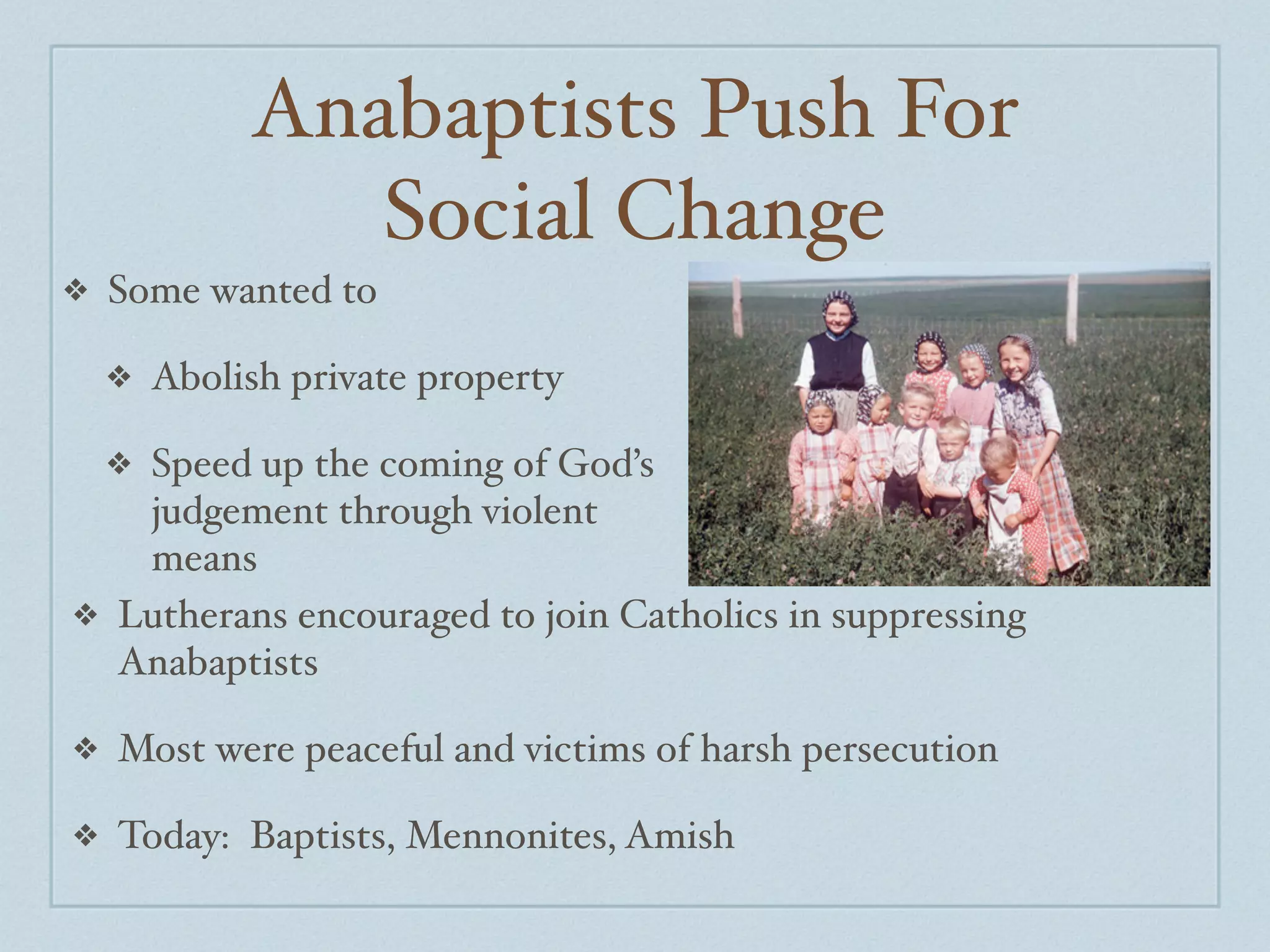
Anabaptists Push For
                Social Change
❖   Some wanted to

    ❖   Abolish private property

   Speed up the coming of God’s
    ❖
   judgement through violent
   means
❖ Lutherans encouraged to join Catholics in suppressing
  Anabaptists

❖   Most were peaceful and victims of harsh persecution

❖   Today: Baptists, Mennonites, Amish
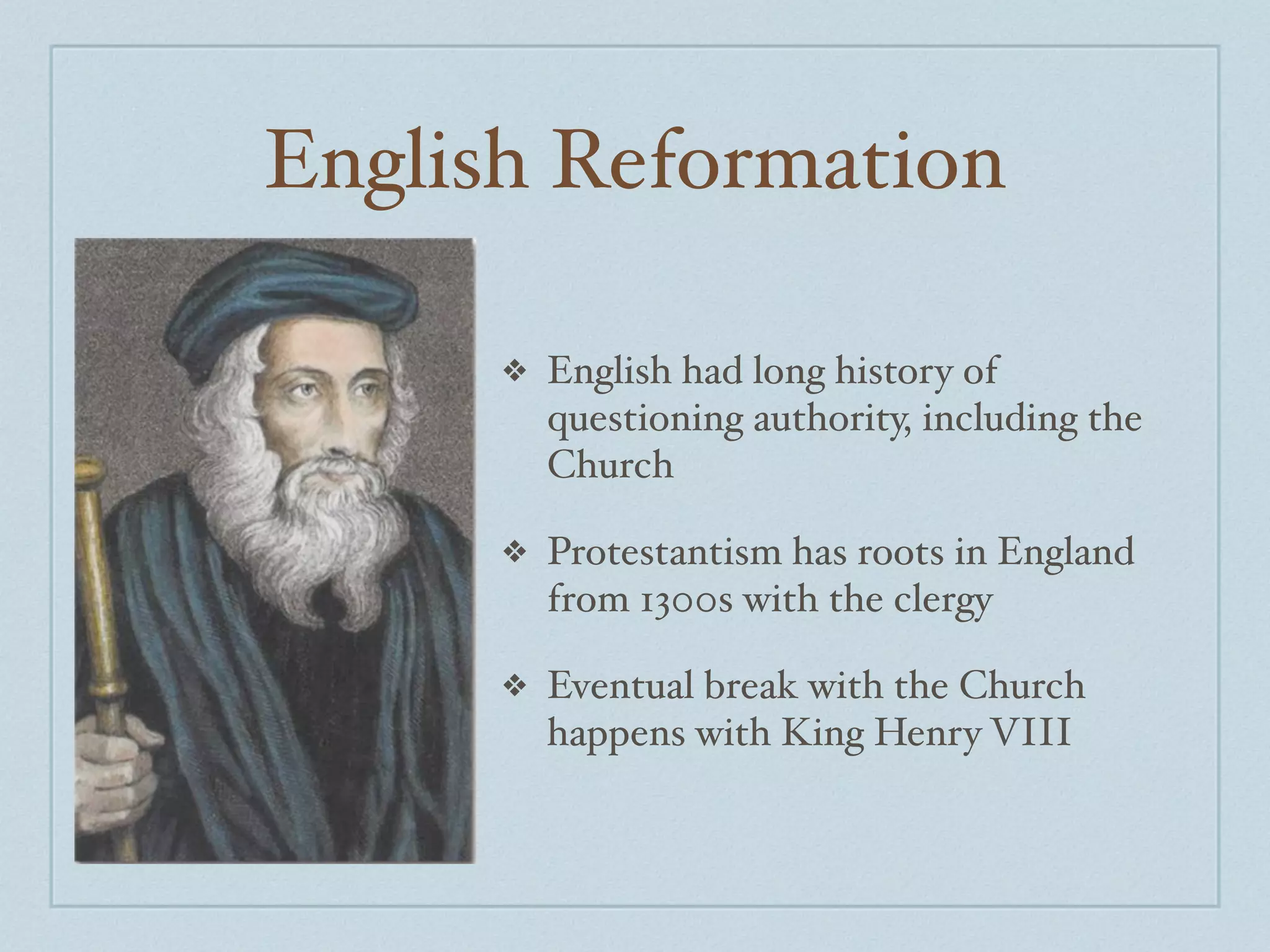
English Reformation

      ❖   English had long history of
          questioning authority, including the
          Church

      ❖   Protestantism has roots in England
          from 1300s with the clergy

      ❖   Eventual break with the Church
          happens with King Henry VIII
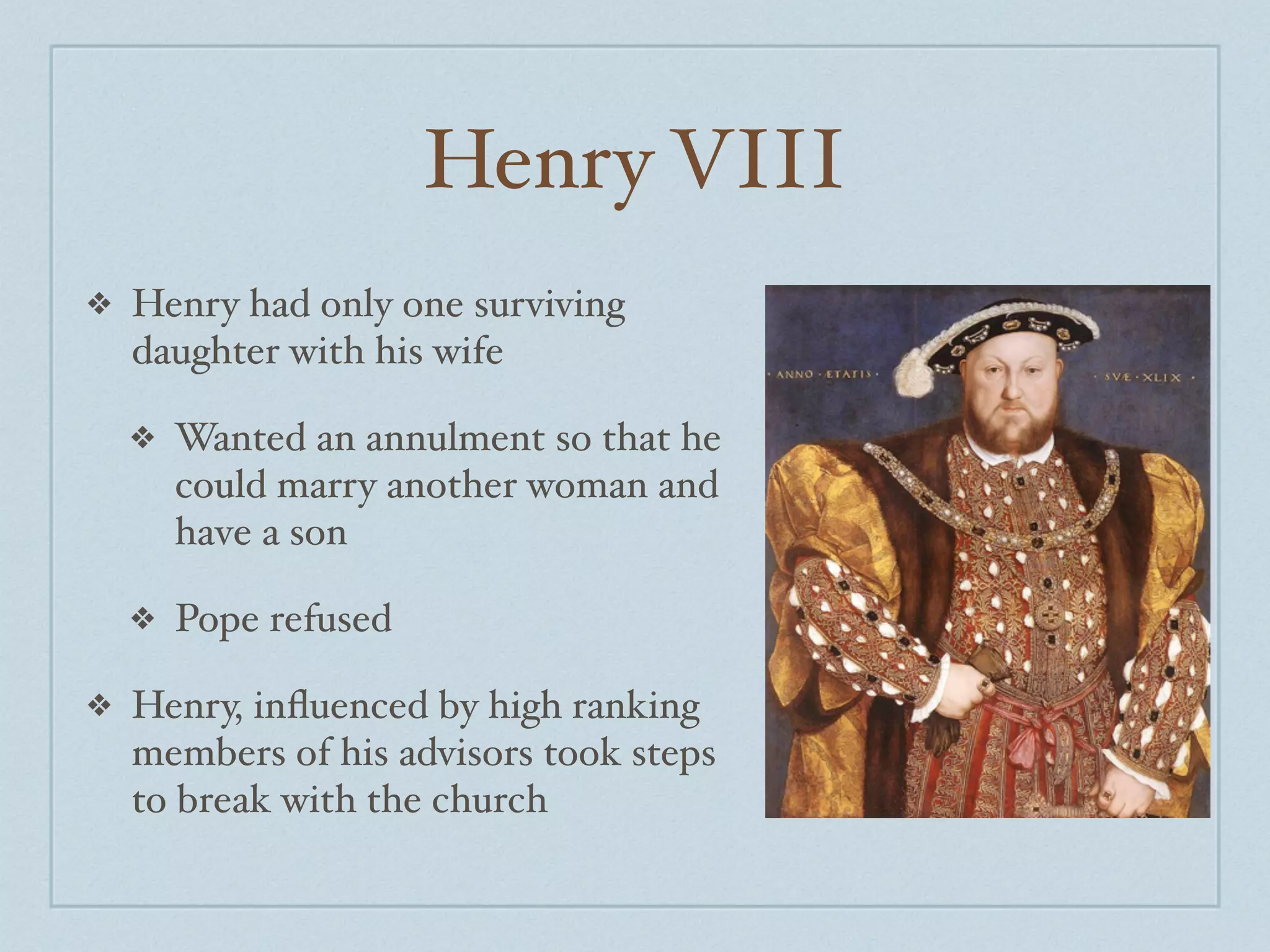
Henry VIII
❖   Henry had only one surviving
    daughter with his wife

    ❖   Wanted an annulment so that he
        could marry another woman and
        have a son

    ❖   Pope refused

❖   Henry, influenced by high ranking
    members of his advisors took steps
    to break with the church
Church of England
     ❖   With Parliament, Henry took control
         of the church

         ❖   1534: Parliament passed the Act of
             Supremacy, making Henry the “only
             supreme head on Earth of the
             Church of England”

     ❖   Caused infighting between Protestants
         and Catholics

     ❖   1534-1540: Strengthening of the
         Church of England through seizures
         and closing of Catholic churches
Swift Changes and Turmoil
❖   1547: Henry dies; Nine year old Edward takes over

    ❖   Attempt to create a strict Protestant nation with Parliament
        (Protestant)

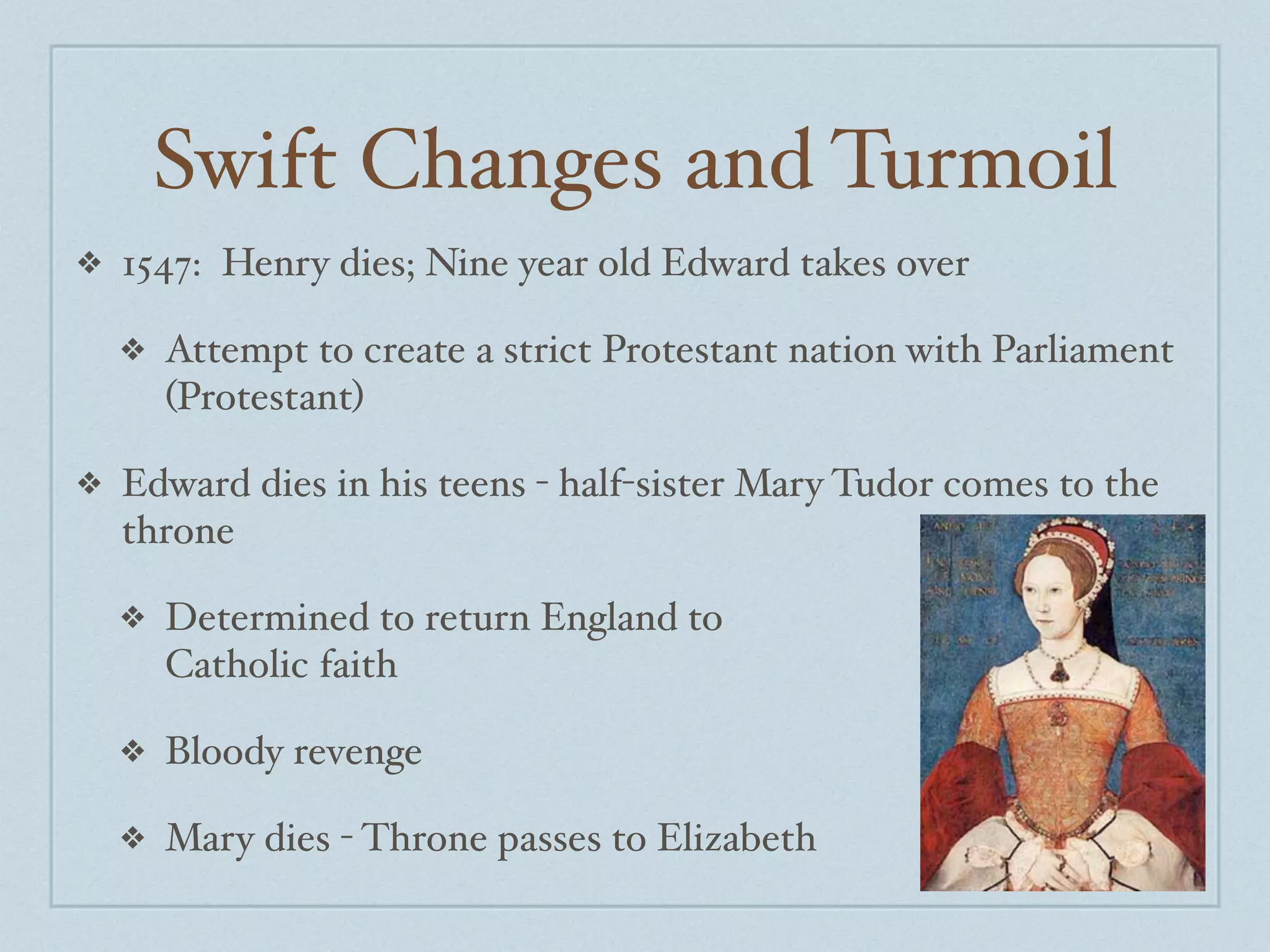
❖   Edward dies in his teens - half-sister Mary Tudor comes to the
    throne

    ❖   Determined to return England to
        Catholic faith

    ❖   Bloody revenge

    ❖   Mary dies - Throne passes to Elizabeth
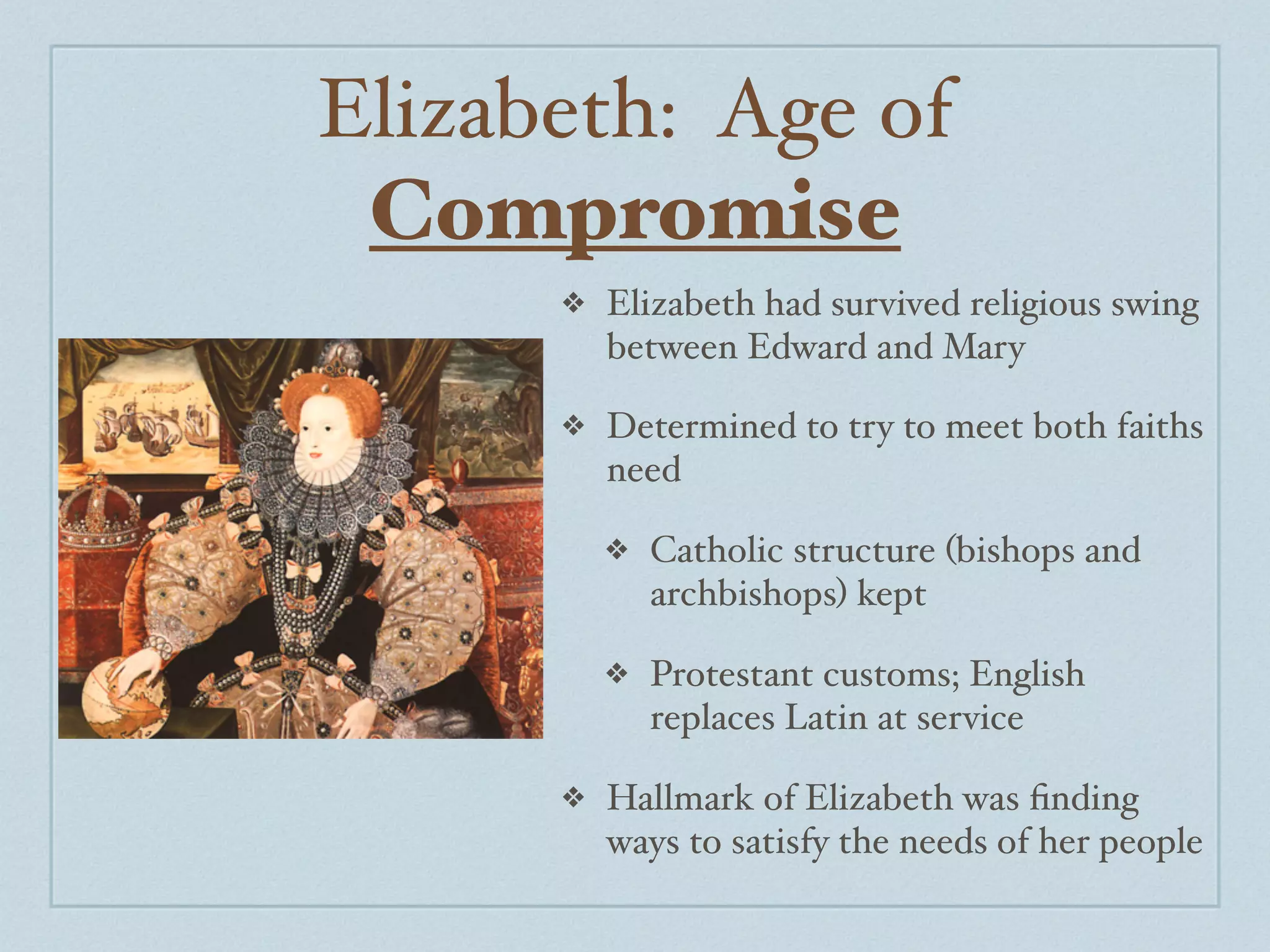
Elizabeth: Age of
 Compromise
      ❖   Elizabeth had survived religious swing
          between Edward and Mary

      ❖   Determined to try to meet both faiths
          need

          ❖   Catholic structure (bishops and
              archbishops) kept

          ❖   Protestant customs; English
              replaces Latin at service

      ❖   Hallmark of Elizabeth was finding
          ways to satisfy the needs of her people
Catholic Reform -
                the Counter Reformation
❖   Pope Paul III recognized that Protestantism could spread and
    ultimately threaten the Church in a much larger way

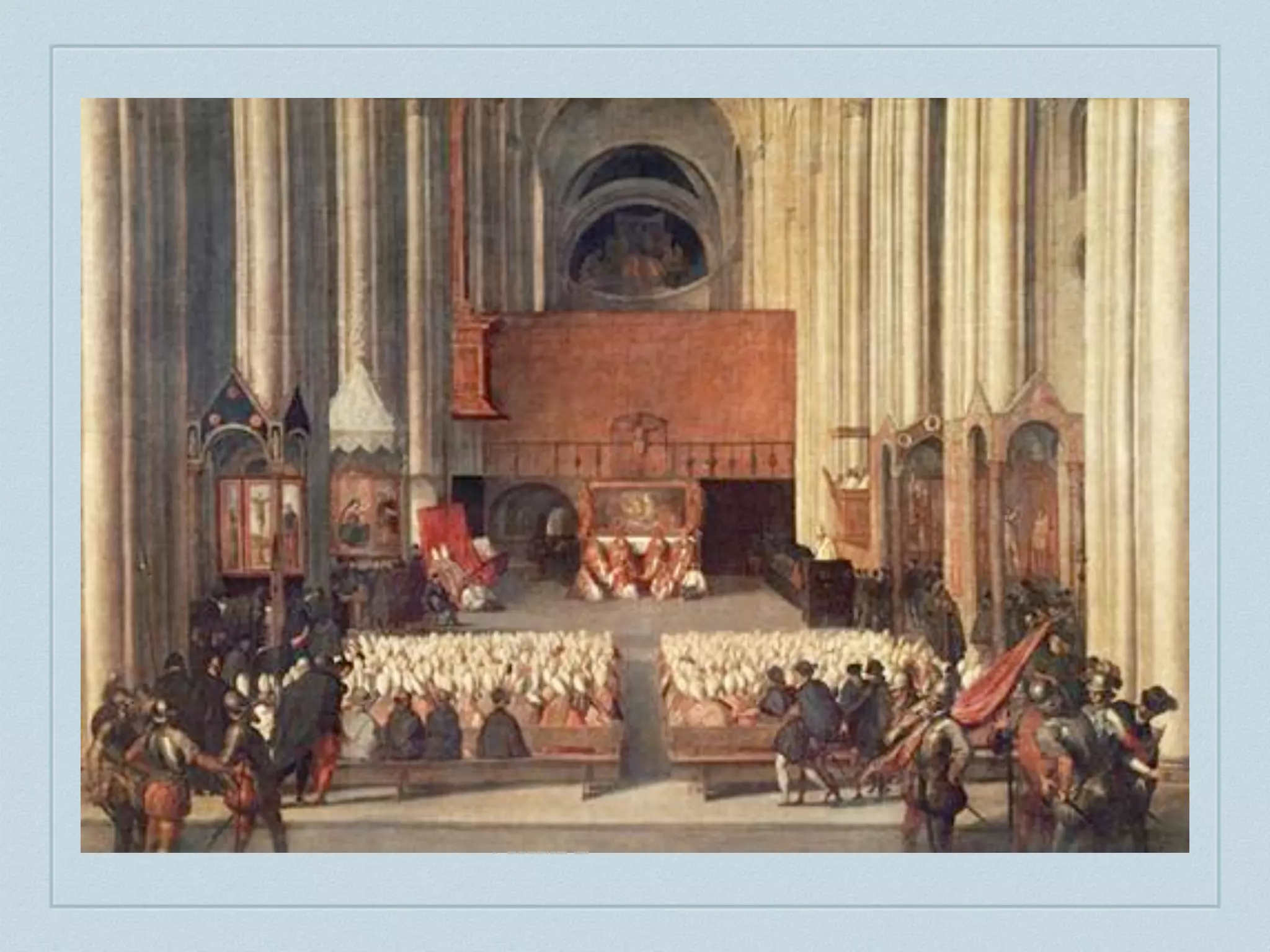
❖   Called the Council of Trent in 1545

    ❖   Lasted nearly 20 years

    ❖   Reaffirmed many of the traditional views that Protestants had
        challenged

        ❖   Salvation comes through faith and good works; Bible is not
            only source of truth

    ❖   Took steps to end abuses in the church and establish schools
        to better educate clergy
Inquisition

❖   Church led court set up during the Middle Ages that was
    now being used to fight back against Protestantism

    ❖   Secret testimony, torture and execution used to root out
        heresy

    ❖   Index of Forbidden books - including books by Luther
        and Calvin and other humanists

❖   Pope Paul III strengthened the Inquisition
Jesuits
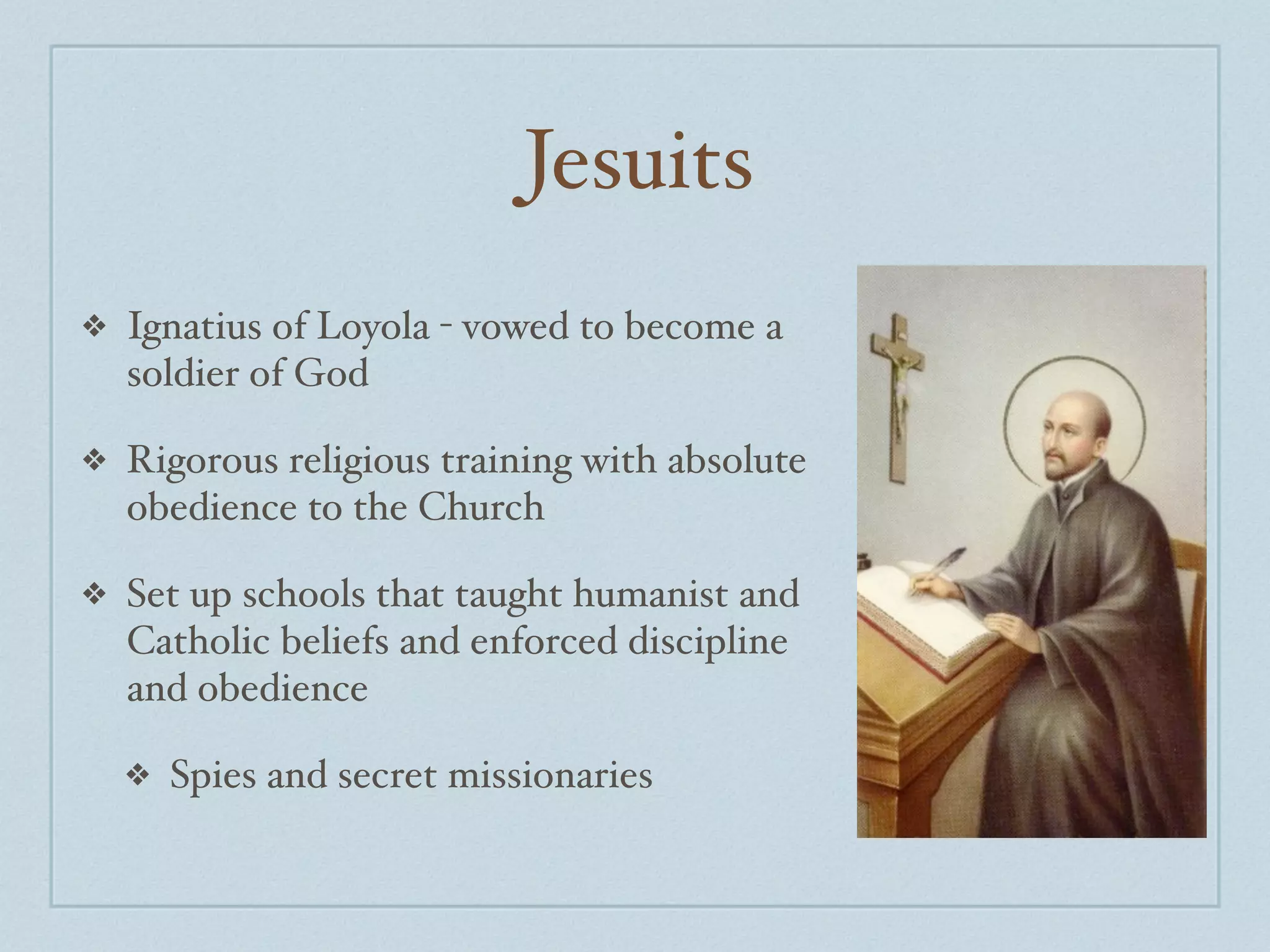
❖   Ignatius of Loyola - vowed to become a
    soldier of God

❖   Rigorous religious training with absolute
    obedience to the Church

❖   Set up schools that taught humanist and
    Catholic beliefs and enforced discipline
    and obedience

    ❖   Spies and secret missionaries
Spread and Legacy of the
         Catholic Reformation

❖   Response to the ends of abuse and changes in the church
    stopped the tide of conversion to Protestant

❖   Majority of Europe is still Catholic

❖   Protestants have foothold in Europe, though

    ❖   Divided faiths in Europe
Persecution
❖   With major tensions and anger - fighting
    and killing for religion heightened

❖   Intolerance and persecution of outsiders
    - considered to be witches or Jews

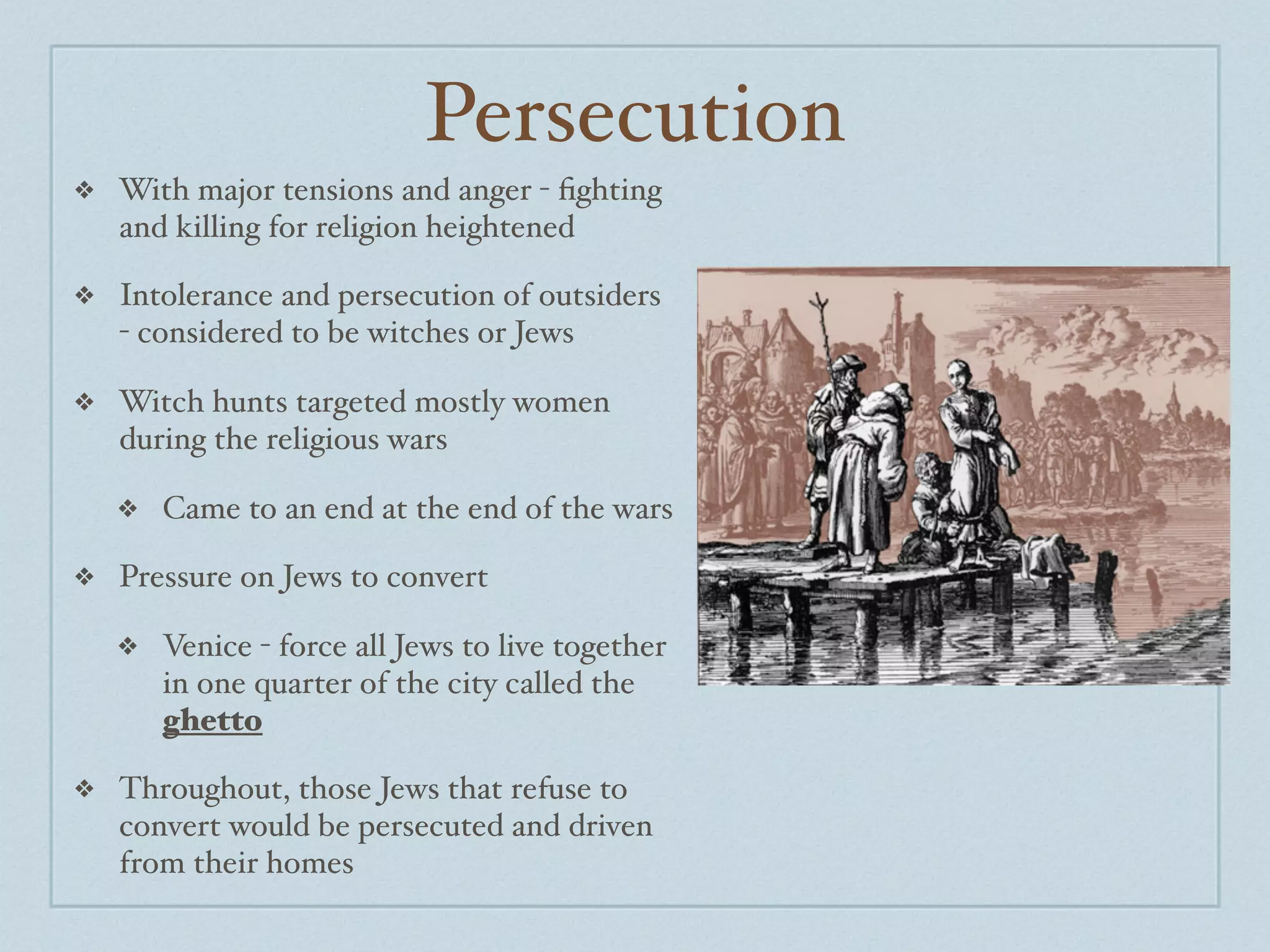
❖   Witch hunts targeted mostly women
    during the religious wars

    ❖   Came to an end at the end of the wars

❖   Pressure on Jews to convert

    ❖   Venice - force all Jews to live together
        in one quarter of the city called the
        ghetto

❖   Throughout, those Jews that refuse to
    convert would be persecuted and driven
    from their homes

Reformation II

  • 1.
    Challenges to the Church, Part II Taking Root in Church - Reformation from Within
  • 2.
    Objectives ❖ Students will describe reasons why England formed a new church. ❖ Students will analyze how the Catholic Church reformed itself. ❖ Students will analyze the changes in European thought and culture resulting from the Renaissance.
  • 3.
    Vocabulary ❖ sect: a subgroup of a major religious group. ❖ compromise: an agreement in which each side makes concessions; an acceptable middle ground. ❖ Council of Trent: a group of Catholic leaders that met between 1545 and 1563 to respond to Protestant challenges and direct the future of the Catholic Church. ❖ ghetto: separate section of a city where members of a minority group are forced to live.
  • 4.
    Protestant Sects Grow ❖ Hundreds of new sects of Protestants spring up throughout Europe ❖ Some followed variations of Luther or other leaders ❖ Some were more radical - Anabaptists felt that infants could not know what being baptized meant, so it was impossible to convey the faith ❖ Considered radical for the time
  • 5.
    Anabaptists Push For Social Change ❖ Some wanted to ❖ Abolish private property Speed up the coming of God’s ❖ judgement through violent means ❖ Lutherans encouraged to join Catholics in suppressing Anabaptists ❖ Most were peaceful and victims of harsh persecution ❖ Today: Baptists, Mennonites, Amish
  • 6.
    English Reformation ❖ English had long history of questioning authority, including the Church ❖ Protestantism has roots in England from 1300s with the clergy ❖ Eventual break with the Church happens with King Henry VIII
  • 7.
    Henry VIII ❖ Henry had only one surviving daughter with his wife ❖ Wanted an annulment so that he could marry another woman and have a son ❖ Pope refused ❖ Henry, influenced by high ranking members of his advisors took steps to break with the church
  • 8.
    Church of England ❖ With Parliament, Henry took control of the church ❖ 1534: Parliament passed the Act of Supremacy, making Henry the “only supreme head on Earth of the Church of England” ❖ Caused infighting between Protestants and Catholics ❖ 1534-1540: Strengthening of the Church of England through seizures and closing of Catholic churches
  • 9.
    Swift Changes andTurmoil ❖ 1547: Henry dies; Nine year old Edward takes over ❖ Attempt to create a strict Protestant nation with Parliament (Protestant) ❖ Edward dies in his teens - half-sister Mary Tudor comes to the throne ❖ Determined to return England to Catholic faith ❖ Bloody revenge ❖ Mary dies - Throne passes to Elizabeth
  • 10.
    Elizabeth: Age of Compromise ❖ Elizabeth had survived religious swing between Edward and Mary ❖ Determined to try to meet both faiths need ❖ Catholic structure (bishops and archbishops) kept ❖ Protestant customs; English replaces Latin at service ❖ Hallmark of Elizabeth was finding ways to satisfy the needs of her people
  • 11.
    Catholic Reform - the Counter Reformation ❖ Pope Paul III recognized that Protestantism could spread and ultimately threaten the Church in a much larger way ❖ Called the Council of Trent in 1545 ❖ Lasted nearly 20 years ❖ Reaffirmed many of the traditional views that Protestants had challenged ❖ Salvation comes through faith and good works; Bible is not only source of truth ❖ Took steps to end abuses in the church and establish schools to better educate clergy
  • 13.
    Inquisition ❖ Church led court set up during the Middle Ages that was now being used to fight back against Protestantism ❖ Secret testimony, torture and execution used to root out heresy ❖ Index of Forbidden books - including books by Luther and Calvin and other humanists ❖ Pope Paul III strengthened the Inquisition
  • 14.
    Jesuits ❖ Ignatius of Loyola - vowed to become a soldier of God ❖ Rigorous religious training with absolute obedience to the Church ❖ Set up schools that taught humanist and Catholic beliefs and enforced discipline and obedience ❖ Spies and secret missionaries
  • 15.
    Spread and Legacyof the Catholic Reformation ❖ Response to the ends of abuse and changes in the church stopped the tide of conversion to Protestant ❖ Majority of Europe is still Catholic ❖ Protestants have foothold in Europe, though ❖ Divided faiths in Europe
  • 16.
    Persecution ❖ With major tensions and anger - fighting and killing for religion heightened ❖ Intolerance and persecution of outsiders - considered to be witches or Jews ❖ Witch hunts targeted mostly women during the religious wars ❖ Came to an end at the end of the wars ❖ Pressure on Jews to convert ❖ Venice - force all Jews to live together in one quarter of the city called the ghetto ❖ Throughout, those Jews that refuse to convert would be persecuted and driven from their homes