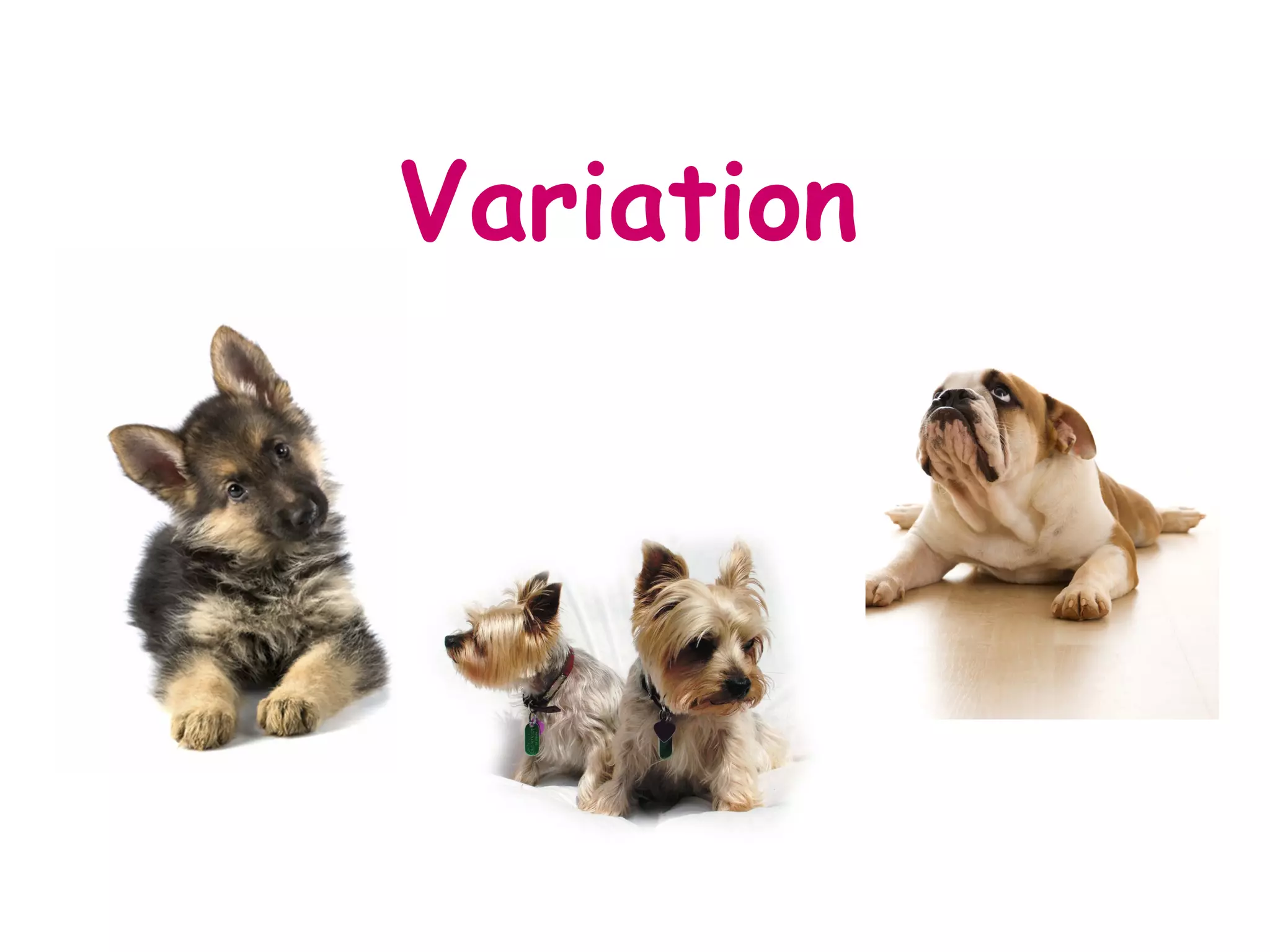
Variation
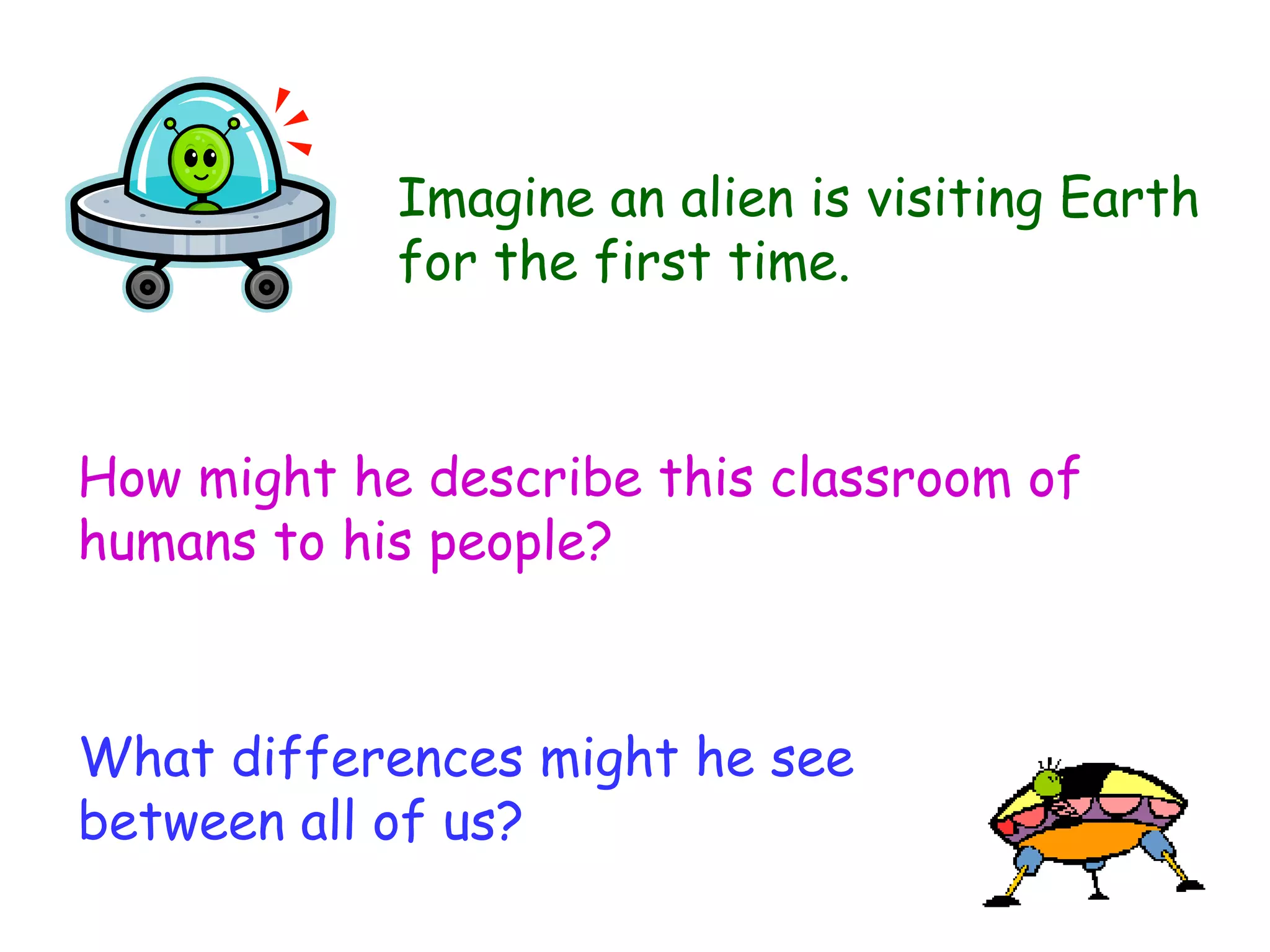
How might he describe this classroom of humans to his people? Imagine an alien is visiting Earth for the first time.  What differences might he see between all of us?
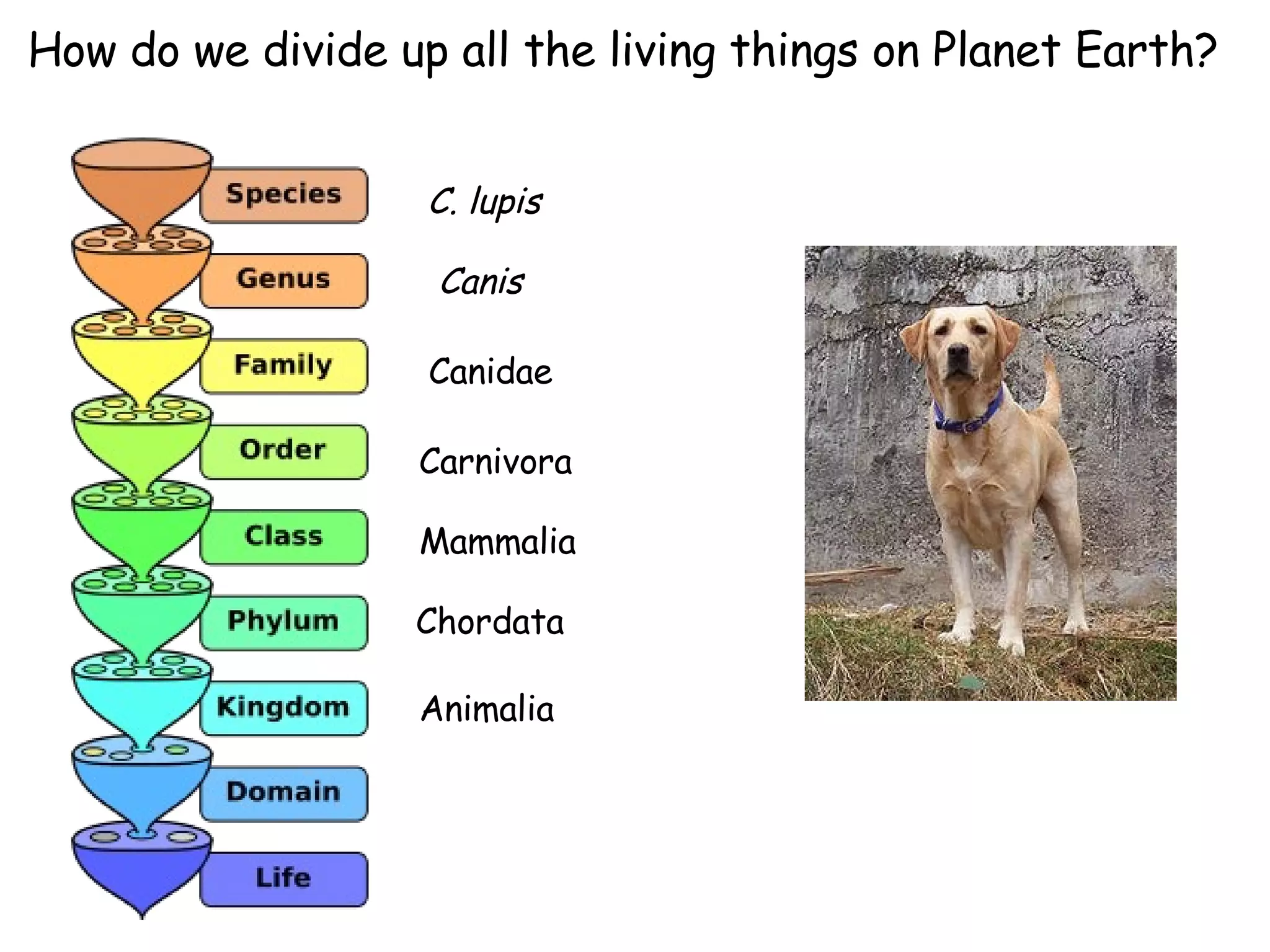
How do we divide up all the living things on Planet Earth? Animalia Chordata Mammalia Carnivora Canidae Canis C. lupis
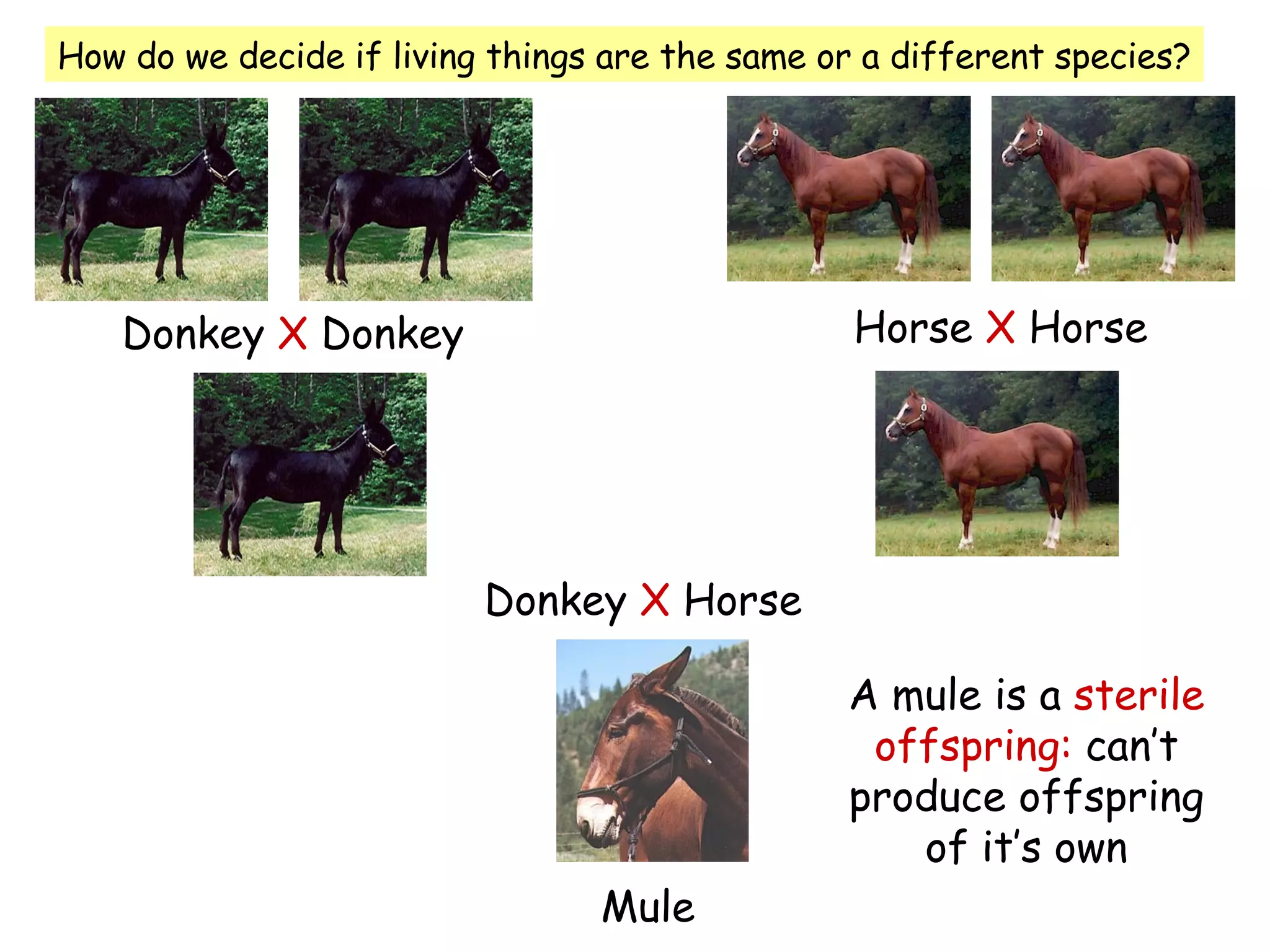
How do we decide if living things are the same or a different species? A mule is a  sterile offspring:  can’t produce offspring of it’s own Donkey  X  Donkey Donkey  X  Horse Mule Horse  X  Horse
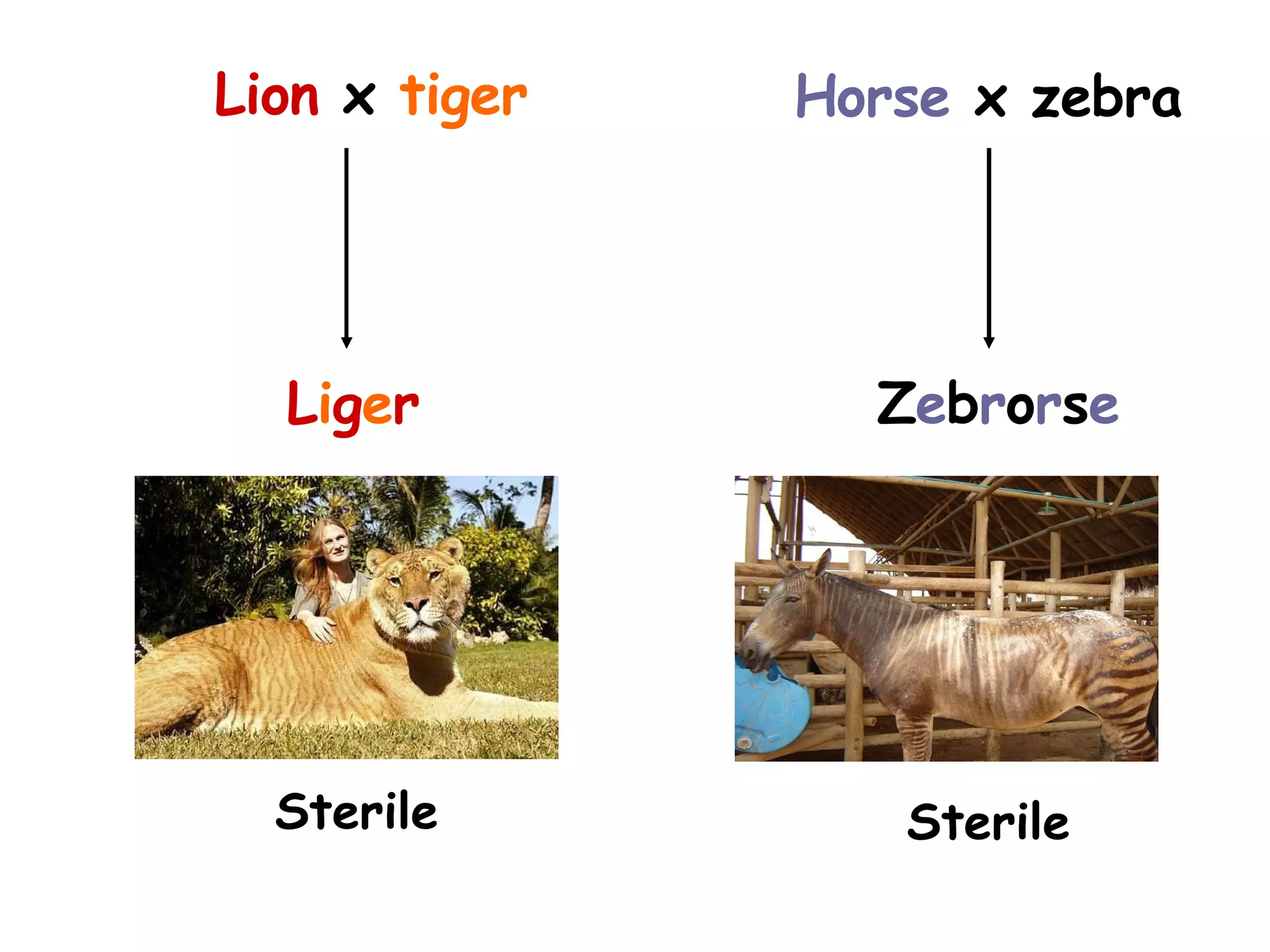
Lion  x  tiger Sterile Horse  x zebra Sterile L i g e r Z e b r o r s e
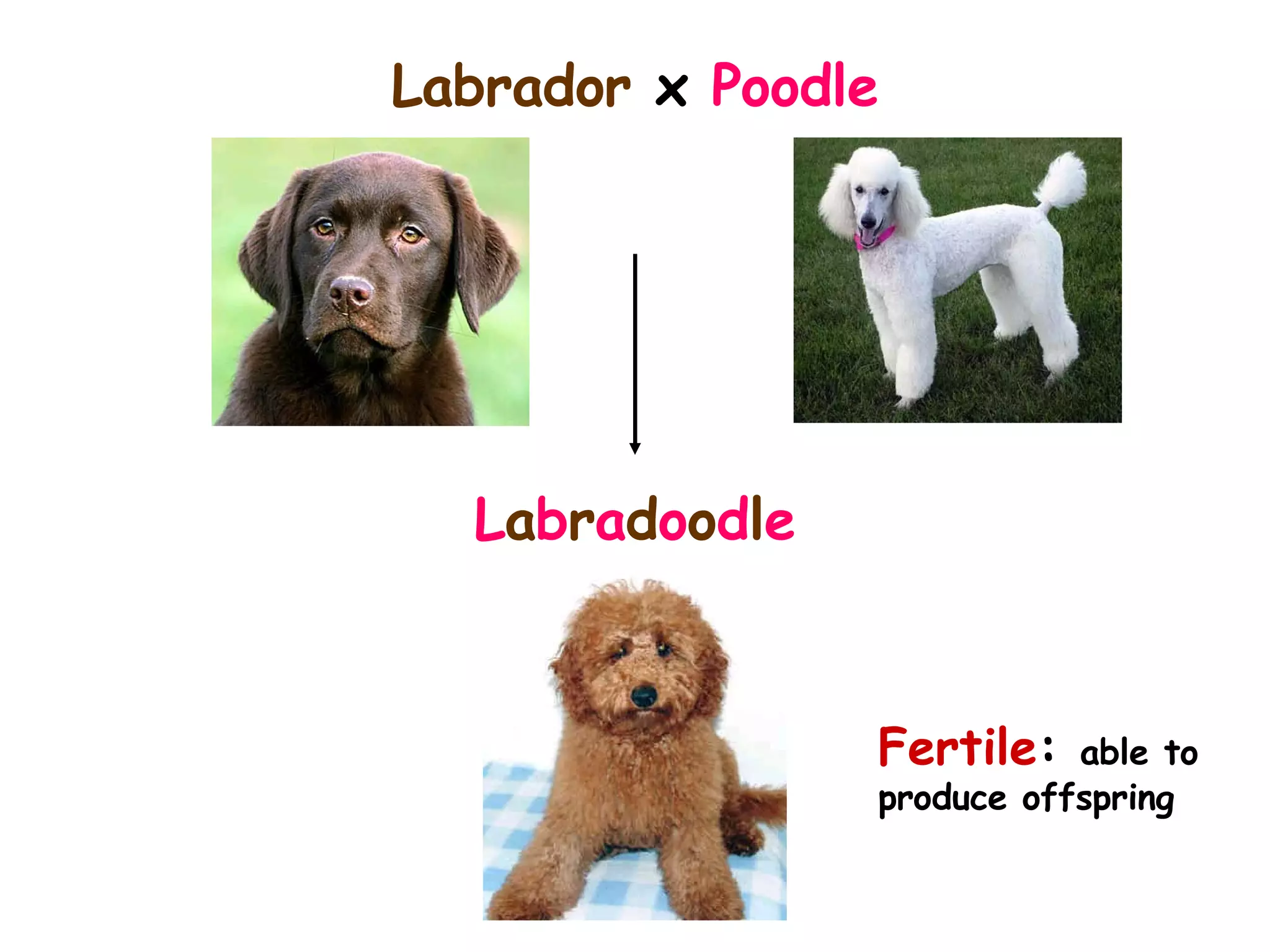
Fertile :  able to produce offspring L a b r a d o o d l e Labrador  x  Poodle
A  species  is a group of living organisms which share the same general physical characteristics and can mate to   produce fertile young. Can we define a species now?
A Species -Define a species. -Give examples of animals of the same species reproducing to produce offspring. -Give examples of animals that are not the same species reproducing to produce offspring. -State the key difference between these offspring. Notes
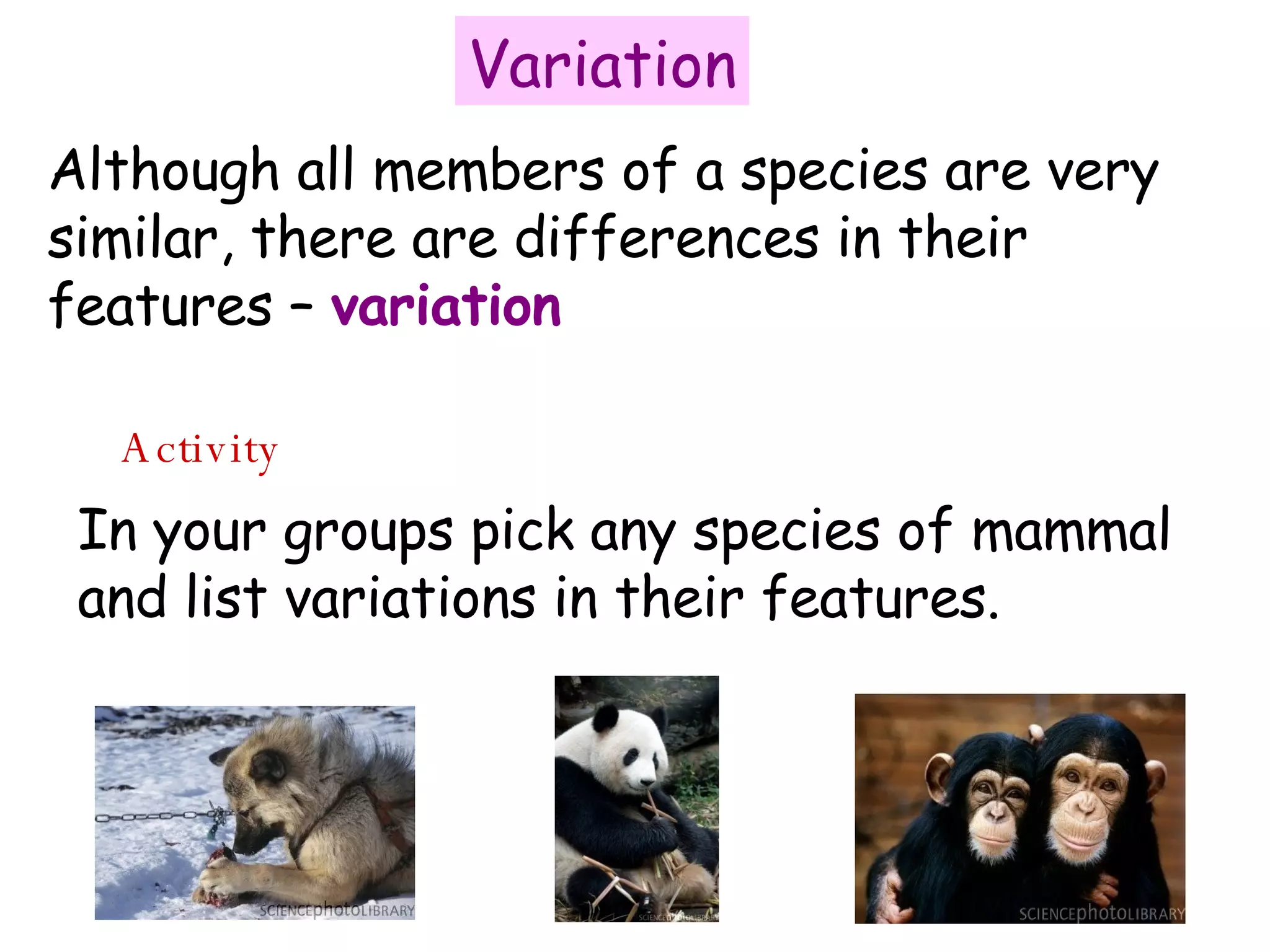
Variation Although all members of a species are very similar, there are differences in their features –  variation Activity In your groups pick any species of mammal and list variations in their features.
Variations  between individuals of a species fall into  two categories: 1)  Discontinuous variation: - Characteristics fall into distinct groups Sometimes there are only two forms of a  characteristic. Discontinuous   or  Continuous Can you think of any human features that fit into groups?
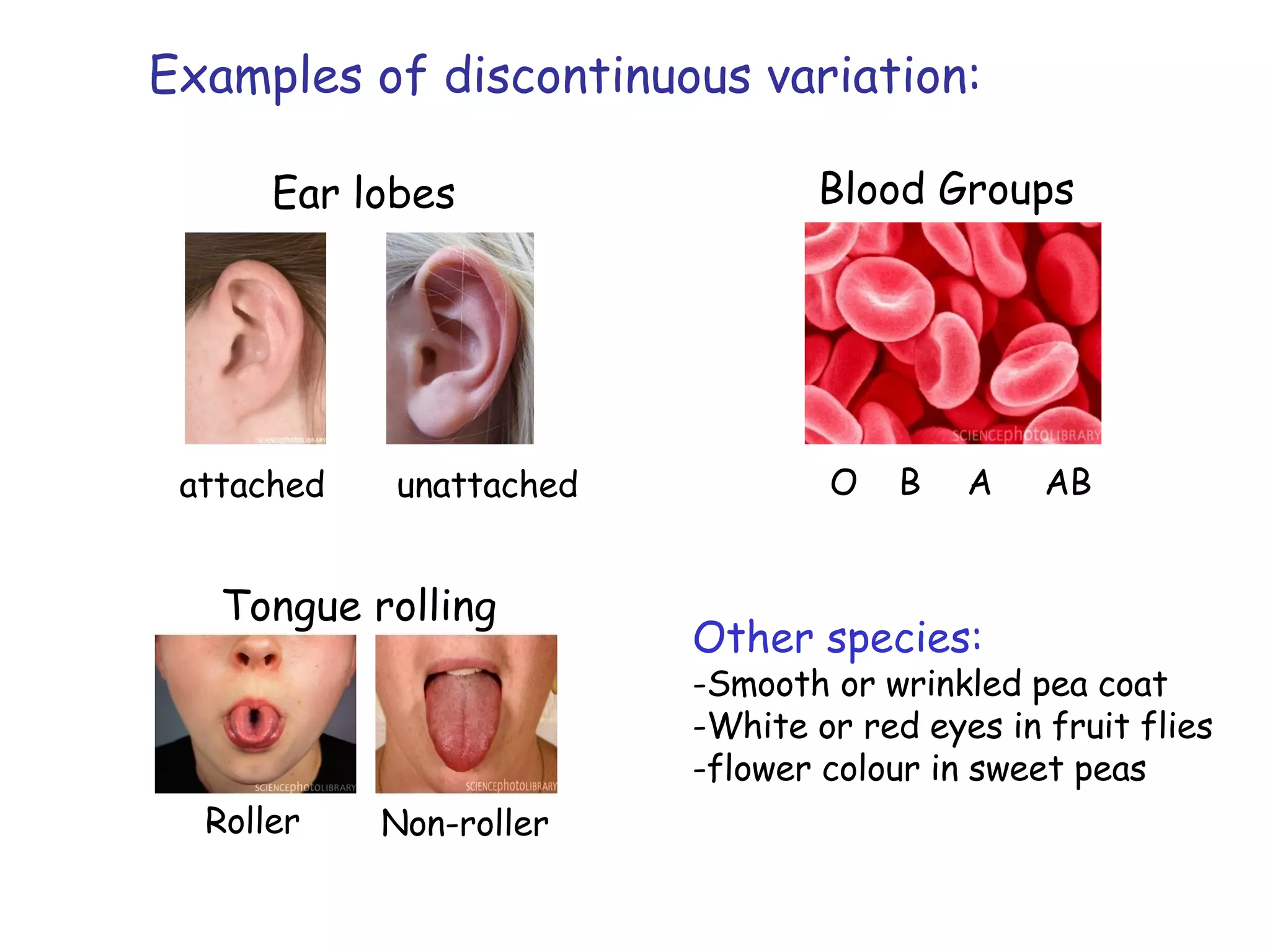
Examples of discontinuous variation: Other species: -Smooth or wrinkled pea coat -White or red eyes in fruit flies -flower colour in sweet peas Ear lobes attached unattached Blood Groups O  B  A  AB Tongue rolling Roller Non-roller
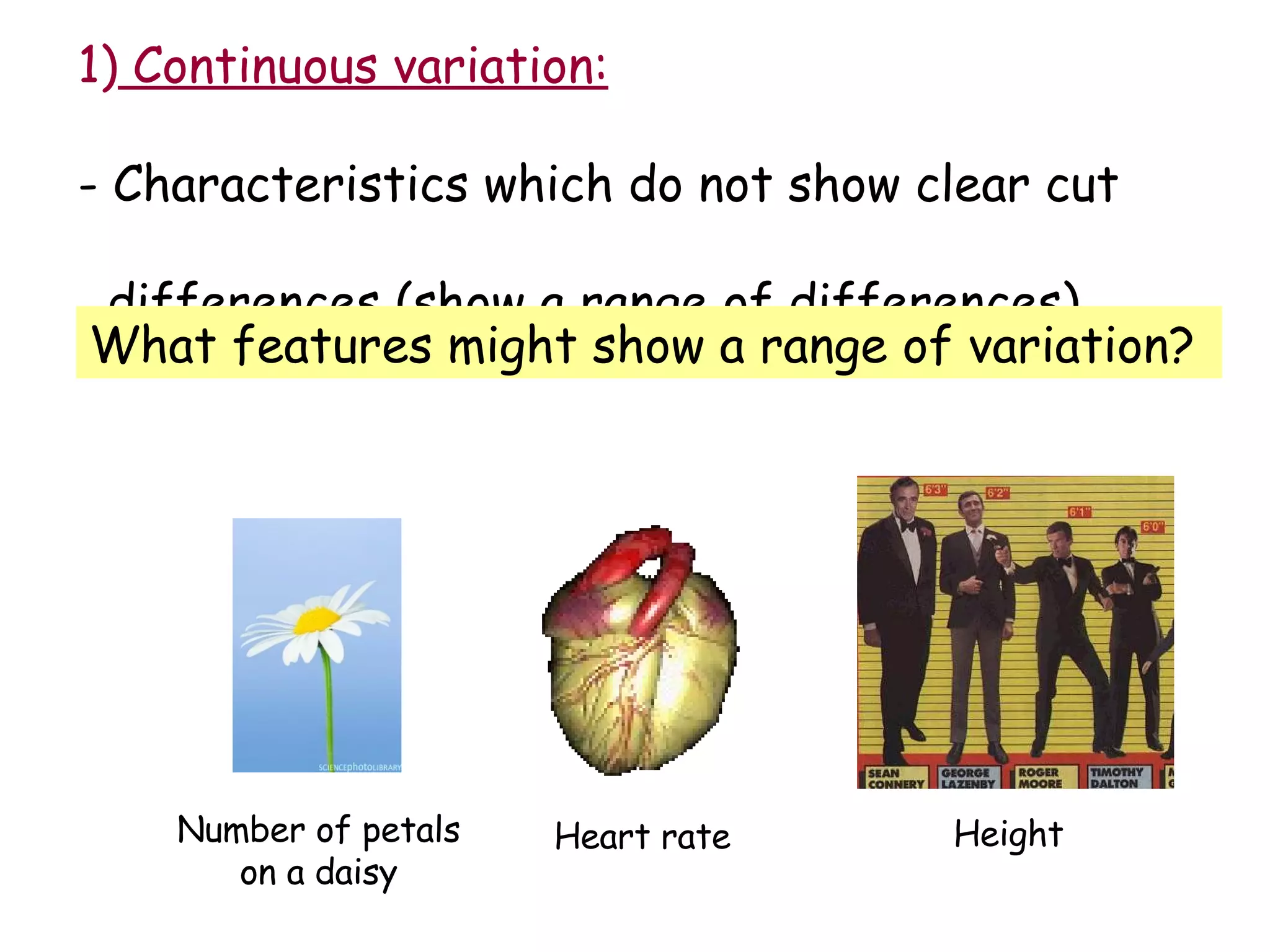
1)  Continuous variation: - Characteristics which do not show clear cut  differences (show a range of differences). What features might show a range of variation?  Number of petals on a daisy Heart rate Height
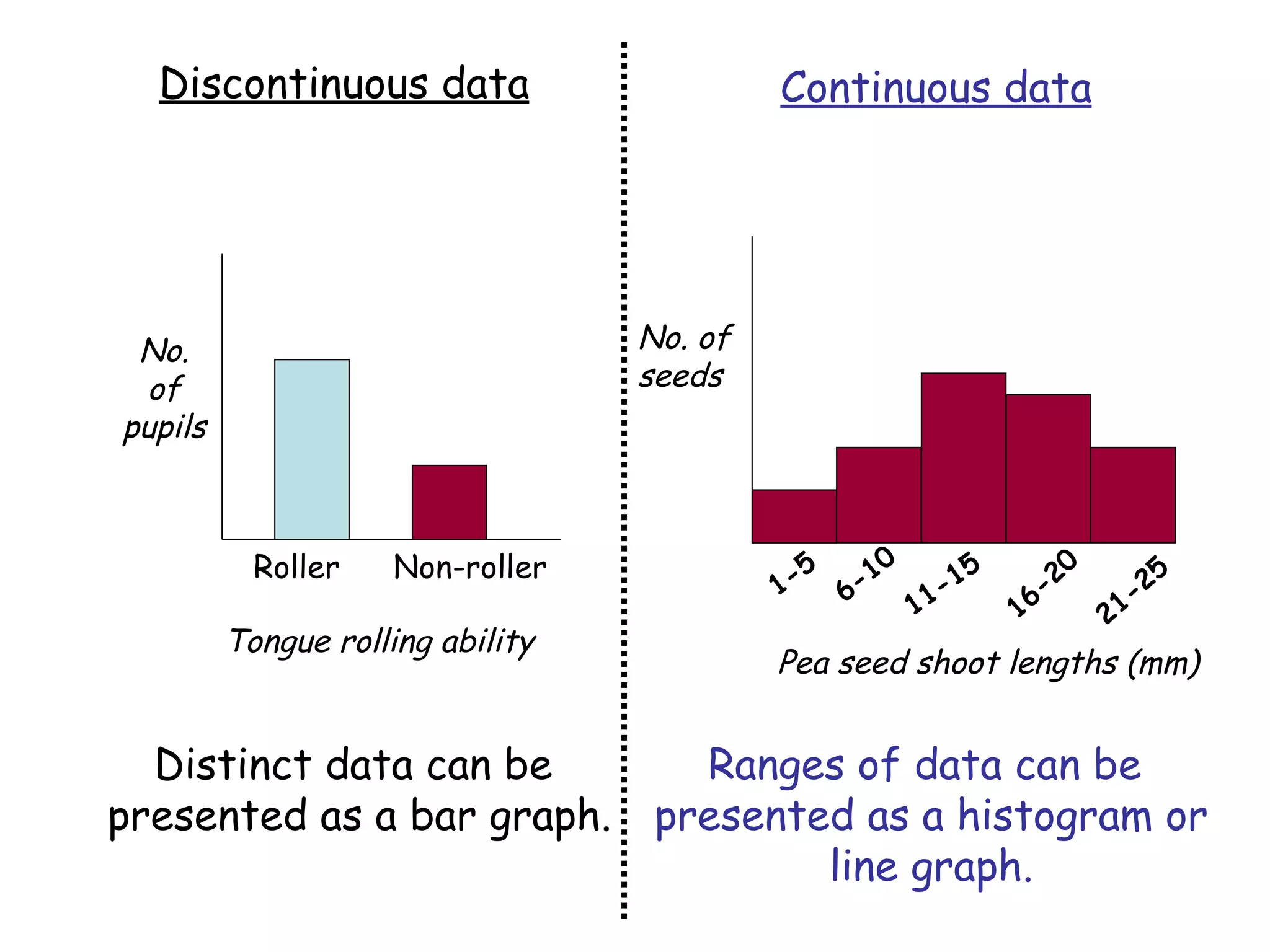
Discontinuous data Continuous data Distinct data can be  presented as a bar graph. Ranges of data can be  presented as a histogram or line graph. No. of pupils Tongue rolling ability Roller Non-roller Pea seed shoot lengths (mm) No. of seeds 1-5 6-10 11-15 16-20 21-25
Continuous and Discontinuous Variation Use what you have learned to explain the two types of variation. Your description should include:   examples of each   the matching cut out graph Notes

A) Variation

  • 1.
  • 2.
    How might hedescribe this classroom of humans to his people? Imagine an alien is visiting Earth for the first time. What differences might he see between all of us?
  • 3.
    How do wedivide up all the living things on Planet Earth? Animalia Chordata Mammalia Carnivora Canidae Canis C. lupis
  • 4.
    How do wedecide if living things are the same or a different species? A mule is a sterile offspring: can’t produce offspring of it’s own Donkey X Donkey Donkey X Horse Mule Horse X Horse
  • 5.
    Lion x tiger Sterile Horse x zebra Sterile L i g e r Z e b r o r s e
  • 6.
    Fertile : able to produce offspring L a b r a d o o d l e Labrador x Poodle
  • 7.
    A species is a group of living organisms which share the same general physical characteristics and can mate to produce fertile young. Can we define a species now?
  • 8.
    A Species -Definea species. -Give examples of animals of the same species reproducing to produce offspring. -Give examples of animals that are not the same species reproducing to produce offspring. -State the key difference between these offspring. Notes
  • 9.
    Variation Although allmembers of a species are very similar, there are differences in their features – variation Activity In your groups pick any species of mammal and list variations in their features.
  • 10.
    Variations betweenindividuals of a species fall into two categories: 1) Discontinuous variation: - Characteristics fall into distinct groups Sometimes there are only two forms of a characteristic. Discontinuous or Continuous Can you think of any human features that fit into groups?
  • 11.
    Examples of discontinuousvariation: Other species: -Smooth or wrinkled pea coat -White or red eyes in fruit flies -flower colour in sweet peas Ear lobes attached unattached Blood Groups O B A AB Tongue rolling Roller Non-roller
  • 12.
    1) Continuousvariation: - Characteristics which do not show clear cut differences (show a range of differences). What features might show a range of variation? Number of petals on a daisy Heart rate Height
  • 13.
    Discontinuous data Continuousdata Distinct data can be presented as a bar graph. Ranges of data can be presented as a histogram or line graph. No. of pupils Tongue rolling ability Roller Non-roller Pea seed shoot lengths (mm) No. of seeds 1-5 6-10 11-15 16-20 21-25
  • 14.
    Continuous and DiscontinuousVariation Use what you have learned to explain the two types of variation. Your description should include: examples of each the matching cut out graph Notes