Physiological Homeostasis SQA HIGHER BIOLOGY Unit 3: Control and Regulation
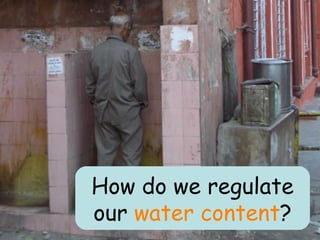
How do we regulate our  water content ?
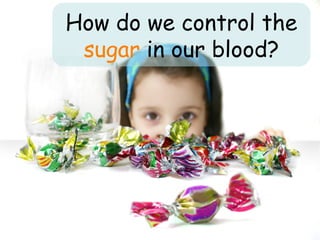
How do we control the  sugar  in our blood?
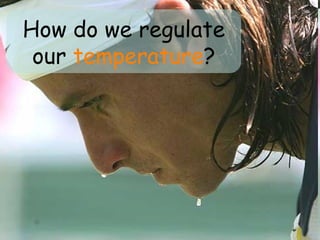
How do we regulate our  temperature ?
Learning Content The principle of negative feedback: The need to maintain conditions within tolerable limits. Water content of blood and concentration of cell chemicals. Glucose and energy needs of tissue. Temperature:  the importance of temperature to enzyme-controlled metabolic processes in the body. Endotherms and ectotherms.
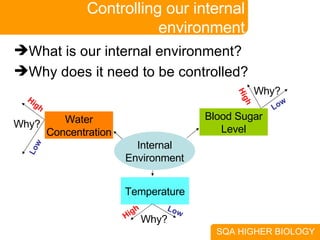
Controlling our internal environment What is our internal environment? Why does it need to be controlled? Internal Environment Water Concentration Blood Sugar Level Temperature Why? Why? Why? High Low High Low High Low
Physiological Homeostasis Physiological   Homeo stasis What do these words mean?
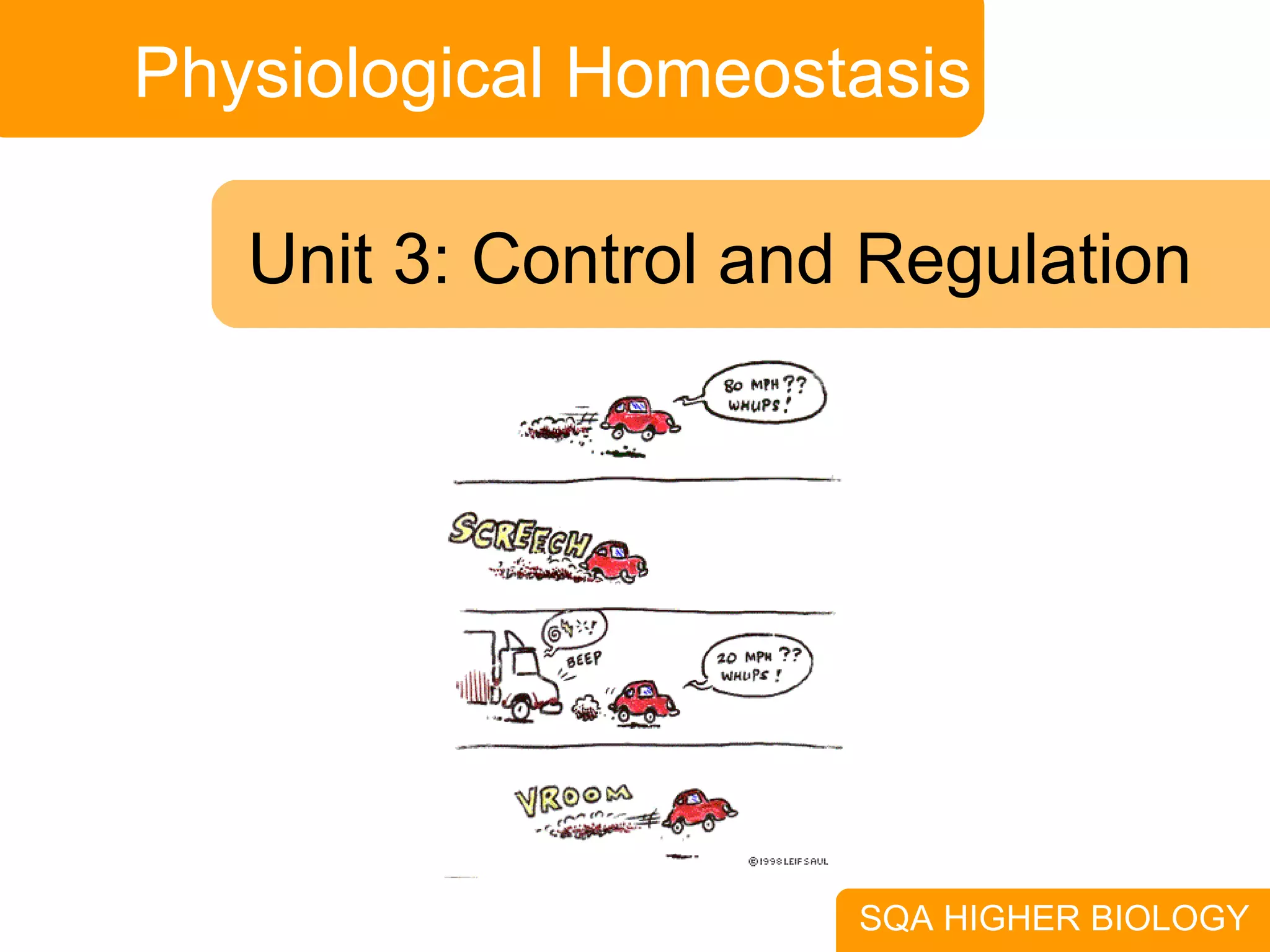
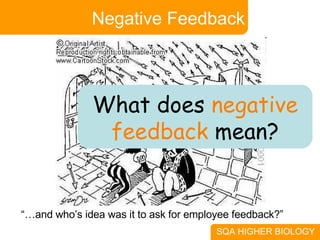
Negative Feedback “… and who’s idea was it to ask for employee feedback?” What does  negative feedback  mean?
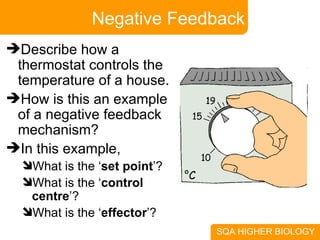
Negative Feedback Describe how a thermostat controls the temperature of a house. How is this an example of a negative feedback mechanism? In this example, What is the ‘ set point ’? What is the ‘ control centre ’? What is the ‘ effector ’?
Osmoregulation What is meant by ‘osmoregulation’? How does osmoregulation work in the human body? Produce a poster summarising these processes.
Blood sugar level SQA HIGHER BIOLOGY What are the key organs in the regulation of blood sugar levels? How do these organs control blood sugar? Summarise these processes as a poster. What role does the hormone adrenaline play in this? What is  diabetes ? What’s the difference between type I and type II diabetes? How is diabetes treated?
Body Temperature What is meant by ‘ectotherm’ and ‘endotherm’? How is the hypothalamus involved in temperature regulation? Where are thermoreceptors located? Why are there two locations? Summarise the homeostatic processes involved in the regulation of body temperature.
Homeostasis What advantage does homeostatic mechanisms provide to organisms? What occurs to organisms if exposed to extreme conditions for prolonged periods of time?

Physiological Homeostasis

  • 1.
    Physiological Homeostasis SQAHIGHER BIOLOGY Unit 3: Control and Regulation
  • 2.
    How do weregulate our water content ?
  • 3.
    How do wecontrol the sugar in our blood?
  • 4.
    How do weregulate our temperature ?
  • 5.
    Learning Content Theprinciple of negative feedback: The need to maintain conditions within tolerable limits. Water content of blood and concentration of cell chemicals. Glucose and energy needs of tissue. Temperature: the importance of temperature to enzyme-controlled metabolic processes in the body. Endotherms and ectotherms.
  • 6.
    Controlling our internalenvironment What is our internal environment? Why does it need to be controlled? Internal Environment Water Concentration Blood Sugar Level Temperature Why? Why? Why? High Low High Low High Low
  • 7.
    Physiological Homeostasis Physiological Homeo stasis What do these words mean?
  • 8.
    Negative Feedback “…and who’s idea was it to ask for employee feedback?” What does negative feedback mean?
  • 9.
    Negative Feedback Describehow a thermostat controls the temperature of a house. How is this an example of a negative feedback mechanism? In this example, What is the ‘ set point ’? What is the ‘ control centre ’? What is the ‘ effector ’?
  • 10.
    Osmoregulation What ismeant by ‘osmoregulation’? How does osmoregulation work in the human body? Produce a poster summarising these processes.
  • 11.
    Blood sugar levelSQA HIGHER BIOLOGY What are the key organs in the regulation of blood sugar levels? How do these organs control blood sugar? Summarise these processes as a poster. What role does the hormone adrenaline play in this? What is diabetes ? What’s the difference between type I and type II diabetes? How is diabetes treated?
  • 12.
    Body Temperature Whatis meant by ‘ectotherm’ and ‘endotherm’? How is the hypothalamus involved in temperature regulation? Where are thermoreceptors located? Why are there two locations? Summarise the homeostatic processes involved in the regulation of body temperature.
  • 13.
    Homeostasis What advantagedoes homeostatic mechanisms provide to organisms? What occurs to organisms if exposed to extreme conditions for prolonged periods of time?