Reprogramming Microbes
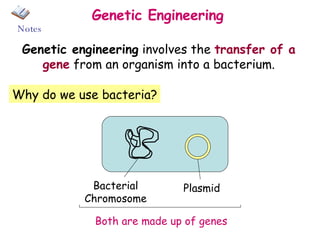
Genetic engineering  involves the  transfer of a gene  from an organism into a bacterium. Genetic Engineering Why do we use bacteria? Bacterial Chromosome Plasmid Both are made up of genes Notes
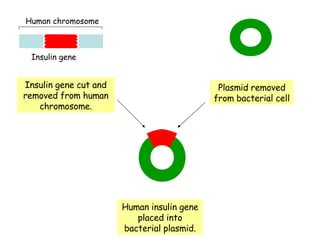
Plasmid removed from bacterial cell Human insulin gene placed into bacterial plasmid. Insulin gene cut and removed from human chromosome. Human chromosome Insulin gene
Plasmid containing insulin gene placed into new bacterial cell Plasmid multiplies inside bacterial cell. More insulin is produced Bacterial cell grows and divides producing more cells containing many more plasmids and much more insulin Human insulin is collected and purified from bacterial cell
Genetic Engineering  to Produce Insulin What is insulin and why do humans need to produce it in their bodies? How can genetic engineering help people that cannot make their own insulin? Complete your diagram showing the steps in insulin production by genetic engineering. Notes
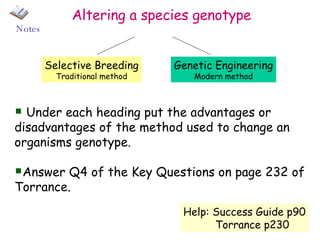
Altering a species genotype Under each heading put the advantages or disadvantages of the method used to change an organisms genotype. Answer Q4 of the Key Questions on page 232 of Torrance. Help: Success Guide p90 Torrance p230 Selective Breeding Traditional method Genetic Engineering Modern method Notes
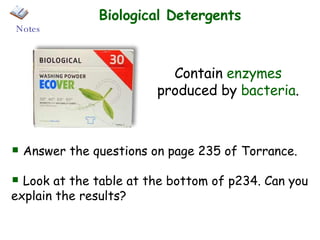
Biological Detergents Contain  enzymes  produced by  bacteria . Answer the questions on page 235 of Torrance. Look at the table at the bottom of p234. Can you explain the results? Notes
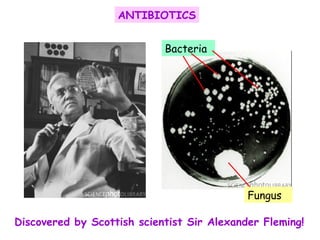
Discovered by Scottish scientist Sir Alexander Fleming! ANTIBIOTICS Fungus Bacteria
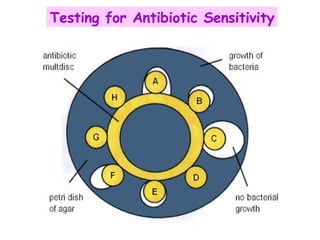
Testing for Antibiotic Sensitivity
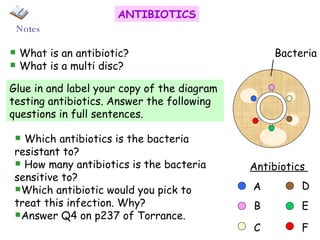
Bacteria What is an antibiotic? What is a multi disc? ANTIBIOTICS Glue in and label your copy of the diagram testing antibiotics. Answer the following questions in full sentences. Which antibiotics is the bacteria resistant to? How many antibiotics is the bacteria sensitive to? Which antibiotic would you pick to treat this infection. Why? Answer Q4 on p237 of Torrance. Antibiotics  A B C D E F Notes
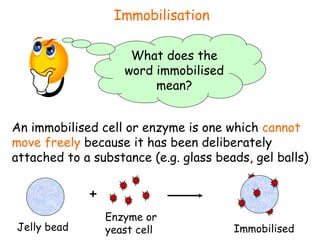
Immobilisation An immobilised cell or enzyme is one which  cannot move freely  because it has been deliberately attached to a substance (e.g. glass beads, gel balls) What does the word immobilised mean? Jelly bead + Enzyme or  yeast cell Immobilised
Stick in and label your copy of the immobilisation diagram. What are the advantages of using immobilised cells and enzymes? Success Guides p91 Torrance p238 Batch and Continuous-Flow Processing Compare batch processing with continuous processing. Why is continuous processing more advantageous than batch processing. Success Guides p91 Torrance p238
Congratulations!! You have just completed Standard Grade Biology

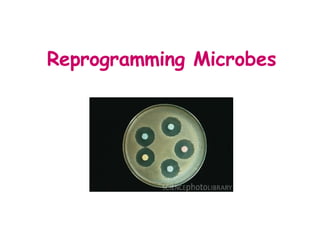
Reprogramming Microbes

  • 1.
  • 2.
    Genetic engineering involves the transfer of a gene from an organism into a bacterium. Genetic Engineering Why do we use bacteria? Bacterial Chromosome Plasmid Both are made up of genes Notes
  • 3.
    Plasmid removed frombacterial cell Human insulin gene placed into bacterial plasmid. Insulin gene cut and removed from human chromosome. Human chromosome Insulin gene
  • 4.
    Plasmid containing insulingene placed into new bacterial cell Plasmid multiplies inside bacterial cell. More insulin is produced Bacterial cell grows and divides producing more cells containing many more plasmids and much more insulin Human insulin is collected and purified from bacterial cell
  • 5.
    Genetic Engineering to Produce Insulin What is insulin and why do humans need to produce it in their bodies? How can genetic engineering help people that cannot make their own insulin? Complete your diagram showing the steps in insulin production by genetic engineering. Notes
  • 6.
    Altering a speciesgenotype Under each heading put the advantages or disadvantages of the method used to change an organisms genotype. Answer Q4 of the Key Questions on page 232 of Torrance. Help: Success Guide p90 Torrance p230 Selective Breeding Traditional method Genetic Engineering Modern method Notes
  • 7.
    Biological Detergents Contain enzymes produced by bacteria . Answer the questions on page 235 of Torrance. Look at the table at the bottom of p234. Can you explain the results? Notes
  • 8.
    Discovered by Scottishscientist Sir Alexander Fleming! ANTIBIOTICS Fungus Bacteria
  • 9.
  • 10.
    Bacteria What isan antibiotic? What is a multi disc? ANTIBIOTICS Glue in and label your copy of the diagram testing antibiotics. Answer the following questions in full sentences. Which antibiotics is the bacteria resistant to? How many antibiotics is the bacteria sensitive to? Which antibiotic would you pick to treat this infection. Why? Answer Q4 on p237 of Torrance. Antibiotics A B C D E F Notes
  • 11.
    Immobilisation An immobilisedcell or enzyme is one which cannot move freely because it has been deliberately attached to a substance (e.g. glass beads, gel balls) What does the word immobilised mean? Jelly bead + Enzyme or yeast cell Immobilised
  • 12.
    Stick in andlabel your copy of the immobilisation diagram. What are the advantages of using immobilised cells and enzymes? Success Guides p91 Torrance p238 Batch and Continuous-Flow Processing Compare batch processing with continuous processing. Why is continuous processing more advantageous than batch processing. Success Guides p91 Torrance p238
  • 13.
    Congratulations!! You havejust completed Standard Grade Biology