Applied Pharmacokinetics in the Adult Critically Ill Gil Fraser, PharmD, FCCM Critical Care Tom Nolin, PharmD, PhD Nephrology and Transplantation Maine Medical Center Portland, ME
Why Study Pharmacokinetics?   Avoid adverse drug events At least 40% of adverse drug reactions are preventable Almost 30% of these events involve dosing errors Individualize patient dosing needs Understand the mechanisms of drug interactions and prevent or anticipate their sequelae
Pharmacokinetics Describes the movement of drugs in the body Blend of math, physiology, pharmacology Four components: Absorption, Distribution, Metabolism, Excretion (ADME)
Drug Absorption Occurs Via Many Routes of Administration Intravenous Subcutaneous Intramuscular Epidural Ocular Otic Rectal Dermal Oral/Enteral * Sublingual Buccal  Intrasynovial Intranasal Vaginal * This discussion pertains to enteral drug absorption
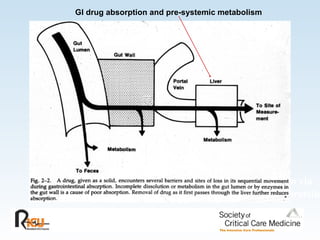
Enteral Drug Absorption Generally a passive process, fueled by a concentration gradient transporting drugs from the gut into the portal circulation Significant types of pre-systemic clearance: Intestinal and hepatic metabolism i.e., via cytochrome P450 (CYP) enzymes Active transport via P-glycoprotein Resulting “first-pass effect”
Sites of pre-systemic metabolism via CYP 3A and efflux by P-glycoprotein GI drug absorption and pre-systemic metabolism
Oral/Enteral Drug Administration Advantages: Avoids hazards of IV lines, infections, phlebitis  Facilitates earlier ICU discharge (example - enteral methadone instead of fentanyl infusion) Lowers drug acquisition costs by an average of 8-fold Caution!  Drug bioavailability in critical illness may be deranged.
Oral/Enteral Drug Administration Should Be Avoided in Those With… Ileus, no active bowel sounds Ischemic bowel Gastric residuals Nausea and vomiting Malabsorption syndrome Questionable gut perfusion and poor hemodynamics Interacting substances in gut
Interacting GI Substances May Interfere with Absorption Examples:  Phenytoin, quinolones, tetracyclines Enteral nutrition with enteral phenytoin often lowers serum levels by as much as 80%. - Many patients require intravenous phenytoin to maintain adequate serum levels. Bi- and trivalent cations bind to quinolone and tetracycline antibiotics, potentially leading to treatment failures. - Avoid concurrent administration of substances such as iron, aluminum (sucralfate), magnesium, etc.
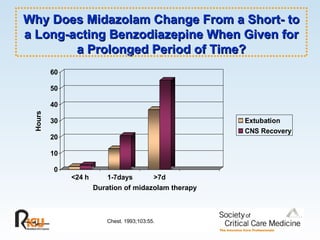
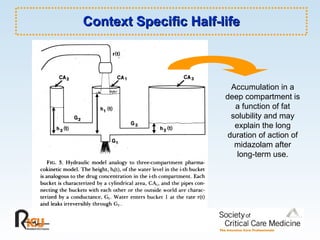
Distribution Describes rate and extent of plasma transfer Is determined by fat solubility and extent of protein binding Relevance? Explains differences in onset of activity e.g., fentanyl vs. morphine Explains the prolonged duration of midazolam after long-term use Helps predict medication removal by renal replacement therapy
Central Nervous System Effects of Medications and the Blood-brain Barrier Drug entry and egress is a function of  lipophilicity and the ability to cross the blood-brain barrier. The onset and offset differences between morphine and fentanyl can be explained by the fact that fentanyl is 100 x more lipid soluble than morphine.
Why Does Midazolam Change From a Short- to a Long-acting Benzodiazepine When Given for a Prolonged Period of Time? Hours Duration of midazolam therapy Chest. 1993;103:55.
Context Specific Half-life Accumulation in a deep compartment is a function of fat solubility and may explain the long duration of action of midazolam after long-term use.
How can the volume of distribution help predict removal by hemodialysis? How about the extent of protein binding? If a drug has a large volume of distribution, very little resides in the circulation and is available for removal via hemodialysis.  Examples  -  digoxin and tricyclic antidepressants Highly protein bound drugs are typically not removed by hemodialysis.
The Clinical Relevance of Deranged Protein Binding of Drugs Has Been Overstated (Except for Phenytoin) Pharmacologically active drug is in the “free” state, not protein bound Normally, 90% phenytoin is protein bound and inactive (only 10% is “free”) The free fraction of phenytoin increases with hypoalbuminemia and uremia Under these conditions, it is preferred to measure active drug i.e., “free” phenytoin levels, rather than “total” phenytoin levels. Clin Pharmacol Ther. 2002;71:115.
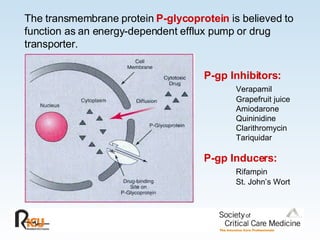
P-glycoprotein  (P-gp) and Drug  Distribution   Promiscuous ATP-dependent active transporter  evolved as a protective mechanism against a wide variety of toxic substances Located in intestine, renal tubule, biliary system, CNS, WBC, testes, tumor cell Relevance - acts as an efflux pump to limit absorption & distribution; expedites elimination of toxins (digoxin, etoposide, mitoxantrone, paclitaxel, tacrolimus) Can P-gp inhibitors be used therapeutically for multidrug-resistant tumors? May explain why quinidine and amiodarone double digoxin levels
The transmembrane protein  P-glycoprotein   is believed to function as an energy-dependent efflux pump or drug transporter.  P-gp Inhibitors: Verapamil Grapefruit juice Amiodarone Quininidine Clarithromycin Tariquidar P-gp Inducers: Rifampin St. John’s Wort
Drug Metabolism A.k.a. “biotransformation” Refers to the “enzyme catalyzed changes in drug structure” or “the process by which drugs are converted  in vivo  into one or more structural derivatives (metabolites)” Sites - liver, gut, lungs, kidney, brain, plasma, skin Originally viewed as detoxification reaction    hydrophilicity which promotes excretion May change the pharmacological activity or toxicity of the molecule
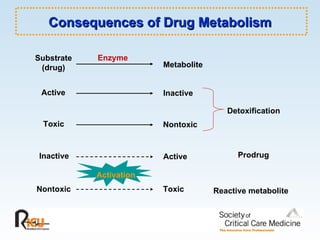
Consequences of Drug Metabolism Substrate (drug) Enzyme Metabolite Active Inactive Inactive Active Toxic Nontoxic Nontoxic Toxic Detoxification Prodrug Reactive metabolite Activation
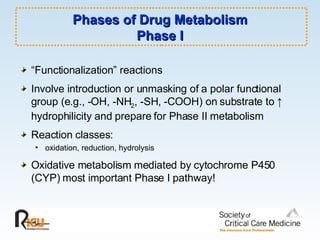
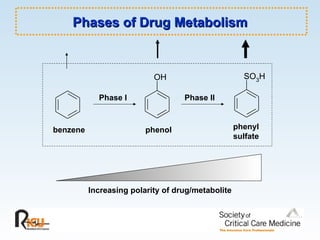
Phases of Drug Metabolism Phase I “ Functionalization” reactions Involve introduction or unmasking of a polar functional group (e.g., -OH, -NH 2 , -SH, -COOH) on substrate to  ↑  hydrophilicity and prepare for Phase II metabolism Reaction classes: oxidation, reduction, hydrolysis Oxidative metabolism mediated by cytochrome P450 (CYP) most important Phase I pathway!
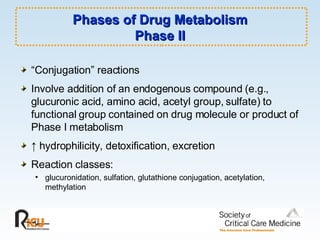
“ Conjugation” reactions Involve addition of an endogenous compound (e.g., glucuronic acid, amino acid, acetyl group, sulfate) to functional group contained on drug molecule or product of Phase I metabolism ↑   hydrophilicity, detoxification, excretion Reaction classes: glucuronidation, sulfation, glutathione conjugation, acetylation, methylation Phases of Drug Metabolism Phase II
Phases of Drug Metabolism Phase I Phase II benzene phenol phenyl sulfate Increasing polarity of drug/metabolite
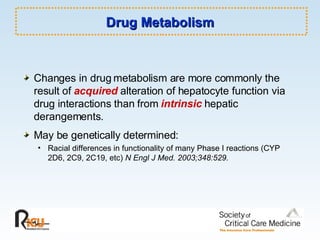
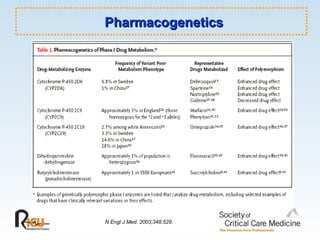
Drug Metabolism Changes in drug metabolism are more commonly the result of  acquired  alteration of hepatocyte function via drug interactions than from  intrinsic  hepatic derangements. May be genetically determined: Racial differences in functionality of many Phase I reactions (CYP 2D6, 2C9, 2C19, etc)  N Engl J Med. 2003;348:529.
Cytochrome P450 Most significant contributors to drug metabolism Catalyze biotransformation of endogenous substrates, dietary compounds, environmental chemicals, and up to 60% to 80% of drugs currently marketed! Present in species from bacteria to mammals; localized intracellularly in smooth endoplasmic reticulum > 270 gene families described; > 18 families in man CYP1 ,  CYP2 , and  CYP3   families most clinically relevant
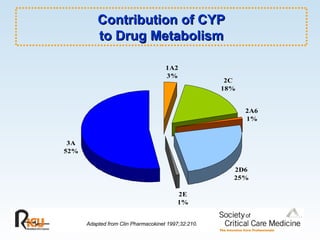
Contribution of CYP to Drug Metabolism Adapted from Clin Pharmacokinet 1997;32:210.
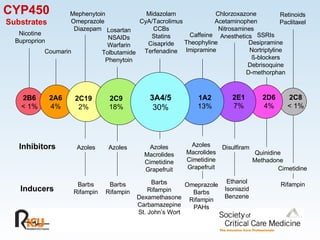
3A4/5 30% 1A2 13% 2E1 7% 2D6 4% 2C8 < 1% 2B6 < 1% 2A6 4% 2C19 2% 2C9 18% Nicotine Buproprion Mephenytoin Omeprazole Diazepam Coumarin Losartan NSAIDs Warfarin Tolbutamide Phenytoin Midazolam CyA/Tacrolimus CCBs Statins Cisapride Terfenadine Caffeine Theophyline Imipramine Chlorzoxazone Acetaminophen Nitrosamines Anesthetics Azoles Macrolides Cimetidine Grapefruit Barbs Rifampin Dexamethasone Carbamazepine St. John’s Wort Azoles Macrolides Cimetidine Grapefruit CYP450 Substrates SSRIs Desipramine Nortriptyline ß-blockers Debrisoquine D-methorphan Retinoids Paclitaxel Inhibitors Disulfiram Quinidine Methadone Cimetidine Azoles Azoles Inducers Barbs Rifampin Barbs Rifampin Omeprazole Barbs Rifampin PAHs Ethanol Isoniazid Benzene Rifampin
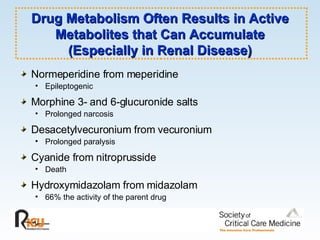
Drug Metabolism Often Results in Active Metabolites that Can Accumulate (Especially in Renal Disease) Normeperidine from meperidine Epileptogenic Morphine 3- and 6-glucuronide salts Prolonged narcosis Desacetylvecuronium from vecuronium Prolonged paralysis Cyanide from nitroprusside Death Hydroxymidazolam from midazolam 66% the activity of the parent drug
Drug Excretion Largely the domain of the kidney Minor pathways: bile, lung, and feces  Common issue for drug dosing in the ICU 7 - 25% ICU population develop significant renal impairment and many more have pre-existing renal disease Age-related changes in organ function, including the kidneys Approximately 1% functional loss per year after 30 years of age
Estimating Renal Function Using Serum Creatinine Creatinine is freely filtered and serves as conventional surrogate for glomerular filtration The assumption is that there is a normal production of creatinine May not be true in catabolic, malnourished critically ill patients! MDRD equation derived from multiple regression analysis incorporates race, serum albumin, and urea nitrogen and may be more accurate  Ann Intern Med. 1999;130:461.
Problem Drugs in Renal Disease Most cephalosporins and quinolones, imipenem, vancomycin, aminoglycosides, acyclovir, fluconazole Procainamide, digoxin, atenolol Meperidine, morphine, and midazolam Famotidine Milrinone Low molecular weight heparins Phenytoin (increased free fraction) Many drugs removed via renal replacement therapy (RRT) Specifics vary with type of RRT and individual drugs
Pharmacokinetic Principles Steady-state: the amount of drug eliminated equals the amount of drug administered Results in a plateau or constant serum drug level Is a function of drug half-life Steady-state occurs after 4 - 5 half-lives
Half-life Time it takes for half of an administered drug to be eliminated  Defines the time needed for steady-state to occur and the time needed for complete elimination of drug from the body (4 - 5 half-lives)
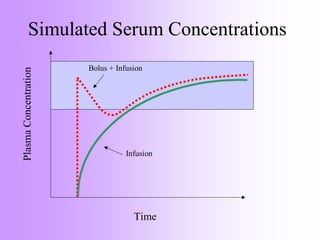
Loading Doses Used to reach therapeutic levels quickly, especially if drug has long half-life Not affected by organ dysfunction Except digoxin - use 75% typical loading dose
 
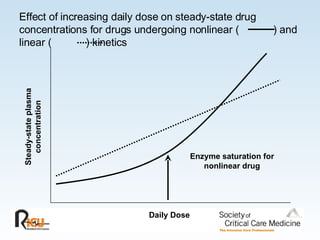
Linear Kinetics Constant fraction of total drug stores eliminated in a given time Almost all drugs follow linear kinetics (except in overdose situations) Dose increases result in proportional increases in serum levels
Non-linear Kinetics Constant  amount  (vs. %) eliminated per unit time Examples - phenytoin, aspirin, ethanol At point of metabolic limit, lose proportionality of dose with serum level   Example: 50% increase in phenytoin dose may result in 300% increase in level
Steady-state plasma concentration Effect of increasing daily dose on steady-state drug concentrations for drugs undergoing nonlinear (  ) and linear (  ) kinetics Daily Dose Enzyme saturation for nonlinear drug
Contribution of Pharmagenetics to Interindividual Variability in Drug Response Genetic polymorphisms in drug metabolizing enzymes, drug transporters, or receptors can cause clinically relevant effects on the efficacy and toxicity of drugs
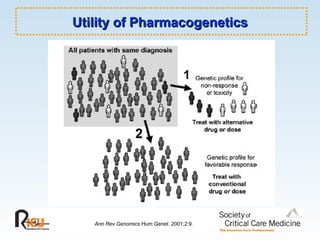
Clinical Relevance Most drugs are dosed on a “one-size-fits-all” basis Likely a major contributor to the high incidence of adverse drug reactions People can vary substantially in how they respond to a given drug!
Pharmacogenetics The study of heredity as it relates to the absorption, distribution, elimination, and action of medicines A tool to limit variability and individualize therapy
Pharmacogenetics N Engl J Med. 2003;348:529.
Clinical Consequences of Genetic Polymorphisms Toxicity Can be profound for drugs with a narrow therapeutic index that are inactivated - mercaptopurine, fluorouracil Reduced efficacy or therapeutic failure Drugs that are activated - codeine
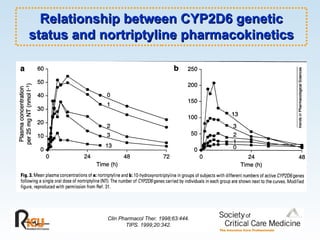
Drug: Gene Interaction Evaluated by Dalen et al, in 21 healthy Caucasian volunteers Nortriptyline is a tricyclic antidepressant metabolized by CYP2D6 to 10-hydroxynortriptyline. Do allelic variants of drug metabolizing enzymes impact pharmacokinetics and response?
Relationship between CYP2D6 genetic status and nortriptyline pharmacokinetics Clin Pharmacol Ther. 1998;63:444. TIPS. 1999;20:342.
Utility of Pharmacogenetics Ann Rev Genomics Hum Genet. 2001;2:9.
Summary: Management of Drug Therapy Using  PK Principles For each medication prescribed you need to know: Which organs are involved in drug clearance If genetic/race issues influence drug clearance Whether active metabolites are formed The half-lives of parent drug and metabolites to estimate time to steady-state (and therefore time for drug evaluation) Potential drug or food interactions If there is an oral or dermal formulation that patients can transition to if appropriate
Selected References Michalets. Update: clinically significant CYP 450 interactions.  Pharmacotherapy . 1998;18:84. Weinshilboum. Inheritance and drug response.  N Engl J Med.  2003;348:529. Matheny. Pharmacokinetic and pharmacodynamic implications of P-glycoprotein modulation.  Pharmacotherapy.  2001;21:778. DeBellis. Drug dosing in critically ill patients with renal failure: a pharmacokinetic approach.  J Intensive Care Med . 2000;15; 273.
Case Scenario #1   23-year-old 100-kg male with multiple fractures and traumatic brain injury resulting from a motor vehicle crash 1800 mg (18 mg/kg) IV phenytoin load for seizure prophylaxis with maintenance dose of 300 mg IV every 12 hours (6 mg/kg/d); serum level = 10 mcg/ml day three of therapy Phenytoin suspension (same dose) begun when enteral nutrition initiated, with repeat phenytoin level in two days = 2 mcg/ml Explain these findings What strategy can we use to achieve therapeutic phenytoin levels?
Case Scenario #1 - Answer The oral absorption of phenytoin may be dramatically reduced in the setting of enteral feeds. Consider discontinuing phenytoin if treatment duration longer than seven days and if no seizures have occurred. If continued prophylaxis indicated, offer phenytoin IV and avoid any GI absorption issues or advance the dose of enteral phenytoin (mindful that drug absorption will increase when a regular diet is resumed).
Case Scenario #2 68-year-old male post open heart surgery becomes acutely agitated and is treated successfully with 3 mg midazolam IV Requires additional CV support in the form of an IABP and experiences more consistent agitation treated with a continuous infusion of midazolam 8mg/hr for three days CV status improves and he is ready to extubate. Midazolam is discontinued, but he remains in a drug-induced stupor for three days. Why?
Case Scenario #2 - Answer Midazolam’s lipophilicity and ability to enter the CNS explain its rapid onset and offset with acute use. Lipophilicity (and accumulation in adipose tissue) can also explain midazolam’s prolonged duration of action with long-term use. An additional confounder is the formation and potential accumulation of the active hydroxy-midazolam metabolite. Because of this, SCCM suggests that lorazepam is the preferred benzodiazepine for long-term use.
Case Scenario #3 60-year-old male recovering from acute coronary syndrome receives aggressive LDL therapy - simvastatin, 80 mg daily His med list includes NTG, ASA, an ACE inhibitor, amiodarone Within three days he experiences extreme muscle pain with a CK of 20,000. What is the pharmacologic explanation for these findings?
Case Scenario #3 - Answer Most statins are metabolized by CYP 3A4 and are susceptible to drug interactions. Amiodarone (and many other drugs) interfere with CYP 3A4 function and may lead to statin toxicity - perhaps even to rhabdomyolysis. Simvastatin dosing should be limited to 20 mg daily or less in these circumstances.

Pharmacokinetics

  • 1.
    Applied Pharmacokinetics inthe Adult Critically Ill Gil Fraser, PharmD, FCCM Critical Care Tom Nolin, PharmD, PhD Nephrology and Transplantation Maine Medical Center Portland, ME
  • 2.
    Why Study Pharmacokinetics? Avoid adverse drug events At least 40% of adverse drug reactions are preventable Almost 30% of these events involve dosing errors Individualize patient dosing needs Understand the mechanisms of drug interactions and prevent or anticipate their sequelae
  • 3.
    Pharmacokinetics Describes themovement of drugs in the body Blend of math, physiology, pharmacology Four components: Absorption, Distribution, Metabolism, Excretion (ADME)
  • 4.
    Drug Absorption OccursVia Many Routes of Administration Intravenous Subcutaneous Intramuscular Epidural Ocular Otic Rectal Dermal Oral/Enteral * Sublingual Buccal Intrasynovial Intranasal Vaginal * This discussion pertains to enteral drug absorption
  • 5.
    Enteral Drug AbsorptionGenerally a passive process, fueled by a concentration gradient transporting drugs from the gut into the portal circulation Significant types of pre-systemic clearance: Intestinal and hepatic metabolism i.e., via cytochrome P450 (CYP) enzymes Active transport via P-glycoprotein Resulting “first-pass effect”
  • 6.
    Sites of pre-systemicmetabolism via CYP 3A and efflux by P-glycoprotein GI drug absorption and pre-systemic metabolism
  • 7.
    Oral/Enteral Drug AdministrationAdvantages: Avoids hazards of IV lines, infections, phlebitis Facilitates earlier ICU discharge (example - enteral methadone instead of fentanyl infusion) Lowers drug acquisition costs by an average of 8-fold Caution! Drug bioavailability in critical illness may be deranged.
  • 8.
    Oral/Enteral Drug AdministrationShould Be Avoided in Those With… Ileus, no active bowel sounds Ischemic bowel Gastric residuals Nausea and vomiting Malabsorption syndrome Questionable gut perfusion and poor hemodynamics Interacting substances in gut
  • 9.
    Interacting GI SubstancesMay Interfere with Absorption Examples: Phenytoin, quinolones, tetracyclines Enteral nutrition with enteral phenytoin often lowers serum levels by as much as 80%. - Many patients require intravenous phenytoin to maintain adequate serum levels. Bi- and trivalent cations bind to quinolone and tetracycline antibiotics, potentially leading to treatment failures. - Avoid concurrent administration of substances such as iron, aluminum (sucralfate), magnesium, etc.
  • 10.
    Distribution Describes rateand extent of plasma transfer Is determined by fat solubility and extent of protein binding Relevance? Explains differences in onset of activity e.g., fentanyl vs. morphine Explains the prolonged duration of midazolam after long-term use Helps predict medication removal by renal replacement therapy
  • 11.
    Central Nervous SystemEffects of Medications and the Blood-brain Barrier Drug entry and egress is a function of lipophilicity and the ability to cross the blood-brain barrier. The onset and offset differences between morphine and fentanyl can be explained by the fact that fentanyl is 100 x more lipid soluble than morphine.
  • 12.
    Why Does MidazolamChange From a Short- to a Long-acting Benzodiazepine When Given for a Prolonged Period of Time? Hours Duration of midazolam therapy Chest. 1993;103:55.
  • 13.
    Context Specific Half-lifeAccumulation in a deep compartment is a function of fat solubility and may explain the long duration of action of midazolam after long-term use.
  • 14.
    How can thevolume of distribution help predict removal by hemodialysis? How about the extent of protein binding? If a drug has a large volume of distribution, very little resides in the circulation and is available for removal via hemodialysis. Examples - digoxin and tricyclic antidepressants Highly protein bound drugs are typically not removed by hemodialysis.
  • 15.
    The Clinical Relevanceof Deranged Protein Binding of Drugs Has Been Overstated (Except for Phenytoin) Pharmacologically active drug is in the “free” state, not protein bound Normally, 90% phenytoin is protein bound and inactive (only 10% is “free”) The free fraction of phenytoin increases with hypoalbuminemia and uremia Under these conditions, it is preferred to measure active drug i.e., “free” phenytoin levels, rather than “total” phenytoin levels. Clin Pharmacol Ther. 2002;71:115.
  • 16.
    P-glycoprotein (P-gp)and Drug Distribution Promiscuous ATP-dependent active transporter evolved as a protective mechanism against a wide variety of toxic substances Located in intestine, renal tubule, biliary system, CNS, WBC, testes, tumor cell Relevance - acts as an efflux pump to limit absorption & distribution; expedites elimination of toxins (digoxin, etoposide, mitoxantrone, paclitaxel, tacrolimus) Can P-gp inhibitors be used therapeutically for multidrug-resistant tumors? May explain why quinidine and amiodarone double digoxin levels
  • 17.
    The transmembrane protein P-glycoprotein is believed to function as an energy-dependent efflux pump or drug transporter. P-gp Inhibitors: Verapamil Grapefruit juice Amiodarone Quininidine Clarithromycin Tariquidar P-gp Inducers: Rifampin St. John’s Wort
  • 18.
    Drug Metabolism A.k.a.“biotransformation” Refers to the “enzyme catalyzed changes in drug structure” or “the process by which drugs are converted in vivo into one or more structural derivatives (metabolites)” Sites - liver, gut, lungs, kidney, brain, plasma, skin Originally viewed as detoxification reaction  hydrophilicity which promotes excretion May change the pharmacological activity or toxicity of the molecule
  • 19.
    Consequences of DrugMetabolism Substrate (drug) Enzyme Metabolite Active Inactive Inactive Active Toxic Nontoxic Nontoxic Toxic Detoxification Prodrug Reactive metabolite Activation
  • 20.
    Phases of DrugMetabolism Phase I “ Functionalization” reactions Involve introduction or unmasking of a polar functional group (e.g., -OH, -NH 2 , -SH, -COOH) on substrate to ↑ hydrophilicity and prepare for Phase II metabolism Reaction classes: oxidation, reduction, hydrolysis Oxidative metabolism mediated by cytochrome P450 (CYP) most important Phase I pathway!
  • 21.
    “ Conjugation” reactionsInvolve addition of an endogenous compound (e.g., glucuronic acid, amino acid, acetyl group, sulfate) to functional group contained on drug molecule or product of Phase I metabolism ↑ hydrophilicity, detoxification, excretion Reaction classes: glucuronidation, sulfation, glutathione conjugation, acetylation, methylation Phases of Drug Metabolism Phase II
  • 22.
    Phases of DrugMetabolism Phase I Phase II benzene phenol phenyl sulfate Increasing polarity of drug/metabolite
  • 23.
    Drug Metabolism Changesin drug metabolism are more commonly the result of acquired alteration of hepatocyte function via drug interactions than from intrinsic hepatic derangements. May be genetically determined: Racial differences in functionality of many Phase I reactions (CYP 2D6, 2C9, 2C19, etc) N Engl J Med. 2003;348:529.
  • 24.
    Cytochrome P450 Mostsignificant contributors to drug metabolism Catalyze biotransformation of endogenous substrates, dietary compounds, environmental chemicals, and up to 60% to 80% of drugs currently marketed! Present in species from bacteria to mammals; localized intracellularly in smooth endoplasmic reticulum > 270 gene families described; > 18 families in man CYP1 , CYP2 , and CYP3 families most clinically relevant
  • 25.
    Contribution of CYPto Drug Metabolism Adapted from Clin Pharmacokinet 1997;32:210.
  • 26.
    3A4/5 30% 1A213% 2E1 7% 2D6 4% 2C8 < 1% 2B6 < 1% 2A6 4% 2C19 2% 2C9 18% Nicotine Buproprion Mephenytoin Omeprazole Diazepam Coumarin Losartan NSAIDs Warfarin Tolbutamide Phenytoin Midazolam CyA/Tacrolimus CCBs Statins Cisapride Terfenadine Caffeine Theophyline Imipramine Chlorzoxazone Acetaminophen Nitrosamines Anesthetics Azoles Macrolides Cimetidine Grapefruit Barbs Rifampin Dexamethasone Carbamazepine St. John’s Wort Azoles Macrolides Cimetidine Grapefruit CYP450 Substrates SSRIs Desipramine Nortriptyline ß-blockers Debrisoquine D-methorphan Retinoids Paclitaxel Inhibitors Disulfiram Quinidine Methadone Cimetidine Azoles Azoles Inducers Barbs Rifampin Barbs Rifampin Omeprazole Barbs Rifampin PAHs Ethanol Isoniazid Benzene Rifampin
  • 27.
    Drug Metabolism OftenResults in Active Metabolites that Can Accumulate (Especially in Renal Disease) Normeperidine from meperidine Epileptogenic Morphine 3- and 6-glucuronide salts Prolonged narcosis Desacetylvecuronium from vecuronium Prolonged paralysis Cyanide from nitroprusside Death Hydroxymidazolam from midazolam 66% the activity of the parent drug
  • 28.
    Drug Excretion Largelythe domain of the kidney Minor pathways: bile, lung, and feces Common issue for drug dosing in the ICU 7 - 25% ICU population develop significant renal impairment and many more have pre-existing renal disease Age-related changes in organ function, including the kidneys Approximately 1% functional loss per year after 30 years of age
  • 29.
    Estimating Renal FunctionUsing Serum Creatinine Creatinine is freely filtered and serves as conventional surrogate for glomerular filtration The assumption is that there is a normal production of creatinine May not be true in catabolic, malnourished critically ill patients! MDRD equation derived from multiple regression analysis incorporates race, serum albumin, and urea nitrogen and may be more accurate Ann Intern Med. 1999;130:461.
  • 30.
    Problem Drugs inRenal Disease Most cephalosporins and quinolones, imipenem, vancomycin, aminoglycosides, acyclovir, fluconazole Procainamide, digoxin, atenolol Meperidine, morphine, and midazolam Famotidine Milrinone Low molecular weight heparins Phenytoin (increased free fraction) Many drugs removed via renal replacement therapy (RRT) Specifics vary with type of RRT and individual drugs
  • 31.
    Pharmacokinetic Principles Steady-state:the amount of drug eliminated equals the amount of drug administered Results in a plateau or constant serum drug level Is a function of drug half-life Steady-state occurs after 4 - 5 half-lives
  • 32.
    Half-life Time ittakes for half of an administered drug to be eliminated Defines the time needed for steady-state to occur and the time needed for complete elimination of drug from the body (4 - 5 half-lives)
  • 33.
    Loading Doses Usedto reach therapeutic levels quickly, especially if drug has long half-life Not affected by organ dysfunction Except digoxin - use 75% typical loading dose
  • 34.
  • 35.
    Linear Kinetics Constantfraction of total drug stores eliminated in a given time Almost all drugs follow linear kinetics (except in overdose situations) Dose increases result in proportional increases in serum levels
  • 36.
    Non-linear Kinetics Constant amount (vs. %) eliminated per unit time Examples - phenytoin, aspirin, ethanol At point of metabolic limit, lose proportionality of dose with serum level Example: 50% increase in phenytoin dose may result in 300% increase in level
  • 37.
    Steady-state plasma concentrationEffect of increasing daily dose on steady-state drug concentrations for drugs undergoing nonlinear ( ) and linear ( ) kinetics Daily Dose Enzyme saturation for nonlinear drug
  • 38.
    Contribution of Pharmageneticsto Interindividual Variability in Drug Response Genetic polymorphisms in drug metabolizing enzymes, drug transporters, or receptors can cause clinically relevant effects on the efficacy and toxicity of drugs
  • 39.
    Clinical Relevance Mostdrugs are dosed on a “one-size-fits-all” basis Likely a major contributor to the high incidence of adverse drug reactions People can vary substantially in how they respond to a given drug!
  • 40.
    Pharmacogenetics The studyof heredity as it relates to the absorption, distribution, elimination, and action of medicines A tool to limit variability and individualize therapy
  • 41.
    Pharmacogenetics N EnglJ Med. 2003;348:529.
  • 42.
    Clinical Consequences ofGenetic Polymorphisms Toxicity Can be profound for drugs with a narrow therapeutic index that are inactivated - mercaptopurine, fluorouracil Reduced efficacy or therapeutic failure Drugs that are activated - codeine
  • 43.
    Drug: Gene InteractionEvaluated by Dalen et al, in 21 healthy Caucasian volunteers Nortriptyline is a tricyclic antidepressant metabolized by CYP2D6 to 10-hydroxynortriptyline. Do allelic variants of drug metabolizing enzymes impact pharmacokinetics and response?
  • 44.
    Relationship between CYP2D6genetic status and nortriptyline pharmacokinetics Clin Pharmacol Ther. 1998;63:444. TIPS. 1999;20:342.
  • 45.
    Utility of PharmacogeneticsAnn Rev Genomics Hum Genet. 2001;2:9.
  • 46.
    Summary: Management ofDrug Therapy Using PK Principles For each medication prescribed you need to know: Which organs are involved in drug clearance If genetic/race issues influence drug clearance Whether active metabolites are formed The half-lives of parent drug and metabolites to estimate time to steady-state (and therefore time for drug evaluation) Potential drug or food interactions If there is an oral or dermal formulation that patients can transition to if appropriate
  • 47.
    Selected References Michalets.Update: clinically significant CYP 450 interactions. Pharmacotherapy . 1998;18:84. Weinshilboum. Inheritance and drug response. N Engl J Med. 2003;348:529. Matheny. Pharmacokinetic and pharmacodynamic implications of P-glycoprotein modulation. Pharmacotherapy. 2001;21:778. DeBellis. Drug dosing in critically ill patients with renal failure: a pharmacokinetic approach. J Intensive Care Med . 2000;15; 273.
  • 48.
    Case Scenario #1 23-year-old 100-kg male with multiple fractures and traumatic brain injury resulting from a motor vehicle crash 1800 mg (18 mg/kg) IV phenytoin load for seizure prophylaxis with maintenance dose of 300 mg IV every 12 hours (6 mg/kg/d); serum level = 10 mcg/ml day three of therapy Phenytoin suspension (same dose) begun when enteral nutrition initiated, with repeat phenytoin level in two days = 2 mcg/ml Explain these findings What strategy can we use to achieve therapeutic phenytoin levels?
  • 49.
    Case Scenario #1- Answer The oral absorption of phenytoin may be dramatically reduced in the setting of enteral feeds. Consider discontinuing phenytoin if treatment duration longer than seven days and if no seizures have occurred. If continued prophylaxis indicated, offer phenytoin IV and avoid any GI absorption issues or advance the dose of enteral phenytoin (mindful that drug absorption will increase when a regular diet is resumed).
  • 50.
    Case Scenario #268-year-old male post open heart surgery becomes acutely agitated and is treated successfully with 3 mg midazolam IV Requires additional CV support in the form of an IABP and experiences more consistent agitation treated with a continuous infusion of midazolam 8mg/hr for three days CV status improves and he is ready to extubate. Midazolam is discontinued, but he remains in a drug-induced stupor for three days. Why?
  • 51.
    Case Scenario #2- Answer Midazolam’s lipophilicity and ability to enter the CNS explain its rapid onset and offset with acute use. Lipophilicity (and accumulation in adipose tissue) can also explain midazolam’s prolonged duration of action with long-term use. An additional confounder is the formation and potential accumulation of the active hydroxy-midazolam metabolite. Because of this, SCCM suggests that lorazepam is the preferred benzodiazepine for long-term use.
  • 52.
    Case Scenario #360-year-old male recovering from acute coronary syndrome receives aggressive LDL therapy - simvastatin, 80 mg daily His med list includes NTG, ASA, an ACE inhibitor, amiodarone Within three days he experiences extreme muscle pain with a CK of 20,000. What is the pharmacologic explanation for these findings?
  • 53.
    Case Scenario #3- Answer Most statins are metabolized by CYP 3A4 and are susceptible to drug interactions. Amiodarone (and many other drugs) interfere with CYP 3A4 function and may lead to statin toxicity - perhaps even to rhabdomyolysis. Simvastatin dosing should be limited to 20 mg daily or less in these circumstances.