

Presented by
K.V. NAGARJUNA REDDY
Ph.D Entomology
IGKV, Raipur
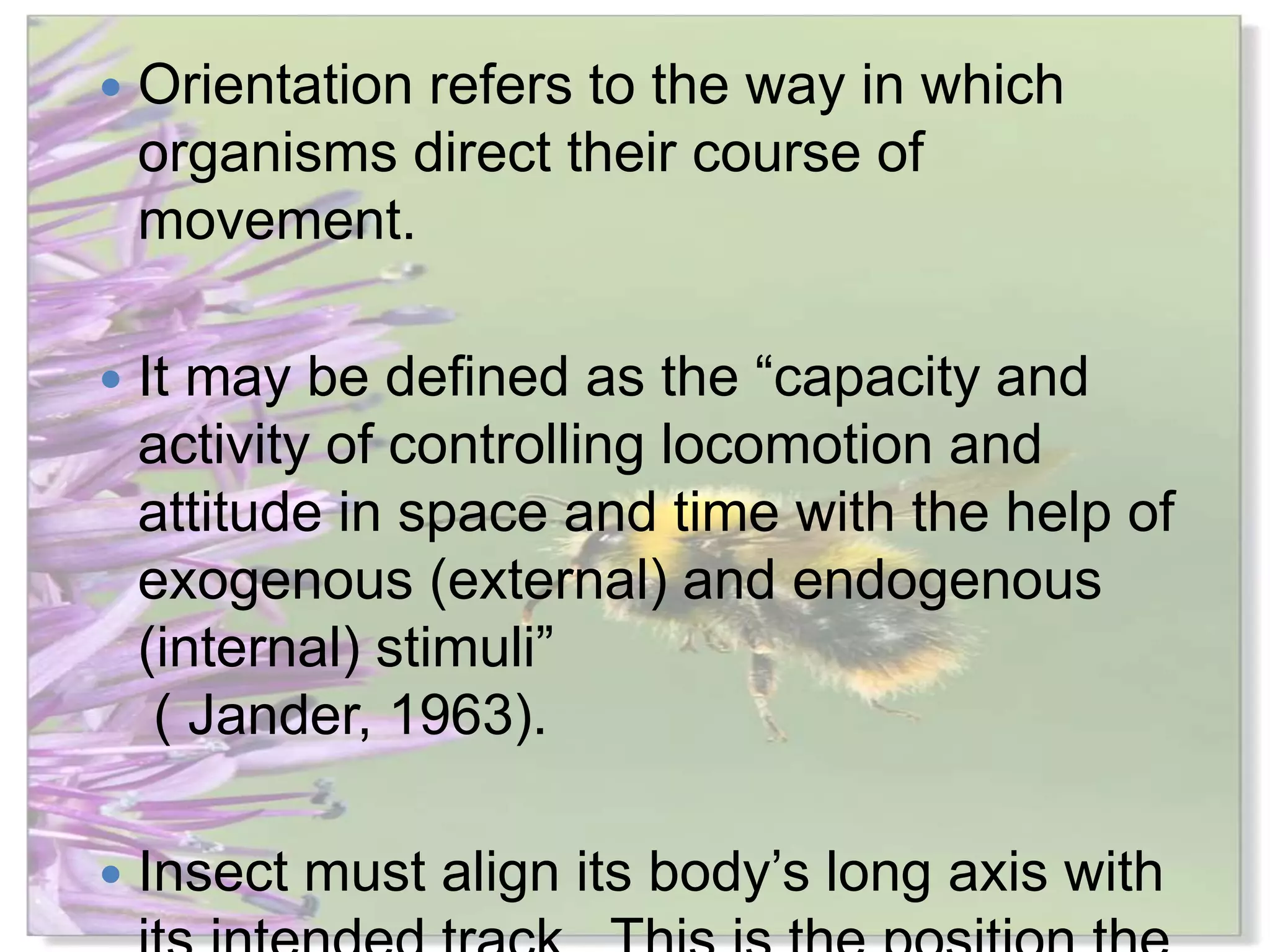
 Orientation refers to the way in which
organisms direct their course of
movement.
 It may be defined as the “capacity and
activity of controlling locomotion and
attitude in space and time with the help of
exogenous (external) and endogenous
(internal) stimuli”
( Jander, 1963).
 Insect must align its body’s long axis with
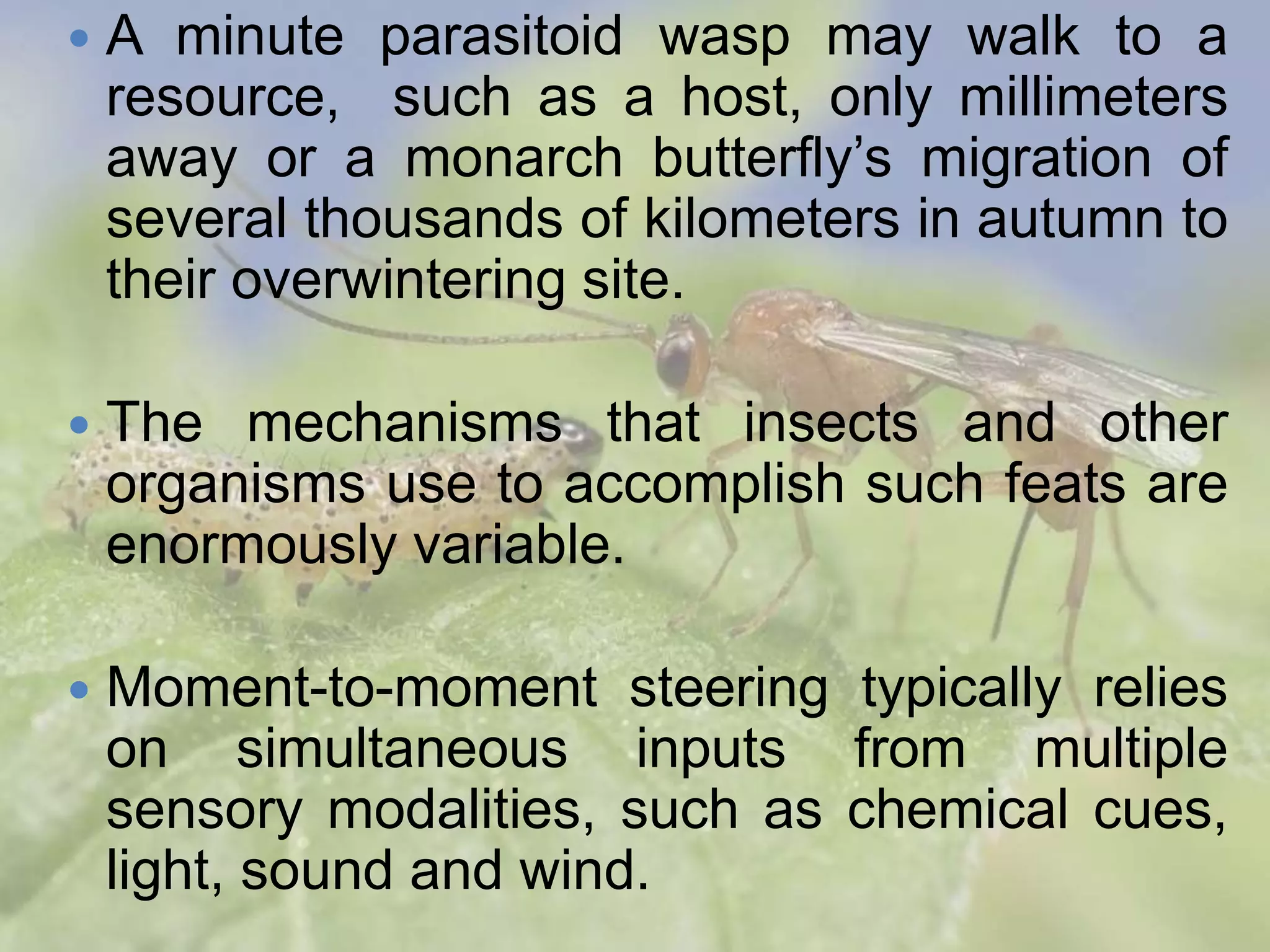
 A minute parasitoid wasp may walk to a
resource, such as a host, only millimeters
away or a monarch butterfly’s migration of
several thousands of kilometers in autumn to
their overwintering site.
 The mechanisms that insects and other
organisms use to accomplish such feats are
enormously variable.
 Moment-to-moment steering typically relies
on simultaneous inputs from multiple
sensory modalities, such as chemical cues,
light, sound and wind.
Forms of Orientation
Primary orientation
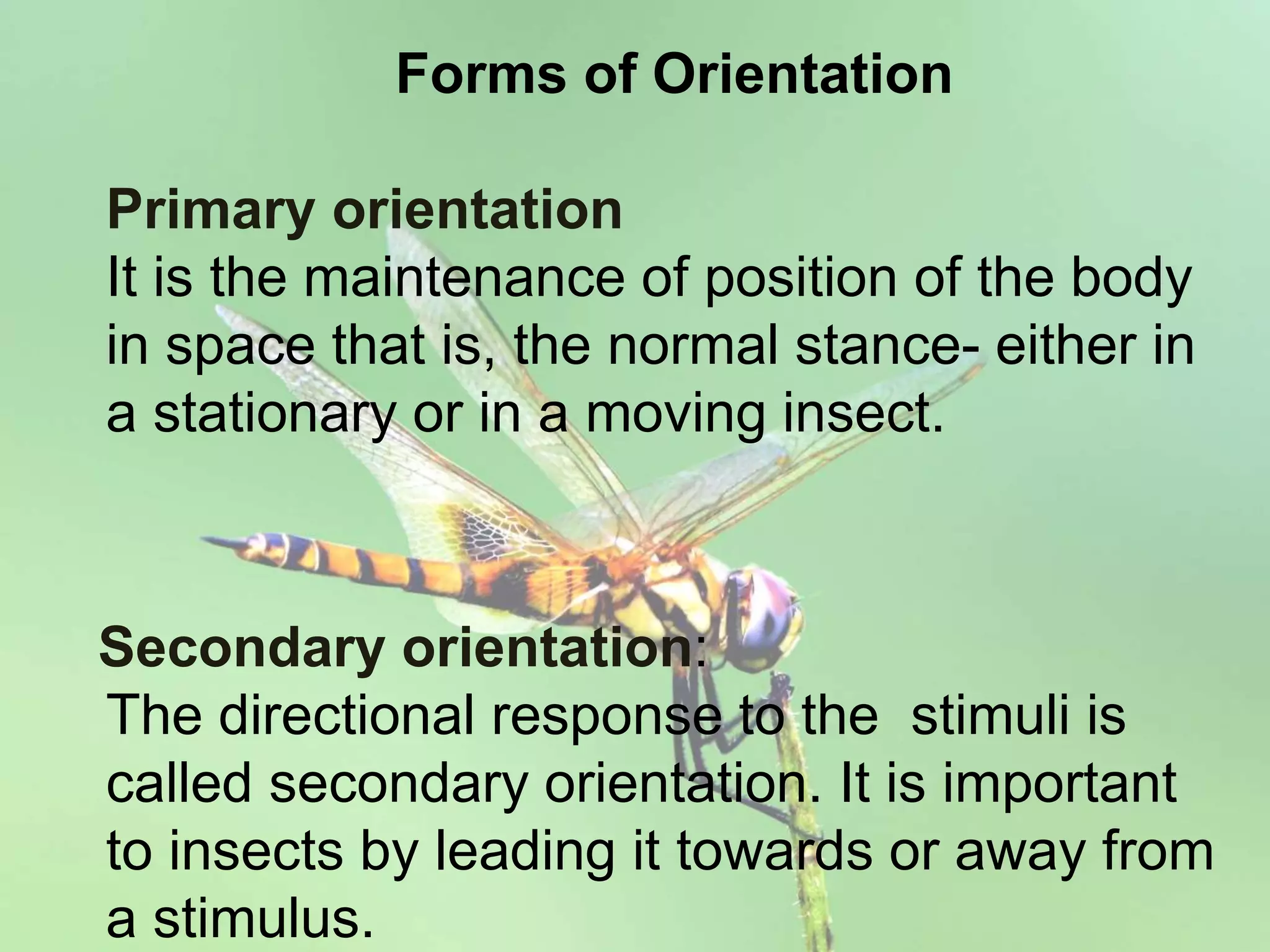
It is the maintenance of position of the body
in space that is, the normal stance- either in
a stationary or in a moving insect.
Secondary orientation:
The directional response to the stimuli is
called secondary orientation. It is important
to insects by leading it towards or away from
a stimulus.
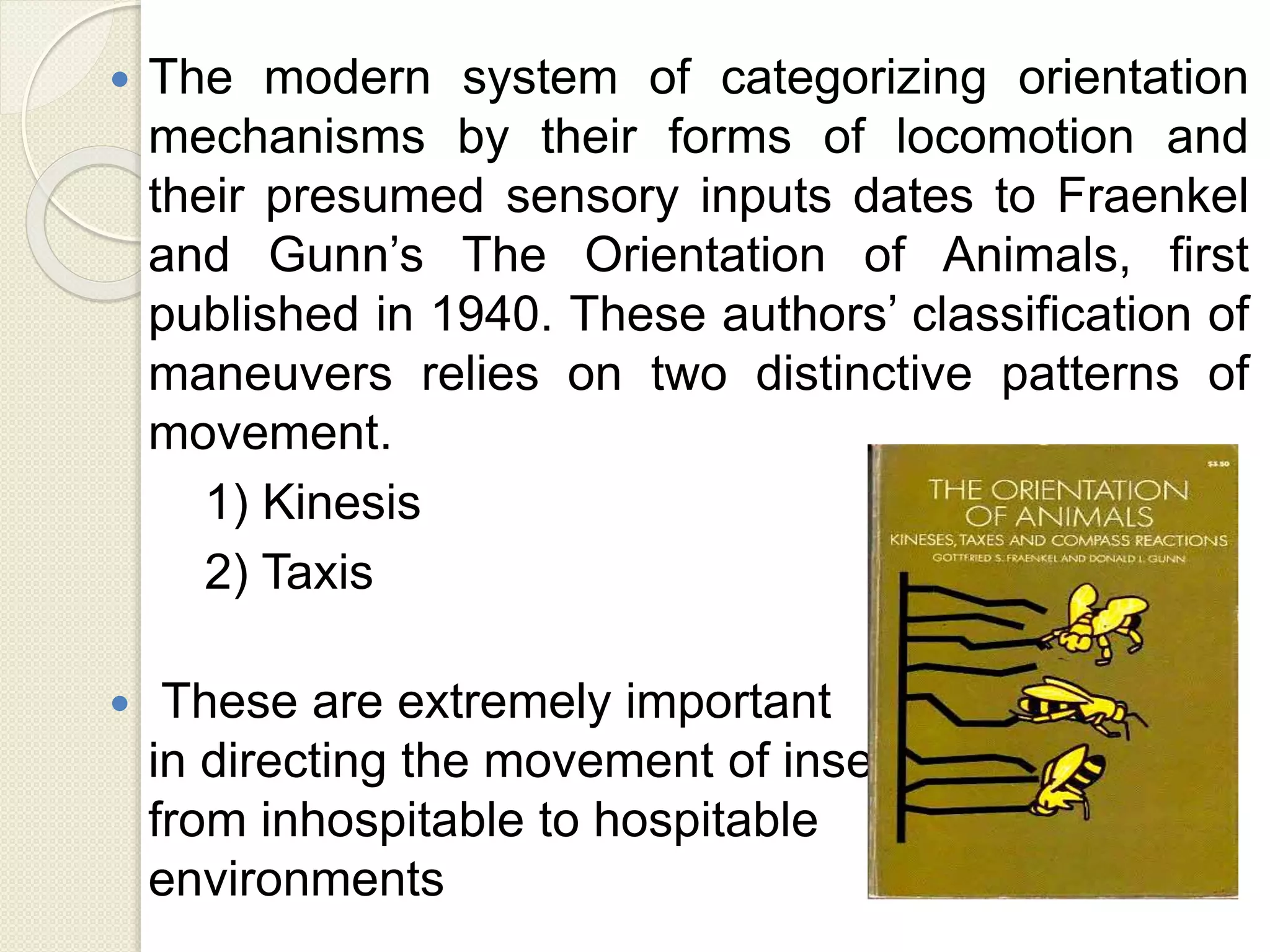
 The modern system of categorizing orientation
mechanisms by their forms of locomotion and
their presumed sensory inputs dates to Fraenkel
and Gunn’s The Orientation of Animals, first
published in 1940. These authors’ classification of
maneuvers relies on two distinctive patterns of
movement.
1) Kinesis
2) Taxis
 These are extremely important
in directing the movement of insects
from inhospitable to hospitable
environments
Kinesis
 The first kind of maneuver is termed a
kinesis.
 It is defined as an undirected response in
which the body’s long axis exhibits no
consistent relationship to the direction of
the stimulus and the direction of
locomotion is random.
 The intensity of locomotion depends upon
the intensity of stimulus, but not the
direction of stimulus.
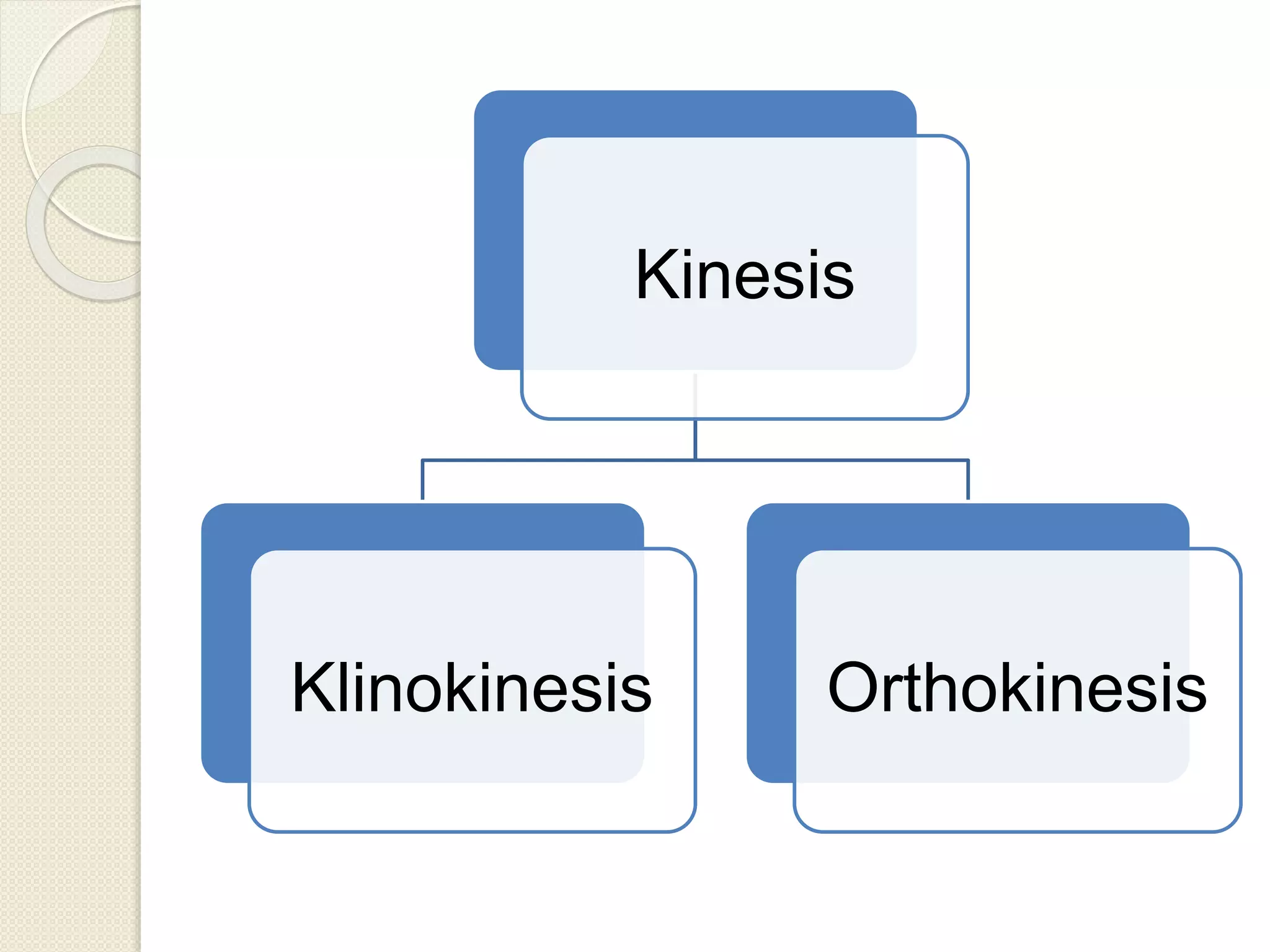
Kinesis
Klinokinesis Orthokinesis
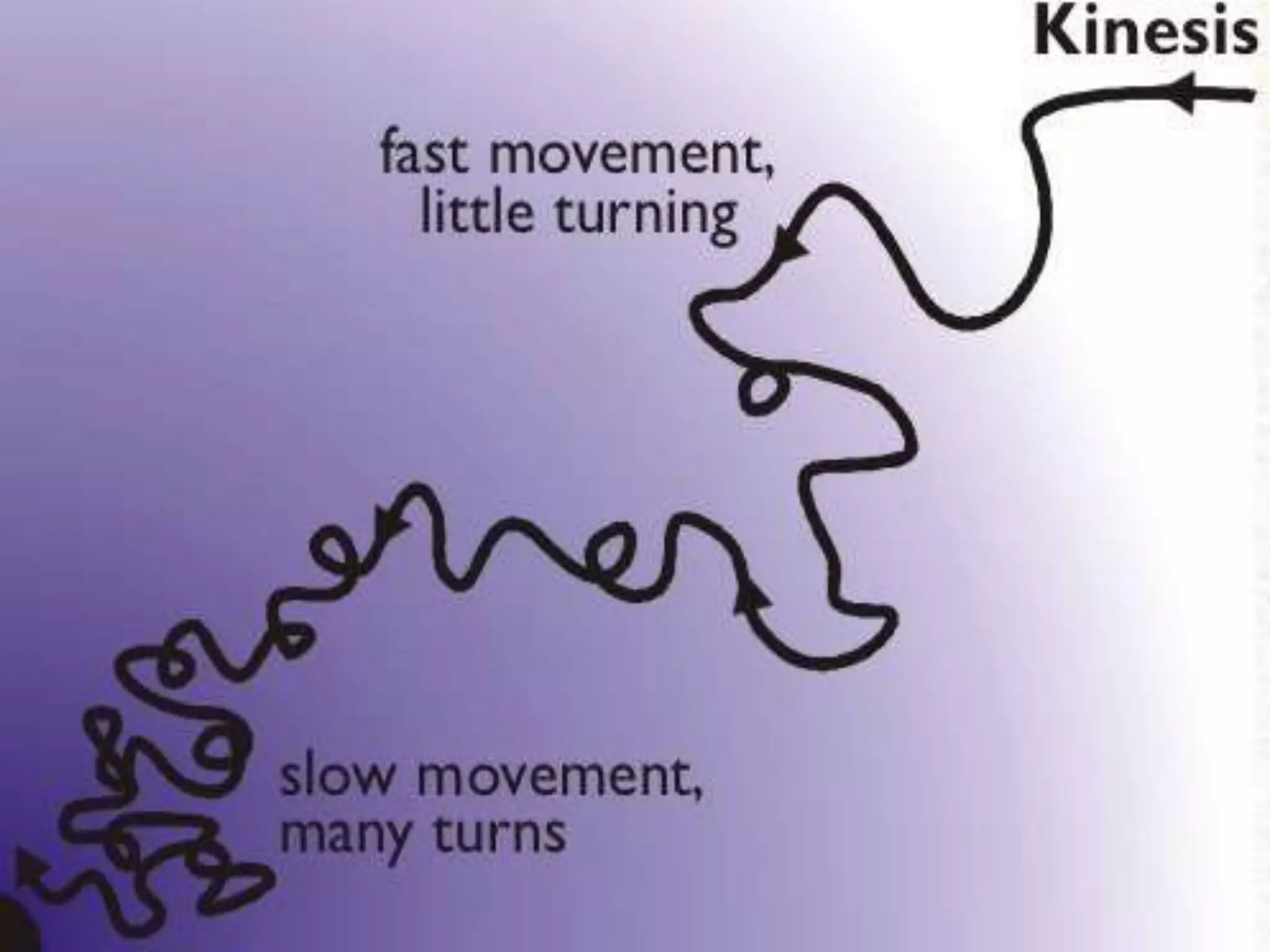
Klinokinesis
 If a gradient of stimulus intensity
regulates either the frequency of turns
or the amount of turning per unit of time,
the reaction is termed a klinokinesis.
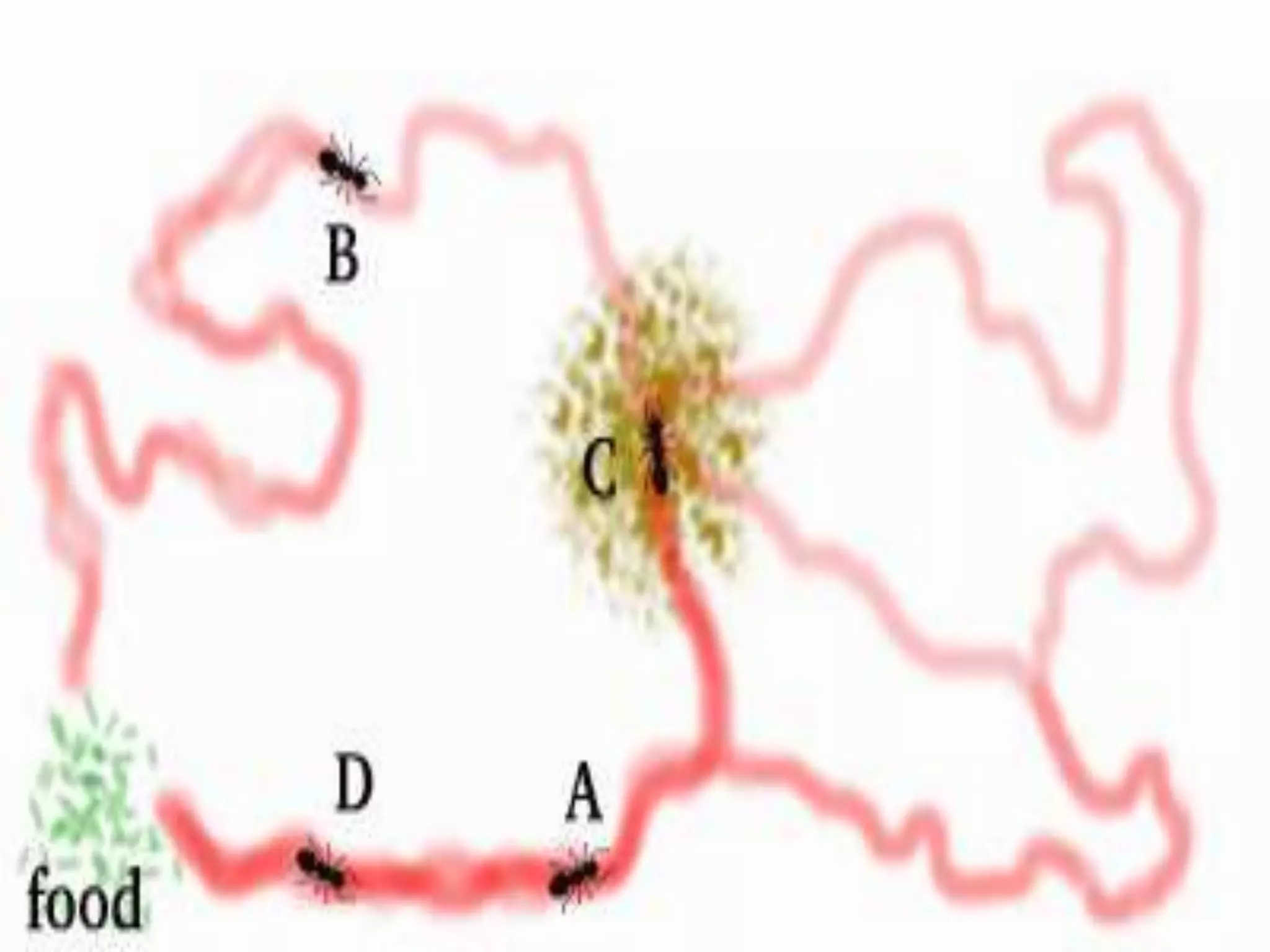
 An insect can locate food by following
the odor gradient emanating from it, the
orientation is straight while the intensity
of stimulus is constant or increasing, but
when the stimulus declines the insect
makes a random turn.
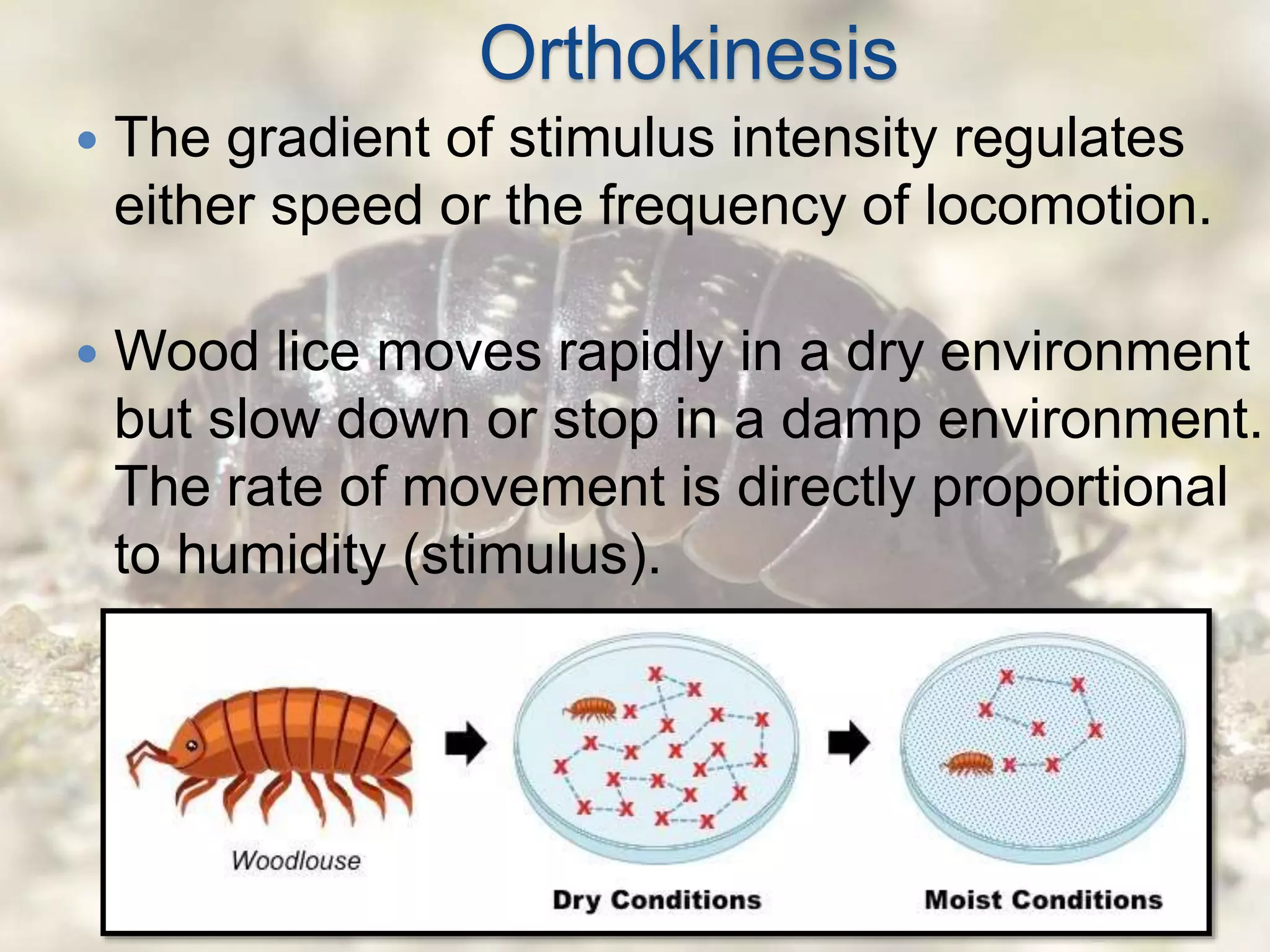
Orthokinesis
 The gradient of stimulus intensity regulates
either speed or the frequency of locomotion.
 Wood lice moves rapidly in a dry environment
but slow down or stop in a damp environment.
The rate of movement is directly proportional
to humidity (stimulus).
TAXIS
 A taxis is the movement of an organism in
response to a stimulus which may be a
physical or biological factors such as light or
the presence of food.
 In the case of taxis, the organism has
motility and demonstrates guided movement
towards or away from the stimulus source.
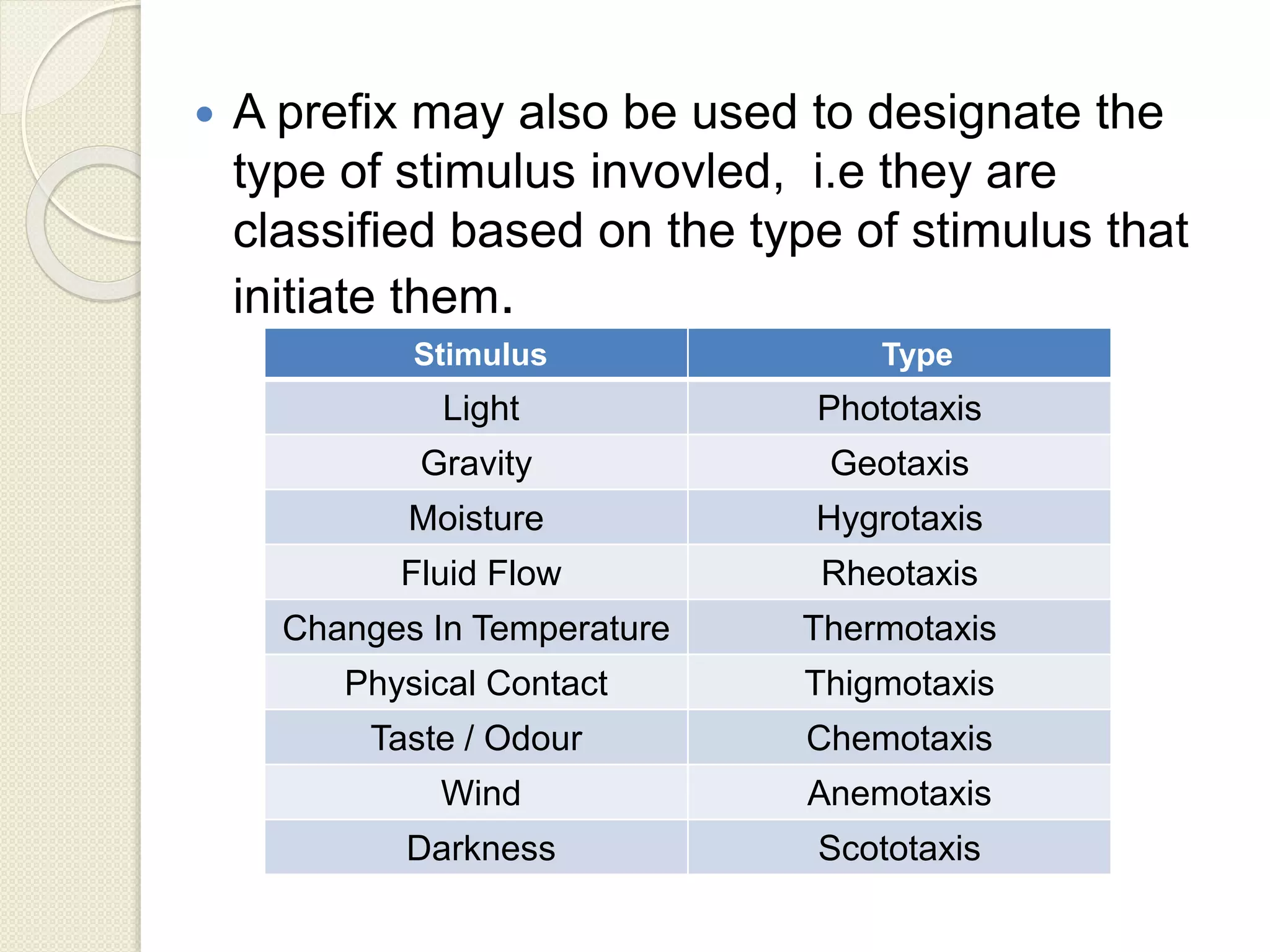
 A prefix may also be used to designate the
type of stimulus invovled, i.e they are
classified based on the type of stimulus that
initiate them.
Stimulus Type
Light Phototaxis
Gravity Geotaxis
Moisture Hygrotaxis
Fluid Flow Rheotaxis
Changes In Temperature Thermotaxis
Physical Contact Thigmotaxis
Taste / Odour Chemotaxis
Wind Anemotaxis
Darkness Scototaxis
Klinotaxis
 It occurs in organisms with receptor
cells but no paired receptor organs. The
cells for reception are located all over
the body, particularly towards the
anterior side.
 The insect detect the stimuli by turning
their head sideways and compare the
intensity.
 When the intensity of stimuli is balanced
equally from all sides then the organisms
move in a straight line.
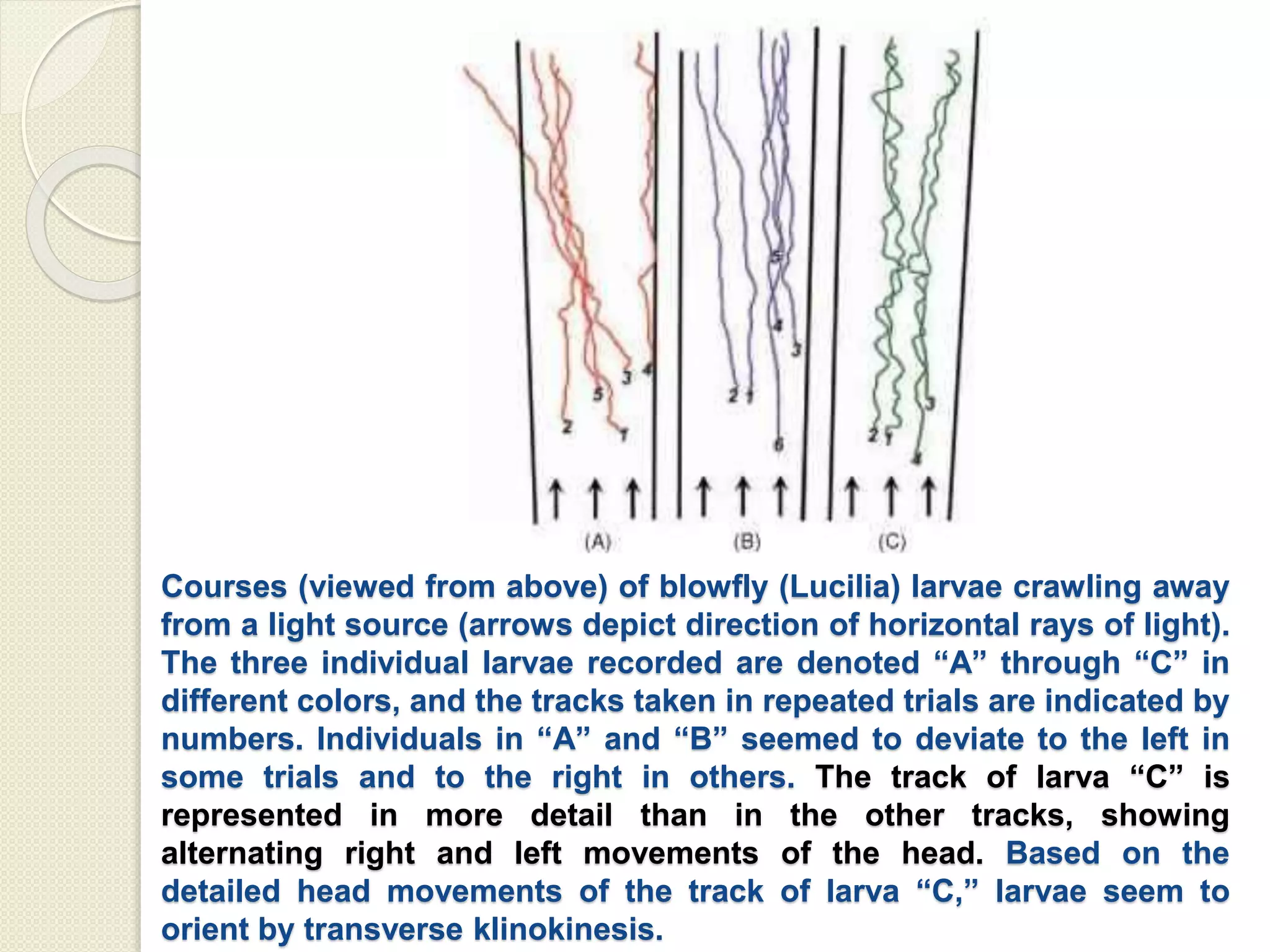
Courses (viewed from above) of blowfly (Lucilia) larvae crawling away
from a light source (arrows depict direction of horizontal rays of light).
The three individual larvae recorded are denoted “A” through “C” in
different colors, and the tracks taken in repeated trials are indicated by
numbers. Individuals in “A” and “B” seemed to deviate to the left in
some trials and to the right in others. The track of larva “C” is
represented in more detail than in the other tracks, showing
alternating right and left movements of the head. Based on the
detailed head movements of the track of larva “C,” larvae seem to
orient by transverse klinokinesis.
Tropotaxis
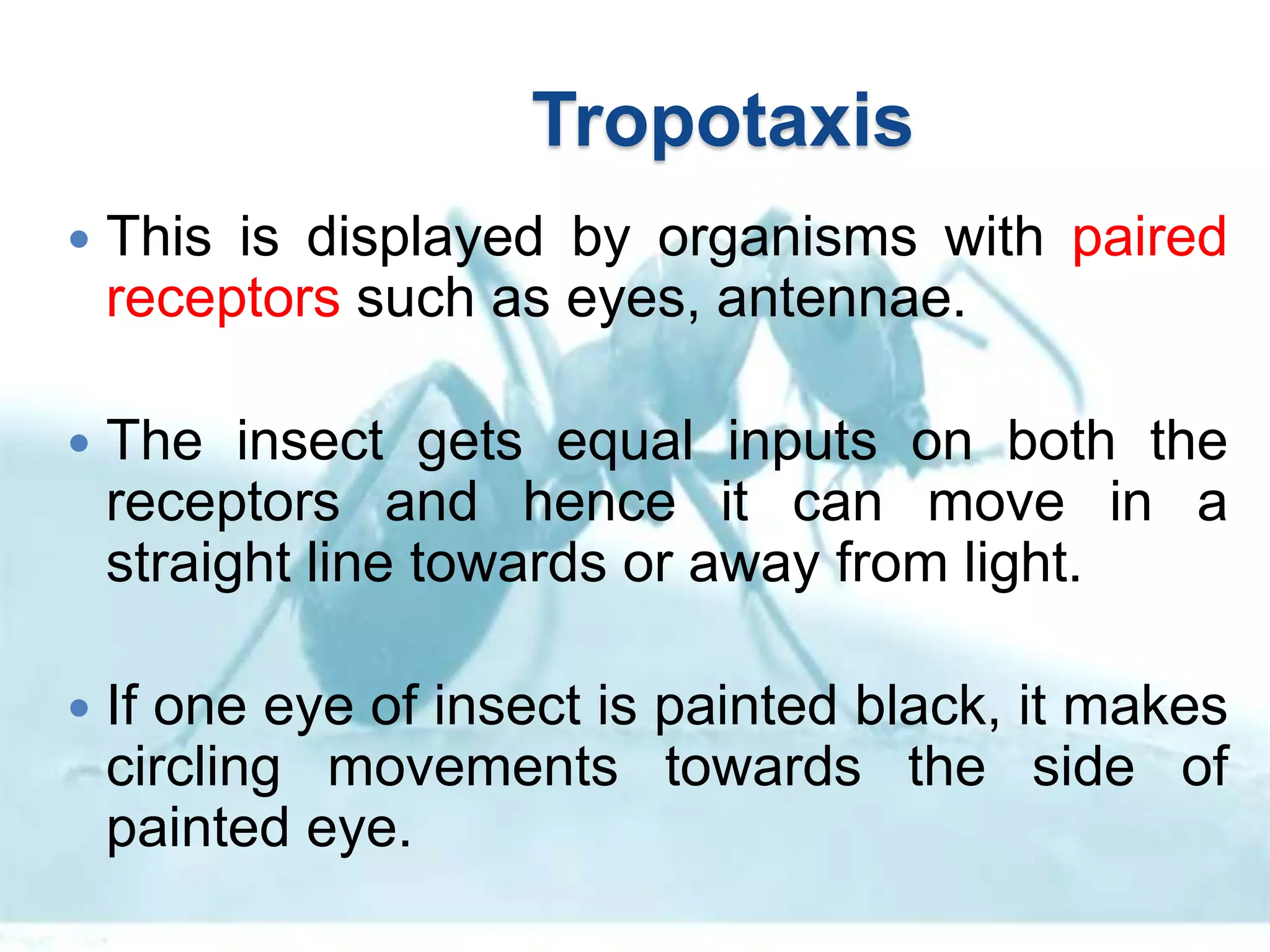
 This is displayed by organisms with paired
receptors such as eyes, antennae.
 The insect gets equal inputs on both the
receptors and hence it can move in a
straight line towards or away from light.
 If one eye of insect is painted black, it makes
circling movements towards the side of
painted eye.
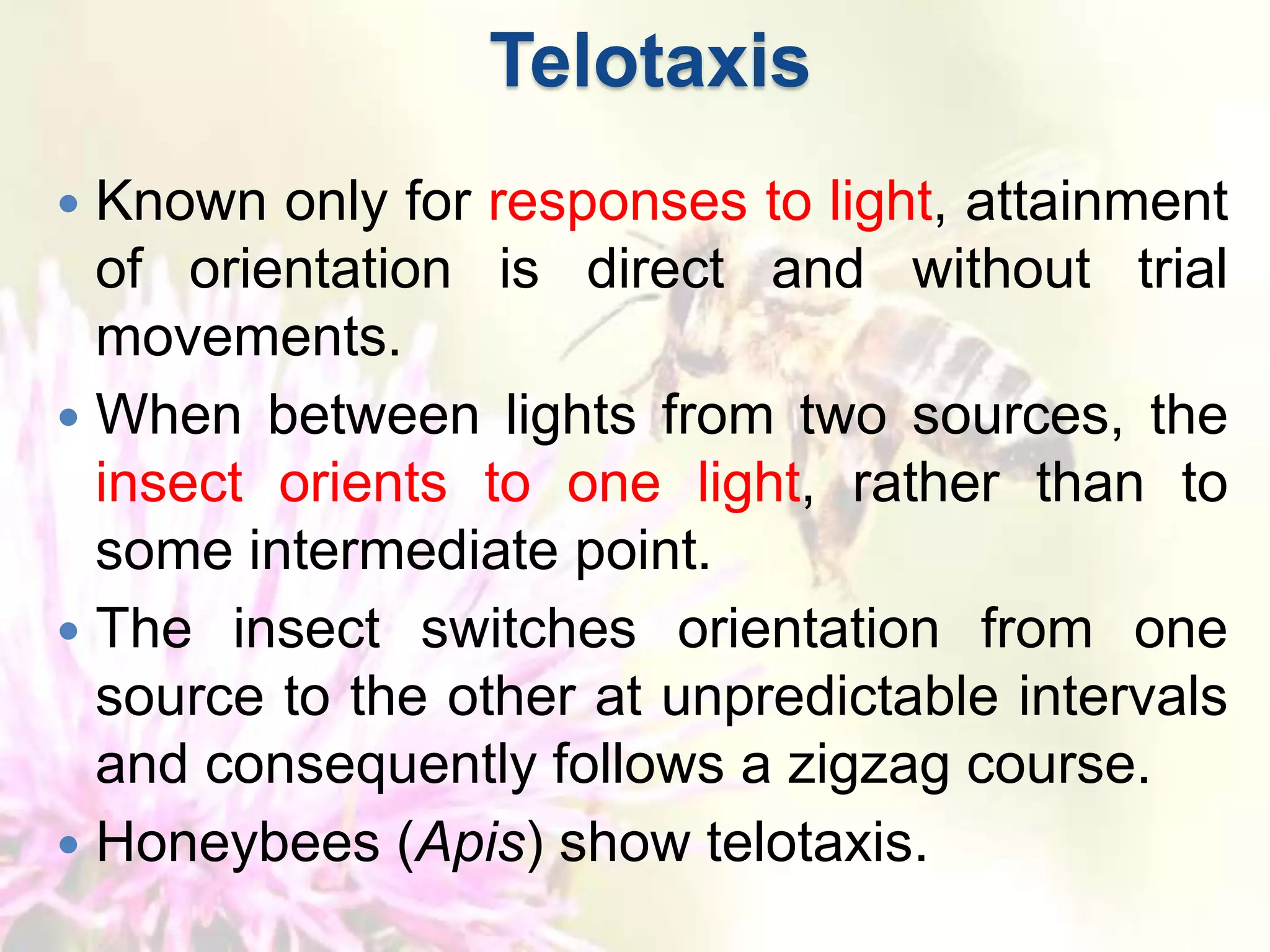
Telotaxis
 Known only for responses to light, attainment
of orientation is direct and without trial
movements.
 When between lights from two sources, the
insect orients to one light, rather than to
some intermediate point.
 The insect switches orientation from one
source to the other at unpredictable intervals
and consequently follows a zigzag course.
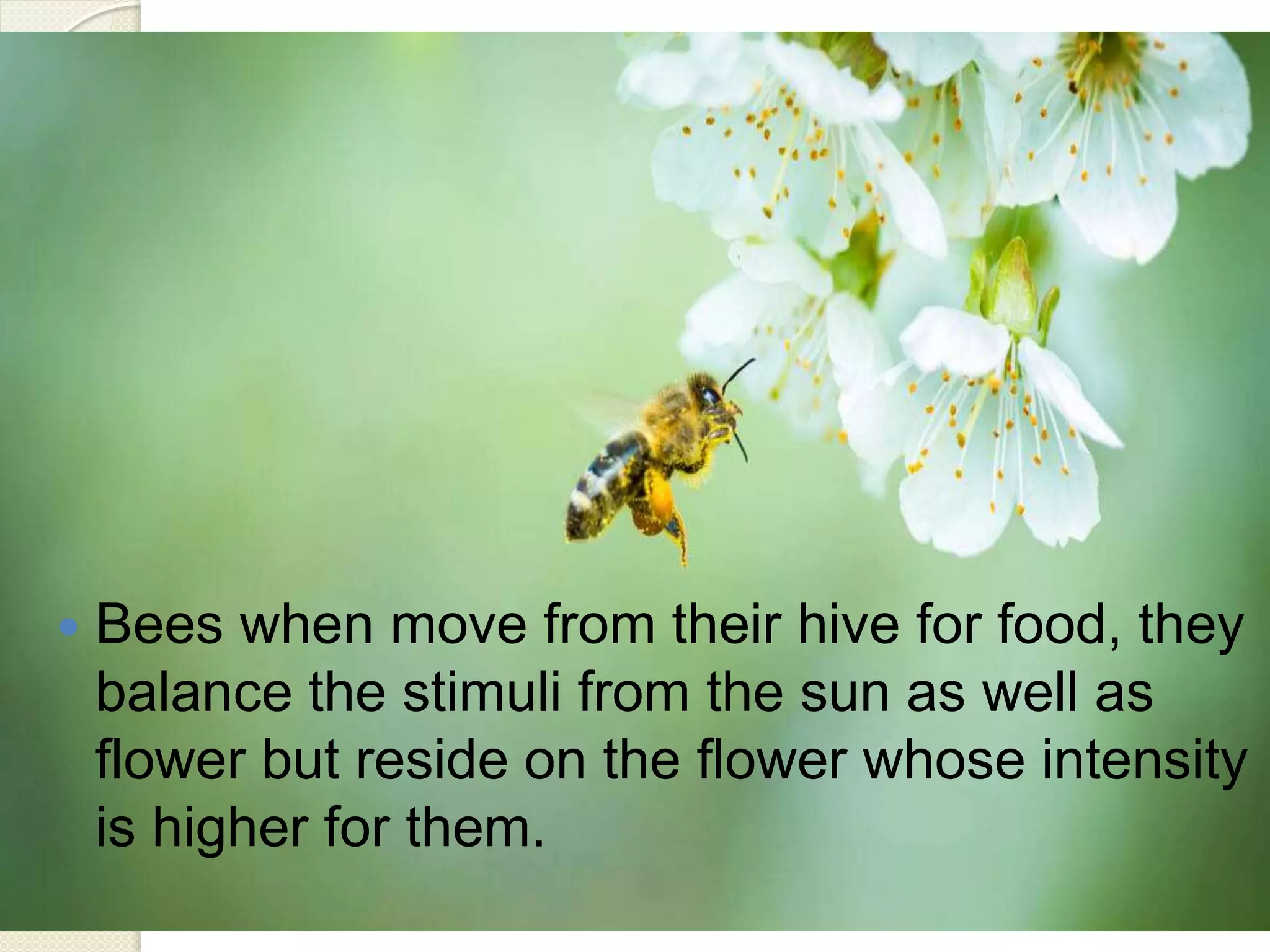
 Honeybees (Apis) show telotaxis.
 Bees when move from their hive for food, they
balance the stimuli from the sun as well as
flower but reside on the flower whose intensity
is higher for them.
Menotaxis
 The orientation of the long body axis is at a
constant angle to the source of stimulus.
Menotaxis is commonly called “compass
orientation”.
 The assumption is that moths normally fly a
straightened-out path by using celestial cues as
a menotactic guide.
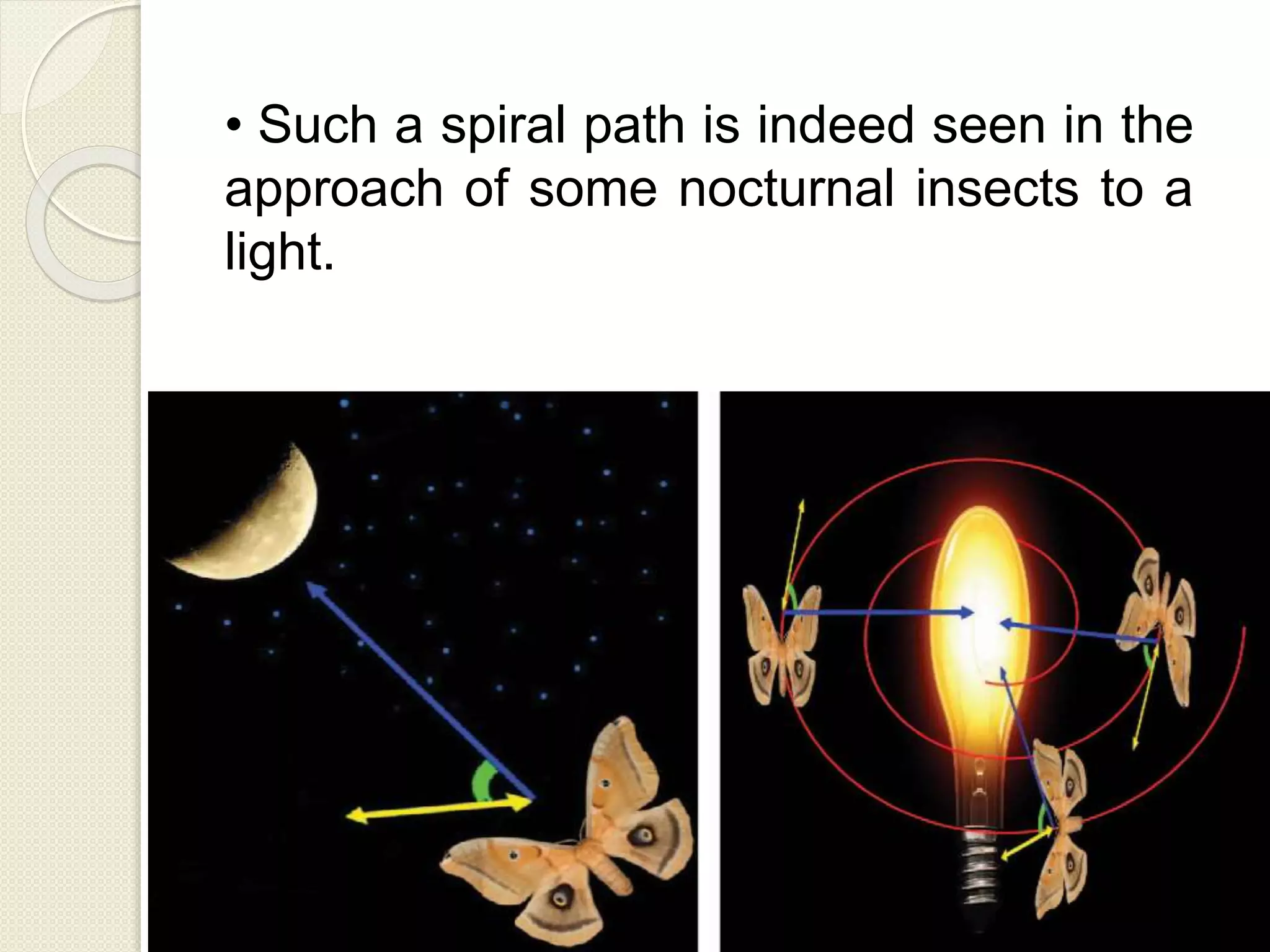
 When they encounter an artificial point source of
light, they attempt to maintain a relatively
constant angle with respect to the fixed point of
light as in menotaxis, but in doing so they
inevitably spiral toward the light source.
• Such a spiral path is indeed seen in the
approach of some nocturnal insects to a
light.
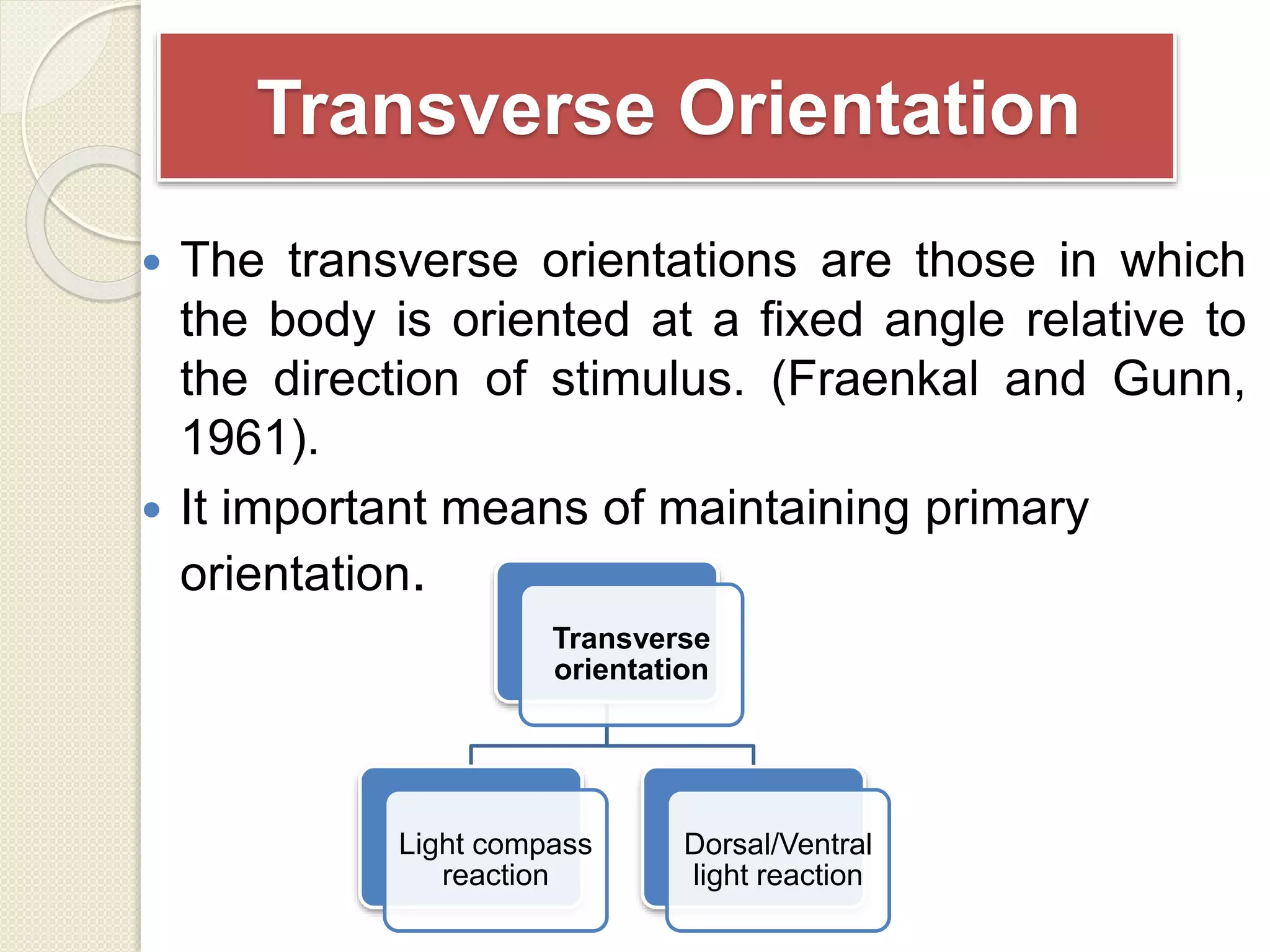
Transverse Orientation
 The transverse orientations are those in which
the body is oriented at a fixed angle relative to
the direction of stimulus. (Fraenkal and Gunn,
1961).
 It important means of maintaining primary
orientation.
Transverse
orientation
Light compass
reaction
Dorsal/Ventral
light reaction
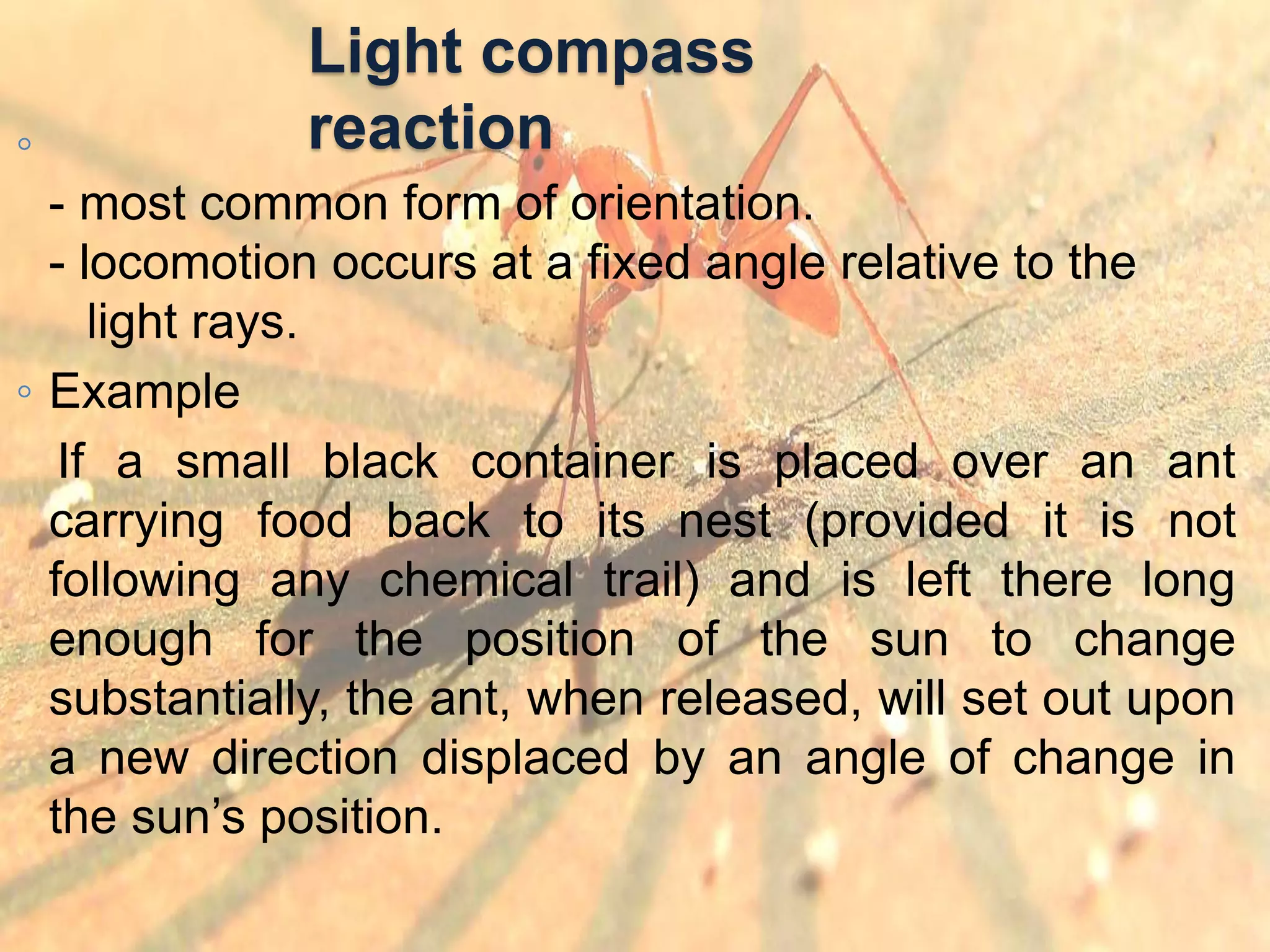
Light compass
reaction◦
- most common form of orientation.
- locomotion occurs at a fixed angle relative to the
light rays.
◦ Example
If a small black container is placed over an ant
carrying food back to its nest (provided it is not
following any chemical trail) and is left there long
enough for the position of the sun to change
substantially, the ant, when released, will set out upon
a new direction displaced by an angle of change in
the sun’s position.
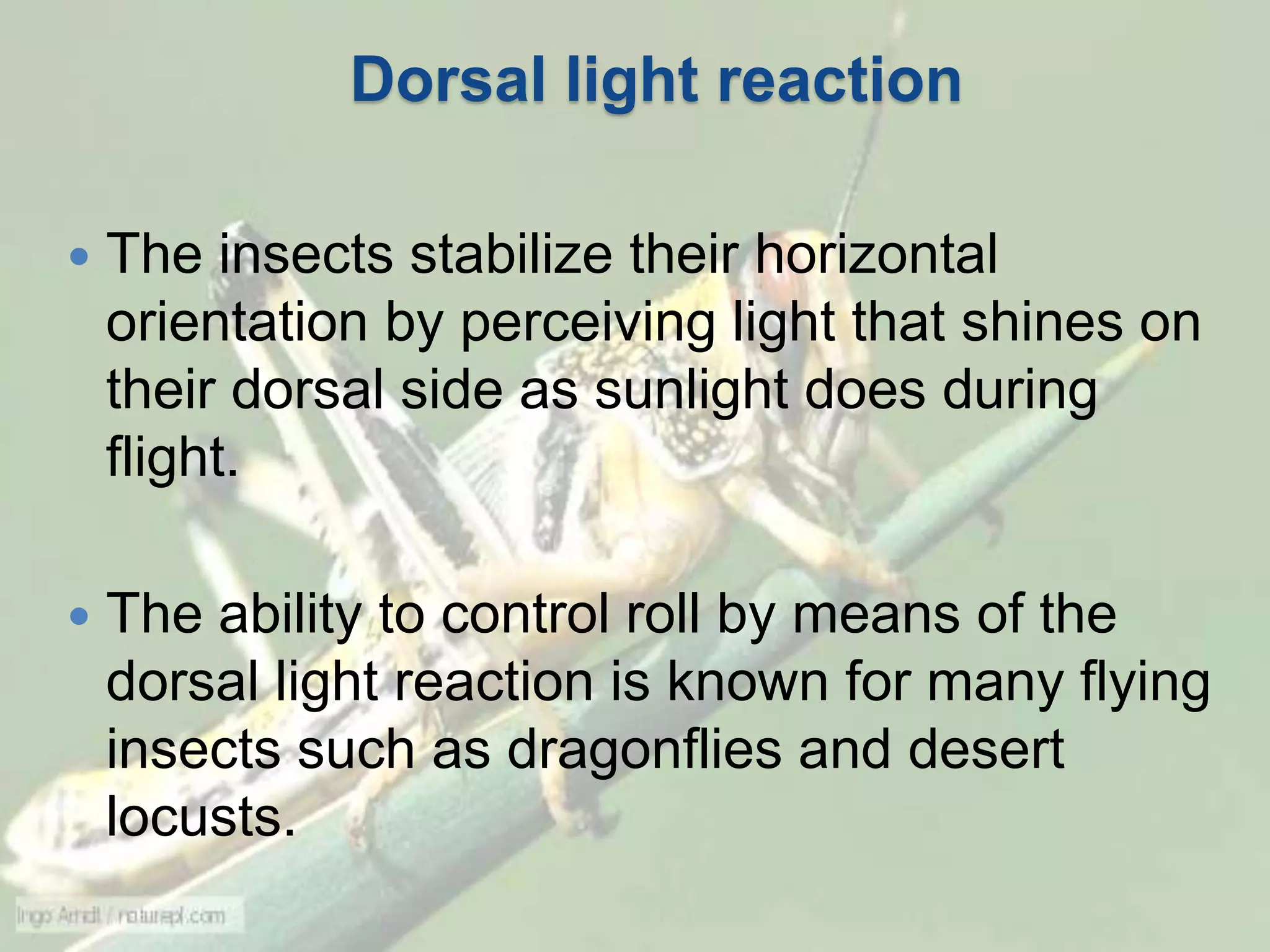
Dorsal light reaction
 The insects stabilize their horizontal
orientation by perceiving light that shines on
their dorsal side as sunlight does during
flight.
 The ability to control roll by means of the
dorsal light reaction is known for many flying
insects such as dragonflies and desert
locusts.
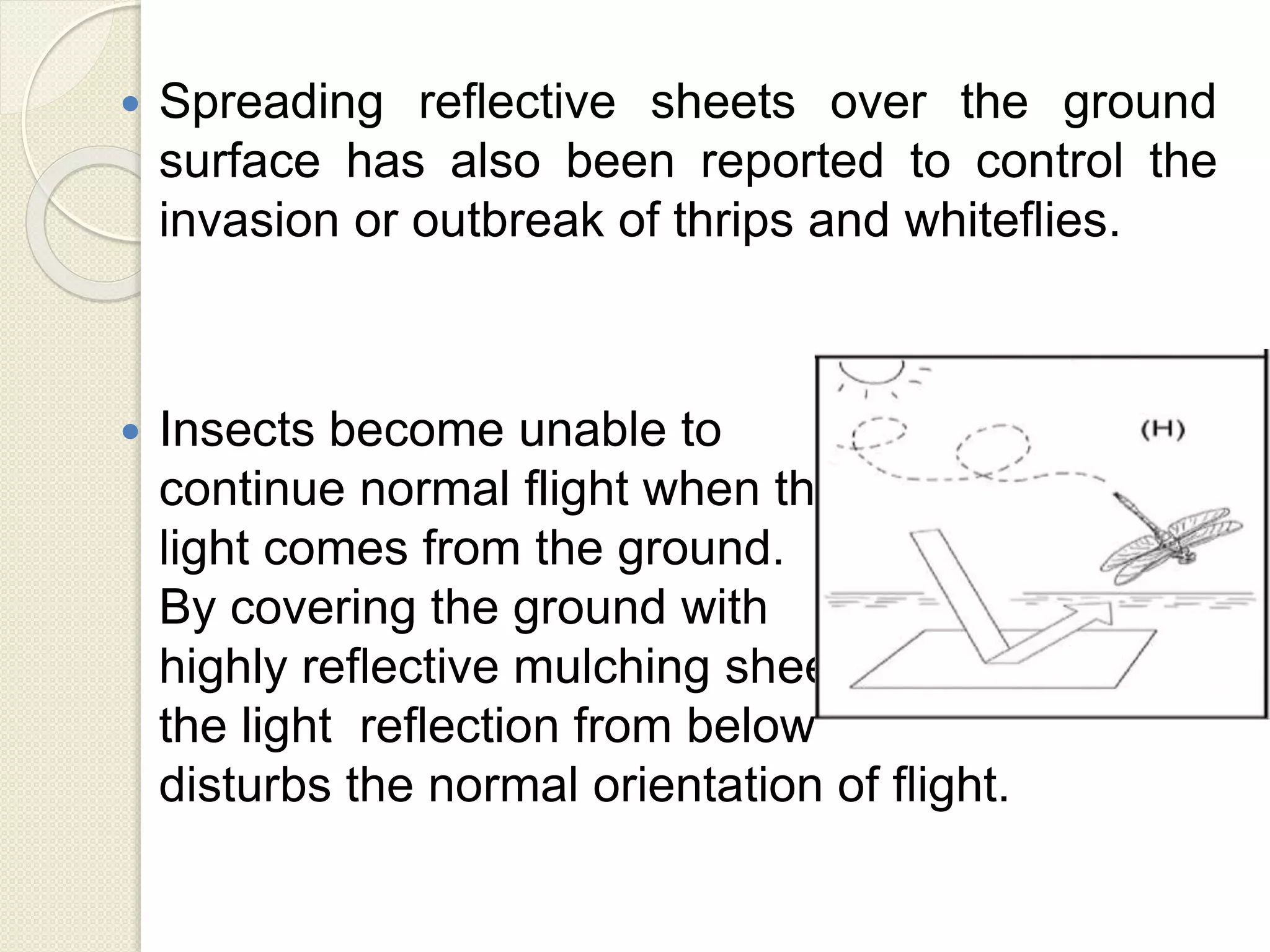
 Spreading reflective sheets over the ground
surface has also been reported to control the
invasion or outbreak of thrips and whiteflies.
 Insects become unable to
continue normal flight when the
light comes from the ground.
By covering the ground with
highly reflective mulching sheet,
the light reflection from below
disturbs the normal orientation of flight.
A soybean field covered with silver mulching
sheets
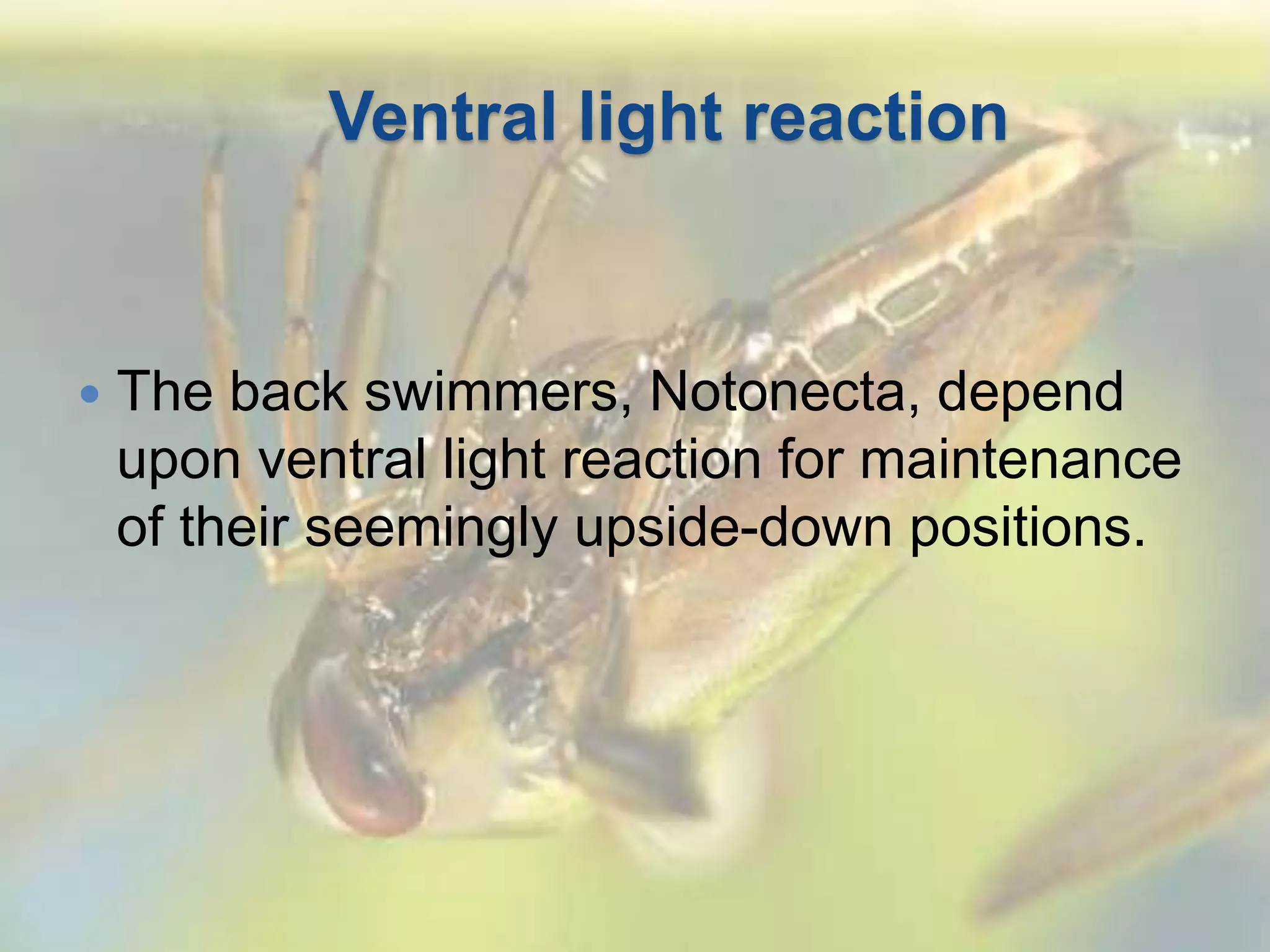
Ventral light reaction
 The back swimmers, Notonecta, depend
upon ventral light reaction for maintenance
of their seemingly upside-down positions.
Insect orientation and behaviour

Insect orientation and behaviour

  • 1.
    Presented by K.V. NAGARJUNAREDDY Ph.D Entomology IGKV, Raipur
  • 2.
     Orientation refersto the way in which organisms direct their course of movement.  It may be defined as the “capacity and activity of controlling locomotion and attitude in space and time with the help of exogenous (external) and endogenous (internal) stimuli” ( Jander, 1963).  Insect must align its body’s long axis with
  • 3.
     A minuteparasitoid wasp may walk to a resource, such as a host, only millimeters away or a monarch butterfly’s migration of several thousands of kilometers in autumn to their overwintering site.  The mechanisms that insects and other organisms use to accomplish such feats are enormously variable.  Moment-to-moment steering typically relies on simultaneous inputs from multiple sensory modalities, such as chemical cues, light, sound and wind.
  • 4.
    Forms of Orientation Primaryorientation It is the maintenance of position of the body in space that is, the normal stance- either in a stationary or in a moving insect. Secondary orientation: The directional response to the stimuli is called secondary orientation. It is important to insects by leading it towards or away from a stimulus.
  • 5.
     The modernsystem of categorizing orientation mechanisms by their forms of locomotion and their presumed sensory inputs dates to Fraenkel and Gunn’s The Orientation of Animals, first published in 1940. These authors’ classification of maneuvers relies on two distinctive patterns of movement. 1) Kinesis 2) Taxis  These are extremely important in directing the movement of insects from inhospitable to hospitable environments
  • 6.
    Kinesis  The firstkind of maneuver is termed a kinesis.  It is defined as an undirected response in which the body’s long axis exhibits no consistent relationship to the direction of the stimulus and the direction of locomotion is random.  The intensity of locomotion depends upon the intensity of stimulus, but not the direction of stimulus.
  • 7.
  • 8.
    Klinokinesis  If agradient of stimulus intensity regulates either the frequency of turns or the amount of turning per unit of time, the reaction is termed a klinokinesis.  An insect can locate food by following the odor gradient emanating from it, the orientation is straight while the intensity of stimulus is constant or increasing, but when the stimulus declines the insect makes a random turn.
  • 10.
    Orthokinesis  The gradientof stimulus intensity regulates either speed or the frequency of locomotion.  Wood lice moves rapidly in a dry environment but slow down or stop in a damp environment. The rate of movement is directly proportional to humidity (stimulus).
  • 12.
    TAXIS  A taxisis the movement of an organism in response to a stimulus which may be a physical or biological factors such as light or the presence of food.  In the case of taxis, the organism has motility and demonstrates guided movement towards or away from the stimulus source.
  • 13.
     A prefixmay also be used to designate the type of stimulus invovled, i.e they are classified based on the type of stimulus that initiate them. Stimulus Type Light Phototaxis Gravity Geotaxis Moisture Hygrotaxis Fluid Flow Rheotaxis Changes In Temperature Thermotaxis Physical Contact Thigmotaxis Taste / Odour Chemotaxis Wind Anemotaxis Darkness Scototaxis
  • 14.
    Klinotaxis  It occursin organisms with receptor cells but no paired receptor organs. The cells for reception are located all over the body, particularly towards the anterior side.  The insect detect the stimuli by turning their head sideways and compare the intensity.  When the intensity of stimuli is balanced equally from all sides then the organisms move in a straight line.
  • 15.
    Courses (viewed fromabove) of blowfly (Lucilia) larvae crawling away from a light source (arrows depict direction of horizontal rays of light). The three individual larvae recorded are denoted “A” through “C” in different colors, and the tracks taken in repeated trials are indicated by numbers. Individuals in “A” and “B” seemed to deviate to the left in some trials and to the right in others. The track of larva “C” is represented in more detail than in the other tracks, showing alternating right and left movements of the head. Based on the detailed head movements of the track of larva “C,” larvae seem to orient by transverse klinokinesis.
  • 16.
    Tropotaxis  This isdisplayed by organisms with paired receptors such as eyes, antennae.  The insect gets equal inputs on both the receptors and hence it can move in a straight line towards or away from light.  If one eye of insect is painted black, it makes circling movements towards the side of painted eye.
  • 17.
    Telotaxis  Known onlyfor responses to light, attainment of orientation is direct and without trial movements.  When between lights from two sources, the insect orients to one light, rather than to some intermediate point.  The insect switches orientation from one source to the other at unpredictable intervals and consequently follows a zigzag course.  Honeybees (Apis) show telotaxis.
  • 18.
     Bees whenmove from their hive for food, they balance the stimuli from the sun as well as flower but reside on the flower whose intensity is higher for them.
  • 19.
    Menotaxis  The orientationof the long body axis is at a constant angle to the source of stimulus. Menotaxis is commonly called “compass orientation”.  The assumption is that moths normally fly a straightened-out path by using celestial cues as a menotactic guide.  When they encounter an artificial point source of light, they attempt to maintain a relatively constant angle with respect to the fixed point of light as in menotaxis, but in doing so they inevitably spiral toward the light source.
  • 20.
    • Such aspiral path is indeed seen in the approach of some nocturnal insects to a light.
  • 21.
    Transverse Orientation  Thetransverse orientations are those in which the body is oriented at a fixed angle relative to the direction of stimulus. (Fraenkal and Gunn, 1961).  It important means of maintaining primary orientation. Transverse orientation Light compass reaction Dorsal/Ventral light reaction
  • 22.
    Light compass reaction◦ - mostcommon form of orientation. - locomotion occurs at a fixed angle relative to the light rays. ◦ Example If a small black container is placed over an ant carrying food back to its nest (provided it is not following any chemical trail) and is left there long enough for the position of the sun to change substantially, the ant, when released, will set out upon a new direction displaced by an angle of change in the sun’s position.
  • 23.
    Dorsal light reaction The insects stabilize their horizontal orientation by perceiving light that shines on their dorsal side as sunlight does during flight.  The ability to control roll by means of the dorsal light reaction is known for many flying insects such as dragonflies and desert locusts.
  • 24.
     Spreading reflectivesheets over the ground surface has also been reported to control the invasion or outbreak of thrips and whiteflies.  Insects become unable to continue normal flight when the light comes from the ground. By covering the ground with highly reflective mulching sheet, the light reflection from below disturbs the normal orientation of flight.
  • 25.
    A soybean fieldcovered with silver mulching sheets
  • 26.
    Ventral light reaction The back swimmers, Notonecta, depend upon ventral light reaction for maintenance of their seemingly upside-down positions.