Queuing Theory –
Study of Congestion
  Operations Research
What is a queue?
• People waiting for service
  – Customers at a supermarket (IVR, railway counter)
  – Letters in a post office (Emails, SMS)
  – Cars at a traffic signal
• In ordered fashion (who defines order?)
  – Bank provides token numbers
  – Customers themselves ensure FIFO at Railway
    ticket counters
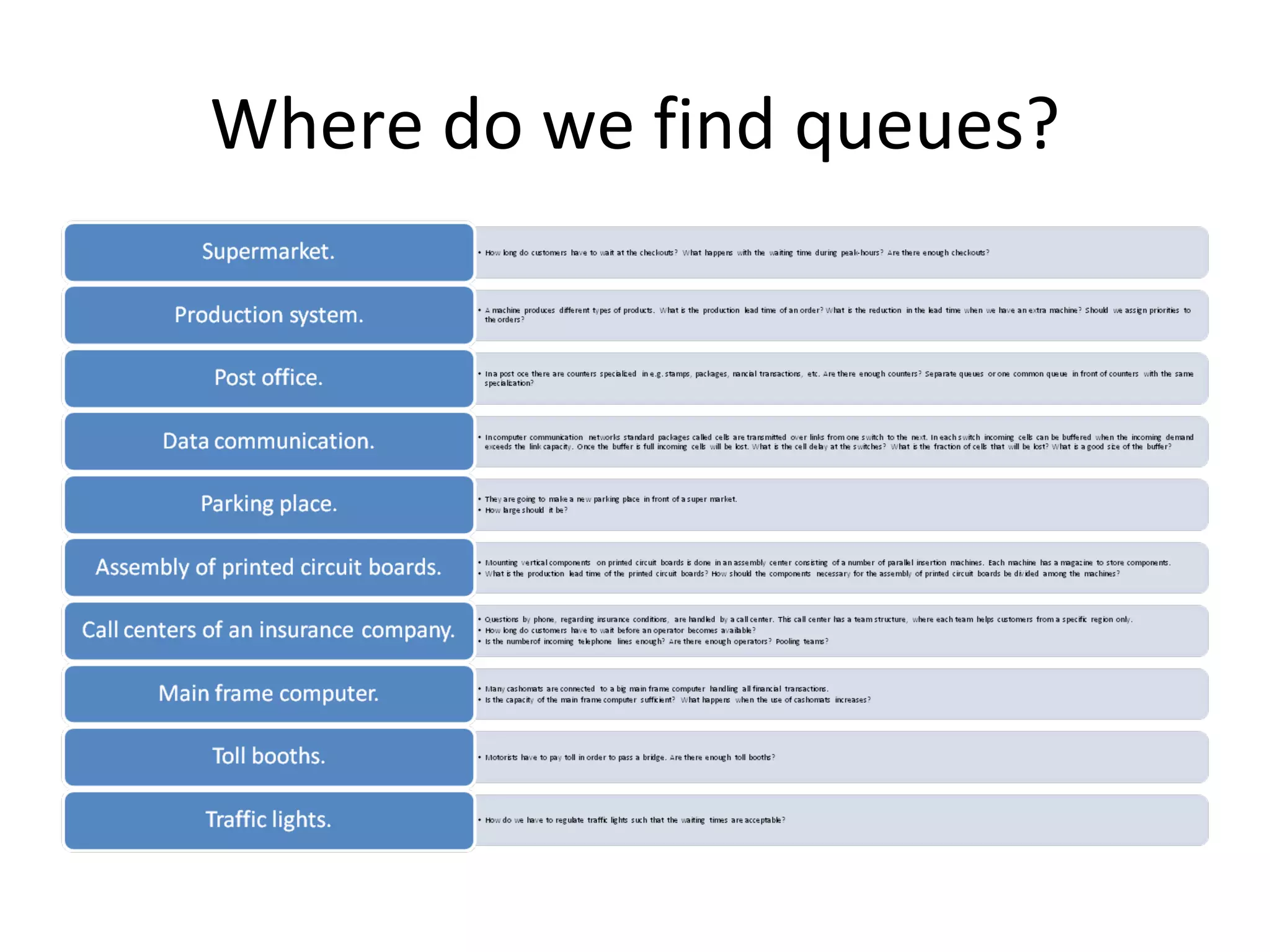
Where do we find queues?
A thought experiment
• When does a queue form?

• When will it not form?

• When will you not join a queue?

• When will you leave a queue?

• What is the worst case scenario?
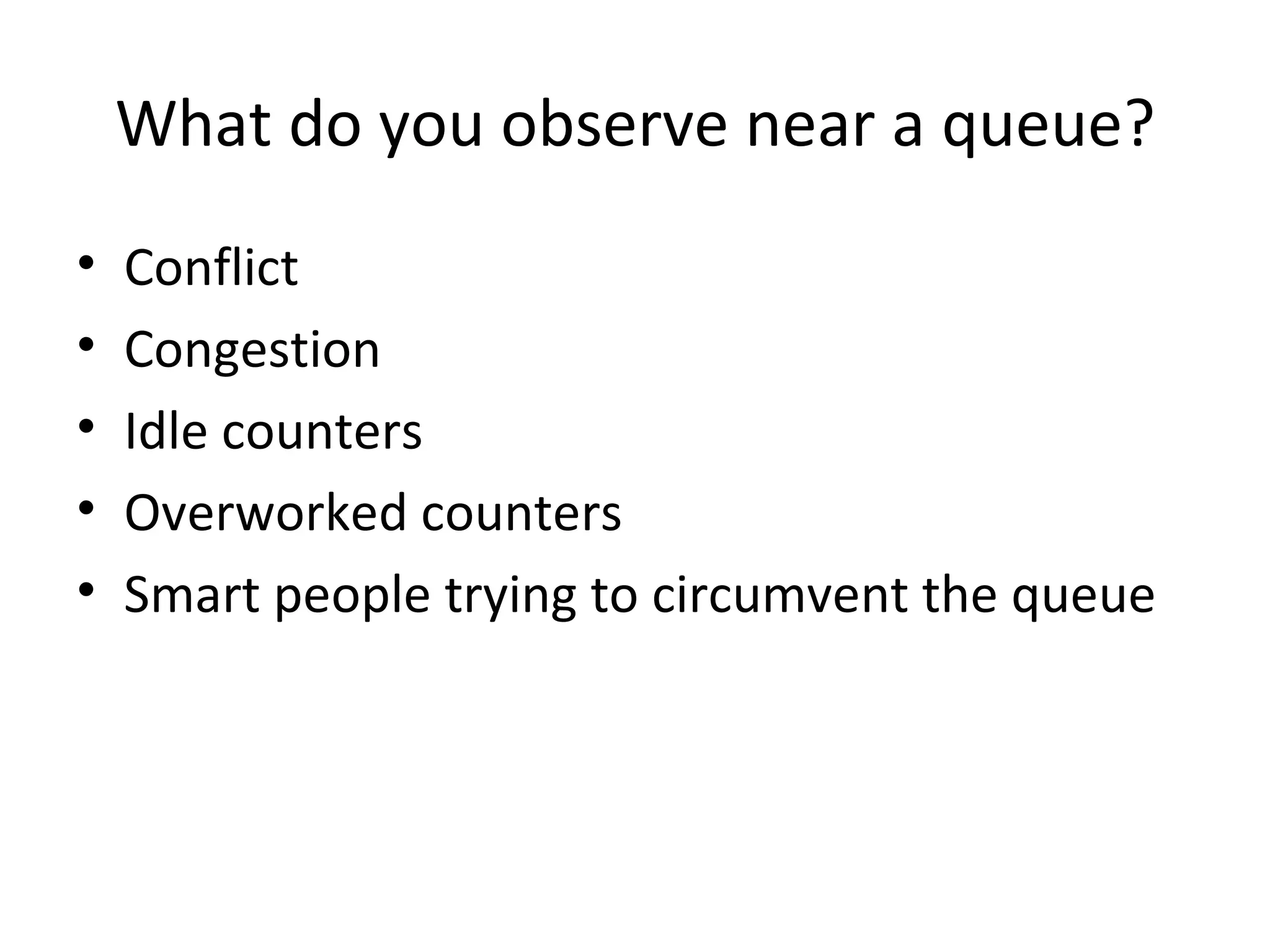
What do you observe near a queue?
•   Conflict
•   Congestion
•   Idle counters
•   Overworked counters
•   Smart people trying to circumvent the queue
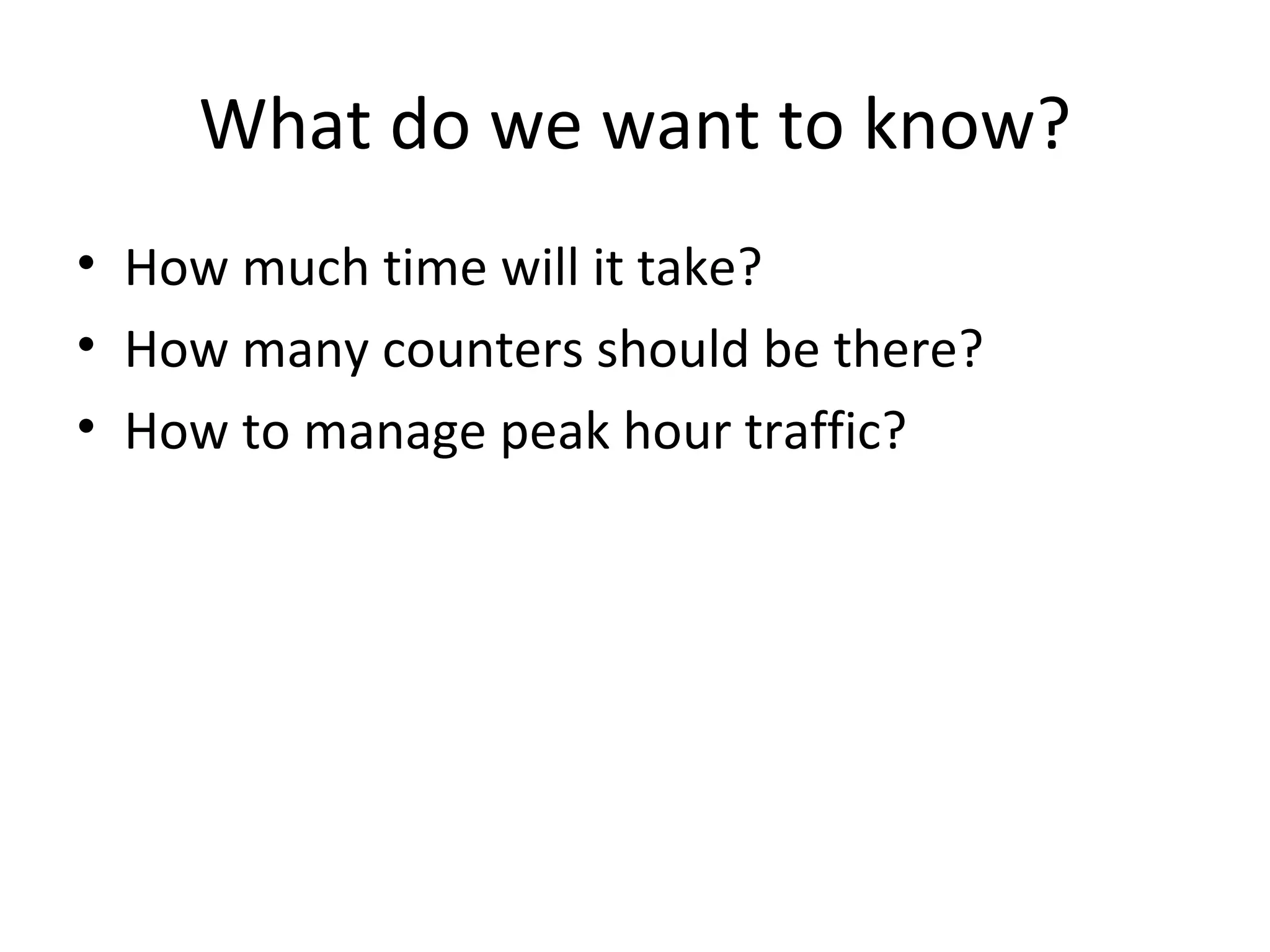
What do we want to know?
• How much time will it take?
• How many counters should be there?
• How to manage peak hour traffic?
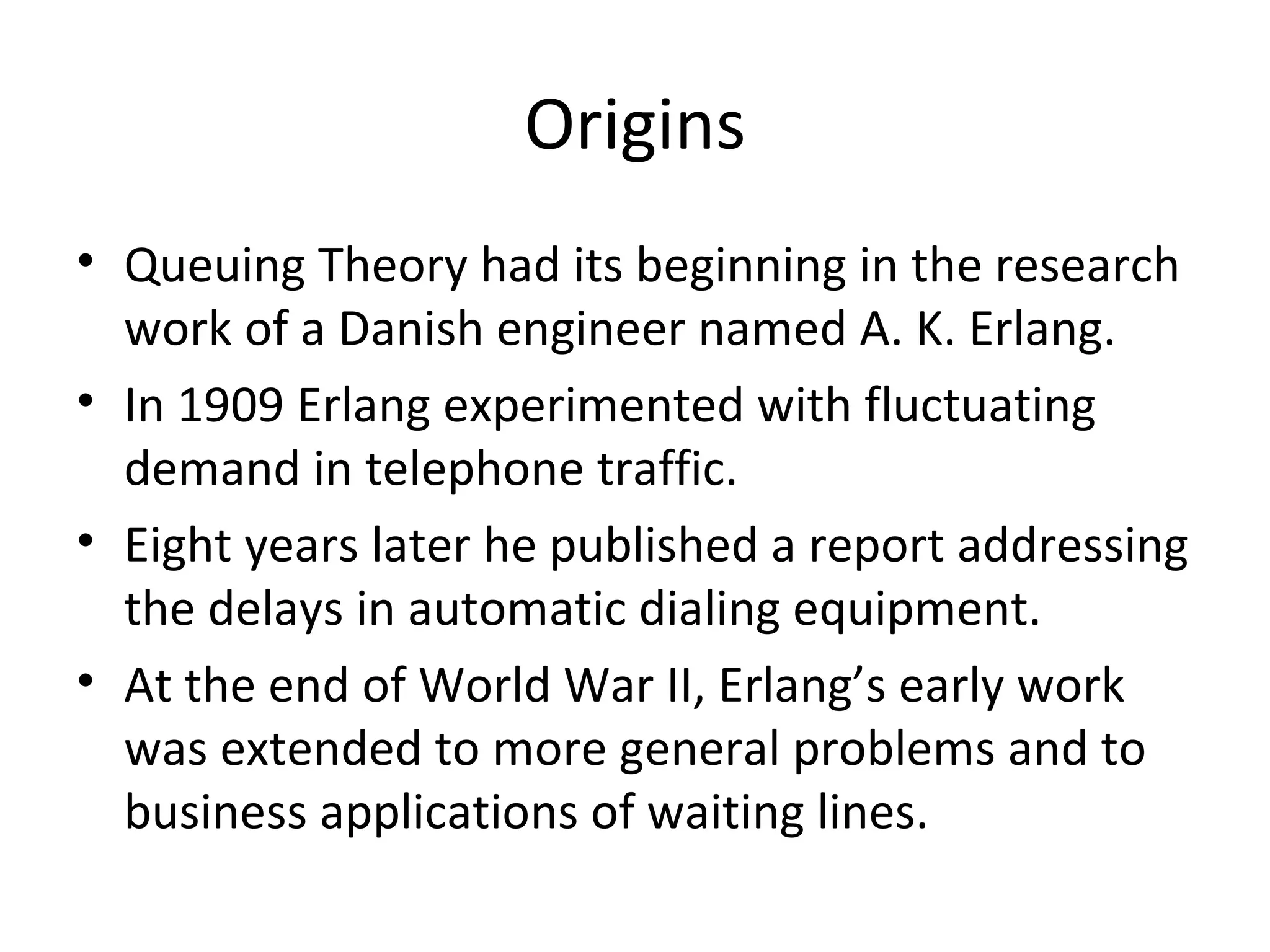
Origins
• Queuing Theory had its beginning in the research
  work of a Danish engineer named A. K. Erlang.
• In 1909 Erlang experimented with fluctuating
  demand in telephone traffic.
• Eight years later he published a report addressing
  the delays in automatic dialing equipment.
• At the end of World War II, Erlang’s early work
  was extended to more general problems and to
  business applications of waiting lines.
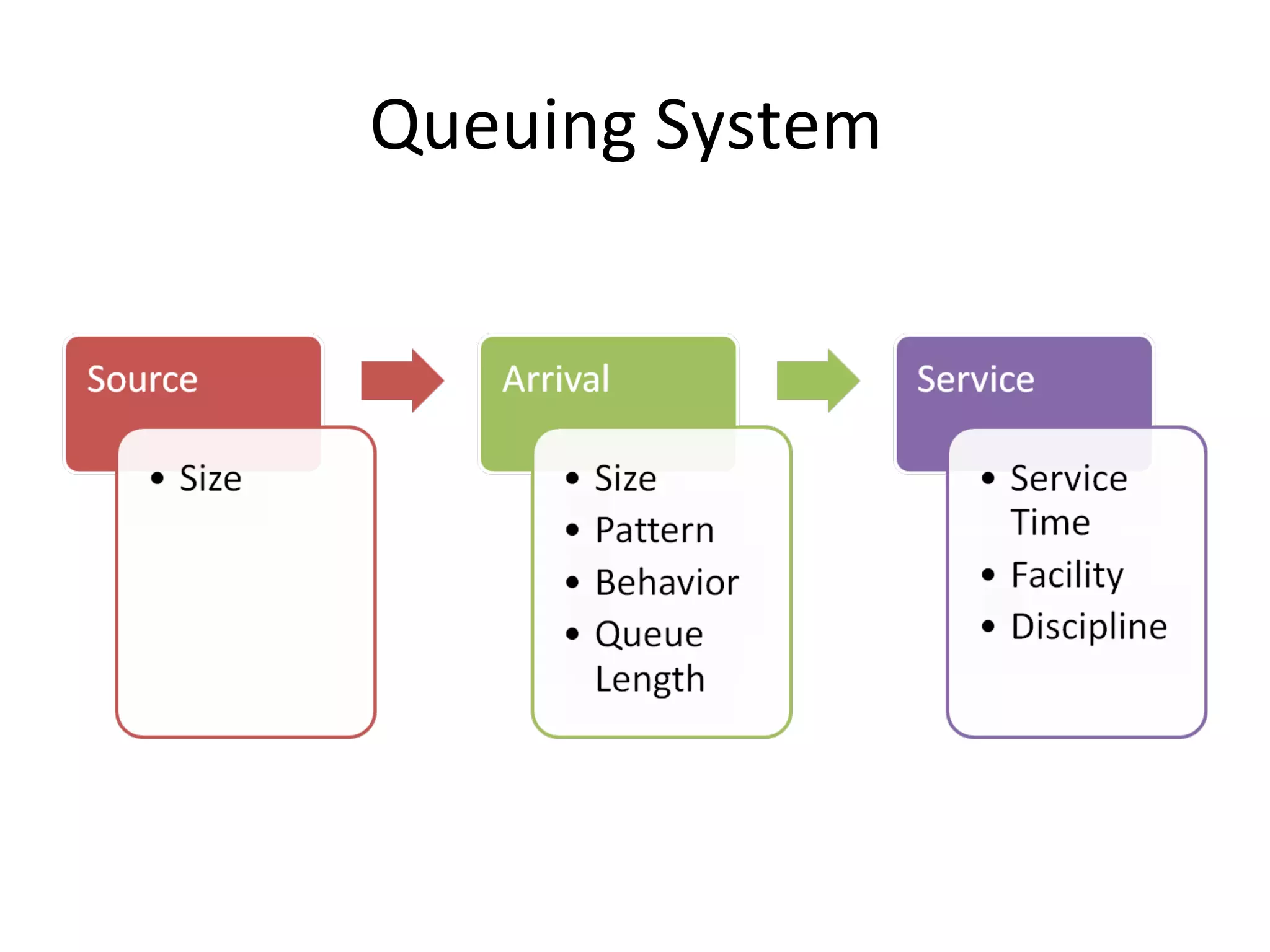
Queuing System
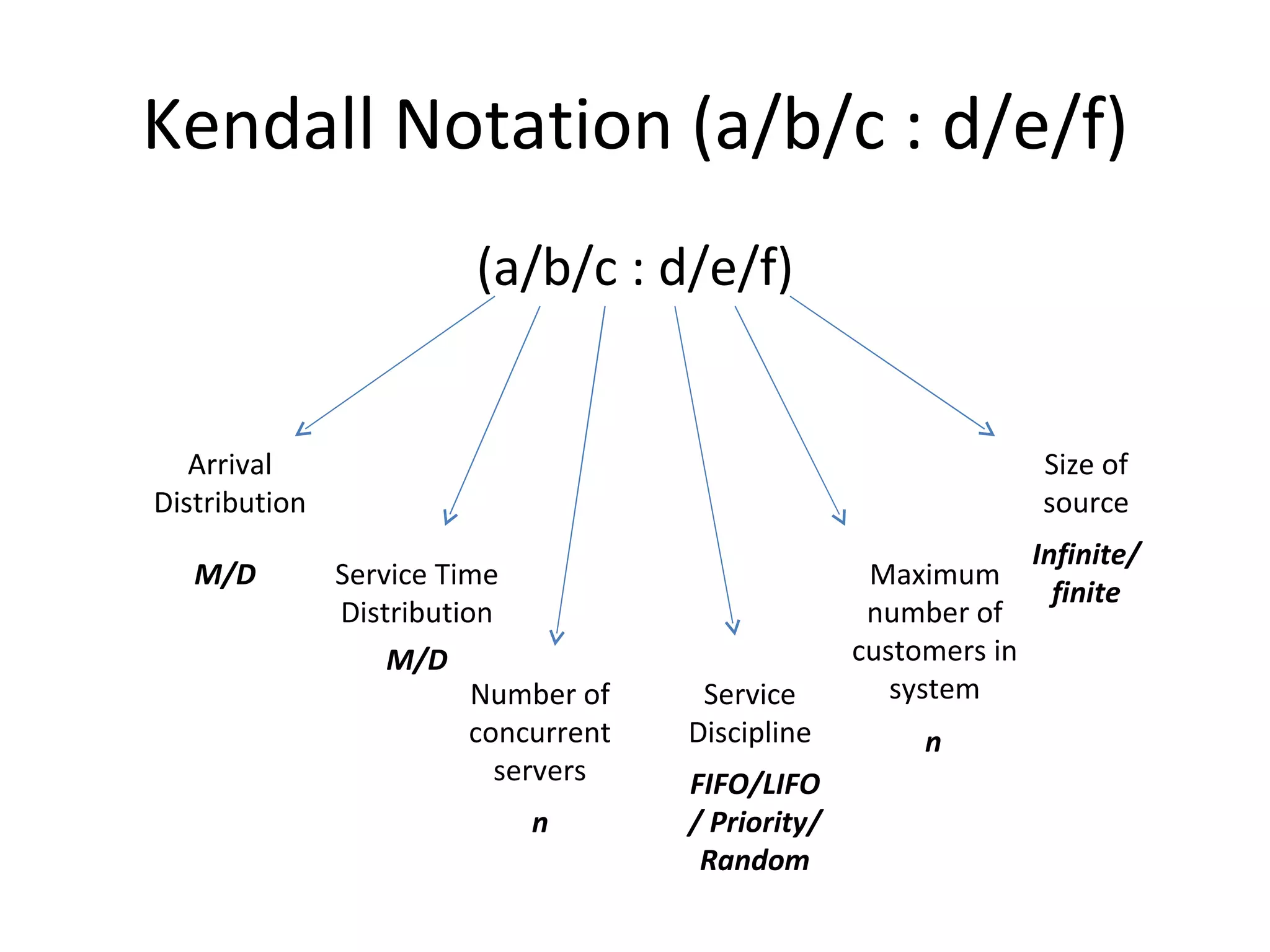
Kendall Notation (a/b/c : d/e/f)
                         (a/b/c : d/e/f)


   Arrival                                                          Size of
Distribution                                                        source
                                                                    Infinite/
   M/D         Service Time                           Maximum
                                                                      finite
               Distribution                           number of
                   M/D                               customers in
                          Number of     Service         system
                          concurrent   Discipline         n
                            servers    FIFO/LIFO
                             n         / Priority/
                                        Random
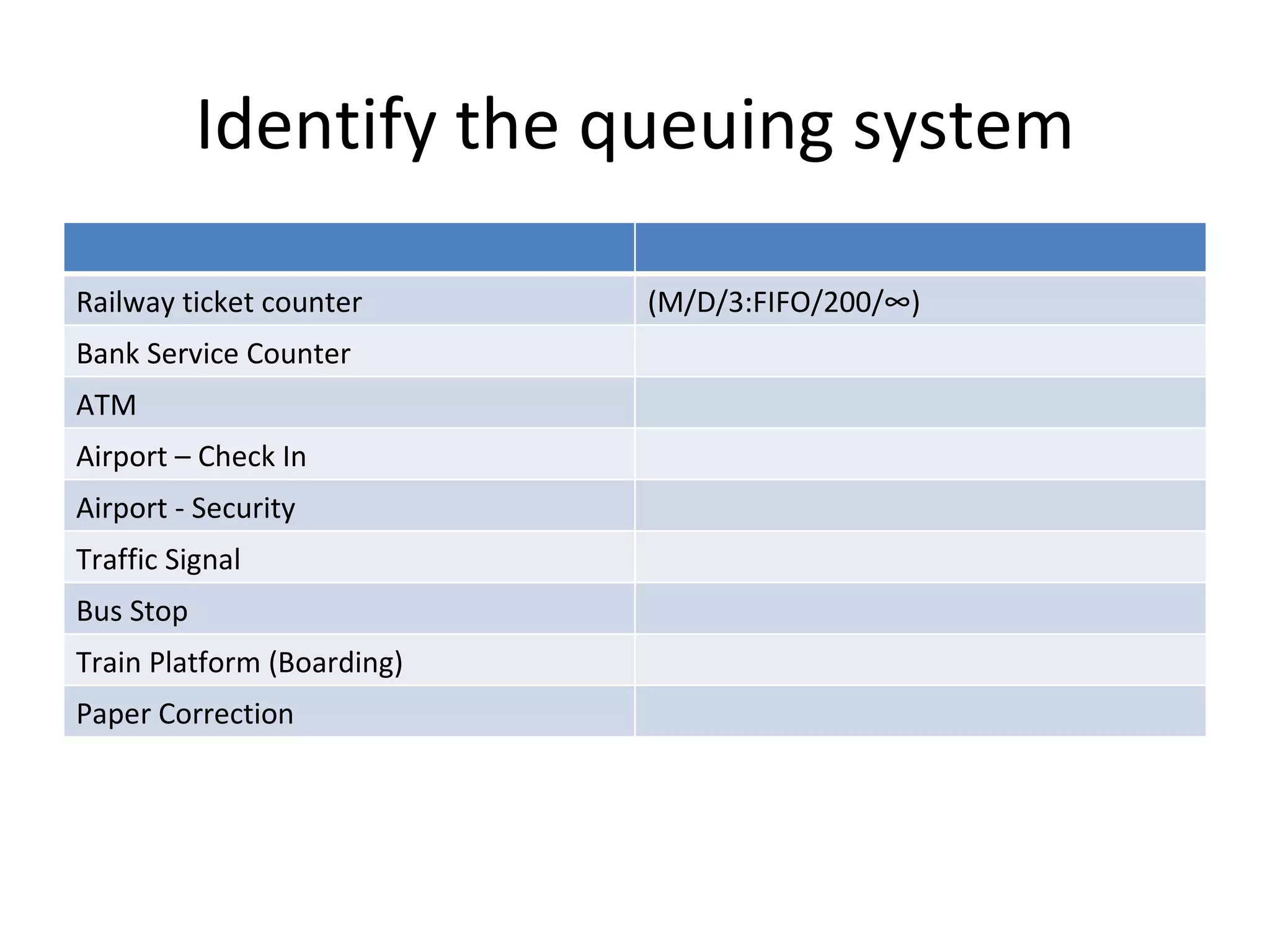
Identify the queuing system

Railway ticket counter      (M/D/3:FIFO/200/∞)
Bank Service Counter
ATM
Airport – Check In
Airport - Security
Traffic Signal
Bus Stop
Train Platform (Boarding)
Paper Correction
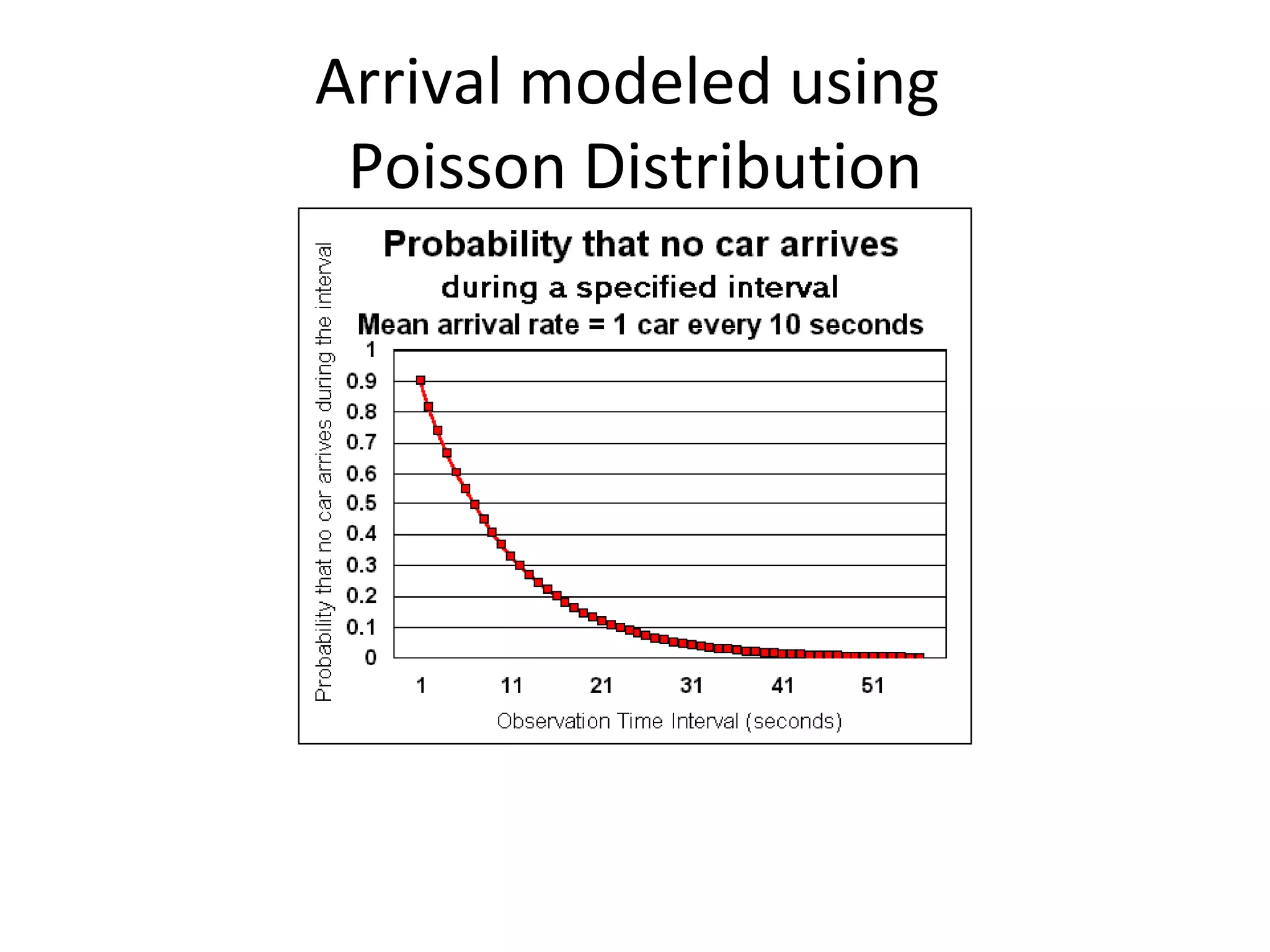
Arrival modeled using
 Poisson Distribution
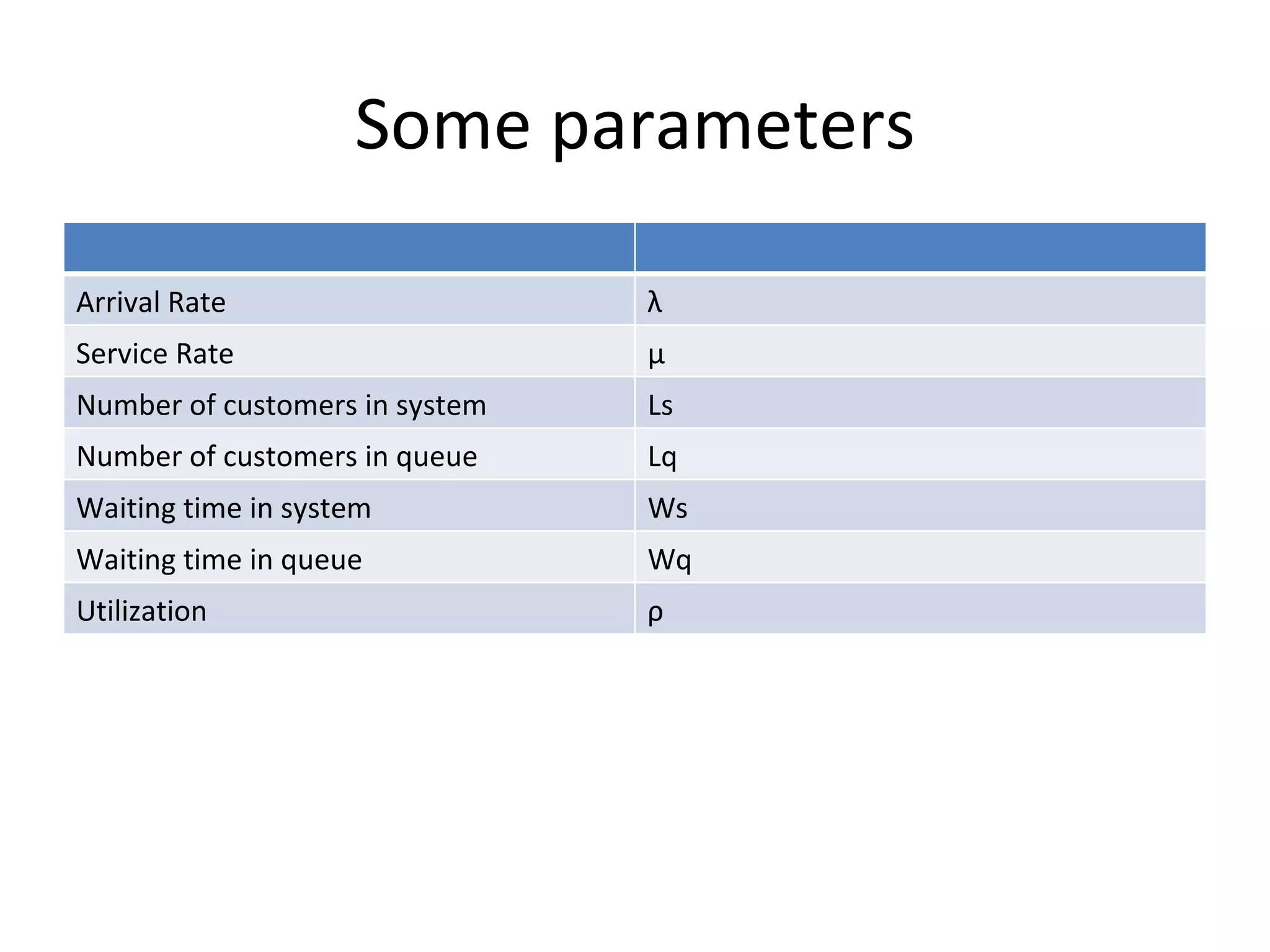
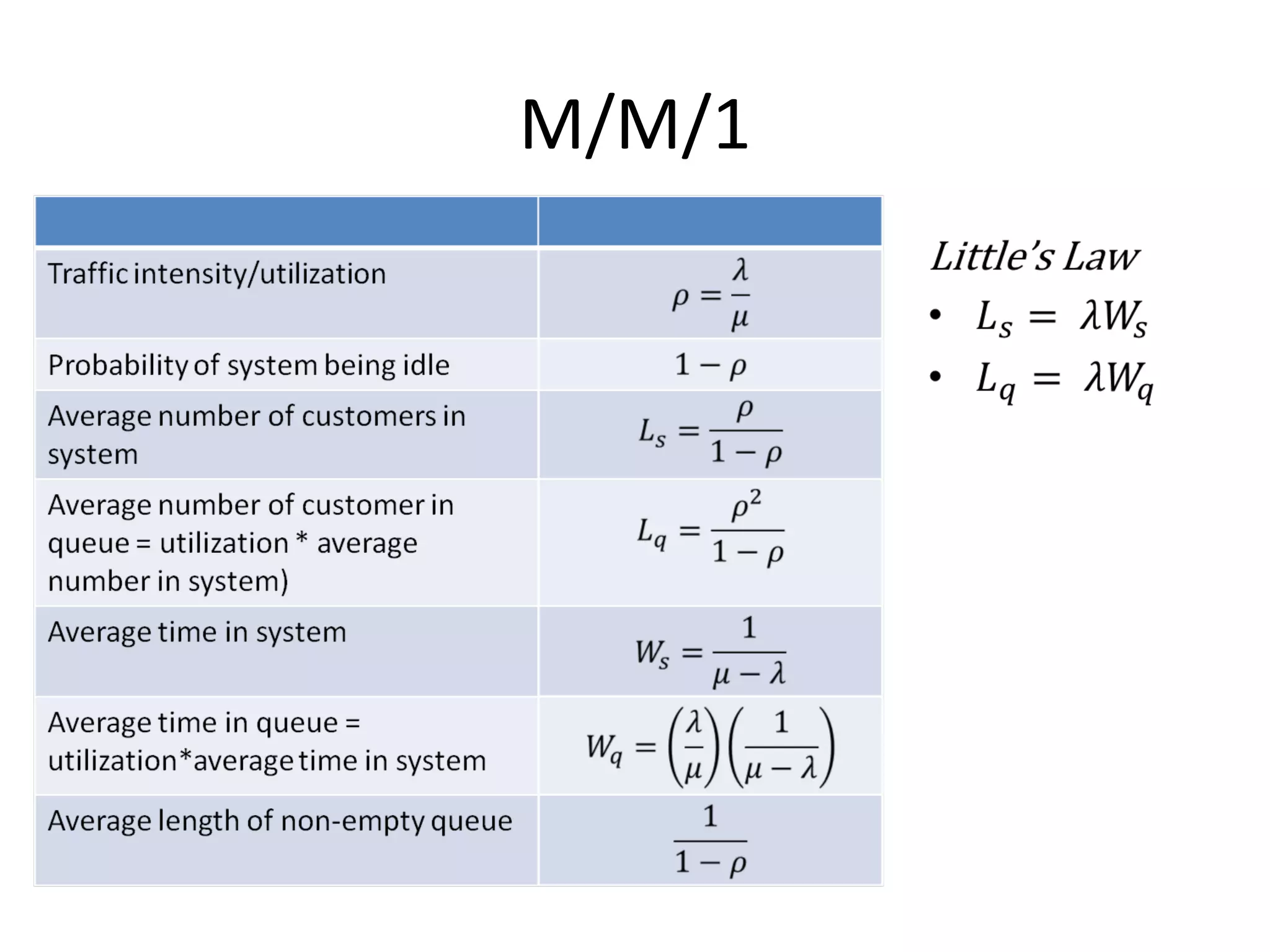
Some parameters

Arrival Rate                    λ
Service Rate                    μ
Number of customers in system   Ls
Number of customers in queue    Lq
Waiting time in system          Ws
Waiting time in queue           Wq
Utilization                     ρ
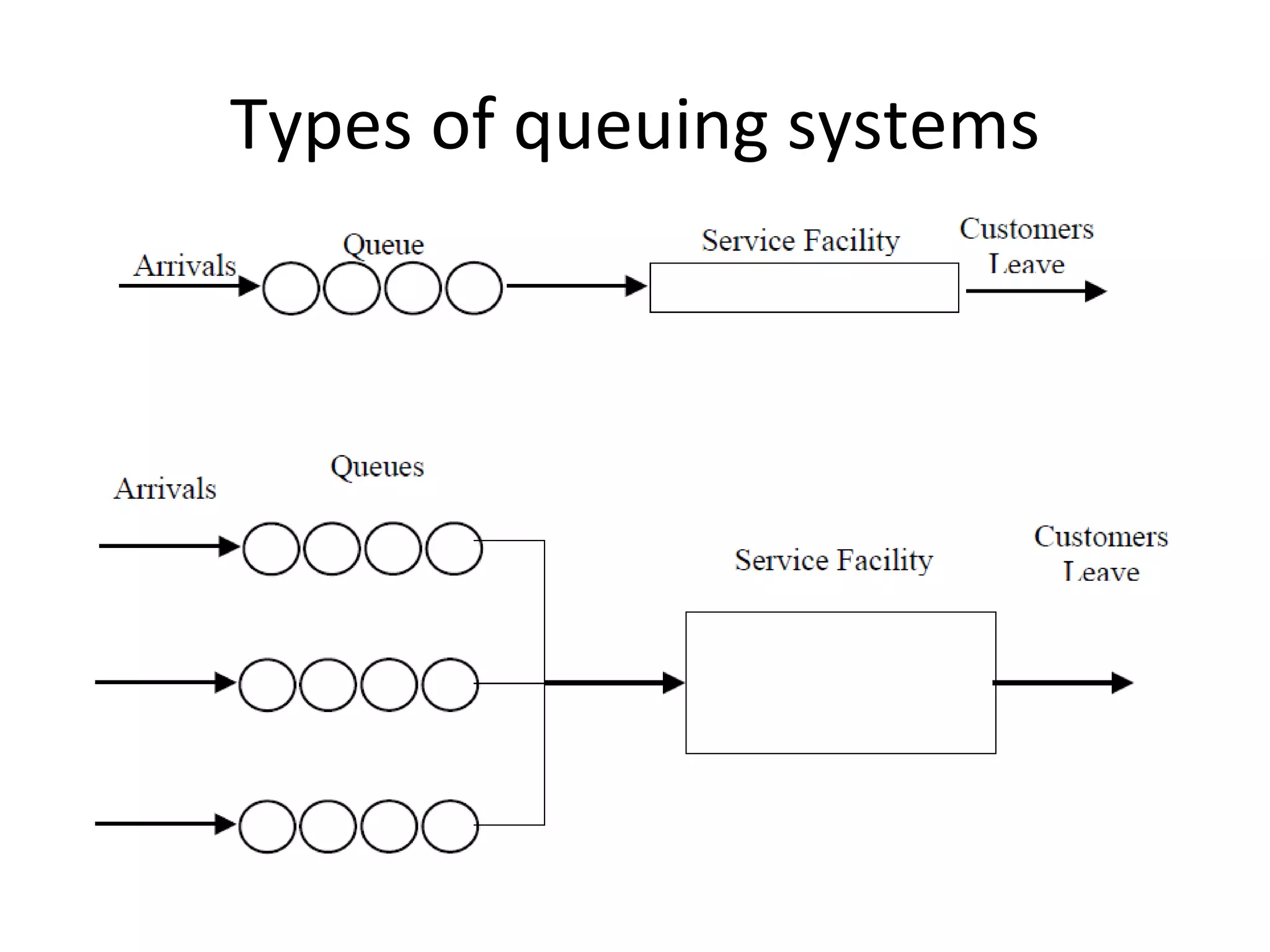
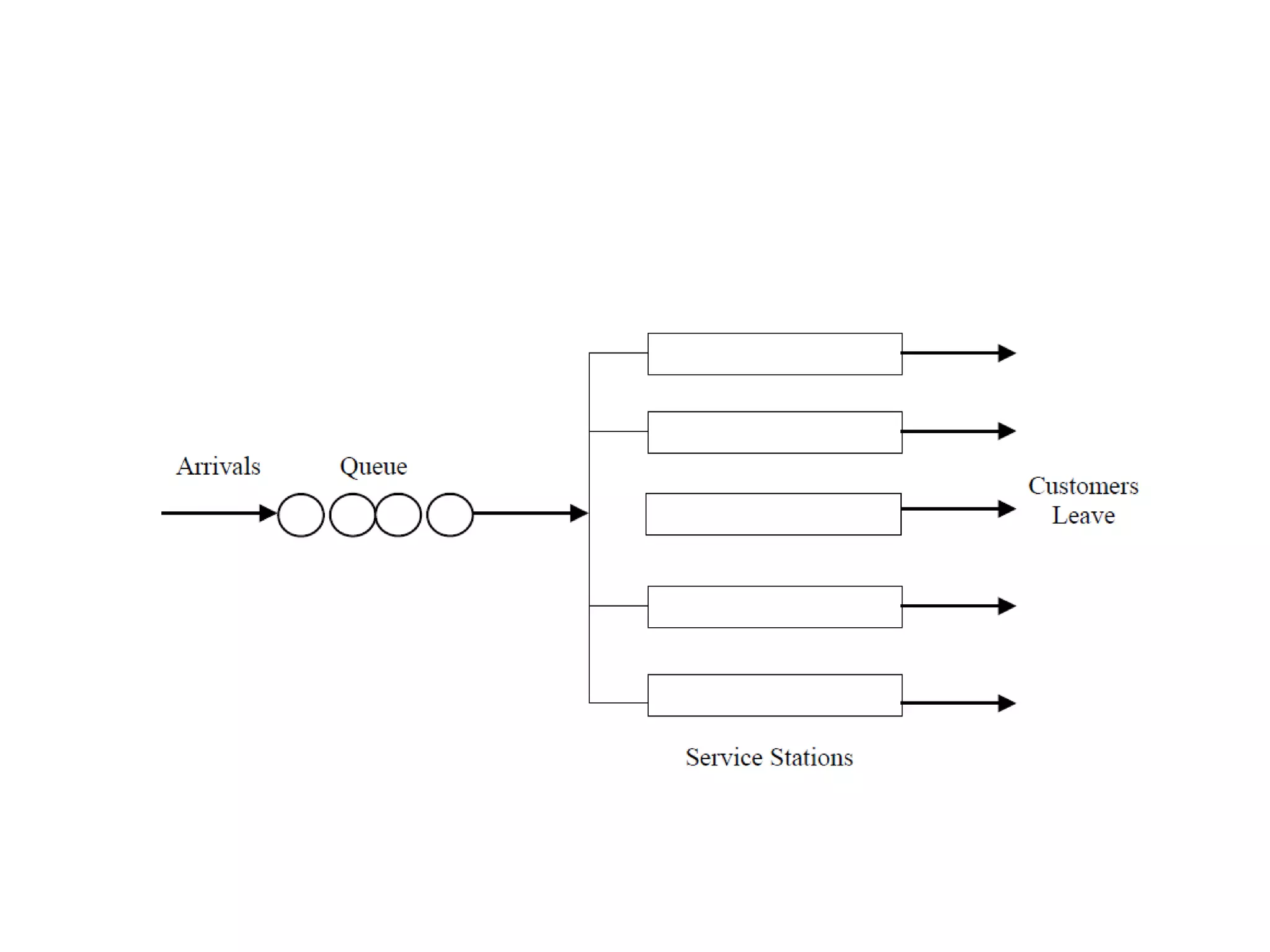
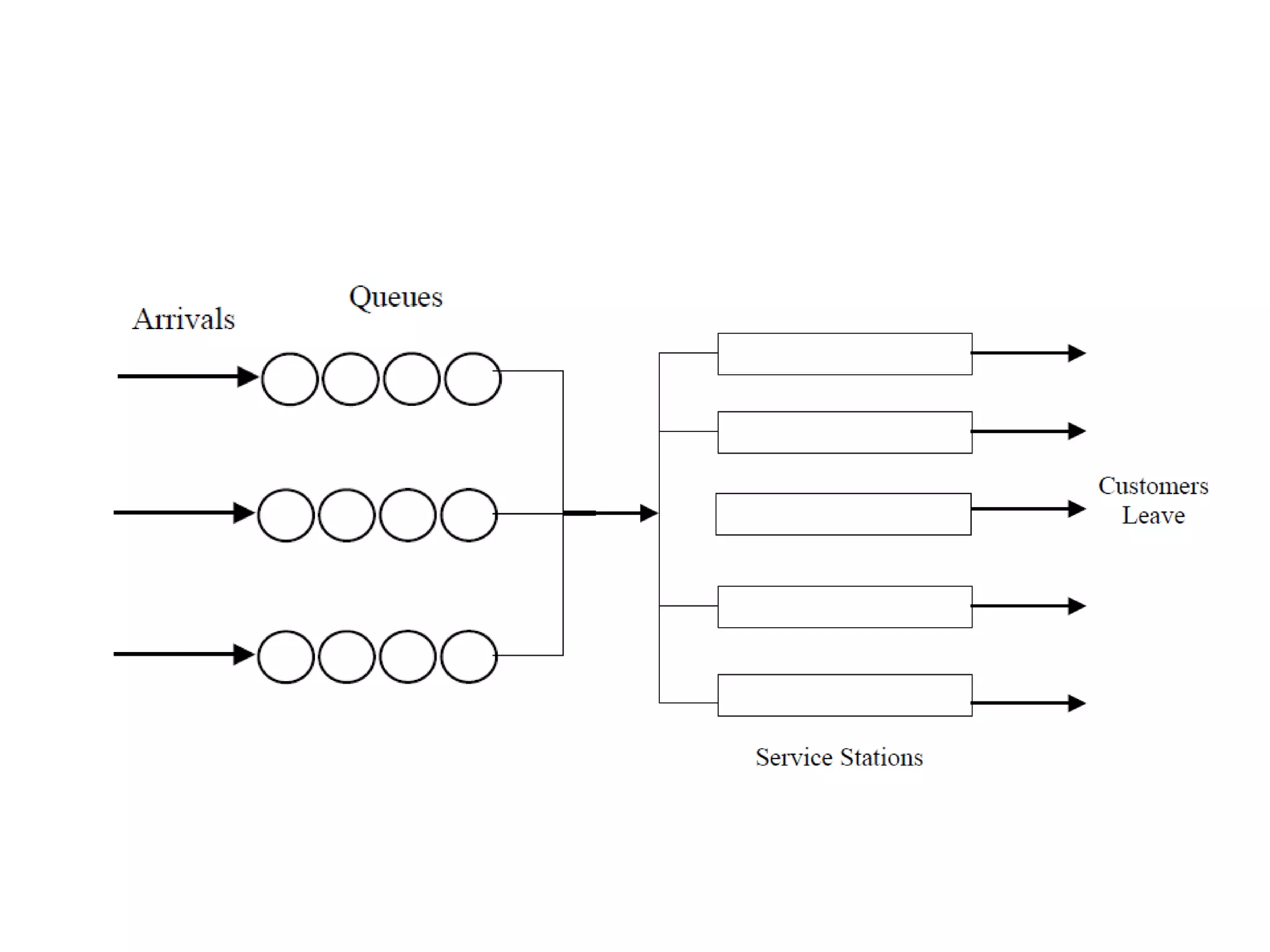
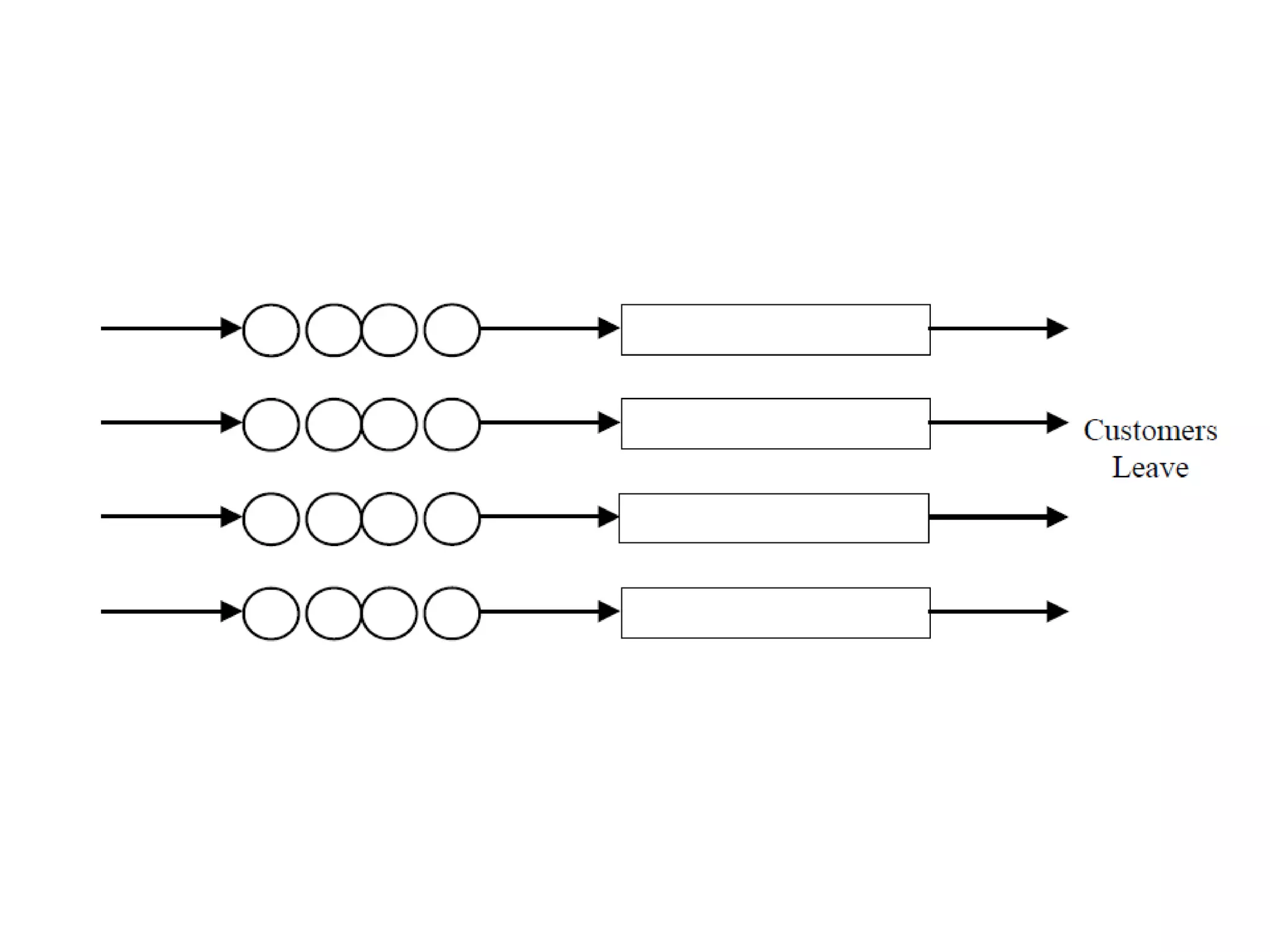
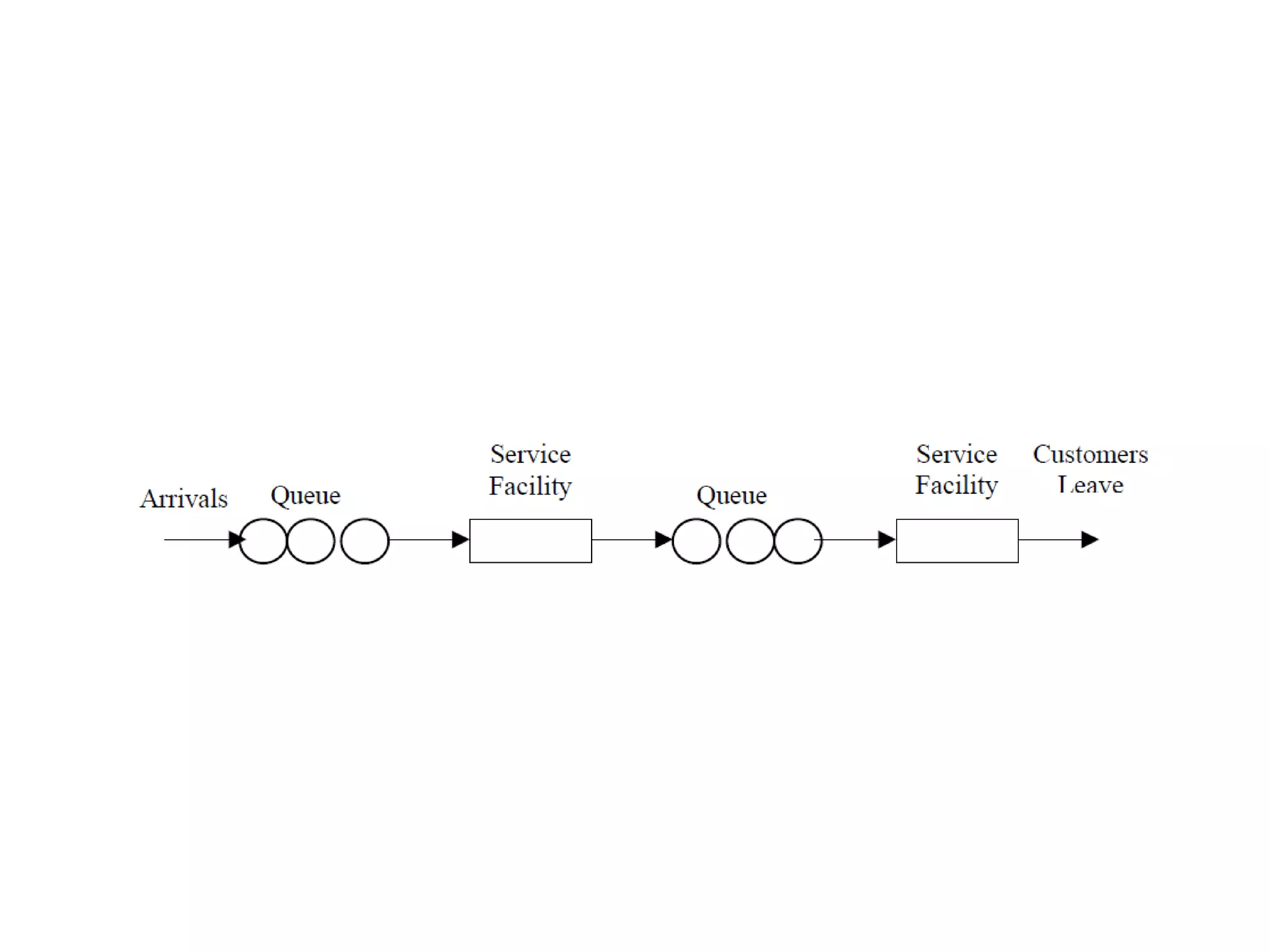
Types of queuing systems
M/M/1
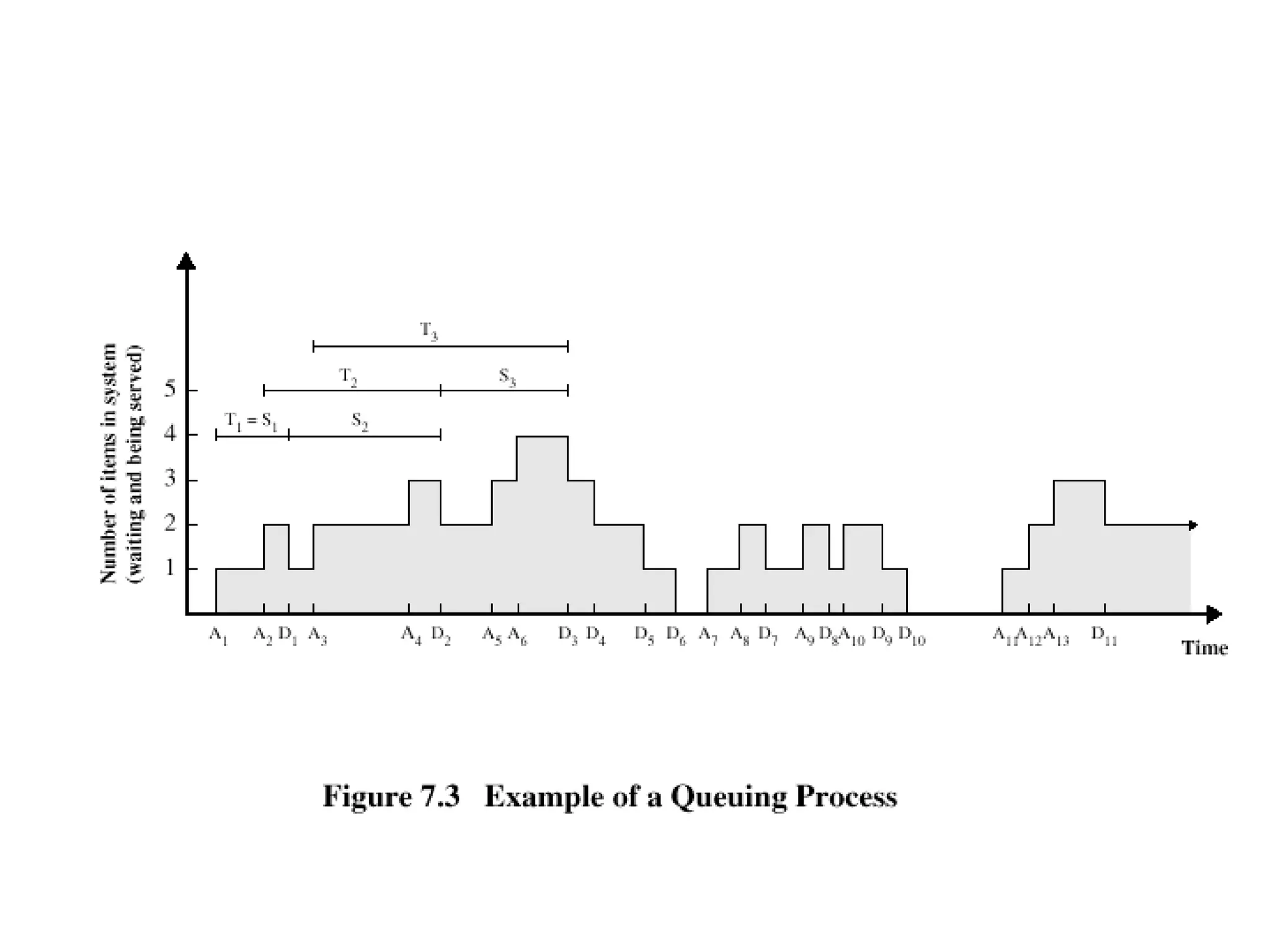
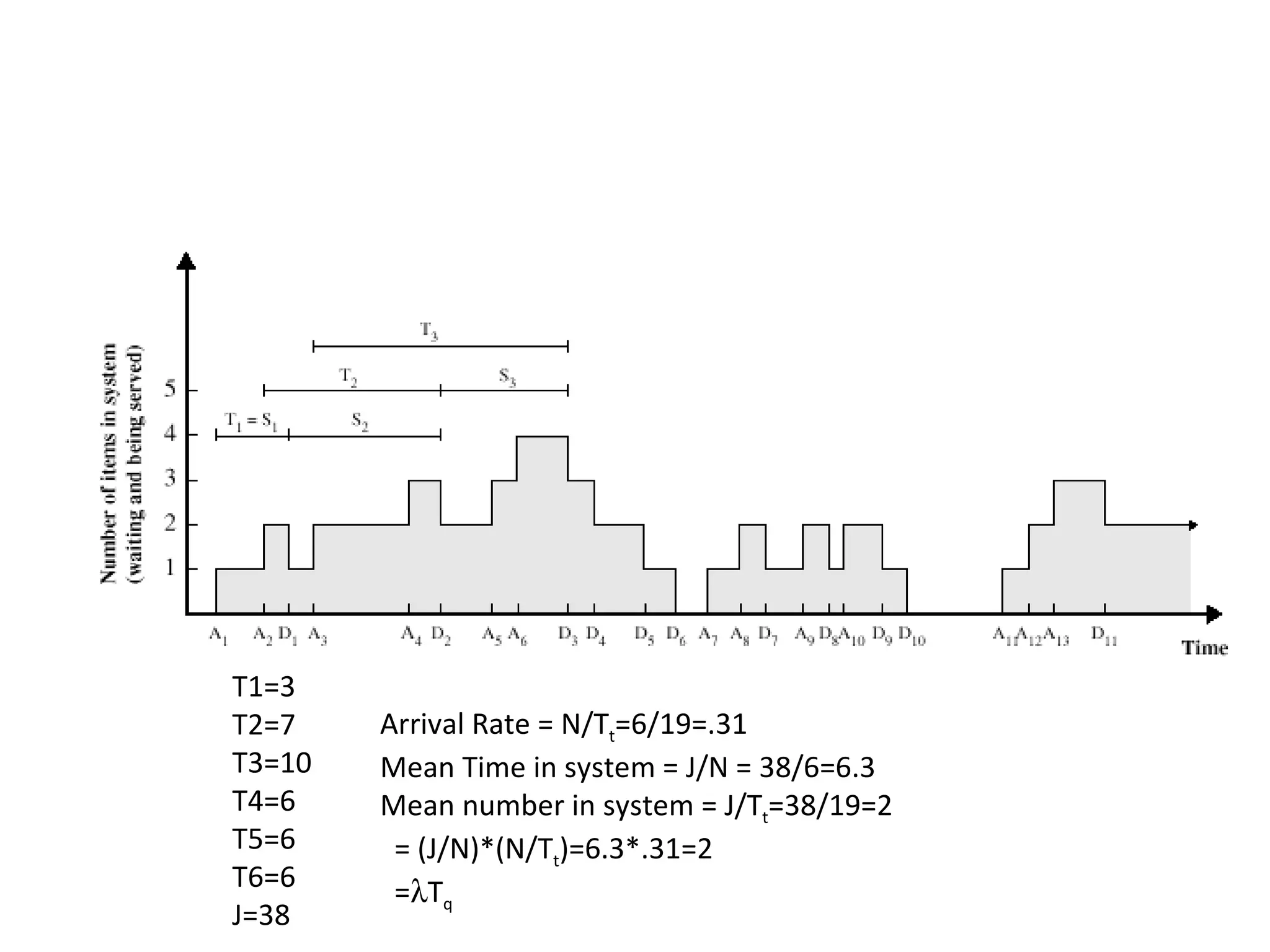
T1=3
T2=7    Arrival Rate = N/Tt=6/19=.31
T3=10   Mean Time in system = J/N = 38/6=6.3
T4=6    Mean number in system = J/Tt=38/19=2
T5=6     = (J/N)*(N/Tt)=6.3*.31=2
T6=6     =λTq
J=38

Queuing Theory

  • 1.
    Queuing Theory – Studyof Congestion Operations Research
  • 2.
    What is aqueue? • People waiting for service – Customers at a supermarket (IVR, railway counter) – Letters in a post office (Emails, SMS) – Cars at a traffic signal • In ordered fashion (who defines order?) – Bank provides token numbers – Customers themselves ensure FIFO at Railway ticket counters
  • 3.
    Where do wefind queues?
  • 4.
    A thought experiment •When does a queue form? • When will it not form? • When will you not join a queue? • When will you leave a queue? • What is the worst case scenario?
  • 5.
    What do youobserve near a queue? • Conflict • Congestion • Idle counters • Overworked counters • Smart people trying to circumvent the queue
  • 6.
    What do wewant to know? • How much time will it take? • How many counters should be there? • How to manage peak hour traffic?
  • 7.
    Origins • Queuing Theoryhad its beginning in the research work of a Danish engineer named A. K. Erlang. • In 1909 Erlang experimented with fluctuating demand in telephone traffic. • Eight years later he published a report addressing the delays in automatic dialing equipment. • At the end of World War II, Erlang’s early work was extended to more general problems and to business applications of waiting lines.
  • 8.
  • 9.
    Kendall Notation (a/b/c: d/e/f) (a/b/c : d/e/f) Arrival Size of Distribution source Infinite/ M/D Service Time Maximum finite Distribution number of M/D customers in Number of Service system concurrent Discipline n servers FIFO/LIFO n / Priority/ Random
  • 10.
    Identify the queuingsystem Railway ticket counter (M/D/3:FIFO/200/∞) Bank Service Counter ATM Airport – Check In Airport - Security Traffic Signal Bus Stop Train Platform (Boarding) Paper Correction
  • 12.
    Arrival modeled using Poisson Distribution
  • 13.
    Some parameters Arrival Rate λ Service Rate μ Number of customers in system Ls Number of customers in queue Lq Waiting time in system Ws Waiting time in queue Wq Utilization ρ
  • 14.
  • 19.
  • 20.
    T1=3 T2=7 Arrival Rate = N/Tt=6/19=.31 T3=10 Mean Time in system = J/N = 38/6=6.3 T4=6 Mean number in system = J/Tt=38/19=2 T5=6 = (J/N)*(N/Tt)=6.3*.31=2 T6=6 =λTq J=38