Chapter 5
Understanding Perceptions and Attributions

q   The Perceptual Process* (esp. Figure 3.1, p. 68)
q   Perceptual Selection*
q   Person Perception*
q   Perceptual Errors*
q   Attributions: Perceived Causes of Behavior*
q   Exercise: Truth or Consequences?


                                                       1
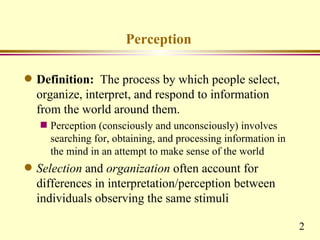
Perception

q   Definition: The process by which people select,
    organize, interpret, and respond to information
    from the world around them.
    s   Perception (consciously and unconsciously) involves
        searching for, obtaining, and processing information in
        the mind in an attempt to make sense of the world
q   Selection and organization often account for
    differences in interpretation/perception between
    individuals observing the same stimuli

                                                                  2
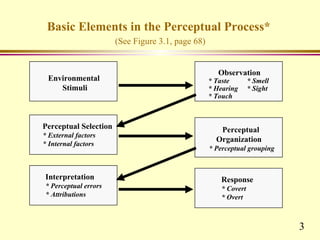
Basic Elements in the Perceptual Process*
                       (See Figure 3.1, page 68)


                                                      Observation
 Environmental                                     * Taste        * Smell
    Stimuli                                        * Hearing      * Sight
                                                   * Touch


Perceptual Selection                                  Perceptual
* External factors
                                                     Organization
* Internal factors
                                                   * Perceptual grouping


Interpretation                                         Response
* Perceptual errors                                    * Covert
* Attributions                                         * Overt


                                                                            3
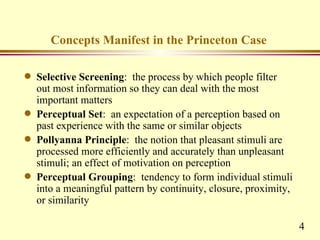
Concepts Manifest in the Princeton Case

q   Selective Screening: the process by which people filter
    out most information so they can deal with the most
    important matters
q   Perceptual Set: an expectation of a perception based on
    past experience with the same or similar objects
q   Pollyanna Principle: the notion that pleasant stimuli are
    processed more efficiently and accurately than unpleasant
    stimuli; an effect of motivation on perception
q   Perceptual Grouping: tendency to form individual stimuli
    into a meaningful pattern by continuity, closure, proximity,
    or similarity

                                                                   4
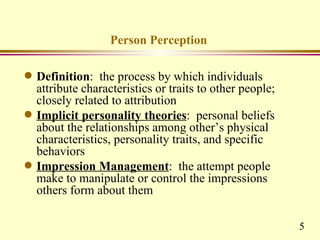
Person Perception

q   Definition: the process by which individuals
    attribute characteristics or traits to other people;
    closely related to attribution
q   Implicit personality theories: personal beliefs
    about the relationships among other’s physical
    characteristics, personality traits, and specific
    behaviors
q   Impression Management: the attempt people
    make to manipulate or control the impressions
    others form about them

                                                           5
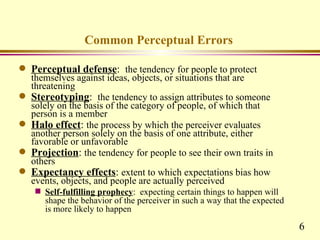
Common Perceptual Errors

q   Perceptual defense: the tendency for people to protect
    themselves against ideas, objects, or situations that are
    threatening
q   Stereotyping: the tendency to assign attributes to someone
    solely on the basis of the category of people, of which that
    person is a member
q   Halo effect: the process by which the perceiver evaluates
    another person solely on the basis of one attribute, either
    favorable or unfavorable
q   Projection: the tendency for people to see their own traits in
    others
q   Expectancy effects: extent to which expectations bias how
    events, objects, and people are actually perceived
     s   Self-fulfilling prophecy: expecting certain things to happen will
         shape the behavior of the perceiver in such a way that the expected
         is more likely to happen

                                                                               6
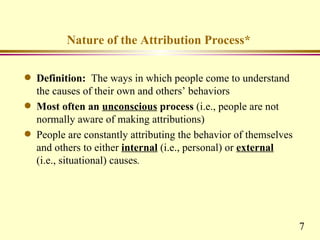
Nature of the Attribution Process*

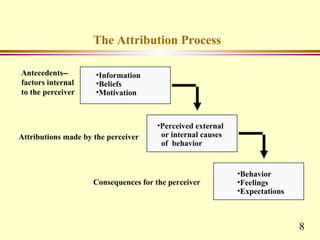
q   Definition: The ways in which people come to understand
    the causes of their own and others’ behaviors
q   Most often an unconscious process (i.e., people are not
    normally aware of making attributions)
q   People are constantly attributing the behavior of themselves
    and others to either internal (i.e., personal) or external
    (i.e., situational) causes.


                                                                   7
The Attribution Process

Antecedents--        •Information
factors internal     •Beliefs
to the perceiver     •Motivation


                                      •Perceived external
Attributions made by the perceiver     or internal causes
                                       of behavior


                                                            •Behavior
                     Consequences for the perceiver         •Feelings
                                                            •Expectations


                                                                            8
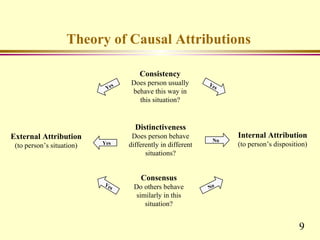
Theory of Causal Attributions

                                      Consistency
                              s   Does person usually        Ye
                            Ye                                 s
                                  behave this way in
                                    this situation?


                                    Distinctiveness
External Attribution               Does person behave              Internal Attribution
                                                              No
 (to person’s situation)   Yes    differently in different         (to person’s disposition)
                                        situations?


                                      Consensus
                           Ye
                             s     Do others behave          No
                                    similarly in this
                                       situation?


                                                                                         9
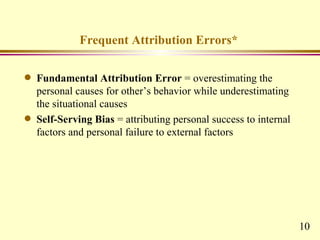
Frequent Attribution Errors*

q   Fundamental Attribution Error = overestimating the
    personal causes for other’s behavior while underestimating
    the situational causes
q   Self-Serving Bias = attributing personal success to internal
    factors and personal failure to external factors


                                                                   10

Organizational Behavior Chapter 5

  • 1.
    Chapter 5 Understanding Perceptionsand Attributions q The Perceptual Process* (esp. Figure 3.1, p. 68) q Perceptual Selection* q Person Perception* q Perceptual Errors* q Attributions: Perceived Causes of Behavior* q Exercise: Truth or Consequences? 1
  • 2.
    Perception q Definition: The process by which people select, organize, interpret, and respond to information from the world around them. s Perception (consciously and unconsciously) involves searching for, obtaining, and processing information in the mind in an attempt to make sense of the world q Selection and organization often account for differences in interpretation/perception between individuals observing the same stimuli 2
  • 3.
    Basic Elements inthe Perceptual Process* (See Figure 3.1, page 68) Observation Environmental * Taste * Smell Stimuli * Hearing * Sight * Touch Perceptual Selection Perceptual * External factors Organization * Internal factors * Perceptual grouping Interpretation Response * Perceptual errors * Covert * Attributions * Overt 3
  • 4.
    Concepts Manifest inthe Princeton Case q Selective Screening: the process by which people filter out most information so they can deal with the most important matters q Perceptual Set: an expectation of a perception based on past experience with the same or similar objects q Pollyanna Principle: the notion that pleasant stimuli are processed more efficiently and accurately than unpleasant stimuli; an effect of motivation on perception q Perceptual Grouping: tendency to form individual stimuli into a meaningful pattern by continuity, closure, proximity, or similarity 4
  • 5.
    Person Perception q Definition: the process by which individuals attribute characteristics or traits to other people; closely related to attribution q Implicit personality theories: personal beliefs about the relationships among other’s physical characteristics, personality traits, and specific behaviors q Impression Management: the attempt people make to manipulate or control the impressions others form about them 5
  • 6.
    Common Perceptual Errors q Perceptual defense: the tendency for people to protect themselves against ideas, objects, or situations that are threatening q Stereotyping: the tendency to assign attributes to someone solely on the basis of the category of people, of which that person is a member q Halo effect: the process by which the perceiver evaluates another person solely on the basis of one attribute, either favorable or unfavorable q Projection: the tendency for people to see their own traits in others q Expectancy effects: extent to which expectations bias how events, objects, and people are actually perceived s Self-fulfilling prophecy: expecting certain things to happen will shape the behavior of the perceiver in such a way that the expected is more likely to happen 6
  • 7.
    Nature of theAttribution Process* q Definition: The ways in which people come to understand the causes of their own and others’ behaviors q Most often an unconscious process (i.e., people are not normally aware of making attributions) q People are constantly attributing the behavior of themselves and others to either internal (i.e., personal) or external (i.e., situational) causes. 7
  • 8.
    The Attribution Process Antecedents-- •Information factors internal •Beliefs to the perceiver •Motivation •Perceived external Attributions made by the perceiver or internal causes of behavior •Behavior Consequences for the perceiver •Feelings •Expectations 8
  • 9.
    Theory of CausalAttributions Consistency s Does person usually Ye Ye s behave this way in this situation? Distinctiveness External Attribution Does person behave Internal Attribution No (to person’s situation) Yes differently in different (to person’s disposition) situations? Consensus Ye s Do others behave No similarly in this situation? 9
  • 10.
    Frequent Attribution Errors* q Fundamental Attribution Error = overestimating the personal causes for other’s behavior while underestimating the situational causes q Self-Serving Bias = attributing personal success to internal factors and personal failure to external factors 10

Editor's Notes