State Routes 315 and 750:
A Roundabout Approach to a Solution


               Ian Ausprey. Ariel Godwin. Amanda King.
               Stephen Mayer. Anna McCreery.
Advantages to Roundabouts
  •Improved Vehicle Safety
     • Both fewer crashes, and fewer injury crashes
  •Reduced wait time
     • Roundabouts have less traffic delay that
       comparable light-controlled intersections
  •Environmental impact
     • Reduced air pollution, oil and car debris runoff
Disadvantages to Roundabouts

 • Bicycle & Pedestrian Safety Problems
    • Increased accidents involving bicycles &
    pedestrians
 • Capital Cost
    • New roundabouts cost around $500,000 for
    construction
    • Additional costs for land acquisition, road curves
    to slow entering traffic, illumination, and signage.
Site Analysis: Minimum Site Requirements for
    Constructing a Roundabout

  •   Central island > 100 ft diameter

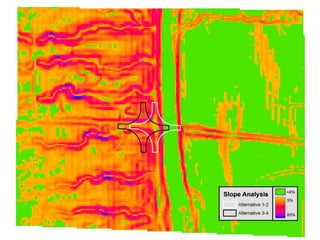
  •   < 4% grade across intersection

  •   < 4% grade for all approaches

  •   Clear line of site 50 ft. from approach intersections

  •   Approach flaring 130 ft. from intersection
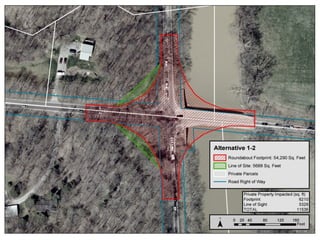
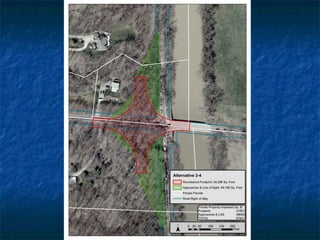
Site Analysis: Private Property Take

   •   Alternatives 1-2: 11,500 sq. feet

   •   Alternatives 3-4: 57,820 sq. feet
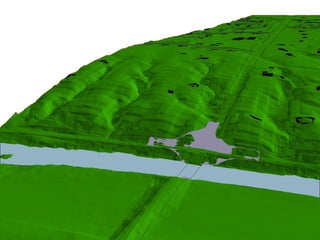
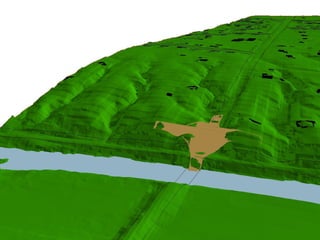
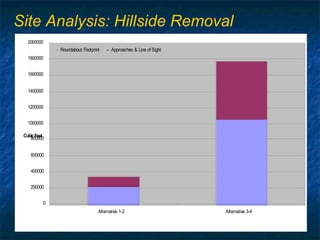
Site Analysis: Hillside Removal
   2000000
              Roundabout Footprint      Approaches & Line of Sight
   1800000


   1600000


   1400000


   1200000


   1000000

 Cubic Feet
    800000


    600000


    400000


    200000


          0
                                 Alternative 1-2                     Alternative 3-4
Stakeholder Analysis: City of Powell
•   Supportive of any solutions ODOT is willing to
    provide since the road is slipping into river
•   Will not be pleased if congestion is lessened
    because of its impact on downtown Powell.
Stakeholder Analysis: Delaware County
•   Prefer a method that best facilitates traffic
    from Columbus to Delaware County and enables
    future growth in the area.
•   Economic activity is important to the area.
Stakeholder Analysis: Scenic Rivers
•   Concerned construction’s potential impact on:
    •   Wildlife
    •   River health
    •   Aesthetics


•   Preference would be absolutely no impacts on
    the Olentangy River
Stakeholder Analysis:
Friends of the Lower Olentangy River Watershed

 •   Distressed that construction would harm the
     “good part” of the river
     •   The Olentangy is “Exceptional Warm Water Habitat”
         at the intersection


 •   Preferred Alternatives 3-4 if necessary
Stakeholder Analysis: Homeowners’ Association
 •   According to the homeowners’ association,
     property owners in the area are concerned
     about:
     •   Property rights
     •   Traffic issues
     •   The green aesthetic of the area
 •   Regrading for the roundabout would cut into
     residential lots and require driveways to be
     rebuilt
Environmental Consequences
 •   Homeowners are concerned about the greenery
     and the extent to which roundabout construction
     would “scar the land”
 •   Homeowners are divided:
     •   Some would like to see congestion eased
     •   Some like the congestion because it keeps traffic slow
     •   All value the forested character of the area and would
         not support a solution that would change that
         character
Stakeholder Analysis:
Regional Planning: MORPC
•   200 roadway projects under review in the region
•   MORPC Engineers considered a roundabout too
    expensive
•   Excessive development has been a problem in
    the area
•   Conflict between ODOT and Powell over
    development too close to the river
Stakeholder Analysis: ODOT
•   Considering 5 alternatives, none of which is a
    roundabout
•   Contact person for project was unwilling to
    comment specifically regarding a roundabout
Environmental Consequences
•   Removal of riparian vegetation
    •   Removal of organic material
    •   Increased erosion potential around river
    •   Implications for species survival/dominance
•   Disruption of mussel beds and other species
•   Ground water flow impacts
•   River water quality
    •   Siltation of river
    •   Acidification of river water during construction
•   Increased imperviousness
    •   Stormwater runoff implications
Environmental Consequences
•   Very high quality section of the Olentangy River
    at this site
•   Meets Exceptional Warm Water Habitat (EWWH)
    criteria
    •   “Unusual and exceptional” assemblages of organisms
    •   High diversity of species, including endangered
        mussels
•   Pristine water quality
Consequence Mitigation Techniques
•   Potential environmental benefit of increased shade from
    bridge to offset less tree cover
•   Relocation of mussels and other valuable species
•   Designate additional riparian conservation sites within
    watershed
•   Use center of roundabout as rain garden to mitigate
    increase in impervious surface
•   Exceptional quality of river and surrounding habitat at
    this site makes the potential for comparable mitigation
    unlikely
Conclusions
 •   Roundabouts generally meet many 315/750
     intersection needs
     •   Traffic management, increased safety, improved air
         quality
 •   However, intersection lacks physical suitability
     for roundabout needs
     •   Lack of space
     •   Grade
     •   Proximity of river
 •   Prohibitive economic and environmental costs
Conclusions
 •   Lessons learned for transportation planning
     •   Problems with building close to river and other
         environmentally valuable sites
     •   Importance of multi-modal transportation options
     •   Connection between land use, growth, and
         transportation
Conclusions
 •   Future Recommendations
     •   Limit need for this and other vulnerable roads
     •   Factor in projected commercial and residential
         growth/decline in transportation planning projects
     •   Factor in energy, time, and other commuting costs
         for greater Delaware County area
     •   Assemble stakeholders early in project planning
         process to achieve community buy-in

Roundabout feasibility analysis

  • 1.
    State Routes 315and 750: A Roundabout Approach to a Solution Ian Ausprey. Ariel Godwin. Amanda King. Stephen Mayer. Anna McCreery.
  • 3.
    Advantages to Roundabouts •Improved Vehicle Safety • Both fewer crashes, and fewer injury crashes •Reduced wait time • Roundabouts have less traffic delay that comparable light-controlled intersections •Environmental impact • Reduced air pollution, oil and car debris runoff
  • 4.
    Disadvantages to Roundabouts • Bicycle & Pedestrian Safety Problems • Increased accidents involving bicycles & pedestrians • Capital Cost • New roundabouts cost around $500,000 for construction • Additional costs for land acquisition, road curves to slow entering traffic, illumination, and signage.
  • 5.
    Site Analysis: MinimumSite Requirements for Constructing a Roundabout • Central island > 100 ft diameter • < 4% grade across intersection • < 4% grade for all approaches • Clear line of site 50 ft. from approach intersections • Approach flaring 130 ft. from intersection
  • 11.
    Site Analysis: PrivateProperty Take • Alternatives 1-2: 11,500 sq. feet • Alternatives 3-4: 57,820 sq. feet
  • 12.
    Site Analysis: HillsideRemoval 2000000 Roundabout Footprint Approaches & Line of Sight 1800000 1600000 1400000 1200000 1000000 Cubic Feet 800000 600000 400000 200000 0 Alternative 1-2 Alternative 3-4
  • 13.
    Stakeholder Analysis: Cityof Powell • Supportive of any solutions ODOT is willing to provide since the road is slipping into river • Will not be pleased if congestion is lessened because of its impact on downtown Powell.
  • 14.
    Stakeholder Analysis: DelawareCounty • Prefer a method that best facilitates traffic from Columbus to Delaware County and enables future growth in the area. • Economic activity is important to the area.
  • 15.
    Stakeholder Analysis: ScenicRivers • Concerned construction’s potential impact on: • Wildlife • River health • Aesthetics • Preference would be absolutely no impacts on the Olentangy River
  • 16.
    Stakeholder Analysis: Friends ofthe Lower Olentangy River Watershed • Distressed that construction would harm the “good part” of the river • The Olentangy is “Exceptional Warm Water Habitat” at the intersection • Preferred Alternatives 3-4 if necessary
  • 17.
    Stakeholder Analysis: Homeowners’Association • According to the homeowners’ association, property owners in the area are concerned about: • Property rights • Traffic issues • The green aesthetic of the area • Regrading for the roundabout would cut into residential lots and require driveways to be rebuilt
  • 18.
    Environmental Consequences • Homeowners are concerned about the greenery and the extent to which roundabout construction would “scar the land” • Homeowners are divided: • Some would like to see congestion eased • Some like the congestion because it keeps traffic slow • All value the forested character of the area and would not support a solution that would change that character
  • 19.
    Stakeholder Analysis: Regional Planning:MORPC • 200 roadway projects under review in the region • MORPC Engineers considered a roundabout too expensive • Excessive development has been a problem in the area • Conflict between ODOT and Powell over development too close to the river
  • 20.
    Stakeholder Analysis: ODOT • Considering 5 alternatives, none of which is a roundabout • Contact person for project was unwilling to comment specifically regarding a roundabout
  • 21.
    Environmental Consequences • Removal of riparian vegetation • Removal of organic material • Increased erosion potential around river • Implications for species survival/dominance • Disruption of mussel beds and other species • Ground water flow impacts • River water quality • Siltation of river • Acidification of river water during construction • Increased imperviousness • Stormwater runoff implications
  • 22.
    Environmental Consequences • Very high quality section of the Olentangy River at this site • Meets Exceptional Warm Water Habitat (EWWH) criteria • “Unusual and exceptional” assemblages of organisms • High diversity of species, including endangered mussels • Pristine water quality
  • 23.
    Consequence Mitigation Techniques • Potential environmental benefit of increased shade from bridge to offset less tree cover • Relocation of mussels and other valuable species • Designate additional riparian conservation sites within watershed • Use center of roundabout as rain garden to mitigate increase in impervious surface • Exceptional quality of river and surrounding habitat at this site makes the potential for comparable mitigation unlikely
  • 24.
    Conclusions • Roundabouts generally meet many 315/750 intersection needs • Traffic management, increased safety, improved air quality • However, intersection lacks physical suitability for roundabout needs • Lack of space • Grade • Proximity of river • Prohibitive economic and environmental costs
  • 25.
    Conclusions • Lessons learned for transportation planning • Problems with building close to river and other environmentally valuable sites • Importance of multi-modal transportation options • Connection between land use, growth, and transportation
  • 26.
    Conclusions • Future Recommendations • Limit need for this and other vulnerable roads • Factor in projected commercial and residential growth/decline in transportation planning projects • Factor in energy, time, and other commuting costs for greater Delaware County area • Assemble stakeholders early in project planning process to achieve community buy-in