DEPARTMENT OF CARDIOLOGY
CURRENT MANAGEMENT
ISSUES OF CARDIOGENIC SHOCK
Gopal C Ghosh
UNIT-1
DEFINITION
• Cardiogenic shock is a state of end-organ
hypoperfusion due to cardiac failure
• Pulmonary artery (PA) catheterization;
Doppler echocardiography used to confirm
elevation of LV filling pressures
Circulation. 2008;117:686-697
• Persistent hypotension (systolic blood pressure <80 to 90 mm
Hg or mean arterial pressure 30 mm Hg lower than baseline)
• Severe reduction in cardiac index (<1.8 L / min/m2
without support or <2.0 to 2.2 L/ min/m 2 with support)
• Adequate or elevated filling pressure (eg, left
ventricular [LV] end-diastolic pressure >18 mm Hg or right ventricular [RV] end-
diastolic pressure >10 to 15 mm Hg)
• Clinically by cool extremities, decreased urine output, and/or alteration in
mental status.
Circulation. 2008;117:686-697
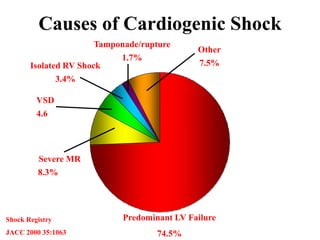
Causes of Cardiogenic Shock
Predominant LV Failure
74.5%
Acute Severe MR
8.3%
VSD
4.6%
Isolated RV Shock
3.4%
Tamponade/rupture
1.7%
Other
7.5%
Shock Registry
JACC 2000 35:1063
OTHER CAUSES
• Acute myopericarditis
• Tako-tsubo cardiomyopathy
• Acute valvular regurgitation (trauma, degenerative
disease)
• Aortic dissection
• Acute stress in the setting of aortic or mitral stenosis
• Massive pulmonary embolism
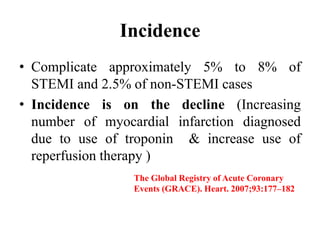
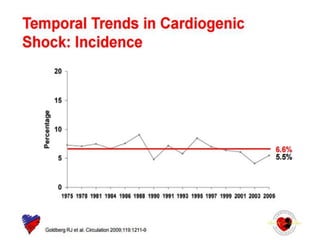
Incidence
• Complicate approximately 5% to 8% of
STEMI and 2.5% of non-STEMI cases
• Incidence is on the decline (Increasing
number of myocardial infarction diagnosed
due to use of troponin & increase use of
reperfusion therapy )
The Global Registry of Acute Coronary
Events (GRACE). Heart. 2007;93:177–182
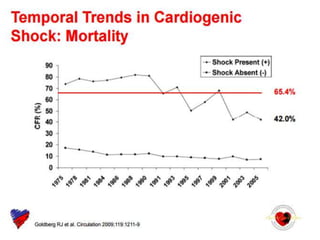
• Historic mortality rate for CS complicating an acute
myocardial infarction (MI) was 80 to 90 percent
(1975 to 1988)
N Engl J Med 1991; 325:1117
• Shortterm mortality rates between 42-48 %
Circulation 2009; 119:1211
• Swiss registry (1997-2006): showing similar trends
Ann Intern Med 2008; 149:618
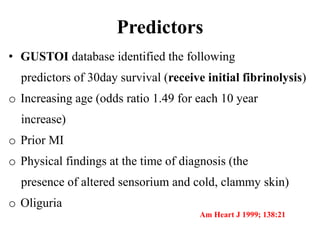
Predictors
• GUSTOI database identified the following
predictors of 30day survival (receive initial fibrinolysis)
o Increasing age (odds ratio 1.49 for each 10 year
increase)
o Prior MI
o Physical findings at the time of diagnosis (the
presence of altered sensorium and cold, clammy skin)
o Oliguria
Am Heart J 1999; 138:21
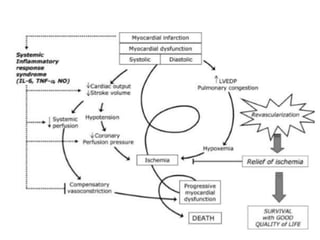
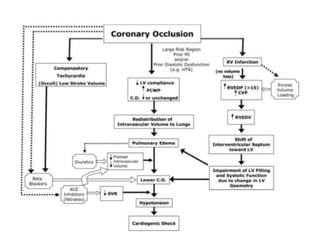
PATHOPHYSIOLOGY
IATROGENIC FACTORS
WORSENS CARDIOGENIC
SHOCK
Treatment
General measures
• Antithrombotic therapy with aspirin and
heparin
• Clopidogrel may be deferred until after
emergency angiography
Hemodynamic assessment
• Pulmonary artery catheterisation
• Non-invasive Doppler measurement:
Short mitral deceleration time (<140 ms) is
highly predictive of pulmonary capillary
wedge pressure >20 mm Hg in CS
Am Heart J. 2006;151:890 e9–e15
Volume management
• Intravenous fluid replacement:
PCWP, arterial oxygen saturation(SaO2),
systemic arterial pressure, and cardiac output
• The usual value in CS is between 18 and 25
mmHg
J Am Coll Cardiol 2000; 36:1071
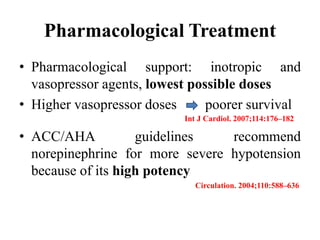
Pharmacological Treatment
• Pharmacological support: inotropic and
vasopressor agents, lowest possible doses
• Higher vasopressor doses poorer survival
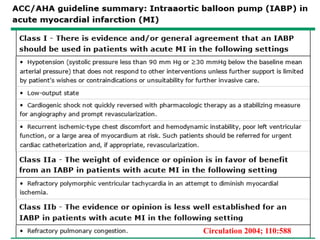
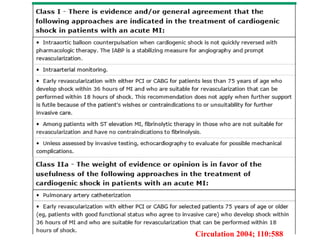
• ACC/AHA guidelines recommend
norepinephrine for more severe hypotension
because of its high potency
Circulation. 2004;110:588–636
Int J Cardiol. 2007;114:176–182
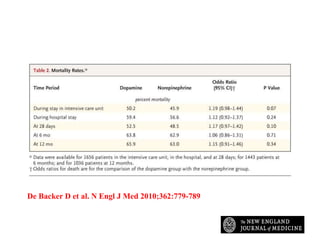
Mortality Rates
De Backer D et al. N Engl J Med 2010;362:779-789
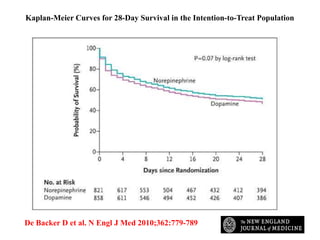
Kaplan-Meier Curves for 28-Day Survival in the Intention-to-Treat Population
De Backer D et al. N Engl J Med 2010;362:779-789
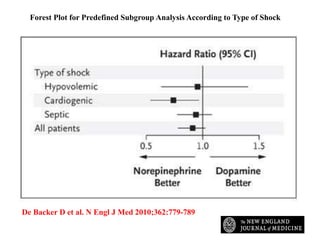
Forest Plot for Predefined Subgroup Analysis According to Type of Shock
De Backer D et al. N Engl J Med 2010;362:779-789
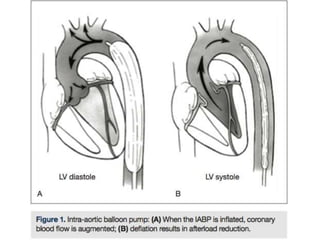
Mechanical Support: IABP
• Not every patient has a hemodynamic response
to IABP
• Response predicts better outcome
Circulation. 2003;108(suppl I):I-672
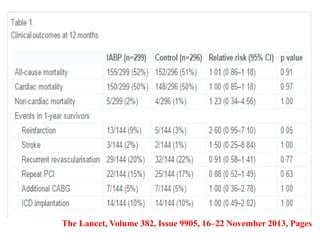
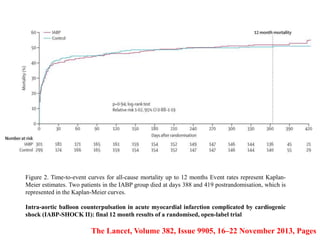
The Lancet, Volume 382, Issue 9905, 16–22 November 2013, Pages
Figure 2. Time-to-event curves for all-cause mortality up to 12 months Event rates represent Kaplan-
Meier estimates. Two patients in the IABP group died at days 388 and 419 postrandomisation, which is
represented in the Kaplan-Meier curves.
Intra-aortic balloon counterpulsation in acute myocardial infarction complicated by cardiogenic
shock (IABP-SHOCK II): final 12 month results of a randomised, open-label trial
The Lancet, Volume 382, Issue 9905, 16–22 November 2013, Pages
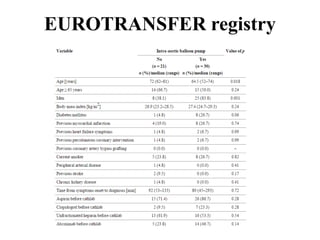
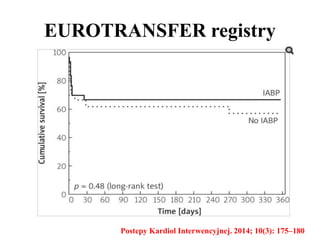
EUROTRANSFER registry
Postepy Kardiol Interwencyjnej. 2014; 10(3): 175–180
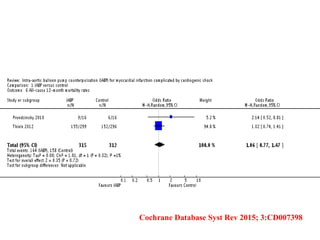
Cochrane Database Syst Rev 2015; 3:CD007398
Circulation 2004; 110:588
ACC/AHA/ESC
RECOMENDATIONS
• ACC/AHA 2007 & 2013 update also
recomends same
• ESC 2008 & 2012: same recomendations
Reperfusion
• Survival benefit of early revascularization
• Thrombolysis
PCI is impossible
If a delay has occurred in transport for PCI and
when MI and CS onset were within 3 hours
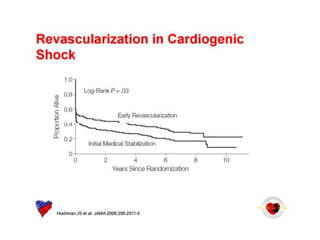
REVASCULARISATION
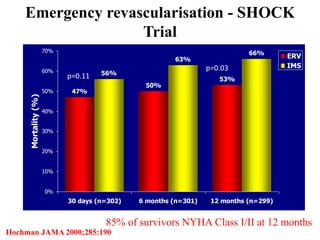
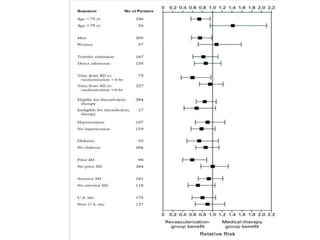
• Early revascularization decreases mortality
rates
− SMASH (Urban P et al. Eur Heart J
1999;20:1030-8)
− SHOCK (Hochman JS et al. N Engl J Med
1999;34:625 -34)
− ACC/AHA guidelines on acute myocardial
infarction (Ryan TJ et al. Circulation
1999;100;1016-30)
Emergency revascularisation - SHOCK
Trial
47%
50%
53%
56%
63%
66%
0%
10%
20%
30%
40%
50%
60%
70%
30 days (n=302) 6 months (n=301) 12 months (n=299)
Mortality(%)
ERV
IMS
p=0.11
p=0.03
85% of survivors NYHA Class I/II at 12 months
Hochman JAMA 2000;285:190
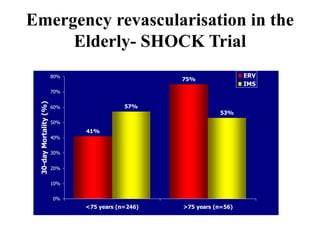
Emergency revascularisation in the
Elderly- SHOCK Trial
41%
75%
57%
53%
0%
10%
20%
30%
40%
50%
60%
70%
80%
<75 years (n=246) >75 years (n=56)
30-dayMortality(%)
ERV
IMS
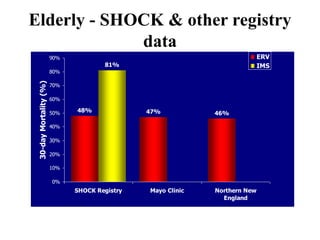
Elderly - SHOCK & other registry
data
48% 47% 46%
81%
0%
10%
20%
30%
40%
50%
60%
70%
80%
90%
SHOCK Registry Mayo Clinic Northern New
England
30-dayMortality(%)
ERV
IMS
Circulation 2004; 110:588
Timing of PCI
• Presentation 0 to 6 hours after symptom onset
was associated with the lowest mortality
[ ALKK registry(German). door-to-angiography times were <90 minutes in
approximately three fourths of patients. ]
• SHOCK trial: increasing long-term mortality
as time to revascularization increased from 0
to 8 hours
• Survival benefit as long as 48 hours after MI
and 18 hours after shock onset
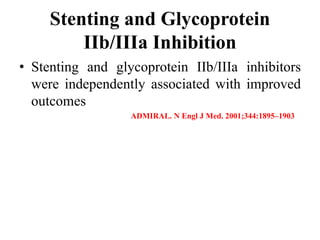
Stenting and Glycoprotein
IIb/IIIa Inhibition
• Stenting and glycoprotein IIb/IIIa inhibitors
were independently associated with improved
outcomes
ADMIRAL. N Engl J Med. 2001;344:1895–1903
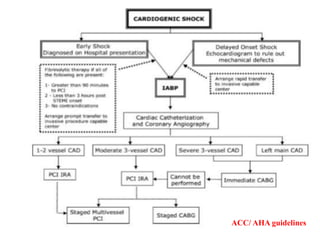
ACC/ AHA guidelines
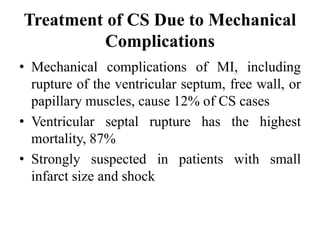
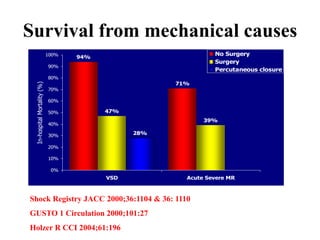
Treatment of CS Due to Mechanical
Complications
• Mechanical complications of MI, including
rupture of the ventricular septum, free wall, or
papillary muscles, cause 12% of CS cases
• Ventricular septal rupture has the highest
mortality, 87%
• Strongly suspected in patients with small
infarct size and shock
Survival from mechanical causes
94%
71%
47%
39%
28%
0%
10%
20%
30%
40%
50%
60%
70%
80%
90%
100%
VSD Acute Severe MR
In-hospitalMortality(%)
No Surgery
Surgery
Percutaneous closure
Shock Registry JACC 2000;36:1104 & 36: 1110
GUSTO 1 Circulation 2000;101:27
Holzer R CCI 2004;61:196
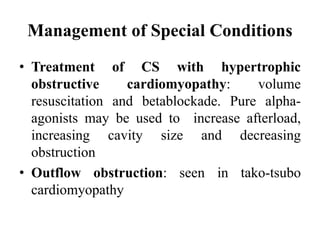
Management of Special Conditions
• Treatment of CS with hypertrophic
obstructive cardiomyopathy: volume
resuscitation and betablockade. Pure alpha-
agonists may be used to increase afterload,
increasing cavity size and decreasing
obstruction
• Outflow obstruction: seen in tako-tsubo
cardiomyopathy
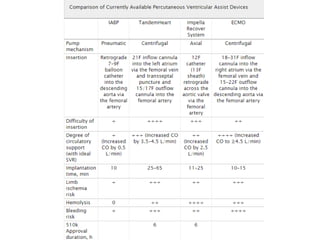
Other mechanical devices
• Left ventricular and biventricular assist device
: surgically placed, bridge to therapy & bridge to
transplantation
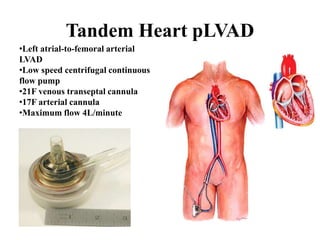
• Percutaneous left atrialto-
femoral arterial ventricular assist device(Tand
em heart)
• ECMO
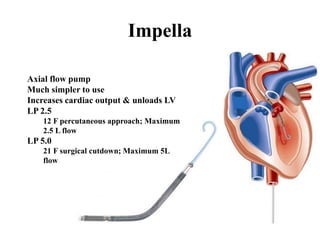
• Percutaneous transvalvular left ventricular ass
ist device (LVAD)[Impella]
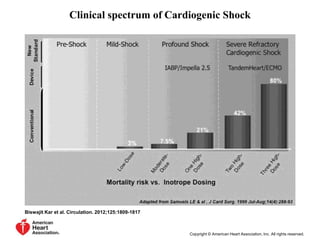
Clinical spectrum of Cardiogenic Shock
Biswajit Kar et al. Circulation. 2012;125:1809-1817
Copyright © American Heart Association, Inc. All rights reserved.
•Left atrial-to-femoral arterial
LVAD
•Low speed centrifugal continuous
flow pump
•21F venous transeptal cannula
•17F arterial cannula
•Maximum flow 4L/minute
Tandem Heart pLVAD
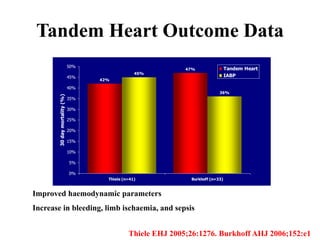
Tandem Heart Outcome Data
42%
47%
45%
36%
0%
5%
10%
15%
20%
25%
30%
35%
40%
45%
50%
Thiele (n=41) Burkhoff (n=33)
30daymortality(%)
Tandem Heart
IABP
Improved haemodynamic parameters
Increase in bleeding, limb ischaemia, and sepsis
Thiele EHJ 2005;26:1276. Burkhoff AHJ 2006;152:e1
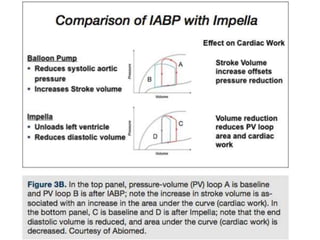
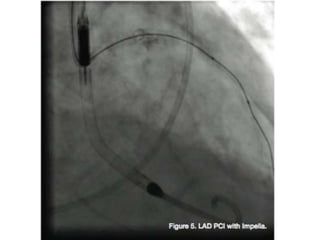
Impella
Axial flow pump
Much simpler to use
Increases cardiac output & unloads LV
LP 2.5
12 F percutaneous approach; Maximum
2.5 L flow
LP 5.0
21 F surgical cutdown; Maximum 5L
flow
Impella outcome data
• 1 RCT of Impella 2.5 in AMI Cardiogenic Shock
• ISAR-SHOCK
– 26 patient RCT Impella vs IABP
–  Cardiac Index,  MAP (by 10mmHg) vs IABP
– Complications ≤ IABP
– No difference in mortality
Percutaneous ECMO
• CARDIOHELP & LIFEBRIDGE-B2T
system (FDA approved)
• Advantage: over other modern PVADs is the
lack of need for transseptal puncture or
transfer to a cardiac catheterization laboratory
Indications
• Short-term cardiopulmonary support in
patients with postcardiotomy CS
Doll N et al. Ann Thorac Surg. 2004; 77: 151–157
• Bridge-to-recovery device in patients with
fulminant myocarditis
Asaumi Y et al. Eur Heart J. 2005; 26: 2185–2192
• Improves 30-day outcomes when used for
hemodynamic support during primary PCI in
patients presenting with STEMI and profound
CS
Sheu JJ et al. Crit Care Med. 2010; 38: 1810–1817
Timing of Implantation
• Rather than continued escalation of medical
therapy, early institution of mechanical
circulatory support via IABP and/or PVAD-
mediated circulatory support should strongly be
considered
Goals of Support and Weaning
• Maintain mean arterial pressure >60 mm Hg
and a mixed venous oxygen saturation of
>70%
• Minimal/no pressor requirement and
improving end-organ function.
• Average duration was 5.8±4.75 days
Tallaj JA et al. J Am Coll Cardiol. 2011; 57: 697–699
What we should do about STEMI
Cardiogenic Shock
• Emergency angiography and revascularisation: Primary PCI preferably
– All patients <75 years
– Selected patients ≥75 years
• On-table echo to rule out mechanical defects
• Stabilise the patient in the lab before revascularisation
– IABP
– Pressors if required (Norepinephrine/dopamine)
– Anaesthetic support
• Consider calling the surgeon for true surgical disease
• PCI culprit artery. Other vessels if shock persists
• Use abciximab for PCI
• Consider percutaneous LVAD if shock persists with IABP + multi-vessel
revascularisation
Cardiogenic shock

Cardiogenic shock

  • 1.
    DEPARTMENT OF CARDIOLOGY CURRENTMANAGEMENT ISSUES OF CARDIOGENIC SHOCK Gopal C Ghosh UNIT-1
  • 2.
    DEFINITION • Cardiogenic shockis a state of end-organ hypoperfusion due to cardiac failure • Pulmonary artery (PA) catheterization; Doppler echocardiography used to confirm elevation of LV filling pressures Circulation. 2008;117:686-697
  • 3.
    • Persistent hypotension(systolic blood pressure <80 to 90 mm Hg or mean arterial pressure 30 mm Hg lower than baseline) • Severe reduction in cardiac index (<1.8 L / min/m2 without support or <2.0 to 2.2 L/ min/m 2 with support) • Adequate or elevated filling pressure (eg, left ventricular [LV] end-diastolic pressure >18 mm Hg or right ventricular [RV] end- diastolic pressure >10 to 15 mm Hg) • Clinically by cool extremities, decreased urine output, and/or alteration in mental status. Circulation. 2008;117:686-697
  • 4.
    Causes of CardiogenicShock Predominant LV Failure 74.5% Acute Severe MR 8.3% VSD 4.6% Isolated RV Shock 3.4% Tamponade/rupture 1.7% Other 7.5% Shock Registry JACC 2000 35:1063
  • 5.
    OTHER CAUSES • Acutemyopericarditis • Tako-tsubo cardiomyopathy • Acute valvular regurgitation (trauma, degenerative disease) • Aortic dissection • Acute stress in the setting of aortic or mitral stenosis • Massive pulmonary embolism
  • 6.
    Incidence • Complicate approximately5% to 8% of STEMI and 2.5% of non-STEMI cases • Incidence is on the decline (Increasing number of myocardial infarction diagnosed due to use of troponin & increase use of reperfusion therapy ) The Global Registry of Acute Coronary Events (GRACE). Heart. 2007;93:177–182
  • 8.
    • Historic mortalityrate for CS complicating an acute myocardial infarction (MI) was 80 to 90 percent (1975 to 1988) N Engl J Med 1991; 325:1117 • Shortterm mortality rates between 42-48 % Circulation 2009; 119:1211 • Swiss registry (1997-2006): showing similar trends Ann Intern Med 2008; 149:618
  • 10.
    Predictors • GUSTOI databaseidentified the following predictors of 30day survival (receive initial fibrinolysis) o Increasing age (odds ratio 1.49 for each 10 year increase) o Prior MI o Physical findings at the time of diagnosis (the presence of altered sensorium and cold, clammy skin) o Oliguria Am Heart J 1999; 138:21
  • 11.
  • 13.
  • 15.
    Treatment General measures • Antithrombotictherapy with aspirin and heparin • Clopidogrel may be deferred until after emergency angiography
  • 16.
    Hemodynamic assessment • Pulmonaryartery catheterisation • Non-invasive Doppler measurement: Short mitral deceleration time (<140 ms) is highly predictive of pulmonary capillary wedge pressure >20 mm Hg in CS Am Heart J. 2006;151:890 e9–e15
  • 17.
    Volume management • Intravenousfluid replacement: PCWP, arterial oxygen saturation(SaO2), systemic arterial pressure, and cardiac output • The usual value in CS is between 18 and 25 mmHg J Am Coll Cardiol 2000; 36:1071
  • 18.
    Pharmacological Treatment • Pharmacologicalsupport: inotropic and vasopressor agents, lowest possible doses • Higher vasopressor doses poorer survival • ACC/AHA guidelines recommend norepinephrine for more severe hypotension because of its high potency Circulation. 2004;110:588–636 Int J Cardiol. 2007;114:176–182
  • 19.
    Mortality Rates De BackerD et al. N Engl J Med 2010;362:779-789
  • 20.
    Kaplan-Meier Curves for28-Day Survival in the Intention-to-Treat Population De Backer D et al. N Engl J Med 2010;362:779-789
  • 21.
    Forest Plot forPredefined Subgroup Analysis According to Type of Shock De Backer D et al. N Engl J Med 2010;362:779-789
  • 22.
    Mechanical Support: IABP •Not every patient has a hemodynamic response to IABP • Response predicts better outcome Circulation. 2003;108(suppl I):I-672
  • 24.
    The Lancet, Volume382, Issue 9905, 16–22 November 2013, Pages
  • 25.
    Figure 2. Time-to-eventcurves for all-cause mortality up to 12 months Event rates represent Kaplan- Meier estimates. Two patients in the IABP group died at days 388 and 419 postrandomisation, which is represented in the Kaplan-Meier curves. Intra-aortic balloon counterpulsation in acute myocardial infarction complicated by cardiogenic shock (IABP-SHOCK II): final 12 month results of a randomised, open-label trial The Lancet, Volume 382, Issue 9905, 16–22 November 2013, Pages
  • 26.
  • 27.
    EUROTRANSFER registry Postepy KardiolInterwencyjnej. 2014; 10(3): 175–180
  • 28.
    Cochrane Database SystRev 2015; 3:CD007398
  • 29.
  • 30.
    ACC/AHA/ESC RECOMENDATIONS • ACC/AHA 2007& 2013 update also recomends same • ESC 2008 & 2012: same recomendations
  • 31.
    Reperfusion • Survival benefitof early revascularization • Thrombolysis PCI is impossible If a delay has occurred in transport for PCI and when MI and CS onset were within 3 hours
  • 32.
    REVASCULARISATION • Early revascularizationdecreases mortality rates − SMASH (Urban P et al. Eur Heart J 1999;20:1030-8) − SHOCK (Hochman JS et al. N Engl J Med 1999;34:625 -34) − ACC/AHA guidelines on acute myocardial infarction (Ryan TJ et al. Circulation 1999;100;1016-30)
  • 34.
    Emergency revascularisation -SHOCK Trial 47% 50% 53% 56% 63% 66% 0% 10% 20% 30% 40% 50% 60% 70% 30 days (n=302) 6 months (n=301) 12 months (n=299) Mortality(%) ERV IMS p=0.11 p=0.03 85% of survivors NYHA Class I/II at 12 months Hochman JAMA 2000;285:190
  • 36.
    Emergency revascularisation inthe Elderly- SHOCK Trial 41% 75% 57% 53% 0% 10% 20% 30% 40% 50% 60% 70% 80% <75 years (n=246) >75 years (n=56) 30-dayMortality(%) ERV IMS
  • 37.
    Elderly - SHOCK& other registry data 48% 47% 46% 81% 0% 10% 20% 30% 40% 50% 60% 70% 80% 90% SHOCK Registry Mayo Clinic Northern New England 30-dayMortality(%) ERV IMS
  • 38.
  • 39.
    Timing of PCI •Presentation 0 to 6 hours after symptom onset was associated with the lowest mortality [ ALKK registry(German). door-to-angiography times were <90 minutes in approximately three fourths of patients. ] • SHOCK trial: increasing long-term mortality as time to revascularization increased from 0 to 8 hours • Survival benefit as long as 48 hours after MI and 18 hours after shock onset
  • 40.
    Stenting and Glycoprotein IIb/IIIaInhibition • Stenting and glycoprotein IIb/IIIa inhibitors were independently associated with improved outcomes ADMIRAL. N Engl J Med. 2001;344:1895–1903
  • 41.
  • 42.
    Treatment of CSDue to Mechanical Complications • Mechanical complications of MI, including rupture of the ventricular septum, free wall, or papillary muscles, cause 12% of CS cases • Ventricular septal rupture has the highest mortality, 87% • Strongly suspected in patients with small infarct size and shock
  • 43.
    Survival from mechanicalcauses 94% 71% 47% 39% 28% 0% 10% 20% 30% 40% 50% 60% 70% 80% 90% 100% VSD Acute Severe MR In-hospitalMortality(%) No Surgery Surgery Percutaneous closure Shock Registry JACC 2000;36:1104 & 36: 1110 GUSTO 1 Circulation 2000;101:27 Holzer R CCI 2004;61:196
  • 44.
    Management of SpecialConditions • Treatment of CS with hypertrophic obstructive cardiomyopathy: volume resuscitation and betablockade. Pure alpha- agonists may be used to increase afterload, increasing cavity size and decreasing obstruction • Outflow obstruction: seen in tako-tsubo cardiomyopathy
  • 45.
    Other mechanical devices •Left ventricular and biventricular assist device : surgically placed, bridge to therapy & bridge to transplantation • Percutaneous left atrialto- femoral arterial ventricular assist device(Tand em heart) • ECMO • Percutaneous transvalvular left ventricular ass ist device (LVAD)[Impella]
  • 47.
    Clinical spectrum ofCardiogenic Shock Biswajit Kar et al. Circulation. 2012;125:1809-1817 Copyright © American Heart Association, Inc. All rights reserved.
  • 48.
    •Left atrial-to-femoral arterial LVAD •Lowspeed centrifugal continuous flow pump •21F venous transeptal cannula •17F arterial cannula •Maximum flow 4L/minute Tandem Heart pLVAD
  • 49.
    Tandem Heart OutcomeData 42% 47% 45% 36% 0% 5% 10% 15% 20% 25% 30% 35% 40% 45% 50% Thiele (n=41) Burkhoff (n=33) 30daymortality(%) Tandem Heart IABP Improved haemodynamic parameters Increase in bleeding, limb ischaemia, and sepsis Thiele EHJ 2005;26:1276. Burkhoff AHJ 2006;152:e1
  • 50.
    Impella Axial flow pump Muchsimpler to use Increases cardiac output & unloads LV LP 2.5 12 F percutaneous approach; Maximum 2.5 L flow LP 5.0 21 F surgical cutdown; Maximum 5L flow
  • 51.
    Impella outcome data •1 RCT of Impella 2.5 in AMI Cardiogenic Shock • ISAR-SHOCK – 26 patient RCT Impella vs IABP –  Cardiac Index,  MAP (by 10mmHg) vs IABP – Complications ≤ IABP – No difference in mortality
  • 54.
    Percutaneous ECMO • CARDIOHELP& LIFEBRIDGE-B2T system (FDA approved) • Advantage: over other modern PVADs is the lack of need for transseptal puncture or transfer to a cardiac catheterization laboratory
  • 55.
    Indications • Short-term cardiopulmonarysupport in patients with postcardiotomy CS Doll N et al. Ann Thorac Surg. 2004; 77: 151–157 • Bridge-to-recovery device in patients with fulminant myocarditis Asaumi Y et al. Eur Heart J. 2005; 26: 2185–2192 • Improves 30-day outcomes when used for hemodynamic support during primary PCI in patients presenting with STEMI and profound CS Sheu JJ et al. Crit Care Med. 2010; 38: 1810–1817
  • 56.
    Timing of Implantation •Rather than continued escalation of medical therapy, early institution of mechanical circulatory support via IABP and/or PVAD- mediated circulatory support should strongly be considered
  • 57.
    Goals of Supportand Weaning • Maintain mean arterial pressure >60 mm Hg and a mixed venous oxygen saturation of >70% • Minimal/no pressor requirement and improving end-organ function. • Average duration was 5.8±4.75 days Tallaj JA et al. J Am Coll Cardiol. 2011; 57: 697–699
  • 58.
    What we shoulddo about STEMI Cardiogenic Shock • Emergency angiography and revascularisation: Primary PCI preferably – All patients <75 years – Selected patients ≥75 years • On-table echo to rule out mechanical defects • Stabilise the patient in the lab before revascularisation – IABP – Pressors if required (Norepinephrine/dopamine) – Anaesthetic support • Consider calling the surgeon for true surgical disease • PCI culprit artery. Other vessels if shock persists • Use abciximab for PCI • Consider percutaneous LVAD if shock persists with IABP + multi-vessel revascularisation

Editor's Notes

  • #20 Table 2. Mortality Rates.
  • #48 Clinical spectrum of cardiogenic shock. IABP indicates intra-aortic balloon pressure; ECMO, extracorporeal membrane oxygenation. Adapted from Samuels et al5 with permission from the publisher. Copyright © 1999, John Wiley & Sons Inc.