“Angiotensin–Neprilysin 
Inhibition versus Enalapril in 
Heart Failure” 
N ENGL J MED August 30,2014
Background: 
 This study compared the angiotensin receptor– 
neprilysin inhibitor LCZ696(SACUBITRIL + 
VALSARTAN) with enalapril in patients who had heart 
failure with a reduced ejection fraction. 
 In previous studies, enalapril improved survival in such 
patients.
METHODS: 
 Double-blind trial(RANDOMISED) 
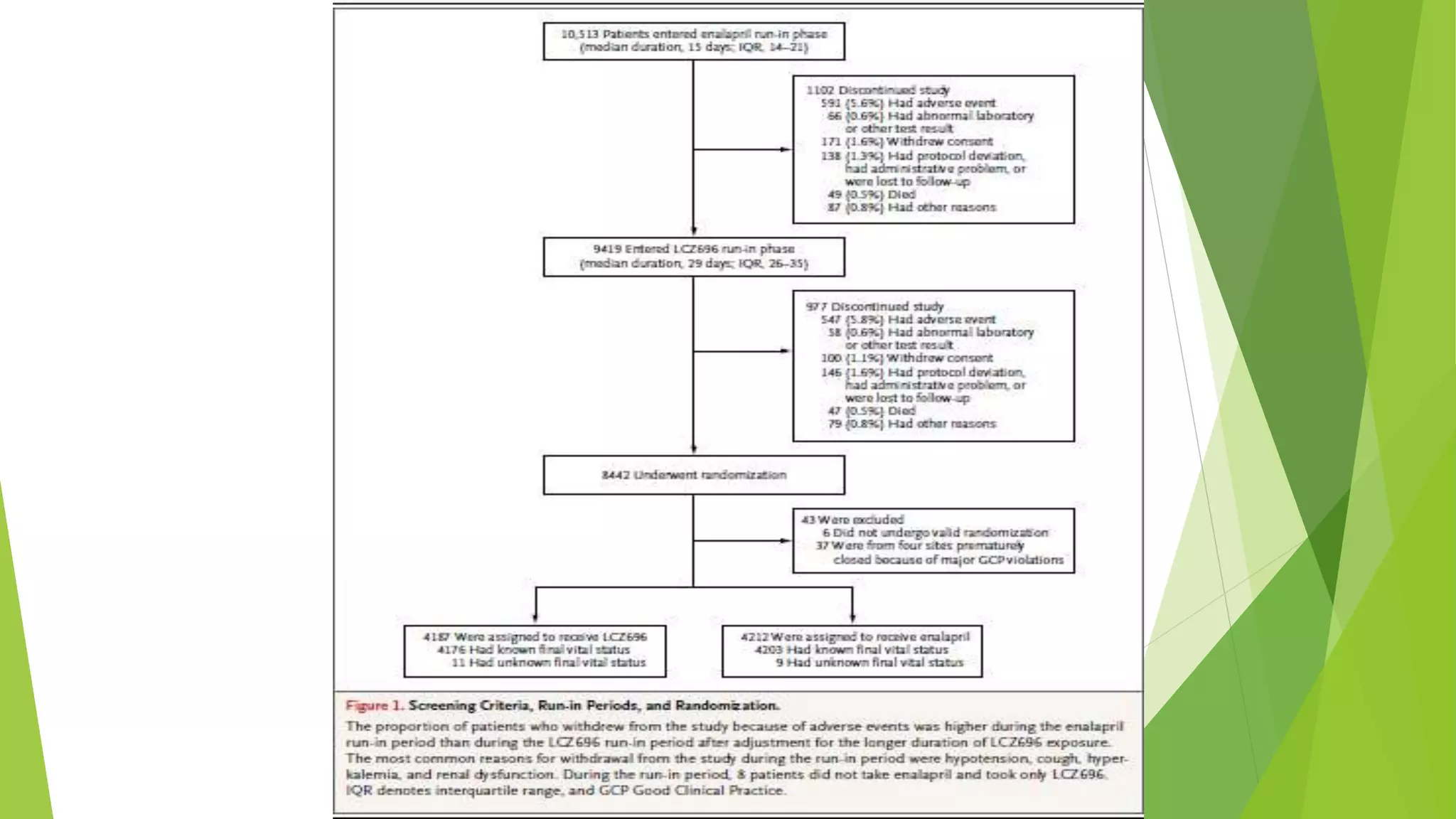
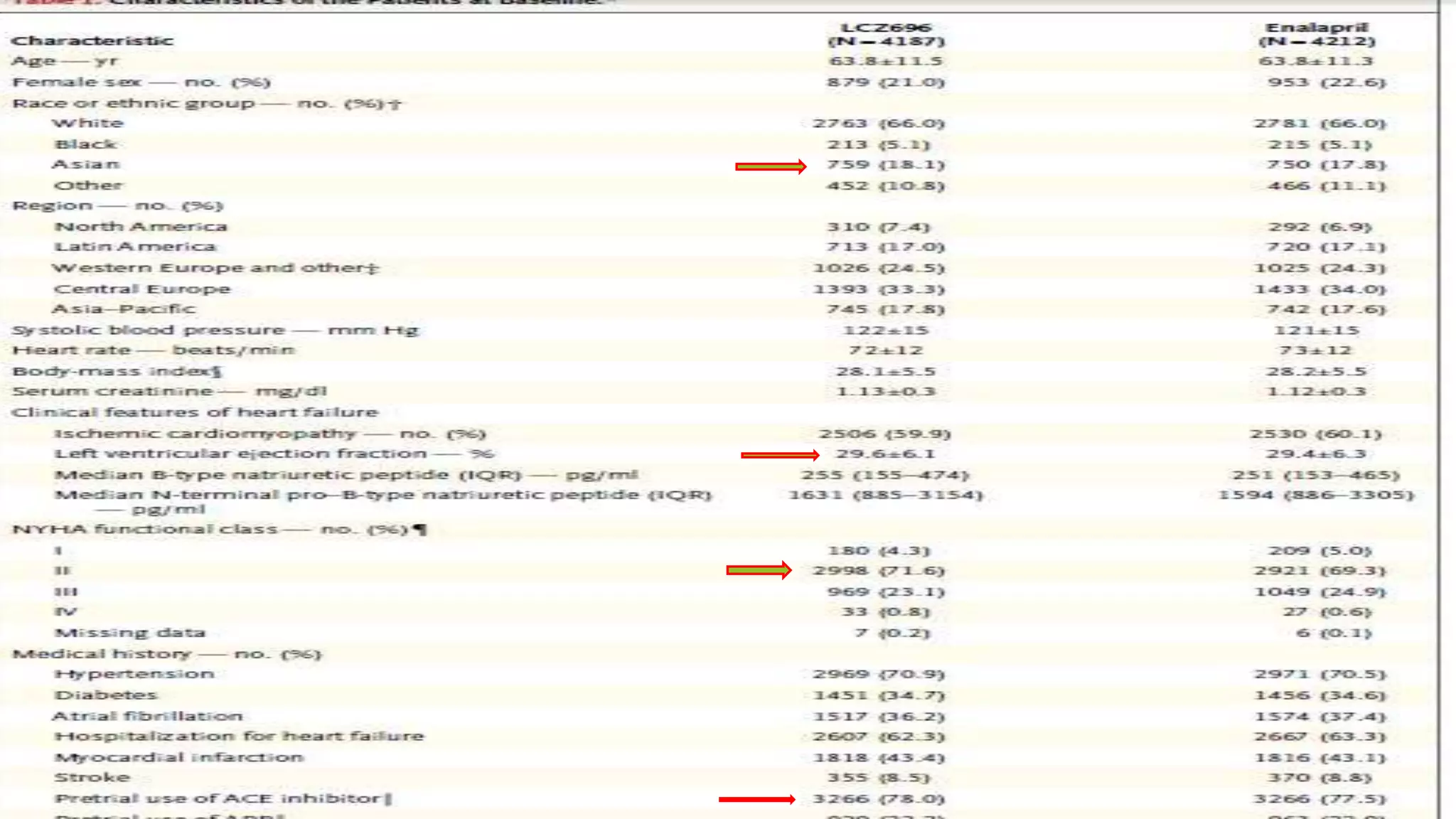
 Investigators randomly assigned 8442 patients with class II, 
III, or IV heart failure and an ejection fraction of 40% or less 
to receive either LCZ696 (at a dose of 200 mg twice daily) or 
enalapril (at a dose of 10 mg twice daily), in addition to 
recommended therapy.
INCLUSION CRITERIA 
 New York Heart Association (NYHA) class II, III, or IV symptoms, and 
an ejection fraction of 40% or less (which was changed to 35% or less 
by an amendment to the protocol on December 15, 2010). 
 Patients were required to have a plasma B-type natriuretic peptide 
(BNP) level of at least 150 pg per milliliter (or an N-terminal pro-BNP 
[NT-proBNP] level ≥600 pg per milliliter) 
or 
 if they had been hospitalized for heart failure within the previous 12 
months, a BNP of at least 100 pg per milliliter (or an NT-proBNP ≥400 
pg per milliliter).
EXCLUSION CRITERIA 
 Exclusion criteria included symptomatic hypotension,a systolic blood pressure 
of less than 100 mm Hg at screening or 95 mm Hg at randomization, 
 An estimated glomerular filtration rate (eGFR) below 30 ml per minute per 
1.73 m2 of body-surface area at screening or at randomization or a decrease 
in the eGFR of more than 25% (which was amended to 35%) between screening 
and randomization. 
 Serum potassium level of more than 5.2 mmol per liter at screening (or above 
5.4 mmol per liter at randomization). 
 History of angioedema or unacceptable side effects during receipt of ACE 
inhibitors or ARBs.
OUTCOME ANALYSIS 
Primary outcome :composite of death from cardiovascular causes 
or hospitalization for heart failure 
Secondary outcomes: 
1. Time to death from any cause 
2. The change from baseline to 8 months in the clinical summary score 
on the Kansas City Cardiomyopathy Questionnaire (KCCQ) (on a scale from 0 to 
100, with higher scores indicating fewer symptoms and physical limitations 
associated with heart failure), 
3. The time to a new onset of atrial fibrillation 
4. Time to the first occurrence of a decline in renal 
function
Results: 
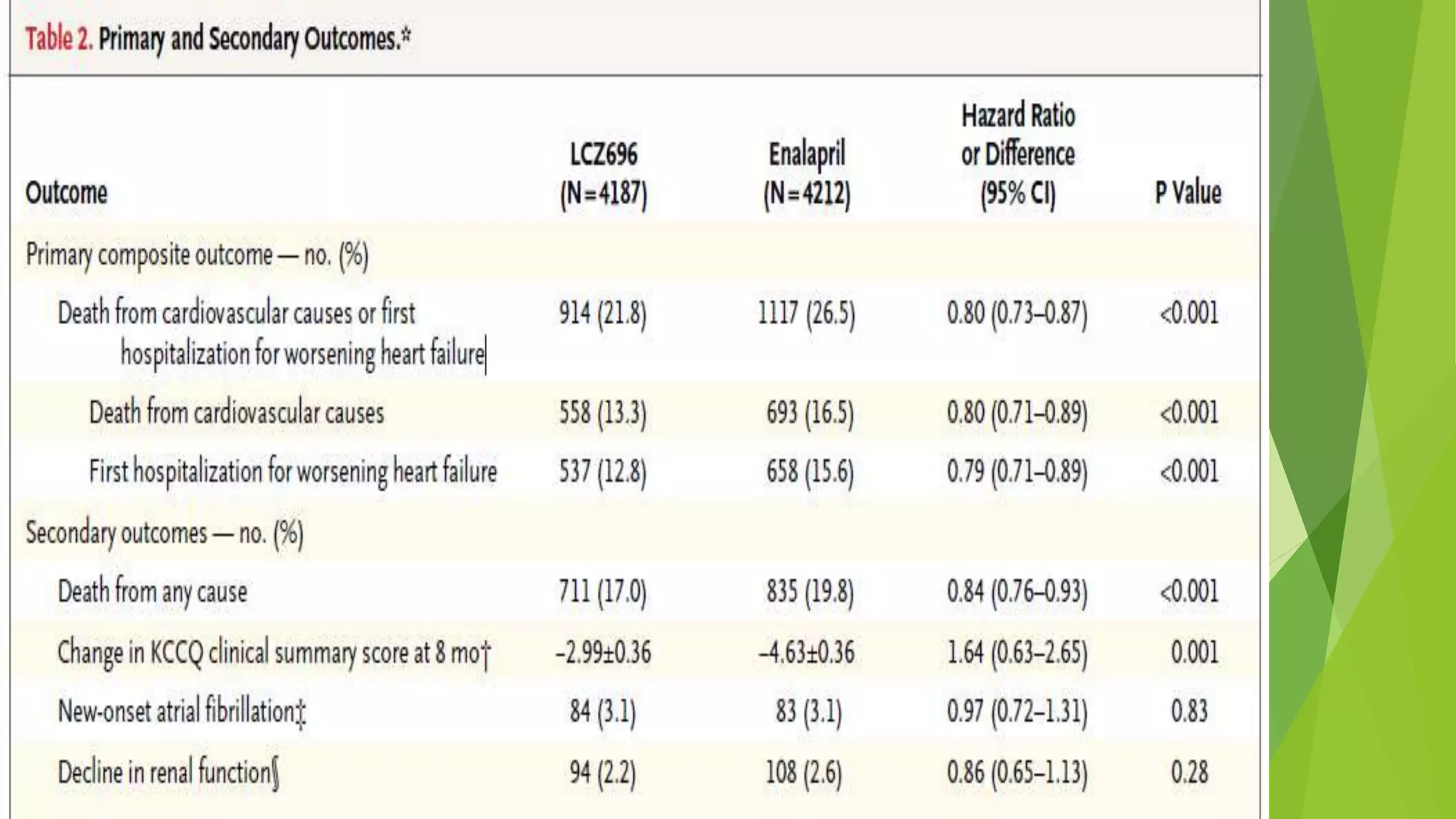
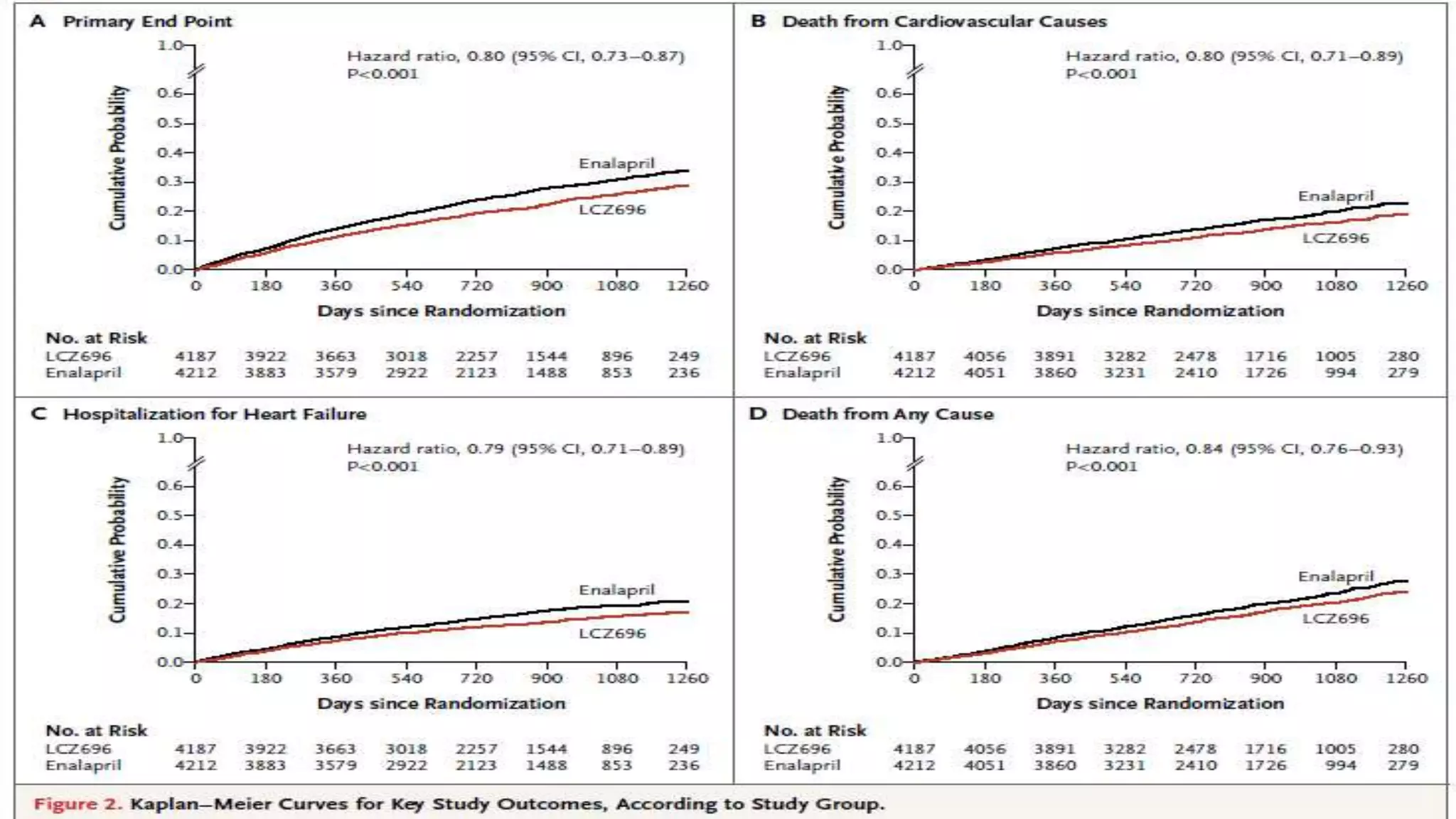
 1. Primary outcome had occurred in 914 patients (21.8%) in the LCZ696 group and 
1117 patients (26.5%) in the enalapril group (hazard ratio in the LCZ696 group, 
0.80; 95% confidence interval [CI], 0.73 to 0.87; P<0.001). 
 2. A total of 711 patients (17.0%) receiving LCZ696 and 835 patients (19.8%) 
receiving enalapril died (hazard ratio for death from any cause, 0.84; 95% CI, 0.76 
to 0.93; P<0.001). 
 3. The trial was stopped early, according to prespecified rules, after a median follow 
up of 27 months
4. 558 (13.3%) and 693 (16.5%), respectively, died from cardiovascular causes 
(hazard ratio, 0.80; 95% CI, 0.71 to 0.89; P<0.001). 
5. As compared with enalapril, LCZ696 also reduced the risk of hospitalization 
for heart failure by 21% (P<0.001) and decreased the symptoms and physical 
limitations of heart failure (P = 0.001). 
6. The LCZ696 group had higher proportions of patients with hypotension and 
nonserious angioedema but lower proportions with renal impairment, 
hyperkalemia, and cough than the enalapril group.
CONCLUSIONS: 
 LCZ696 was superior to enalapril in reducing the risks 
of death and of hospitalization for heart failure.

Paradigm hf journal club presentation

  • 1.
    “Angiotensin–Neprilysin Inhibition versusEnalapril in Heart Failure” N ENGL J MED August 30,2014
  • 2.
    Background:  Thisstudy compared the angiotensin receptor– neprilysin inhibitor LCZ696(SACUBITRIL + VALSARTAN) with enalapril in patients who had heart failure with a reduced ejection fraction.  In previous studies, enalapril improved survival in such patients.
  • 3.
    METHODS:  Double-blindtrial(RANDOMISED)  Investigators randomly assigned 8442 patients with class II, III, or IV heart failure and an ejection fraction of 40% or less to receive either LCZ696 (at a dose of 200 mg twice daily) or enalapril (at a dose of 10 mg twice daily), in addition to recommended therapy.
  • 4.
    INCLUSION CRITERIA New York Heart Association (NYHA) class II, III, or IV symptoms, and an ejection fraction of 40% or less (which was changed to 35% or less by an amendment to the protocol on December 15, 2010).  Patients were required to have a plasma B-type natriuretic peptide (BNP) level of at least 150 pg per milliliter (or an N-terminal pro-BNP [NT-proBNP] level ≥600 pg per milliliter) or  if they had been hospitalized for heart failure within the previous 12 months, a BNP of at least 100 pg per milliliter (or an NT-proBNP ≥400 pg per milliliter).
  • 5.
    EXCLUSION CRITERIA Exclusion criteria included symptomatic hypotension,a systolic blood pressure of less than 100 mm Hg at screening or 95 mm Hg at randomization,  An estimated glomerular filtration rate (eGFR) below 30 ml per minute per 1.73 m2 of body-surface area at screening or at randomization or a decrease in the eGFR of more than 25% (which was amended to 35%) between screening and randomization.  Serum potassium level of more than 5.2 mmol per liter at screening (or above 5.4 mmol per liter at randomization).  History of angioedema or unacceptable side effects during receipt of ACE inhibitors or ARBs.
  • 6.
    OUTCOME ANALYSIS Primaryoutcome :composite of death from cardiovascular causes or hospitalization for heart failure Secondary outcomes: 1. Time to death from any cause 2. The change from baseline to 8 months in the clinical summary score on the Kansas City Cardiomyopathy Questionnaire (KCCQ) (on a scale from 0 to 100, with higher scores indicating fewer symptoms and physical limitations associated with heart failure), 3. The time to a new onset of atrial fibrillation 4. Time to the first occurrence of a decline in renal function
  • 9.
    Results:  1.Primary outcome had occurred in 914 patients (21.8%) in the LCZ696 group and 1117 patients (26.5%) in the enalapril group (hazard ratio in the LCZ696 group, 0.80; 95% confidence interval [CI], 0.73 to 0.87; P<0.001).  2. A total of 711 patients (17.0%) receiving LCZ696 and 835 patients (19.8%) receiving enalapril died (hazard ratio for death from any cause, 0.84; 95% CI, 0.76 to 0.93; P<0.001).  3. The trial was stopped early, according to prespecified rules, after a median follow up of 27 months
  • 11.
    4. 558 (13.3%)and 693 (16.5%), respectively, died from cardiovascular causes (hazard ratio, 0.80; 95% CI, 0.71 to 0.89; P<0.001). 5. As compared with enalapril, LCZ696 also reduced the risk of hospitalization for heart failure by 21% (P<0.001) and decreased the symptoms and physical limitations of heart failure (P = 0.001). 6. The LCZ696 group had higher proportions of patients with hypotension and nonserious angioedema but lower proportions with renal impairment, hyperkalemia, and cough than the enalapril group.
  • 13.
    CONCLUSIONS:  LCZ696was superior to enalapril in reducing the risks of death and of hospitalization for heart failure.