CARDIOGENIC 
SHOCK 
-RAKSHA YADAV 
B.Sc Nursing 2nd Year 
AIIMS, JODHPUR
Cardiogenic shock 
 Definition 
 Predisposing/Risk factors 
 Etiological factors 
 Pathophysiology 
 Clinical Manifestations 
 Complications 
 Diagnostic tests 
 Medical Management 
-Pharmacological Management 
-Surgical Management 
 Nursing Management 
 Prevention of cardiogenic shock
Definition 
 What is Cardiogenic shock? 
Cardiogenic shock is defined as heart’s 
inability to contract and pump blood 
efficiently due to inadequate supply of O2 & 
nutrients to the heart. 
 Most often caused by severe heart attack. 
 Mortality rate is very high (50-75%), if not 
treated immediately
Predisposing/Risk Factors 
 Older age 
 A history of heart attacks or heart failure 
 Coronary heart disease (CHD)- Affects all the 
major blood vessels of heart 
 Hypertension 
 Diabetes 
 Obesity 
 Atherosclerosis
Etiological Factors 
• Acute MI 
• Severe hypoxemia 
• Cardiomyopathy 
• Pericardial tamponade 
• Acidosis 
• Dysrhythmias 
• Trauma 
• Structural abnormalities 
• Valvular abnormality 
• Ventricular septal rupture 
• Tension pneumothorax
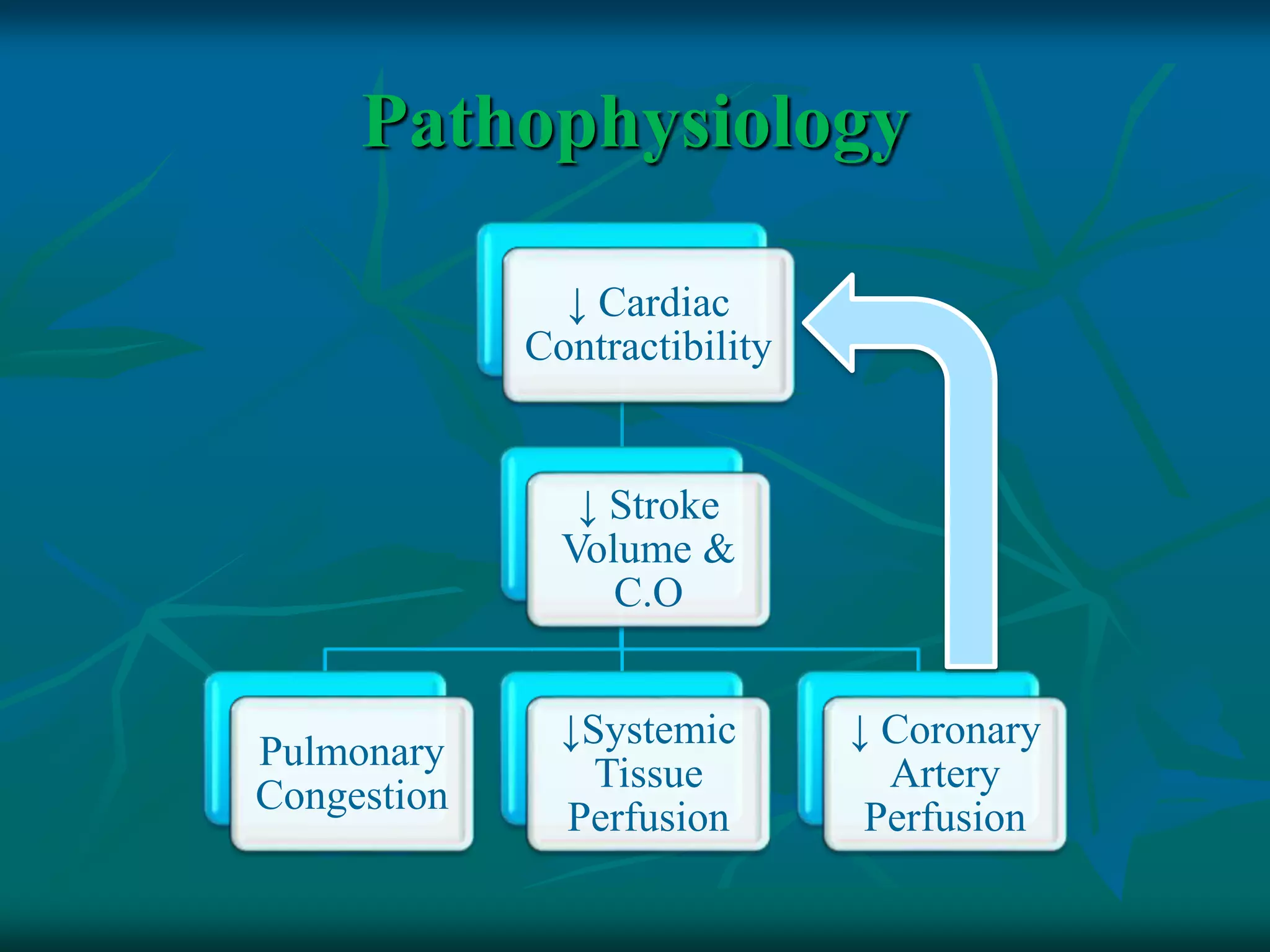
Pathophysiology 
↓ Cardiac 
Contractibility 
↓ Stroke 
Volume & 
C.O 
Pulmonary 
Congestion 
↓Systemic 
Tissue 
Perfusion 
↓ Coronary 
Artery 
Perfusion
Clinical Manifestations 
 Angina Pectoris, squeezing pain in center of chest. 
 Dysrhythmias 
 Diminished heart sounds 
 Acute drop in blood pressure > 30 mm Hg 
 Decreased cardiac output 
 Tachypneas, shortness of breath 
 Weak, thready pulse 
 Sweating, cold hand & feet 
 Urine output < 30 mL/hr 
 Cool, pale, moist skin
Complications 
 Brain damage 
 Kidney damage 
 Liver damage 
 Multiple organ failure 
 Coma 
 Death
How is Cardiogenic shock 
diagnosed? 
 Blood pressure test 
 Electrocardiogram 
 Echocardiography 
 Chest X-ray 
 Cardiac enzyme test 
 Coronary angiography 
 Pulmonary artery catheterization 
 Blood tests: 
- ABG, LFT, RFT
Medical Management
 Correction of underlying cause: 
→ Correction of the underlying cause is very 
important as it may lead to: 
- Fail of the compensatory mechanisms 
- It can reduce the effectiveness of the 
interventions 
→ Correction of: 
- Dysrhythmia 
- Acidosis & electrolyte disturbances
 Initiation of first line treatment: 
→ Oxygenation- Nasal cannula @ 2-6 lpm 
→ Hemodynamic Monitoring- BP 
→ Fluid Therapy- RL, NS, Dextran 
→ Pain Control- Morphine
 Pharmacological Management: 
→ Dobutamine 
→ Nitroglycerine (Vasodilator) 
→ Dopamine 
→ Vasoactive Medications 
> Epinephrine 
> Nor- Epinephrine 
> Vasopressin (ADH)
 Surgical Management: 
→ CABG (Coronary artery bypass graft) 
→ Replacement of Faulty Cardiac valve
Nursing Management : Our main 
Focus
Monitoring Hemodynamic Status: 
 Assess vitals regularly. 
 Maintain a patent arterial line, if any 
 Assess functioning of ECG monitor & 
readings
Administering medications & IV fluids: 
 Monitor vitals before and after administering 
medications & IV fluids. 
 Administer prescribed medications & fluids 
accurately (Follow10 Rights) 
 Assess IV infusion site for bleeding or any 
allergic response. 
 Monitor: 
- Urine Output 
- BUN Indicators of renal function 
- Serum Creatinine
 Preventing Complications: 
 Notify the physician promptly if: 
- Hemodynamic, Cardiac or Pulmonary status 
changes. 
- Decline in ABG or Pulse Oximeter values 
- Adventitious breath sounds heard 
- Changes in cardiac rhythm
Limit myocardial oxygen demand by: 
 Administering analgesics, sedatives, and other agents 
as prescribed. 
 Positioning the patient for comfort. 
 Limiting activities. 
 Providing calm and quiet environment 
 Offering support to reduce anxiety. 
 Teaching the patient about his condition. 
Enhancing myocardial oxygen supply by: 
 Administering oxygen. 
 Monitoring the patient’s respiratory status. 
 Administering prescribed medications.
How can Cardiogenic shock be 
prevented? 
 Adopt ‘Heart healthy lifestyle’ 
 Take healthy diet 
- Low in sodium & fat 
 Control hypertension and diabetes 
 Reduce obesity- Be physically active 
 Quit smoking 
 If lifestyle changes are not enough, Take all of 
your medicines as prescribed.
Cardiogenic shock : Medical Surgical Nursing

Cardiogenic shock : Medical Surgical Nursing

  • 1.
    CARDIOGENIC SHOCK -RAKSHAYADAV B.Sc Nursing 2nd Year AIIMS, JODHPUR
  • 2.
    Cardiogenic shock Definition  Predisposing/Risk factors  Etiological factors  Pathophysiology  Clinical Manifestations  Complications  Diagnostic tests  Medical Management -Pharmacological Management -Surgical Management  Nursing Management  Prevention of cardiogenic shock
  • 3.
    Definition  Whatis Cardiogenic shock? Cardiogenic shock is defined as heart’s inability to contract and pump blood efficiently due to inadequate supply of O2 & nutrients to the heart.  Most often caused by severe heart attack.  Mortality rate is very high (50-75%), if not treated immediately
  • 4.
    Predisposing/Risk Factors Older age  A history of heart attacks or heart failure  Coronary heart disease (CHD)- Affects all the major blood vessels of heart  Hypertension  Diabetes  Obesity  Atherosclerosis
  • 5.
    Etiological Factors •Acute MI • Severe hypoxemia • Cardiomyopathy • Pericardial tamponade • Acidosis • Dysrhythmias • Trauma • Structural abnormalities • Valvular abnormality • Ventricular septal rupture • Tension pneumothorax
  • 6.
    Pathophysiology ↓ Cardiac Contractibility ↓ Stroke Volume & C.O Pulmonary Congestion ↓Systemic Tissue Perfusion ↓ Coronary Artery Perfusion
  • 7.
    Clinical Manifestations Angina Pectoris, squeezing pain in center of chest.  Dysrhythmias  Diminished heart sounds  Acute drop in blood pressure > 30 mm Hg  Decreased cardiac output  Tachypneas, shortness of breath  Weak, thready pulse  Sweating, cold hand & feet  Urine output < 30 mL/hr  Cool, pale, moist skin
  • 8.
    Complications  Braindamage  Kidney damage  Liver damage  Multiple organ failure  Coma  Death
  • 9.
    How is Cardiogenicshock diagnosed?  Blood pressure test  Electrocardiogram  Echocardiography  Chest X-ray  Cardiac enzyme test  Coronary angiography  Pulmonary artery catheterization  Blood tests: - ABG, LFT, RFT
  • 10.
  • 11.
     Correction ofunderlying cause: → Correction of the underlying cause is very important as it may lead to: - Fail of the compensatory mechanisms - It can reduce the effectiveness of the interventions → Correction of: - Dysrhythmia - Acidosis & electrolyte disturbances
  • 12.
     Initiation offirst line treatment: → Oxygenation- Nasal cannula @ 2-6 lpm → Hemodynamic Monitoring- BP → Fluid Therapy- RL, NS, Dextran → Pain Control- Morphine
  • 13.
     Pharmacological Management: → Dobutamine → Nitroglycerine (Vasodilator) → Dopamine → Vasoactive Medications > Epinephrine > Nor- Epinephrine > Vasopressin (ADH)
  • 14.
     Surgical Management: → CABG (Coronary artery bypass graft) → Replacement of Faulty Cardiac valve
  • 15.
    Nursing Management :Our main Focus
  • 16.
    Monitoring Hemodynamic Status:  Assess vitals regularly.  Maintain a patent arterial line, if any  Assess functioning of ECG monitor & readings
  • 17.
    Administering medications &IV fluids:  Monitor vitals before and after administering medications & IV fluids.  Administer prescribed medications & fluids accurately (Follow10 Rights)  Assess IV infusion site for bleeding or any allergic response.  Monitor: - Urine Output - BUN Indicators of renal function - Serum Creatinine
  • 18.
     Preventing Complications:  Notify the physician promptly if: - Hemodynamic, Cardiac or Pulmonary status changes. - Decline in ABG or Pulse Oximeter values - Adventitious breath sounds heard - Changes in cardiac rhythm
  • 19.
    Limit myocardial oxygendemand by:  Administering analgesics, sedatives, and other agents as prescribed.  Positioning the patient for comfort.  Limiting activities.  Providing calm and quiet environment  Offering support to reduce anxiety.  Teaching the patient about his condition. Enhancing myocardial oxygen supply by:  Administering oxygen.  Monitoring the patient’s respiratory status.  Administering prescribed medications.
  • 20.
    How can Cardiogenicshock be prevented?  Adopt ‘Heart healthy lifestyle’  Take healthy diet - Low in sodium & fat  Control hypertension and diabetes  Reduce obesity- Be physically active  Quit smoking  If lifestyle changes are not enough, Take all of your medicines as prescribed.