
BACKGROUND
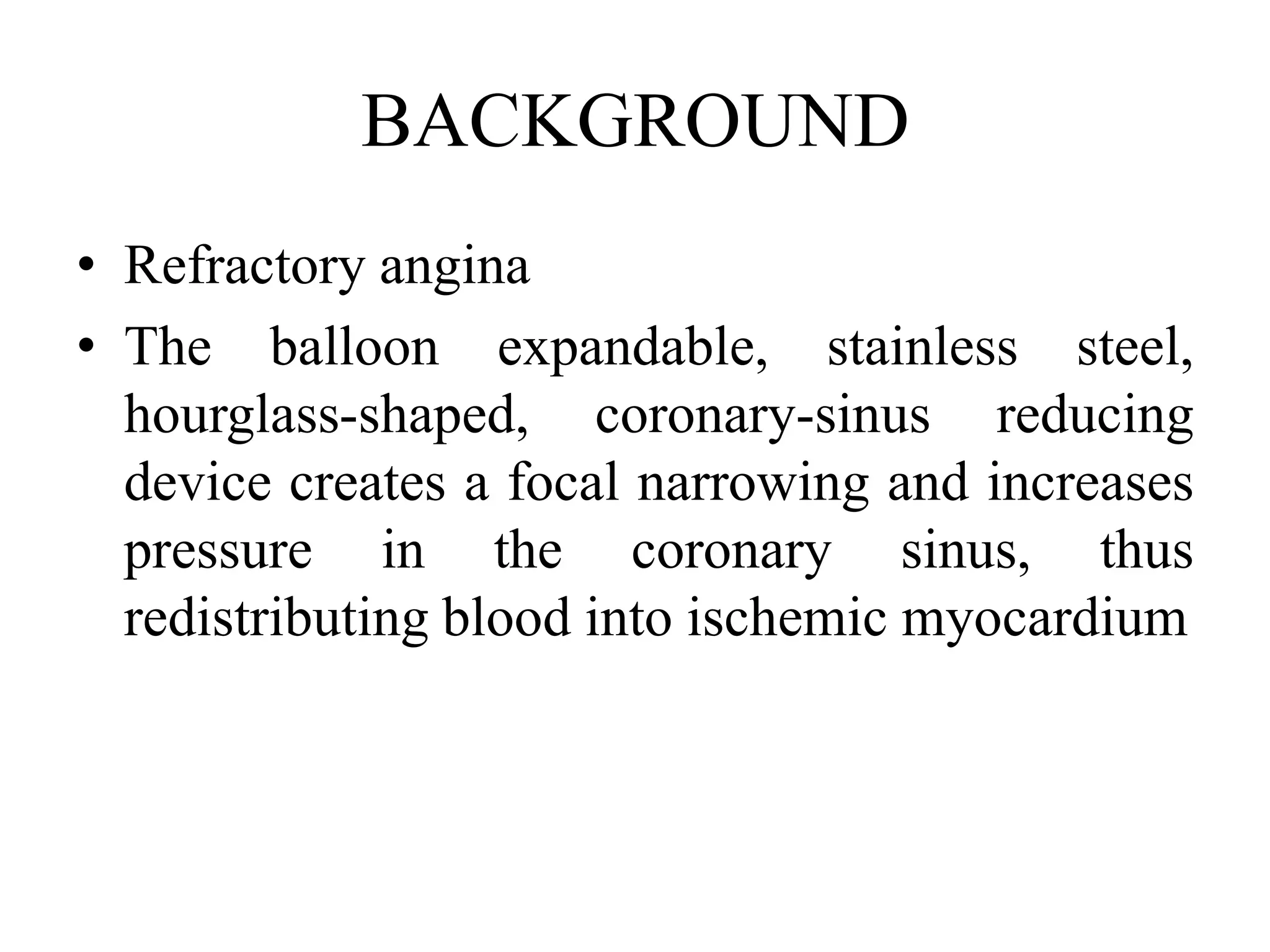
• Refractory angina
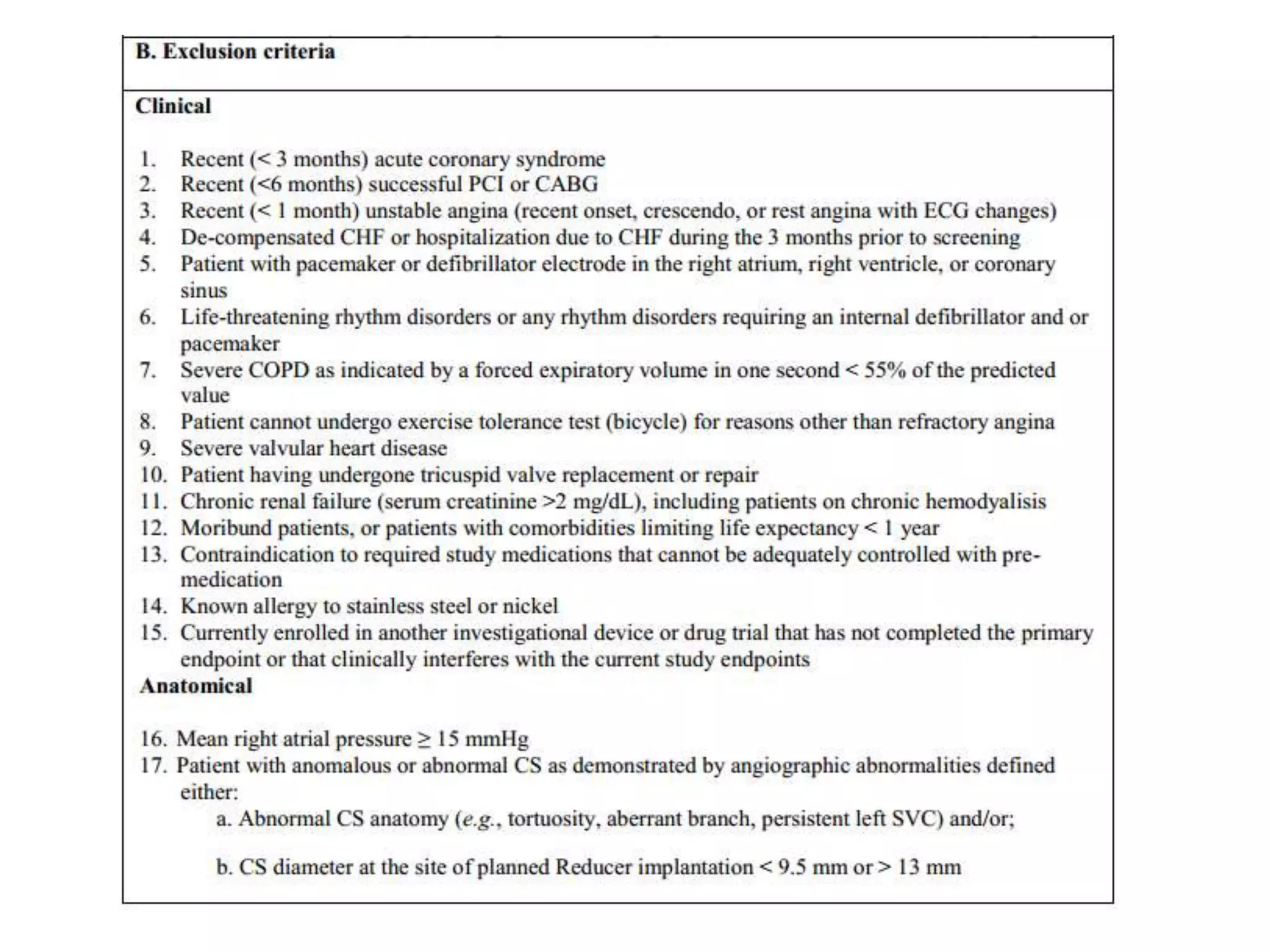
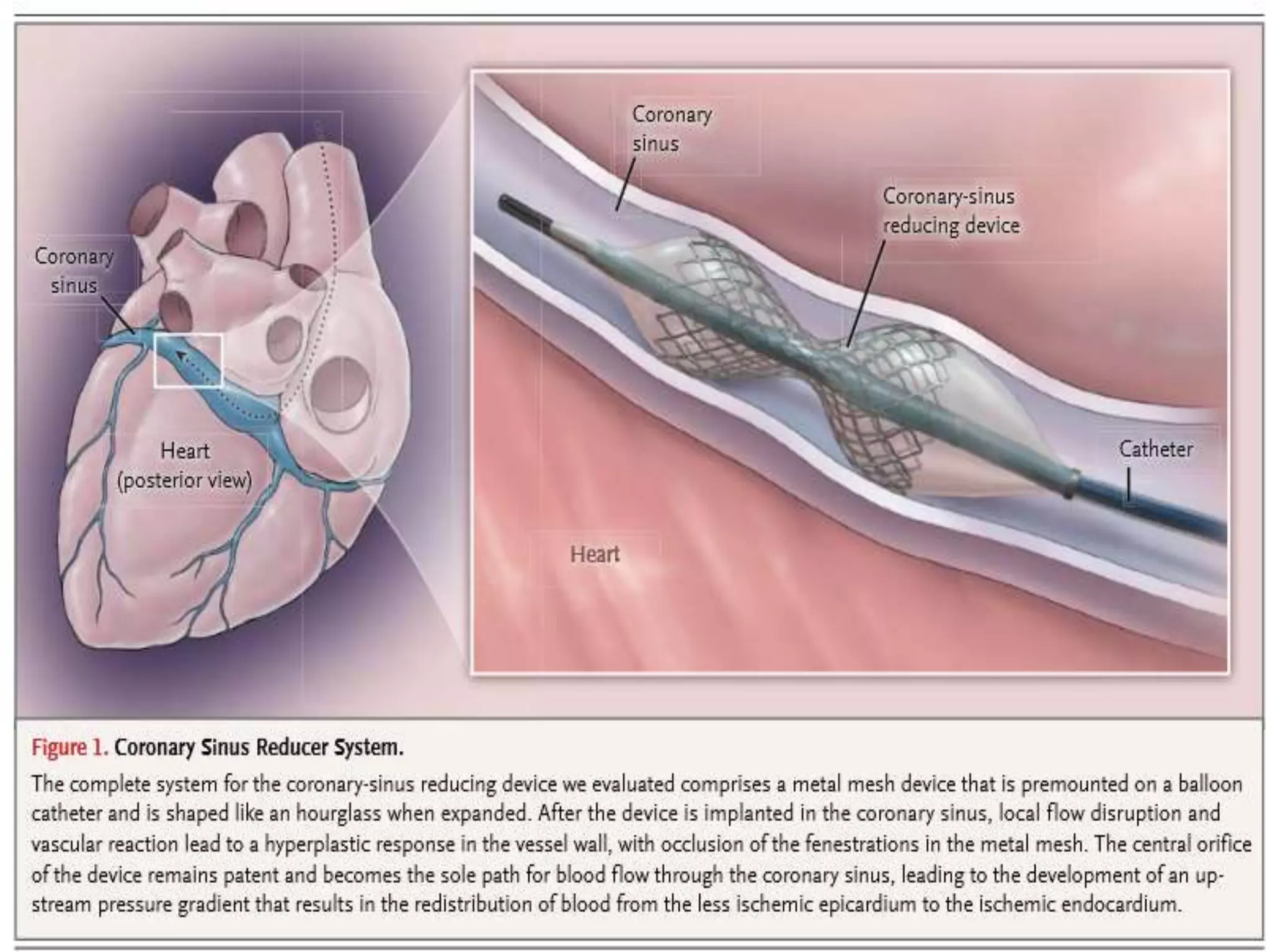
• The balloon expandable, stainless steel,
hourglass-shaped, coronary-sinus reducing
device creates a focal narrowing and increases
pressure in the coronary sinus, thus
redistributing blood into ischemic myocardium
METHODS
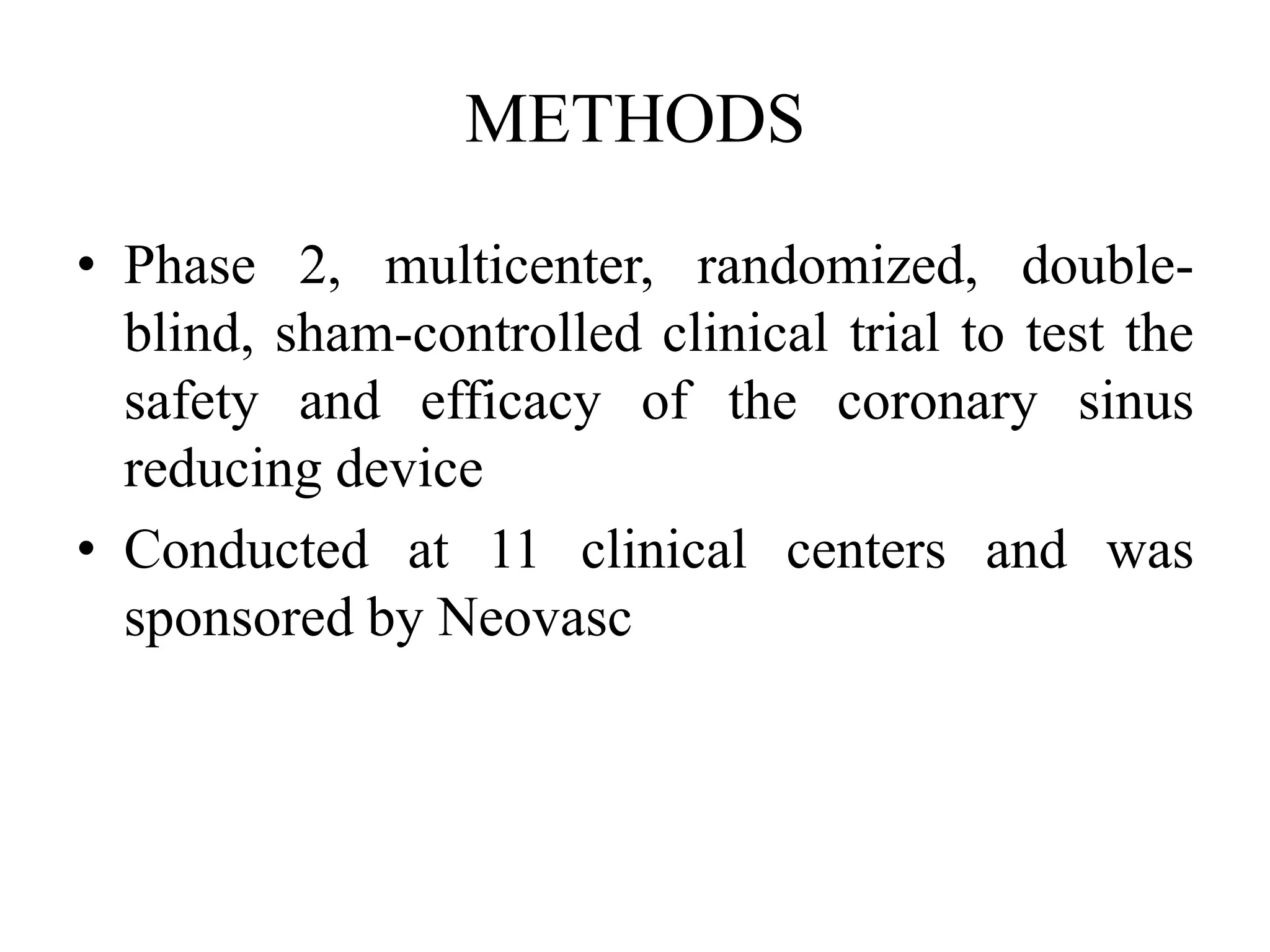
• Phase 2, multicenter, randomized, double-
blind, sham-controlled clinical trial to test the
safety and efficacy of the coronary sinus
reducing device
• Conducted at 11 clinical centers and was
sponsored by Neovasc
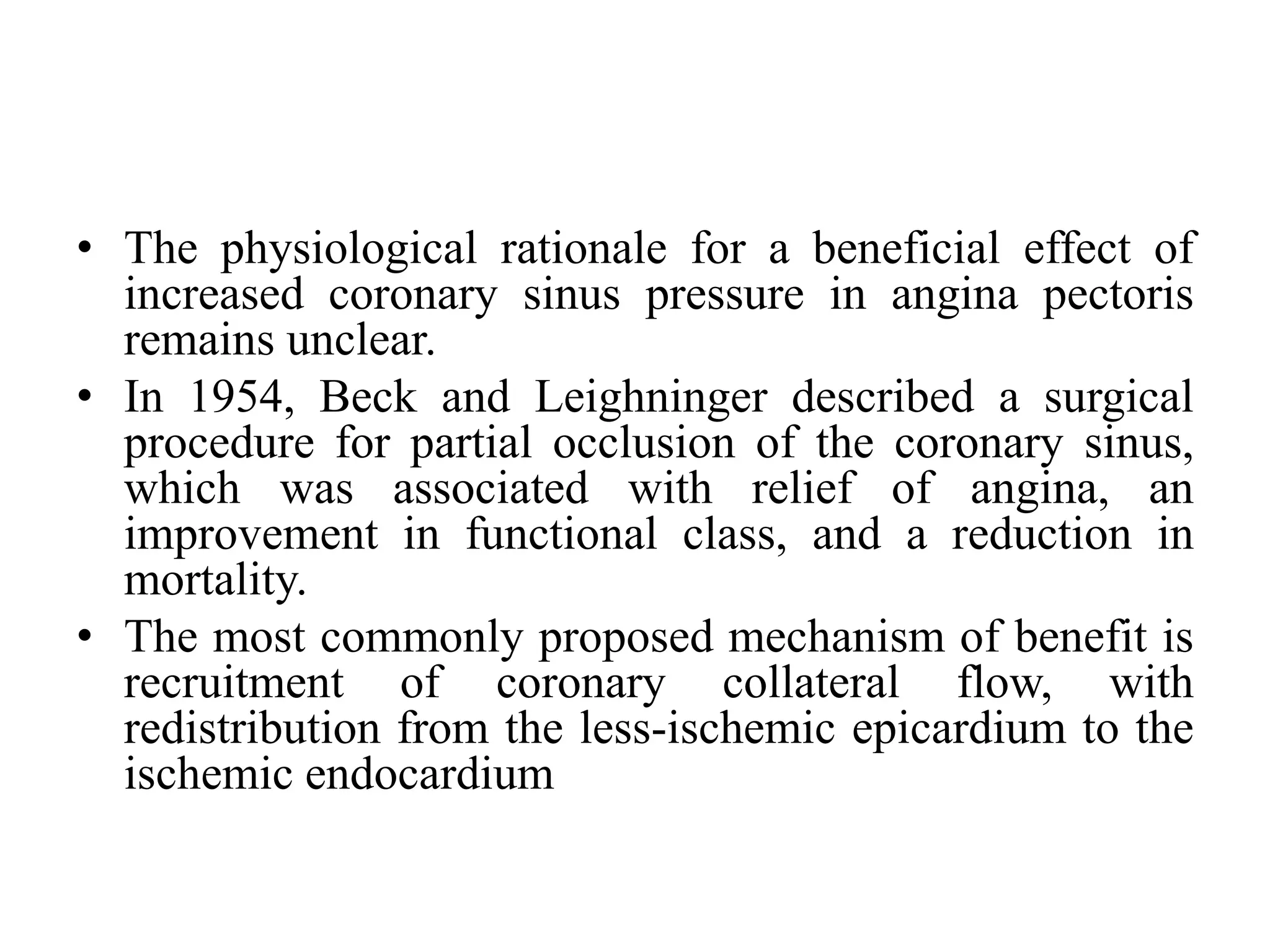
• The physiological rationale for a beneficial effect of
increased coronary sinus pressure in angina pectoris
remains unclear.
• In 1954, Beck and Leighninger described a surgical
procedure for partial occlusion of the coronary sinus,
which was associated with relief of angina, an
improvement in functional class, and a reduction in
mortality.
• The most commonly proposed mechanism of benefit is
recruitment of coronary collateral flow, with
redistribution from the less-ischemic epicardium to the
ischemic endocardium
RESULTS
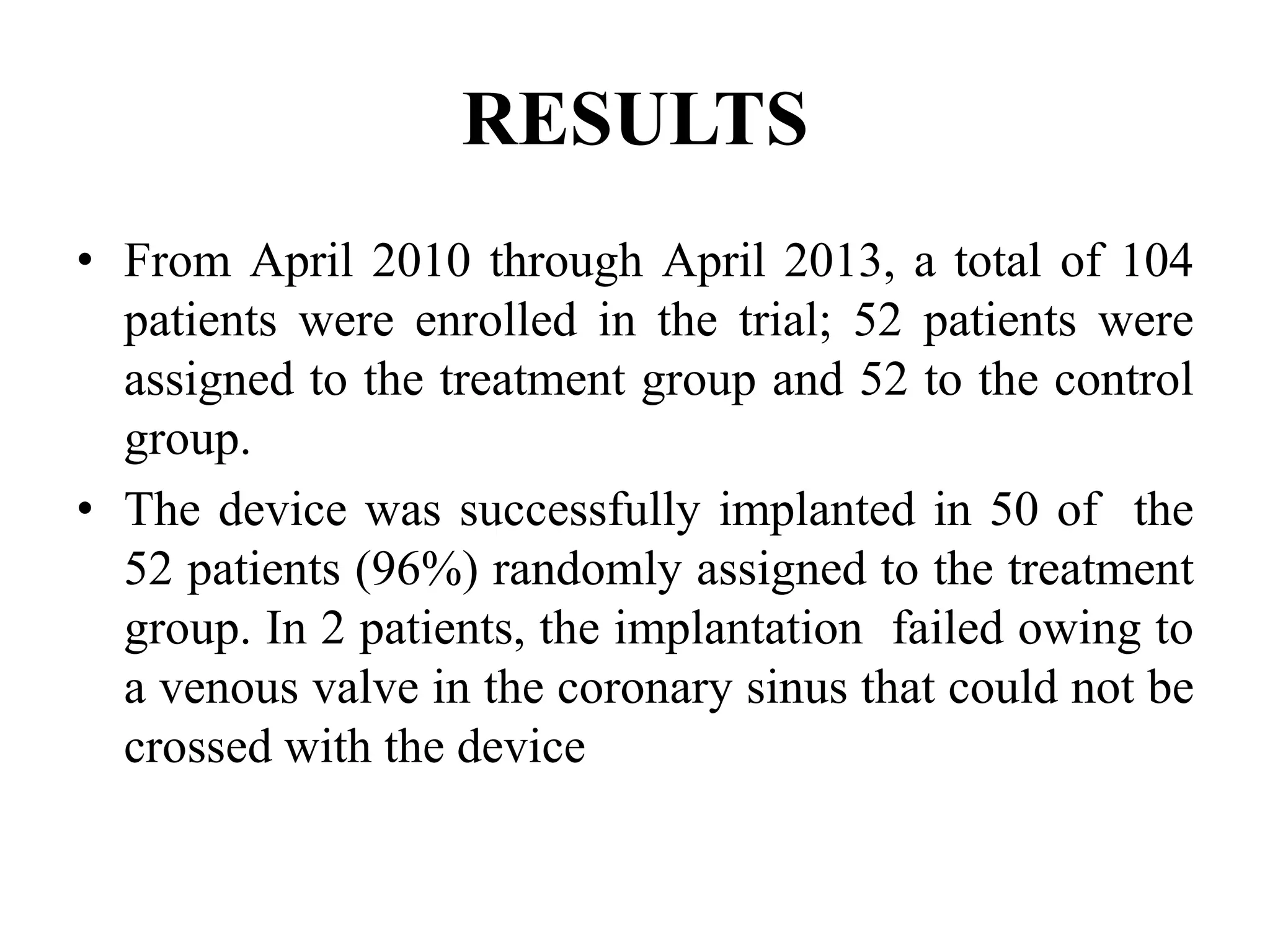
• From April 2010 through April 2013, a total of 104
patients were enrolled in the trial; 52 patients were
assigned to the treatment group and 52 to the control
group.
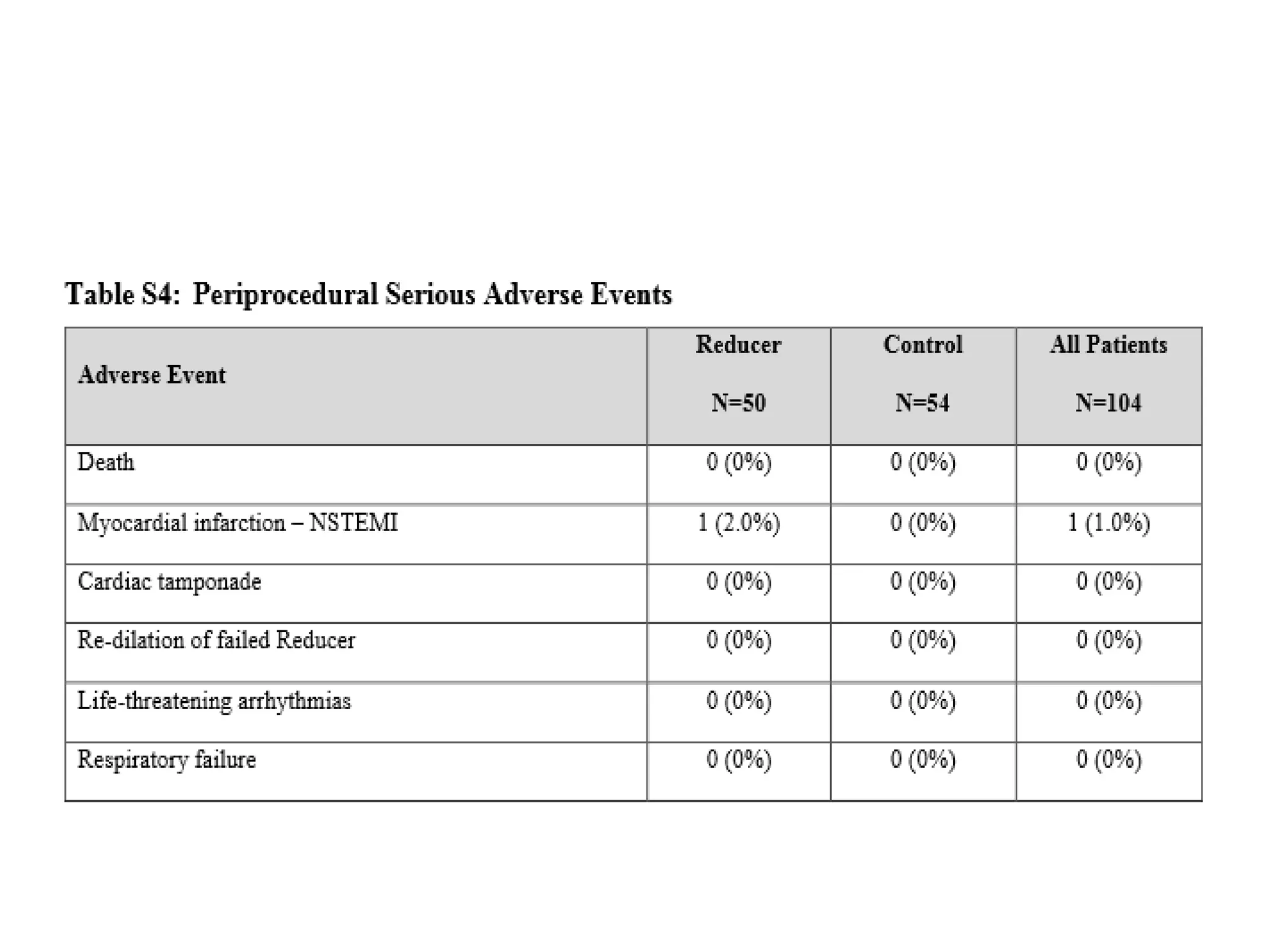
• The device was successfully implanted in 50 of the
52 patients (96%) randomly assigned to the treatment
group. In 2 patients, the implantation failed owing to
a venous valve in the coronary sinus that could not be
crossed with the device
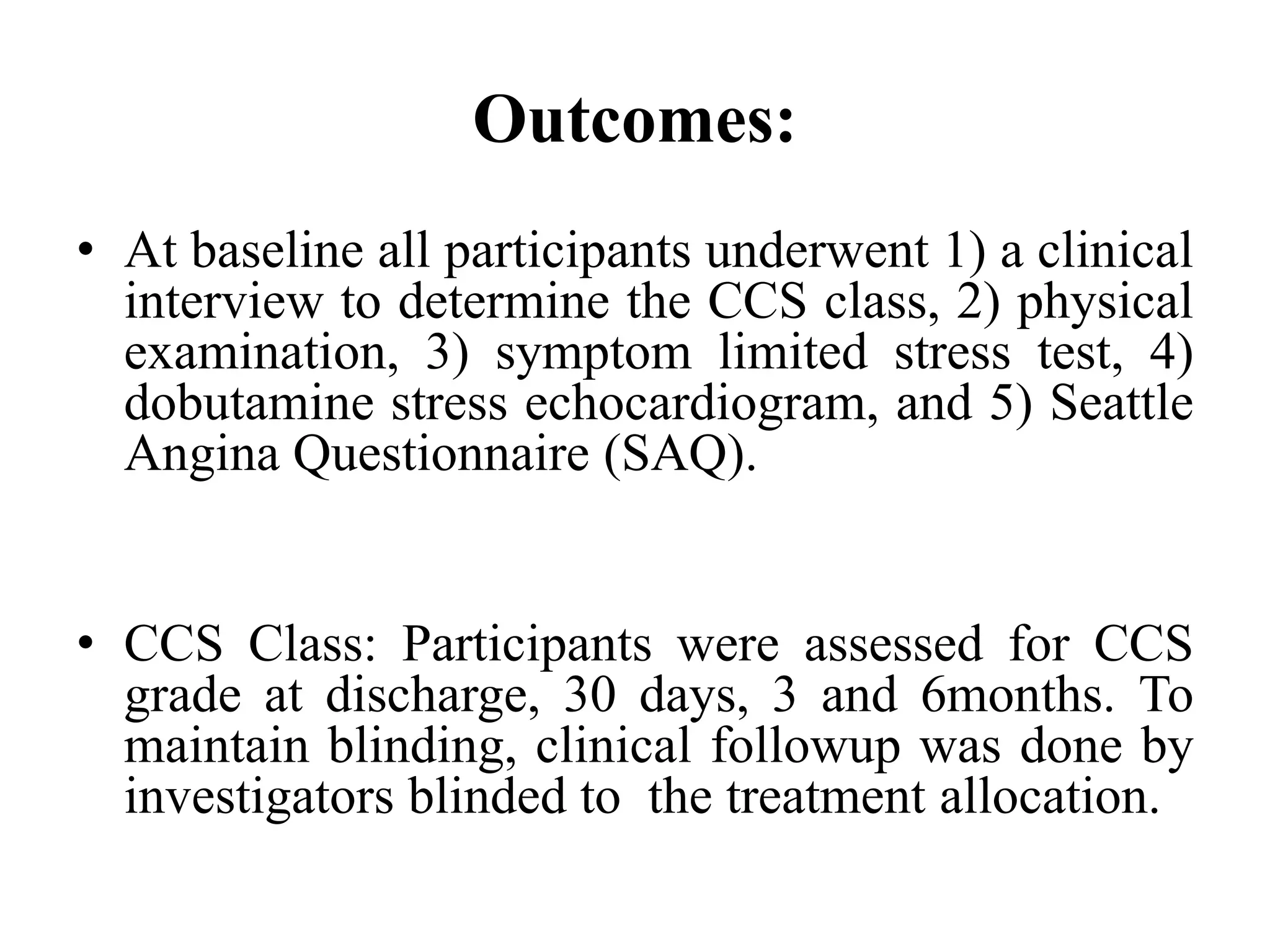
Outcomes:
• At baseline all participants underwent 1) a clinical
interview to determine the CCS class, 2) physical
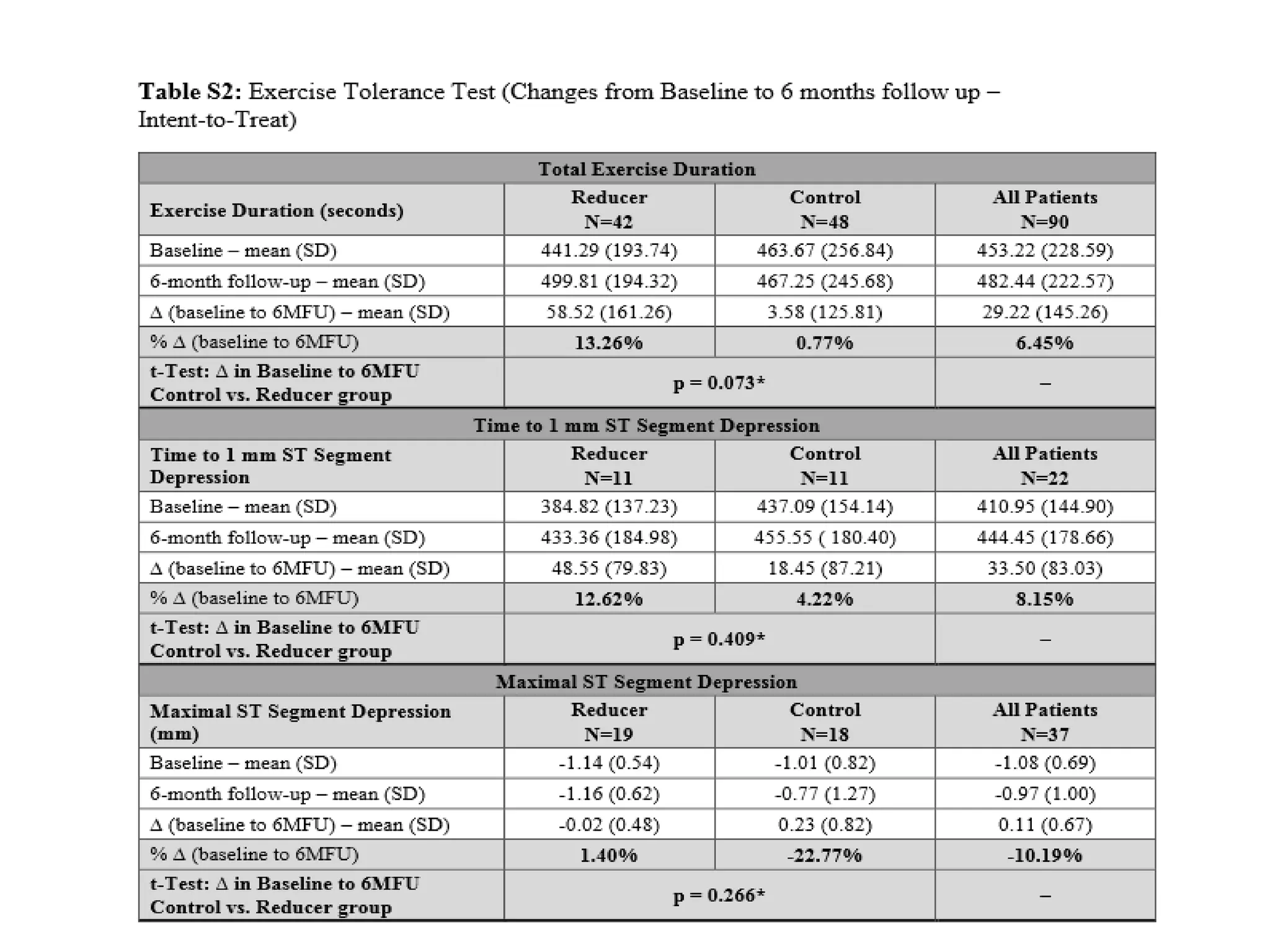
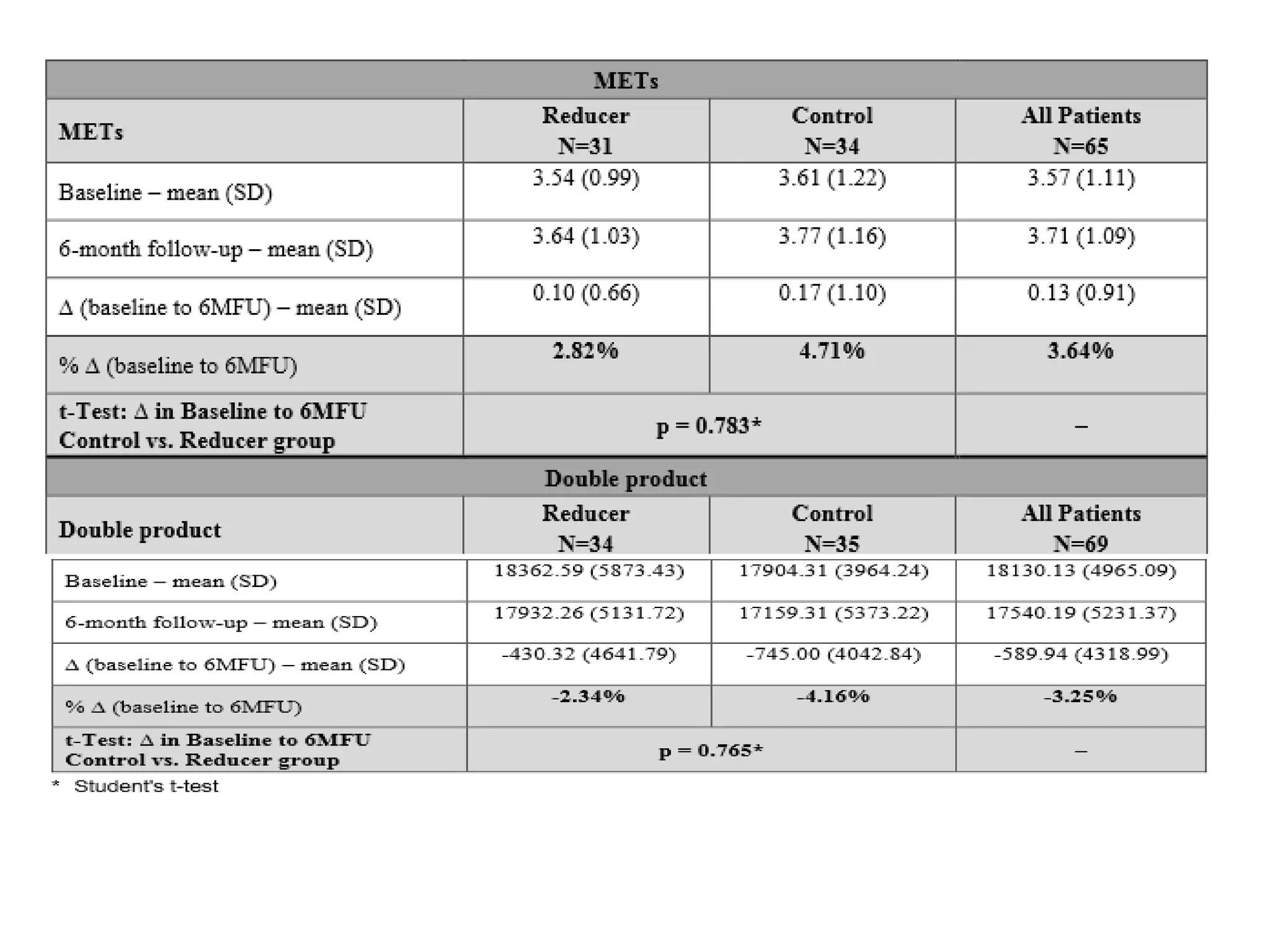
examination, 3) symptom limited stress test, 4)
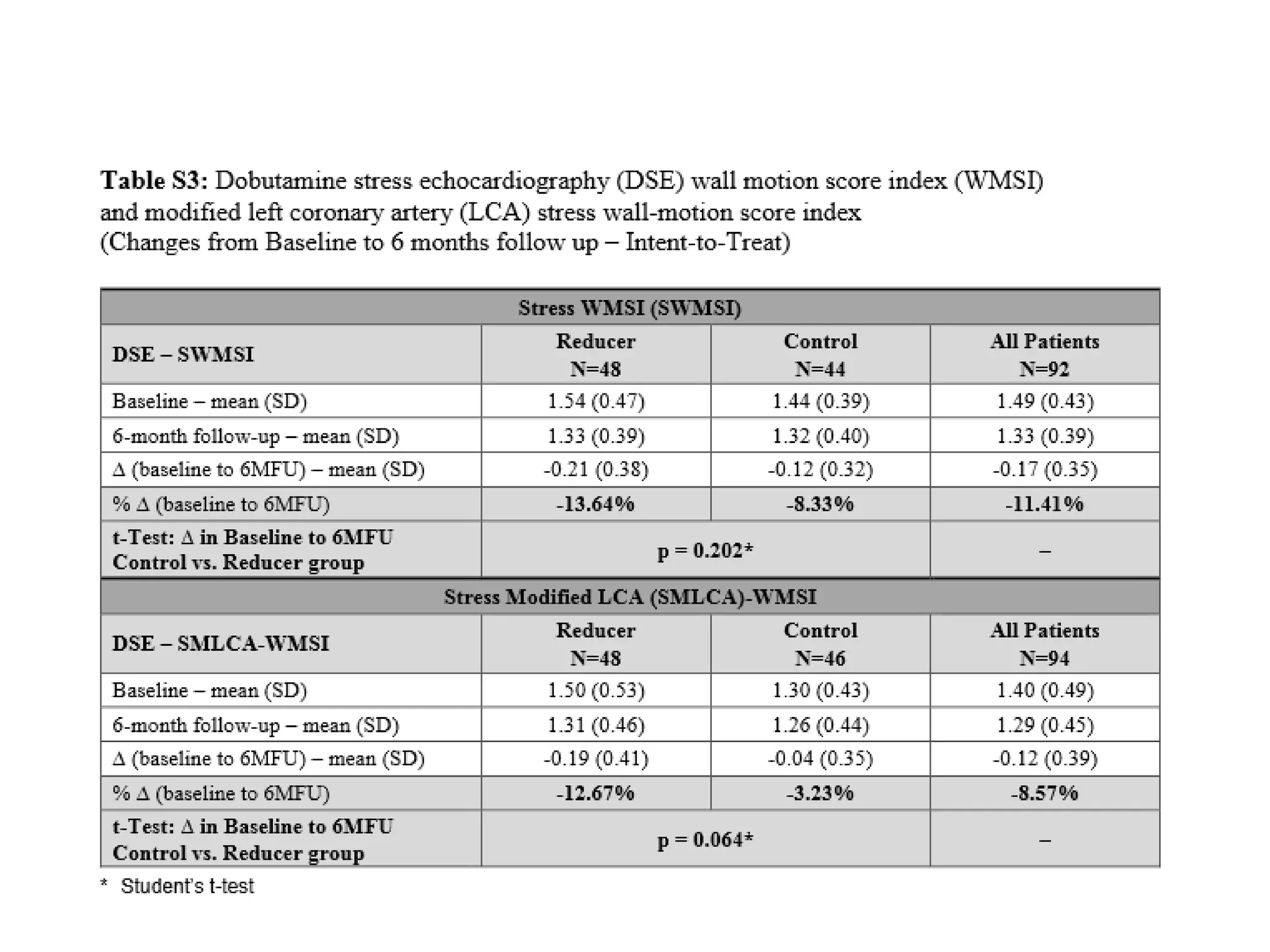
dobutamine stress echocardiogram, and 5) Seattle
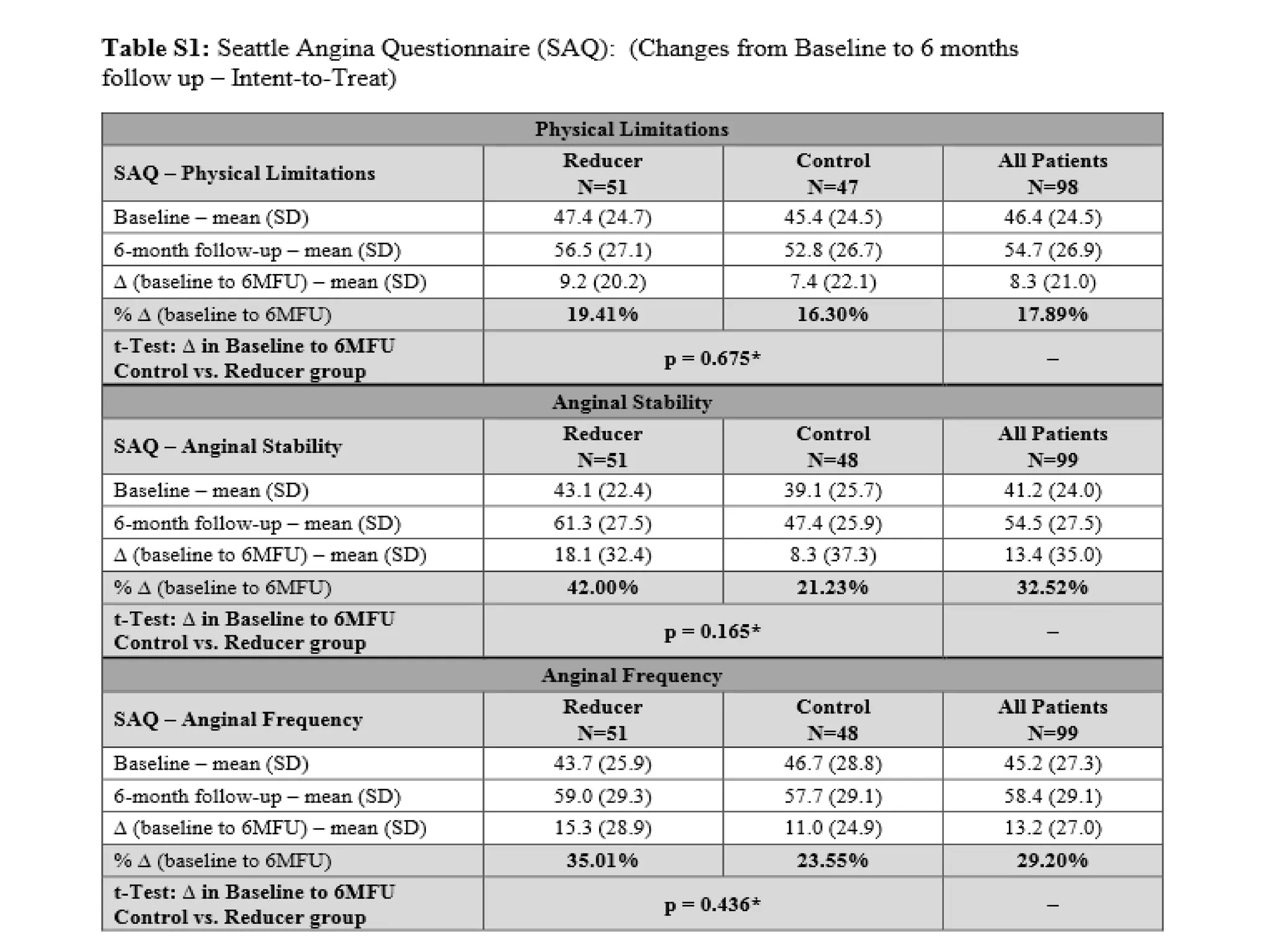
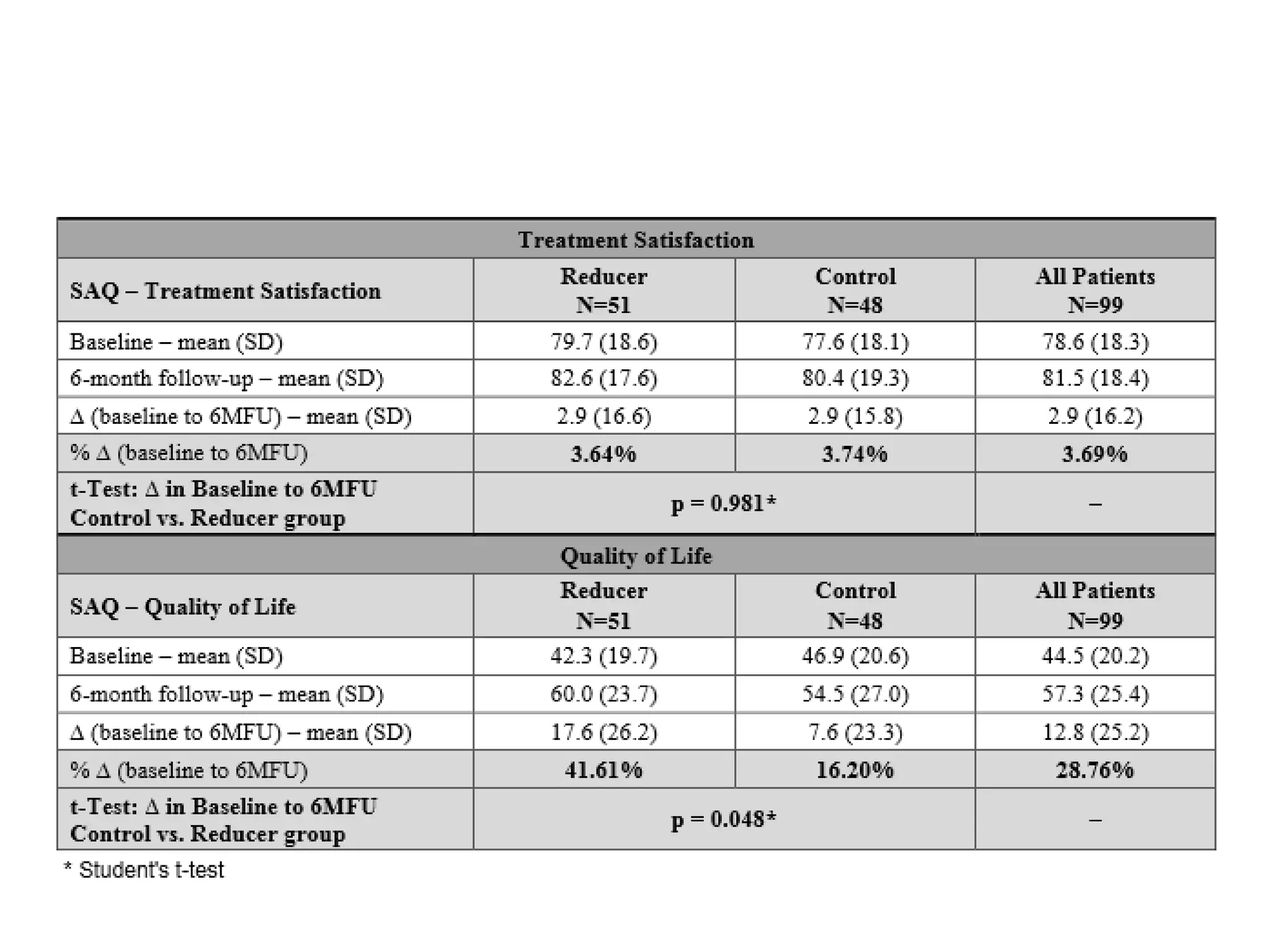
Angina Questionnaire (SAQ).
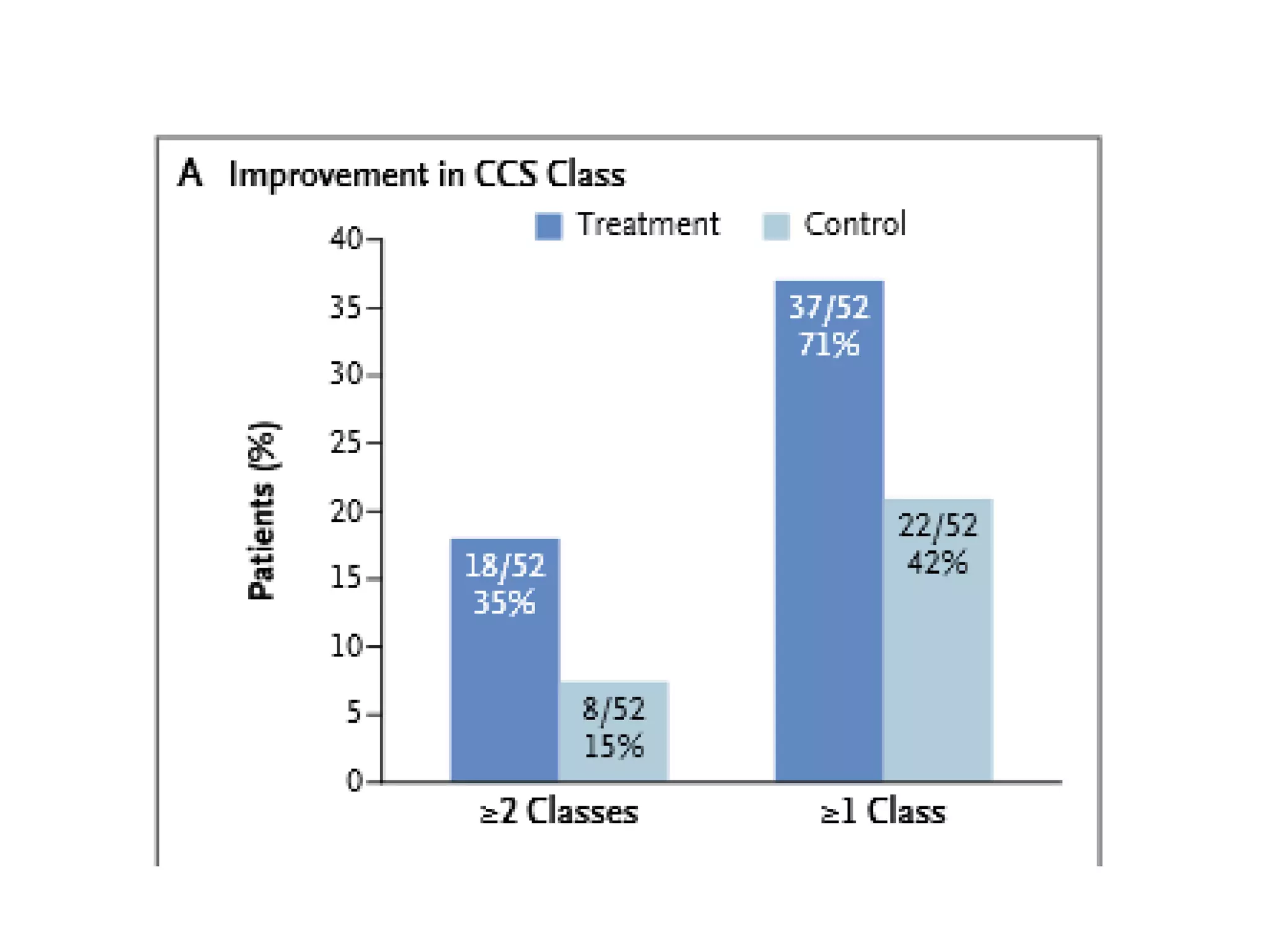
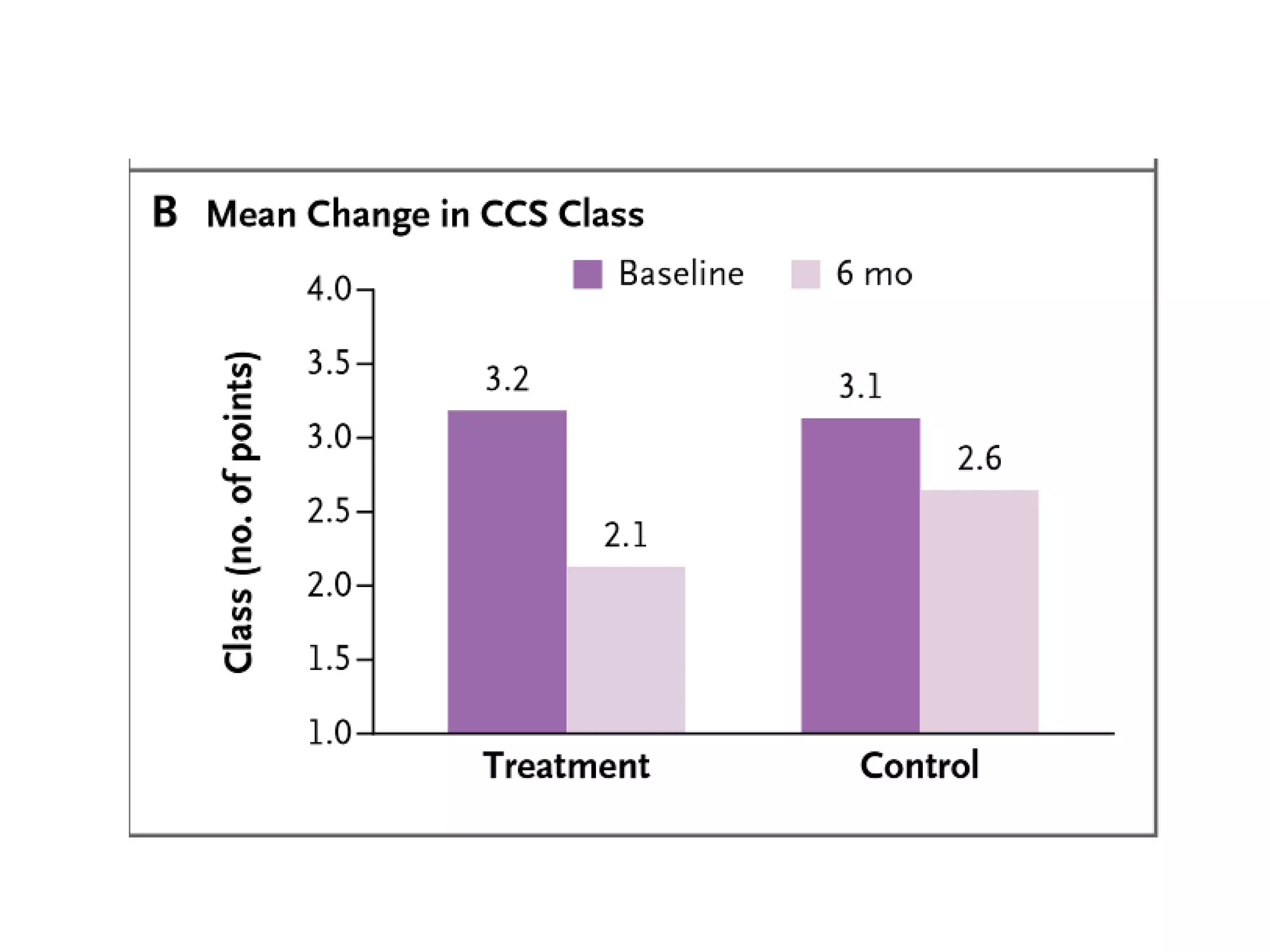
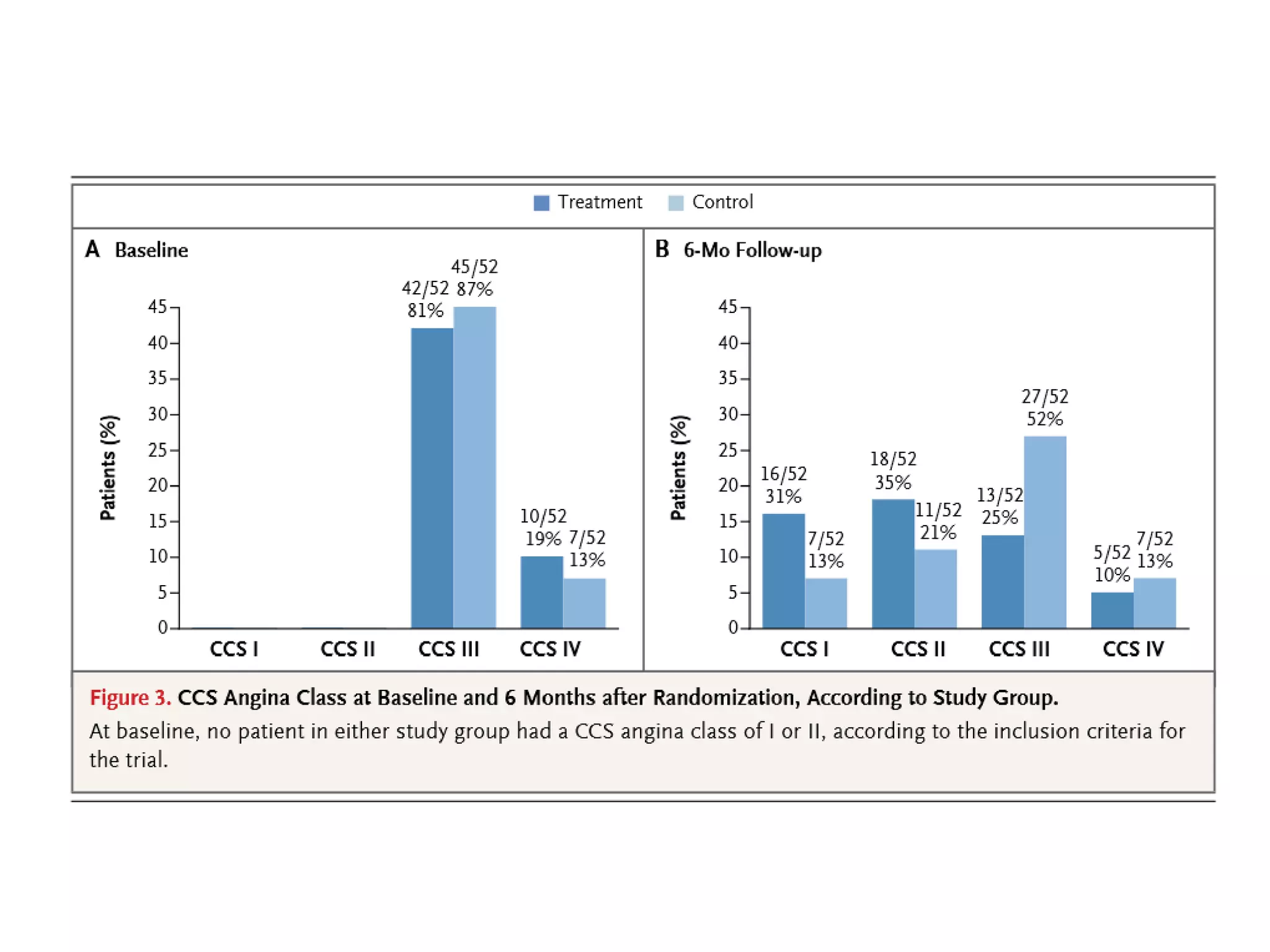
• CCS Class: Participants were assessed for CCS
grade at discharge, 30 days, 3 and 6months. To
maintain blinding, clinical followup was done by
investigators blinded to the treatment allocation.
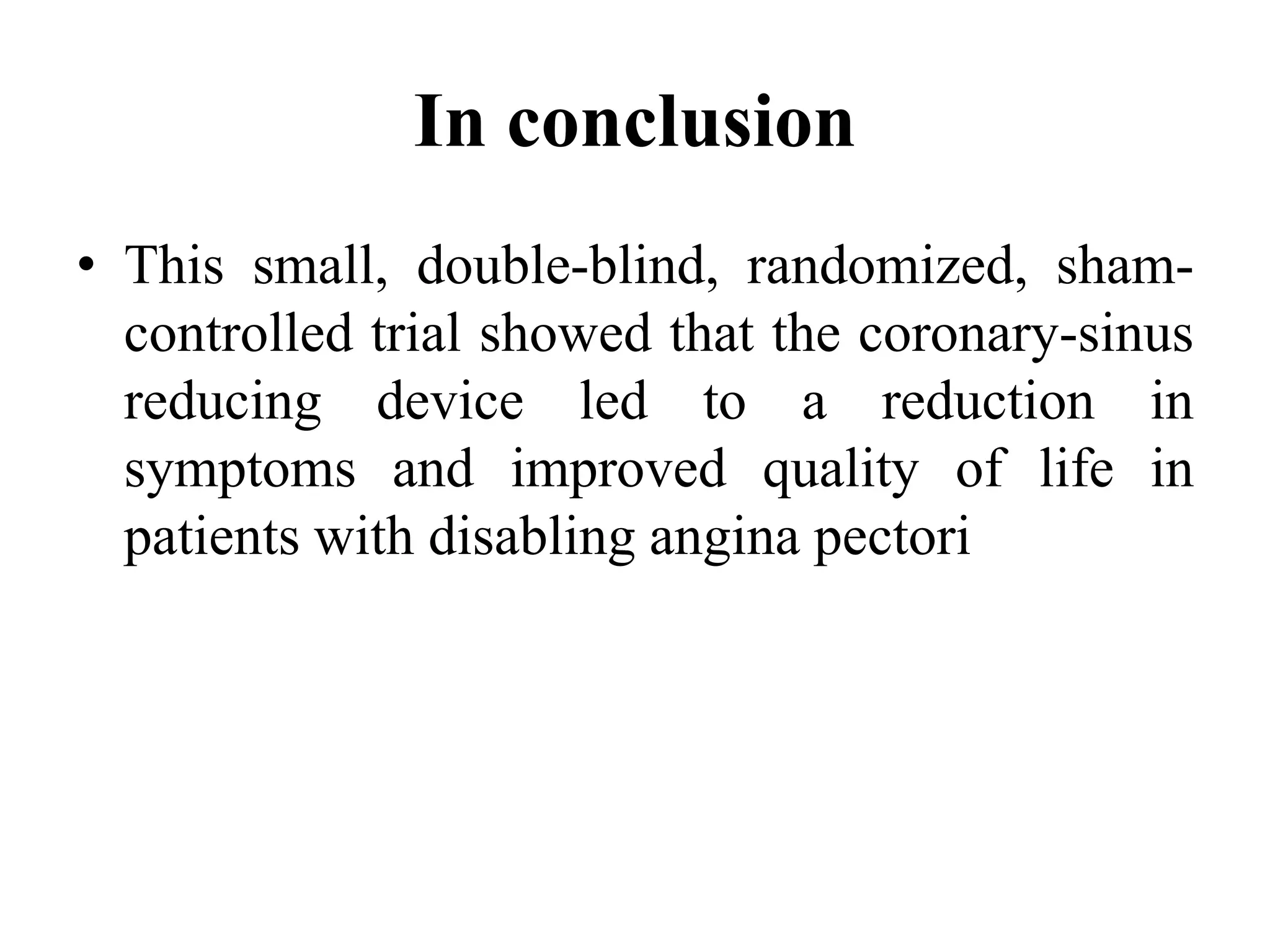
In conclusion
• This small, double-blind, randomized, sham-
controlled trial showed that the coronary-sinus
reducing device led to a reduction in
symptoms and improved quality of life in
patients with disabling angina pectori

Presentation csrd

  • 2.
    BACKGROUND • Refractory angina •The balloon expandable, stainless steel, hourglass-shaped, coronary-sinus reducing device creates a focal narrowing and increases pressure in the coronary sinus, thus redistributing blood into ischemic myocardium
  • 3.
    METHODS • Phase 2,multicenter, randomized, double- blind, sham-controlled clinical trial to test the safety and efficacy of the coronary sinus reducing device • Conducted at 11 clinical centers and was sponsored by Neovasc
  • 7.
    • The physiologicalrationale for a beneficial effect of increased coronary sinus pressure in angina pectoris remains unclear. • In 1954, Beck and Leighninger described a surgical procedure for partial occlusion of the coronary sinus, which was associated with relief of angina, an improvement in functional class, and a reduction in mortality. • The most commonly proposed mechanism of benefit is recruitment of coronary collateral flow, with redistribution from the less-ischemic epicardium to the ischemic endocardium
  • 8.
    RESULTS • From April2010 through April 2013, a total of 104 patients were enrolled in the trial; 52 patients were assigned to the treatment group and 52 to the control group. • The device was successfully implanted in 50 of the 52 patients (96%) randomly assigned to the treatment group. In 2 patients, the implantation failed owing to a venous valve in the coronary sinus that could not be crossed with the device
  • 9.
    Outcomes: • At baselineall participants underwent 1) a clinical interview to determine the CCS class, 2) physical examination, 3) symptom limited stress test, 4) dobutamine stress echocardiogram, and 5) Seattle Angina Questionnaire (SAQ). • CCS Class: Participants were assessed for CCS grade at discharge, 30 days, 3 and 6months. To maintain blinding, clinical followup was done by investigators blinded to the treatment allocation.
  • 20.
    In conclusion • Thissmall, double-blind, randomized, sham- controlled trial showed that the coronary-sinus reducing device led to a reduction in symptoms and improved quality of life in patients with disabling angina pectori