Downloaded 637 times
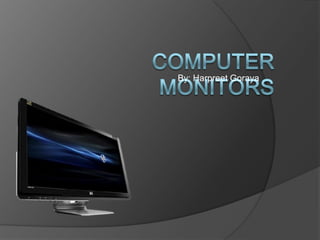
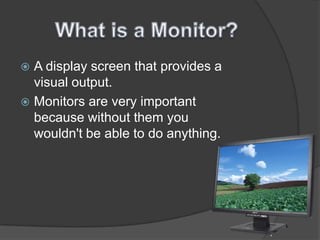
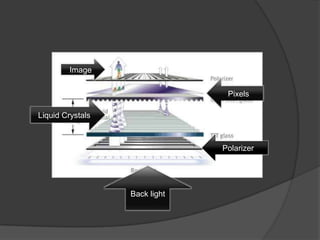
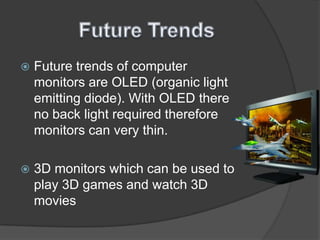



Computer monitors display visual output and have evolved from early text-based displays to modern LCD screens capable of showing millions of colors. Early monitors in the 1980s could only display text in a few colors but improved to color graphics. LCD monitors became popular in the 1990s and work by using a backlight and pixels to form images. Future monitor trends may include thinner OLED screens without backlights and 3D capable displays.


![5G Explained! A High Level Overview [Introduction]](https://cdn.slidesharecdn.com/ss_thumbnails/5gexplainedahighleveloverview-260119165306-cc137a3e-thumbnail.jpg?width=640&height=640&fit=bounds)


