Complex Patients Treated With
Zotarolimus-Eluting
Resolute and Everolimus-Eluting
Xience V Stents in
the Randomized TWENTE Trial:
Comparison of
2-Year Clinical Outcome
METHODS
• TWENTE is a randomized, controlled, patient-
blinded DES trial, comparing Resolute ZES and
Xience V EES stents after 1:1 randomization
• Study was performed in 1,033 complex patients of
TWENTE trial, which represent 74.5% of the total
trial population
• 529 (51%) were treated with Resolute ZES and 504
(49%) with Xience V EES
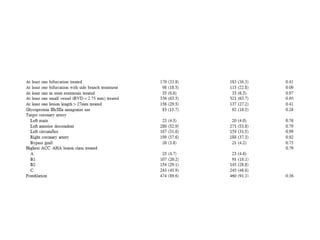
• Considered “complex” if they had atleast one of the
following characteristics:
• Renal insuffi-ciency (creatinine 140 mmol/l)
• Ejection fraction<30%
• Occurrence of acute myocardial infarction (MI)
within the previous 72 hrs
• More than one lesion per vessel
• More than two vessels treated
• Lesion length>27 mm
• Bifurcation; saphenous vein graft lesion; arterial
bypass graft lesion
• In-stent restenosis
• Unprotected left main lesion; lesion with thrombus;
and/or lesion with total occlusion
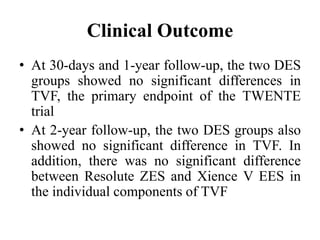
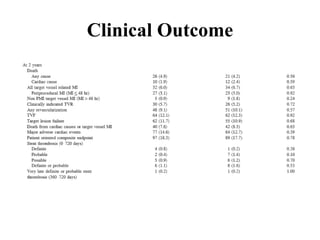
Clinical Outcome
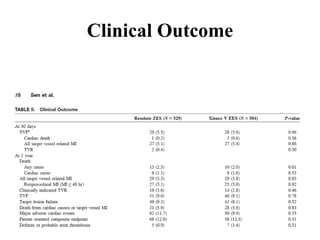
• At 30-days and 1-year follow-up, the two DES
groups showed no significant differences in
TVF, the primary endpoint of the TWENTE
trial
• At 2-year follow-up, the two DES groups also
showed no significant difference in TVF. In
addition, there was no significant difference
between Resolute ZES and Xience V EES in
the individual components of TVF
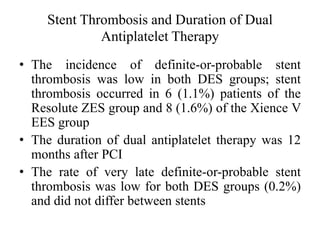
Stent Thrombosis and Duration of Dual
Antiplatelet Therapy
• The incidence of definite-or-probable stent
thrombosis was low in both DES groups; stent
thrombosis occurred in 6 (1.1%) patients of the
Resolute ZES group and 8 (1.6%) of the Xience V
EES group
• The duration of dual antiplatelet therapy was 12
months after PCI
• The rate of very late definite-or-probable stent
thrombosis was low for both DES groups (0.2%)
and did not differ between stents
Clinical Outcome
Clinical Outcome
OUTCOMES
• 2-year outcome data showed no significant
difference between DES groups in primary and
secondary endpoint
• The rates of definite-or-probable stent
thrombosis, in particular the incidence of very
late stent thrombosis, were low and similar for
both DES groups
• Improved flexibility of the cobalt-chromium
based stent platforms and the more biocom
patible coatings of both second-generation DES
(compared with the first-generation DES) might
have played a role
• The high postdilation rate of 88% might have
improved DES apposition
• Improvement of other procedural devices (e.g.,
balloon catheters, guide wires, etc.) might have
contributed to the overall favorable findings
Limitations
• Should be considered as hypothesis-
generating:
1. Enrolled patients with limited exclusion
criteria, but no patients with acute ST
segment elevation MI
2. Vast majority of enrolled patients were
complex
• Patients were treated in a high-volume tertiary
PCI center by five interventional cardiologists
who all had an individual experience of at least
4,000 PCI procedure
• Applied stent postdilation in the vastmajority
of complex patients (91% of lesions),
generalization of our findings to other settings
may be limited

Complex patients treated with zotarolimus eluting

  • 1.
    Complex Patients TreatedWith Zotarolimus-Eluting Resolute and Everolimus-Eluting Xience V Stents in the Randomized TWENTE Trial: Comparison of 2-Year Clinical Outcome
  • 2.
    METHODS • TWENTE isa randomized, controlled, patient- blinded DES trial, comparing Resolute ZES and Xience V EES stents after 1:1 randomization • Study was performed in 1,033 complex patients of TWENTE trial, which represent 74.5% of the total trial population • 529 (51%) were treated with Resolute ZES and 504 (49%) with Xience V EES
  • 3.
    • Considered “complex”if they had atleast one of the following characteristics: • Renal insuffi-ciency (creatinine 140 mmol/l) • Ejection fraction<30% • Occurrence of acute myocardial infarction (MI) within the previous 72 hrs • More than one lesion per vessel • More than two vessels treated • Lesion length>27 mm • Bifurcation; saphenous vein graft lesion; arterial bypass graft lesion • In-stent restenosis • Unprotected left main lesion; lesion with thrombus; and/or lesion with total occlusion
  • 6.
    Clinical Outcome • At30-days and 1-year follow-up, the two DES groups showed no significant differences in TVF, the primary endpoint of the TWENTE trial • At 2-year follow-up, the two DES groups also showed no significant difference in TVF. In addition, there was no significant difference between Resolute ZES and Xience V EES in the individual components of TVF
  • 7.
    Stent Thrombosis andDuration of Dual Antiplatelet Therapy • The incidence of definite-or-probable stent thrombosis was low in both DES groups; stent thrombosis occurred in 6 (1.1%) patients of the Resolute ZES group and 8 (1.6%) of the Xience V EES group • The duration of dual antiplatelet therapy was 12 months after PCI • The rate of very late definite-or-probable stent thrombosis was low for both DES groups (0.2%) and did not differ between stents
  • 8.
  • 9.
  • 10.
    OUTCOMES • 2-year outcomedata showed no significant difference between DES groups in primary and secondary endpoint • The rates of definite-or-probable stent thrombosis, in particular the incidence of very late stent thrombosis, were low and similar for both DES groups
  • 11.
    • Improved flexibilityof the cobalt-chromium based stent platforms and the more biocom patible coatings of both second-generation DES (compared with the first-generation DES) might have played a role • The high postdilation rate of 88% might have improved DES apposition • Improvement of other procedural devices (e.g., balloon catheters, guide wires, etc.) might have contributed to the overall favorable findings
  • 12.
    Limitations • Should beconsidered as hypothesis- generating: 1. Enrolled patients with limited exclusion criteria, but no patients with acute ST segment elevation MI 2. Vast majority of enrolled patients were complex
  • 13.
    • Patients weretreated in a high-volume tertiary PCI center by five interventional cardiologists who all had an individual experience of at least 4,000 PCI procedure • Applied stent postdilation in the vastmajority of complex patients (91% of lesions), generalization of our findings to other settings may be limited