Fredric Ginsberg, MD Assistant Professor of Medicine, Robert Wood Johnson Medical School University of Medicine and Dentistry of New Jersey Joseph E. Parrillo, MD Professor of Medicine, Robert Wood Johnson Medical School University of Medicine and Dentistry of New Jersey Head, Division of Cardiovascular Disease and Critical Care Medicine Director, Cooper Heart Institute Director, Cardiovascular and Critical Care Services Cooper University Hospital Camden, New Jersey SCCM Online Critical Care Course: Cardiogenic Shock, Acute Coronary Syndrome and Congestive  Heart Failure
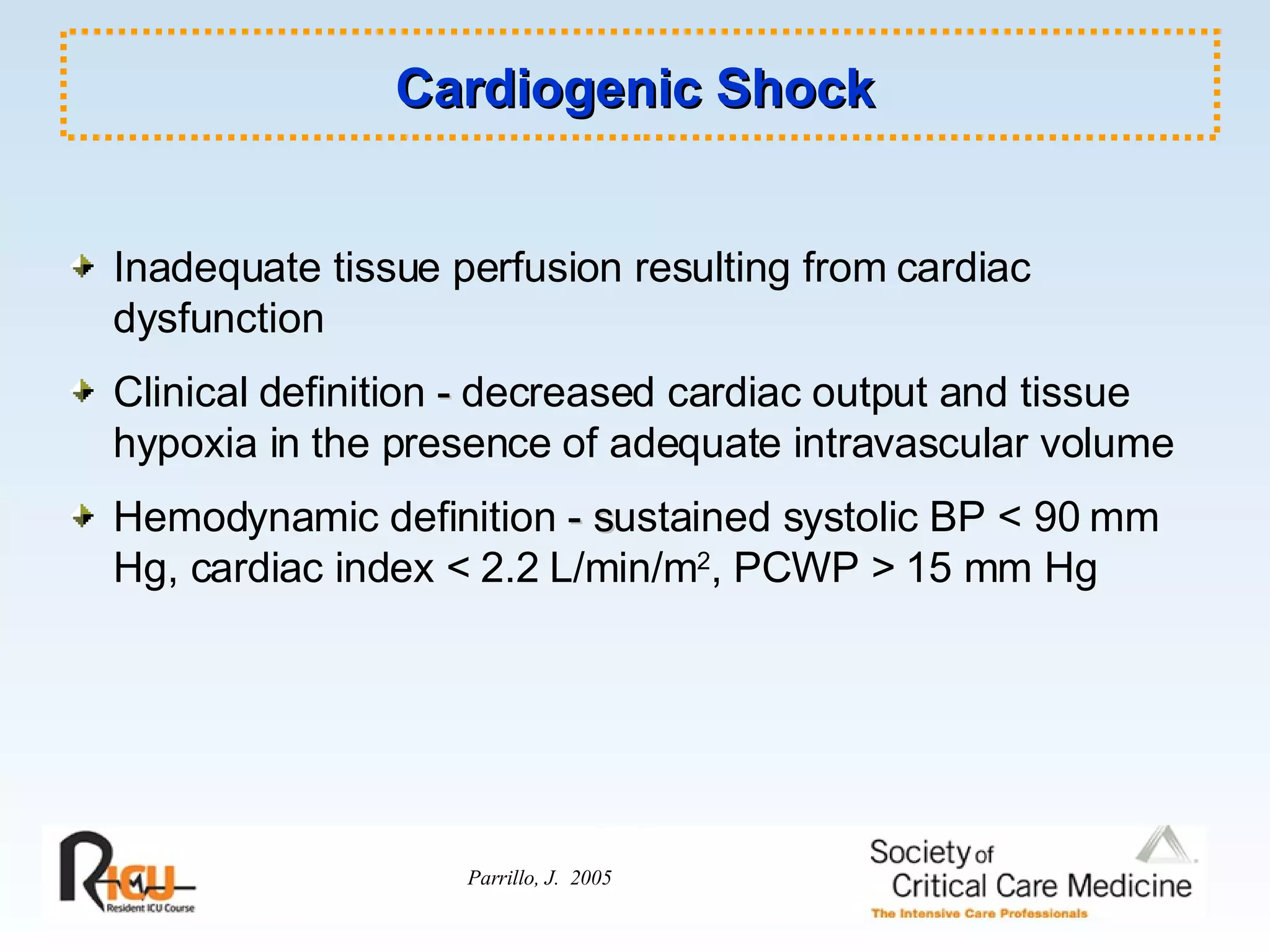
Inadequate tissue perfusion resulting from cardiac dysfunction Clinical definition  -  decreased cardiac output and tissue hypoxia in the presence of adequate intravascular volume Hemodynamic definition  - s ustained systolic BP < 90 mm Hg, cardiac index < 2.2 L/min/m 2 , PCWP > 15 mm Hg Parrillo, J.  2005 Cardiogenic Shock
Acute MI Pump failure Mechanical complications Right ventricular infarction Other conditions End-stage cardiomyopathy Myocarditis (fulminant myocarditis) Myocardial contusion Prolonged cardiopulmonary bypass Septic shock with myocardial depression Valvular disease Causes of Cardiogenic Shock
Evolution Of The Disease Frequently, shock develops after presentation for myocardial infarction. - SHOCK Registry   • At presentation  25% in shock   • Within 24 hours  75%   (median delay = 7 hours) - GUSTO Trial   • At presentation 11% in shock   • After admission 89% SHOCK Registry, Circulation. 1995;91:873-81. GUSTO J Amer Coll Cardiol. 1995;26:668-74 . Cardiogenic Shock
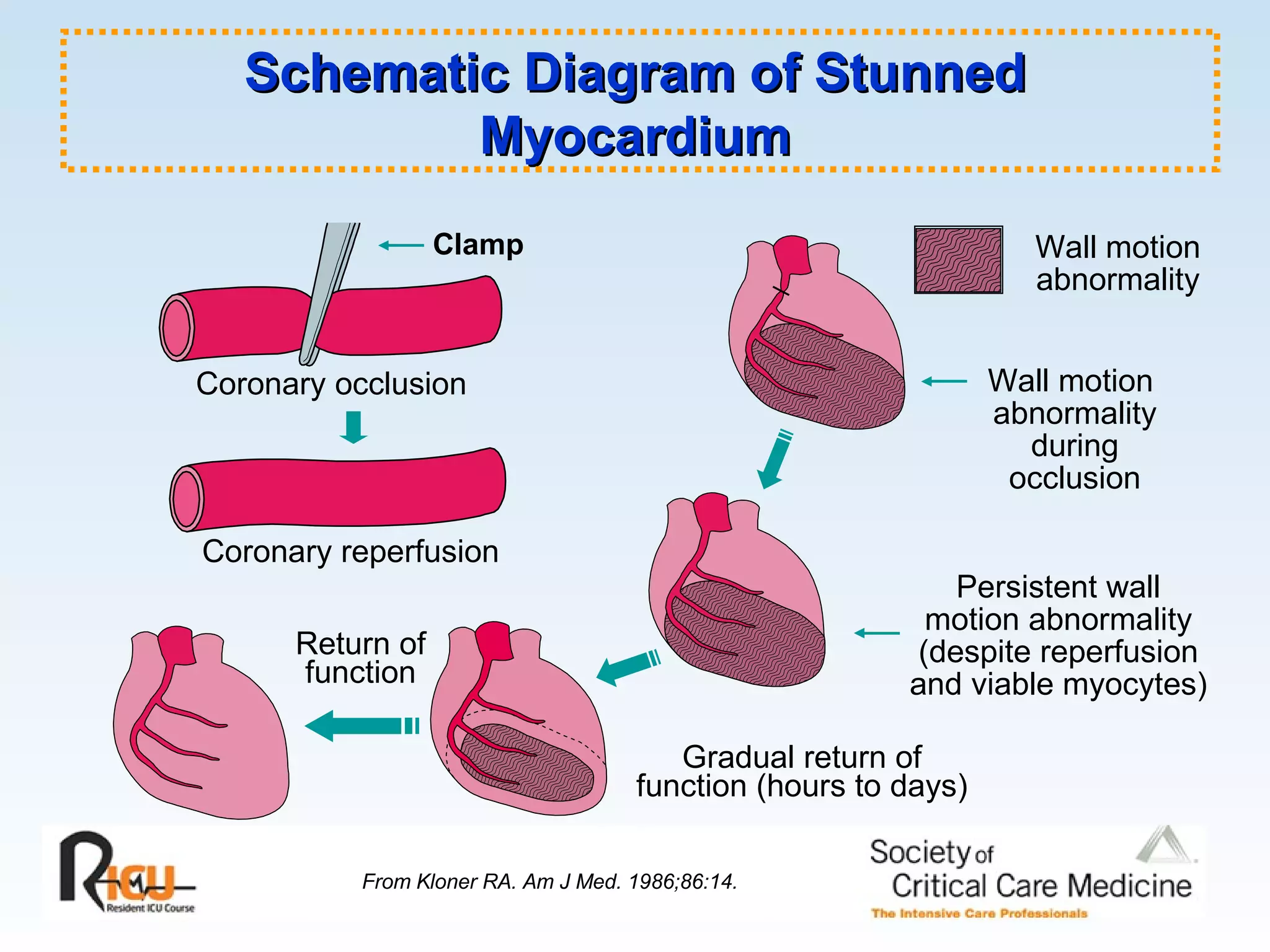
Wall motion  abnormality during occlusion Wall motion abnormality From Kloner RA. Am J Med. 1986;86:14. Gradual return of function (hours to days) Persistent wall motion abnormality (despite reperfusion and viable myocytes) Coronary occlusion Coronary reperfusion Return of function Clamp Schematic Diagram of Stunned Myocardium
Atherosclerotic narrowing Wall motion abnormality due to chronic ischemia without infarction Wall motion abnormality From Kloner RA. Am J Med. 1986;86:14. Hibernating Myocardium
Pre-operative 8 Months Postoperative CONTROL LVEDV = 128 EF = 0.37 POST NTG LVEDV = 101 EF = 0.51 LVEDV = 104 EF = 0.76 Patient Coronary Bypass Graft to L.A.D. Single vessel disease - Occluded L.A.D. End-Diastole End-Systole From Rahimtoola SH, et al. Circ. 1992;65:225. Hibernating Myocardium
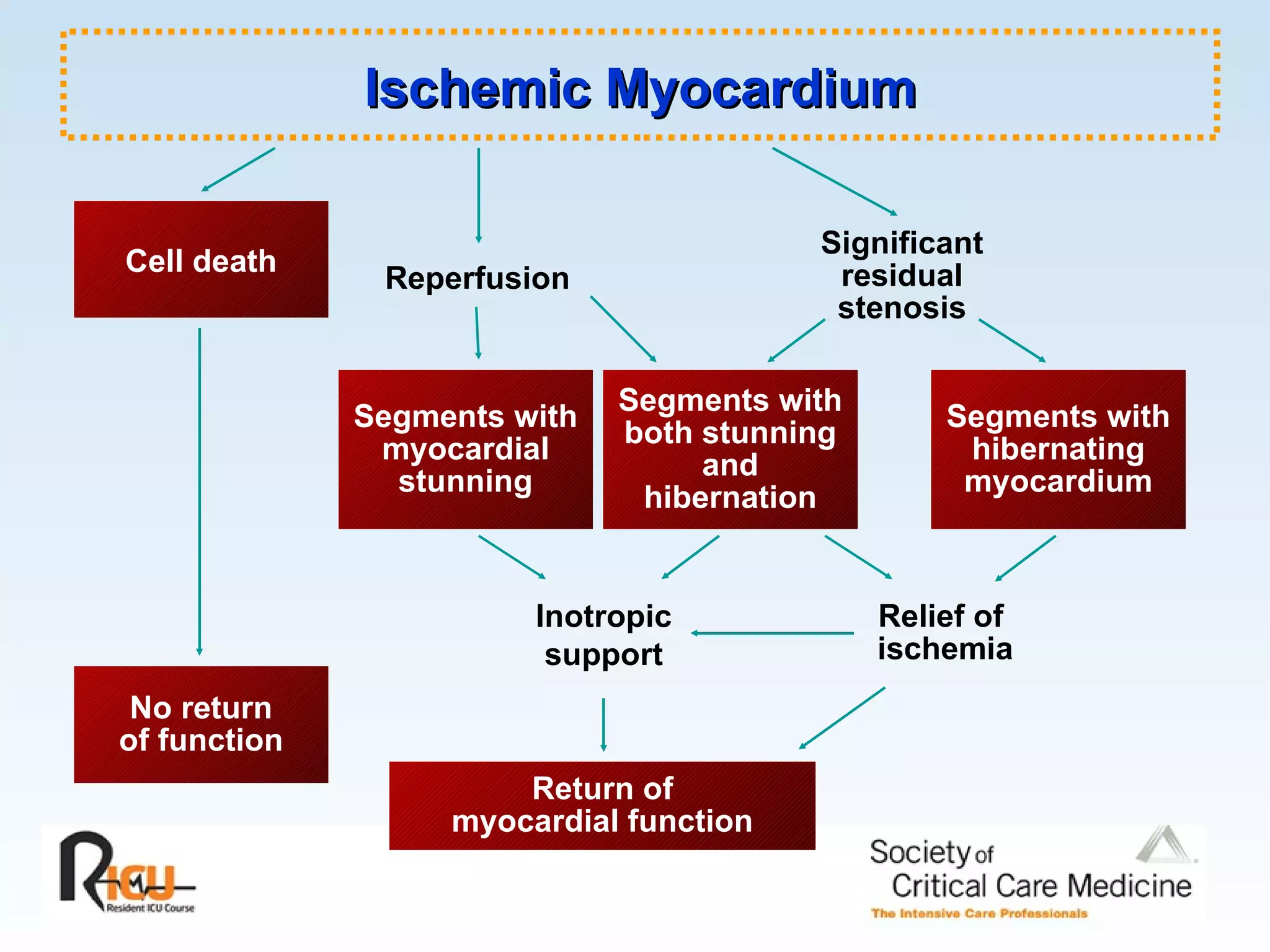
Cell death Significant residual stenosis Reperfusion Segments with myocardial stunning Segments with both stunning and hibernation Segments with hibernating myocardium Relief of  ischemia Inotropic support No return of function Return of myocardial function Ischemic Myocardium
Assure oxygenation Intubation and ventilation if needed Venous access Pain relief  Continuous EKG monitoring Hemodynamic support Fluid challenge if no pulmonary edema Vasopressors for hypotension - Dopamine - Norepinephrine Initial Approach: Management
Reduces afterload and augments diastolic perfusion pressure Beneficial effects occur without increase in oxygen demand No improvement in blood flow distal to critical coronary stenosis No improvement in survival when used alone May be essential support mechanism to allow for definitive therapy Intra-aortic Balloon Counterpulsation
Overall 30-Day Survival in the Study Hochman JS, et al. N Engl J Med. 1999;341:625-34. Proportion Alive 0 Days after Randomization 0.6 0.2 0.0 0.8 Revascularization (n =152) Medical   therapy (n =150) 1.0 0.4 5 10 15 20 25 30 Survival   = 53% Survival =   44% p = 0.11 Early Revascularization in Acute Myocardial Infarction Complicated by Cardiogenic Shock
46.7 50.3 54.3 56 63.1 66.4 0 20 40 60 80 100 % P = 0.11 P = 0.027 P < 0.03 30 days 6 months 1 year Revasc Med   Rx SHOCK Trial Mortality
Patients with ST segment elevation MI who have cardiogenic shock and are less than 75 years of age should be brought immediately or secondarily transferred to facilities capable of cardiac catheterization and rapid revascularization (PCI or CABG) if it can be performed within 18 hours of onset of shock. (Level of Evidence: A) ACC/AHA Class I Indication
Despite ACC/AHA recommendation to treat patients < 75 years of age aggressively with early mechanical revascularization, in 2001, two years after the guidelines were published, only 41% of patients with cardiogenic shock complicating AMI were treated with primary PTCA and only 3.1% underwent early CABG.  These data demonstrate significant underutilization of guideline recommended therapy. Babaev A, et al. Circ. 2002;106(19):1811 (abstract). National Registry of MI Early Revascularization is Underutilized in  Cardiogenic Shock
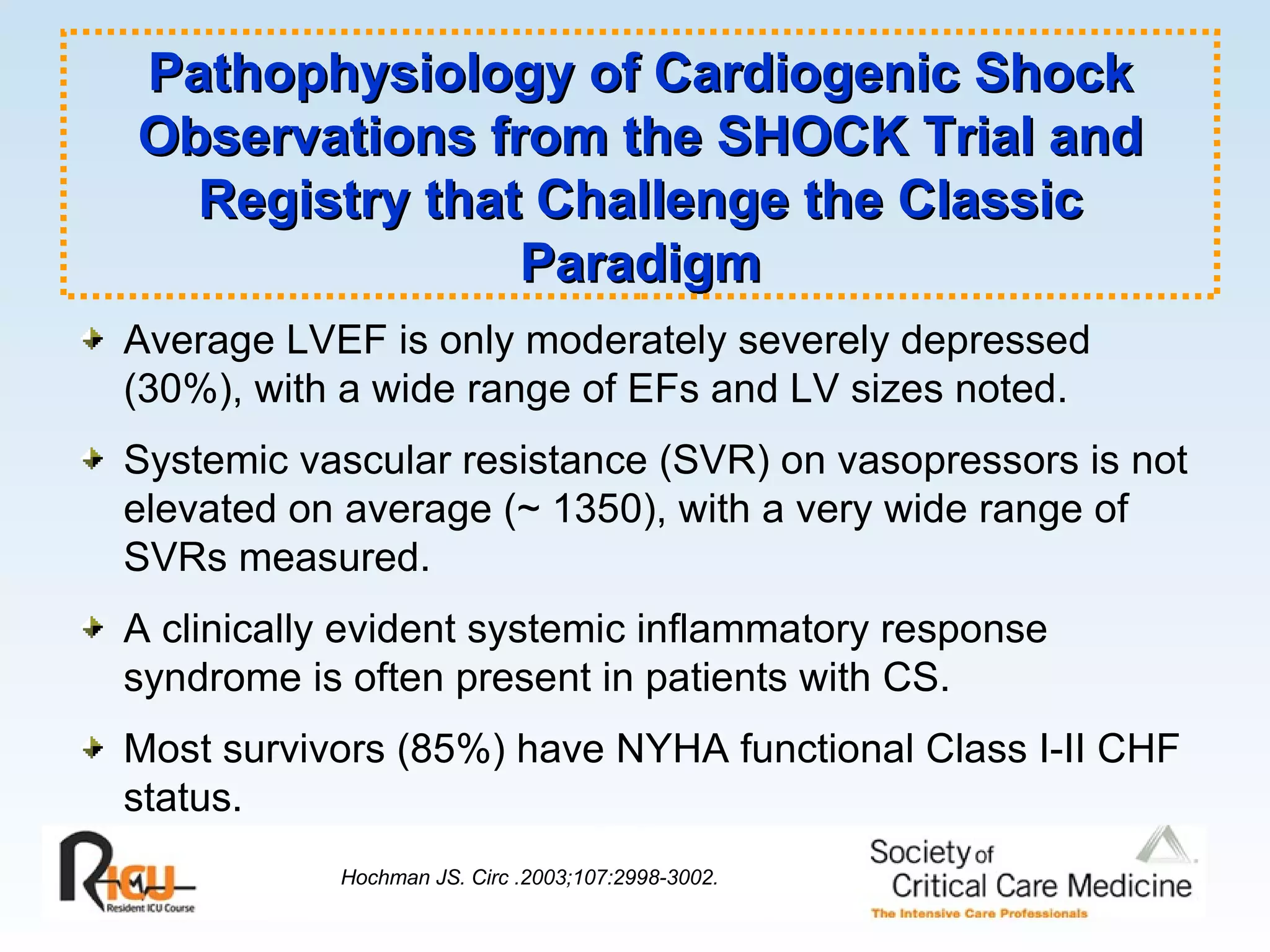
Average LVEF is only moderately severely depressed (30%), with a wide range of EFs and LV sizes noted. Systemic vascular resistance (SVR) on vasopressors is not elevated on average (~ 1350), with a very wide range of SVRs measured. A clinically evident systemic inflammatory response syndrome is often present in patients with CS. Most survivors (85%) have NYHA functional Class I-II CHF status. Hochman JS. Circ .2003;107:2998-3002.   Pathophysiology of Cardiogenic Shock Observations from the SHOCK Trial and Registry that Challenge the Classic Paradigm
Cardiogenic shock IS NOT simply the result of severe depression of LV function due to extensive myocardial ischemia/injury.  Depressed Myocardial Contractility  combined with  Inadequate Systemic Vasoconstriction  resulting from a systemic inflammatory response to extensive myocardial ischemia/injury results in cardiogenic shock . Pathophysiology of Cardiogenic Shock
Thus, excess nitric oxide and peroxy nitrites may be a major contributor to cardiogenic shock complicating MI. The Overproduction of Nitric Oxide May Cause Both Myocardial Depression and Inappropriate Vasodilatation.
Nitric oxide synthase inhibition can raise blood pressure in patients with persistent cardiogenic shock after percutaneous intervention. The mechanism of this effect is unknown, but may involve both an effect on coronary and other organ perfusion pressure, and potentially an improvement in cardiac function.  Outcome data are not yet available. LINCS: Conclusions Cotter. Eur Heart J. 2003;24:1287-1295.
Acute coronary syndrome : Constellation of clinical symptoms compatible with  acute myocardial ischemia ST-segment elevation MI (STEMI) Non-ST-segment elevation MI (NSTEMI) Unstable angina Unstable angina: Angina at rest (usually > 20 minutes) New-onset of class III or IV angina Increasing angina (from class I or II to III or IV) Braunwald. Circulation 2002; 106:1893-2000. www.acc.org/clinical/guidelines/unstable/unstable.pdf Acute Coronary Syndromes: Definitions
 
Plaque rupture Platelet adhesion Platelet activation Partially occlusive arterial  thrombosis & unstable angina Microembolization & non-ST-segment elevation MI Totally occlusive arterial thrombosis & ST-segment elevation MI White HD. Am J Cardiol 1997;80 (4A):2B-10B. Pathogenesis of Acute Coronary Syndromes
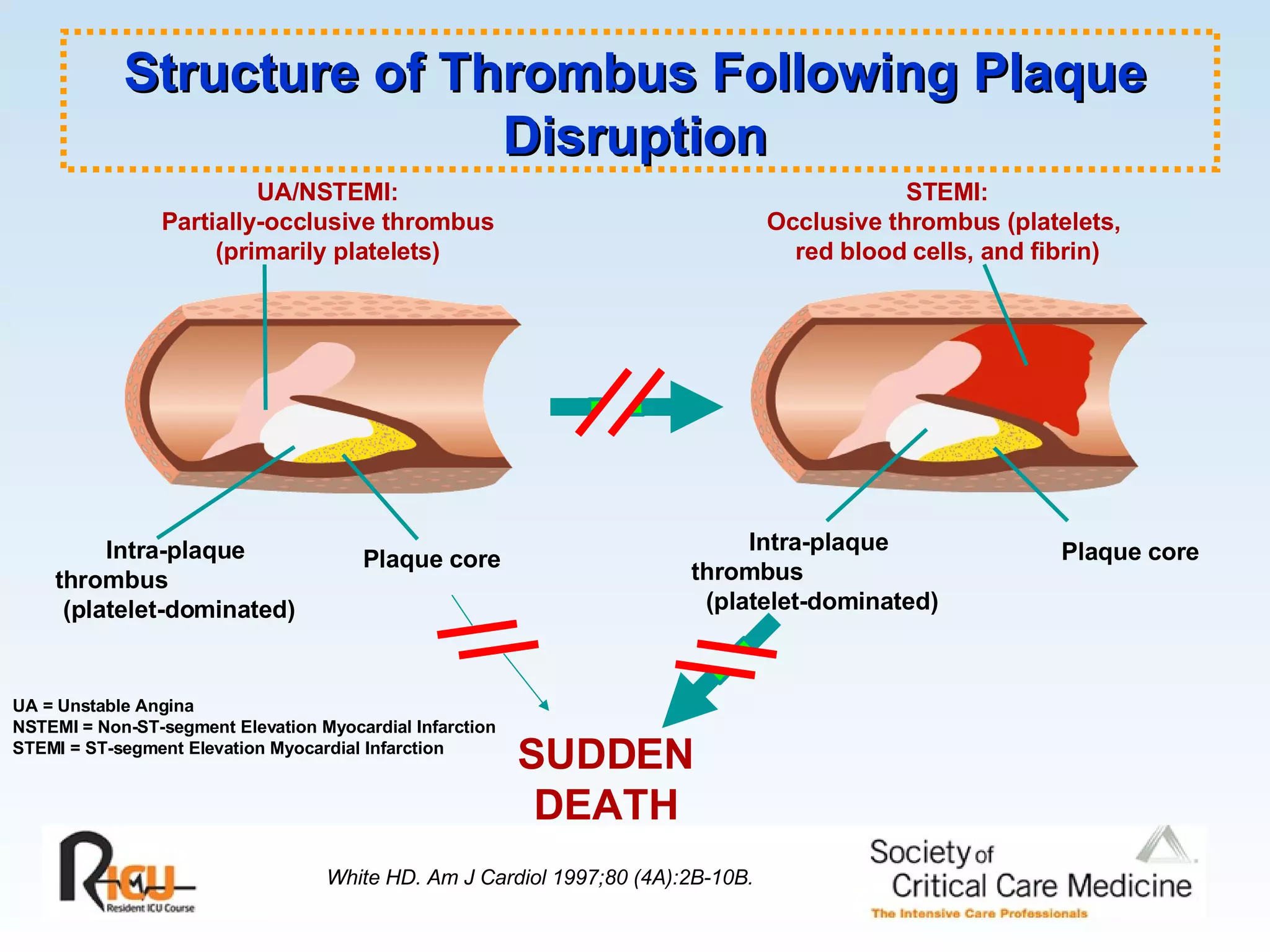
UA/NSTEMI: Partially-occlusive thrombus (primarily platelets) Intra-plaque  thrombus  (platelet-dominated) Plaque core STEMI: Occlusive thrombus (platelets,  red blood cells, and fibrin) Intra-plaque  thrombus  (platelet-dominated) Plaque core SUDDEN DEATH UA = Unstable Angina NSTEMI = Non-ST-segment Elevation Myocardial Infarction STEMI = ST-segment Elevation Myocardial Infarction Structure of Thrombus Following Plaque Disruption White HD. Am J Cardiol 1997;80 (4A):2B-10B.
Therapeutic goal: rapidly break apart fibrin mesh to quickly restore blood flow ST-segment elevation MI Non-ST Elevation ACS* Non-ST Elevation MI + T roponin or + CK-MB Consider fibrinolytic therapy, if indicated, or primary percutaneous coronary intervention (PCI) Therapeutic goal: prevent progression to complete occlusion of coronary artery and resultant MI or death Consider GP IIb-IIIa inhibitor + aspirin + heparin before early diagnostic catheterization &/or Braunwald E, et al. 2002.  http://www.acc.org/clinical/guidelines/unstable/unstable.pdf . Diagnostic Algorithm for Acute Coronary Syndrome Management
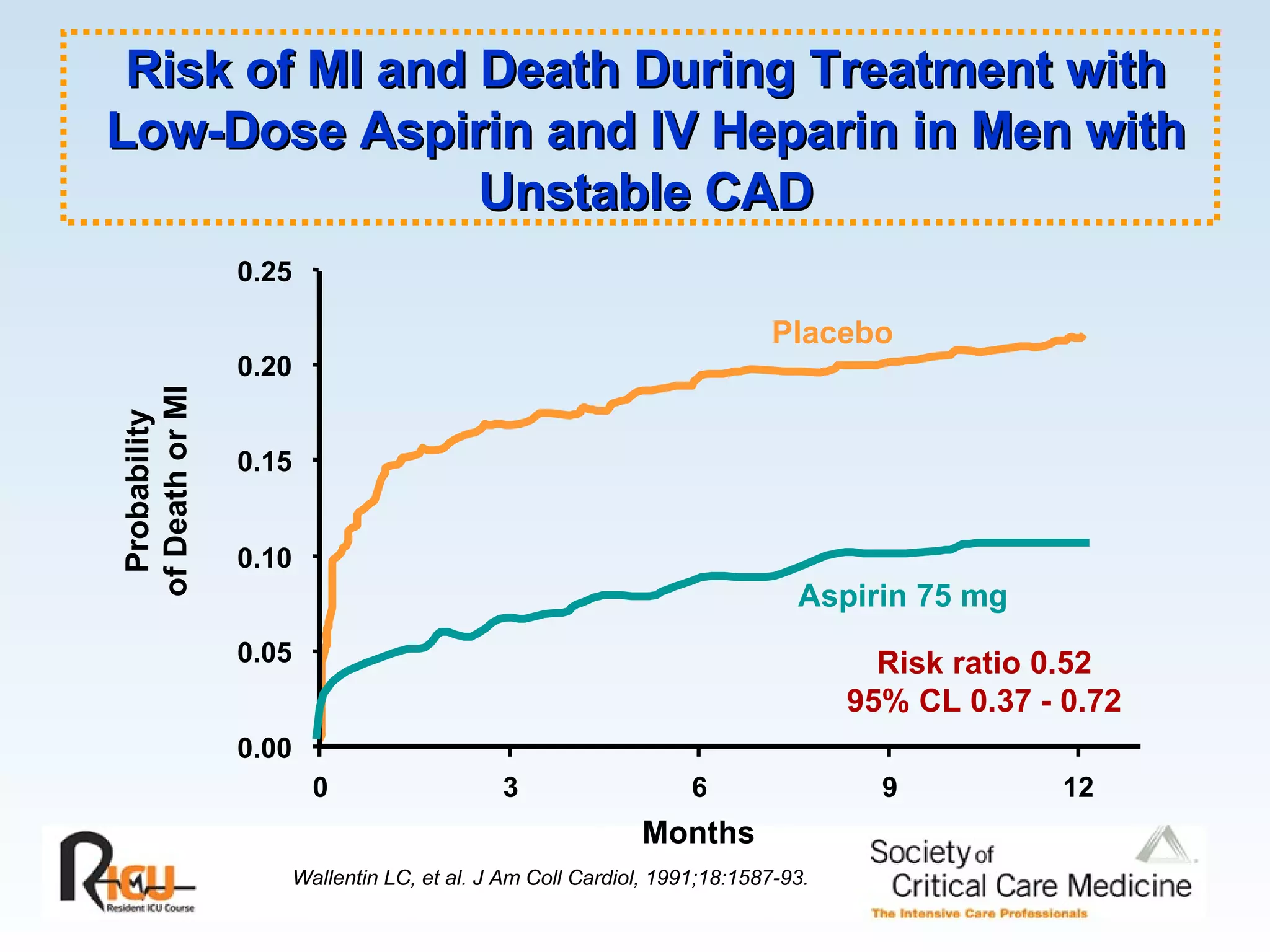
0 3 6 9 12 Probability of Death or MI Placebo Aspirin 75 mg Risk ratio 0.52 95% CL 0.37 - 0.72 Risk of MI and Death During Treatment with Low-Dose Aspirin and IV Heparin in Men with Unstable CAD Wallentin LC, et al. J Am Coll Cardiol, 1991;18:1587-93. Months 0.00 0.05 0.10 0.15 0.20 0.25
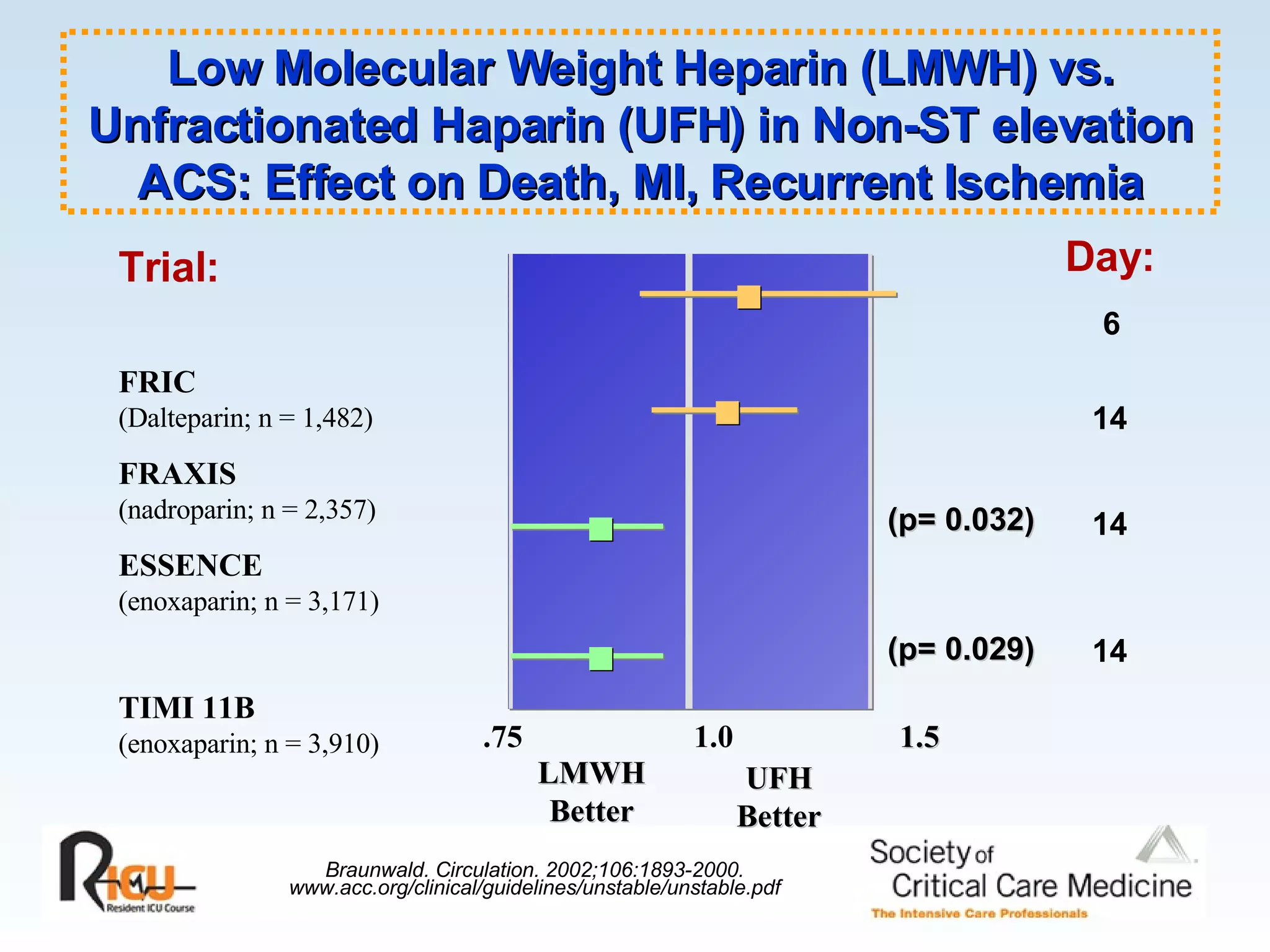
Trial: FRIC (Dalteparin; n = 1,482) FRAXIS (nadroparin; n = 2,357) ESSENCE (enoxaparin; n = 3,171) TIMI 11B (enoxaparin; n = 3,910) .75 1.0 1.5     (p= 0.032) (p= 0.029) LMWH Better UFH Better 6 14 14 14 Day: Braunwald. Circulation. 2002;106:1893-2000. www.acc.org/clinical/guidelines/unstable/unstable.pdf Low Molecular Weight Heparin (LMWH) vs. Unfractionated Haparin (UFH) in Non-ST elevation ACS: Effect on Death, MI, Recurrent Ischemia
0 2 4 6 8 10 12 14 Death, MI, or Stroke Clopidogrel  + ASA 3 6 9 Placebo  + ASA Months of Follow-Up 11.4% 9.3% 20% RRR P  < 0.001 N = 12,562 0 12 % N Engl J Med. 2001;345:494-502. Effects of Clopidogrel in Addition to Aspirin in Patients with ACS without ST-Segment Elevation
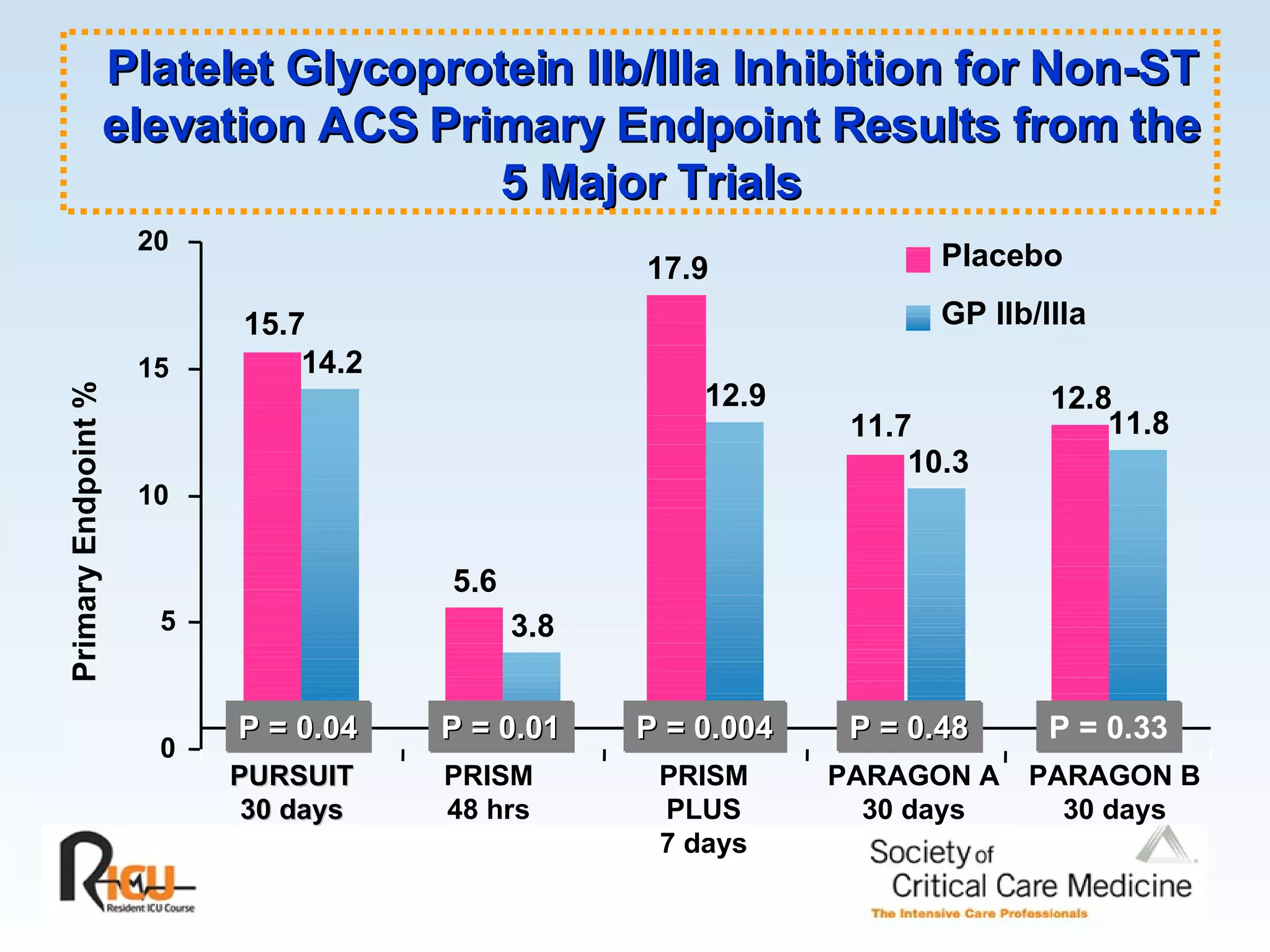
15.7 5.6 17.9 11.7 12.8 14.2 3.8 12.9 10.3 11.8 0 5 10 15 20 Primary Endpoint % Placebo GP IIb/IIIa PURSUIT 30 days PRISM 48 hrs PRISM PLUS 7 days P = 0.04 P = 0.01 P = 0.004 PARAGON A 30 days P = 0.48 PARAGON B 30 days P = 0.33 Platelet Glycoprotein IIb/IIIa Inhibition for Non-ST elevation ACS Primary Endpoint Results from the 5 Major Trials
Hospital Care Anti-Thrombotic Therapy Immediate aspirin Clopidogrel, if aspirin contraindicated Aspirin + clopidogrel for up to one month, if medical therapy or PCI is planned Heparin (IV unfractionated, LMW) with antiplatelet agents listed above Enoxaparin preferred over UFH unless CABG is planned within 24 hours Braunwald. Circulation. 2002;106:1893-2000. www.acc.org/clinical/guidelines/unstable/unstable.pdf I IIa IIb III
*  For patients managed with an early conservative strategy, and  those who are planned to undergo early PCI Guidelines do not specify initial approach to using clopidogrel when coronary anatomy is unknown Braunwald. Circulation. 2002;106:1893-2000. www.acc.org/clinical/guidelines/unstable/unstable.pdf Hospital Care Clopidogrel Therapy Aspirin + clopidogrel, for up to 1 month * Aspirin + clopidogrel, for up to 9 months * Withhold clopidogrel for 5 - 7 days for CABG I IIa IIb III
*  High-risk: Age >75; prolonged, ongoing CP; hemodynamic instability;  rest CP w/ ST   ; VT; positive cardiac markers   Braunwald. Circulation. 2002;106:1893-2000. www.acc.org/clinical/guidelines/unstable/unstable.pdf Hospital Care Platelet GP IIb/IIIa Inhibitors (1) Any GP IIb/IIIa inhibitor + ASA/Heparin for all patients, if cath/PCI planned Eptifibatide or tirofiban + ASA/Heparin for high-risk * patients in whom early cath/PCI is not planned Any GP IIb/IIIa inhibitor for patients already on ASA + Heparin + clopidogrel, if cath/PCI is planned I IIa IIb III
Braunwald. Circulation. 2002;106:1893-2000. www.acc.org/clinical/guidelines/unstable/unstable.pdf Hospital Care Platelet GP IIb/IIIa Inhibitors (2) Eptifibatide or tirofiban + ASA/Heparin for patients without continuing ischemia in whom PCI is not planned Abciximab for patients in whom PCI is not planned I IIa IIb III
Braunwald. Circulation. 2002;106:1893-2000. www.acc.org/clinical/guidelines/unstable/unstable.pdf Hospital Care Anti-ischemic Therapy (1)  -blocker (IV  oral) if not contraindicated Non-dihydropyridine Ca2+ antagonist if   -blocker contraindicated and no LV dysfunction, for recurrent ischemia ACE inhibitor if    BP persists with NTG+   -blocker, for pts with CHF or diabetes I IIa IIb III
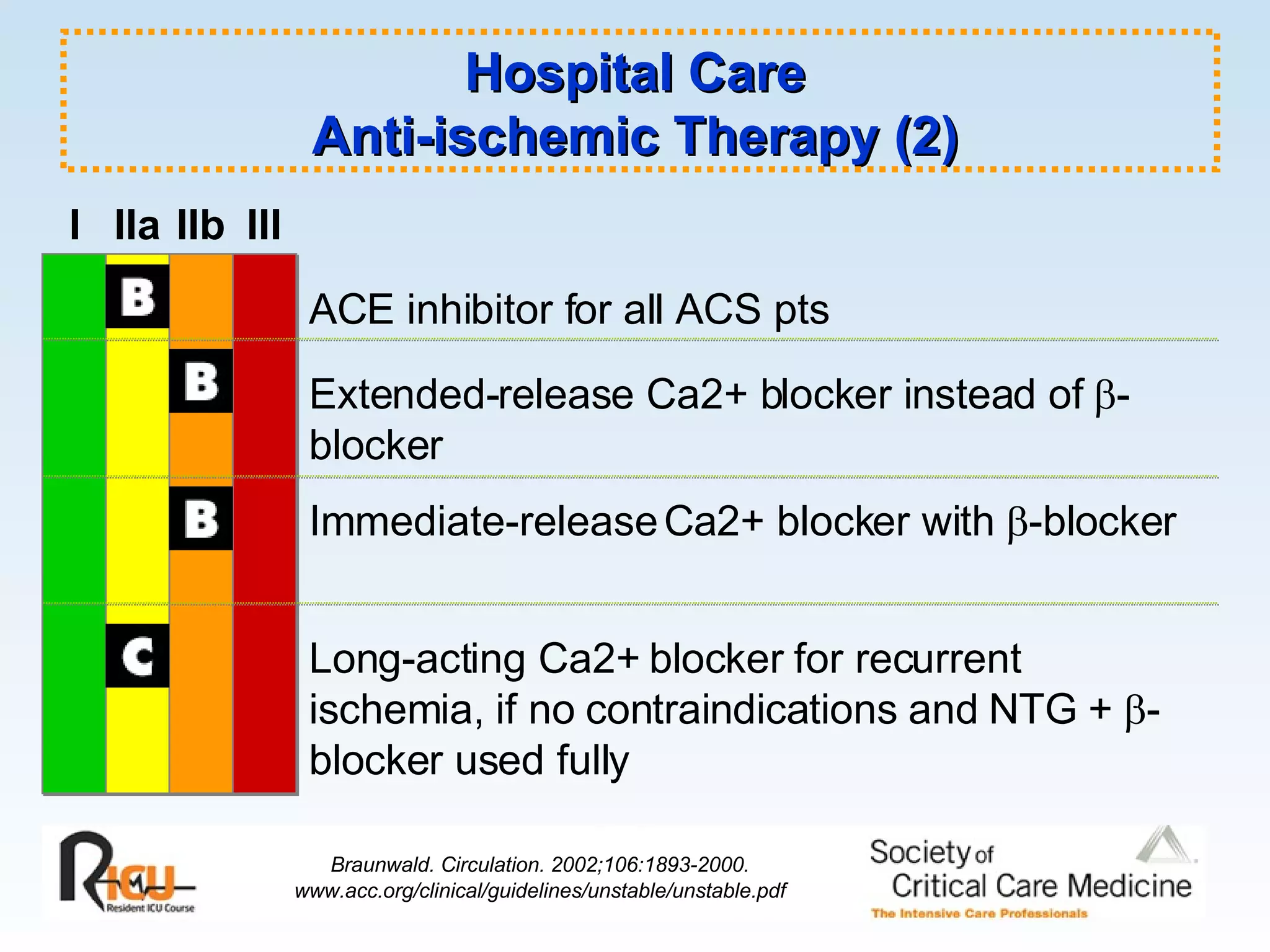
Braunwald. Circulation. 2002;106:1893-2000. www.acc.org/clinical/guidelines/unstable/unstable.pdf Hospital Care Anti-ischemic Therapy (2) ACE inhibitor for all ACS pts Extended-release Ca2+ blocker instead of   -blocker Immediate-release Ca2+ blocker with   -blocker   Long-acting Ca2+ blocker for recurrent ischemia, if no contraindications and NTG +   -blocker used fully I IIa IIb III
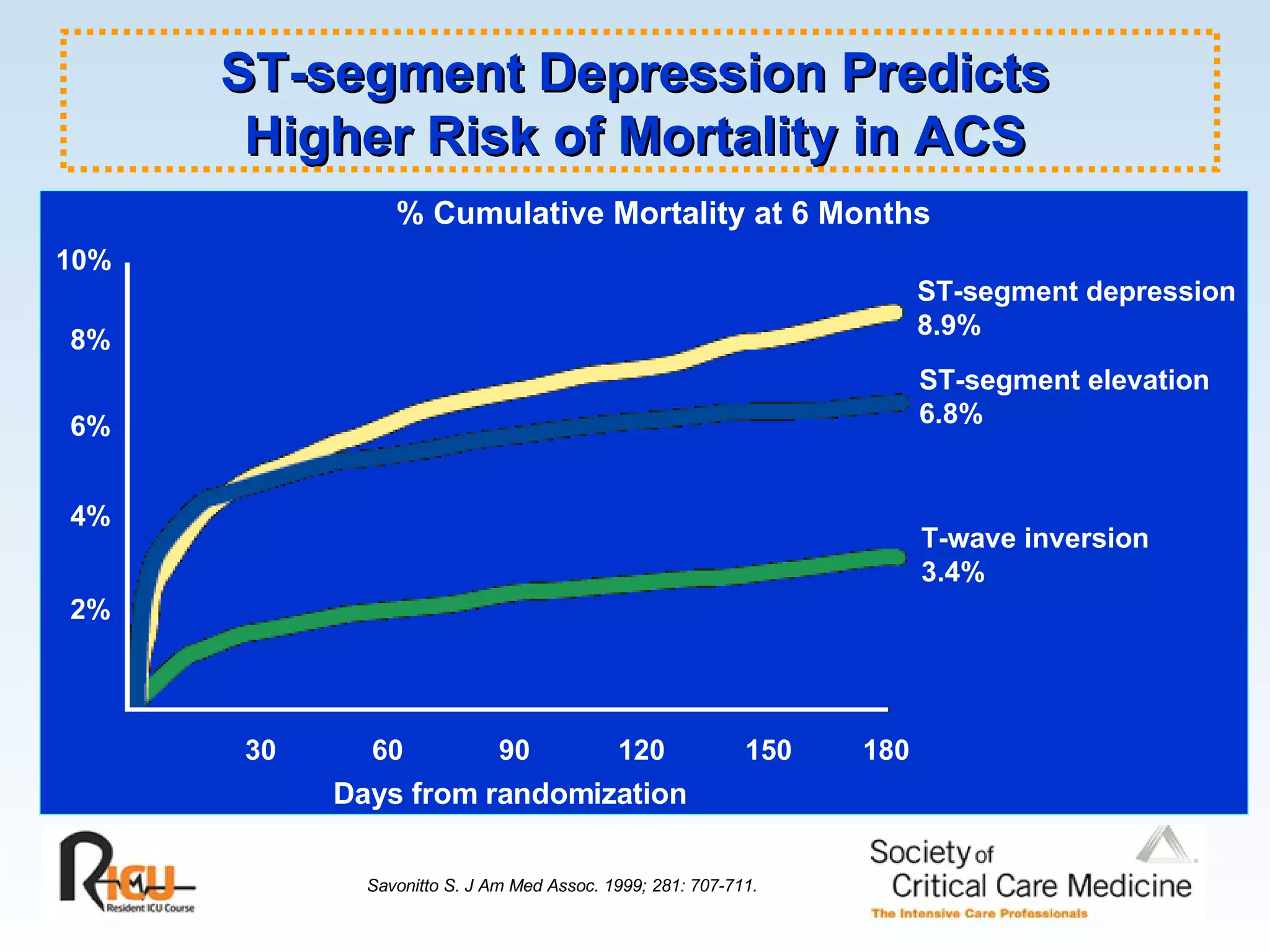
30 60 90 120 150 180 T-wave inversion 3.4% ST-segment elevation 6.8% ST-segment depression 8.9% Days from randomization % Cumulative Mortality at 6 Months Savonitto S. J Am Med Assoc. 1999; 281: 707-711. ST-segment Depression Predicts Higher Risk of Mortality in ACS 10% 8% 6% 4% 2%
 
Age > 65 years 2. > 3 CAD risk factors  (elevated cholesterol, + family Hx, hypertension, diabetes, cigarette smoking) 3. Prior CAD (coronary stenosis > 50%)  4. ASA in last 7 days 5. > 2 anginal events < 24 hours 6. ST deviation  7. Elevated cardiac markers (CK - MB or troponin) TIMI Risk Score for UA/NSTEMI 7 Independent Predictors of Higher Risk Antman, et al. JAMA. 2000;284:835-842.
 
Death/MI/ACS Rehosp (%) TIMI Risk Score CONS  % of Pts:    25%    60%   15% INV OR = 0.75 CI (0.57, 1.00) OR = 0.55 CI (0.33, 0.91) TIMI UA Risk Score: Primary Endpoint at 6 months
Cannon. J Invas Cardiol. 2003;15:22B. Troponin and ST-Segment Shift Predict Benefit of Invasive Treatment Strategy
Class I An   early invasive   strategy in patients with a   high-risk   indicator: Recurrent angina/ischemia despite intensive anti-ischemic rx Elevated troponin-T or troponin-I New or presumably new ST-segment depression Recurrent angina/ischemia with CHF sx, S3, pulmonary edema, worsening  rales, or new or worsening MR 5. High-risk findings on noninvasive stress testing 6. Depressed LV systolic function (EF <40%) 7. Hemodynamic instability 8. Sustained ventricular tachycardia 9. PCI within 6 months 10. Prior CABG Either early invasive or early conservative strategy if   not high risk Braunwald. Circulation. 2002;106:1893-2000. www.acc.org/clinical/guidelines/unstable/unstable.pdf ACC/AHA Guideline Update for the Management of Patients with Unstable Angina and Non-ST-Segment Elevation MI
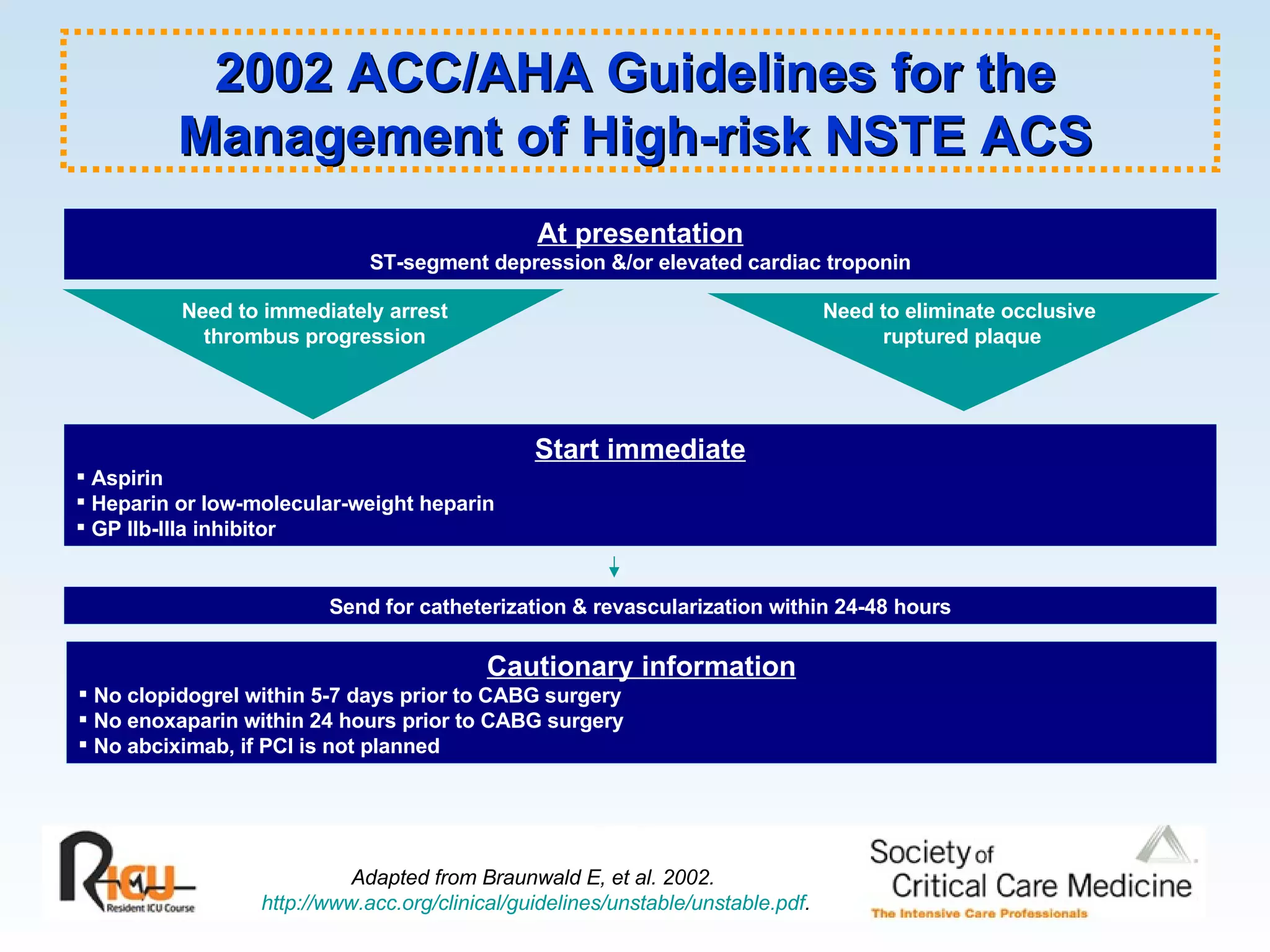
Start immediate Aspirin Heparin or low-molecular-weight heparin GP IIb-IIIa inhibitor Adapted from Braunwald E, et al. 2002.  http://www.acc.org/clinical/guidelines/unstable/unstable.pdf . At presentation ST-segment depression &/or elevated cardiac troponin Need to immediately arrest thrombus progression Need to eliminate occlusive  ruptured plaque Send for catheterization & revascularization within 24-48 hours Cautionary information No clopidogrel within 5-7 days prior to CABG surgery No enoxaparin within 24 hours prior to CABG surgery No abciximab, if PCI is not planned 2002 ACC/AHA Guidelines for the Management of High-risk NSTE ACS
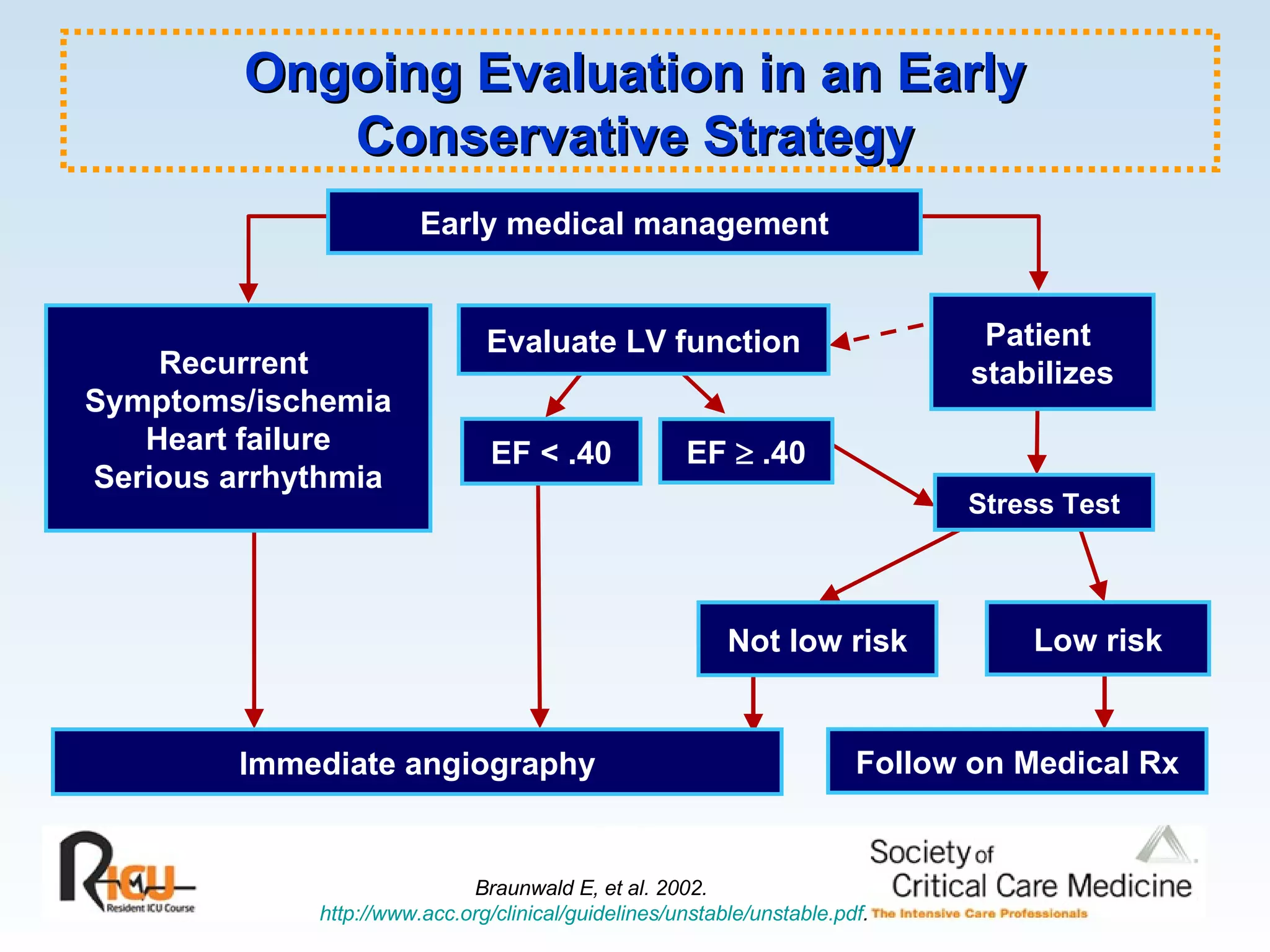
Recurrent  Symptoms/ischemia Heart failure Serious arrhythmia Patient  stabilizes EF    .40 Stress Test Not low risk Follow on Medical Rx Evaluate LV function EF < .40 Low risk Early medical management Immediate angiography Braunwald E, et al. 2002.  http://www.acc.org/clinical/guidelines/unstable/unstable.pdf . Ongoing Evaluation in an Early Conservative Strategy
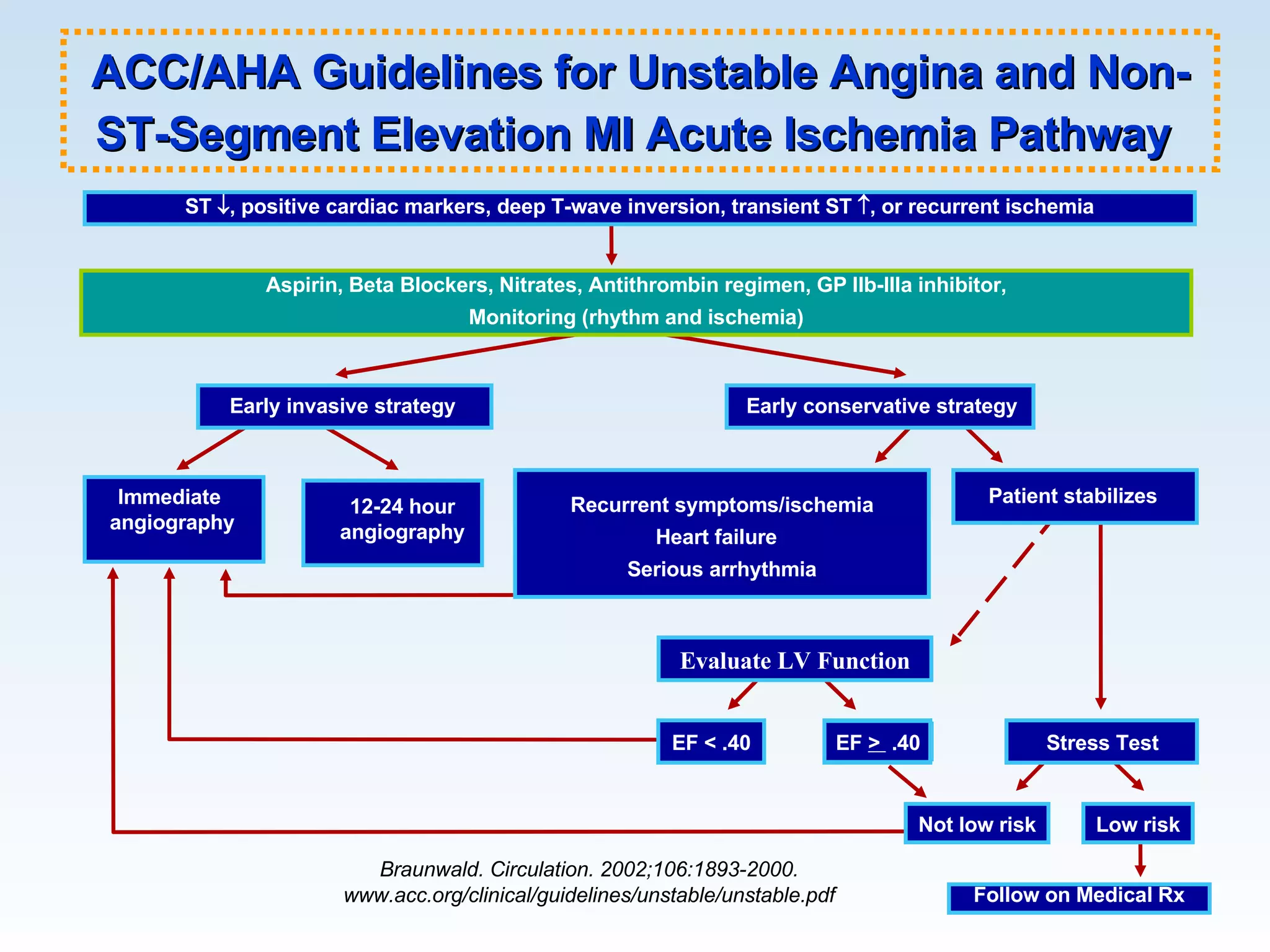
ST   , positive cardiac markers, deep T-wave inversion, transient ST   , or recurrent ischemia Aspirin, Beta Blockers, Nitrates, Antithrombin regimen, GP IIb-IIIa inhibitor, Monitoring (rhythm and ischemia) Immediate  angiography Recurrent symptoms/ischemia Heart failure  Serious arrhythmia Evaluate LV Function EF < .40 Not low risk Low risk Follow on Medical Rx Braunwald. Circulation. 2002;106:1893-2000. www.acc.org/clinical/guidelines/unstable/unstable.pdf ACC/AHA Guidelines for Unstable Angina and Non-ST-Segment Elevation MI Acute Ischemia Pathway   Early invasive strategy Early conservative strategy 12-24 hour  angiography Patient stabilizes EF  >  .40 Stress Test
Class I indications for revascularization   with PCI or CABG 1.  CABG for    50% stenosis of the left main coronary artery 2.  CABG for 3 vessel CAD 3.  CABG for 2 vessel CAD including proximal LAD stenosis & EF < 50%  4.  PCI or CABG for 1 or 2 vessel CAD, no proximal LAD,  large area of viability, high-risk noninvasive test 5.  PCI for patients with multivessel CAD, normal EF, no diabetes 6.  IV platelet GP IIb/IIIa inhibitor in ACS patients undergoing PCI Braunwald. Circulation 2002; 106:1893-2000. www.acc.org/clinical/guidelines/unstable/unstable.pdf ACC/AHA Guidelines for the Management of Patients with Unstable Angina and Non-ST-Segment Elevation MI
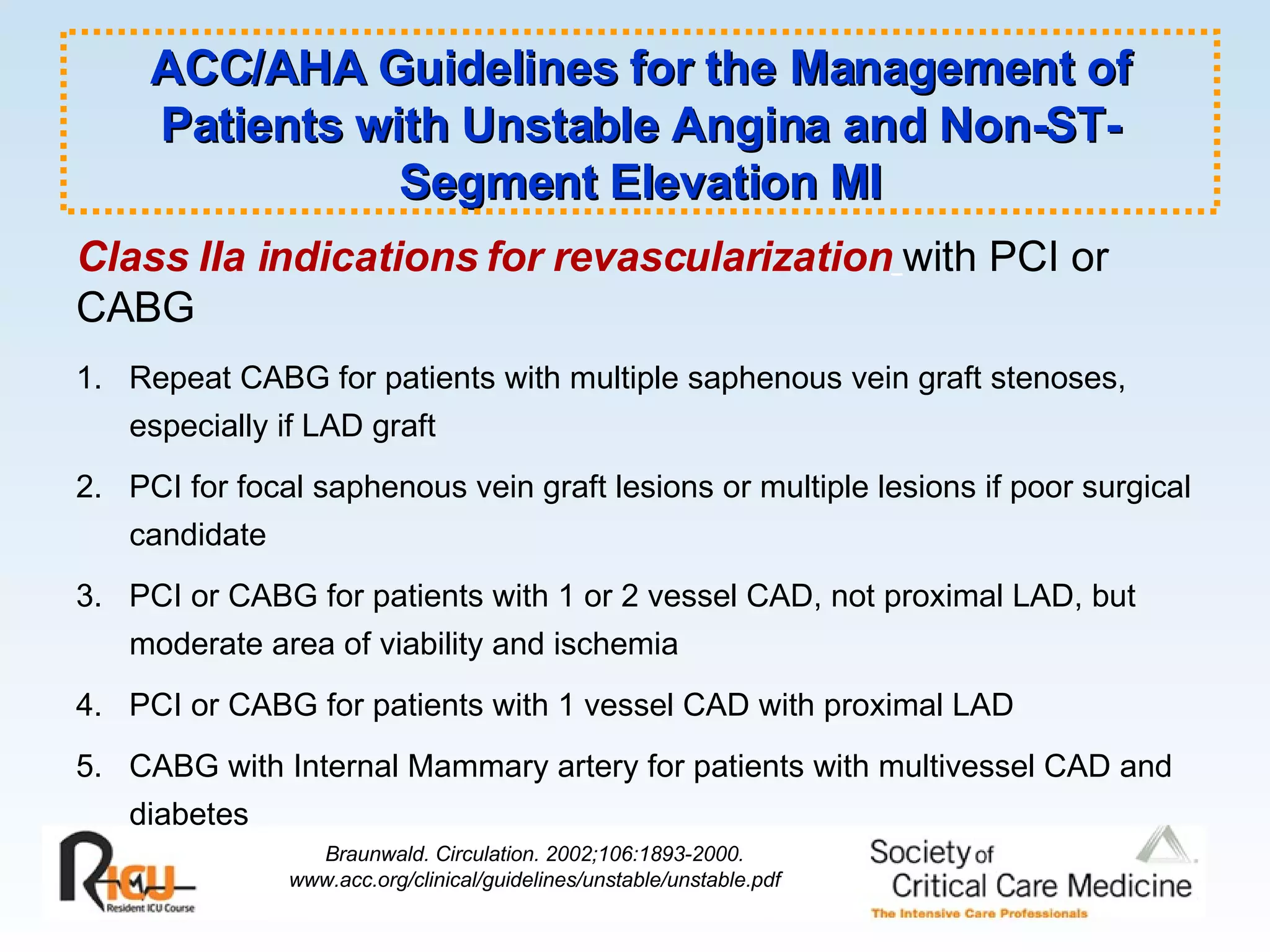
Class IIa indications for revascularization   with PCI or CABG 1.  Repeat CABG for patients with multiple saphenous vein graft stenoses,  especially if LAD graft 2.  PCI for focal saphenous vein graft lesions or multiple lesions if poor surgical candidate 3.  PCI or CABG for patients with 1 or 2 vessel CAD, not proximal LAD, but  moderate area of viability and ischemia 4.  PCI or CABG for patients with 1 vessel CAD with proximal LAD 5.  CABG with Internal Mammary artery for patients with multivessel CAD and diabetes ACC/AHA Guidelines for the Management of Patients with Unstable Angina and Non-ST-Segment Elevation MI Braunwald. Circulation. 2002;106:1893-2000. www.acc.org/clinical/guidelines/unstable/unstable.pdf
Cardiac Catheterization Coronary Artery Disease Left Main Disease Discharge from Protocol NO CABG 1 or 2 Vessel  Disease PCI or CABG,  if eligible 3 Vessel Disease  or 2 Vessel Disease with proximal LAD involvement Left Ventricular Dysfunction or Treated Diabetes CABG PCI or CABG YES NO NO YES Smith et al. ACC/AHA PCI Guidelines. J Am Coll Cardiol 2001:2239-lxvi. Recommendations for Revascularization
Braunwald E, et al. Circ. 2002;106:1893. *  Recurrent ischemia; Trop;  ST; LV  failure/dysf.;  hemodynamic instability; VT; prior CABG     Enoxeparin. Preferred to UFH (IIa)    If coronary arteriography >24 hours ACC/AHA REVISED GUIDELINES UA/NSTEMI High Risk  * ASA, Heparin/ Enox. ,      block., Nitrates, Clopidogrel    RISK STRATIFY Low Risk
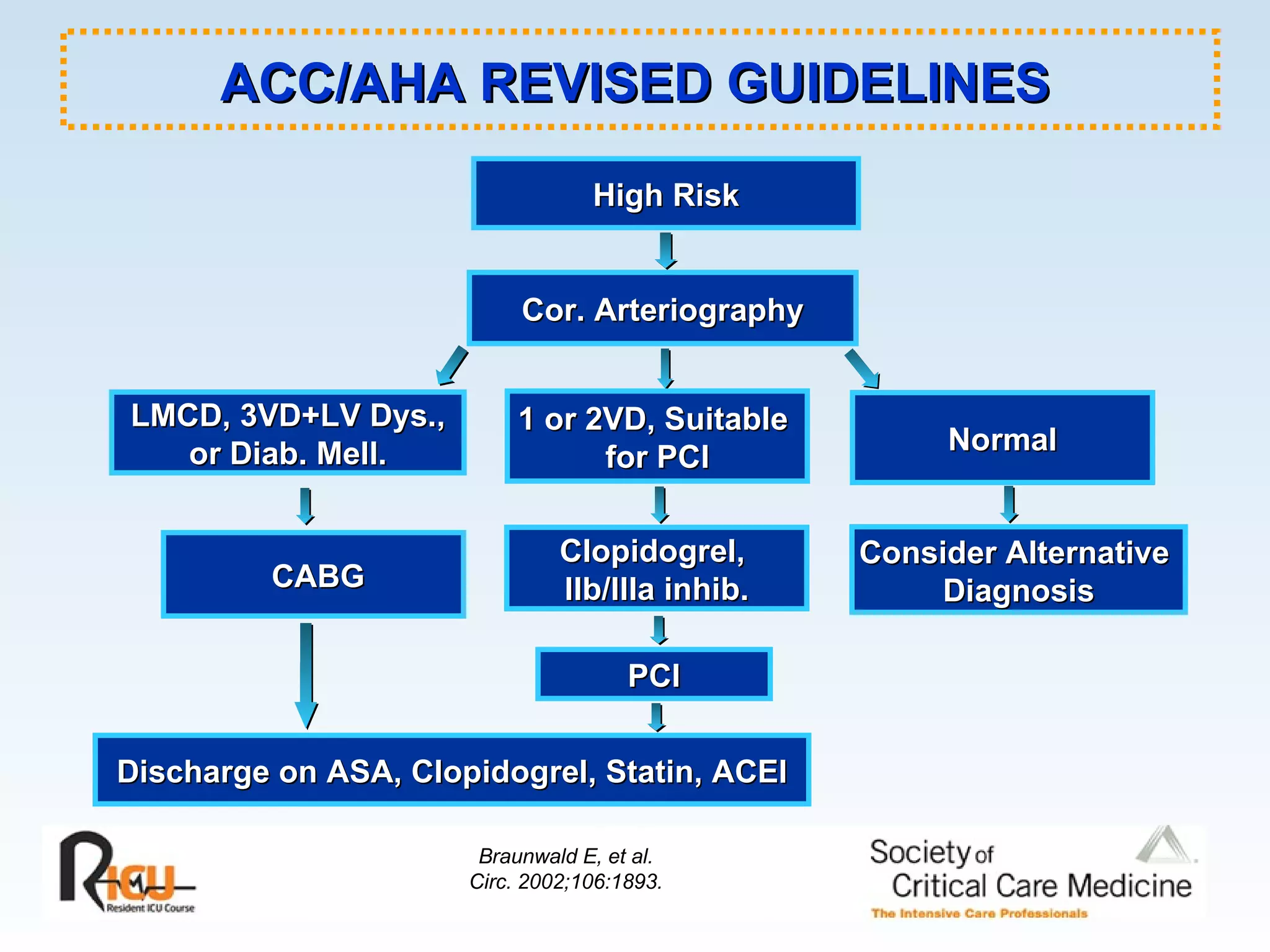
Braunwald E, et al. Circ. 2002;106:1893. ACC/AHA REVISED GUIDELINES LMCD, 3VD+LV Dys.,  or Diab. Mell. CABG High Risk Cor. Arteriography 1 or 2VD, Suitable  for PCI Normal Clopidogrel,  IIb/IIIa inhib. Consider Alternative  Diagnosis Discharge on ASA, Clopidogrel, Statin, ACEI PCI
Braunwald. Circulation 2002;106:1893-2000. www.acc.org/clinical/guidelines/unstable/unstable.pdf Discharge/Post-discharge Medications ASA, if not contraindicated Clopidogrel, when ASA contraindicated Aspirin + Clopidogrel, for up to 9 months  -blocker, if not contraindicated Lipid    agents (statins) + diet ACE Inhibitor: CHF, EF < 40%, DM, or HTN I IIa IIb III
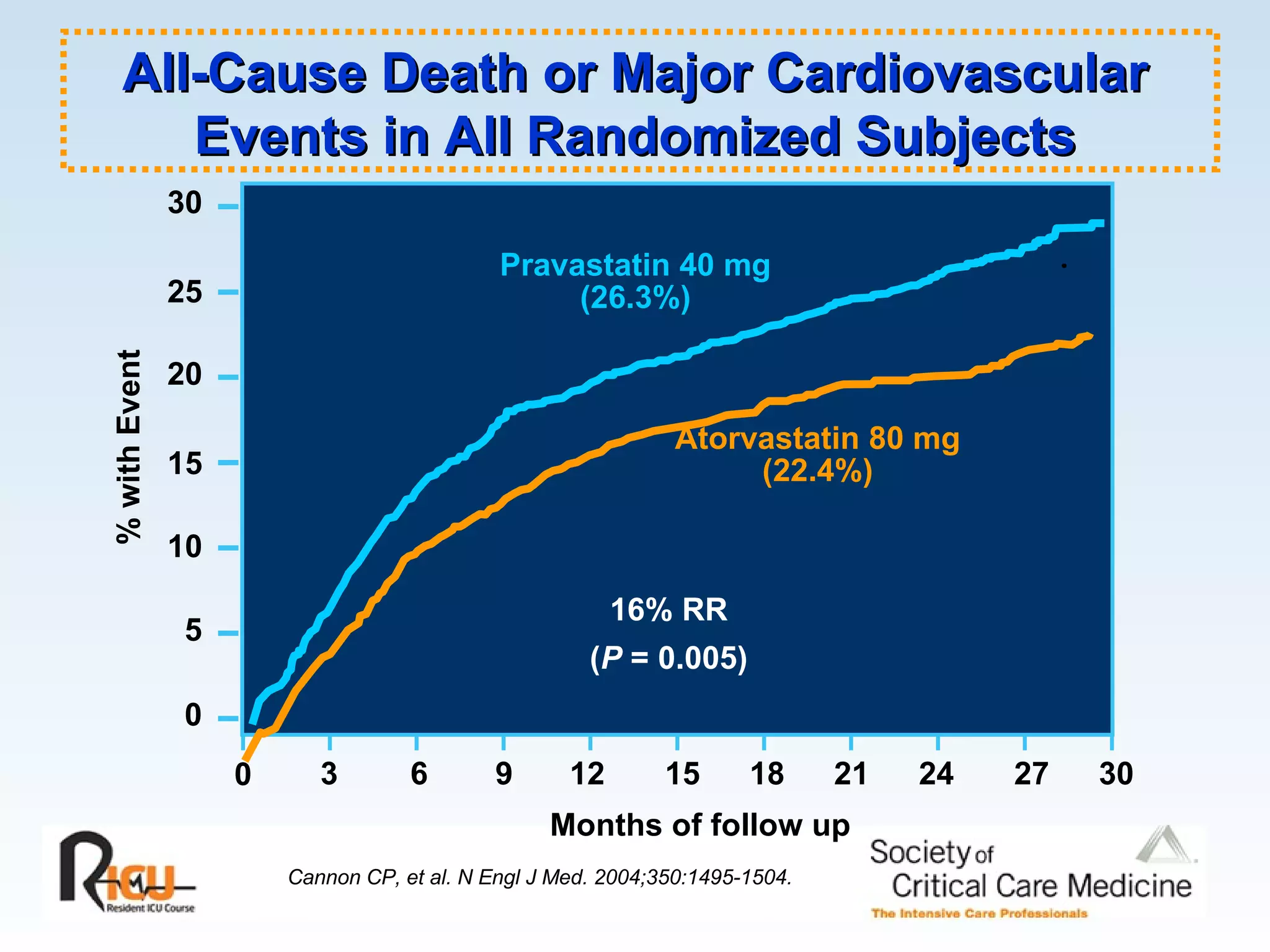
0 3 18 21 24 27 30 6 9 12 15 % with Event Months of follow up Pravastatin 40 mg (26.3%) Atorvastatin 80 mg (22.4%) 16% RR ( P  = 0.005) 30 25 20 15 10 5 0 All-Cause Death or Major Cardiovascular Events in All Randomized Subjects Cannon CP, et al. N Engl J Med. 2004;350:1495-1504.
2-Year Event Rates   RR   Atorva 80   Prava 40 28% 2.2% 3.2%  30% 1.1% 1.4%  13% 6.6% 7.4% 18% 8.3% 10.0% 14% 16.3% 18.8% 29% 3.8% 5.1% 14% 19.7% 22.3% 0.5 1.0 1.5 All-cause Mortality Death or MI MI Revasc >30 d UA Requiring  Hospitalization 0.75 1.25 Atorvastatin 80 mg Better Pravastatin 40 mg Better Death/MI/Urgent Revascularization Cannon CP, et al. N Engl J Med. 2004;350:1495-1504. Reductions in Major Cardiac End Points CHD-related Death
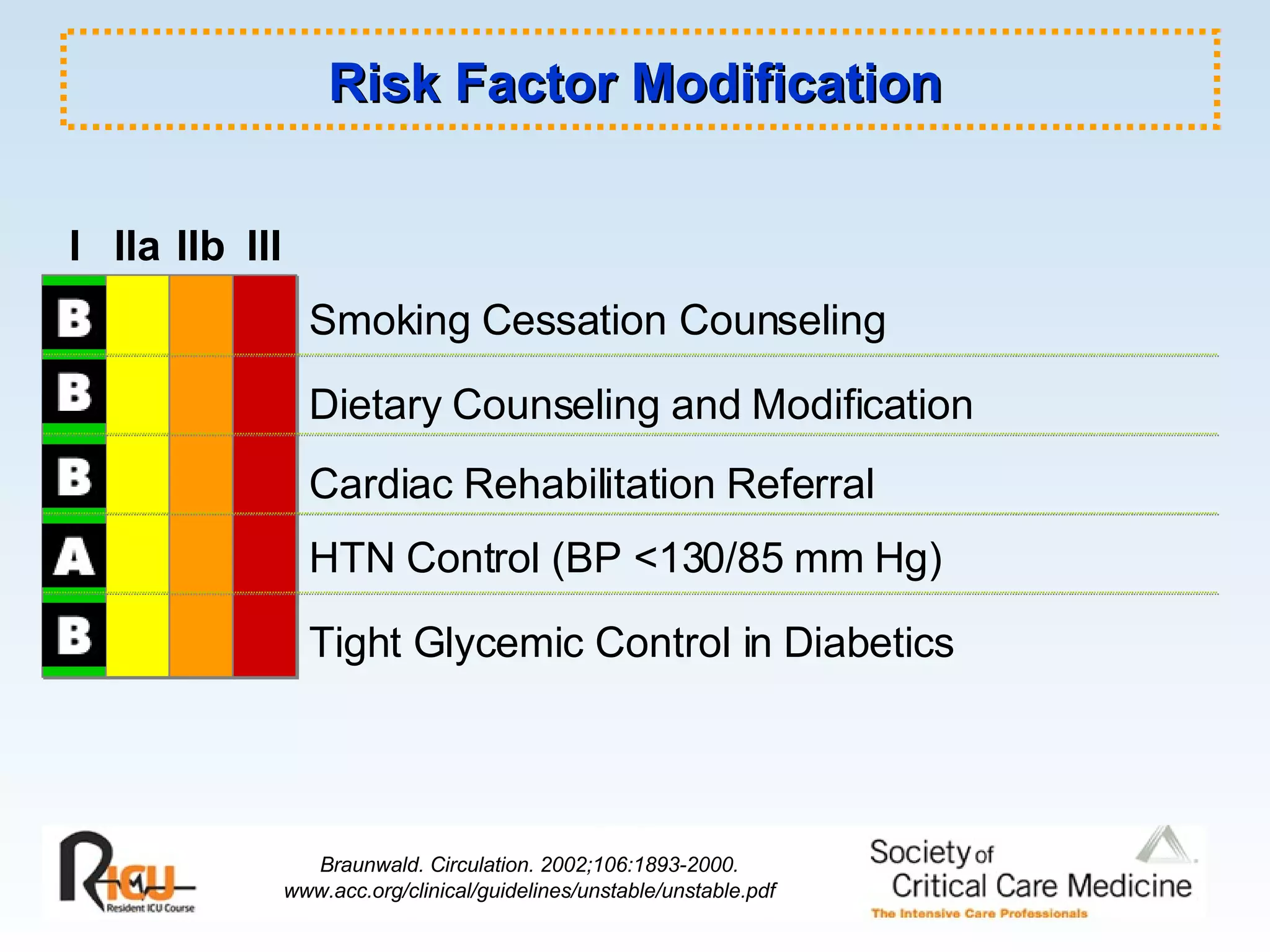
Risk Factor Modification Smoking Cessation Counseling Dietary Counseling and Modification Cardiac Rehabilitation Referral HTN Control (BP <130/85 mm Hg) Tight Glycemic Control in Diabetics Braunwald. Circulation. 2002;106:1893-2000. www.acc.org/clinical/guidelines/unstable/unstable.pdf I IIa IIb III
Approximately 5 million Americans have heart failure (male to female ratio 1:1) 550,000 new cases annually Hospital discharges 1,000,000 annually 80% of men and 70% of women under the age of 65 with HF will die within eight years Heart Failure Due to LV Systolic Dysfunction Numbers based on 2000 data. American Heart Association. 2003 Heart and Stroke Statistical Update. Dallas, Tex: AHA; 2002.
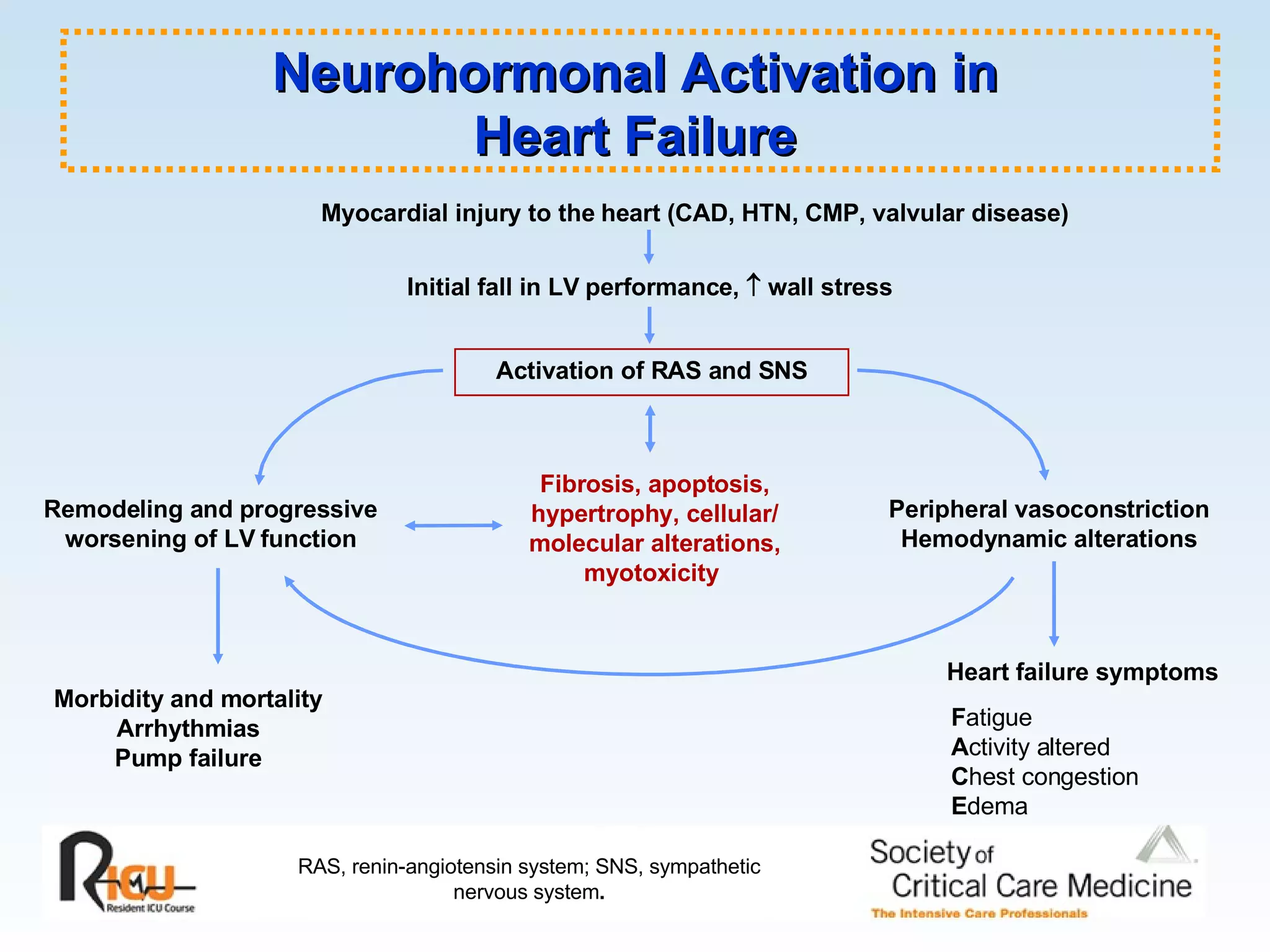
Myocardial injury to the heart (CAD, HTN, CMP, valvular disease)  Morbidity and mortality Arrhythmias Pump failure Peripheral vasoconstriction Hemodynamic alterations Heart failure symptoms Remodeling and progressive worsening of LV function Initial fall in LV performance,    wall stress Activation of RAS and SNS Fibrosis, apoptosis, hypertrophy, cellular/ molecular alterations, myotoxicity  F atigue A ctivity altered  C hest congestion E dema S hortness of breath Neurohormonal Activation in Heart Failure RAS, renin-angiotensin system; SNS, sympathetic nervous system .
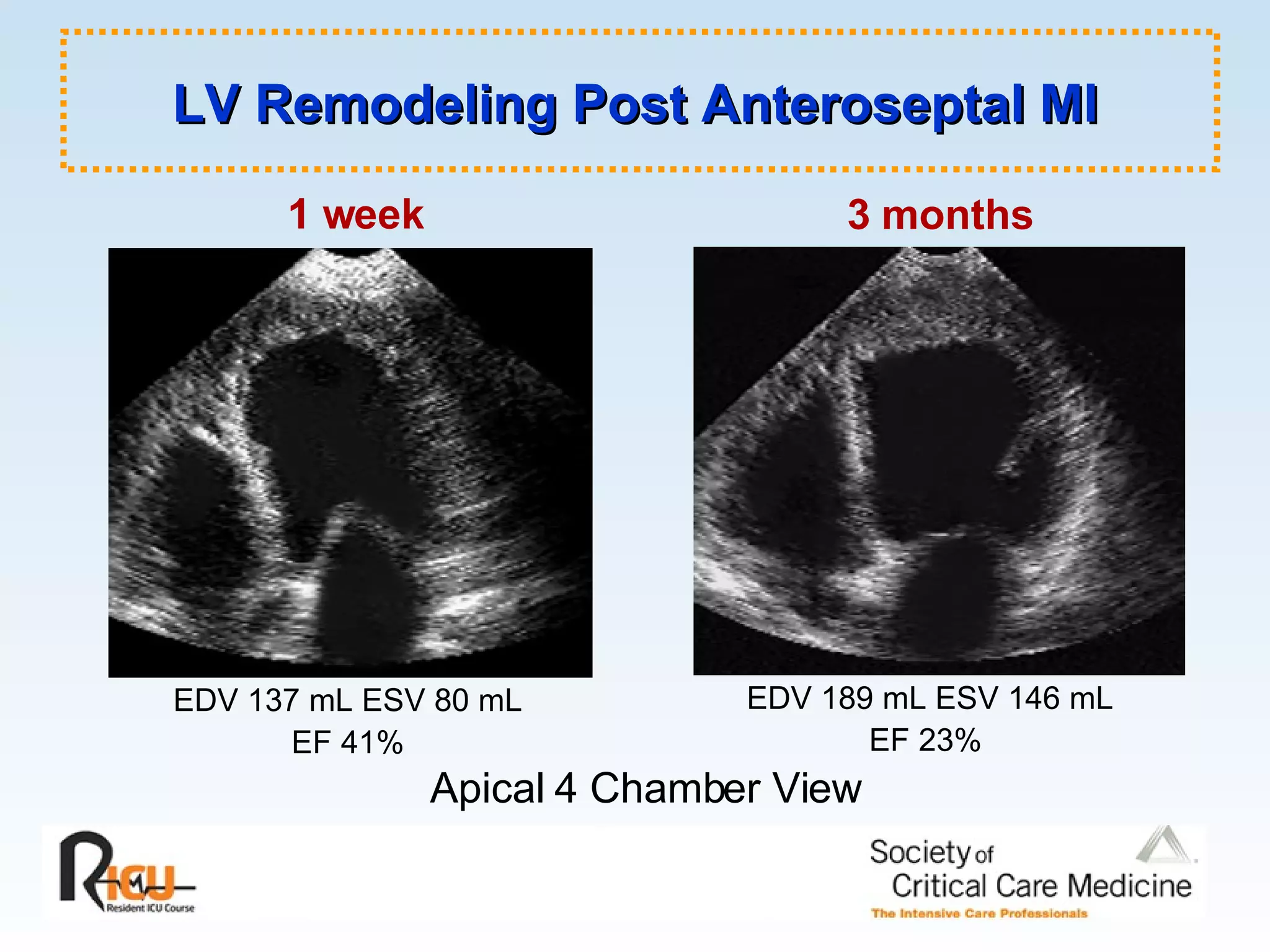
LV Remodeling Post Anteroseptal MI 1 week 3 months EDV 137 mL ESV 80 mL EF 41% EDV 189 mL ESV 146 mL EF 23% Apical 4 Chamber View
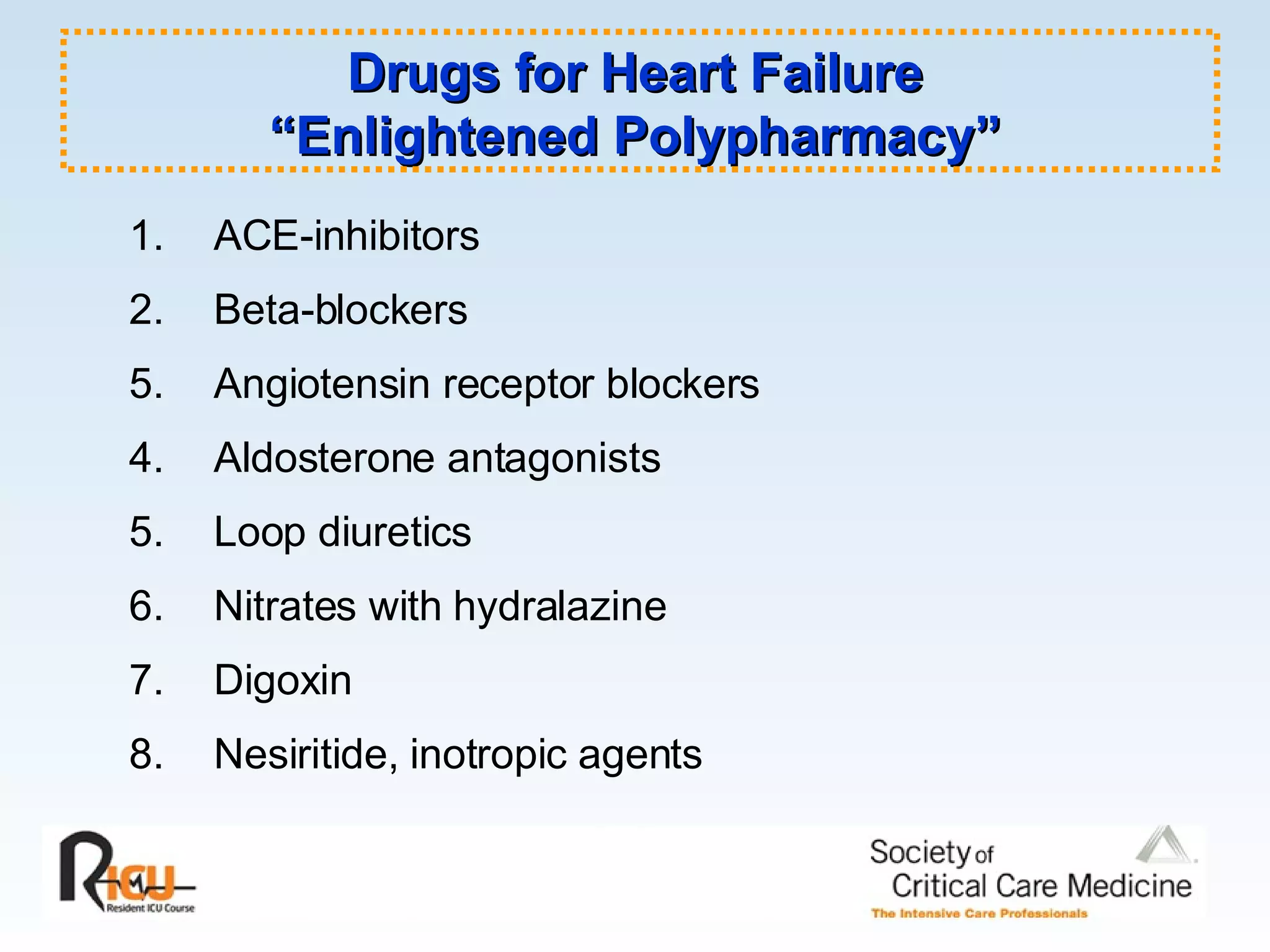
ACE-inhibitors  2. Beta-blockers Angiotensin receptor blockers 4. Aldosterone antagonists 5. Loop diuretics  6. Nitrates with hydralazine 7. Digoxin 8. Nesiritide, inotropic agents Drugs for Heart Failure “Enlightened Polypharmacy”
SAVE   -   captopril, 1992.  Post-MI (not CHF) with EF < 40%, f/u 42 mos, 2,231 pts. Mortality reduced from 25% to 20%   N   Engl J Med. 1992;327:669.   SOLVD   -  enalapril, 1991. CHF pts, class II-III, EF < 35%, f/u 41 mos, 2,569 pts.  Mortality reduced from 39% to 35%  N Engl J Med. 1991;325:293.   SOLVD   -  enalapril, 1992.  Asymptomatic LV dysfunction, EF < 35%, f/u 37 mos, 4,228 pts. Non-significant reduction in mortality, significant reduction in CHF and hospitalization.   N Engl J Med. 1992;327:685.   ACE - Inhibitation and CHF Trials
Captopril, enalapril, ramipril, quinapril, lisinopril 32 trials, 7,105 patients, FC II - III  2 mortality trials Combined  -  total mortality reduced 21.9% to 15.8%, and total mortality plus CHF hosp reduced 32.6% to 22.4%. Summary:   1. Improvement in risk of death or MI or CHF  hospitalization 2. Class effect ACE - I and CHF: Meta-analysis JAMA. 1995;273:1450.
Catecholamine levels are increased in CHF Higher levels correlate with worse disease severity Catecholamines contribute to myocyte hypertrophy and necrosis (apoptosis) More ischemia, arrhythmia, vasoconstriction, and LV dilatation Beta Blockade: Rationale
MERIT - HF:  Metoprolol tartrate Preceded by two previous trials in CHF (MDC, RESOLVD) 3,991 pts, mean f/u 12mos, class II - III Mean EF 28% Results  -  stopped early as total mortality + all cause hospitalization was reduced 38% to 32%  (p = .00012) and total mortality reduced 10.8% to 7.2 % (p < .0001) Metoprolol JAMA .2000;283:1295.
0 0.5 1 1.5 2 2.5 Carvedilol n = 975 Placebo n = 984 Years Proportion Event-free 23% P  = .031 The CAPRICORN Investigators. Lancet. 2001;357:1385–1390. Risk reduction Mortality rates: Placebo 15%;  Carvedilol 12% 0 1.00 0.90 0.70 0.60 0.80 CAPRICORN: Carvedilol in Post-MI patients with Reduced EF: All-cause Mortality
Inclusion  -  EF < 25%, class III - IV, euvolemic 2,289 pts, mean f/u  10.4 mos, stopped early Mortality 18.5% (placebo) vs. 11.4% with carvedilol 35% reduction (p < .00013) No difference in withdrawal rates Mortality curves diverge w/in three weeks, thus beneficial effects are not delayed and can occur at low dose COPERNICUS: Carvedilol in Class III - IV Heart Failure N Engl J Med. 2001;344:1651.
P  = .0014 All-cause Mortality % Survival Carvedilol Placebo 100 90 80 60 70 0 Packer M et al. N Engl J Med. 2001;344:1651–1658. Coreg (carvedilol) Prescribing Information. GlaxoSmithKline, Research Triangle Park, NC. Mar 2003. Risk reduction    35% (19%, 48%) n = 1156 n = 1133 Mortality rates: Placebo 19.7%;  Carvedilol 12.8% COPERNICUS 0 3 6 9 12 15 18 21 Months
First head-to-head mortality study comparing two beta-blocking agents in CHF  -  carvedilol vs. short-acting metoprolol titrate 3,029 pts, class II - III, EF < 35%, 80% male, 99% Caucasian Carvedilol compared to metoprolol reduced annual mortality from 10.0% to 8.3% and prolonged median survival by 1.4 years COMET Lancet. 2003;362:7.
Ischemic or non-ischemic CMP All symptomatic CHF patients Class II - IV Hemodynamically stable and euvolemic Even in “compensated” patients as there is a high likelihood of symptom progression in 12 months Beneficial effects are in addition to effects of other therapies Beta Blockers for CHF: Summary
Angiotensin Receptor Blockers in CHF No increased mortality w/ beta-blocker Small decrease in mortality when added to ACE-I Candesartan CHARM 2003 33% decreased mortal if not on ACE-I 19.9 vs. 19.4  (p = NS) < 40% Valsartan  ValHeft 2001 17.7 vs. 15.9  (p = NS) < 40% Losartan vs. captopril ELITE II 2000 6.1 vs. 3.7 (p = NS) Avg 27% Candesartan vs enalapril RESOLVD 1999 Notes Mortality vs. ACE-I  Baseline EF Drugs Trial
ARBs should be used in patients intolerant of ACE inhibitors. ARBs can be added on in patients receiving ACE-inhibitors and beta blockers with a small added benefit. Increased risk of hypotension, hyperkalemia, and renal insufficiency when added on to ACE-I and beta-blocker therapy. Angiotensin Receptor Blockers in CHF: Summary
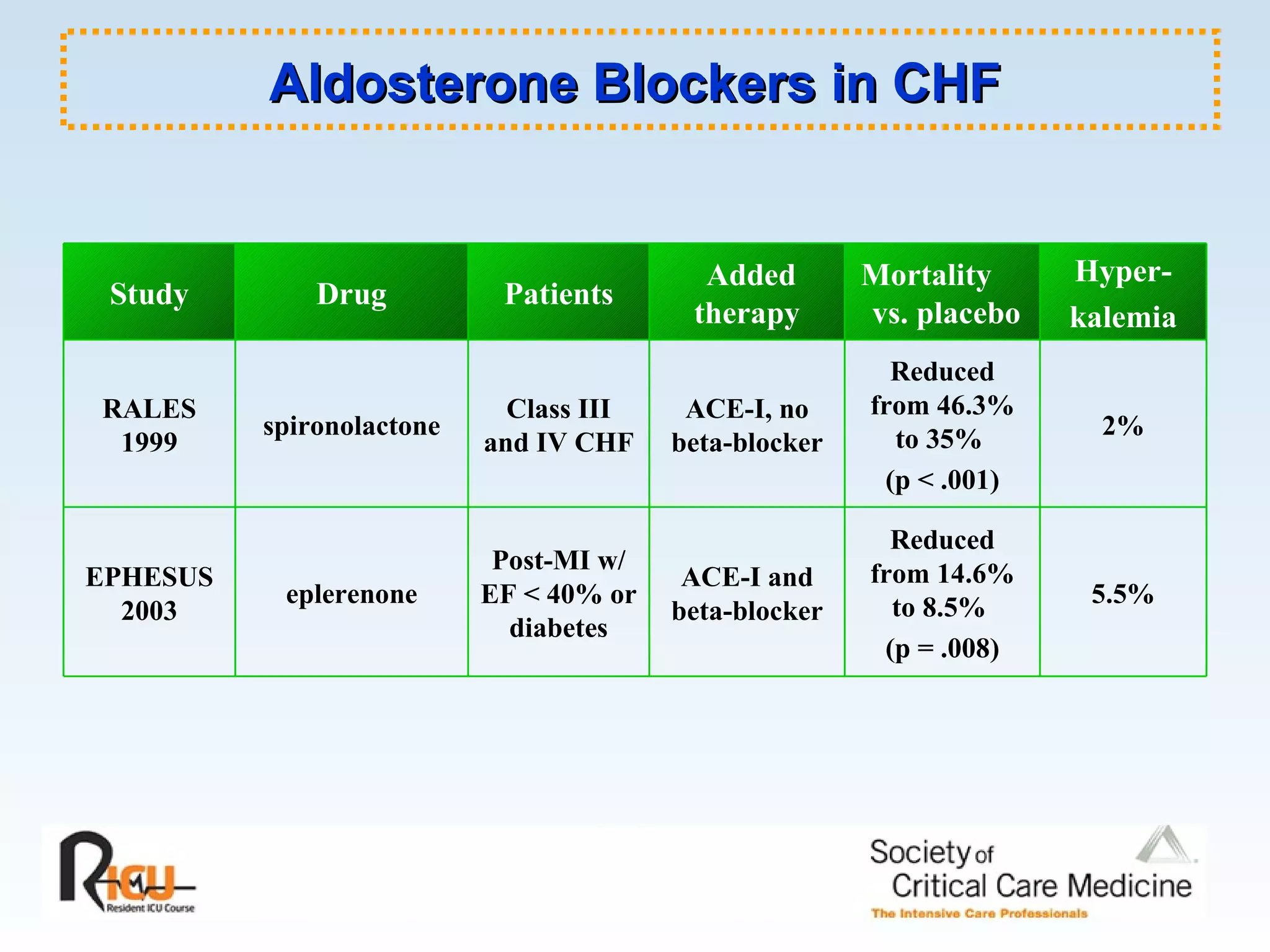
Aldosterone Blockers in CHF 5.5% Reduced from 14.6% to 8.5%  (p = .008) ACE-I and beta-blocker Post-MI w/ EF < 40% or diabetes eplerenone EPHESUS 2003 2% Reduced from 46.3% to 35%  (p < .001) ACE-I, no beta-blocker Class III and IV CHF spironolactone RALES 1999 Hyper- kalemia Mortality  vs. placebo Added therapy Patients Drug Study
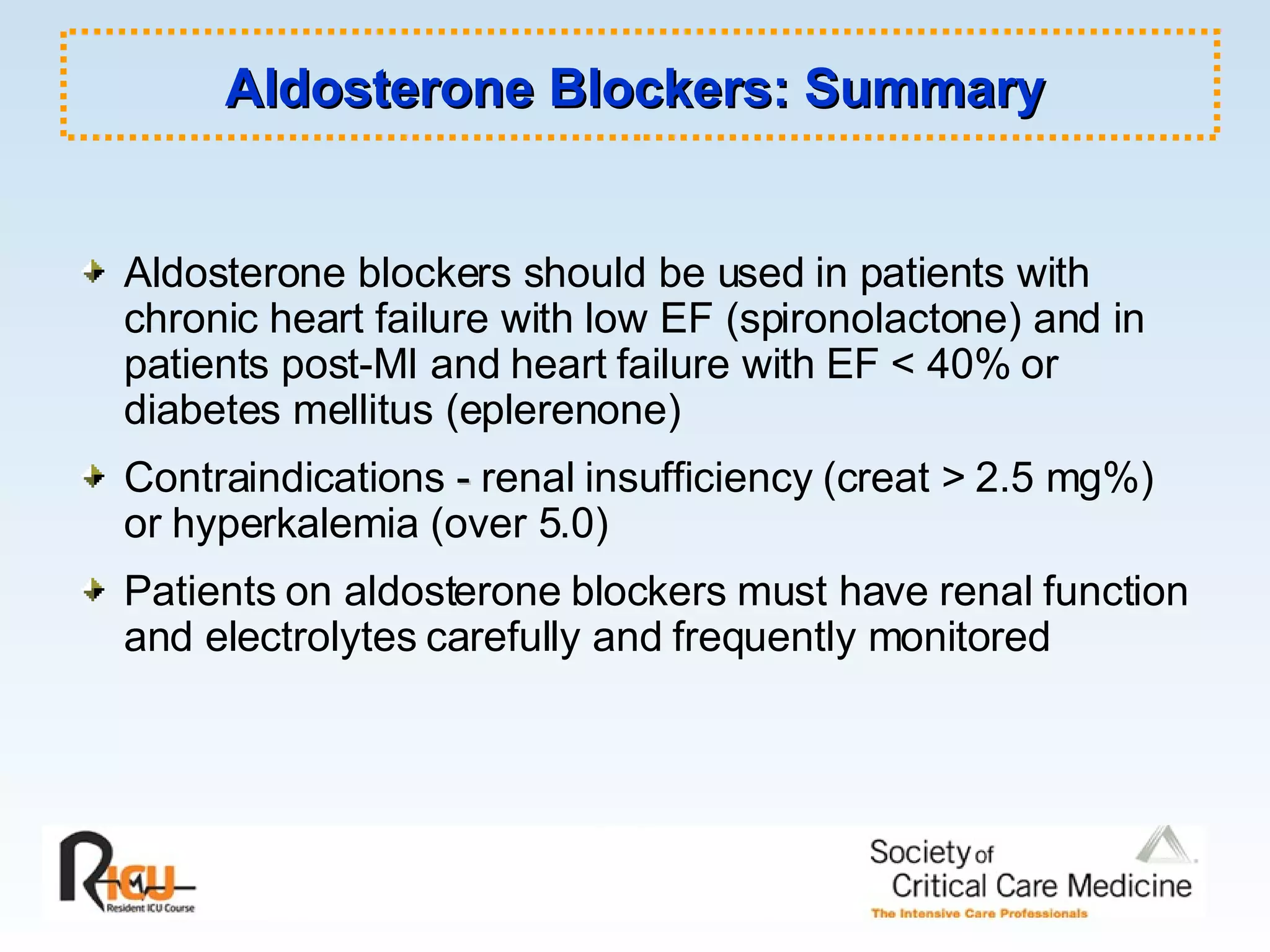
Aldosterone blockers should be used in patients with chronic heart failure with low EF (spironolactone) and in patients post-MI and heart failure with EF < 40% or diabetes mellitus (eplerenone) Contraindications  -  renal insufficiency (creat > 2.5 mg%) or hyperkalemia (over 5.0) Patients on aldosterone blockers must have renal function and electrolytes carefully and frequently monitored Aldosterone Blockers: Summary
1997, CHF with EF < 45%, NSR, class I - III 6,800 pts, 94% ACE - I, little beta-blocker, f/u 37 mos Total and CV mortality  -  no significant differences Decreased need for hospitalization for CHF, 2% hosp for dig toxicity Summary  -  use digoxin for symptomatic benefit,  not mortality benefit Digoxin and CHF: “Dig Trial” N Engl J Med. 1997; 336:525.
V-HeFT I  -  1986:  preceded use of ACE-I and beta blockers for CHF Placebo vs. prazosin vs. combined isosorbide dinitrate (avg. 136 mg) with hydralazine (avg. 270 mg) 642 pts, EF < 45% All cause mortality improvement only with ISDN + Hydralazine (p = .04) Recommend  - u se for pts unable to take ACE-I or ARBs. Vasodilators and CHF N Engl J Med. 1986;314:1547.
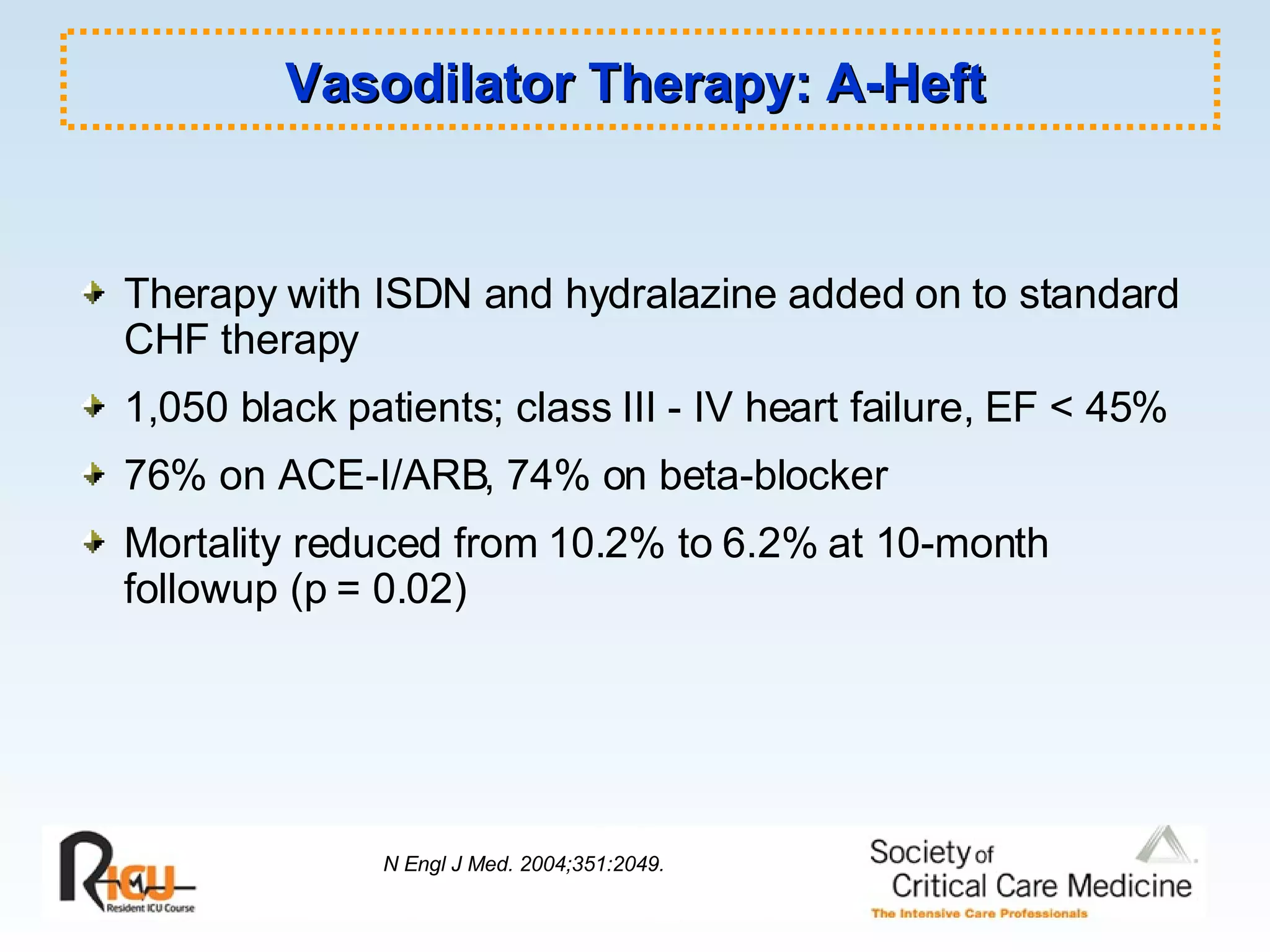
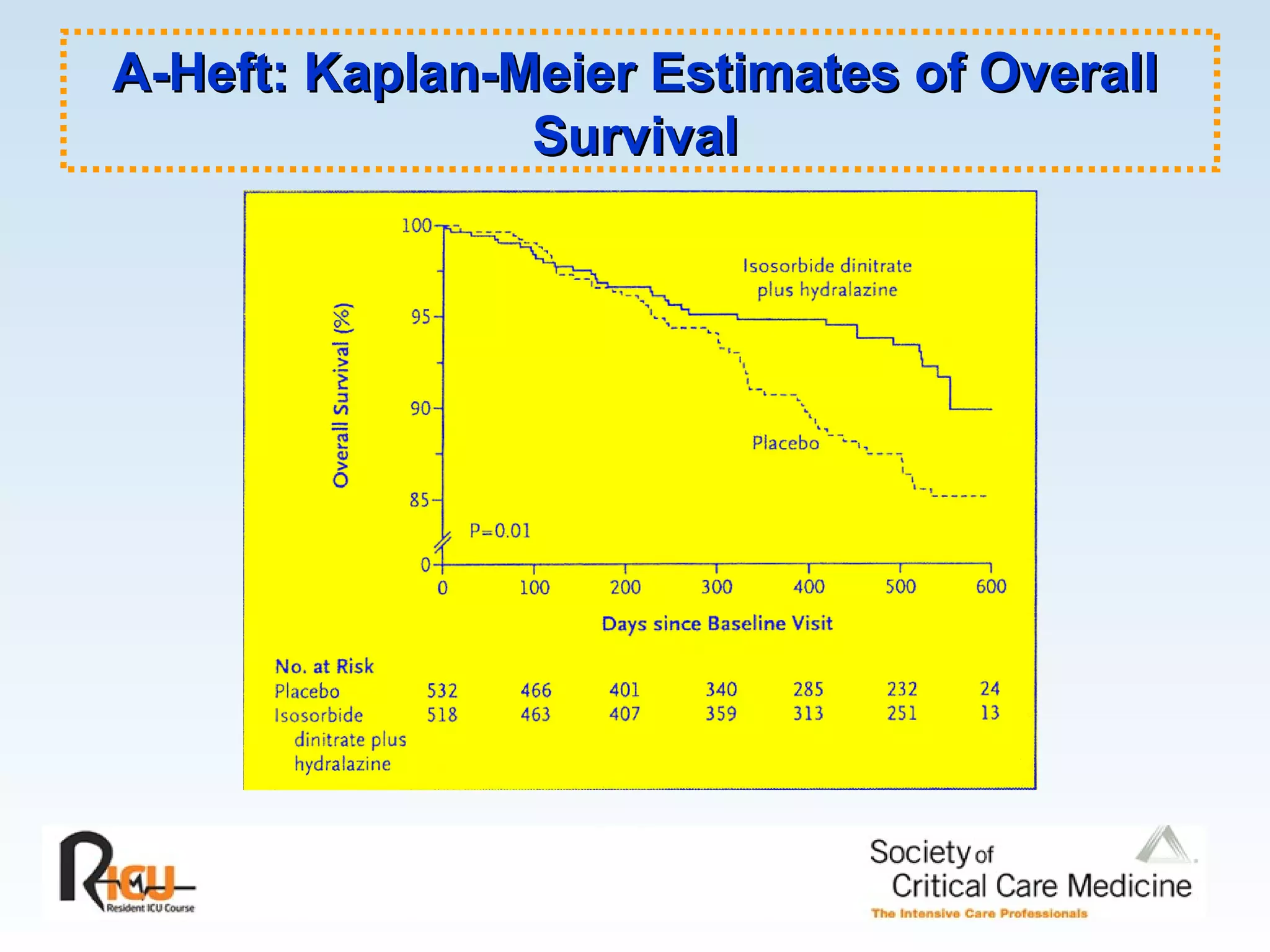
Therapy with ISDN and hydralazine added on to standard CHF therapy 1,050 black patients; class III - IV heart failure, EF < 45% 76% on ACE-I/ARB, 74% on beta-blocker Mortality reduced from 10.2% to 6.2% at 10-month followup (p = 0.02) Vasodilator Therapy: A-Heft N Engl J Med. 2004;351:2049.
A-Heft: Kaplan-Meier Estimates of Overall Survival
Inpatient intravenous infusion Arterial and venodilator Natriuresis and diuresis No tolerance or proarrhythmia Associated with hypotension Rapid fall in PCWP No adverse effect on mortality NESERITIDE (BNP)
ACC/AHA Guidelines  ( Circ . 2001;104:2996.) 1.  For symptomatic systolic dysfunction (Stage C): Class III (i.e., NOT indicated)  -  Long term intermittent use of an  infusion of a positive inotropic drug (level of evidence C) 2.  For refractory end-stage CHF (Stage D):   Class IIb  -  Continuous intravenous infusion of a positive inotropic  agent for  palliation of symptoms   (level of evidence C) Class III (NOT indicated)  -  Routine intermittent infusions (level of  evidence B) Intravenous Inotropic Agents
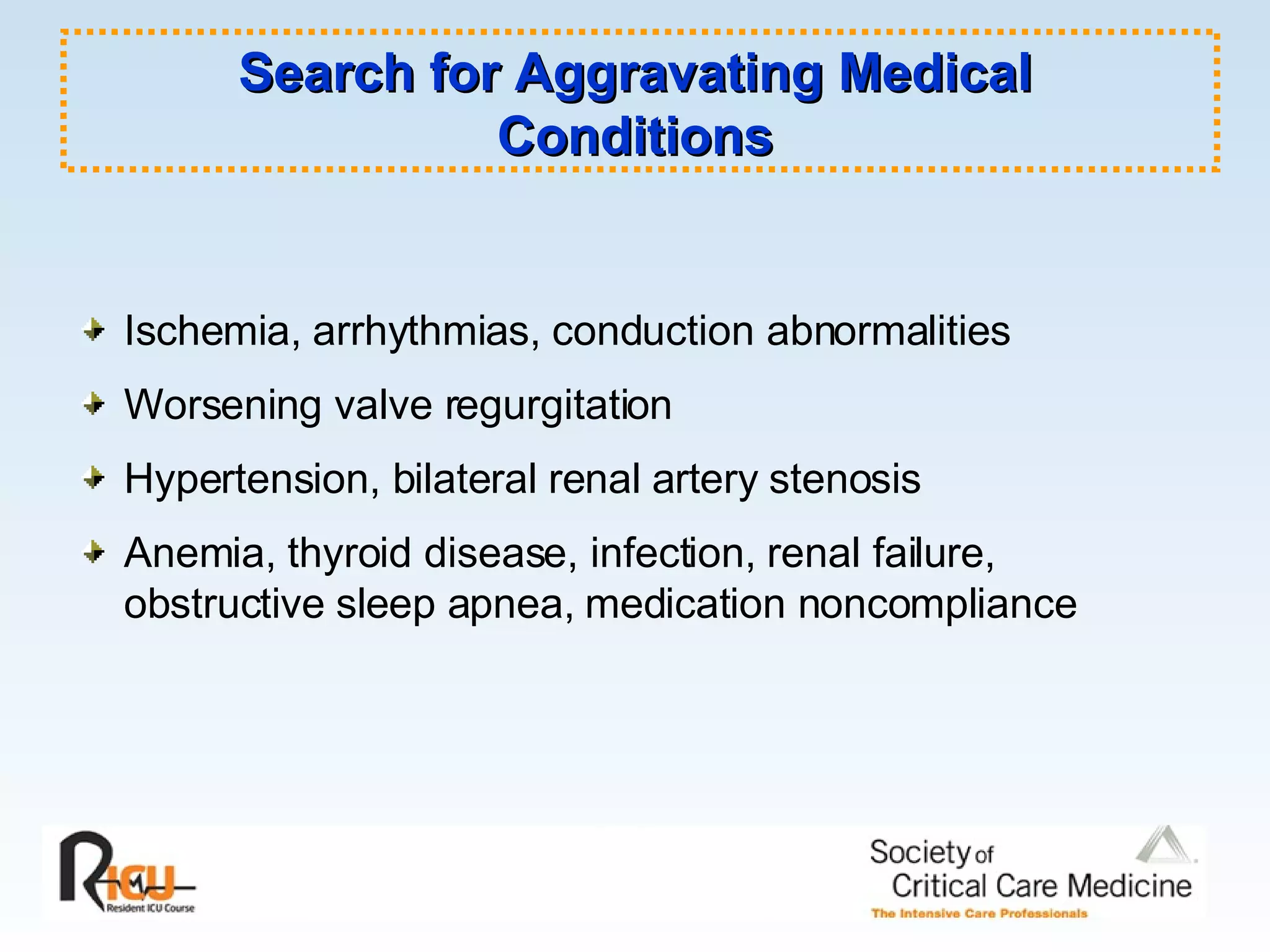
Ischemia, arrhythmias, conduction abnormalities Worsening valve regurgitation Hypertension, bilateral renal artery stenosis Anemia, thyroid disease, infection, renal failure, obstructive sleep apnea, medication noncompliance Search for Aggravating Medical Conditions
Resynchronization therapy to improve heart failure (biventricular pacemaker) Revascularization if documented ischemia ICD implant to reduce risk of sudden arrhythmic death  Surgery  -  CABG, valve repair, transplant Patients Refractory to Pharmacologic Therapy
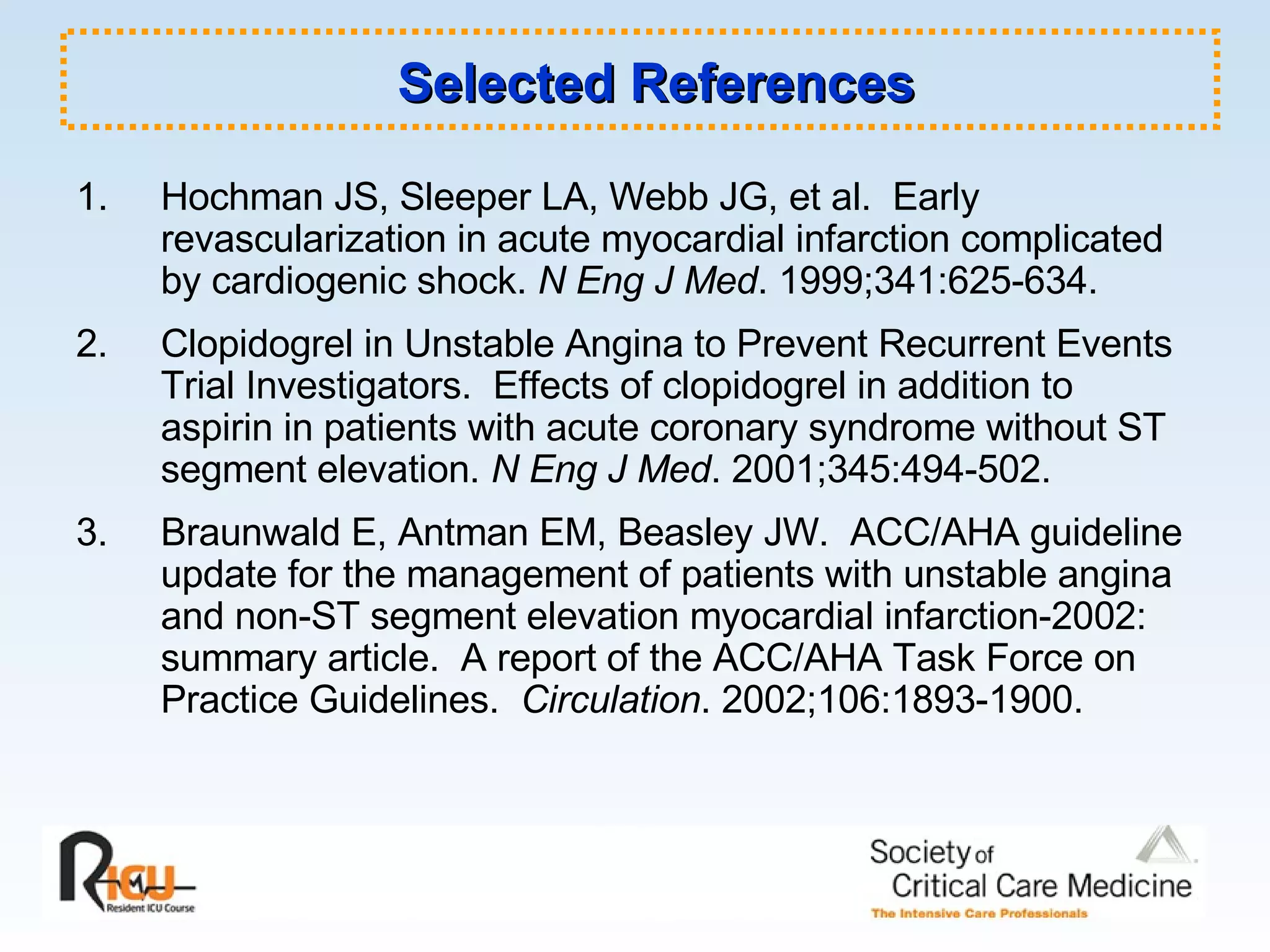
Hochman JS, Sleeper LA, Webb JG, et al.  Early revascularization in acute myocardial infarction complicated by cardiogenic shock.  N Eng J Med . 1999;341:625-634. 2. Clopidogrel in Unstable Angina to Prevent Recurrent Events Trial Investigators.  Effects of clopidogrel in addition to aspirin in patients with acute coronary syndrome without ST segment elevation.  N Eng J Med . 2001;345:494-502. 3. Braunwald E, Antman EM, Beasley JW.  ACC/AHA guideline update for the management of patients with unstable angina and non-ST segment elevation myocardial infarction-2002: summary article.  A report of the ACC/AHA Task Force on Practice Guidelines.  Circulation . 2002;106:1893-1900. Selected References
McMurray JJ, Ostergren J, Swedberg K, et al,  CHARM Investigators and Committees.  Effects of candesartan in patients with chronic heart failure and reduced left ventricular systolic function taking angiotensin converting enzyme inhibitors: the CHARM-added trial.  Lancet . 2003;362:767-771. 5. Packer M, Coats AJ, Fowler MB, et al, Carvedilol Prospective Randomized Cumulative Survival Study Group.  Effect of carvedilol on survival in severe chronic heart failure.  N Eng J Med .  2001;344:1651-1658. Selected References

Cardiogenic Shock

  • 1.
    Fredric Ginsberg, MDAssistant Professor of Medicine, Robert Wood Johnson Medical School University of Medicine and Dentistry of New Jersey Joseph E. Parrillo, MD Professor of Medicine, Robert Wood Johnson Medical School University of Medicine and Dentistry of New Jersey Head, Division of Cardiovascular Disease and Critical Care Medicine Director, Cooper Heart Institute Director, Cardiovascular and Critical Care Services Cooper University Hospital Camden, New Jersey SCCM Online Critical Care Course: Cardiogenic Shock, Acute Coronary Syndrome and Congestive Heart Failure
  • 2.
    Inadequate tissue perfusionresulting from cardiac dysfunction Clinical definition - decreased cardiac output and tissue hypoxia in the presence of adequate intravascular volume Hemodynamic definition - s ustained systolic BP < 90 mm Hg, cardiac index < 2.2 L/min/m 2 , PCWP > 15 mm Hg Parrillo, J. 2005 Cardiogenic Shock
  • 3.
    Acute MI Pumpfailure Mechanical complications Right ventricular infarction Other conditions End-stage cardiomyopathy Myocarditis (fulminant myocarditis) Myocardial contusion Prolonged cardiopulmonary bypass Septic shock with myocardial depression Valvular disease Causes of Cardiogenic Shock
  • 4.
    Evolution Of TheDisease Frequently, shock develops after presentation for myocardial infarction. - SHOCK Registry • At presentation 25% in shock • Within 24 hours 75% (median delay = 7 hours) - GUSTO Trial • At presentation 11% in shock • After admission 89% SHOCK Registry, Circulation. 1995;91:873-81. GUSTO J Amer Coll Cardiol. 1995;26:668-74 . Cardiogenic Shock
  • 5.
    Wall motion abnormality during occlusion Wall motion abnormality From Kloner RA. Am J Med. 1986;86:14. Gradual return of function (hours to days) Persistent wall motion abnormality (despite reperfusion and viable myocytes) Coronary occlusion Coronary reperfusion Return of function Clamp Schematic Diagram of Stunned Myocardium
  • 6.
    Atherosclerotic narrowing Wallmotion abnormality due to chronic ischemia without infarction Wall motion abnormality From Kloner RA. Am J Med. 1986;86:14. Hibernating Myocardium
  • 7.
    Pre-operative 8 MonthsPostoperative CONTROL LVEDV = 128 EF = 0.37 POST NTG LVEDV = 101 EF = 0.51 LVEDV = 104 EF = 0.76 Patient Coronary Bypass Graft to L.A.D. Single vessel disease - Occluded L.A.D. End-Diastole End-Systole From Rahimtoola SH, et al. Circ. 1992;65:225. Hibernating Myocardium
  • 8.
    Cell death Significantresidual stenosis Reperfusion Segments with myocardial stunning Segments with both stunning and hibernation Segments with hibernating myocardium Relief of ischemia Inotropic support No return of function Return of myocardial function Ischemic Myocardium
  • 9.
    Assure oxygenation Intubationand ventilation if needed Venous access Pain relief Continuous EKG monitoring Hemodynamic support Fluid challenge if no pulmonary edema Vasopressors for hypotension - Dopamine - Norepinephrine Initial Approach: Management
  • 10.
    Reduces afterload andaugments diastolic perfusion pressure Beneficial effects occur without increase in oxygen demand No improvement in blood flow distal to critical coronary stenosis No improvement in survival when used alone May be essential support mechanism to allow for definitive therapy Intra-aortic Balloon Counterpulsation
  • 11.
    Overall 30-Day Survivalin the Study Hochman JS, et al. N Engl J Med. 1999;341:625-34. Proportion Alive 0 Days after Randomization 0.6 0.2 0.0 0.8 Revascularization (n =152) Medical therapy (n =150) 1.0 0.4 5 10 15 20 25 30 Survival = 53% Survival = 44% p = 0.11 Early Revascularization in Acute Myocardial Infarction Complicated by Cardiogenic Shock
  • 12.
    46.7 50.3 54.356 63.1 66.4 0 20 40 60 80 100 % P = 0.11 P = 0.027 P < 0.03 30 days 6 months 1 year Revasc Med Rx SHOCK Trial Mortality
  • 13.
    Patients with STsegment elevation MI who have cardiogenic shock and are less than 75 years of age should be brought immediately or secondarily transferred to facilities capable of cardiac catheterization and rapid revascularization (PCI or CABG) if it can be performed within 18 hours of onset of shock. (Level of Evidence: A) ACC/AHA Class I Indication
  • 14.
    Despite ACC/AHA recommendationto treat patients < 75 years of age aggressively with early mechanical revascularization, in 2001, two years after the guidelines were published, only 41% of patients with cardiogenic shock complicating AMI were treated with primary PTCA and only 3.1% underwent early CABG. These data demonstrate significant underutilization of guideline recommended therapy. Babaev A, et al. Circ. 2002;106(19):1811 (abstract). National Registry of MI Early Revascularization is Underutilized in Cardiogenic Shock
  • 15.
    Average LVEF isonly moderately severely depressed (30%), with a wide range of EFs and LV sizes noted. Systemic vascular resistance (SVR) on vasopressors is not elevated on average (~ 1350), with a very wide range of SVRs measured. A clinically evident systemic inflammatory response syndrome is often present in patients with CS. Most survivors (85%) have NYHA functional Class I-II CHF status. Hochman JS. Circ .2003;107:2998-3002. Pathophysiology of Cardiogenic Shock Observations from the SHOCK Trial and Registry that Challenge the Classic Paradigm
  • 16.
    Cardiogenic shock ISNOT simply the result of severe depression of LV function due to extensive myocardial ischemia/injury. Depressed Myocardial Contractility combined with Inadequate Systemic Vasoconstriction resulting from a systemic inflammatory response to extensive myocardial ischemia/injury results in cardiogenic shock . Pathophysiology of Cardiogenic Shock
  • 17.
    Thus, excess nitricoxide and peroxy nitrites may be a major contributor to cardiogenic shock complicating MI. The Overproduction of Nitric Oxide May Cause Both Myocardial Depression and Inappropriate Vasodilatation.
  • 18.
    Nitric oxide synthaseinhibition can raise blood pressure in patients with persistent cardiogenic shock after percutaneous intervention. The mechanism of this effect is unknown, but may involve both an effect on coronary and other organ perfusion pressure, and potentially an improvement in cardiac function. Outcome data are not yet available. LINCS: Conclusions Cotter. Eur Heart J. 2003;24:1287-1295.
  • 19.
    Acute coronary syndrome: Constellation of clinical symptoms compatible with acute myocardial ischemia ST-segment elevation MI (STEMI) Non-ST-segment elevation MI (NSTEMI) Unstable angina Unstable angina: Angina at rest (usually > 20 minutes) New-onset of class III or IV angina Increasing angina (from class I or II to III or IV) Braunwald. Circulation 2002; 106:1893-2000. www.acc.org/clinical/guidelines/unstable/unstable.pdf Acute Coronary Syndromes: Definitions
  • 20.
  • 21.
    Plaque rupture Plateletadhesion Platelet activation Partially occlusive arterial thrombosis & unstable angina Microembolization & non-ST-segment elevation MI Totally occlusive arterial thrombosis & ST-segment elevation MI White HD. Am J Cardiol 1997;80 (4A):2B-10B. Pathogenesis of Acute Coronary Syndromes
  • 22.
    UA/NSTEMI: Partially-occlusive thrombus(primarily platelets) Intra-plaque thrombus (platelet-dominated) Plaque core STEMI: Occlusive thrombus (platelets, red blood cells, and fibrin) Intra-plaque thrombus (platelet-dominated) Plaque core SUDDEN DEATH UA = Unstable Angina NSTEMI = Non-ST-segment Elevation Myocardial Infarction STEMI = ST-segment Elevation Myocardial Infarction Structure of Thrombus Following Plaque Disruption White HD. Am J Cardiol 1997;80 (4A):2B-10B.
  • 23.
    Therapeutic goal: rapidlybreak apart fibrin mesh to quickly restore blood flow ST-segment elevation MI Non-ST Elevation ACS* Non-ST Elevation MI + T roponin or + CK-MB Consider fibrinolytic therapy, if indicated, or primary percutaneous coronary intervention (PCI) Therapeutic goal: prevent progression to complete occlusion of coronary artery and resultant MI or death Consider GP IIb-IIIa inhibitor + aspirin + heparin before early diagnostic catheterization &/or Braunwald E, et al. 2002. http://www.acc.org/clinical/guidelines/unstable/unstable.pdf . Diagnostic Algorithm for Acute Coronary Syndrome Management
  • 24.
    0 3 69 12 Probability of Death or MI Placebo Aspirin 75 mg Risk ratio 0.52 95% CL 0.37 - 0.72 Risk of MI and Death During Treatment with Low-Dose Aspirin and IV Heparin in Men with Unstable CAD Wallentin LC, et al. J Am Coll Cardiol, 1991;18:1587-93. Months 0.00 0.05 0.10 0.15 0.20 0.25
  • 25.
    Trial: FRIC (Dalteparin;n = 1,482) FRAXIS (nadroparin; n = 2,357) ESSENCE (enoxaparin; n = 3,171) TIMI 11B (enoxaparin; n = 3,910) .75 1.0 1.5     (p= 0.032) (p= 0.029) LMWH Better UFH Better 6 14 14 14 Day: Braunwald. Circulation. 2002;106:1893-2000. www.acc.org/clinical/guidelines/unstable/unstable.pdf Low Molecular Weight Heparin (LMWH) vs. Unfractionated Haparin (UFH) in Non-ST elevation ACS: Effect on Death, MI, Recurrent Ischemia
  • 26.
    0 2 46 8 10 12 14 Death, MI, or Stroke Clopidogrel + ASA 3 6 9 Placebo + ASA Months of Follow-Up 11.4% 9.3% 20% RRR P < 0.001 N = 12,562 0 12 % N Engl J Med. 2001;345:494-502. Effects of Clopidogrel in Addition to Aspirin in Patients with ACS without ST-Segment Elevation
  • 27.
    15.7 5.6 17.911.7 12.8 14.2 3.8 12.9 10.3 11.8 0 5 10 15 20 Primary Endpoint % Placebo GP IIb/IIIa PURSUIT 30 days PRISM 48 hrs PRISM PLUS 7 days P = 0.04 P = 0.01 P = 0.004 PARAGON A 30 days P = 0.48 PARAGON B 30 days P = 0.33 Platelet Glycoprotein IIb/IIIa Inhibition for Non-ST elevation ACS Primary Endpoint Results from the 5 Major Trials
  • 28.
    Hospital Care Anti-ThromboticTherapy Immediate aspirin Clopidogrel, if aspirin contraindicated Aspirin + clopidogrel for up to one month, if medical therapy or PCI is planned Heparin (IV unfractionated, LMW) with antiplatelet agents listed above Enoxaparin preferred over UFH unless CABG is planned within 24 hours Braunwald. Circulation. 2002;106:1893-2000. www.acc.org/clinical/guidelines/unstable/unstable.pdf I IIa IIb III
  • 29.
    * Forpatients managed with an early conservative strategy, and those who are planned to undergo early PCI Guidelines do not specify initial approach to using clopidogrel when coronary anatomy is unknown Braunwald. Circulation. 2002;106:1893-2000. www.acc.org/clinical/guidelines/unstable/unstable.pdf Hospital Care Clopidogrel Therapy Aspirin + clopidogrel, for up to 1 month * Aspirin + clopidogrel, for up to 9 months * Withhold clopidogrel for 5 - 7 days for CABG I IIa IIb III
  • 30.
    * High-risk:Age >75; prolonged, ongoing CP; hemodynamic instability; rest CP w/ ST  ; VT; positive cardiac markers Braunwald. Circulation. 2002;106:1893-2000. www.acc.org/clinical/guidelines/unstable/unstable.pdf Hospital Care Platelet GP IIb/IIIa Inhibitors (1) Any GP IIb/IIIa inhibitor + ASA/Heparin for all patients, if cath/PCI planned Eptifibatide or tirofiban + ASA/Heparin for high-risk * patients in whom early cath/PCI is not planned Any GP IIb/IIIa inhibitor for patients already on ASA + Heparin + clopidogrel, if cath/PCI is planned I IIa IIb III
  • 31.
    Braunwald. Circulation. 2002;106:1893-2000.www.acc.org/clinical/guidelines/unstable/unstable.pdf Hospital Care Platelet GP IIb/IIIa Inhibitors (2) Eptifibatide or tirofiban + ASA/Heparin for patients without continuing ischemia in whom PCI is not planned Abciximab for patients in whom PCI is not planned I IIa IIb III
  • 32.
    Braunwald. Circulation. 2002;106:1893-2000.www.acc.org/clinical/guidelines/unstable/unstable.pdf Hospital Care Anti-ischemic Therapy (1)  -blocker (IV  oral) if not contraindicated Non-dihydropyridine Ca2+ antagonist if  -blocker contraindicated and no LV dysfunction, for recurrent ischemia ACE inhibitor if  BP persists with NTG+  -blocker, for pts with CHF or diabetes I IIa IIb III
  • 33.
    Braunwald. Circulation. 2002;106:1893-2000.www.acc.org/clinical/guidelines/unstable/unstable.pdf Hospital Care Anti-ischemic Therapy (2) ACE inhibitor for all ACS pts Extended-release Ca2+ blocker instead of  -blocker Immediate-release Ca2+ blocker with  -blocker Long-acting Ca2+ blocker for recurrent ischemia, if no contraindications and NTG +  -blocker used fully I IIa IIb III
  • 34.
    30 60 90120 150 180 T-wave inversion 3.4% ST-segment elevation 6.8% ST-segment depression 8.9% Days from randomization % Cumulative Mortality at 6 Months Savonitto S. J Am Med Assoc. 1999; 281: 707-711. ST-segment Depression Predicts Higher Risk of Mortality in ACS 10% 8% 6% 4% 2%
  • 35.
  • 36.
    Age > 65years 2. > 3 CAD risk factors (elevated cholesterol, + family Hx, hypertension, diabetes, cigarette smoking) 3. Prior CAD (coronary stenosis > 50%) 4. ASA in last 7 days 5. > 2 anginal events < 24 hours 6. ST deviation 7. Elevated cardiac markers (CK - MB or troponin) TIMI Risk Score for UA/NSTEMI 7 Independent Predictors of Higher Risk Antman, et al. JAMA. 2000;284:835-842.
  • 37.
  • 38.
    Death/MI/ACS Rehosp (%)TIMI Risk Score CONS % of Pts: 25% 60% 15% INV OR = 0.75 CI (0.57, 1.00) OR = 0.55 CI (0.33, 0.91) TIMI UA Risk Score: Primary Endpoint at 6 months
  • 39.
    Cannon. J InvasCardiol. 2003;15:22B. Troponin and ST-Segment Shift Predict Benefit of Invasive Treatment Strategy
  • 40.
    Class I An early invasive strategy in patients with a high-risk indicator: Recurrent angina/ischemia despite intensive anti-ischemic rx Elevated troponin-T or troponin-I New or presumably new ST-segment depression Recurrent angina/ischemia with CHF sx, S3, pulmonary edema, worsening rales, or new or worsening MR 5. High-risk findings on noninvasive stress testing 6. Depressed LV systolic function (EF <40%) 7. Hemodynamic instability 8. Sustained ventricular tachycardia 9. PCI within 6 months 10. Prior CABG Either early invasive or early conservative strategy if not high risk Braunwald. Circulation. 2002;106:1893-2000. www.acc.org/clinical/guidelines/unstable/unstable.pdf ACC/AHA Guideline Update for the Management of Patients with Unstable Angina and Non-ST-Segment Elevation MI
  • 41.
    Start immediate AspirinHeparin or low-molecular-weight heparin GP IIb-IIIa inhibitor Adapted from Braunwald E, et al. 2002. http://www.acc.org/clinical/guidelines/unstable/unstable.pdf . At presentation ST-segment depression &/or elevated cardiac troponin Need to immediately arrest thrombus progression Need to eliminate occlusive ruptured plaque Send for catheterization & revascularization within 24-48 hours Cautionary information No clopidogrel within 5-7 days prior to CABG surgery No enoxaparin within 24 hours prior to CABG surgery No abciximab, if PCI is not planned 2002 ACC/AHA Guidelines for the Management of High-risk NSTE ACS
  • 42.
    Recurrent Symptoms/ischemiaHeart failure Serious arrhythmia Patient stabilizes EF  .40 Stress Test Not low risk Follow on Medical Rx Evaluate LV function EF < .40 Low risk Early medical management Immediate angiography Braunwald E, et al. 2002. http://www.acc.org/clinical/guidelines/unstable/unstable.pdf . Ongoing Evaluation in an Early Conservative Strategy
  • 43.
    ST , positive cardiac markers, deep T-wave inversion, transient ST  , or recurrent ischemia Aspirin, Beta Blockers, Nitrates, Antithrombin regimen, GP IIb-IIIa inhibitor, Monitoring (rhythm and ischemia) Immediate angiography Recurrent symptoms/ischemia Heart failure Serious arrhythmia Evaluate LV Function EF < .40 Not low risk Low risk Follow on Medical Rx Braunwald. Circulation. 2002;106:1893-2000. www.acc.org/clinical/guidelines/unstable/unstable.pdf ACC/AHA Guidelines for Unstable Angina and Non-ST-Segment Elevation MI Acute Ischemia Pathway Early invasive strategy Early conservative strategy 12-24 hour angiography Patient stabilizes EF > .40 Stress Test
  • 44.
    Class I indicationsfor revascularization with PCI or CABG 1. CABG for  50% stenosis of the left main coronary artery 2. CABG for 3 vessel CAD 3. CABG for 2 vessel CAD including proximal LAD stenosis & EF < 50% 4. PCI or CABG for 1 or 2 vessel CAD, no proximal LAD, large area of viability, high-risk noninvasive test 5. PCI for patients with multivessel CAD, normal EF, no diabetes 6. IV platelet GP IIb/IIIa inhibitor in ACS patients undergoing PCI Braunwald. Circulation 2002; 106:1893-2000. www.acc.org/clinical/guidelines/unstable/unstable.pdf ACC/AHA Guidelines for the Management of Patients with Unstable Angina and Non-ST-Segment Elevation MI
  • 45.
    Class IIa indicationsfor revascularization with PCI or CABG 1. Repeat CABG for patients with multiple saphenous vein graft stenoses, especially if LAD graft 2. PCI for focal saphenous vein graft lesions or multiple lesions if poor surgical candidate 3. PCI or CABG for patients with 1 or 2 vessel CAD, not proximal LAD, but moderate area of viability and ischemia 4. PCI or CABG for patients with 1 vessel CAD with proximal LAD 5. CABG with Internal Mammary artery for patients with multivessel CAD and diabetes ACC/AHA Guidelines for the Management of Patients with Unstable Angina and Non-ST-Segment Elevation MI Braunwald. Circulation. 2002;106:1893-2000. www.acc.org/clinical/guidelines/unstable/unstable.pdf
  • 46.
    Cardiac Catheterization CoronaryArtery Disease Left Main Disease Discharge from Protocol NO CABG 1 or 2 Vessel Disease PCI or CABG, if eligible 3 Vessel Disease or 2 Vessel Disease with proximal LAD involvement Left Ventricular Dysfunction or Treated Diabetes CABG PCI or CABG YES NO NO YES Smith et al. ACC/AHA PCI Guidelines. J Am Coll Cardiol 2001:2239-lxvi. Recommendations for Revascularization
  • 47.
    Braunwald E, etal. Circ. 2002;106:1893. * Recurrent ischemia; Trop; ST; LV failure/dysf.; hemodynamic instability; VT; prior CABG  Enoxeparin. Preferred to UFH (IIa)  If coronary arteriography >24 hours ACC/AHA REVISED GUIDELINES UA/NSTEMI High Risk * ASA, Heparin/ Enox. ,   block., Nitrates, Clopidogrel  RISK STRATIFY Low Risk
  • 48.
    Braunwald E, etal. Circ. 2002;106:1893. ACC/AHA REVISED GUIDELINES LMCD, 3VD+LV Dys., or Diab. Mell. CABG High Risk Cor. Arteriography 1 or 2VD, Suitable for PCI Normal Clopidogrel, IIb/IIIa inhib. Consider Alternative Diagnosis Discharge on ASA, Clopidogrel, Statin, ACEI PCI
  • 49.
    Braunwald. Circulation 2002;106:1893-2000.www.acc.org/clinical/guidelines/unstable/unstable.pdf Discharge/Post-discharge Medications ASA, if not contraindicated Clopidogrel, when ASA contraindicated Aspirin + Clopidogrel, for up to 9 months  -blocker, if not contraindicated Lipid  agents (statins) + diet ACE Inhibitor: CHF, EF < 40%, DM, or HTN I IIa IIb III
  • 50.
    0 3 1821 24 27 30 6 9 12 15 % with Event Months of follow up Pravastatin 40 mg (26.3%) Atorvastatin 80 mg (22.4%) 16% RR ( P = 0.005) 30 25 20 15 10 5 0 All-Cause Death or Major Cardiovascular Events in All Randomized Subjects Cannon CP, et al. N Engl J Med. 2004;350:1495-1504.
  • 51.
    2-Year Event Rates RR Atorva 80 Prava 40 28% 2.2% 3.2% 30% 1.1% 1.4% 13% 6.6% 7.4% 18% 8.3% 10.0% 14% 16.3% 18.8% 29% 3.8% 5.1% 14% 19.7% 22.3% 0.5 1.0 1.5 All-cause Mortality Death or MI MI Revasc >30 d UA Requiring Hospitalization 0.75 1.25 Atorvastatin 80 mg Better Pravastatin 40 mg Better Death/MI/Urgent Revascularization Cannon CP, et al. N Engl J Med. 2004;350:1495-1504. Reductions in Major Cardiac End Points CHD-related Death
  • 52.
    Risk Factor ModificationSmoking Cessation Counseling Dietary Counseling and Modification Cardiac Rehabilitation Referral HTN Control (BP <130/85 mm Hg) Tight Glycemic Control in Diabetics Braunwald. Circulation. 2002;106:1893-2000. www.acc.org/clinical/guidelines/unstable/unstable.pdf I IIa IIb III
  • 53.
    Approximately 5 millionAmericans have heart failure (male to female ratio 1:1) 550,000 new cases annually Hospital discharges 1,000,000 annually 80% of men and 70% of women under the age of 65 with HF will die within eight years Heart Failure Due to LV Systolic Dysfunction Numbers based on 2000 data. American Heart Association. 2003 Heart and Stroke Statistical Update. Dallas, Tex: AHA; 2002.
  • 54.
    Myocardial injury tothe heart (CAD, HTN, CMP, valvular disease) Morbidity and mortality Arrhythmias Pump failure Peripheral vasoconstriction Hemodynamic alterations Heart failure symptoms Remodeling and progressive worsening of LV function Initial fall in LV performance,  wall stress Activation of RAS and SNS Fibrosis, apoptosis, hypertrophy, cellular/ molecular alterations, myotoxicity F atigue A ctivity altered C hest congestion E dema S hortness of breath Neurohormonal Activation in Heart Failure RAS, renin-angiotensin system; SNS, sympathetic nervous system .
  • 55.
    LV Remodeling PostAnteroseptal MI 1 week 3 months EDV 137 mL ESV 80 mL EF 41% EDV 189 mL ESV 146 mL EF 23% Apical 4 Chamber View
  • 56.
    ACE-inhibitors 2.Beta-blockers Angiotensin receptor blockers 4. Aldosterone antagonists 5. Loop diuretics 6. Nitrates with hydralazine 7. Digoxin 8. Nesiritide, inotropic agents Drugs for Heart Failure “Enlightened Polypharmacy”
  • 57.
    SAVE - captopril, 1992. Post-MI (not CHF) with EF < 40%, f/u 42 mos, 2,231 pts. Mortality reduced from 25% to 20% N Engl J Med. 1992;327:669. SOLVD - enalapril, 1991. CHF pts, class II-III, EF < 35%, f/u 41 mos, 2,569 pts. Mortality reduced from 39% to 35% N Engl J Med. 1991;325:293. SOLVD - enalapril, 1992. Asymptomatic LV dysfunction, EF < 35%, f/u 37 mos, 4,228 pts. Non-significant reduction in mortality, significant reduction in CHF and hospitalization. N Engl J Med. 1992;327:685. ACE - Inhibitation and CHF Trials
  • 58.
    Captopril, enalapril, ramipril,quinapril, lisinopril 32 trials, 7,105 patients, FC II - III 2 mortality trials Combined - total mortality reduced 21.9% to 15.8%, and total mortality plus CHF hosp reduced 32.6% to 22.4%. Summary: 1. Improvement in risk of death or MI or CHF hospitalization 2. Class effect ACE - I and CHF: Meta-analysis JAMA. 1995;273:1450.
  • 59.
    Catecholamine levels areincreased in CHF Higher levels correlate with worse disease severity Catecholamines contribute to myocyte hypertrophy and necrosis (apoptosis) More ischemia, arrhythmia, vasoconstriction, and LV dilatation Beta Blockade: Rationale
  • 60.
    MERIT - HF: Metoprolol tartrate Preceded by two previous trials in CHF (MDC, RESOLVD) 3,991 pts, mean f/u 12mos, class II - III Mean EF 28% Results - stopped early as total mortality + all cause hospitalization was reduced 38% to 32% (p = .00012) and total mortality reduced 10.8% to 7.2 % (p < .0001) Metoprolol JAMA .2000;283:1295.
  • 61.
    0 0.5 11.5 2 2.5 Carvedilol n = 975 Placebo n = 984 Years Proportion Event-free 23% P = .031 The CAPRICORN Investigators. Lancet. 2001;357:1385–1390. Risk reduction Mortality rates: Placebo 15%; Carvedilol 12% 0 1.00 0.90 0.70 0.60 0.80 CAPRICORN: Carvedilol in Post-MI patients with Reduced EF: All-cause Mortality
  • 62.
    Inclusion - EF < 25%, class III - IV, euvolemic 2,289 pts, mean f/u 10.4 mos, stopped early Mortality 18.5% (placebo) vs. 11.4% with carvedilol 35% reduction (p < .00013) No difference in withdrawal rates Mortality curves diverge w/in three weeks, thus beneficial effects are not delayed and can occur at low dose COPERNICUS: Carvedilol in Class III - IV Heart Failure N Engl J Med. 2001;344:1651.
  • 63.
    P =.0014 All-cause Mortality % Survival Carvedilol Placebo 100 90 80 60 70 0 Packer M et al. N Engl J Med. 2001;344:1651–1658. Coreg (carvedilol) Prescribing Information. GlaxoSmithKline, Research Triangle Park, NC. Mar 2003. Risk reduction  35% (19%, 48%) n = 1156 n = 1133 Mortality rates: Placebo 19.7%; Carvedilol 12.8% COPERNICUS 0 3 6 9 12 15 18 21 Months
  • 64.
    First head-to-head mortalitystudy comparing two beta-blocking agents in CHF - carvedilol vs. short-acting metoprolol titrate 3,029 pts, class II - III, EF < 35%, 80% male, 99% Caucasian Carvedilol compared to metoprolol reduced annual mortality from 10.0% to 8.3% and prolonged median survival by 1.4 years COMET Lancet. 2003;362:7.
  • 65.
    Ischemic or non-ischemicCMP All symptomatic CHF patients Class II - IV Hemodynamically stable and euvolemic Even in “compensated” patients as there is a high likelihood of symptom progression in 12 months Beneficial effects are in addition to effects of other therapies Beta Blockers for CHF: Summary
  • 66.
    Angiotensin Receptor Blockersin CHF No increased mortality w/ beta-blocker Small decrease in mortality when added to ACE-I Candesartan CHARM 2003 33% decreased mortal if not on ACE-I 19.9 vs. 19.4 (p = NS) < 40% Valsartan ValHeft 2001 17.7 vs. 15.9 (p = NS) < 40% Losartan vs. captopril ELITE II 2000 6.1 vs. 3.7 (p = NS) Avg 27% Candesartan vs enalapril RESOLVD 1999 Notes Mortality vs. ACE-I Baseline EF Drugs Trial
  • 67.
    ARBs should beused in patients intolerant of ACE inhibitors. ARBs can be added on in patients receiving ACE-inhibitors and beta blockers with a small added benefit. Increased risk of hypotension, hyperkalemia, and renal insufficiency when added on to ACE-I and beta-blocker therapy. Angiotensin Receptor Blockers in CHF: Summary
  • 68.
    Aldosterone Blockers inCHF 5.5% Reduced from 14.6% to 8.5% (p = .008) ACE-I and beta-blocker Post-MI w/ EF < 40% or diabetes eplerenone EPHESUS 2003 2% Reduced from 46.3% to 35% (p < .001) ACE-I, no beta-blocker Class III and IV CHF spironolactone RALES 1999 Hyper- kalemia Mortality vs. placebo Added therapy Patients Drug Study
  • 69.
    Aldosterone blockers shouldbe used in patients with chronic heart failure with low EF (spironolactone) and in patients post-MI and heart failure with EF < 40% or diabetes mellitus (eplerenone) Contraindications - renal insufficiency (creat > 2.5 mg%) or hyperkalemia (over 5.0) Patients on aldosterone blockers must have renal function and electrolytes carefully and frequently monitored Aldosterone Blockers: Summary
  • 70.
    1997, CHF withEF < 45%, NSR, class I - III 6,800 pts, 94% ACE - I, little beta-blocker, f/u 37 mos Total and CV mortality - no significant differences Decreased need for hospitalization for CHF, 2% hosp for dig toxicity Summary - use digoxin for symptomatic benefit, not mortality benefit Digoxin and CHF: “Dig Trial” N Engl J Med. 1997; 336:525.
  • 71.
    V-HeFT I - 1986: preceded use of ACE-I and beta blockers for CHF Placebo vs. prazosin vs. combined isosorbide dinitrate (avg. 136 mg) with hydralazine (avg. 270 mg) 642 pts, EF < 45% All cause mortality improvement only with ISDN + Hydralazine (p = .04) Recommend - u se for pts unable to take ACE-I or ARBs. Vasodilators and CHF N Engl J Med. 1986;314:1547.
  • 72.
    Therapy with ISDNand hydralazine added on to standard CHF therapy 1,050 black patients; class III - IV heart failure, EF < 45% 76% on ACE-I/ARB, 74% on beta-blocker Mortality reduced from 10.2% to 6.2% at 10-month followup (p = 0.02) Vasodilator Therapy: A-Heft N Engl J Med. 2004;351:2049.
  • 73.
    A-Heft: Kaplan-Meier Estimatesof Overall Survival
  • 74.
    Inpatient intravenous infusionArterial and venodilator Natriuresis and diuresis No tolerance or proarrhythmia Associated with hypotension Rapid fall in PCWP No adverse effect on mortality NESERITIDE (BNP)
  • 75.
    ACC/AHA Guidelines ( Circ . 2001;104:2996.) 1. For symptomatic systolic dysfunction (Stage C): Class III (i.e., NOT indicated) - Long term intermittent use of an infusion of a positive inotropic drug (level of evidence C) 2. For refractory end-stage CHF (Stage D): Class IIb - Continuous intravenous infusion of a positive inotropic agent for palliation of symptoms (level of evidence C) Class III (NOT indicated) - Routine intermittent infusions (level of evidence B) Intravenous Inotropic Agents
  • 76.
    Ischemia, arrhythmias, conductionabnormalities Worsening valve regurgitation Hypertension, bilateral renal artery stenosis Anemia, thyroid disease, infection, renal failure, obstructive sleep apnea, medication noncompliance Search for Aggravating Medical Conditions
  • 77.
    Resynchronization therapy toimprove heart failure (biventricular pacemaker) Revascularization if documented ischemia ICD implant to reduce risk of sudden arrhythmic death Surgery - CABG, valve repair, transplant Patients Refractory to Pharmacologic Therapy
  • 78.
    Hochman JS, SleeperLA, Webb JG, et al. Early revascularization in acute myocardial infarction complicated by cardiogenic shock. N Eng J Med . 1999;341:625-634. 2. Clopidogrel in Unstable Angina to Prevent Recurrent Events Trial Investigators. Effects of clopidogrel in addition to aspirin in patients with acute coronary syndrome without ST segment elevation. N Eng J Med . 2001;345:494-502. 3. Braunwald E, Antman EM, Beasley JW. ACC/AHA guideline update for the management of patients with unstable angina and non-ST segment elevation myocardial infarction-2002: summary article. A report of the ACC/AHA Task Force on Practice Guidelines. Circulation . 2002;106:1893-1900. Selected References
  • 79.
    McMurray JJ, OstergrenJ, Swedberg K, et al, CHARM Investigators and Committees. Effects of candesartan in patients with chronic heart failure and reduced left ventricular systolic function taking angiotensin converting enzyme inhibitors: the CHARM-added trial. Lancet . 2003;362:767-771. 5. Packer M, Coats AJ, Fowler MB, et al, Carvedilol Prospective Randomized Cumulative Survival Study Group. Effect of carvedilol on survival in severe chronic heart failure. N Eng J Med . 2001;344:1651-1658. Selected References