Definition..
 Noninvasive ventilation is the delivery of

ventilatory support without the need for an
invasive artificial airway
How does NIV work?
 Reduction

in inspiratory muscle work
and avoidance of respiratory muscle
fatigue
 Tidal volume is increased
 CPAP counterbalances the inspiratory
threshold work related to intrinsic
PEEP.
 NIV improves respiratory system
compliance by reversing
microatelectasis of the lung.
Advantages of NIV
 Noninvasiveness

Application (compared with endotracheal
intubation) a.Easy to implement b. Easy to remove
Allows intermittent application
Improves patient comfort
Reduces the need for sedation
Oral patency (preserves speech, swallowing, and
cough, reduces the need for nasoenteric tubes)
 Avoid the resistive work imposed by the

endotracheal tube
 Avoids the complications of endotracheal
intubation
Early (local trauma, aspiration)
Late (injury to the the hypopharynx, larynx, and
trachea, nosocomial infections)
Disadvantages of NIV
 1.System

Slower correction of gas exchange abnormalities
Increased initial time commitment
Gastric distension (occurs in <2% patients)
 2.Mask

Air leakage
Transient hypoxemia from accidental removal
Eye irritation
Facial skin necrosis –most common complication.
 3.Lack of airway access and protection

Suctioning of secretions
aspiration
Location of NIV


NIV can be administered in the emergency
department, intermediate care unit, or even
general respiratory ward
Who can administer NIV?
by physicians, nurses, or respiratory care
therapists,
 depends on staff experience and availability
of resources for monitoring, and managing
complications
 For the first few hours, one-to-one monitoring
by a skilled and experienced nurse,
respiratory therapist, or physician is
mandatory.
 Immediate access to staff skilled in invasive
airway management.

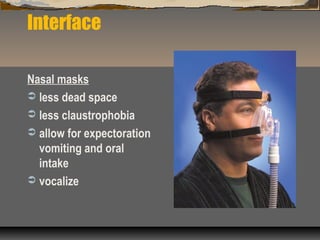
Interface
Nasal masks
 less dead space
 less claustrophobia
 allow for expectoration
vomiting and oral
intake
 vocalize
facial mask


dyspnoeic …
patients are usually
mouth breathers

 More dead space
Position of exhalation port and mask design
affect CO2 rebreathing during NIV
Crit Care Med. 2013 Aug;31

facial mask with exhalation port within the

mask compared with port in the ventilator
circuit
smallest mask volume
less rebreathed CO2
inspiratory load
Aerosol bronchodilator delivery during NIV
 optimum nebulizer position: between the leak port

and patient connection
 Optimum ventilator settings: high inspiratory

pressure and low expiratory pressure.
 Optimum RR 20/m. Rather than 10/m.
25% of salbutamol dose may be delivered

Crit. Care Med. 2012 Nov;30
Humidification during NIV
No humidification: drying of nasal mucosa;

increased airway resistance; decreased
compliance.
HME lessens the efficacy of NIV
Only pass-over humidifiers should be
used

Intensive Care Med. 2012;28
 Desirable

to deliver the aerosolized
bronchodilator without removing the
patient from NIV
 ? aerosol delivery in systems in which
the leak port is in the mask or in which a
leak port of different design
 ? Nebulizer was maintained in the
vertical position
Uses of NIV
COPD. Acute exacerbation.
2. Cardiogenic pulmonary edema.
3. Bronchial asthma
4. Post extubation RF
5. Hasten weaning.
N.B ..the use of NIV in ER minimize the in
admission …..
1.
COPD EXACERBATION: NIV
 success

rates of 80-85%
 increases pH, reduces PaCO 2, reduces
the severity of breathlessness in first 4
h of treatment
 decreases the length of hospital stay
 Mortality, intubation rate—is reduced
GOLD 2013
CRITERIA FOR NIV IN ACUTE
EXACERBATION OF COPD

GOLD 2012
Cardiogenic Pulmonary edema….
 sufficiently

high level evidence to favor the
use of CPAP,
 there is insufficient evidence to recommend
the use of BiPAP, probably the exception
being patients with hypercapnic CPE.
Methodology
 Initial ventilator settings: CPAP (EPAP) 2- cm

H2O & PSV (IPAP) 5 cm H20.
 Mask is held gently on patient’s face.
 Increase the pressures until adequate Vt
(7ml/kg), RR<25/mt, and patient comfortable.
 Titrate FiO2 to achieve SpO2>92%.((88-90%
target for COPD pt.))
 Keep peak pressure <25-30 cmH2O
 Head of the bed elevated (( 45 – 90º ))
Monitoring
Response
Physiological a) Continuous oximetry
as

Objective

b) Exhaled tidal volume
c) ABG should be obtained within 12 hour and,
necessary, at 2 to 6 hour intervals.
a) Respiratory rate
b) blood pressure
c) pulse rate

Subjective
a) dyspnea
b) comfort
c) mental alertness
Monitoring…..
Mask
Fit, Comfort, Air leak, Secretions, Skin necrosis
Respiratory muscle unloading
Accessory muscle activity, paradoxical
abdominal motion
Abdomen
Gastric distension
First 30 min. of NPPV is labor intensive.
Bedside presence of a
respiratory therapist or nurse
familiar with this mode is essential.
Providing reassurance and adequate explanation
Be ready to intubate and start on invasive
ventilation.
Criteria to discontinue NIV
Inability to tolerate the mask because of discomfort or
pain
 Inability to improve gas exchange or dyspnea
 Need for endotracheal intubation to manage secretions
or protect airway ??
 Hemodynamic instability
 ECG – ischemia/arrhythmia
 Failure to improve mental status in those with CO2
narcosis.

Europeans Respiratory J 2012; 20:
Our issue
..
Maximum
care … 

Non invasive ventilation

  • 2.
    Definition..  Noninvasive ventilationis the delivery of ventilatory support without the need for an invasive artificial airway
  • 3.
    How does NIVwork?  Reduction in inspiratory muscle work and avoidance of respiratory muscle fatigue  Tidal volume is increased  CPAP counterbalances the inspiratory threshold work related to intrinsic PEEP.  NIV improves respiratory system compliance by reversing microatelectasis of the lung.
  • 4.
    Advantages of NIV Noninvasiveness Application (compared with endotracheal intubation) a.Easy to implement b. Easy to remove Allows intermittent application Improves patient comfort Reduces the need for sedation Oral patency (preserves speech, swallowing, and cough, reduces the need for nasoenteric tubes)
  • 5.
     Avoid theresistive work imposed by the endotracheal tube  Avoids the complications of endotracheal intubation Early (local trauma, aspiration) Late (injury to the the hypopharynx, larynx, and trachea, nosocomial infections)
  • 6.
    Disadvantages of NIV 1.System Slower correction of gas exchange abnormalities Increased initial time commitment Gastric distension (occurs in <2% patients)  2.Mask Air leakage Transient hypoxemia from accidental removal Eye irritation Facial skin necrosis –most common complication.
  • 7.
     3.Lack ofairway access and protection Suctioning of secretions aspiration
  • 8.
    Location of NIV  NIVcan be administered in the emergency department, intermediate care unit, or even general respiratory ward
  • 9.
    Who can administerNIV? by physicians, nurses, or respiratory care therapists,  depends on staff experience and availability of resources for monitoring, and managing complications  For the first few hours, one-to-one monitoring by a skilled and experienced nurse, respiratory therapist, or physician is mandatory.  Immediate access to staff skilled in invasive airway management. 
  • 10.
    Interface Nasal masks  lessdead space  less claustrophobia  allow for expectoration vomiting and oral intake  vocalize
  • 11.
    facial mask  dyspnoeic … patientsare usually mouth breathers  More dead space
  • 14.
    Position of exhalationport and mask design affect CO2 rebreathing during NIV Crit Care Med. 2013 Aug;31 facial mask with exhalation port within the mask compared with port in the ventilator circuit smallest mask volume less rebreathed CO2 inspiratory load
  • 15.
    Aerosol bronchodilator deliveryduring NIV  optimum nebulizer position: between the leak port and patient connection  Optimum ventilator settings: high inspiratory pressure and low expiratory pressure.  Optimum RR 20/m. Rather than 10/m. 25% of salbutamol dose may be delivered Crit. Care Med. 2012 Nov;30
  • 16.
    Humidification during NIV Nohumidification: drying of nasal mucosa; increased airway resistance; decreased compliance. HME lessens the efficacy of NIV Only pass-over humidifiers should be used Intensive Care Med. 2012;28
  • 18.
     Desirable to deliverthe aerosolized bronchodilator without removing the patient from NIV  ? aerosol delivery in systems in which the leak port is in the mask or in which a leak port of different design  ? Nebulizer was maintained in the vertical position
  • 19.
    Uses of NIV COPD.Acute exacerbation. 2. Cardiogenic pulmonary edema. 3. Bronchial asthma 4. Post extubation RF 5. Hasten weaning. N.B ..the use of NIV in ER minimize the in admission ….. 1.
  • 20.
    COPD EXACERBATION: NIV success rates of 80-85%  increases pH, reduces PaCO 2, reduces the severity of breathlessness in first 4 h of treatment  decreases the length of hospital stay  Mortality, intubation rate—is reduced GOLD 2013
  • 21.
    CRITERIA FOR NIVIN ACUTE EXACERBATION OF COPD GOLD 2012
  • 24.
    Cardiogenic Pulmonary edema…. sufficiently high level evidence to favor the use of CPAP,  there is insufficient evidence to recommend the use of BiPAP, probably the exception being patients with hypercapnic CPE.
  • 25.
    Methodology  Initial ventilatorsettings: CPAP (EPAP) 2- cm H2O & PSV (IPAP) 5 cm H20.  Mask is held gently on patient’s face.  Increase the pressures until adequate Vt (7ml/kg), RR<25/mt, and patient comfortable.  Titrate FiO2 to achieve SpO2>92%.((88-90% target for COPD pt.))  Keep peak pressure <25-30 cmH2O  Head of the bed elevated (( 45 – 90º ))
  • 26.
    Monitoring Response Physiological a) Continuousoximetry as Objective b) Exhaled tidal volume c) ABG should be obtained within 12 hour and, necessary, at 2 to 6 hour intervals. a) Respiratory rate b) blood pressure c) pulse rate Subjective a) dyspnea b) comfort c) mental alertness
  • 27.
    Monitoring….. Mask Fit, Comfort, Airleak, Secretions, Skin necrosis Respiratory muscle unloading Accessory muscle activity, paradoxical abdominal motion Abdomen Gastric distension
  • 28.
    First 30 min.of NPPV is labor intensive. Bedside presence of a respiratory therapist or nurse familiar with this mode is essential. Providing reassurance and adequate explanation Be ready to intubate and start on invasive ventilation.
  • 29.
    Criteria to discontinueNIV Inability to tolerate the mask because of discomfort or pain  Inability to improve gas exchange or dyspnea  Need for endotracheal intubation to manage secretions or protect airway ??  Hemodynamic instability  ECG – ischemia/arrhythmia  Failure to improve mental status in those with CO2 narcosis. 
  • 30.
  • 33.

Editor's Notes

  • #4 The use of NIV in acute hospital settings and at home has been steadily increasing