
Introduction
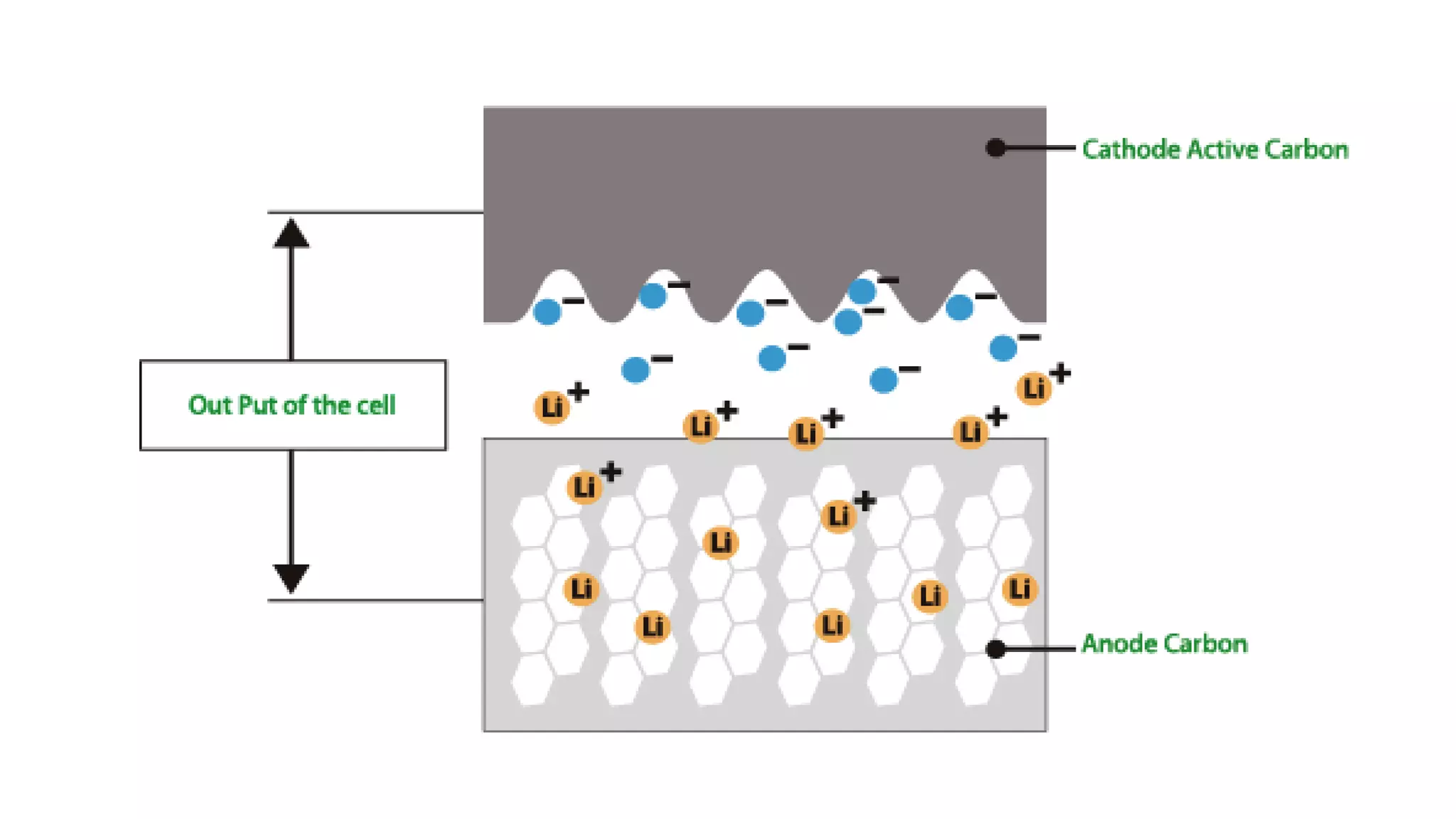
• A lithium-ion capacitor (LIC) is a hybrid type of capacitor.
• Activated carbon is used as cathode.
• The anode of the LIC consists of carbon material which is pre-doped
with lithium ion.
• This pre-doping process lowers the potential of the anode and allows
a high output voltage.
Properties
• High cell capacity, because of the large anode capacity
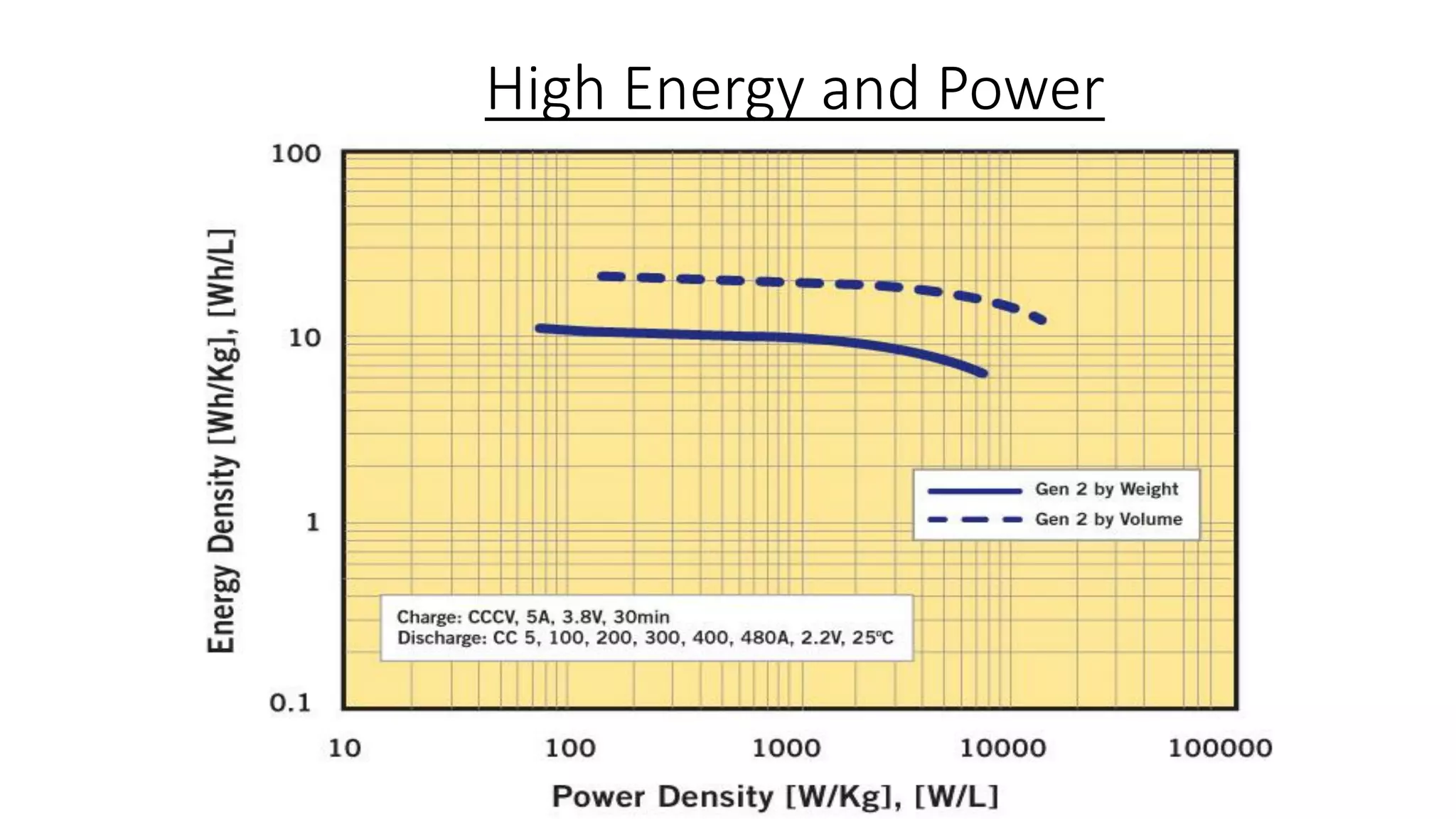
• High energy density (14 Wh/kg reported in)
• High power density
• High reliability
• Operating temperatures ranging from −20 ⁰C to 70 ⁰C.
• Low self-discharge (<5% Voltage drop at 25⁰C over three months)
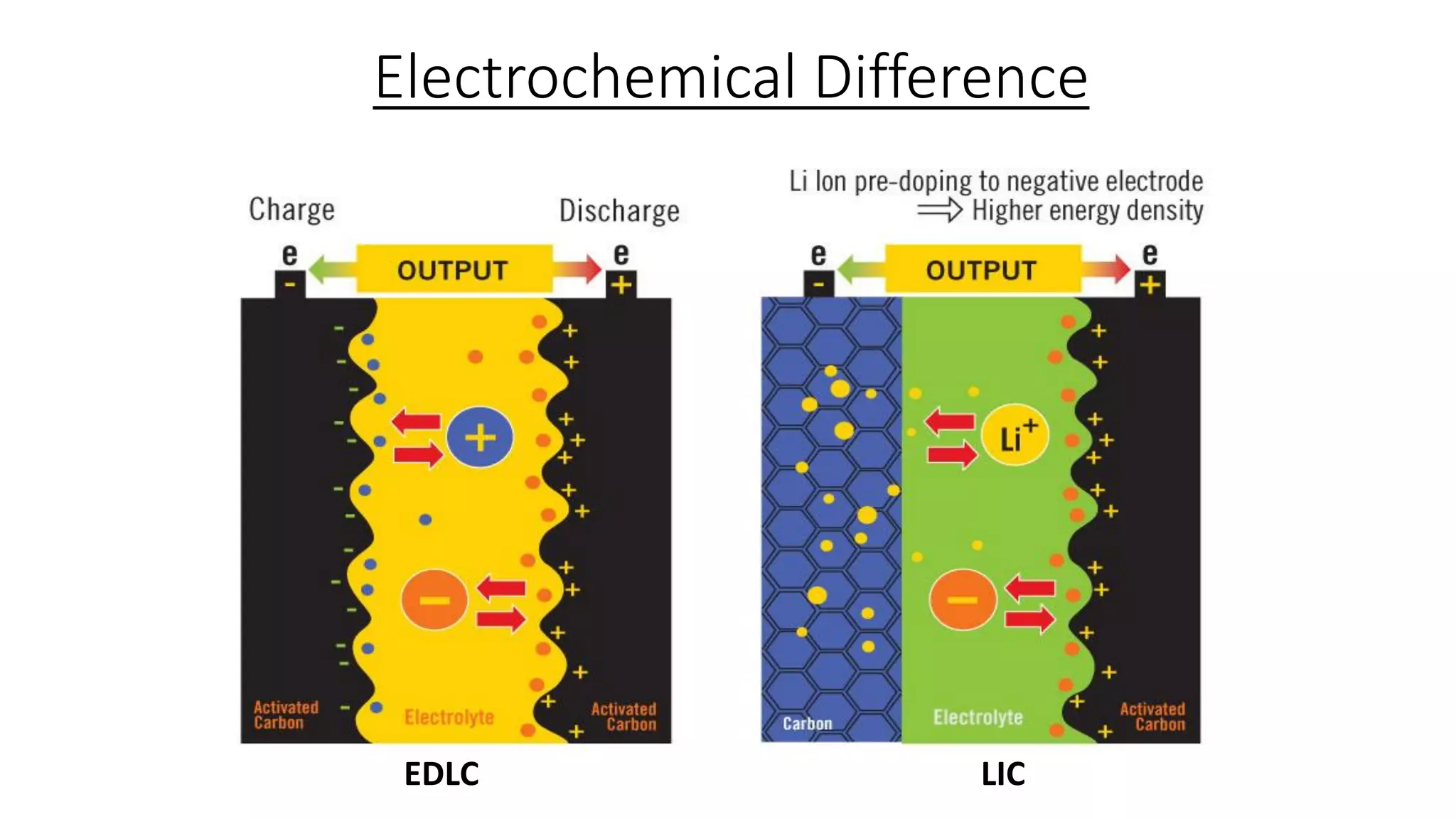
Electrochemical Difference
EDLC LIC
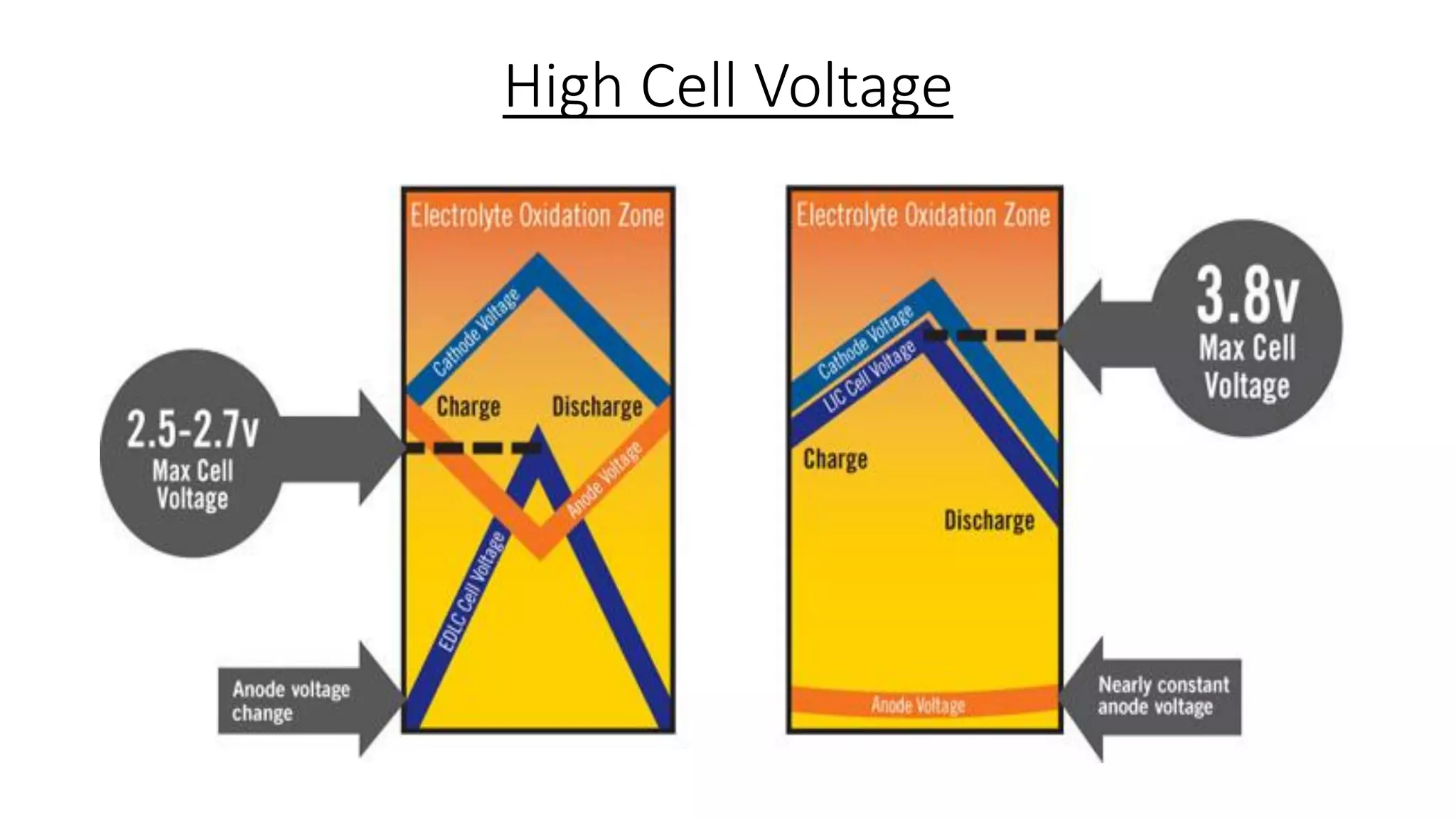
High Cell Voltage
High Energy and Power
Working
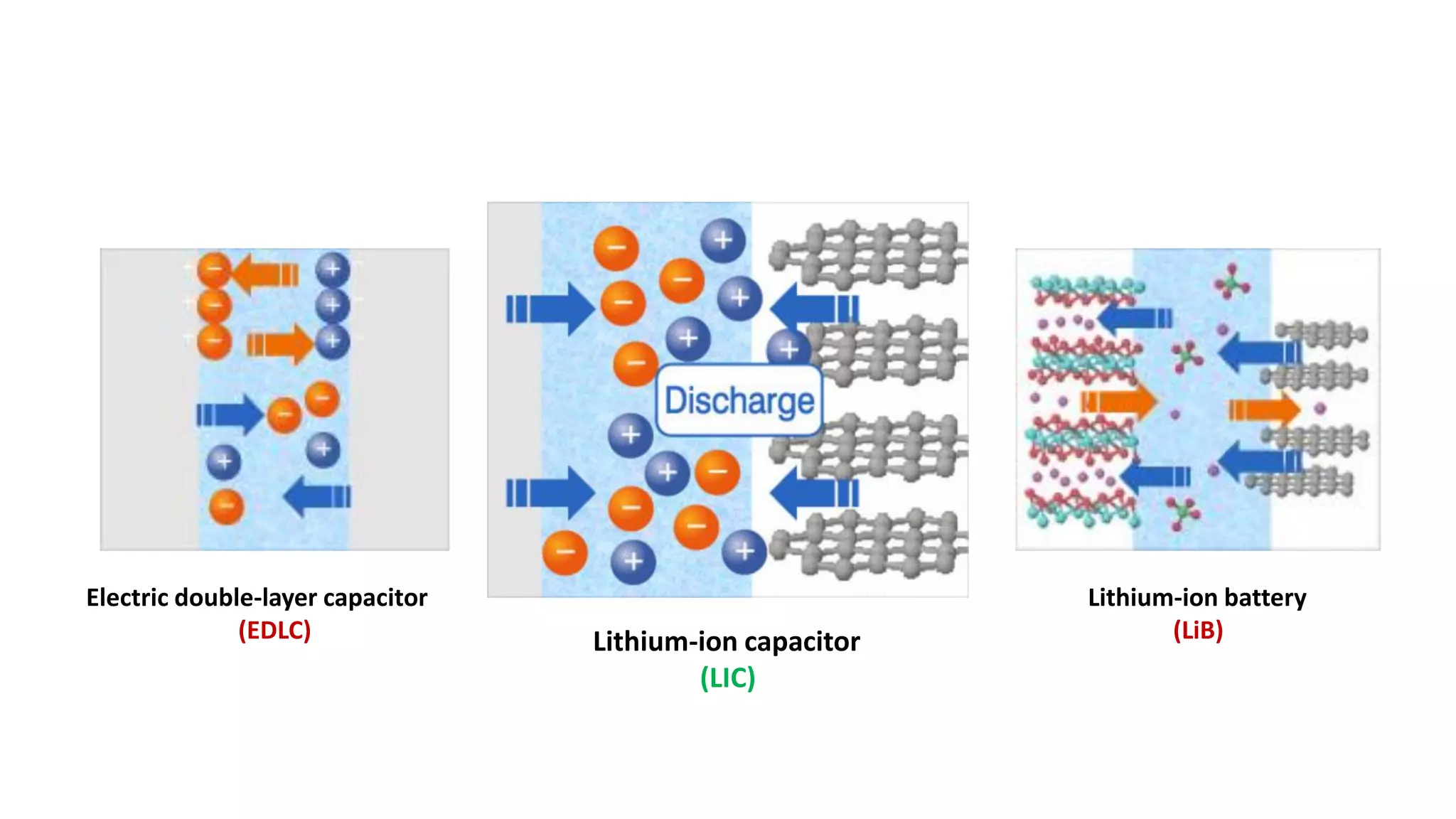
• Electric double-layer capacitors store charge by physically adsorbing the
cations and anions from an electrolytic solution on positive and negative
sides, as an electric double layer.
• LIBs react chemically with lithium ions at their positive and negative sides
to store and release them, or charge and discharge.
• LICs combine these two principles, adsorbing and desorbing ions at their
cathodes and storing and releasing lithium ions at their anodes to charge
and discharge.
Cont..
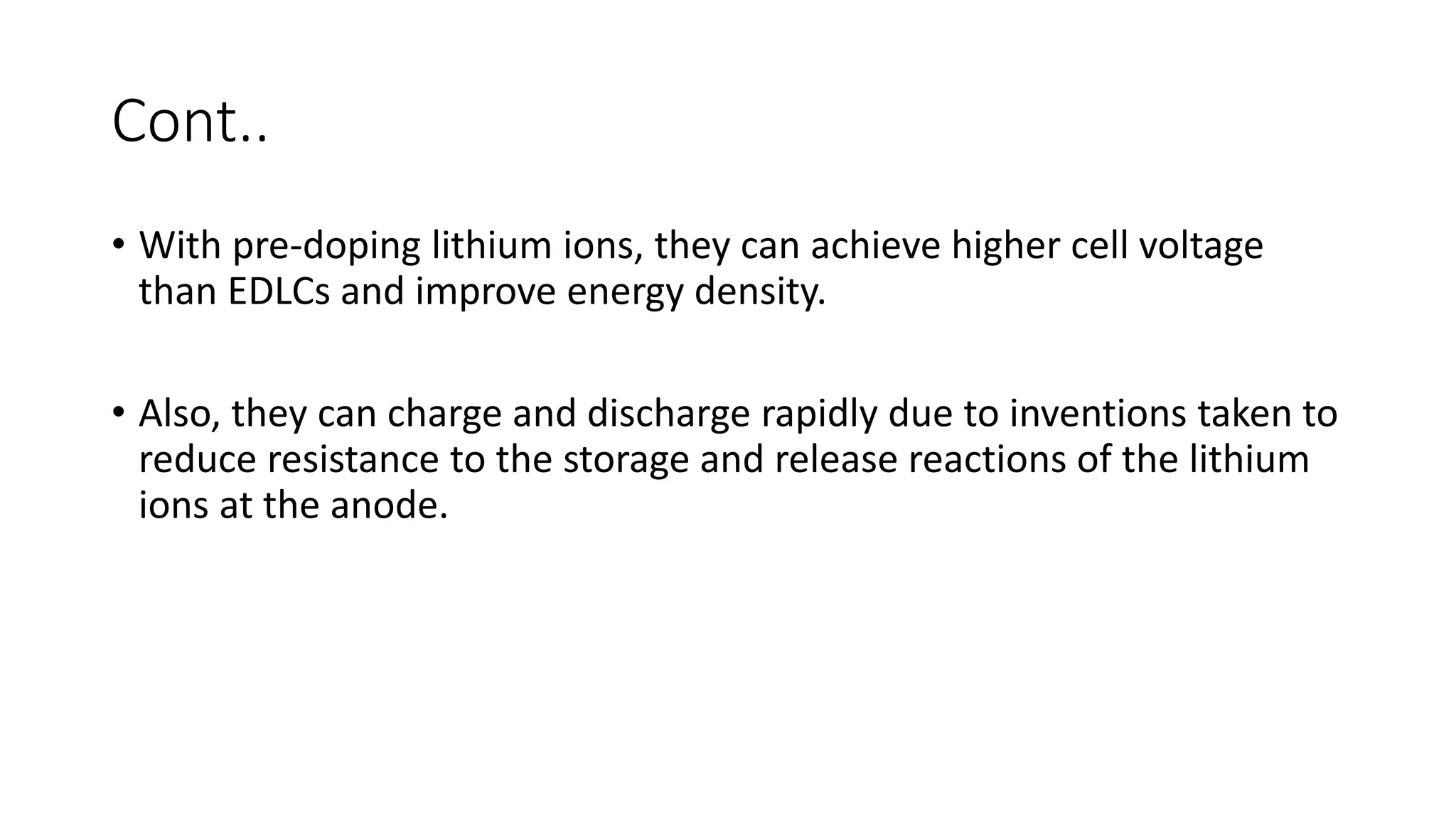
• With pre-doping lithium ions, they can achieve higher cell voltage
than EDLCs and improve energy density.
• Also, they can charge and discharge rapidly due to inventions taken to
reduce resistance to the storage and release reactions of the lithium
ions at the anode.
Electric double-layer capacitor
(EDLC)
Lithium-ion battery
(LiB)Lithium-ion capacitor
(LIC)
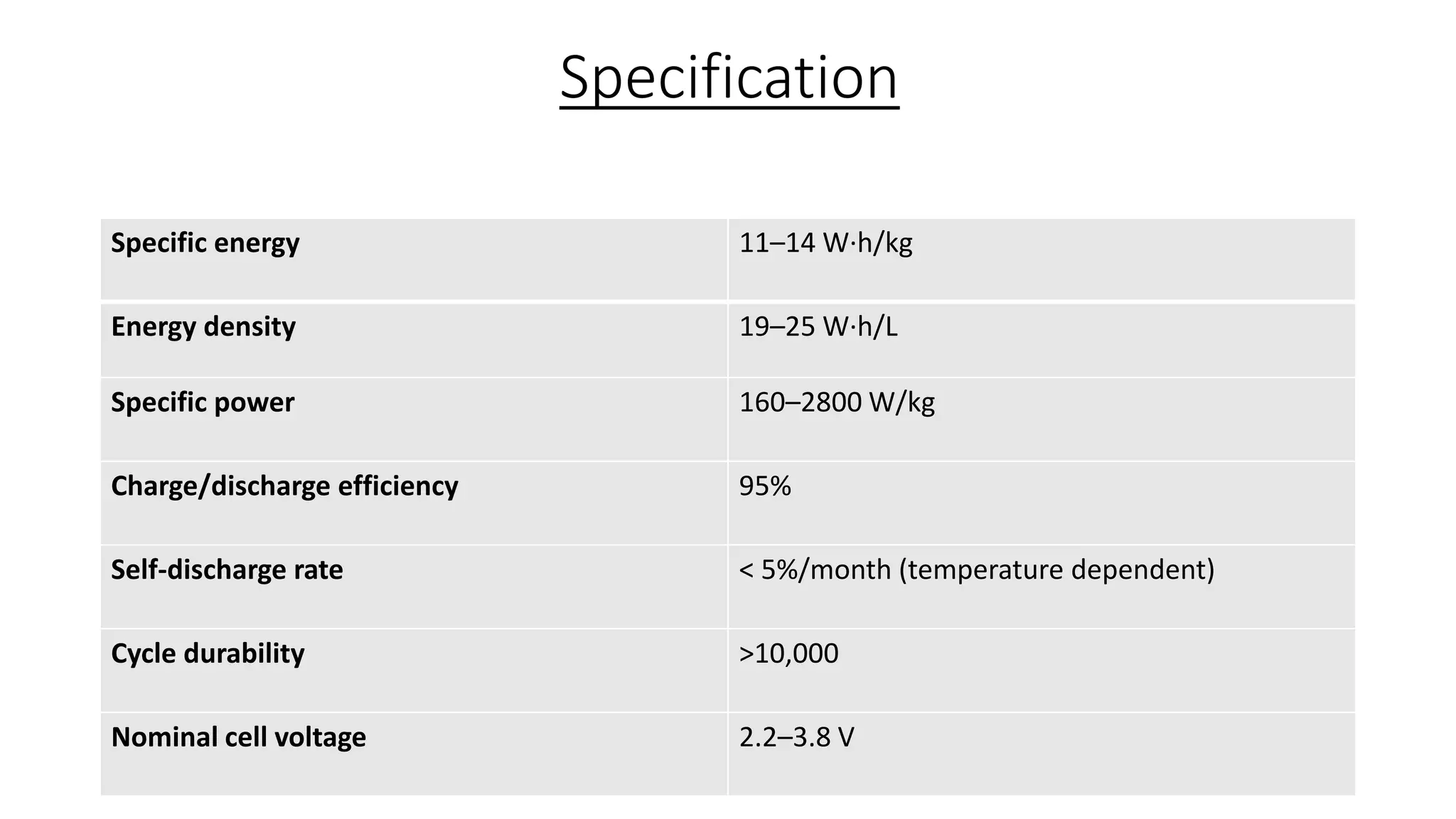
Specification
Specific energy 11–14 W·h/kg
Energy density 19–25 W·h/L
Specific power 160–2800 W/kg
Charge/discharge efficiency 95%
Self-discharge rate < 5%/month (temperature dependent)
Cycle durability >10,000
Nominal cell voltage 2.2–3.8 V
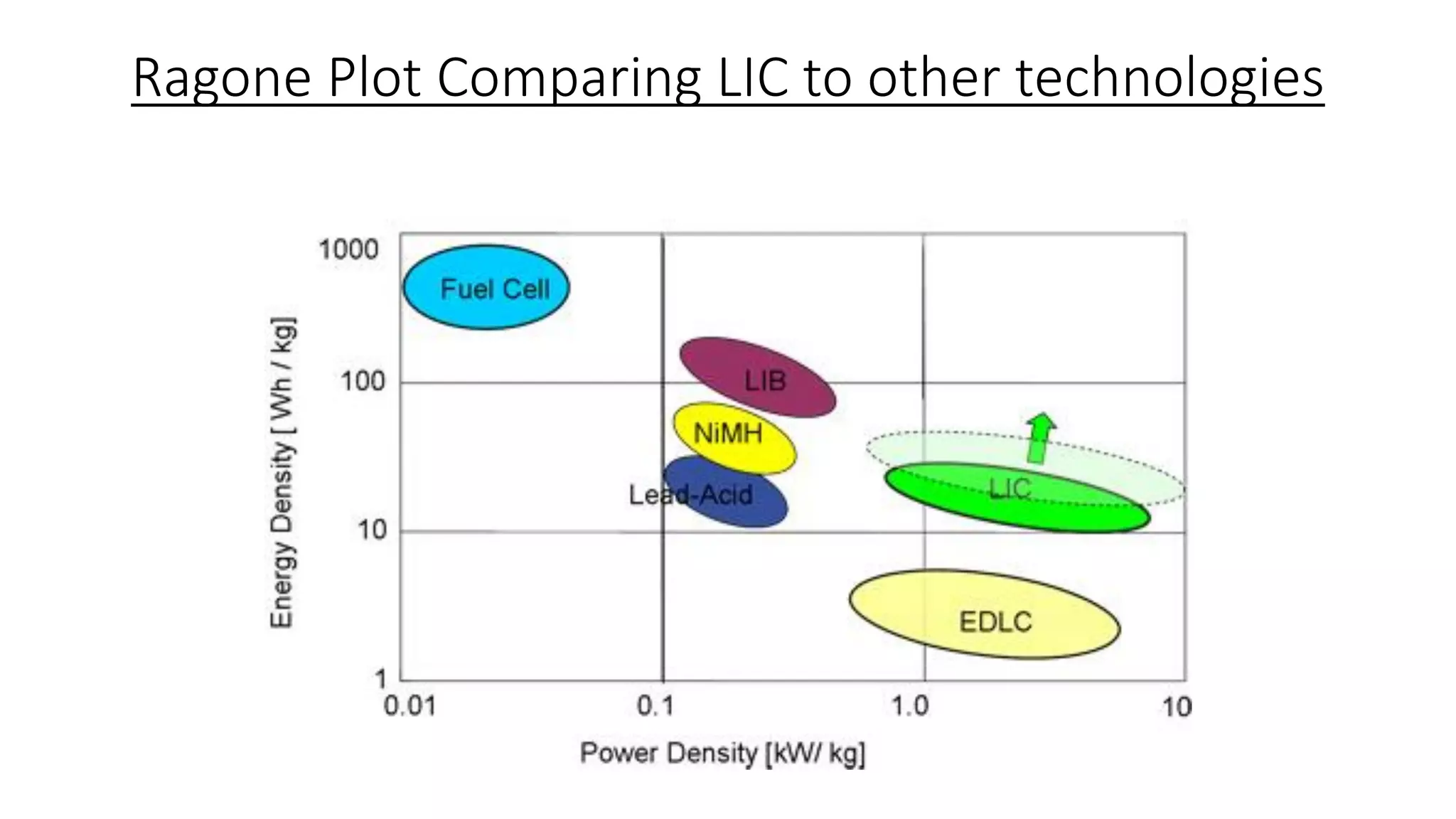
Ragone Plot Comparing LIC to other technologies
Advantages
Advantages over EDLCs Advantages over LIBs
•High voltage
•High energy density
•Little self-discharge
•Reliability at high temperatures
•High power density
•Good cycle characteristics
•No use of rare metals
•High safety
*There are other advantages as well, such as that LICs are eco-friendly since they do not use heavy metals.
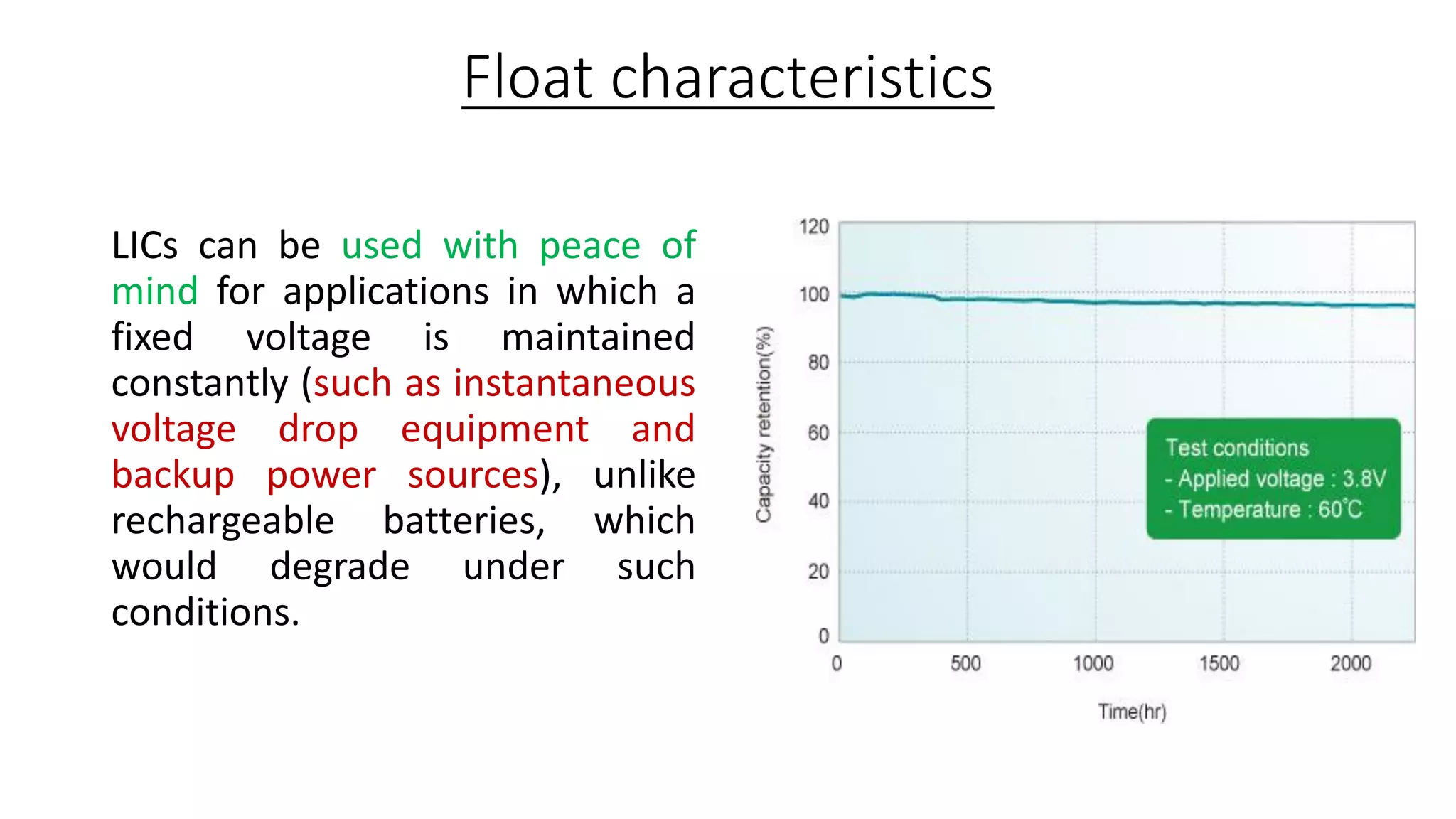
Float characteristics
LICs can be used with peace of
mind for applications in which a
fixed voltage is maintained
constantly (such as instantaneous
voltage drop equipment and
backup power sources), unlike
rechargeable batteries, which
would degrade under such
conditions.
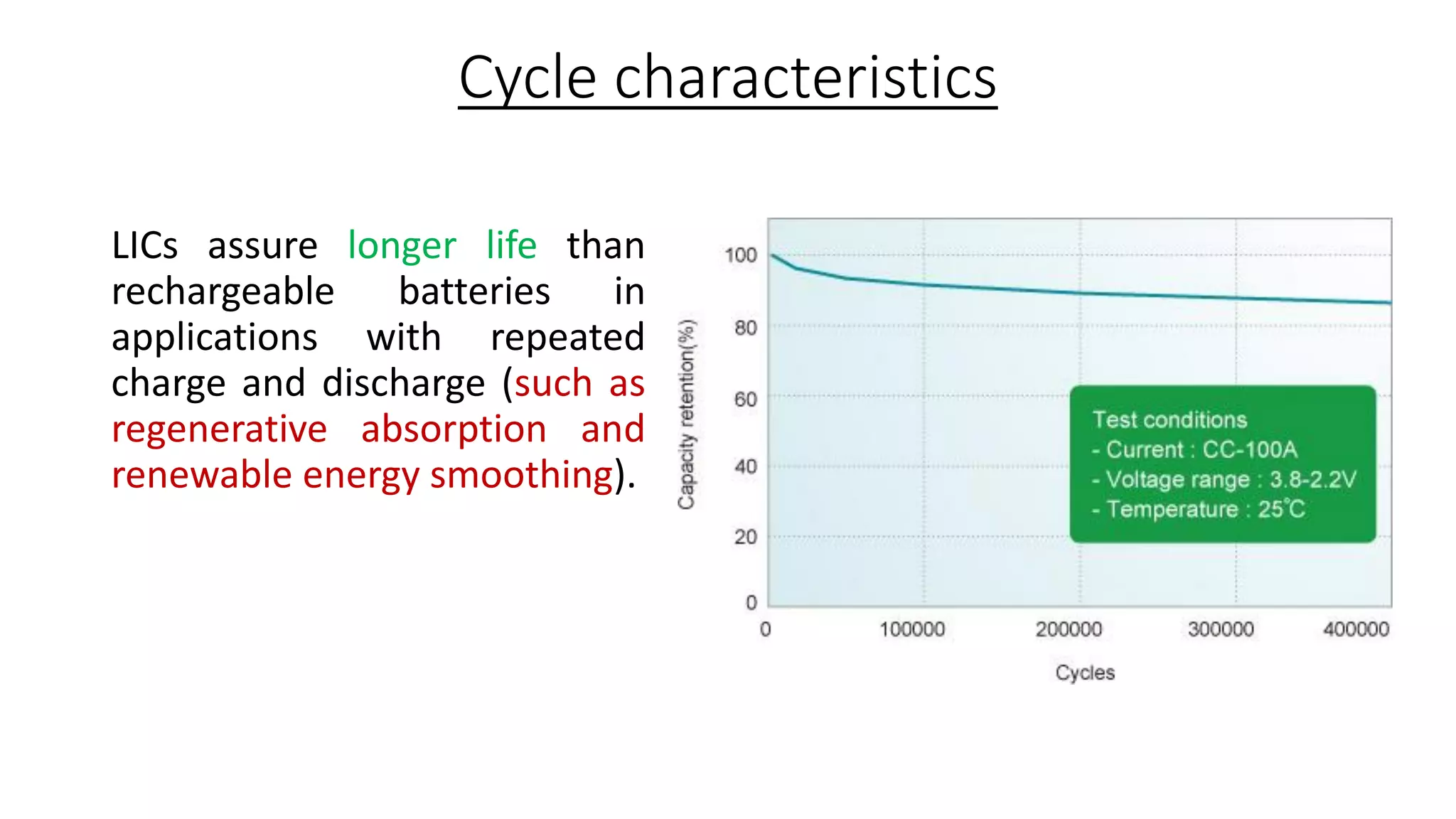
Cycle characteristics
LICs assure longer life than
rechargeable batteries in
applications with repeated
charge and discharge (such as
regenerative absorption and
renewable energy smoothing).
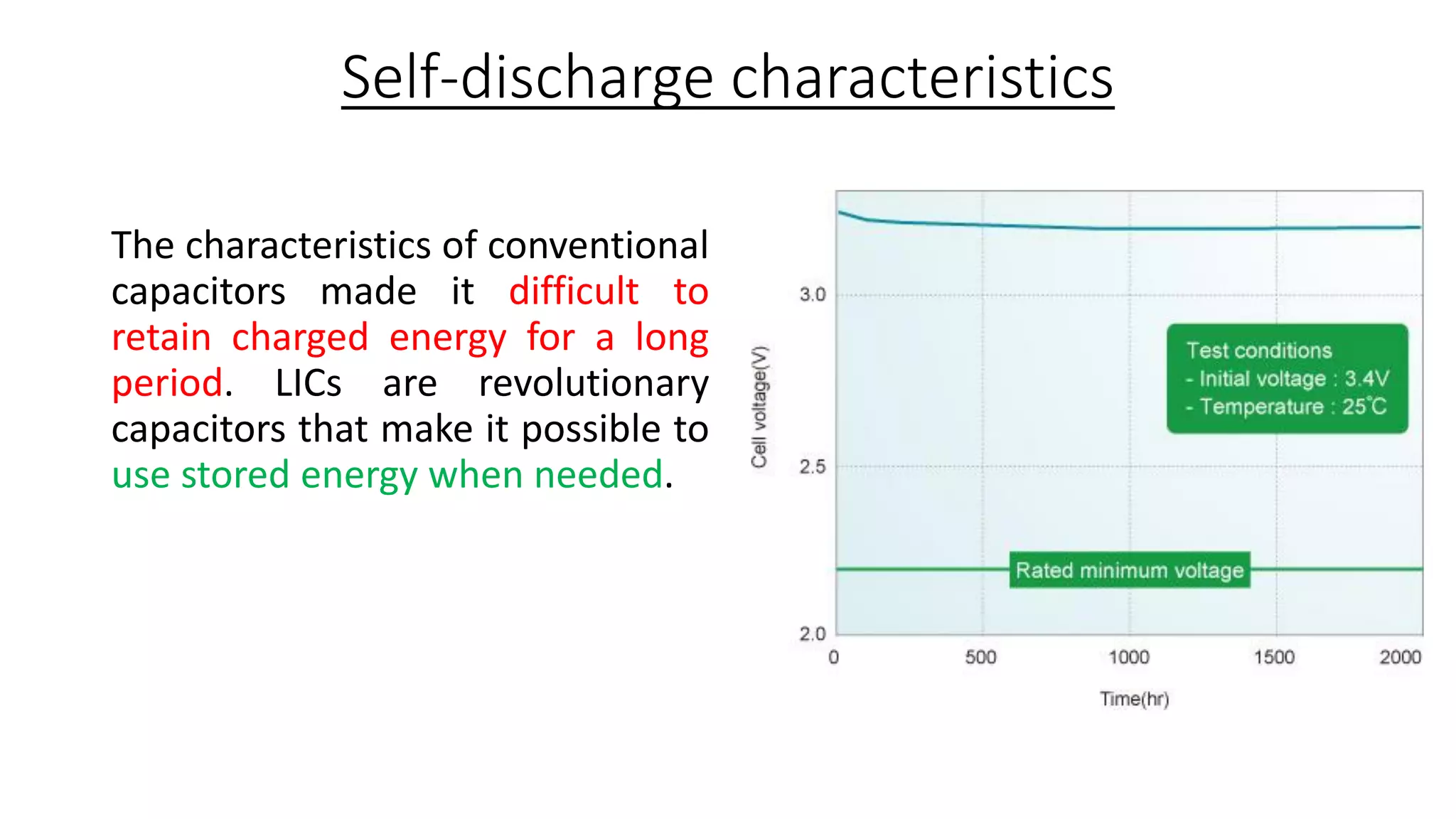
Self-discharge characteristics
The characteristics of conventional
capacitors made it difficult to
retain charged energy for a long
period. LICs are revolutionary
capacitors that make it possible to
use stored energy when needed.
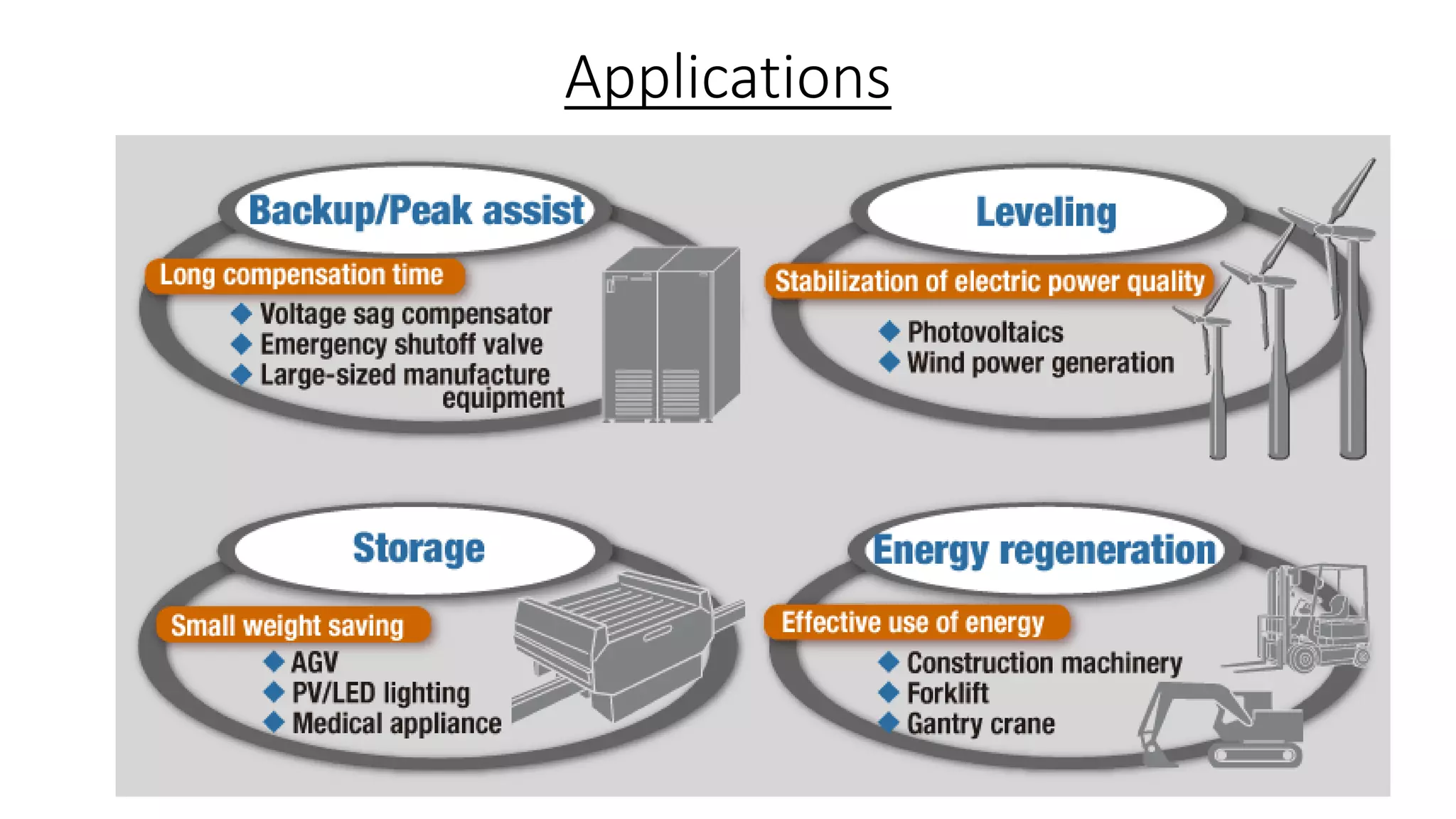
Applications
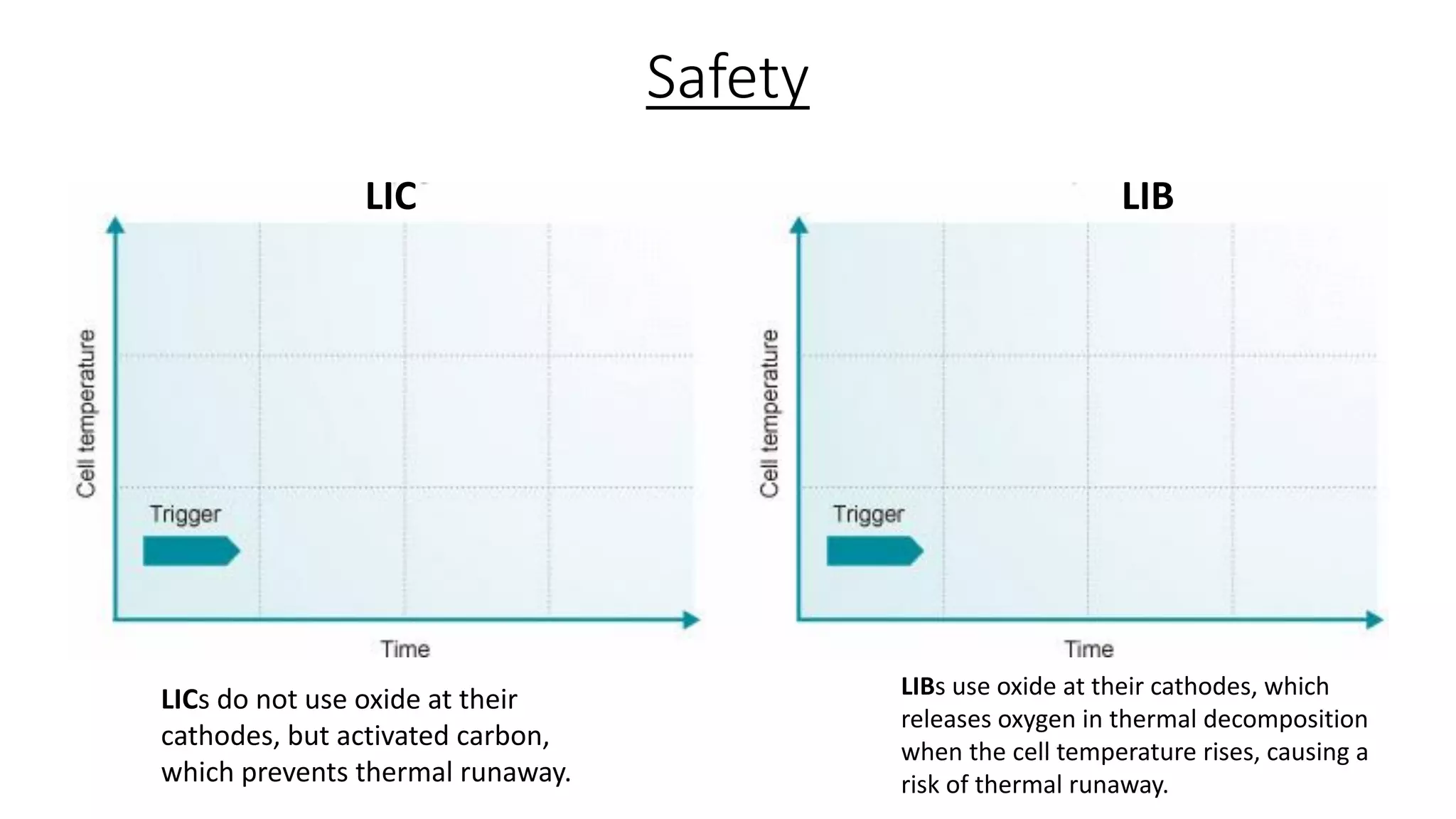
Safety
LICs do not use oxide at their
cathodes, but activated carbon,
which prevents thermal runaway.
LIBs use oxide at their cathodes, which
releases oxygen in thermal decomposition
when the cell temperature rises, causing a
risk of thermal runaway.
LIC LIB
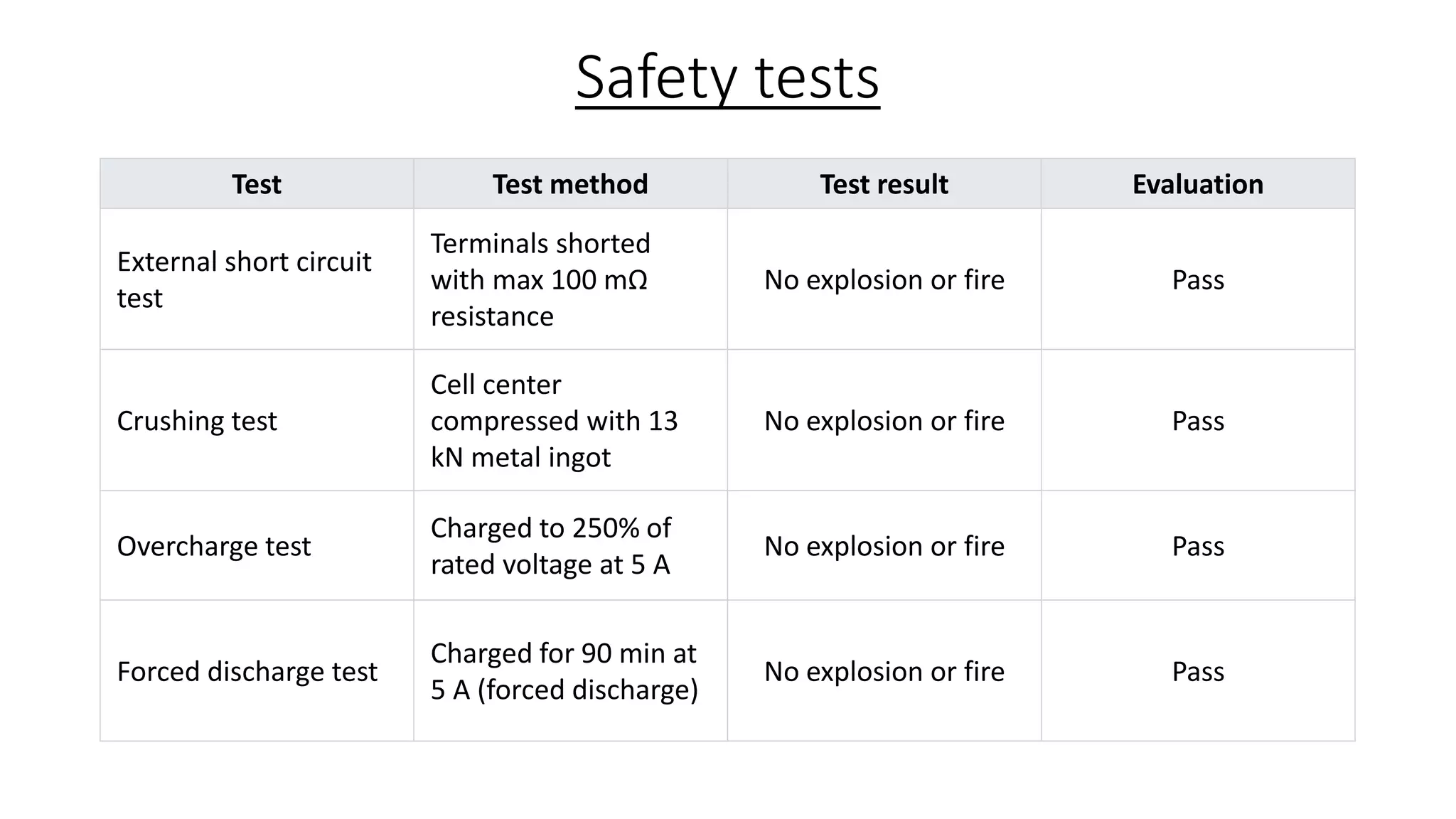
Safety tests
Test Test method Test result Evaluation
External short circuit
test
Terminals shorted
with max 100 mΩ
resistance
No explosion or fire Pass
Crushing test
Cell center
compressed with 13
kN metal ingot
No explosion or fire Pass
Overcharge test
Charged to 250% of
rated voltage at 5 A
No explosion or fire Pass
Forced discharge test
Charged for 90 min at
5 A (forced discharge)
No explosion or fire Pass
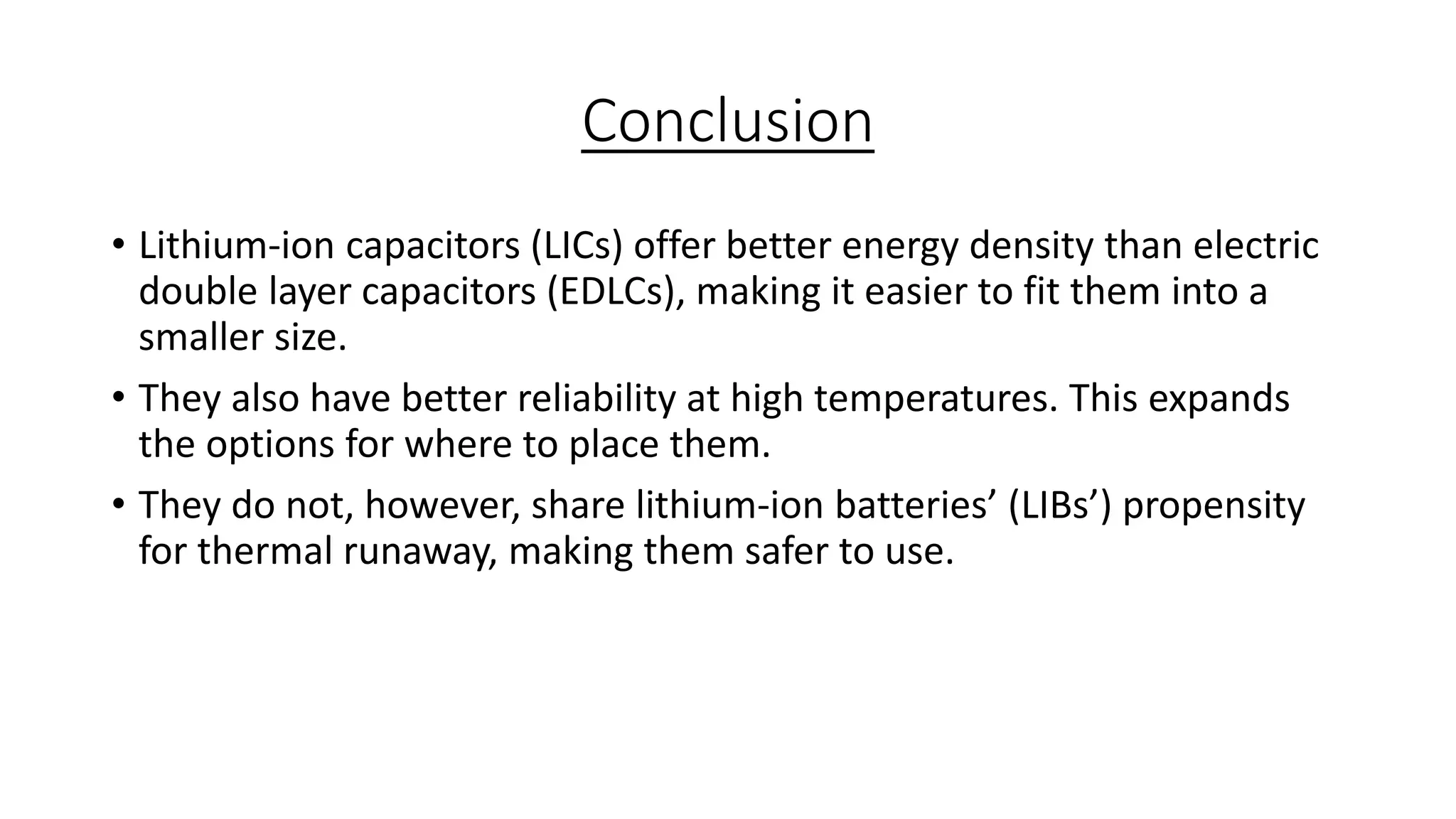
Conclusion
• Lithium-ion capacitors (LICs) offer better energy density than electric
double layer capacitors (EDLCs), making it easier to fit them into a
smaller size.
• They also have better reliability at high temperatures. This expands
the options for where to place them.
• They do not, however, share lithium-ion batteries’ (LIBs’) propensity
for thermal runaway, making them safer to use.
References
• http://en.wikipedia.org/wiki/Lithium_ion_capacitor
• http://en.wikipedia.org/wiki/Electric_double-layer_capacitor
Info graphics
• http://www.afec.co.jp/english/lic/feature.html
• http://www.afec.co.jp/english/lic/performance.html
• http://www.jsrmicro.be/en/lic_applications
• http://www.jsrmicro.com/index.php/EnergyAndEnvironment/LithiumIonCapacitor/
Visit www.seminarlinks.blogspot.com to download

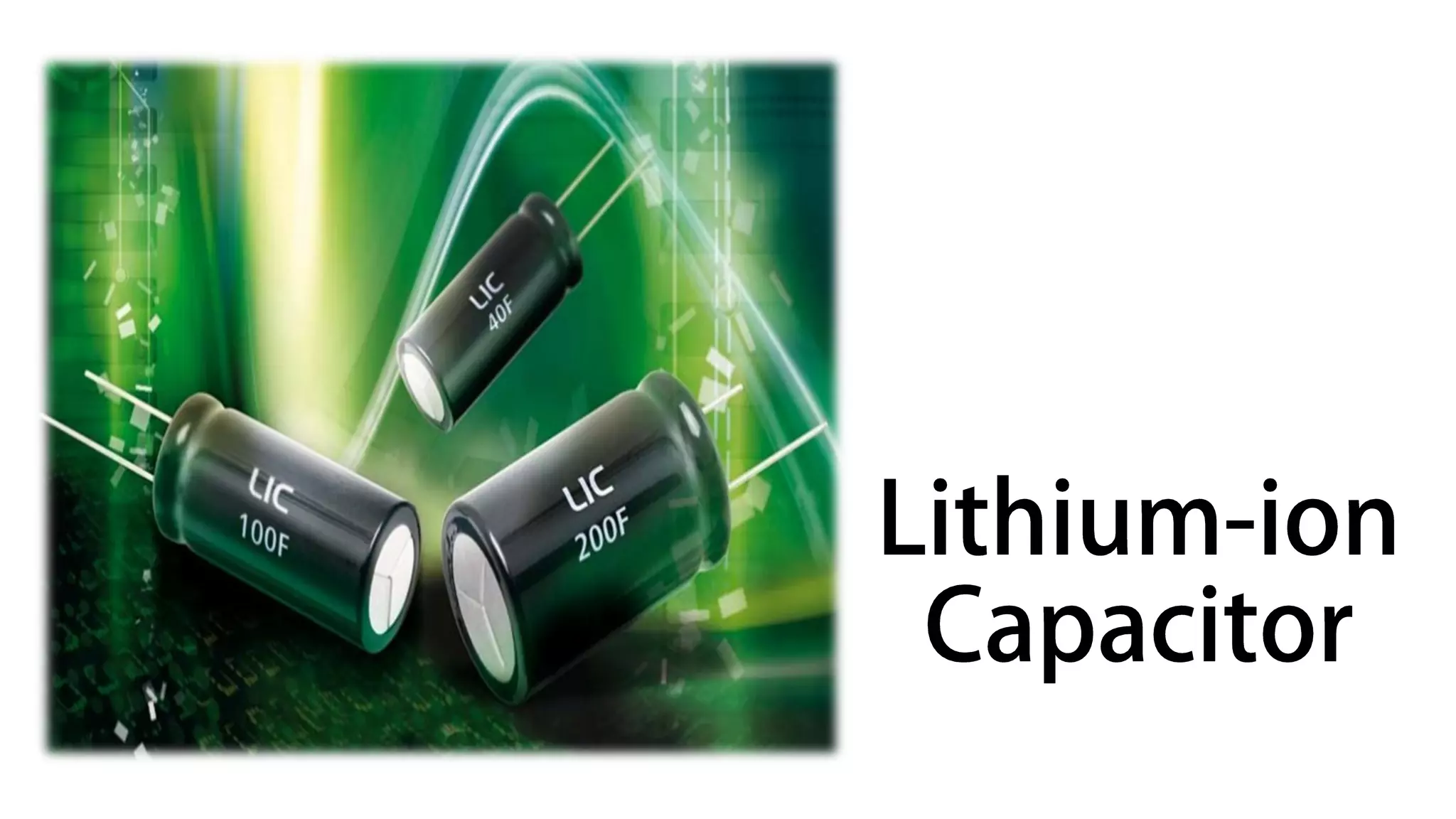
Lithium-ion Capacitor (LIC)

  • 2.
    Introduction • A lithium-ioncapacitor (LIC) is a hybrid type of capacitor. • Activated carbon is used as cathode. • The anode of the LIC consists of carbon material which is pre-doped with lithium ion. • This pre-doping process lowers the potential of the anode and allows a high output voltage.
  • 4.
    Properties • High cellcapacity, because of the large anode capacity • High energy density (14 Wh/kg reported in) • High power density • High reliability • Operating temperatures ranging from −20 ⁰C to 70 ⁰C. • Low self-discharge (<5% Voltage drop at 25⁰C over three months)
  • 5.
  • 6.
  • 7.
  • 8.
    Working • Electric double-layercapacitors store charge by physically adsorbing the cations and anions from an electrolytic solution on positive and negative sides, as an electric double layer. • LIBs react chemically with lithium ions at their positive and negative sides to store and release them, or charge and discharge. • LICs combine these two principles, adsorbing and desorbing ions at their cathodes and storing and releasing lithium ions at their anodes to charge and discharge.
  • 9.
    Cont.. • With pre-dopinglithium ions, they can achieve higher cell voltage than EDLCs and improve energy density. • Also, they can charge and discharge rapidly due to inventions taken to reduce resistance to the storage and release reactions of the lithium ions at the anode.
  • 10.
    Electric double-layer capacitor (EDLC) Lithium-ionbattery (LiB)Lithium-ion capacitor (LIC)
  • 11.
    Specification Specific energy 11–14W·h/kg Energy density 19–25 W·h/L Specific power 160–2800 W/kg Charge/discharge efficiency 95% Self-discharge rate < 5%/month (temperature dependent) Cycle durability >10,000 Nominal cell voltage 2.2–3.8 V
  • 12.
    Ragone Plot ComparingLIC to other technologies
  • 13.
    Advantages Advantages over EDLCsAdvantages over LIBs •High voltage •High energy density •Little self-discharge •Reliability at high temperatures •High power density •Good cycle characteristics •No use of rare metals •High safety *There are other advantages as well, such as that LICs are eco-friendly since they do not use heavy metals.
  • 14.
    Float characteristics LICs canbe used with peace of mind for applications in which a fixed voltage is maintained constantly (such as instantaneous voltage drop equipment and backup power sources), unlike rechargeable batteries, which would degrade under such conditions.
  • 15.
    Cycle characteristics LICs assurelonger life than rechargeable batteries in applications with repeated charge and discharge (such as regenerative absorption and renewable energy smoothing).
  • 16.
    Self-discharge characteristics The characteristicsof conventional capacitors made it difficult to retain charged energy for a long period. LICs are revolutionary capacitors that make it possible to use stored energy when needed.
  • 17.
  • 18.
    Safety LICs do notuse oxide at their cathodes, but activated carbon, which prevents thermal runaway. LIBs use oxide at their cathodes, which releases oxygen in thermal decomposition when the cell temperature rises, causing a risk of thermal runaway. LIC LIB
  • 19.
    Safety tests Test Testmethod Test result Evaluation External short circuit test Terminals shorted with max 100 mΩ resistance No explosion or fire Pass Crushing test Cell center compressed with 13 kN metal ingot No explosion or fire Pass Overcharge test Charged to 250% of rated voltage at 5 A No explosion or fire Pass Forced discharge test Charged for 90 min at 5 A (forced discharge) No explosion or fire Pass
  • 20.
    Conclusion • Lithium-ion capacitors(LICs) offer better energy density than electric double layer capacitors (EDLCs), making it easier to fit them into a smaller size. • They also have better reliability at high temperatures. This expands the options for where to place them. • They do not, however, share lithium-ion batteries’ (LIBs’) propensity for thermal runaway, making them safer to use.
  • 21.
    References • http://en.wikipedia.org/wiki/Lithium_ion_capacitor • http://en.wikipedia.org/wiki/Electric_double-layer_capacitor Infographics • http://www.afec.co.jp/english/lic/feature.html • http://www.afec.co.jp/english/lic/performance.html • http://www.jsrmicro.be/en/lic_applications • http://www.jsrmicro.com/index.php/EnergyAndEnvironment/LithiumIonCapacitor/
  • 22.