Electric Double Layer
Capacitors (EDLC)
AnuragYadav
Roll No: 10
INTRODUCTION
Electric Double Layer Capacitors (EDLC) are
also called super capacitors or ultra
capacitors.They store energy in the form of
static charges. EDLC resembles the ordinary
capacitors but having high energy density.
EDLC have very low working voltage ,and are
used in hybrid vehicles. EDLC ‘s are rated
from Farads to Kilo Farad ranges
2
HISTORY & PRESENT
Electric double layer effect was first noticed by
General Electric engineers in 1957. But this
effect is rediscovered and researches are
done by Standard oil of Ohio in 1966. But it is
NEC,who finally marketted the result as
SUPER CAPACTORS.
Due to the development of Material Science in
90’s,this technology improves rapidly.Today ,
electronic devices, Locomotives uses this
technology.
3
CONSTRUCTION
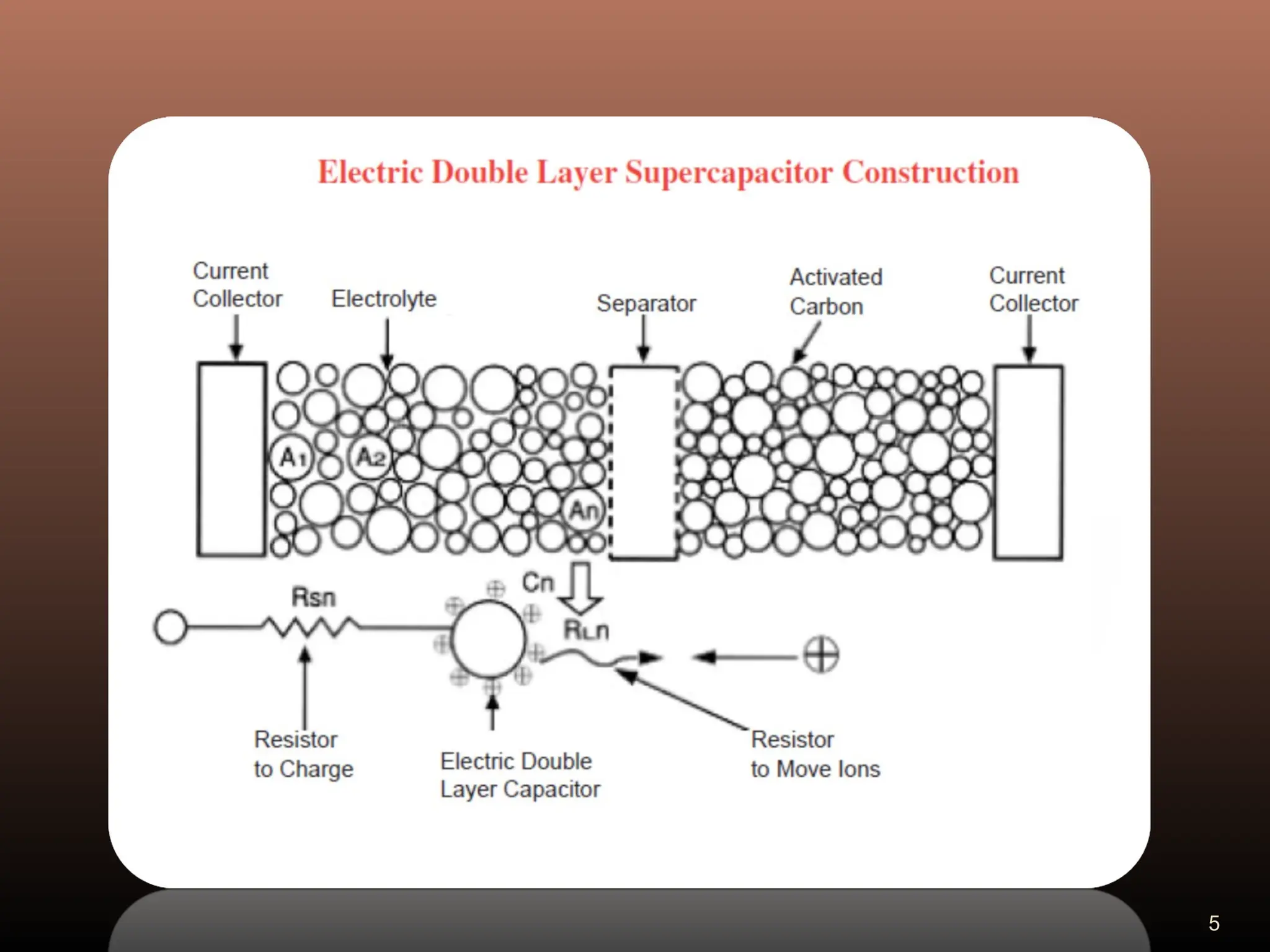
EDLC’s construction is a little different to that
of ordinary capacitors. EDLC’s doesn't have
any conventional dielectric rather than ,two
plates separated by an inverting substance.
The Super Capacitor uses plates of same
material having same electrical properties
and are called electric double layer.
4
5
Main materials used for the construction are
 Activated Charcoal
 CarbonNanoTubes
 Aerogels
6
EDLC use Activated Charcoal as plates.
It is because
 It’s a powder made of very small & rough
particle
 It’s having a low density particles with holes
 Over all surface area is very much larger than
other materials like Al ,Ti etc.
7
8
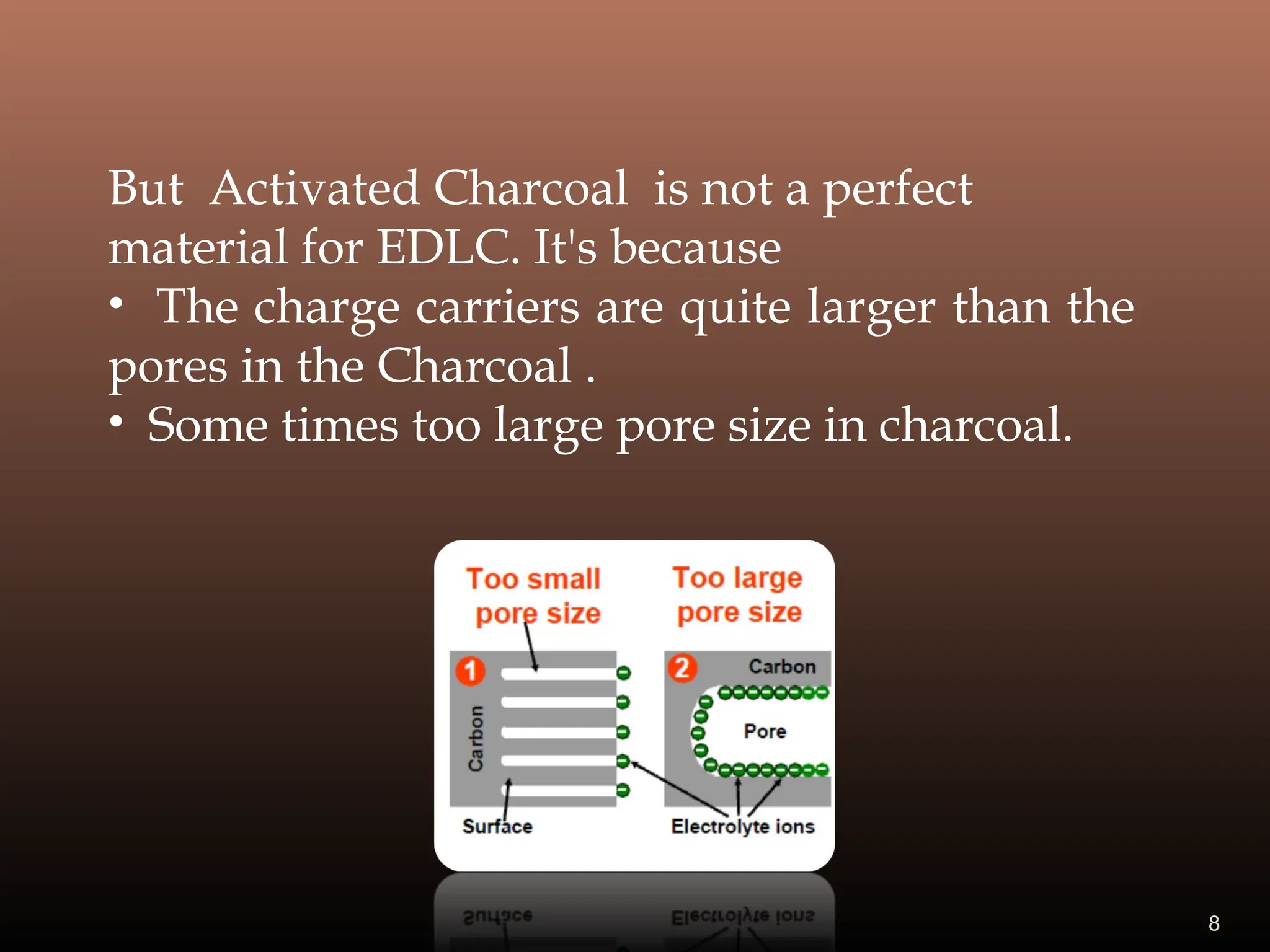
But Activated Charcoal is not a perfect
material for EDLC. It's because
• The charge carriers are quite larger than the
pores in the Charcoal .
• Some times too large pore size in charcoal.
9
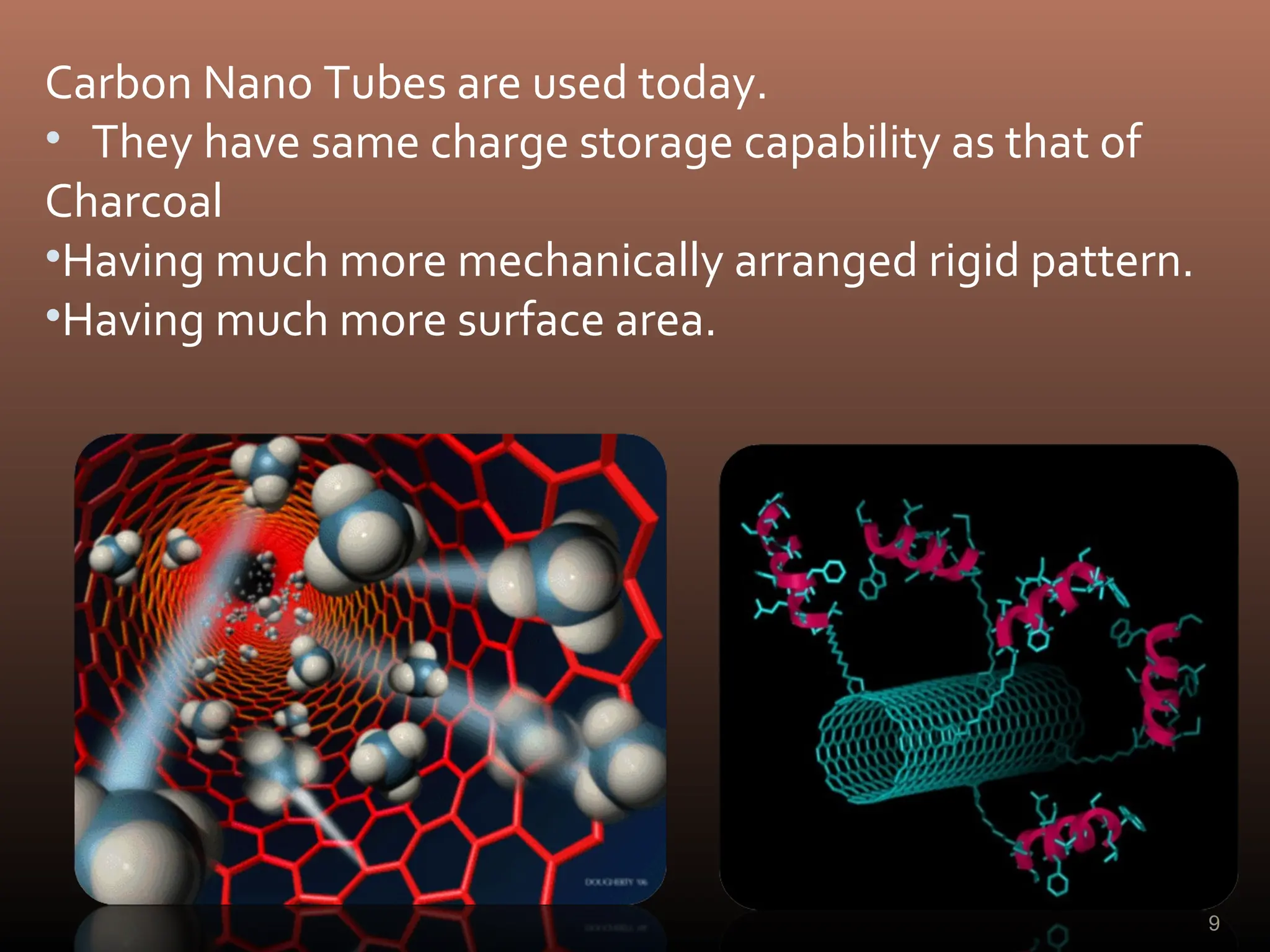
Carbon Nano Tubes are used today.
• They have same charge storage capability as that of
Charcoal
•Having much more mechanically arranged rigid pattern.
•Having much more surface area.
PRINCIPLE & WORKING
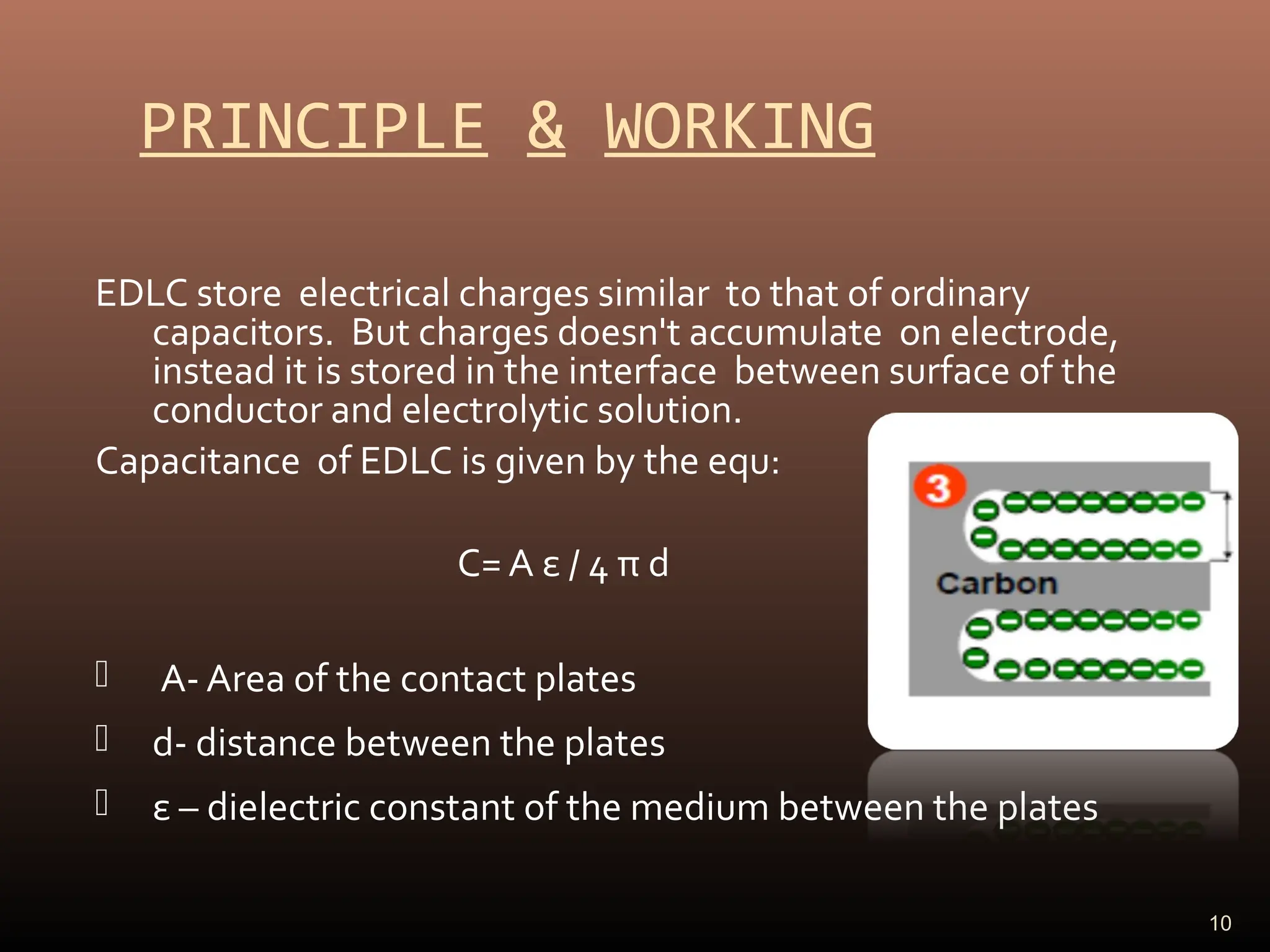
EDLC store electrical charges similar to that of ordinary
capacitors. But charges doesn't accumulate on electrode,
instead it is stored in the interface between surface of the
conductor and electrolytic solution.
Capacitance of EDLC is given by the equ:
C= A ε / 4 π d
 A- Area of the contact plates
 d- distance between the plates
 ε – dielectric constant of the medium between the plates
10
11
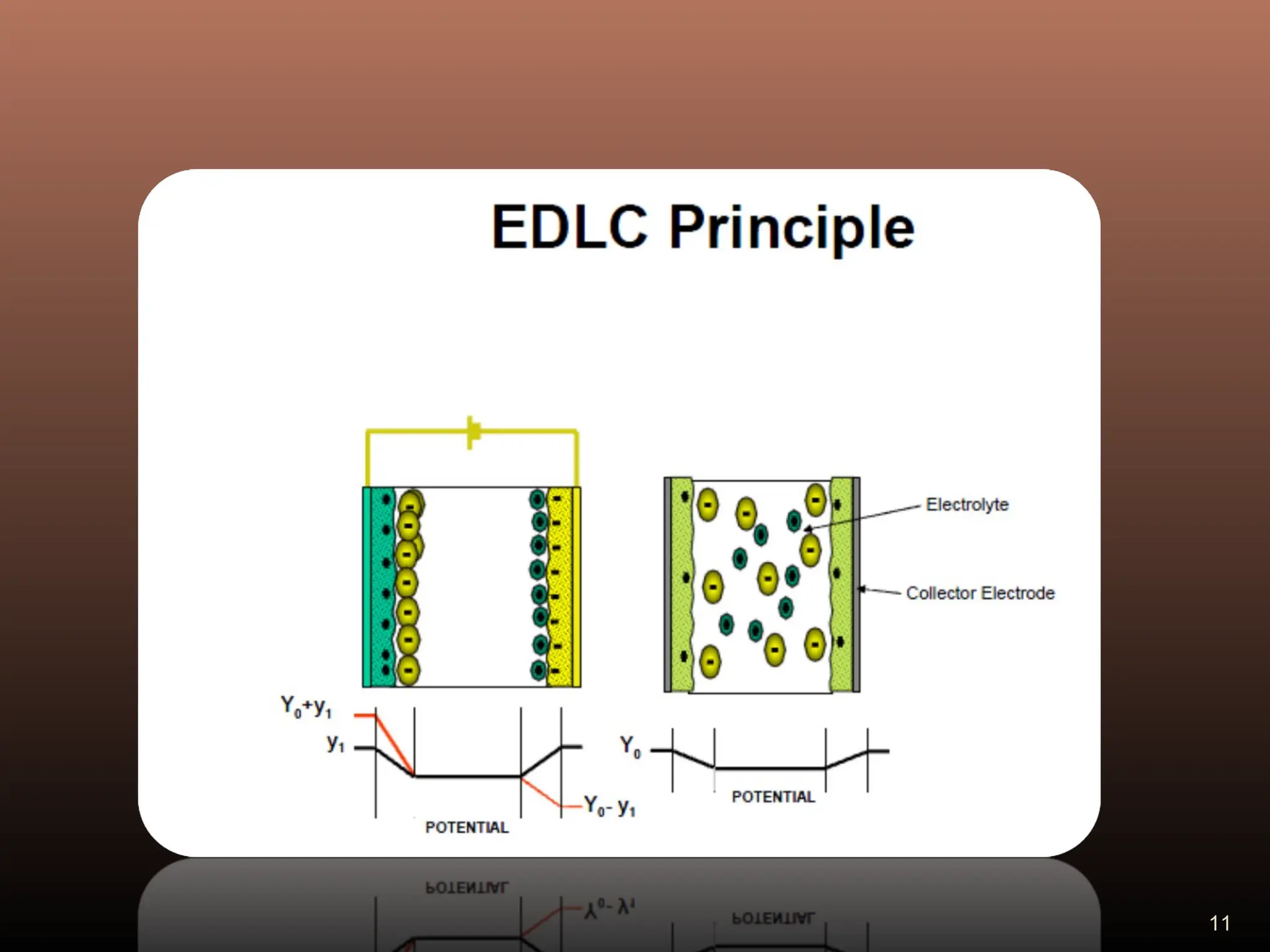
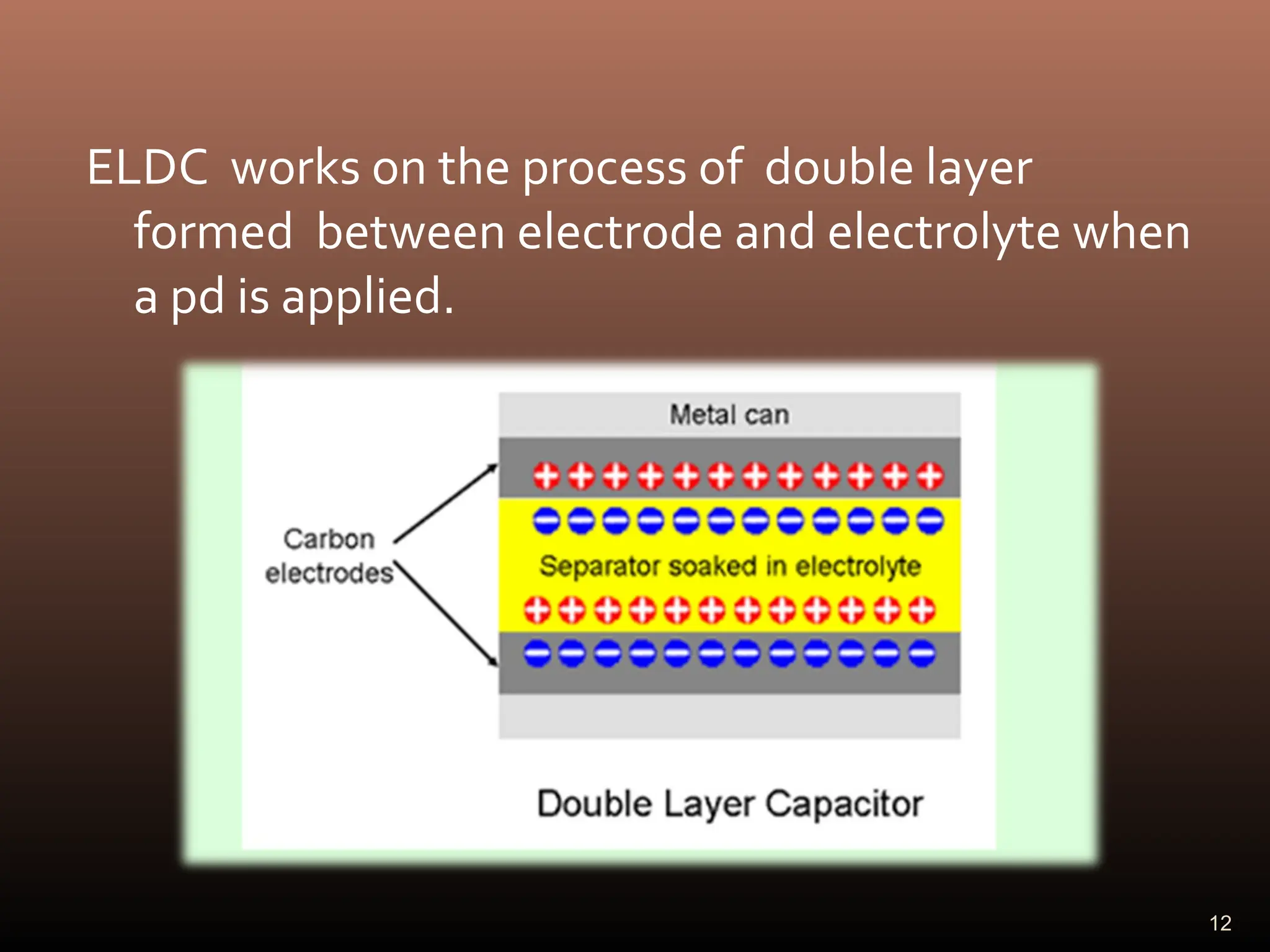
ELDC works on the process of double layer
formed between electrode and electrolyte when
a pd is applied.
12
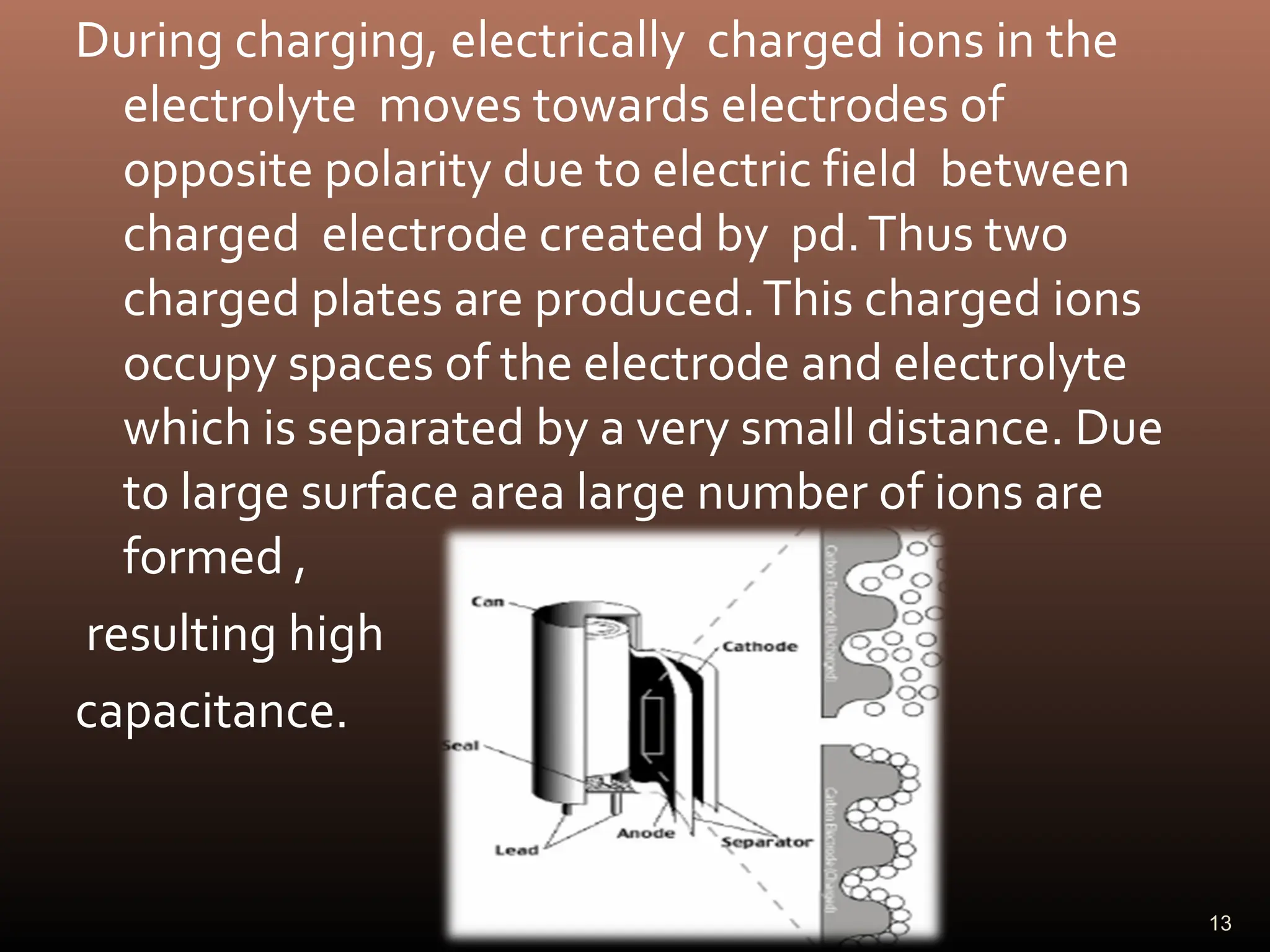
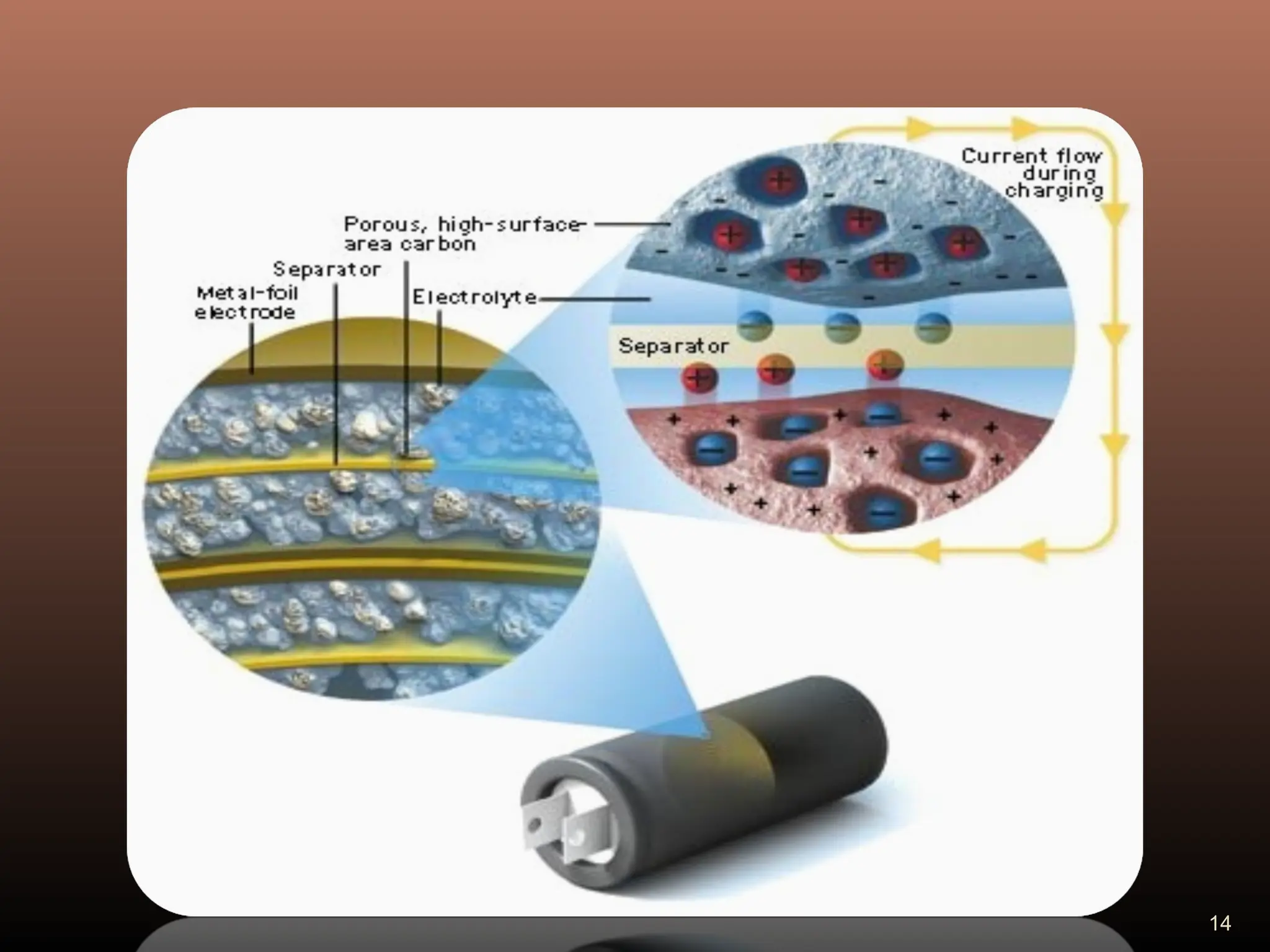
During charging, electrically charged ions in the
electrolyte moves towards electrodes of
opposite polarity due to electric field between
charged electrode created by pd.Thus two
charged plates are produced.This charged ions
occupy spaces of the electrode and electrolyte
which is separated by a very small distance. Due
to large surface area large number of ions are
formed ,
resulting high
capacitance.
13
14
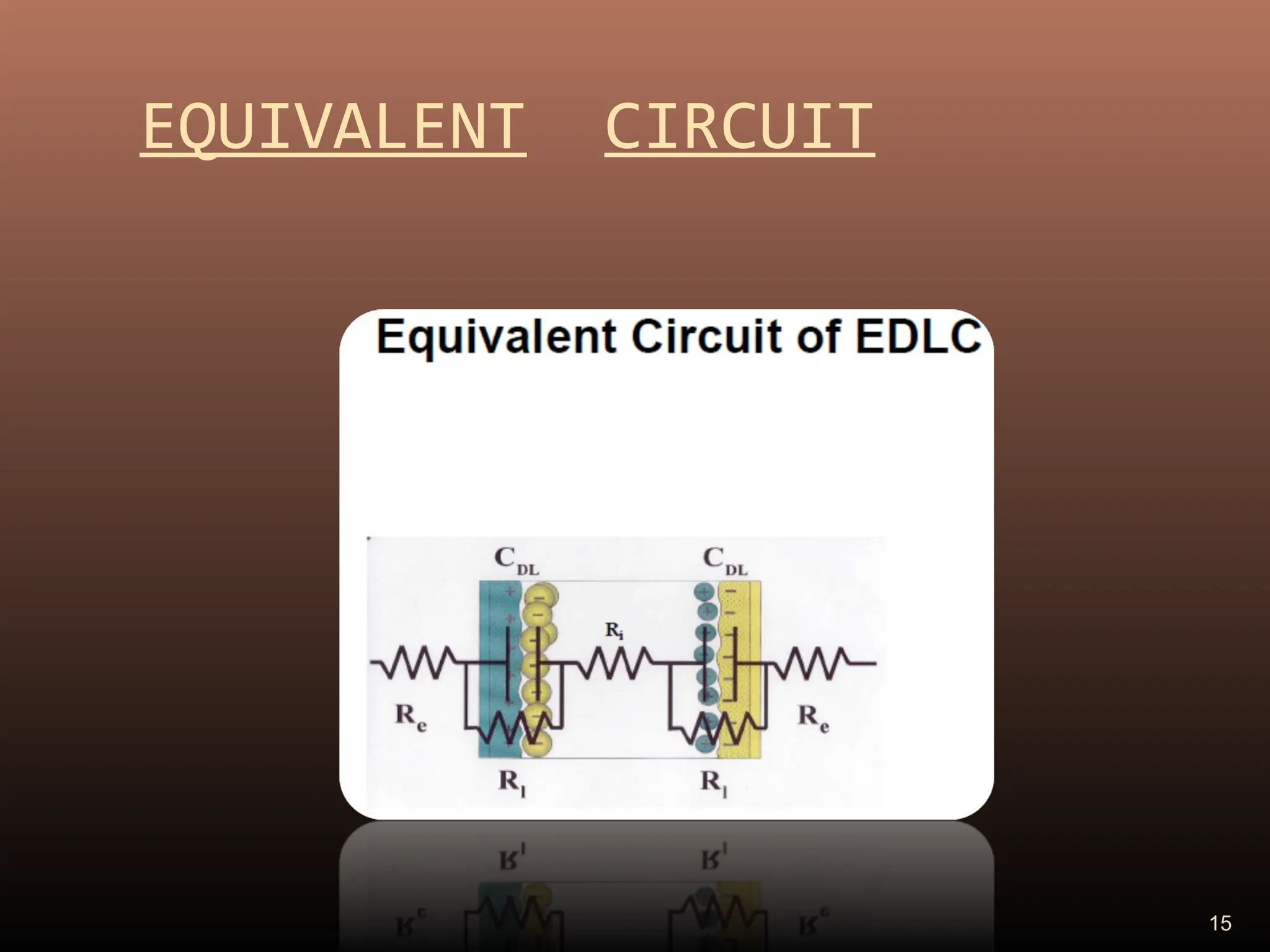
EQUIVALENT CIRCUIT
15
ADVANTAGES
 Eco friendly
 High Efficiency
 Rapid charging & Discharging
 Low internal Resistance
 High power density
 Reliable in harsh environment
 Virtually unlimited cycle life
 Simple charge methods
16
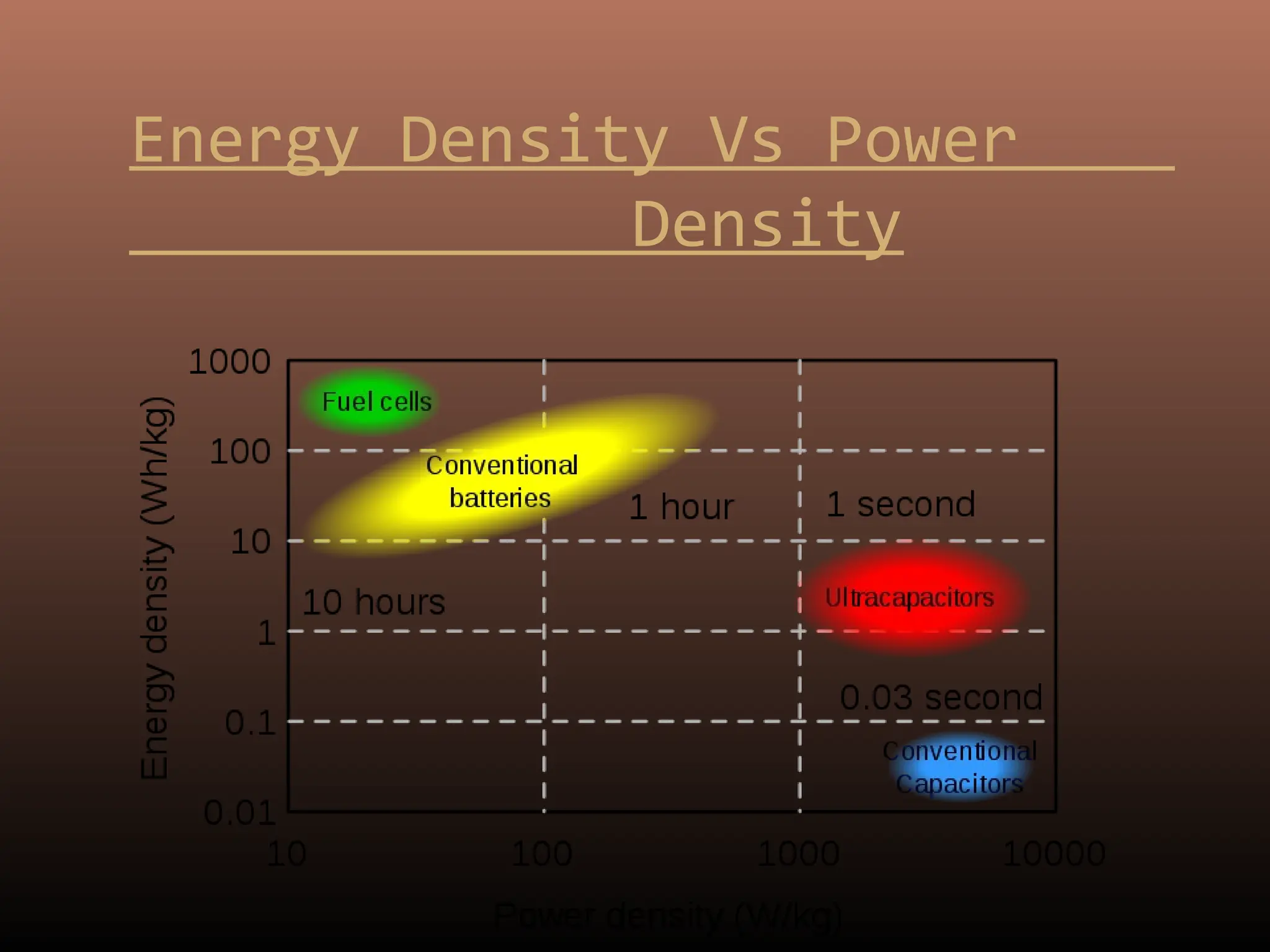
Energy Density Vs Power
Density
DISADVANTAGES
 Unable to use full energy spectrum
 Low energy density
 High self discharge
 Low working voltage
18
APPLICATIONS
 UPS systems.
 Laptops.
 Regenerative breaking systems.
 Automotive: hybrid power trains and drive systems
 Consumer electronic devices that demand sudden energy bursts for
wireless communications, processing, and memory storage.
 Industrial: applications requiring energy storage, bridging, delivery, and
smooth transitioning.
 Telecommunications : portable wireless devices, communication
Satellites, cell towers, or off-the-grid electric power generation
 Transportation : vehicles that frequently accelerate and brake use SC.
19
BATTERY vs. CAPACITORS
 Batteries
 Store energy by converting between electrical and
chemical energy
 Shelf life of a few years
 Not all are rechargeable
 Capacitors
 Store energy as an electric potential between two
surfaces and a dielectric constant (ie. Aluminum)
 Rechargeable
 Long shelf life
 Miniscule amount of energy loss during shelf time
20
FUTURE SCOPES
 Hybrid Battery
The idea of replacing batteries with capacitors in
conjunction with novel alternative energy
sources became a conceptual umbrella of
“Green Electricity (GEL) Initiative, introduced
by Dr. Alexander Bell.
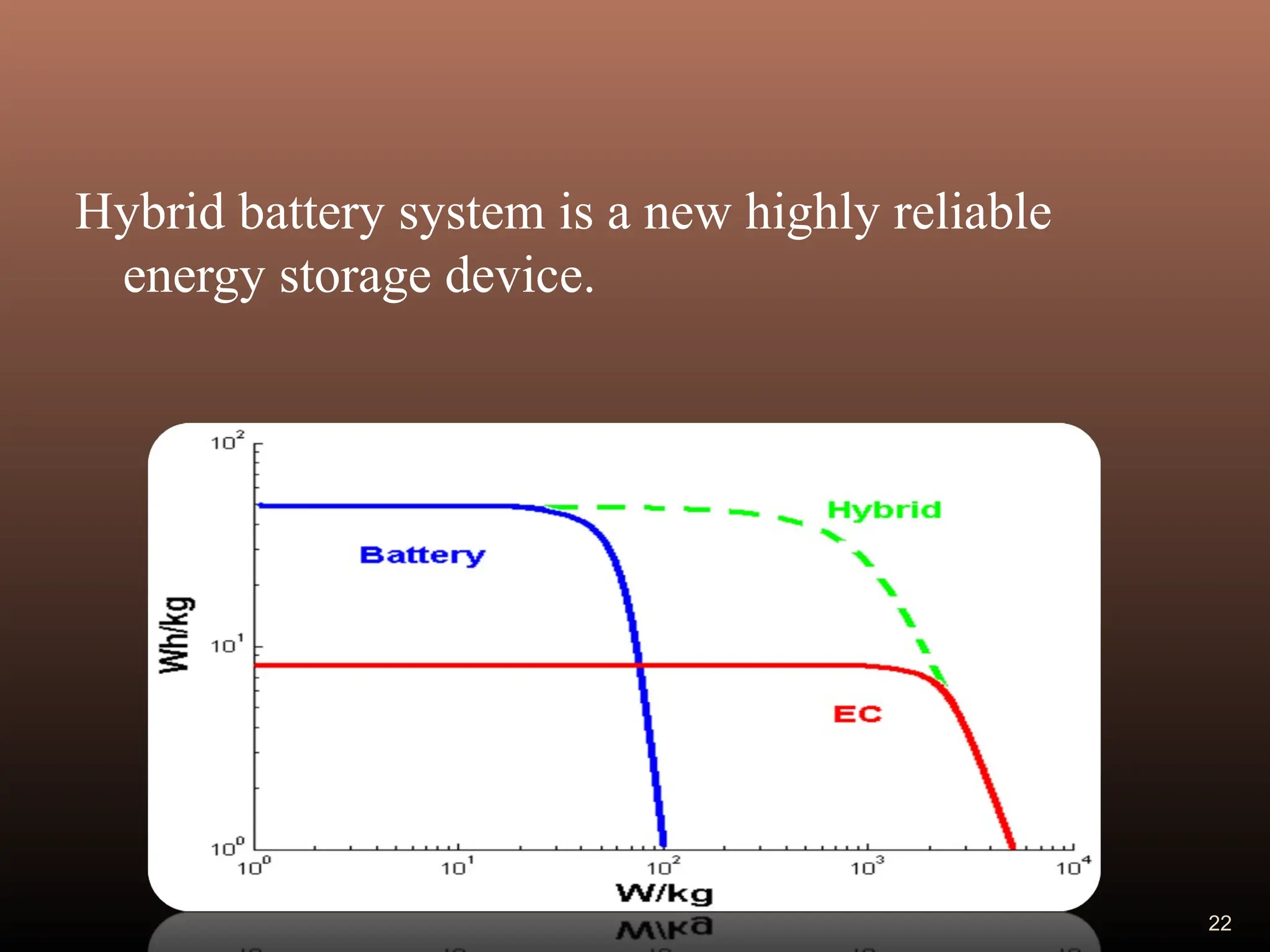
Hybrid Battery is the one which have the
properties of both capacitor and battery. High
power density of caps and High energy density
of battery is combine together
21
Hybrid battery system is a new highly reliable
energy storage device.
22
CONCLUSION
This presentation deals with EDLC as an Energy
storage device.The main advantage of this
ELDCis ,Its having high power density, eco
friendly, used in hybrid vehicles etc.
I hope ,new technologies in the material science
& Nano will make this Super capacitor more
advanced.
23
24

basilk-140302115235-phpapp01.pdf

  • 1.
    Electric Double Layer Capacitors(EDLC) AnuragYadav Roll No: 10
  • 2.
    INTRODUCTION Electric Double LayerCapacitors (EDLC) are also called super capacitors or ultra capacitors.They store energy in the form of static charges. EDLC resembles the ordinary capacitors but having high energy density. EDLC have very low working voltage ,and are used in hybrid vehicles. EDLC ‘s are rated from Farads to Kilo Farad ranges 2
  • 3.
    HISTORY & PRESENT Electricdouble layer effect was first noticed by General Electric engineers in 1957. But this effect is rediscovered and researches are done by Standard oil of Ohio in 1966. But it is NEC,who finally marketted the result as SUPER CAPACTORS. Due to the development of Material Science in 90’s,this technology improves rapidly.Today , electronic devices, Locomotives uses this technology. 3
  • 4.
    CONSTRUCTION EDLC’s construction isa little different to that of ordinary capacitors. EDLC’s doesn't have any conventional dielectric rather than ,two plates separated by an inverting substance. The Super Capacitor uses plates of same material having same electrical properties and are called electric double layer. 4
  • 5.
  • 6.
    Main materials usedfor the construction are  Activated Charcoal  CarbonNanoTubes  Aerogels 6
  • 7.
    EDLC use ActivatedCharcoal as plates. It is because  It’s a powder made of very small & rough particle  It’s having a low density particles with holes  Over all surface area is very much larger than other materials like Al ,Ti etc. 7
  • 8.
    8 But Activated Charcoalis not a perfect material for EDLC. It's because • The charge carriers are quite larger than the pores in the Charcoal . • Some times too large pore size in charcoal.
  • 9.
    9 Carbon Nano Tubesare used today. • They have same charge storage capability as that of Charcoal •Having much more mechanically arranged rigid pattern. •Having much more surface area.
  • 10.
    PRINCIPLE & WORKING EDLCstore electrical charges similar to that of ordinary capacitors. But charges doesn't accumulate on electrode, instead it is stored in the interface between surface of the conductor and electrolytic solution. Capacitance of EDLC is given by the equ: C= A ε / 4 π d  A- Area of the contact plates  d- distance between the plates  ε – dielectric constant of the medium between the plates 10
  • 11.
  • 12.
    ELDC works onthe process of double layer formed between electrode and electrolyte when a pd is applied. 12
  • 13.
    During charging, electricallycharged ions in the electrolyte moves towards electrodes of opposite polarity due to electric field between charged electrode created by pd.Thus two charged plates are produced.This charged ions occupy spaces of the electrode and electrolyte which is separated by a very small distance. Due to large surface area large number of ions are formed , resulting high capacitance. 13
  • 14.
  • 15.
  • 16.
    ADVANTAGES  Eco friendly High Efficiency  Rapid charging & Discharging  Low internal Resistance  High power density  Reliable in harsh environment  Virtually unlimited cycle life  Simple charge methods 16
  • 17.
    Energy Density VsPower Density
  • 18.
    DISADVANTAGES  Unable touse full energy spectrum  Low energy density  High self discharge  Low working voltage 18
  • 19.
    APPLICATIONS  UPS systems. Laptops.  Regenerative breaking systems.  Automotive: hybrid power trains and drive systems  Consumer electronic devices that demand sudden energy bursts for wireless communications, processing, and memory storage.  Industrial: applications requiring energy storage, bridging, delivery, and smooth transitioning.  Telecommunications : portable wireless devices, communication Satellites, cell towers, or off-the-grid electric power generation  Transportation : vehicles that frequently accelerate and brake use SC. 19
  • 20.
    BATTERY vs. CAPACITORS Batteries  Store energy by converting between electrical and chemical energy  Shelf life of a few years  Not all are rechargeable  Capacitors  Store energy as an electric potential between two surfaces and a dielectric constant (ie. Aluminum)  Rechargeable  Long shelf life  Miniscule amount of energy loss during shelf time 20
  • 21.
    FUTURE SCOPES  HybridBattery The idea of replacing batteries with capacitors in conjunction with novel alternative energy sources became a conceptual umbrella of “Green Electricity (GEL) Initiative, introduced by Dr. Alexander Bell. Hybrid Battery is the one which have the properties of both capacitor and battery. High power density of caps and High energy density of battery is combine together 21
  • 22.
    Hybrid battery systemis a new highly reliable energy storage device. 22
  • 23.
    CONCLUSION This presentation dealswith EDLC as an Energy storage device.The main advantage of this ELDCis ,Its having high power density, eco friendly, used in hybrid vehicles etc. I hope ,new technologies in the material science & Nano will make this Super capacitor more advanced. 23
  • 24.