NRI INSTITUTE OF INFORMATION
SCIENCE & TECHNOLOGY (NIIST)
Presentation On:- SUPERCAPACITOR

CONTENTS
 WHAT IS CAPACITOR
 INTRODUCTION OF SUPERCAPACITOR
 WHAT IS SUPERCAPACITOR
 SUPERCAPACITOR & ULTRACAPACITOR
 HISTORY OF SUPERCAPACITOR
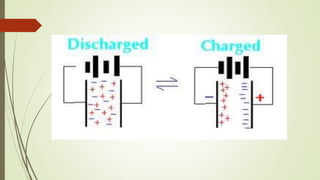
 WHY THEY CAN STORE MORE ENERGY
 WHY SUPERCAPACITOR
 ADVANTAGE AND DISADVANTAGE
 APPLICATIONS
 SOME IMAGES OF SUPERCAPACITOR
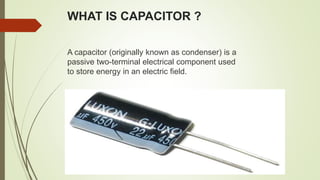
WHAT IS CAPACITOR ?
A capacitor (originally known as condenser) is a
passive two-terminal electrical component used
to store energy in an electric field.
INTRODUCTION OF SUPERCAPACITOR
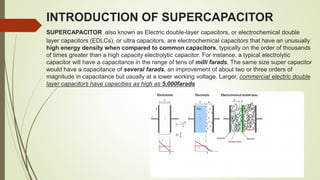
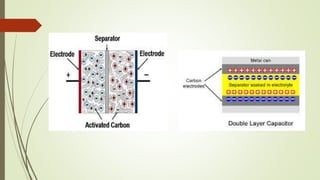
SUPERCAPACITOR also known as Electric double-layer capacitors, or electrochemical double
layer capacitors (EDLCs), or ultra capacitors, are electrochemical capacitors that have an unusually
high energy density when compared to common capacitors, typically on the order of thousands
of times greater than a high capacity electrolytic capacitor. For instance, a typical electrolytic
capacitor will have a capacitance in the range of tens of milli farads. The same size super capacitor
would have a capacitance of several farads, an improvement of about two or three orders of
magnitude in capacitance but usually at a lower working voltage. Larger, commercial electric double
layer capacitors have capacities as high as 5,000farads
WHAT IS SUPERCAPACITOR
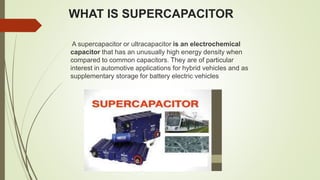
A supercapacitor or ultracapacitor is an electrochemical
capacitor that has an unusually high energy density when
compared to common capacitors. They are of particular
interest in automotive applications for hybrid vehicles and as
supplementary storage for battery electric vehicles
SUPERCAPACITOR &
ULTRACAPACITOR
 Electric double-layer capacitors, also known as supercapacitors,
electrochemical double layer capacitors (EDLCs) or ultracapacitors
are electrochemical capacitors that have an unusually high energy
density when compared to common capacitors.
 An ultracapacitor, also called a supercapacitor, is an electrical
component capable of holding hundreds of times more
electrical charge quantity than a standard capacitor. This
characteristic makes ultracapacitors useful in devices that require
relatively little currentand low voltage. In some situations, an
ultracapacitor can take the place of a rechargeable low-voltage
electrochemical battery.
.
An excellent example of the use of an ultra capacitor
can be found in so-called electrical smart meters.
Ultracapacitors can be found in emergency radios
and flashlights.
The principal disadvantage of the ultracapacitor,
compared with older capacitor designs, is the
fact that the ultracapacitor cannot withstand high
voltage.
HISTORY OF SUPERCAPACITOR
The first supercapacitor based on a double layer mechanism
was developed in 1957 by General Electric using a porous
carbon electrode [Becker, H.I., “Low voltage electrolytic
capacitor”, U.S. Patent 2800616, 23 July 1957]. It was
believed that the energy was stored in the carbon pores
and it exhibited "exceptionally high capacitance", although
the mechanism was unknown at that time. It was the Standard
Oil Company, Cleveland (SOHIO) in 1966 that patented a
device that stored energy in the double layer interface
[Rightmire, R.A., “Electrical energy storage apparatus”, U.S.
Patent 3288641, 29 Nov 1966.].
WHY THEY CAN STORE MORE
ENERGY
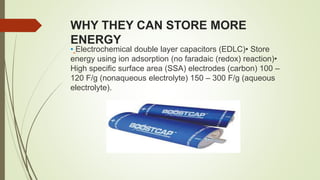
• Electrochemical double layer capacitors (EDLC)• Store
energy using ion adsorption (no faradaic (redox) reaction)•
High specific surface area (SSA) electrodes (carbon) 100 –
120 F/g (nonaqueous electrolyte) 150 – 300 F/g (aqueous
electrolyte).
WHY SUPERCAPACITOR
Supercapacitors are known for over 50 years(patent of
General Electric, 1957). Capacitance Supercapacitor
are able to store and deliver of Earth is energy at
relatively high rates (beyond those 0.0007 accessible
with batteries). A specific power of 5 000 W/kg can be
reached. Supercapacitor exhibit very high degree of
reversibility in repetitive charge-discharge cycling. Cycle
life over 500 000 cycles demonstrated
Study of the Efficiency of
Supercapacitor
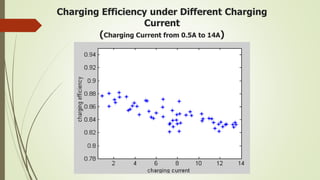
• Supercapacitor by constant current charging, the highest efficiency
can be gotten。Because of the serial and parallel resistance in
Supercapacitor, they will consume electricity when charging.
The amount of charging current will affect the charging efficiency.
• Supercapacitor by constant voltage charging, the efficiency can be
up to 50%
• Many times experiments show that the smaller charging current can
lead to higher efficiency.
Charging Efficiency under Different Charging
Current
(Charging Current from 0.5A to 14A)
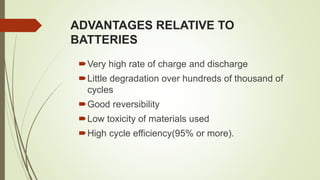
ADVANTAGES RELATIVE TO
BATTERIES
Very high rate of charge and discharge
Little degradation over hundreds of thousand of
cycles
Good reversibility
Low toxicity of materials used
High cycle efficiency(95% or more).
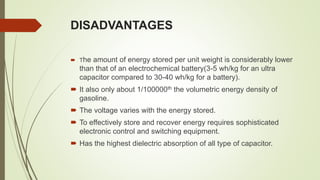
DISADVANTAGES
 The amount of energy stored per unit weight is considerably lower
than that of an electrochemical battery(3-5 wh/kg for an ultra
capacitor compared to 30-40 wh/kg for a battery).
 It also only about 1/100000th the volumetric energy density of
gasoline.
 The voltage varies with the energy stored.
 To effectively store and recover energy requires sophisticated
electronic control and switching equipment.
 Has the highest dielectric absorption of all type of capacitor.
APPLICATIONS
Maintenance free applications
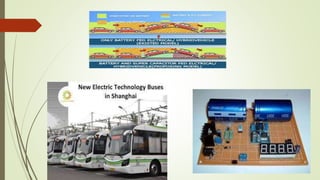
Public transportation
HEVs, start-stop system
Back-up and UPS system
System of energy recuperation
Consumers electronics
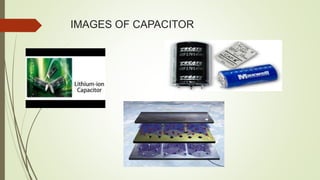
IMAGES OF CAPACITOR
THANKYOU…
.

presentation on SUPERCAPACITOR

  • 1.
    NRI INSTITUTE OFINFORMATION SCIENCE & TECHNOLOGY (NIIST) Presentation On:- SUPERCAPACITOR 
  • 2.
    CONTENTS  WHAT ISCAPACITOR  INTRODUCTION OF SUPERCAPACITOR  WHAT IS SUPERCAPACITOR  SUPERCAPACITOR & ULTRACAPACITOR  HISTORY OF SUPERCAPACITOR  WHY THEY CAN STORE MORE ENERGY  WHY SUPERCAPACITOR  ADVANTAGE AND DISADVANTAGE  APPLICATIONS  SOME IMAGES OF SUPERCAPACITOR
  • 3.
    WHAT IS CAPACITOR? A capacitor (originally known as condenser) is a passive two-terminal electrical component used to store energy in an electric field.
  • 4.
    INTRODUCTION OF SUPERCAPACITOR SUPERCAPACITORalso known as Electric double-layer capacitors, or electrochemical double layer capacitors (EDLCs), or ultra capacitors, are electrochemical capacitors that have an unusually high energy density when compared to common capacitors, typically on the order of thousands of times greater than a high capacity electrolytic capacitor. For instance, a typical electrolytic capacitor will have a capacitance in the range of tens of milli farads. The same size super capacitor would have a capacitance of several farads, an improvement of about two or three orders of magnitude in capacitance but usually at a lower working voltage. Larger, commercial electric double layer capacitors have capacities as high as 5,000farads
  • 5.
    WHAT IS SUPERCAPACITOR Asupercapacitor or ultracapacitor is an electrochemical capacitor that has an unusually high energy density when compared to common capacitors. They are of particular interest in automotive applications for hybrid vehicles and as supplementary storage for battery electric vehicles
  • 6.
    SUPERCAPACITOR & ULTRACAPACITOR  Electricdouble-layer capacitors, also known as supercapacitors, electrochemical double layer capacitors (EDLCs) or ultracapacitors are electrochemical capacitors that have an unusually high energy density when compared to common capacitors.  An ultracapacitor, also called a supercapacitor, is an electrical component capable of holding hundreds of times more electrical charge quantity than a standard capacitor. This characteristic makes ultracapacitors useful in devices that require relatively little currentand low voltage. In some situations, an ultracapacitor can take the place of a rechargeable low-voltage electrochemical battery.
  • 7.
    . An excellent exampleof the use of an ultra capacitor can be found in so-called electrical smart meters. Ultracapacitors can be found in emergency radios and flashlights. The principal disadvantage of the ultracapacitor, compared with older capacitor designs, is the fact that the ultracapacitor cannot withstand high voltage.
  • 9.
    HISTORY OF SUPERCAPACITOR Thefirst supercapacitor based on a double layer mechanism was developed in 1957 by General Electric using a porous carbon electrode [Becker, H.I., “Low voltage electrolytic capacitor”, U.S. Patent 2800616, 23 July 1957]. It was believed that the energy was stored in the carbon pores and it exhibited "exceptionally high capacitance", although the mechanism was unknown at that time. It was the Standard Oil Company, Cleveland (SOHIO) in 1966 that patented a device that stored energy in the double layer interface [Rightmire, R.A., “Electrical energy storage apparatus”, U.S. Patent 3288641, 29 Nov 1966.].
  • 10.
    WHY THEY CANSTORE MORE ENERGY • Electrochemical double layer capacitors (EDLC)• Store energy using ion adsorption (no faradaic (redox) reaction)• High specific surface area (SSA) electrodes (carbon) 100 – 120 F/g (nonaqueous electrolyte) 150 – 300 F/g (aqueous electrolyte).
  • 12.
    WHY SUPERCAPACITOR Supercapacitors areknown for over 50 years(patent of General Electric, 1957). Capacitance Supercapacitor are able to store and deliver of Earth is energy at relatively high rates (beyond those 0.0007 accessible with batteries). A specific power of 5 000 W/kg can be reached. Supercapacitor exhibit very high degree of reversibility in repetitive charge-discharge cycling. Cycle life over 500 000 cycles demonstrated
  • 14.
    Study of theEfficiency of Supercapacitor • Supercapacitor by constant current charging, the highest efficiency can be gotten。Because of the serial and parallel resistance in Supercapacitor, they will consume electricity when charging. The amount of charging current will affect the charging efficiency. • Supercapacitor by constant voltage charging, the efficiency can be up to 50% • Many times experiments show that the smaller charging current can lead to higher efficiency.
  • 15.
    Charging Efficiency underDifferent Charging Current (Charging Current from 0.5A to 14A)
  • 16.
    ADVANTAGES RELATIVE TO BATTERIES Veryhigh rate of charge and discharge Little degradation over hundreds of thousand of cycles Good reversibility Low toxicity of materials used High cycle efficiency(95% or more).
  • 18.
    DISADVANTAGES  The amountof energy stored per unit weight is considerably lower than that of an electrochemical battery(3-5 wh/kg for an ultra capacitor compared to 30-40 wh/kg for a battery).  It also only about 1/100000th the volumetric energy density of gasoline.  The voltage varies with the energy stored.  To effectively store and recover energy requires sophisticated electronic control and switching equipment.  Has the highest dielectric absorption of all type of capacitor.
  • 19.
    APPLICATIONS Maintenance free applications Publictransportation HEVs, start-stop system Back-up and UPS system System of energy recuperation Consumers electronics
  • 20.
  • 21.