11
Learner- centered teaching
Dr. C.V. Suresh Babu
• Meaning
• characteristics of learner-centered teaching
• characteristics learner-centered learning.
• Need for learner-centered approaches in
teaching
• advantages
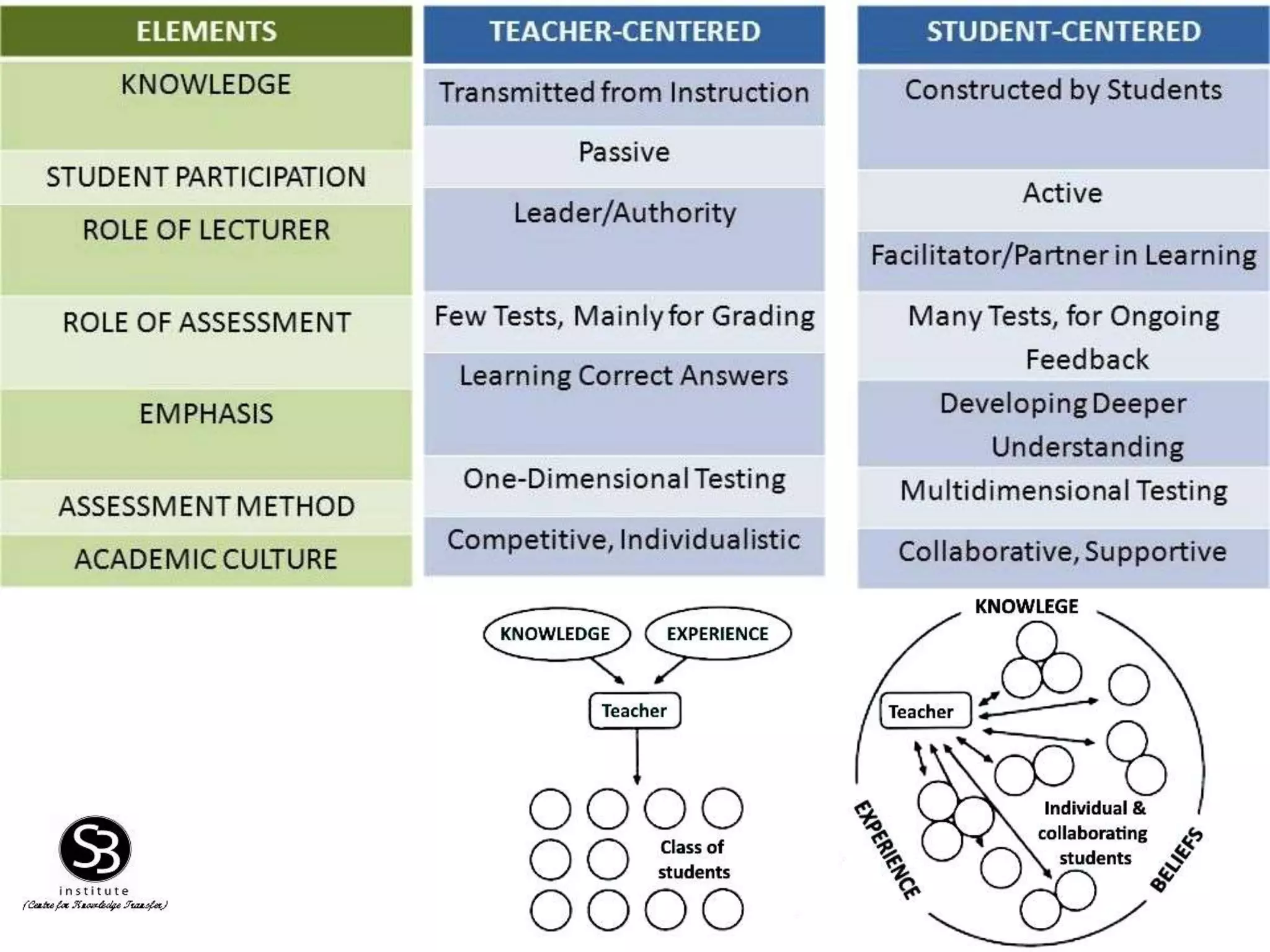
• learner-centered teaching vs teacher-
centered learning, teaching
• Learner - centered techniques of teaching
and their advantages.
2
3
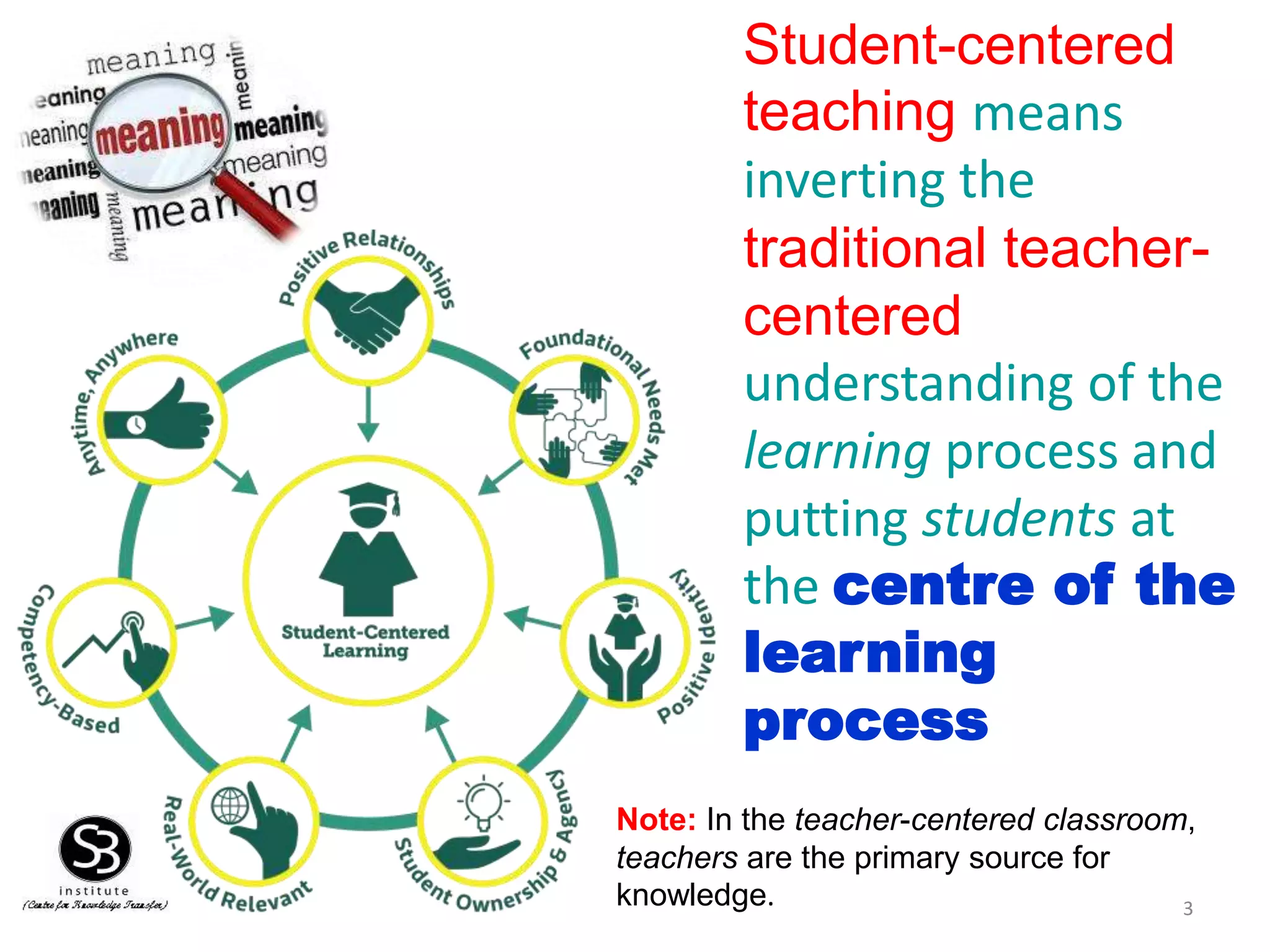
Student-centered
teaching means
inverting the
traditional teacher-
centered
understanding of the
learning process and
putting students at
the centre of the
learning
process
Note: In the teacher-centered classroom,
teachers are the primary source for
knowledge.
4
5
• Need to produce students who are good critical thinkers,
problem solvers and creative thinkers
• Explosion of information: need to make sense of it, not
memorize it
• Improve student engagement and ownership of learning
• Research shows that learner-centered methods lead to
 Increased student engagement with the content
 Deep learning
 Long term retention
 Acquisition of critical thinking or creative problem-solving skills
 Positive attitude toward the subject being taught
 Confidence in knowledge or skills
7
8
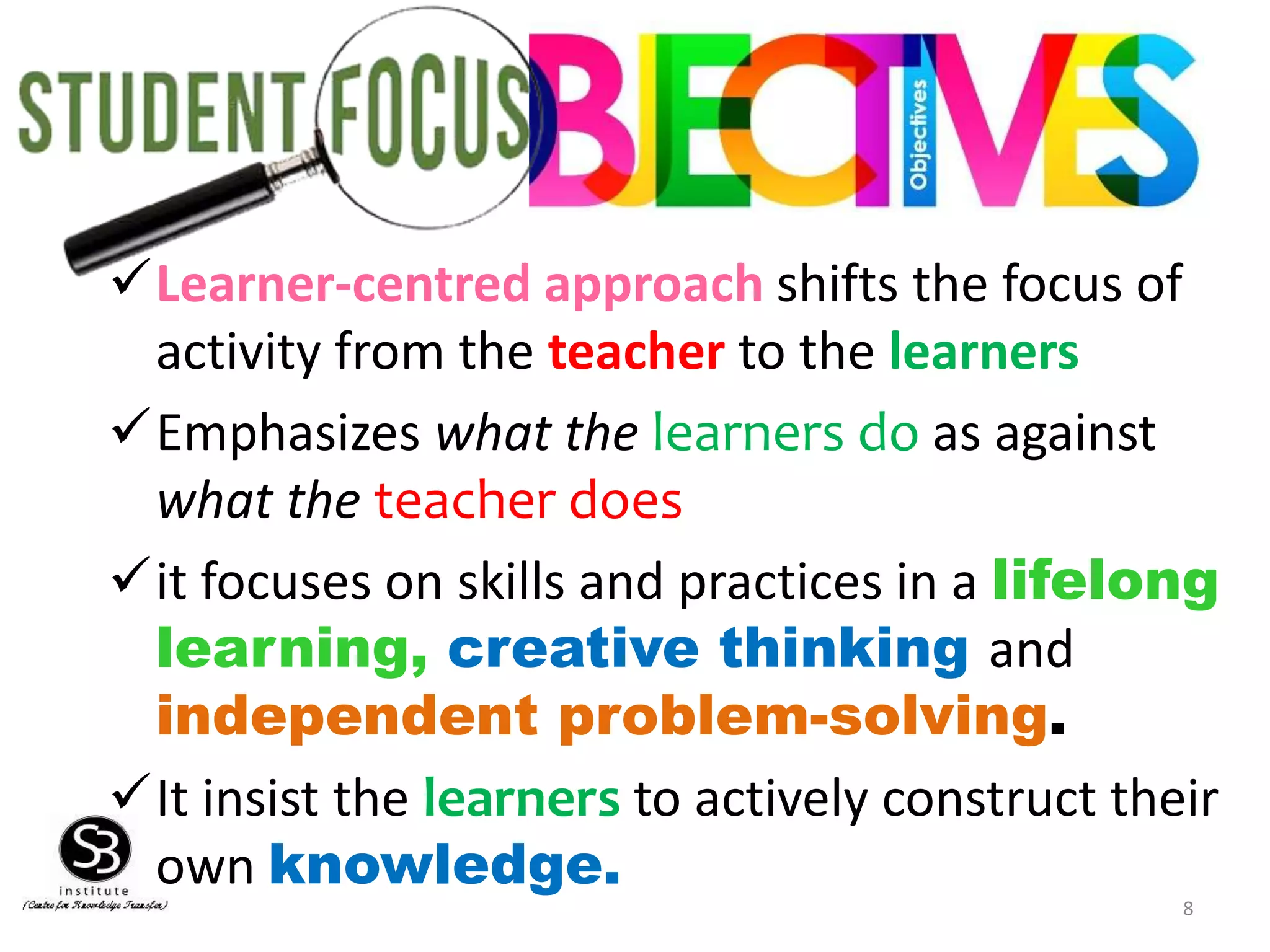
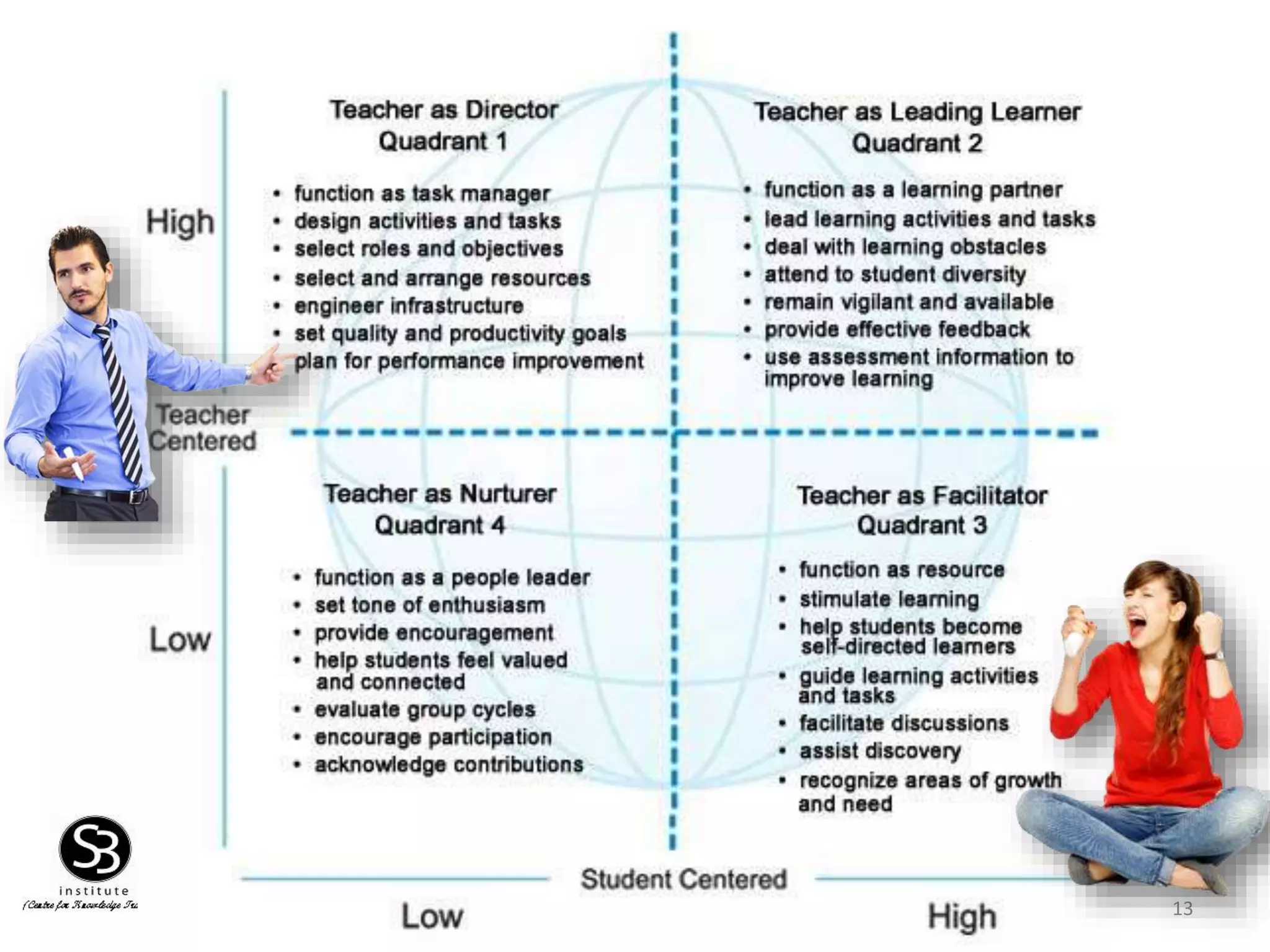
Learner-centred approach shifts the focus of
activity from the teacher to the learners
Emphasizes what the learners do as against
what the teacher does
it focuses on skills and practices in a lifelong
learning, creative thinking and
independent problem-solving.
It insist the learners to actively construct their
own knowledge.
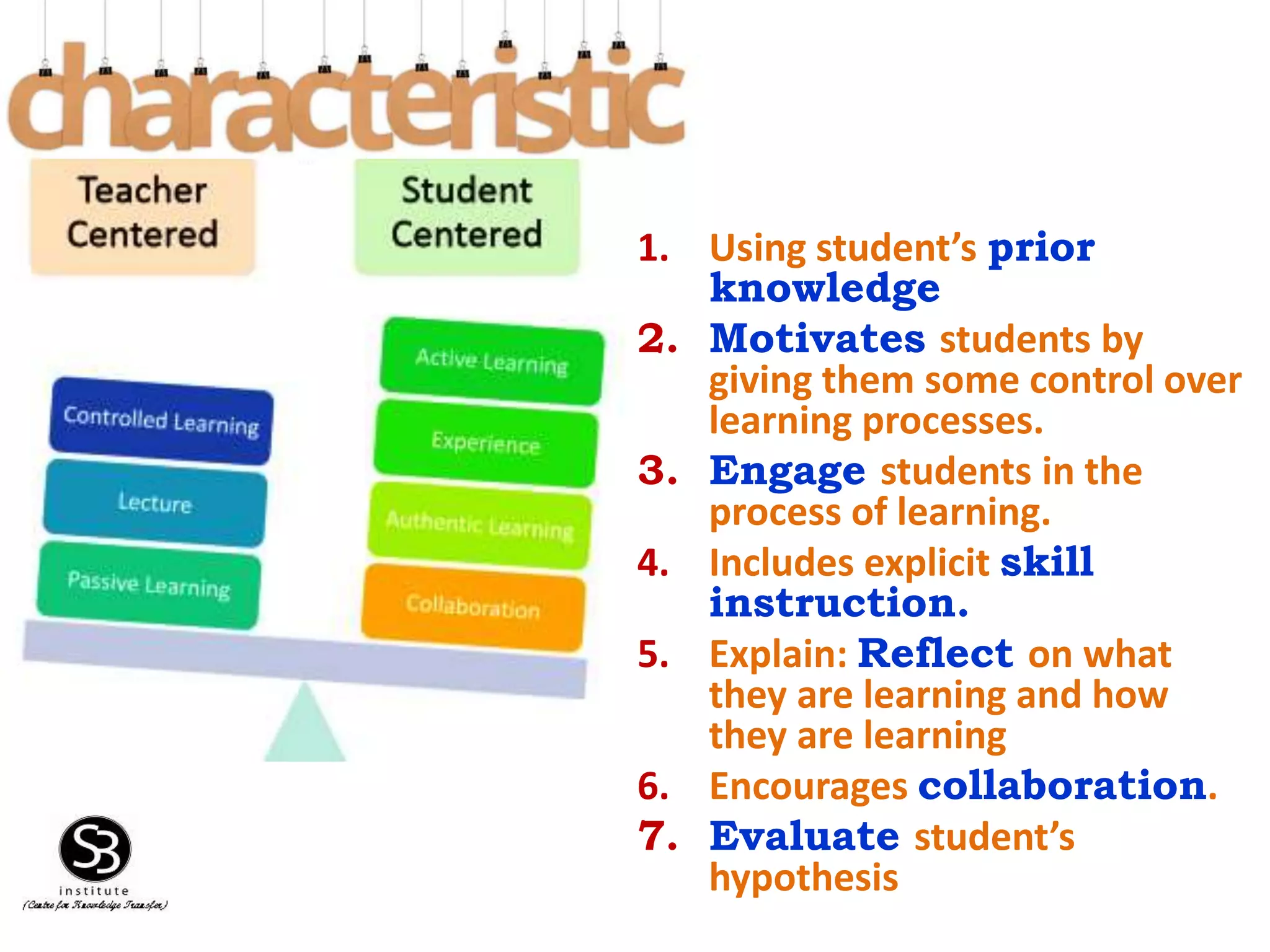
1. Using student’s prior
knowledge
2. Motivates students by
giving them some control over
learning processes.
3. Engage students in the
process of learning.
4. Includes explicit skill
instruction.
5. Explain: Reflect on what
they are learning and how
they are learning
6. Encourages collaboration.
7. Evaluate student’s
hypothesis
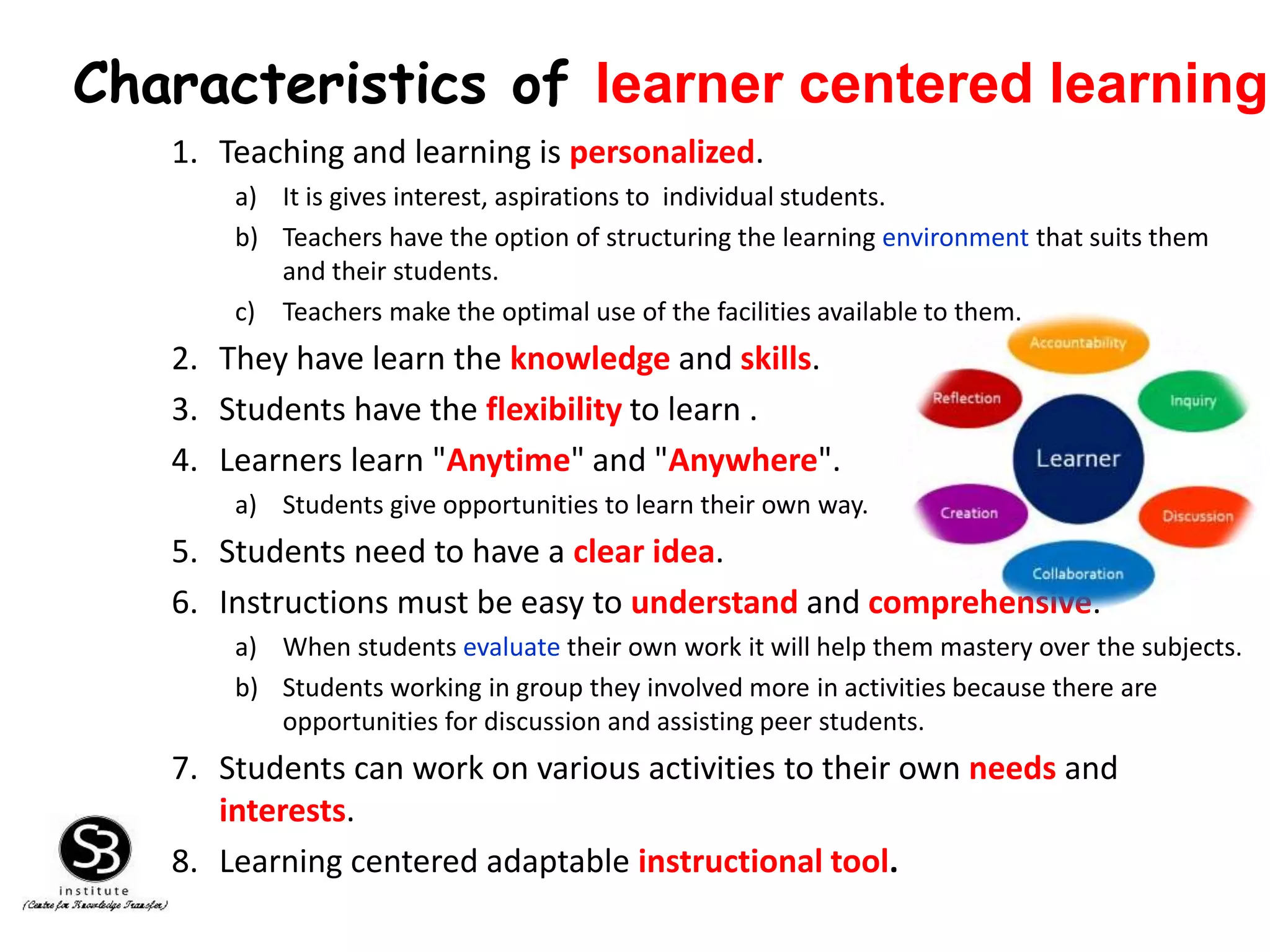
1. Teaching and learning is personalized.
a) It is gives interest, aspirations to individual students.
b) Teachers have the option of structuring the learning environment that suits them
and their students.
c) Teachers make the optimal use of the facilities available to them.
2. They have learn the knowledge and skills.
3. Students have the flexibility to learn .
4. Learners learn "Anytime" and "Anywhere".
a) Students give opportunities to learn their own way.
5. Students need to have a clear idea.
6. Instructions must be easy to understand and comprehensive.
a) When students evaluate their own work it will help them mastery over the subjects.
b) Students working in group they involved more in activities because there are
opportunities for discussion and assisting peer students.
7. Students can work on various activities to their own needs and
interests.
8. Learning centered adaptable instructional tool.
Characteristics of learner centered learning
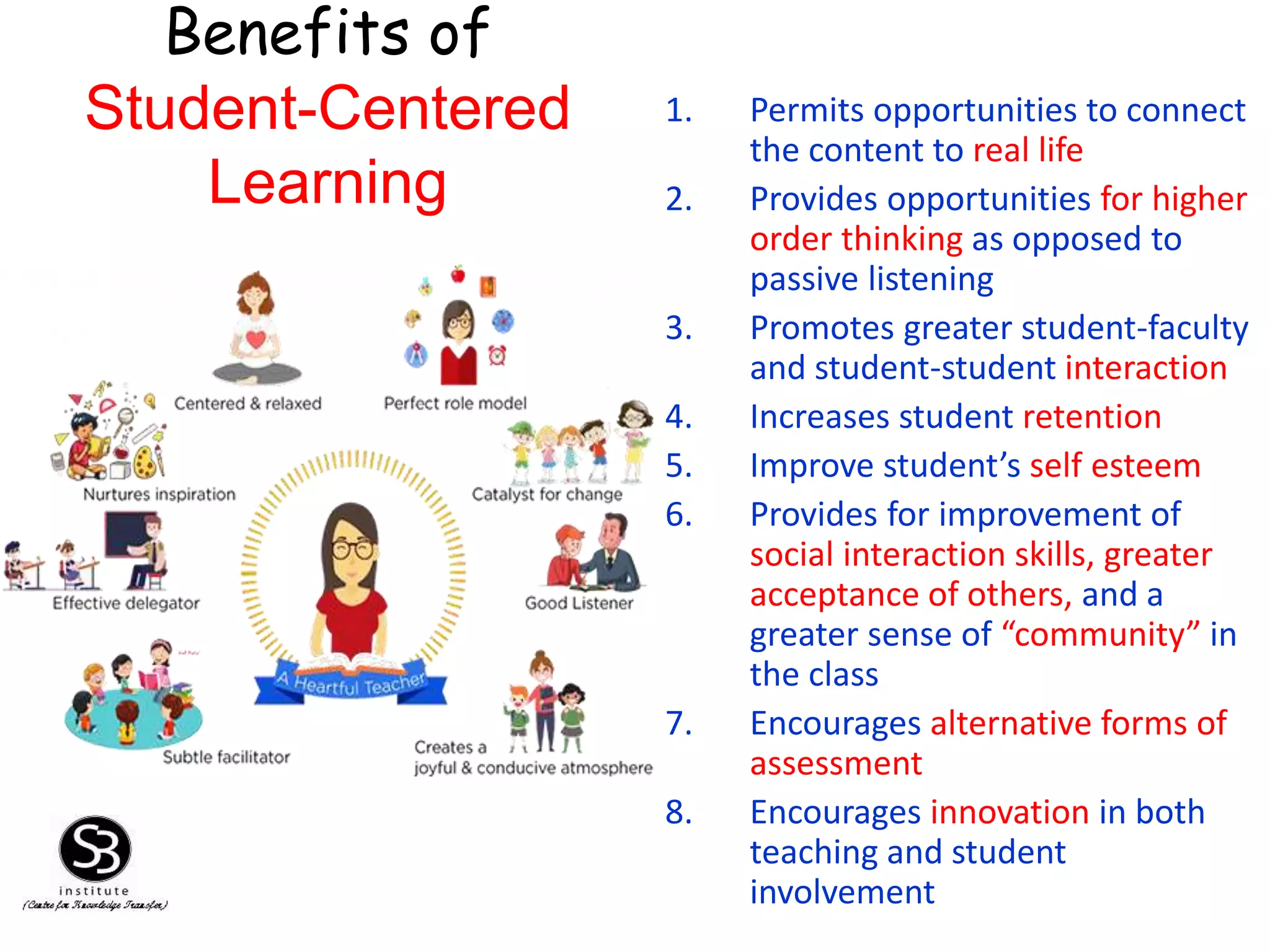
Benefits of
Student-Centered
Learning
1. Permits opportunities to connect
the content to real life
2. Provides opportunities for higher
order thinking as opposed to
passive listening
3. Promotes greater student-faculty
and student-student interaction
4. Increases student retention
5. Improve student’s self esteem
6. Provides for improvement of
social interaction skills, greater
acceptance of others, and a
greater sense of “community” in
the class
7. Encourages alternative forms of
assessment
8. Encourages innovation in both
teaching and student
involvement
13
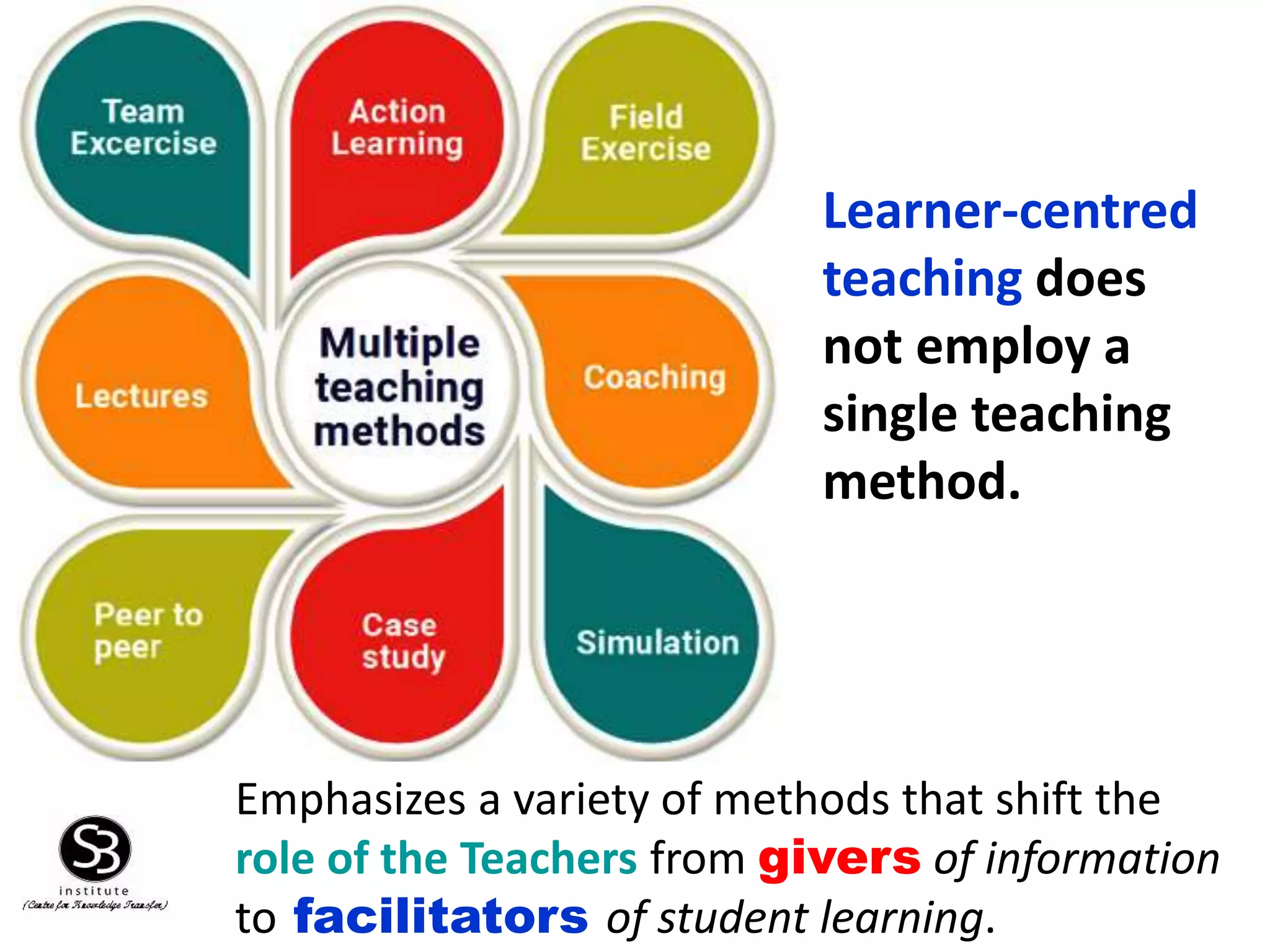
Emphasizes a variety of methods that shift the
role of the Teachers from givers of information
to facilitators of student learning.
Learner-centred
teaching does
not employ a
single teaching
method.
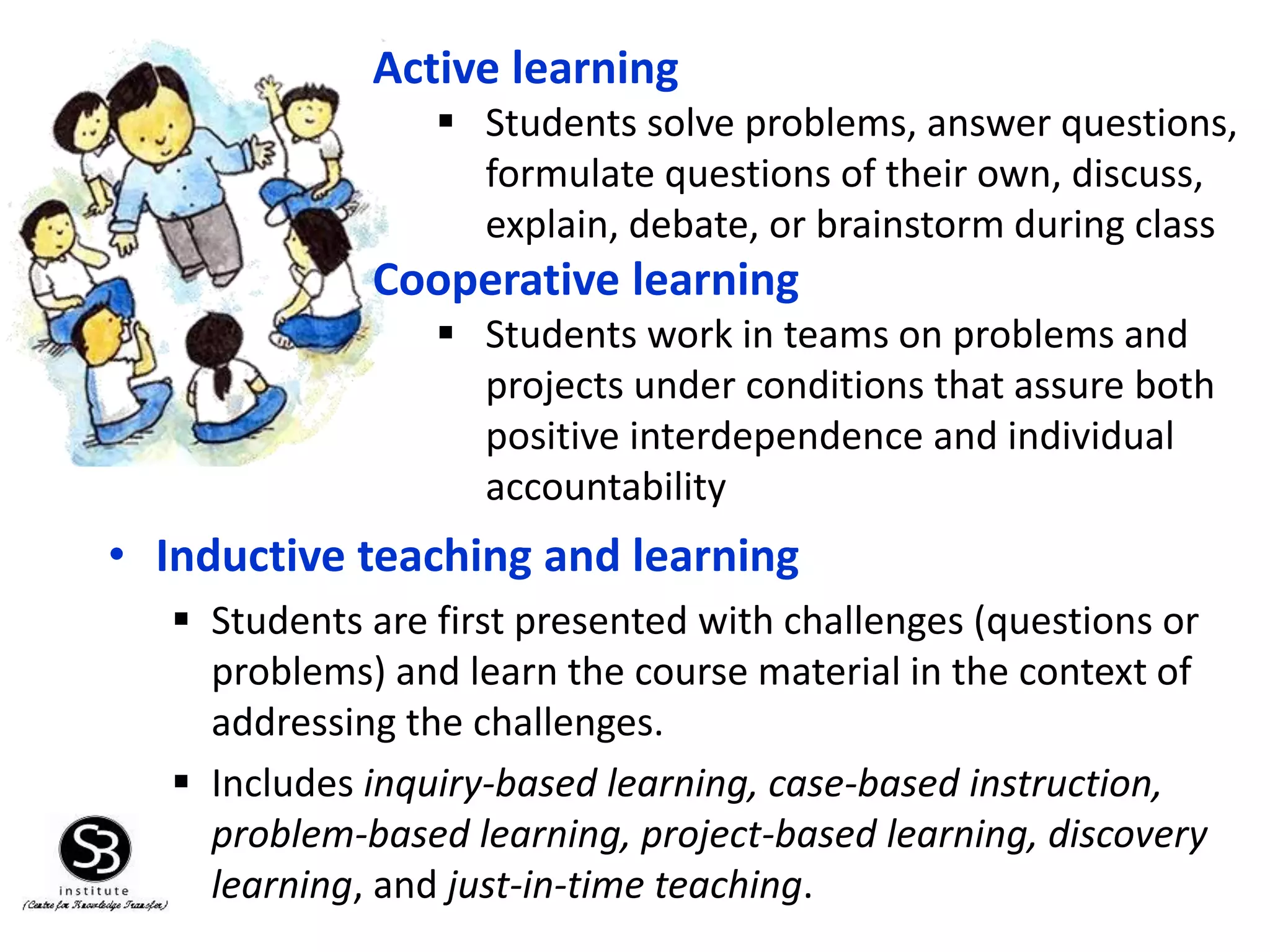
• Inductive teaching and learning
 Students are first presented with challenges (questions or
problems) and learn the course material in the context of
addressing the challenges.
 Includes inquiry-based learning, case-based instruction,
problem-based learning, project-based learning, discovery
learning, and just-in-time teaching.
Active learning
 Students solve problems, answer questions,
formulate questions of their own, discuss,
explain, debate, or brainstorm during class
Cooperative learning
 Students work in teams on problems and
projects under conditions that assure both
positive interdependence and individual
accountability
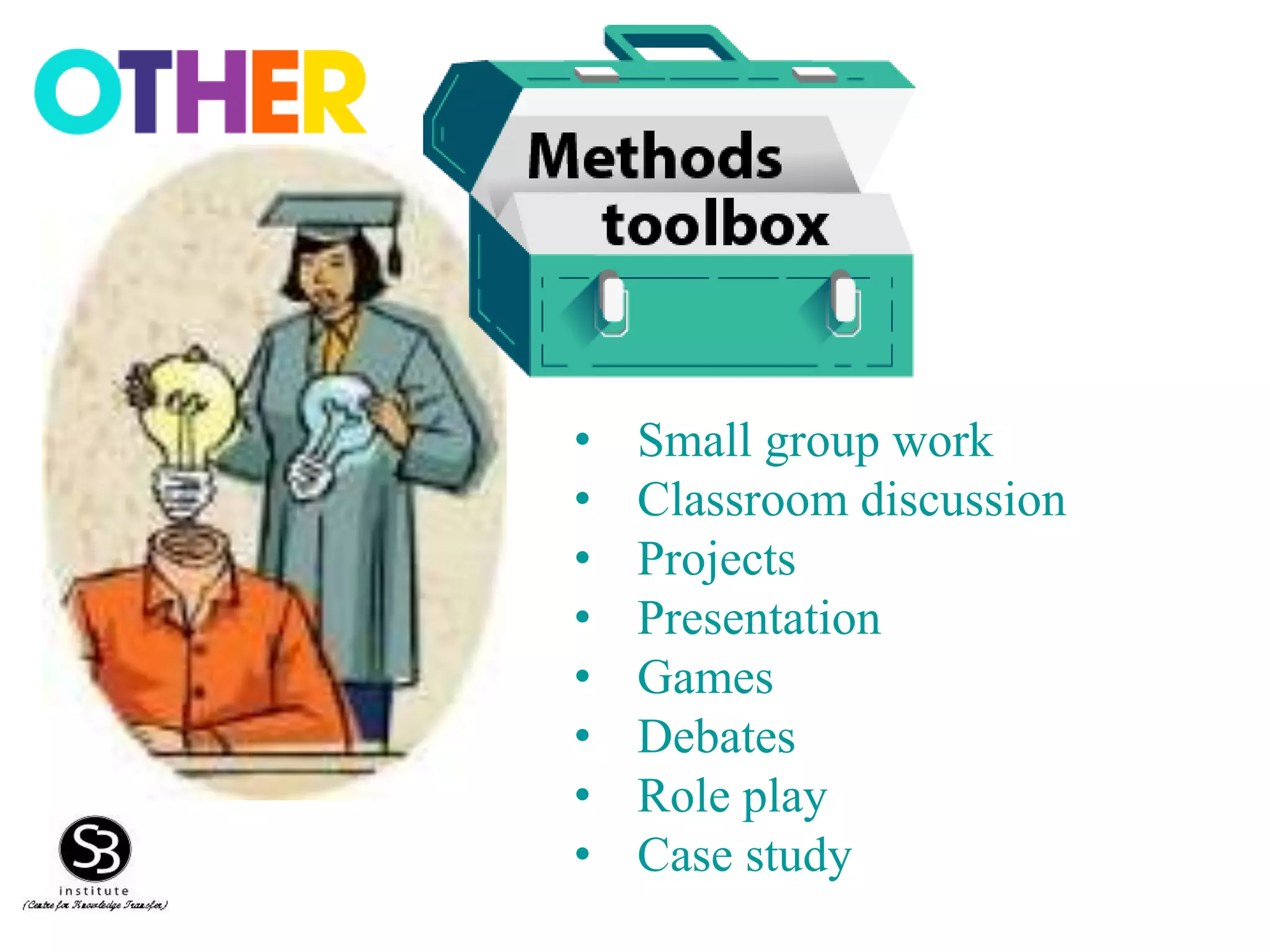
• Small group work
• Classroom discussion
• Projects
• Presentation
• Games
• Debates
• Role play
• Case study

Learner centered teaching

  • 1.
  • 2.
    • Meaning • characteristicsof learner-centered teaching • characteristics learner-centered learning. • Need for learner-centered approaches in teaching • advantages • learner-centered teaching vs teacher- centered learning, teaching • Learner - centered techniques of teaching and their advantages. 2
  • 3.
    3 Student-centered teaching means inverting the traditionalteacher- centered understanding of the learning process and putting students at the centre of the learning process Note: In the teacher-centered classroom, teachers are the primary source for knowledge.
  • 4.
  • 5.
  • 6.
    • Need toproduce students who are good critical thinkers, problem solvers and creative thinkers • Explosion of information: need to make sense of it, not memorize it • Improve student engagement and ownership of learning • Research shows that learner-centered methods lead to  Increased student engagement with the content  Deep learning  Long term retention  Acquisition of critical thinking or creative problem-solving skills  Positive attitude toward the subject being taught  Confidence in knowledge or skills
  • 7.
  • 8.
    8 Learner-centred approach shiftsthe focus of activity from the teacher to the learners Emphasizes what the learners do as against what the teacher does it focuses on skills and practices in a lifelong learning, creative thinking and independent problem-solving. It insist the learners to actively construct their own knowledge.
  • 9.
    1. Using student’sprior knowledge 2. Motivates students by giving them some control over learning processes. 3. Engage students in the process of learning. 4. Includes explicit skill instruction. 5. Explain: Reflect on what they are learning and how they are learning 6. Encourages collaboration. 7. Evaluate student’s hypothesis
  • 10.
    1. Teaching andlearning is personalized. a) It is gives interest, aspirations to individual students. b) Teachers have the option of structuring the learning environment that suits them and their students. c) Teachers make the optimal use of the facilities available to them. 2. They have learn the knowledge and skills. 3. Students have the flexibility to learn . 4. Learners learn "Anytime" and "Anywhere". a) Students give opportunities to learn their own way. 5. Students need to have a clear idea. 6. Instructions must be easy to understand and comprehensive. a) When students evaluate their own work it will help them mastery over the subjects. b) Students working in group they involved more in activities because there are opportunities for discussion and assisting peer students. 7. Students can work on various activities to their own needs and interests. 8. Learning centered adaptable instructional tool. Characteristics of learner centered learning
  • 11.
    Benefits of Student-Centered Learning 1. Permitsopportunities to connect the content to real life 2. Provides opportunities for higher order thinking as opposed to passive listening 3. Promotes greater student-faculty and student-student interaction 4. Increases student retention 5. Improve student’s self esteem 6. Provides for improvement of social interaction skills, greater acceptance of others, and a greater sense of “community” in the class 7. Encourages alternative forms of assessment 8. Encourages innovation in both teaching and student involvement
  • 13.
  • 14.
    Emphasizes a varietyof methods that shift the role of the Teachers from givers of information to facilitators of student learning. Learner-centred teaching does not employ a single teaching method.
  • 15.
    • Inductive teachingand learning  Students are first presented with challenges (questions or problems) and learn the course material in the context of addressing the challenges.  Includes inquiry-based learning, case-based instruction, problem-based learning, project-based learning, discovery learning, and just-in-time teaching. Active learning  Students solve problems, answer questions, formulate questions of their own, discuss, explain, debate, or brainstorm during class Cooperative learning  Students work in teams on problems and projects under conditions that assure both positive interdependence and individual accountability
  • 16.
    • Small groupwork • Classroom discussion • Projects • Presentation • Games • Debates • Role play • Case study