I Year B.Ed - CORE 3
LEARNING AND TEACHING
Ms R SRIDEVI
Assistant Professor, Pedagogy of Mathematics,
Loyola College of Education
Chennai 34
UNIT VI
LEARNER CENTRED TEACHING
MEANING OF LEARNER CENTERED
LEARNING
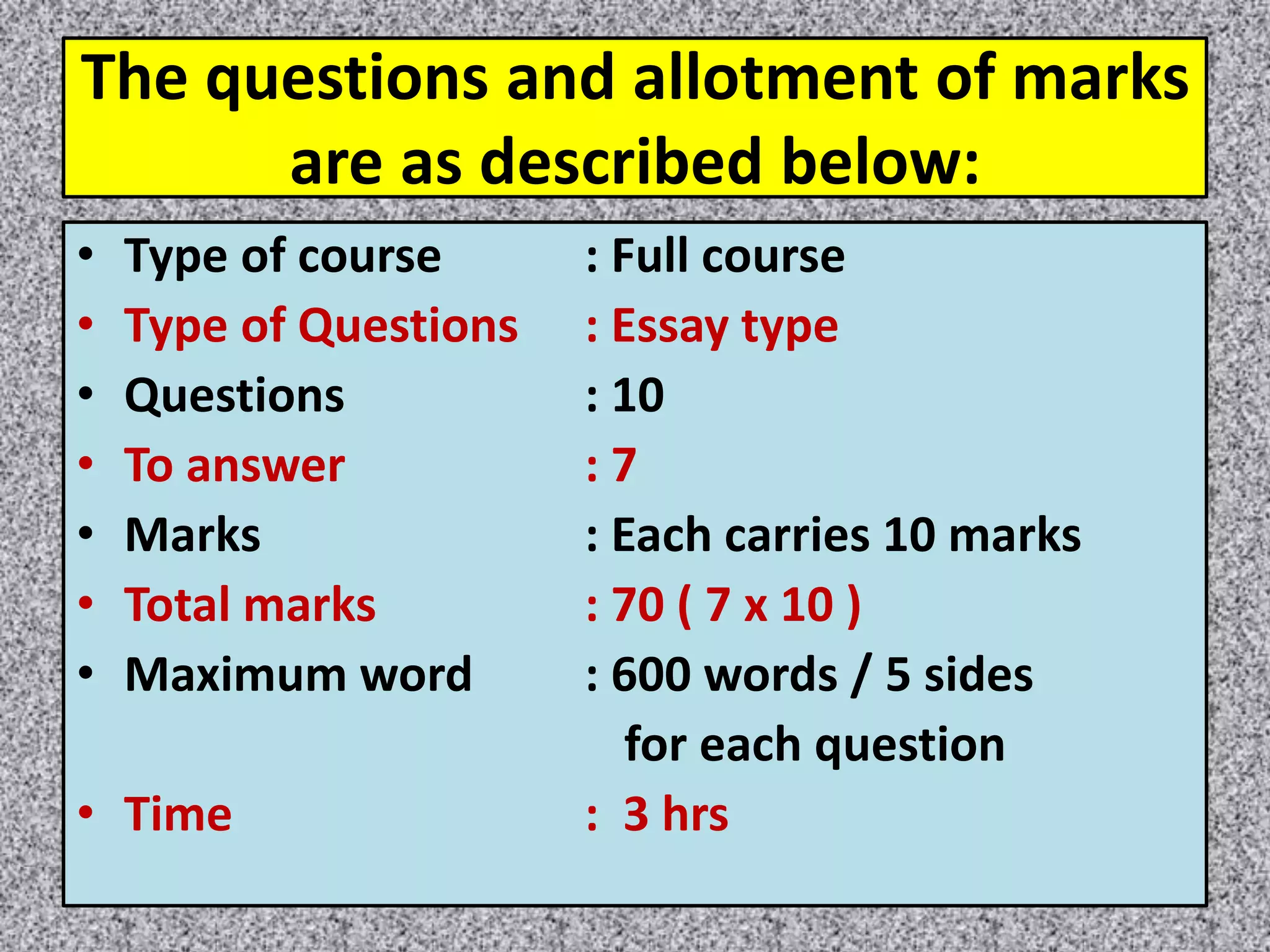
The questions and allotment of marks
are as described below:
• Type of course : Full course
• Type of Questions : Essay type
• Questions : 10
• To answer : 7
• Marks : Each carries 10 marks
• Total marks : 70 ( 7 x 10 )
• Maximum word : 600 words / 5 sides
for each question
• Time : 3 hrs
LEARNER- CENTERED TEACHING
UNIT VI
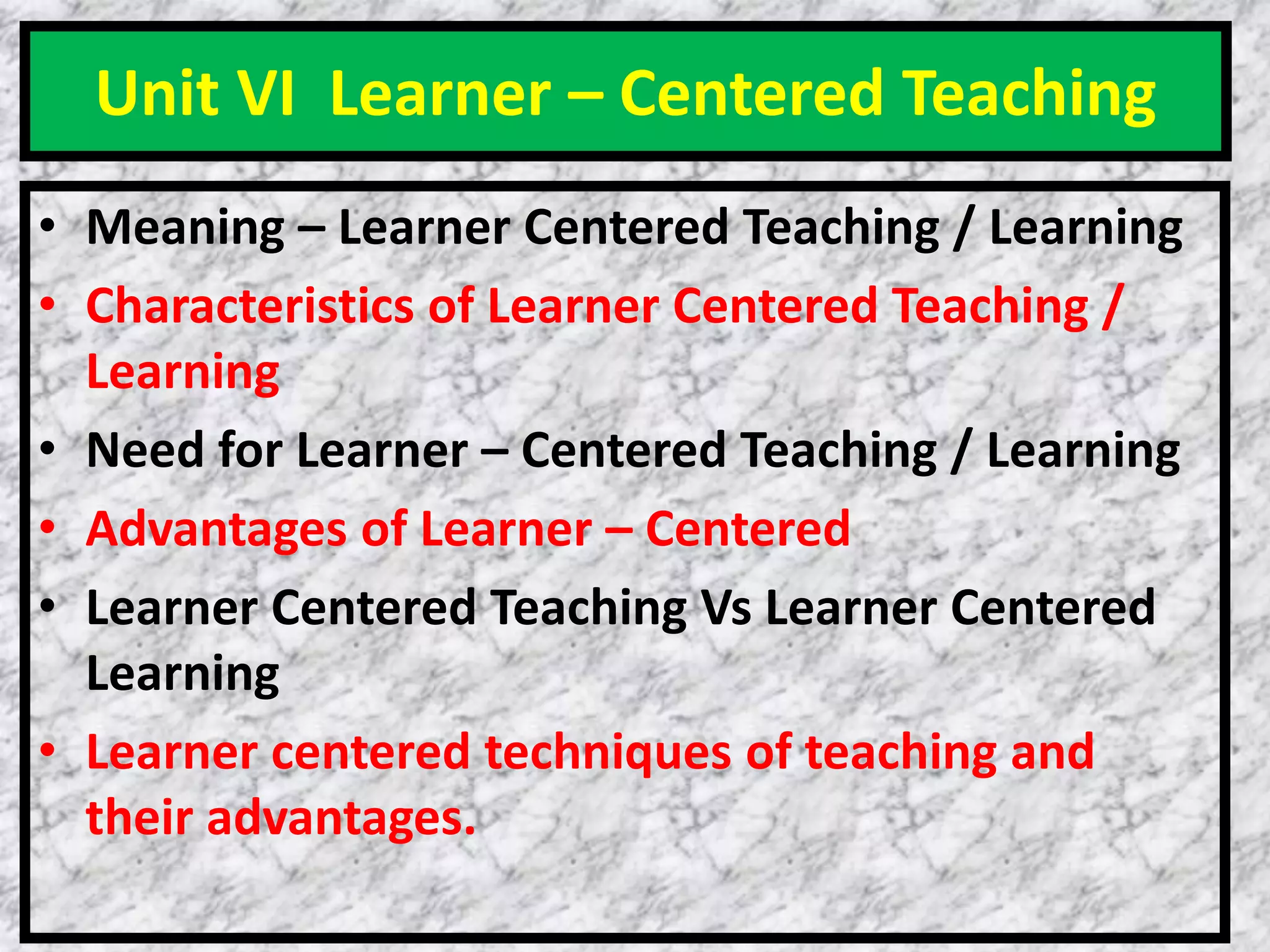
Unit VI Learner – Centered Teaching
• Meaning – Learner Centered Teaching / Learning
• Characteristics of Learner Centered Teaching /
Learning
• Need for Learner – Centered Teaching / Learning
• Advantages of Learner – Centered
• Learner Centered Teaching Vs Learner Centered
Learning
• Learner centered techniques of teaching and
their advantages.
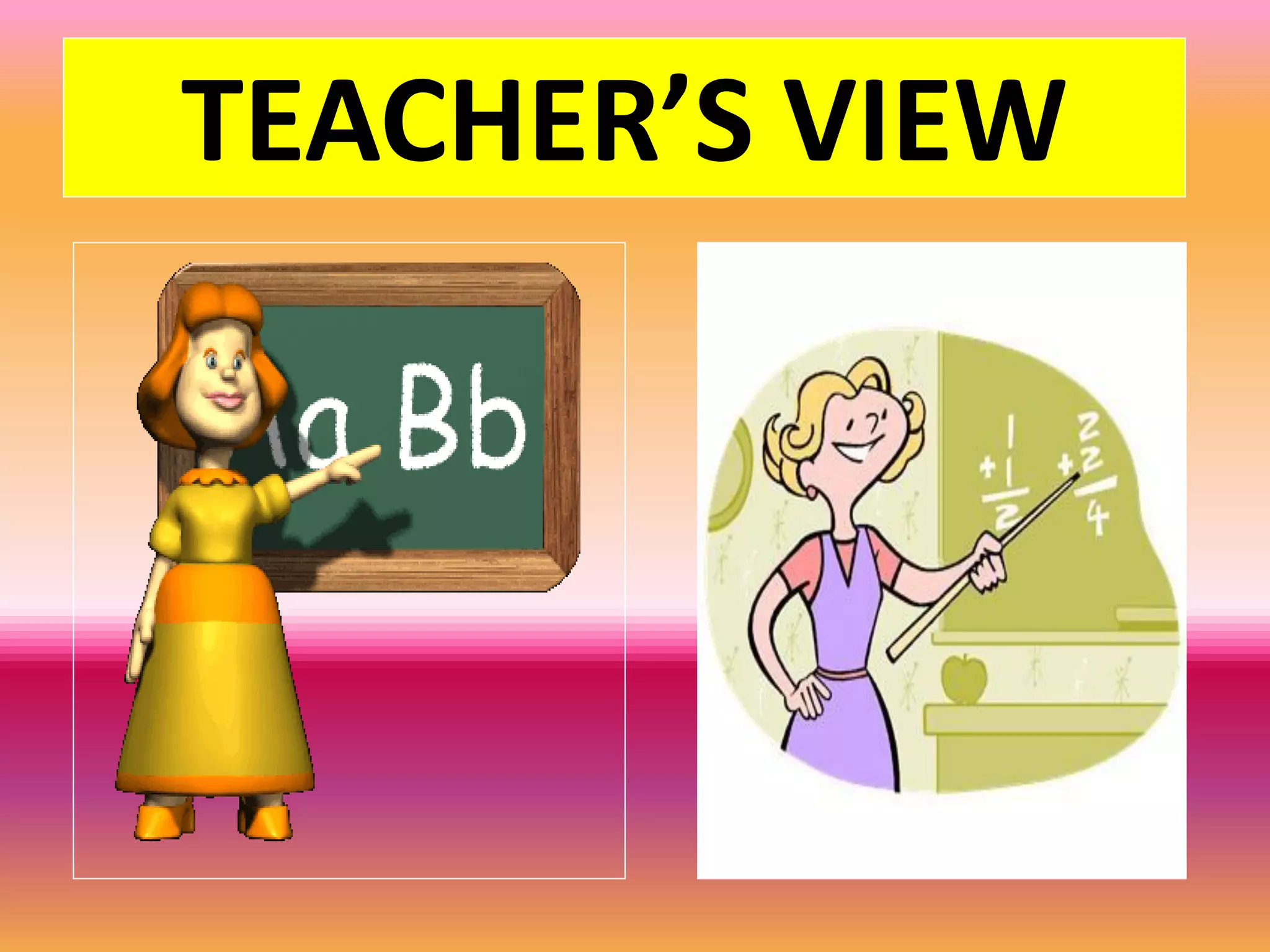
TEACHER’S VIEW
STUDENT’S VIEW
MEANING OF LEARNER
CENTERED TEACHING /
LEARNING
• Learner-centered learning, also known
as Student centered education, broadly
encompasses methods of teaching that shift
the focus of instruction from the teacher to
the student.
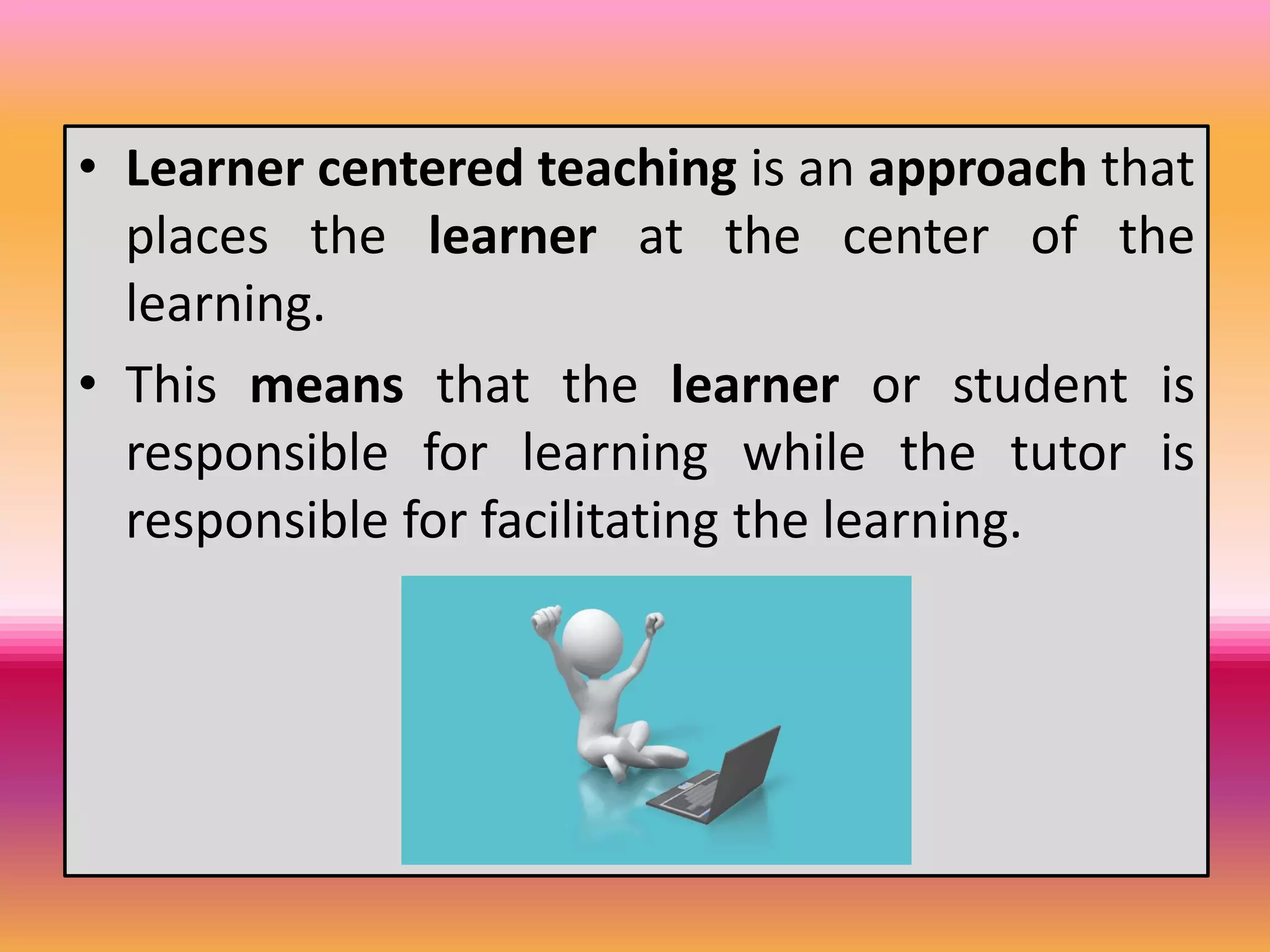
• Learner centered teaching is an approach that
places the learner at the center of the
learning.
• This means that the learner or student is
responsible for learning while the tutor is
responsible for facilitating the learning.
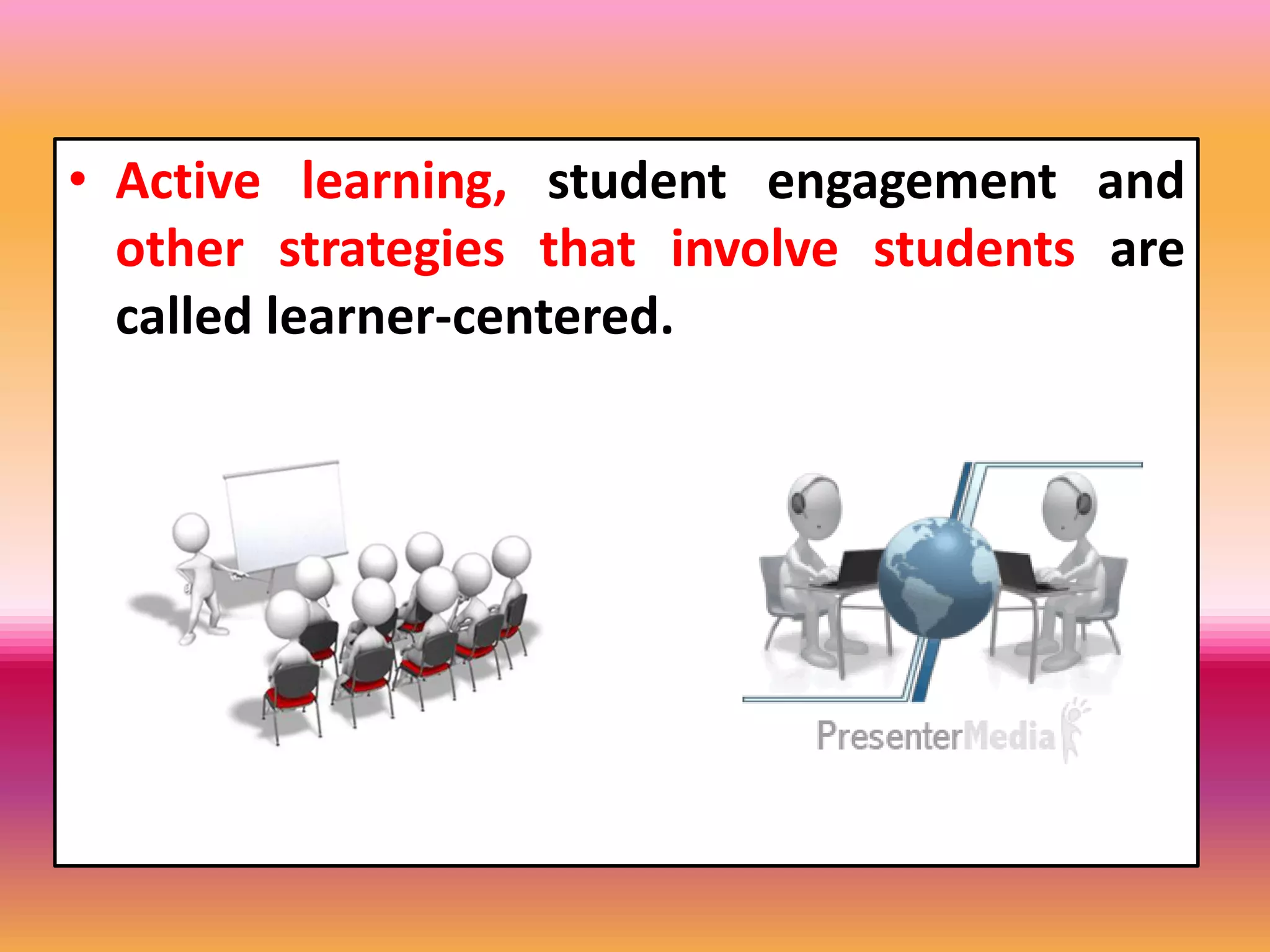
• Active learning, student engagement and
other strategies that involve students are
called learner-centered.
• Focuses on learner learning rather than
teacher’s teaching.
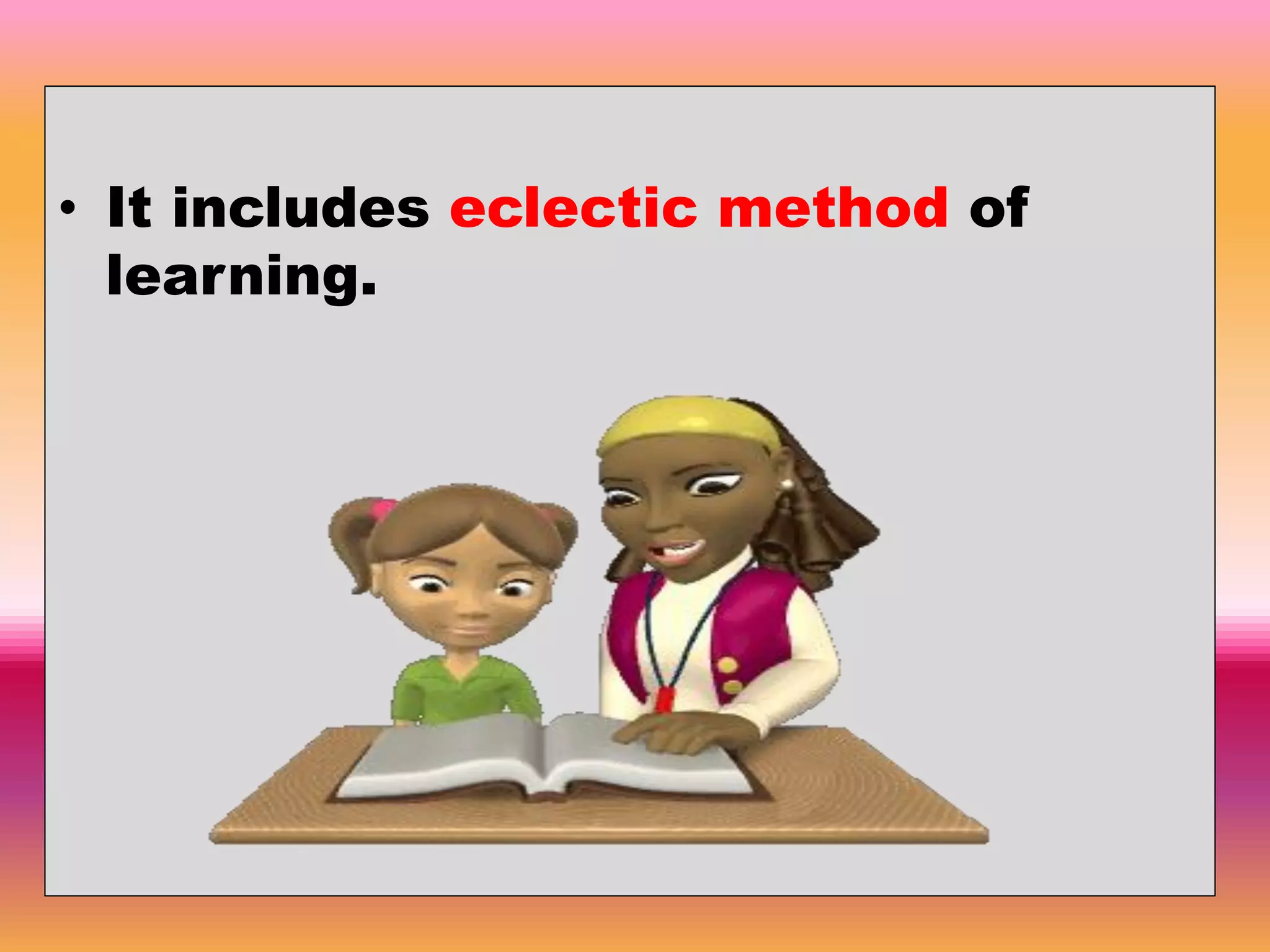
• It includes eclectic method of
learning.
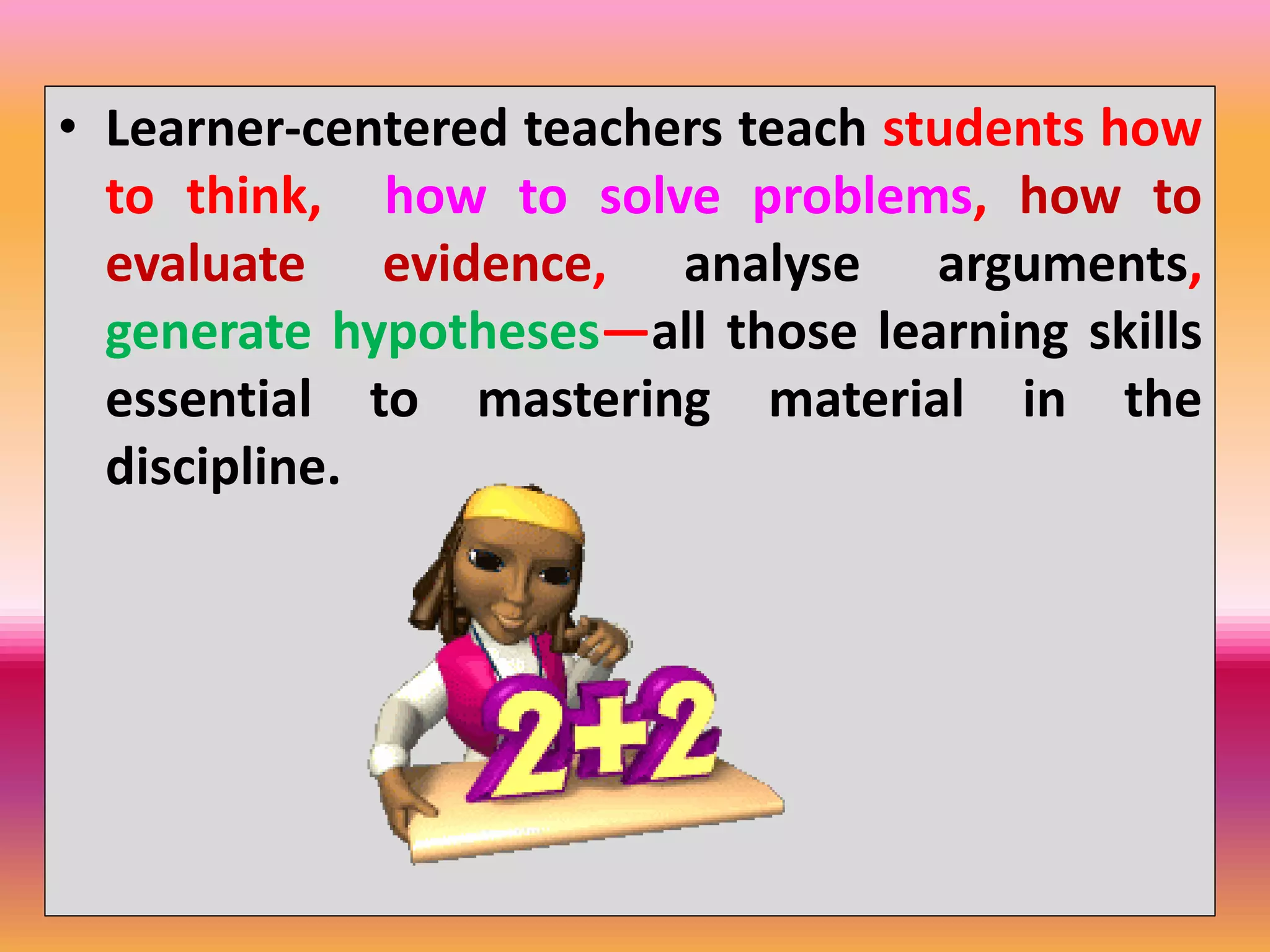
• Learner-centered teachers teach students how
to think, how to solve problems, how to
evaluate evidence, analyse arguments,
generate hypotheses—all those learning skills
essential to mastering material in the
discipline.
• Focus on student’s needs, abilities and
interests.
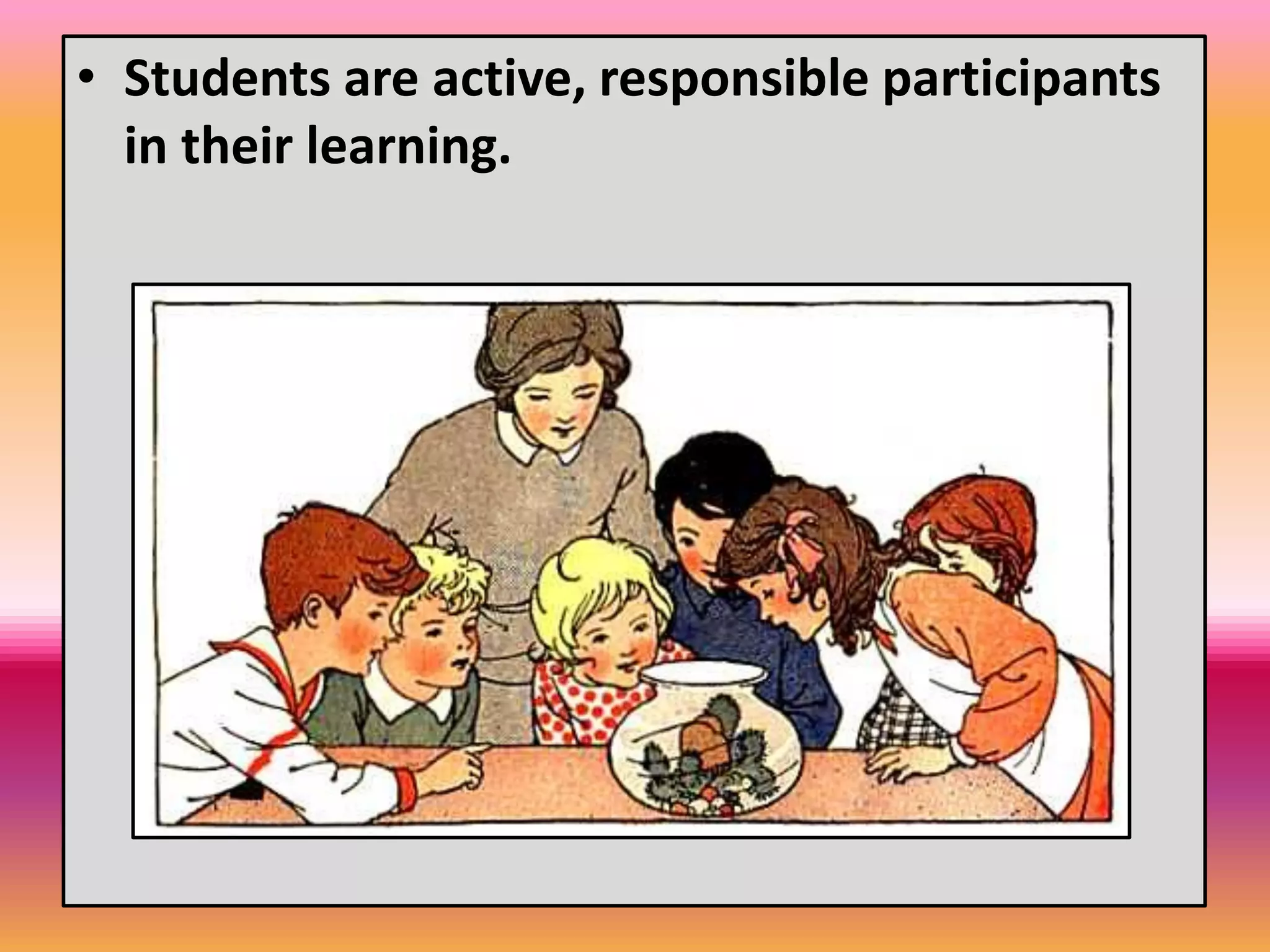
• Students are active, responsible participants
in their learning.
• Learner-centered teaching is not one
specific teaching method
• Many different instructional methods
can use a learner-centered approach
• Students make choices in their learning.
• Learner-centered teaching encourages
students to reflect on what they are learning
and how they are learning it.
• Encourage students on their own
way of learning.
• The goal is to make students aware of
themselves as learners and to make learning
skills something students want to develop.
• Learner-Centered teaching means the student
is at the center of learning.
• “Stimulate curiosity and independent thinking,
develop problem-solving skills, promote planning
and execution of projects and develop self-
learning involving acquisition of knowledge
through observation of phenomena, creative
thinking and activities” (National Curriculum for
Elementary and Secondary Education-A
Framework ,1987,p-6).
THANK YOU

Unit vi meaning learner centered learning

  • 1.
    I Year B.Ed- CORE 3 LEARNING AND TEACHING Ms R SRIDEVI Assistant Professor, Pedagogy of Mathematics, Loyola College of Education Chennai 34 UNIT VI LEARNER CENTRED TEACHING MEANING OF LEARNER CENTERED LEARNING
  • 2.
    The questions andallotment of marks are as described below: • Type of course : Full course • Type of Questions : Essay type • Questions : 10 • To answer : 7 • Marks : Each carries 10 marks • Total marks : 70 ( 7 x 10 ) • Maximum word : 600 words / 5 sides for each question • Time : 3 hrs
  • 3.
  • 4.
    Unit VI Learner– Centered Teaching • Meaning – Learner Centered Teaching / Learning • Characteristics of Learner Centered Teaching / Learning • Need for Learner – Centered Teaching / Learning • Advantages of Learner – Centered • Learner Centered Teaching Vs Learner Centered Learning • Learner centered techniques of teaching and their advantages.
  • 5.
  • 6.
  • 7.
    MEANING OF LEARNER CENTEREDTEACHING / LEARNING
  • 8.
    • Learner-centered learning,also known as Student centered education, broadly encompasses methods of teaching that shift the focus of instruction from the teacher to the student.
  • 9.
    • Learner centeredteaching is an approach that places the learner at the center of the learning. • This means that the learner or student is responsible for learning while the tutor is responsible for facilitating the learning.
  • 10.
    • Active learning,student engagement and other strategies that involve students are called learner-centered.
  • 11.
    • Focuses onlearner learning rather than teacher’s teaching.
  • 12.
    • It includeseclectic method of learning.
  • 13.
    • Learner-centered teachersteach students how to think, how to solve problems, how to evaluate evidence, analyse arguments, generate hypotheses—all those learning skills essential to mastering material in the discipline.
  • 14.
    • Focus onstudent’s needs, abilities and interests.
  • 15.
    • Students areactive, responsible participants in their learning.
  • 16.
    • Learner-centered teachingis not one specific teaching method • Many different instructional methods can use a learner-centered approach
  • 17.
    • Students makechoices in their learning.
  • 18.
    • Learner-centered teachingencourages students to reflect on what they are learning and how they are learning it.
  • 19.
    • Encourage studentson their own way of learning.
  • 20.
    • The goalis to make students aware of themselves as learners and to make learning skills something students want to develop.
  • 21.
    • Learner-Centered teachingmeans the student is at the center of learning.
  • 22.
    • “Stimulate curiosityand independent thinking, develop problem-solving skills, promote planning and execution of projects and develop self- learning involving acquisition of knowledge through observation of phenomena, creative thinking and activities” (National Curriculum for Elementary and Secondary Education-A Framework ,1987,p-6).
  • 23.