LEARNER CENTERED
TEACHING APPROACHES
AND STRATEGIES
OBJECTIVES
 Define learner- centered teaching
 Determine the characteristics of
learner-centered teaching
 Differentiate teacher- centered and
learner- centered teaching
 Recognize the principles and benefits
of leaner- centered teaching
At the end of the session, the participants
will be able to:
Teacher-Centered Learner-Centered
• Focus is on instructor
• Knowledge is transmitted from
instructor to learner.
• Instructor talks while learner
passively listens.
• Learners passively receive
information.
• Learner works alone.
• Culture is competitive.
• Instructor restrains
conversation.
• Instructor answers learner’s
questions
• Focus is on the learners.
• Learners construct knowledge
through gathering and analyzing
information
• Learners interact with instructor
and each other.
• Learners are actively involved.
• Learners often works in pairs or
groups.
• Culture is collaborative and
supportive.
• Learners are encourage to
engage, ask questions, debate,
What is the best way to engage students and help
them retain their learning?
Learner-centered approach
A learner-centered approach puts the learner
at the center of the learning process,
emphasizing their needs, interests, and goals.
This approach is more effective than traditional
teacher- centered approaches in promoting
engagement, motivation, and knowledge
retention.
1
2
Principles
of a
Learner-
Centered
Approach
A learner-centered approach to education prioritizes the
individual student’s needs, interests, and abilities. The core
principles of this approach include putting the learner at the
center of the learning process, emphasizing active learning, and
fostering a collaborative and supportive learning environment.
The teacher’s role in a learner-centered approach is to act as a
facilitator, guide, and coach rather than simply delivering
information. This approach encourages students to take
ownership of their learning, set their own goals, and engage in
reflective and metacognitive thinking. The learner-centered
approach recognizes that each student has a unique learning style
and pace, and it seeks to tailor the educational experience to
meet the individual needs of each student. Ultimately, a learner-
centered approach aims to empower students to become
lifelong learners capable of taking responsibility for their learning
and adapting to new challenges. Here are some principles of a
learner-centered approach worth applying:
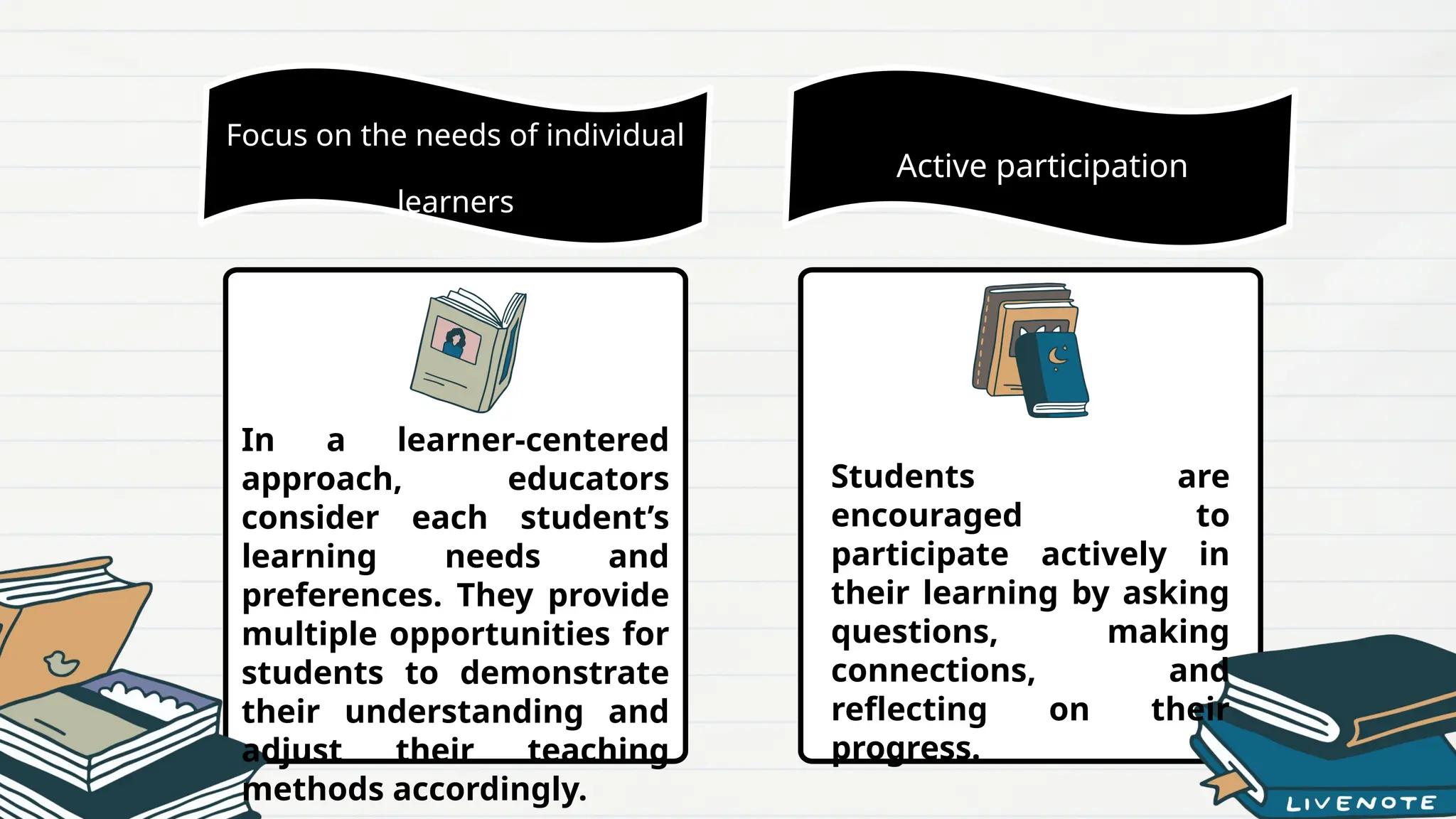
In a learner-centered
approach, educators
consider each student’s
learning needs and
preferences. They provide
multiple opportunities for
students to demonstrate
their understanding and
adjust their teaching
methods accordingly.
Focus on the needs of individual
learners
Active participation
Students are
encouraged to
participate actively in
their learning by asking
questions, making
connections, and
reflecting on their
progress.
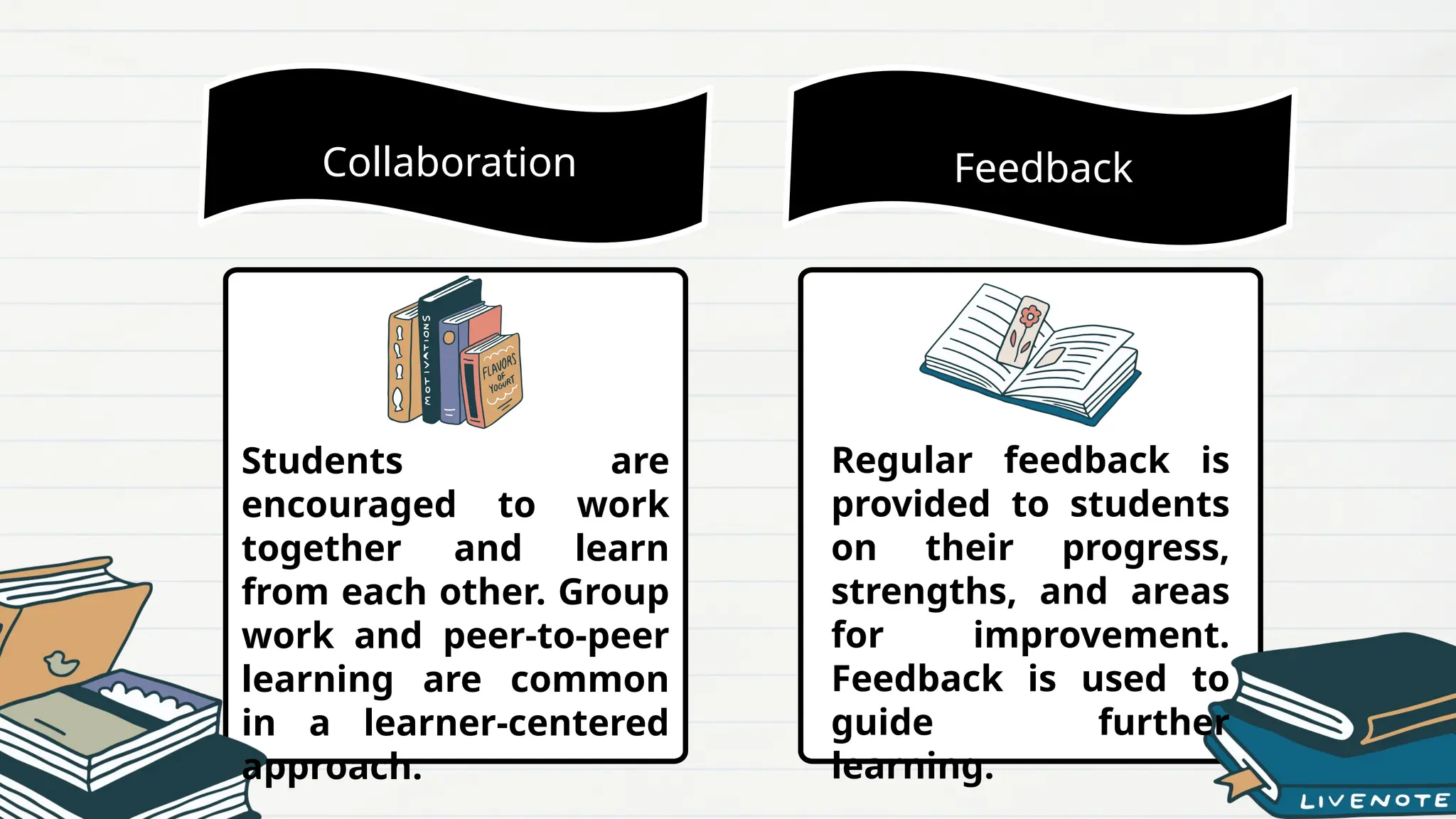
Students are
encouraged to work
together and learn
from each other. Group
work and peer-to-peer
learning are common
in a learner-centered
approach.
Collaboration Feedback
Regular feedback is
provided to students
on their progress,
strengths, and areas
for improvement.
Feedback is used to
guide further
learning.
Benefits of a learner-
centered approach
The benefits of a learner-centered
approach are numerous:
First and foremost, it promotes a more engaging and
interactive learning experience, as learners are
encouraged to participate actively in the learning
process.
This leads to increased motivation and enthusiasm for
learning, which can result in better retention of
knowledge and skills.
A learner-centered approach helps to create a more
inclusive learning environment that accommodates
different learning styles and abilities.
Learners empowered to take control of their learning are
better prepared for lifelong learning, which is essential in
today’s rapidly changing world. Here is a list of the top
nine benefits of the approach:
Increased
motivation:
Learners are more motivated to learn
when they are actively engaged in
learning and feel that their interests
and needs are being addressed.
With a learner-centered approach, the
learning experience can be customized to
the needs and interests of each learner.
Personalized
learning :
Greater
responsibility:
Greater
independence:
Improved
communication skills:
Learners can improve their
communication skills by
working in groups and
engaging in discussions and
debates.
When learners actively engage
in learning, they are more likely
to remember what they have
learned.
Learners are encouraged to
take responsibility for their
own learning, which can help
them develop greater
independence and self-
reliance.
Improved
retention:
Learners are given greater
responsibility for their learning,
which can help them develop
skills such as self-direction,
critical thinking, and problem-
solving.
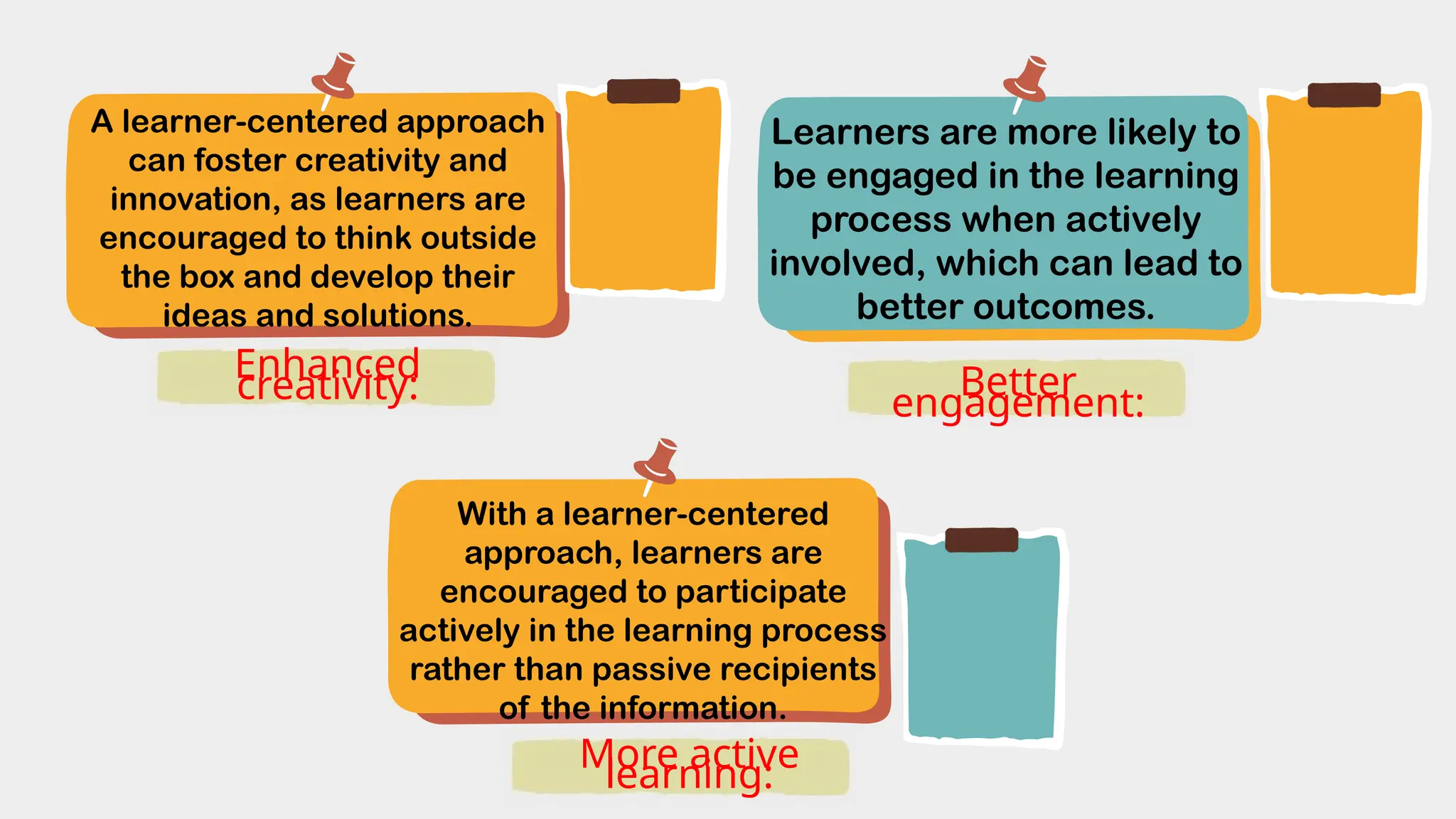
Enhanced
creativity: Better
engagement:
More active
learning:
A learner-centered approach
can foster creativity and
innovation, as learners are
encouraged to think outside
the box and develop their
ideas and solutions.
Learners are more likely to
be engaged in the learning
process when actively
involved, which can lead to
better outcomes.
With a learner-centered
approach, learners are
encouraged to participate
actively in the learning process
rather than passive recipients
of the information.
Small group activity
Classroom discussion
Projects
Presentations
Games
Debates
Role play
Case study
Simulations
Teaching
Methods
• Define organizational patterns
• Understand the significance of
organizational patterns to reading and
writing
• Learn about specific organizational
patterns
Today, we
will...

For Teachers -Learner Centered Approach.pptx

  • 1.
  • 2.
    OBJECTIVES  Define learner-centered teaching  Determine the characteristics of learner-centered teaching  Differentiate teacher- centered and learner- centered teaching  Recognize the principles and benefits of leaner- centered teaching At the end of the session, the participants will be able to:
  • 4.
    Teacher-Centered Learner-Centered • Focusis on instructor • Knowledge is transmitted from instructor to learner. • Instructor talks while learner passively listens. • Learners passively receive information. • Learner works alone. • Culture is competitive. • Instructor restrains conversation. • Instructor answers learner’s questions • Focus is on the learners. • Learners construct knowledge through gathering and analyzing information • Learners interact with instructor and each other. • Learners are actively involved. • Learners often works in pairs or groups. • Culture is collaborative and supportive. • Learners are encourage to engage, ask questions, debate,
  • 5.
    What is thebest way to engage students and help them retain their learning? Learner-centered approach A learner-centered approach puts the learner at the center of the learning process, emphasizing their needs, interests, and goals. This approach is more effective than traditional teacher- centered approaches in promoting engagement, motivation, and knowledge retention.
  • 6.
  • 8.
  • 9.
    A learner-centered approachto education prioritizes the individual student’s needs, interests, and abilities. The core principles of this approach include putting the learner at the center of the learning process, emphasizing active learning, and fostering a collaborative and supportive learning environment. The teacher’s role in a learner-centered approach is to act as a facilitator, guide, and coach rather than simply delivering information. This approach encourages students to take ownership of their learning, set their own goals, and engage in reflective and metacognitive thinking. The learner-centered approach recognizes that each student has a unique learning style and pace, and it seeks to tailor the educational experience to meet the individual needs of each student. Ultimately, a learner- centered approach aims to empower students to become lifelong learners capable of taking responsibility for their learning and adapting to new challenges. Here are some principles of a learner-centered approach worth applying:
  • 10.
    In a learner-centered approach,educators consider each student’s learning needs and preferences. They provide multiple opportunities for students to demonstrate their understanding and adjust their teaching methods accordingly. Focus on the needs of individual learners Active participation Students are encouraged to participate actively in their learning by asking questions, making connections, and reflecting on their progress.
  • 11.
    Students are encouraged towork together and learn from each other. Group work and peer-to-peer learning are common in a learner-centered approach. Collaboration Feedback Regular feedback is provided to students on their progress, strengths, and areas for improvement. Feedback is used to guide further learning.
  • 12.
    Benefits of alearner- centered approach
  • 13.
    The benefits ofa learner-centered approach are numerous: First and foremost, it promotes a more engaging and interactive learning experience, as learners are encouraged to participate actively in the learning process. This leads to increased motivation and enthusiasm for learning, which can result in better retention of knowledge and skills. A learner-centered approach helps to create a more inclusive learning environment that accommodates different learning styles and abilities. Learners empowered to take control of their learning are better prepared for lifelong learning, which is essential in today’s rapidly changing world. Here is a list of the top nine benefits of the approach:
  • 14.
    Increased motivation: Learners are moremotivated to learn when they are actively engaged in learning and feel that their interests and needs are being addressed. With a learner-centered approach, the learning experience can be customized to the needs and interests of each learner. Personalized learning :
  • 15.
    Greater responsibility: Greater independence: Improved communication skills: Learners canimprove their communication skills by working in groups and engaging in discussions and debates. When learners actively engage in learning, they are more likely to remember what they have learned. Learners are encouraged to take responsibility for their own learning, which can help them develop greater independence and self- reliance. Improved retention: Learners are given greater responsibility for their learning, which can help them develop skills such as self-direction, critical thinking, and problem- solving.
  • 16.
    Enhanced creativity: Better engagement: More active learning: Alearner-centered approach can foster creativity and innovation, as learners are encouraged to think outside the box and develop their ideas and solutions. Learners are more likely to be engaged in the learning process when actively involved, which can lead to better outcomes. With a learner-centered approach, learners are encouraged to participate actively in the learning process rather than passive recipients of the information.
  • 17.
    Small group activity Classroomdiscussion Projects Presentations Games Debates Role play Case study Simulations Teaching Methods
  • 18.
    • Define organizationalpatterns • Understand the significance of organizational patterns to reading and writing • Learn about specific organizational patterns Today, we will...