Teacher-centered vs. Learner-centered paradigms 
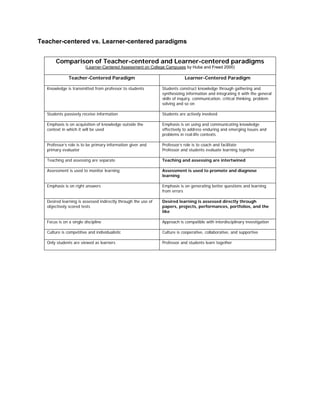
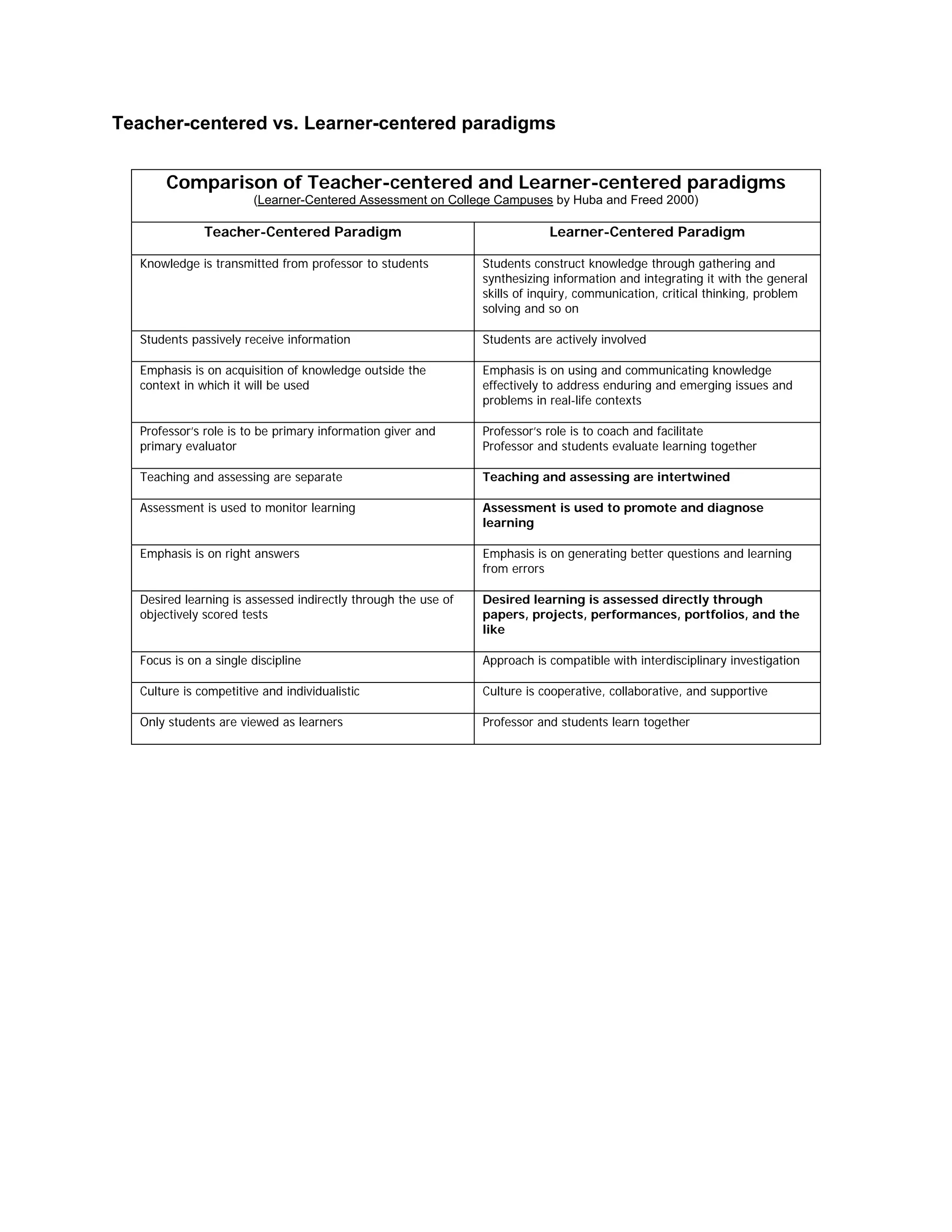
Comparison of Teacher-centered and Learner-centered paradigms 
(Learner-Centered Assessment on College Campuses by Huba and Freed 2000) 
Teacher-Centered Paradigm Learner-Centered Paradigm 
Knowledge is transmitted from professor to students Students construct knowledge through gathering and 
synthesizing information and integrating it with the general 
skills of inquiry, communication, critical thinking, problem 
solving and so on 
Students passively receive information Students are actively involved 
Emphasis is on acquisition of knowledge outside the 
context in which it will be used 
Emphasis is on using and communicating knowledge 
effectively to address enduring and emerging issues and 
problems in real-life contexts 
Professor’s role is to be primary information giver and 
primary evaluator 
Professor’s role is to coach and facilitate 
Professor and students evaluate learning together 
Teaching and assessing are separate Teaching and assessing are intertwined 
Assessment is used to monitor learning Assessment is used to promote and diagnose 
learning 
Emphasis is on right answers Emphasis is on generating better questions and learning 
from errors 
Desired learning is assessed indirectly through the use of 
objectively scored tests 
Desired learning is assessed directly through 
papers, projects, performances, portfolios, and the 
like 
Focus is on a single discipline Approach is compatible with interdisciplinary investigation 
Culture is competitive and individualistic Culture is cooperative, collaborative, and supportive 
Only students are viewed as learners Professor and students learn together
Teacher-centered vs. Learner-centered paradigms 
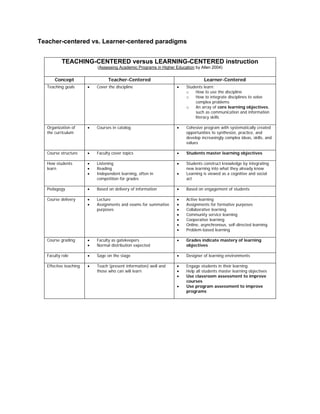
TEACHING-CENTERED versus LEARNING-CENTERED instruction 
(Assessing Academic Programs in Higher Education by Allen 2004) 
Concept Teacher-Centered Learner-Centered 
Teaching goals • Cover the discipline • Students learn: 
o How to use the discipline 
o How to integrate disciplines to solve 
complex problems 
o An array of core learning objectives, 
such as communication and information 
literacy skills 
Organization of 
the curriculum 
• Courses in catalog • Cohesive program with systematically created 
opportunities to synthesize, practice, and 
develop increasingly complex ideas, skills, and 
values 
Course structure • Faculty cover topics • Students master learning objectives 
How students 
learn 
• Listening 
• Reading 
• Independent learning, often in 
competition for grades 
• Students construct knowledge by integrating 
new learning into what they already know 
• Learning is viewed as a cognitive and social 
act 
Pedagogy • Based on delivery of information • Based on engagement of students 
Course delivery • Lecture 
• Assignments and exams for summative 
purposes 
• Active learning 
• Assignments for formative purposes 
• Collaborative learning 
• Community service learning 
• Cooperative learning 
• Online, asynchronous, self-directed learning 
• Problem-based learning 
Course grading • Faculty as gatekeepers 
• Normal distribution expected 
• Grades indicate mastery of learning 
objectives 
Faculty role • Sage on the stage • Designer of learning environments 
Effective teaching • Teach (present information) well and 
those who can will learn 
• Engage students in their learning 
• Help all students master learning objectives 
• Use classroom assessment to improve 
courses 
• Use program assessment to improve 
programs

Teacher centeredvslearnercenteredparadigms

  • 1.
    Teacher-centered vs. Learner-centeredparadigms Comparison of Teacher-centered and Learner-centered paradigms (Learner-Centered Assessment on College Campuses by Huba and Freed 2000) Teacher-Centered Paradigm Learner-Centered Paradigm Knowledge is transmitted from professor to students Students construct knowledge through gathering and synthesizing information and integrating it with the general skills of inquiry, communication, critical thinking, problem solving and so on Students passively receive information Students are actively involved Emphasis is on acquisition of knowledge outside the context in which it will be used Emphasis is on using and communicating knowledge effectively to address enduring and emerging issues and problems in real-life contexts Professor’s role is to be primary information giver and primary evaluator Professor’s role is to coach and facilitate Professor and students evaluate learning together Teaching and assessing are separate Teaching and assessing are intertwined Assessment is used to monitor learning Assessment is used to promote and diagnose learning Emphasis is on right answers Emphasis is on generating better questions and learning from errors Desired learning is assessed indirectly through the use of objectively scored tests Desired learning is assessed directly through papers, projects, performances, portfolios, and the like Focus is on a single discipline Approach is compatible with interdisciplinary investigation Culture is competitive and individualistic Culture is cooperative, collaborative, and supportive Only students are viewed as learners Professor and students learn together
  • 2.
    Teacher-centered vs. Learner-centeredparadigms TEACHING-CENTERED versus LEARNING-CENTERED instruction (Assessing Academic Programs in Higher Education by Allen 2004) Concept Teacher-Centered Learner-Centered Teaching goals • Cover the discipline • Students learn: o How to use the discipline o How to integrate disciplines to solve complex problems o An array of core learning objectives, such as communication and information literacy skills Organization of the curriculum • Courses in catalog • Cohesive program with systematically created opportunities to synthesize, practice, and develop increasingly complex ideas, skills, and values Course structure • Faculty cover topics • Students master learning objectives How students learn • Listening • Reading • Independent learning, often in competition for grades • Students construct knowledge by integrating new learning into what they already know • Learning is viewed as a cognitive and social act Pedagogy • Based on delivery of information • Based on engagement of students Course delivery • Lecture • Assignments and exams for summative purposes • Active learning • Assignments for formative purposes • Collaborative learning • Community service learning • Cooperative learning • Online, asynchronous, self-directed learning • Problem-based learning Course grading • Faculty as gatekeepers • Normal distribution expected • Grades indicate mastery of learning objectives Faculty role • Sage on the stage • Designer of learning environments Effective teaching • Teach (present information) well and those who can will learn • Engage students in their learning • Help all students master learning objectives • Use classroom assessment to improve courses • Use program assessment to improve programs