
Student- 
Centered 
Learning 
Olga Shkrabachenko 
Kharkiv sanatorium complex #13
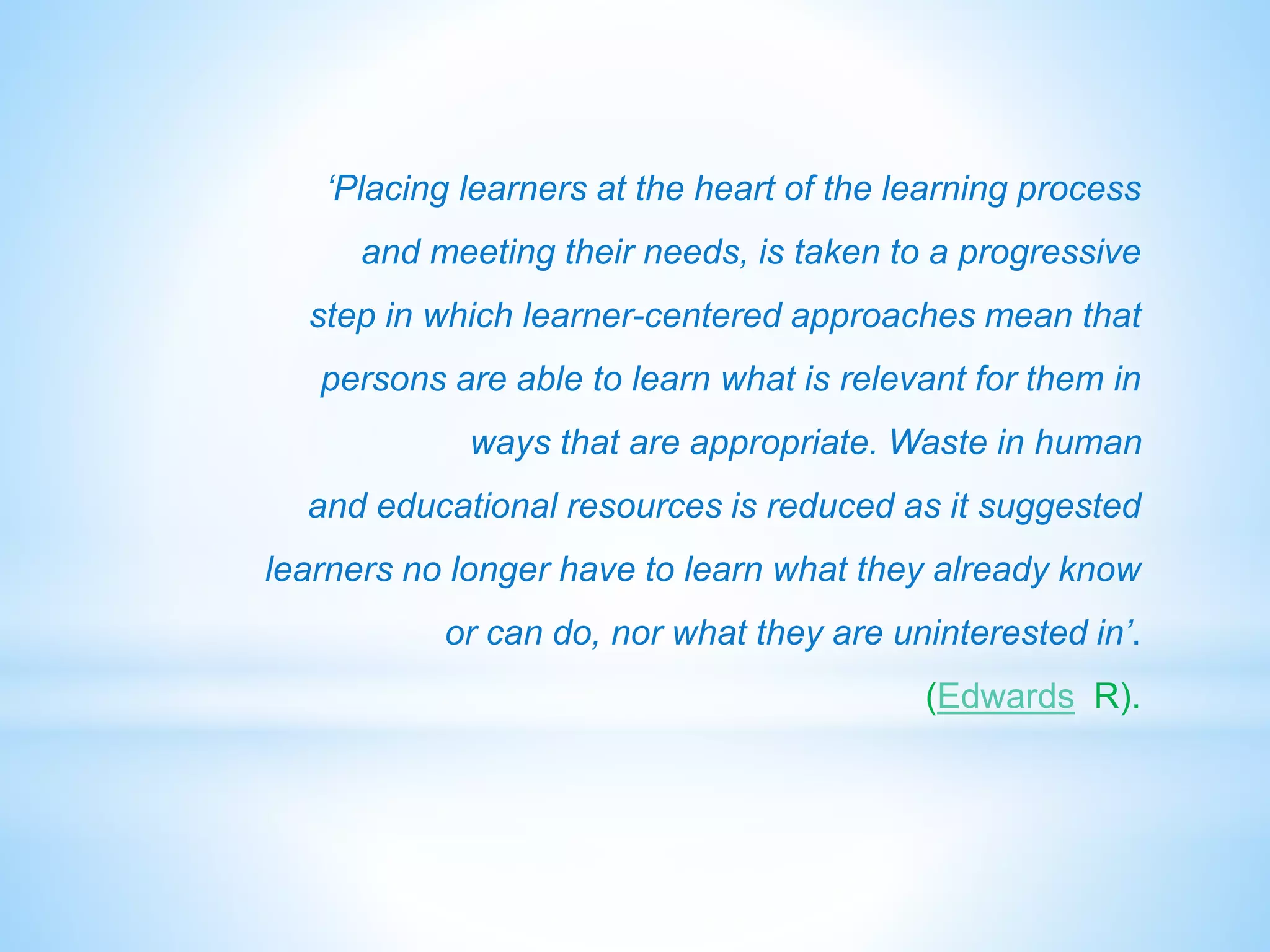
‘Placing learners at the heart of the learning process 
and meeting their needs, is taken to a progressive 
step in which learner-centered approaches mean that 
persons are able to learn what is relevant for them in 
ways that are appropriate. Waste in human 
and educational resources is reduced as it suggested 
learners no longer have to learn what they already know 
or can do, nor what they are uninterested in’. 
(Edwards R).
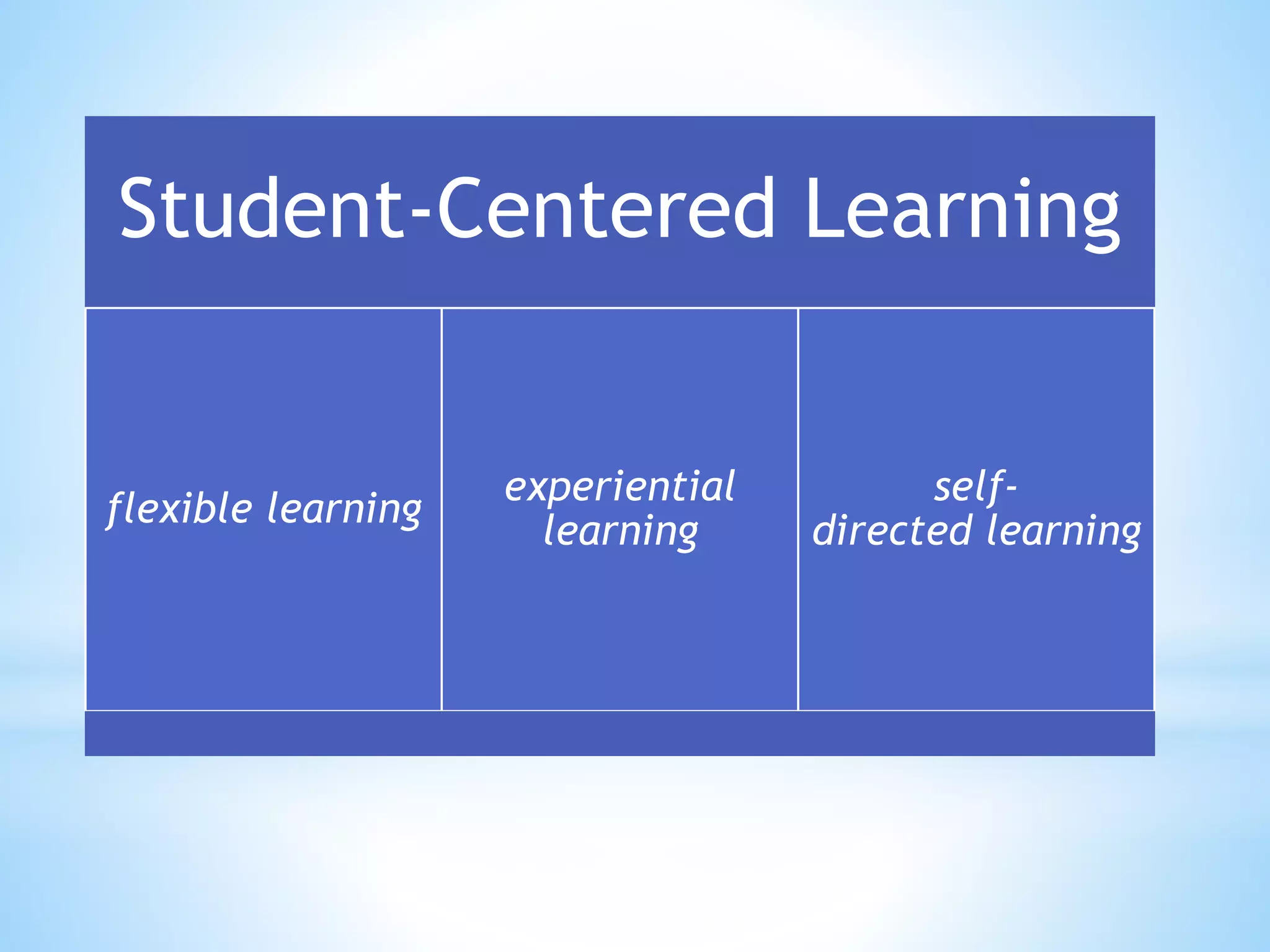
Student-Centered Learning 
flexible learning 
experiential 
learning 
self-directed 
learning
what 
how 
why
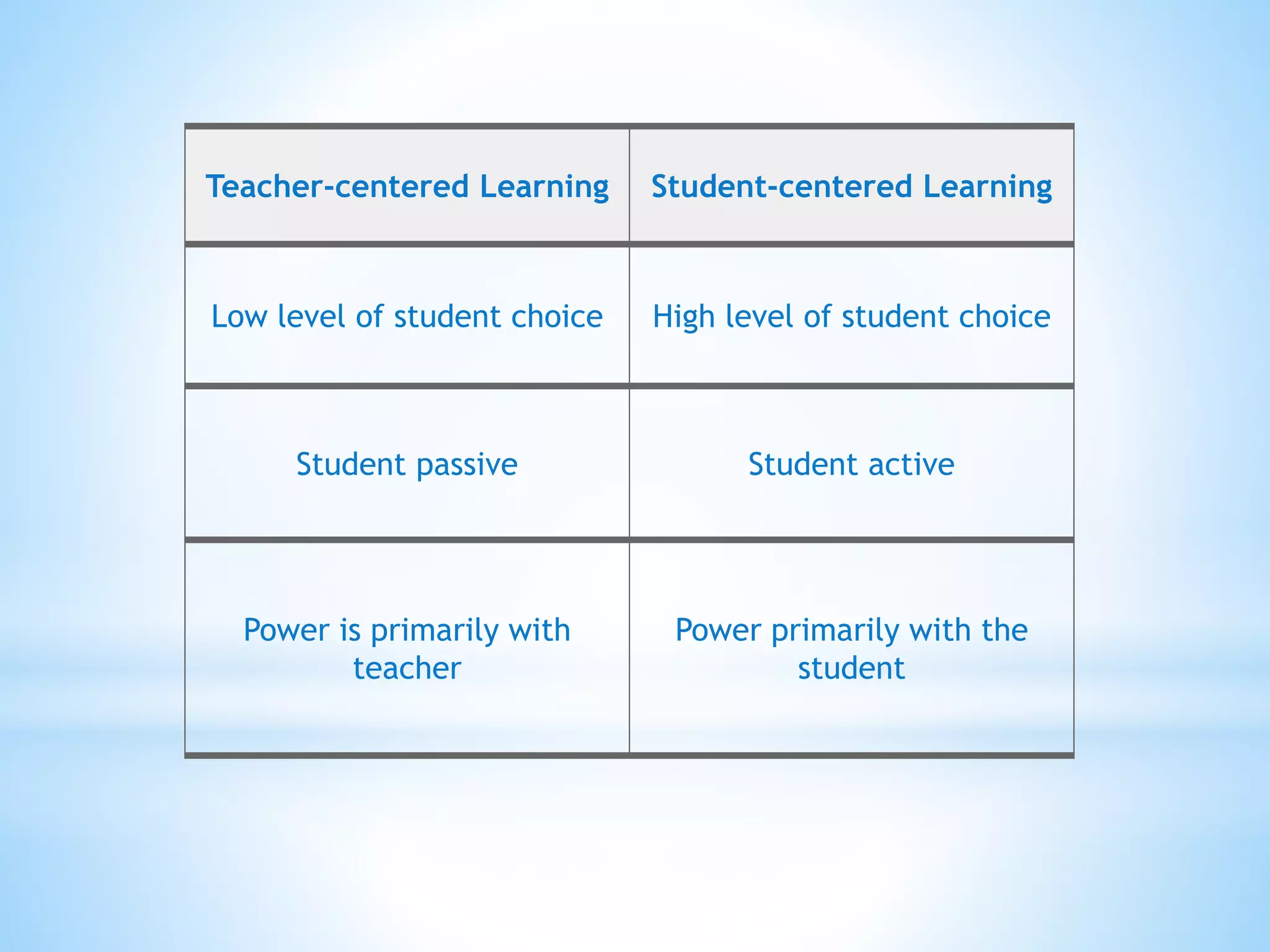
Teacher-centered Learning Student-centered Learning 
Low level of student choice High level of student choice 
Student passive Student active 
Power is primarily with 
teacher 
Power primarily with the 
student
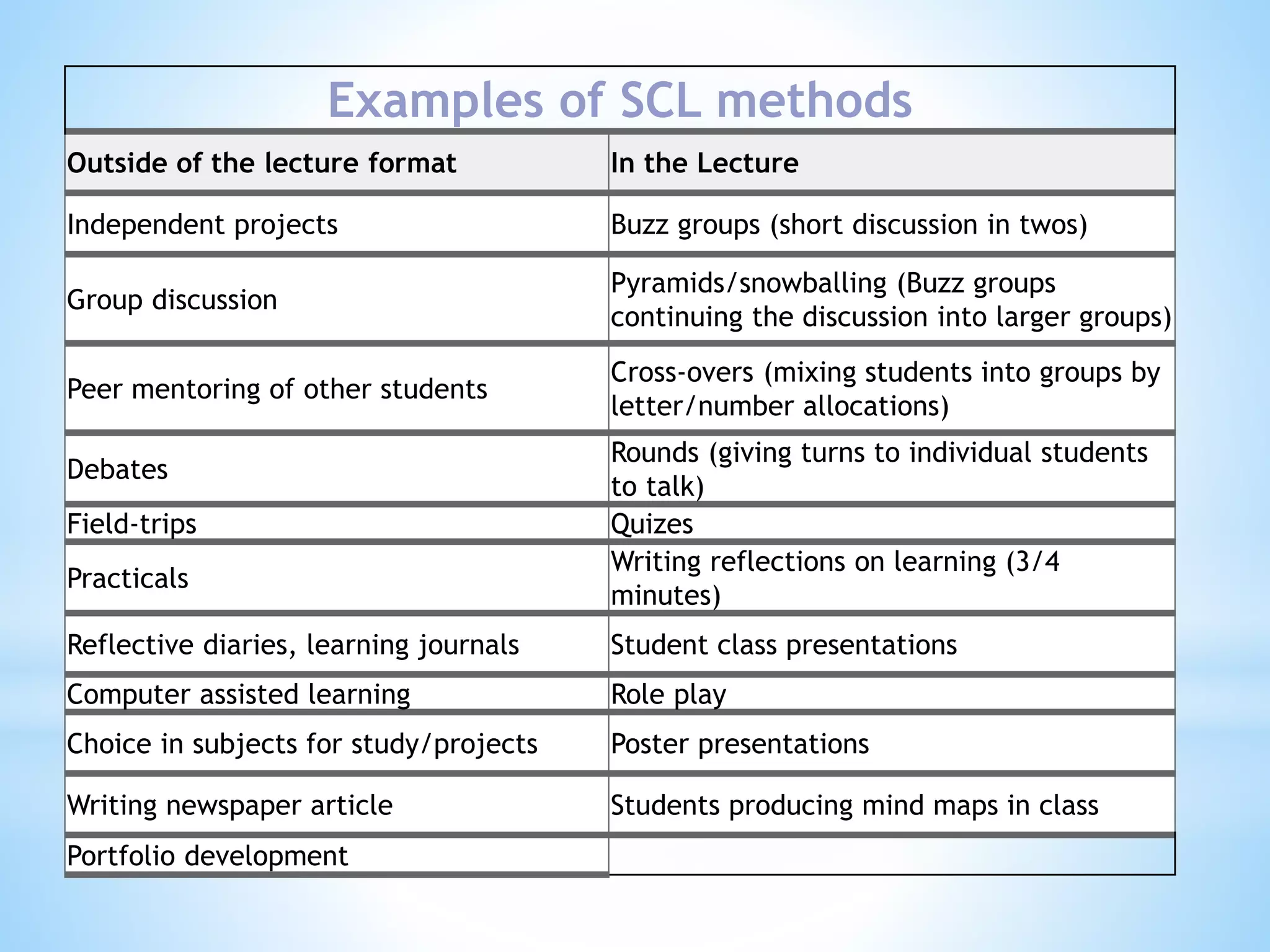
Examples of SCL methods 
Outside of the lecture format In the Lecture 
Independent projects Buzz groups (short discussion in twos) 
Group discussion 
Pyramids/snowballing (Buzz groups 
continuing the discussion into larger groups) 
Peer mentoring of other students 
Cross-overs (mixing students into groups by 
letter/number allocations) 
Debates 
Rounds (giving turns to individual students 
to talk) 
Field-trips Quizes 
Practicals 
Writing reflections on learning (3/4 
minutes) 
Reflective diaries, learning journals Student class presentations 
Computer assisted learning Role play 
Choice in subjects for study/projects Poster presentations 
Writing newspaper article Students producing mind maps in class 
Portfolio development
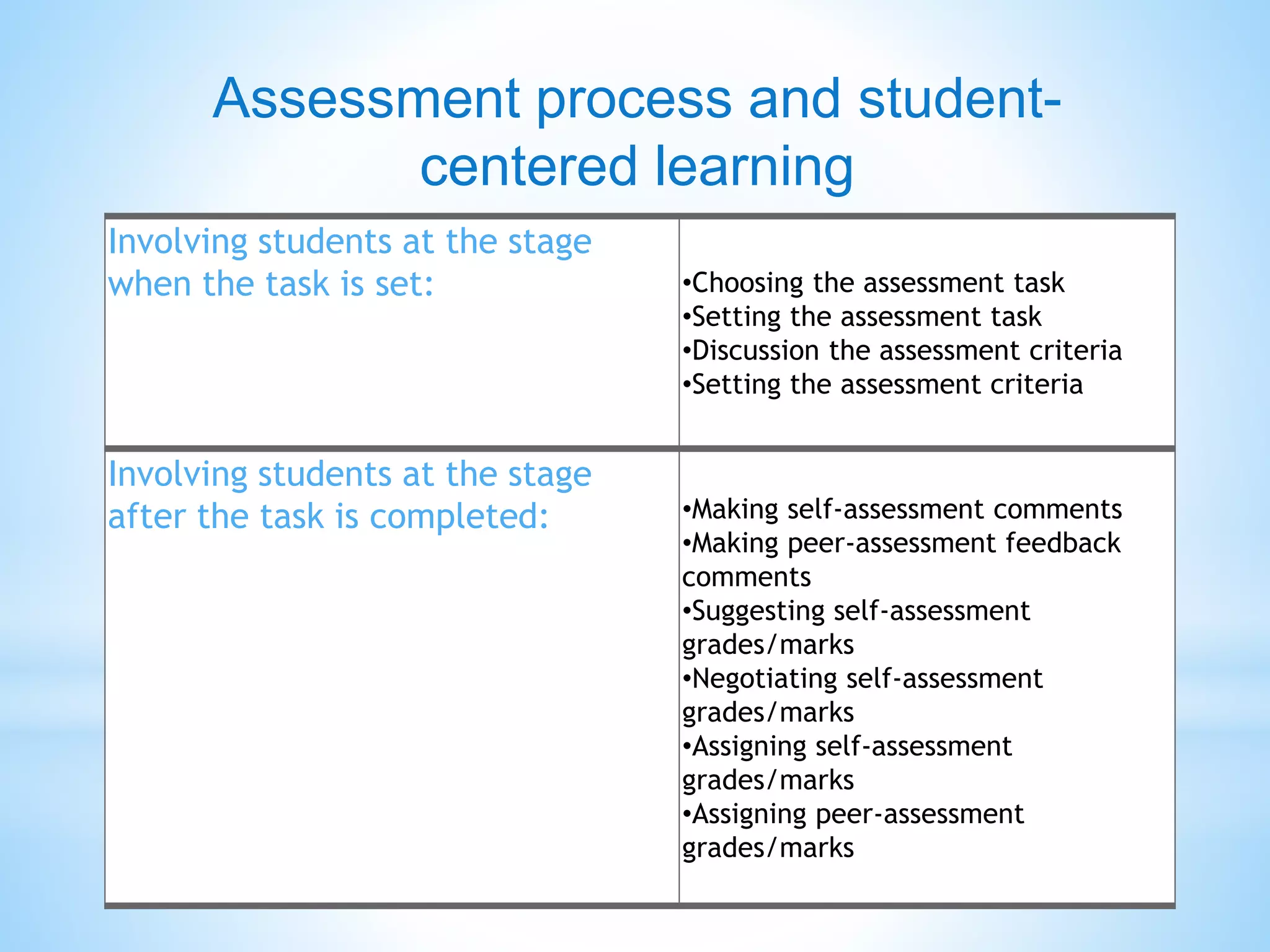
Assessment process and student-centered 
learning 
Involving students at the stage 
when the task is set: •Choosing the assessment task 
•Setting the assessment task 
•Discussion the assessment criteria 
•Setting the assessment criteria 
Involving students at the stage 
after the task is completed: •Making self-assessment comments 
•Making peer-assessment feedback 
comments 
•Suggesting self-assessment 
grades/marks 
•Negotiating self-assessment 
grades/marks 
•Assigning self-assessment 
grades/marks 
•Assigning peer-assessment 
grades/marks
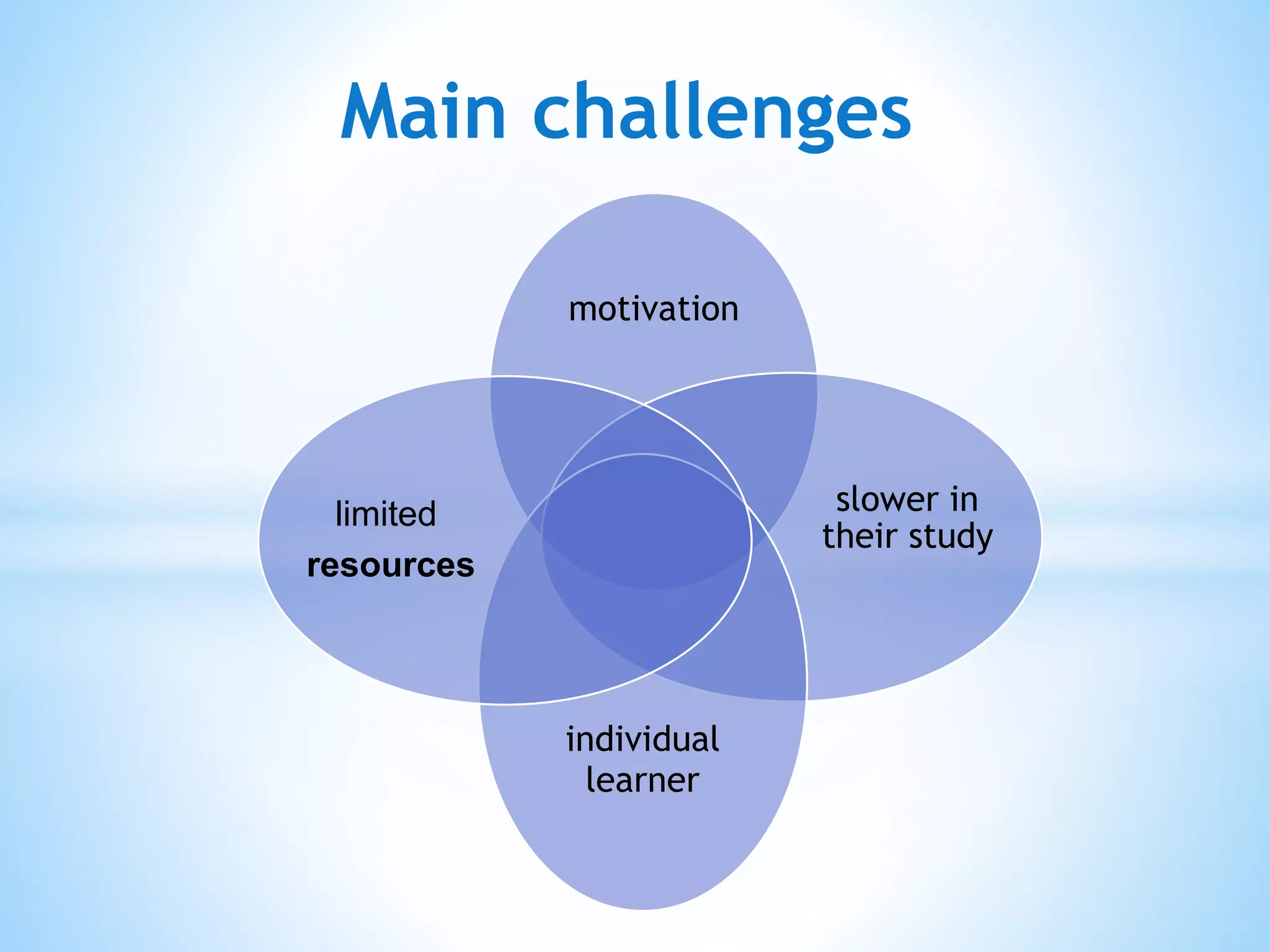
Main challenges 
motivation 
slower in 
their study 
individual 
learner 
limited 
resources
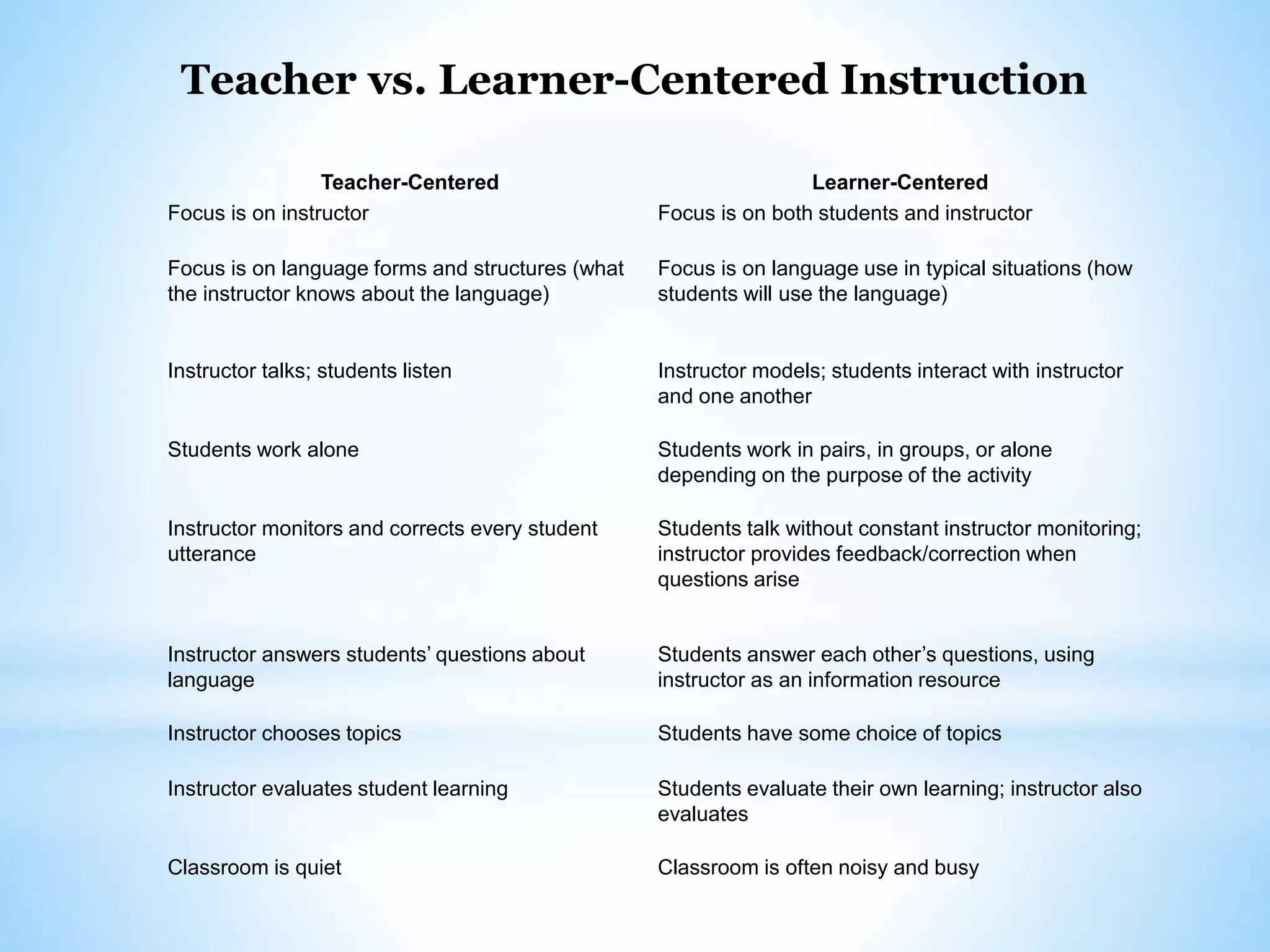
Teacher vs. Learner-Centered Instruction 
Teacher-Centered Learner-Centered 
Focus is on instructor Focus is on both students and instructor 
Focus is on language forms and structures (what 
the instructor knows about the language) 
Focus is on language use in typical situations (how 
students will use the language) 
Instructor talks; students listen Instructor models; students interact with instructor 
and one another 
Students work alone Students work in pairs, in groups, or alone 
depending on the purpose of the activity 
Instructor monitors and corrects every student 
utterance 
Students talk without constant instructor monitoring; 
instructor provides feedback/correction when 
questions arise 
Instructor answers students’ questions about 
language 
Students answer each other’s questions, using 
instructor as an information resource 
Instructor chooses topics Students have some choice of topics 
Instructor evaluates student learning Students evaluate their own learning; instructor also 
evaluates 
Classroom is quiet Classroom is often noisy and busy
Thank you 
for 
attention

Student centered learning

  • 1.
    Student- Centered Learning Olga Shkrabachenko Kharkiv sanatorium complex #13
  • 2.
    ‘Placing learners atthe heart of the learning process and meeting their needs, is taken to a progressive step in which learner-centered approaches mean that persons are able to learn what is relevant for them in ways that are appropriate. Waste in human and educational resources is reduced as it suggested learners no longer have to learn what they already know or can do, nor what they are uninterested in’. (Edwards R).
  • 3.
    Student-Centered Learning flexiblelearning experiential learning self-directed learning
  • 4.
  • 6.
    Teacher-centered Learning Student-centeredLearning Low level of student choice High level of student choice Student passive Student active Power is primarily with teacher Power primarily with the student
  • 7.
    Examples of SCLmethods Outside of the lecture format In the Lecture Independent projects Buzz groups (short discussion in twos) Group discussion Pyramids/snowballing (Buzz groups continuing the discussion into larger groups) Peer mentoring of other students Cross-overs (mixing students into groups by letter/number allocations) Debates Rounds (giving turns to individual students to talk) Field-trips Quizes Practicals Writing reflections on learning (3/4 minutes) Reflective diaries, learning journals Student class presentations Computer assisted learning Role play Choice in subjects for study/projects Poster presentations Writing newspaper article Students producing mind maps in class Portfolio development
  • 8.
    Assessment process andstudent-centered learning Involving students at the stage when the task is set: •Choosing the assessment task •Setting the assessment task •Discussion the assessment criteria •Setting the assessment criteria Involving students at the stage after the task is completed: •Making self-assessment comments •Making peer-assessment feedback comments •Suggesting self-assessment grades/marks •Negotiating self-assessment grades/marks •Assigning self-assessment grades/marks •Assigning peer-assessment grades/marks
  • 9.
    Main challenges motivation slower in their study individual learner limited resources
  • 10.
    Teacher vs. Learner-CenteredInstruction Teacher-Centered Learner-Centered Focus is on instructor Focus is on both students and instructor Focus is on language forms and structures (what the instructor knows about the language) Focus is on language use in typical situations (how students will use the language) Instructor talks; students listen Instructor models; students interact with instructor and one another Students work alone Students work in pairs, in groups, or alone depending on the purpose of the activity Instructor monitors and corrects every student utterance Students talk without constant instructor monitoring; instructor provides feedback/correction when questions arise Instructor answers students’ questions about language Students answer each other’s questions, using instructor as an information resource Instructor chooses topics Students have some choice of topics Instructor evaluates student learning Students evaluate their own learning; instructor also evaluates Classroom is quiet Classroom is often noisy and busy
  • 11.
    Thank you for attention