7/7/2015 ARETE-ZOE, LLC 1
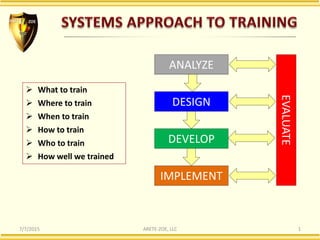
EVALUATE
ANALYZE
DESIGN
DEVELOP
IMPLEMENT
 What to train
 Where to train
 When to train
 How to train
 Who to train
 How well we trained
Input
Process
Evaluation data
Changed situation
Different needs
Changed requirements
Reorganization
Output
Roles &
Responsibilities
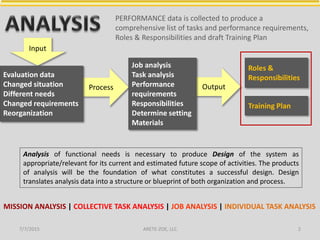
Analysis of functional needs is necessary to produce Design of the system as
appropriate/relevant for its current and estimated future scope of activities. The products
of analysis will be the foundation of what constitutes a successful design. Design
translates analysis data into a structure or blueprint of both organization and process.
PERFORMANCE data is collected to produce a
comprehensive list of tasks and performance requirements,
Roles & Responsibilities and draft Training Plan
7/7/2015 ARETE-ZOE, LLC 2
Job analysis
Task analysis
Performance
requirements
Responsibilities
Determine setting
Materials
Training Plan
MISSION ANALYSIS | COLLECTIVE TASK ANALYSIS | JOB ANALYSIS | INDIVIDUAL TASK ANALYSIS
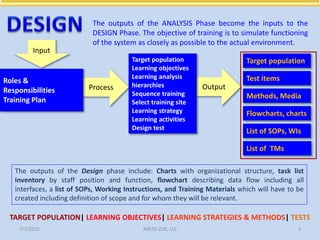
The outputs of the ANALYSIS Phase become the inputs to the
DESIGN Phase. The objective of training is to simulate functioning
of the system as closely as possible to the actual environment.
Input
Process Output
Roles &
Responsibilities
Training Plan
Target population
Learning objectives
Learning analysis
hierarchies
Sequence training
Select training site
Learning strategy
Learning activities
Design test
Target population
The outputs of the Design phase include: Charts with organizational structure, task list
inventory by staff position and function, flowchart describing data flow including all
interfaces, a list of SOPs, Working Instructions, and Training Materials which will have to be
created including definition of scope and for whom they will be relevant.
7/7/2015 ARETE-ZOE, LLC 3
TARGET POPULATION| LEARNING OBJECTIVES| LEARNING STRATEGIES & METHODS| TESTS
Test items
Methods, Media
Flowcharts, charts
List of SOPs, WIs
List of TMs
Input
Process
Target Population
Description
TEST items
Methods & Media
Charts, flowcharts
List of SOPs and WIs,
Training materials list
Output
System
Master
File
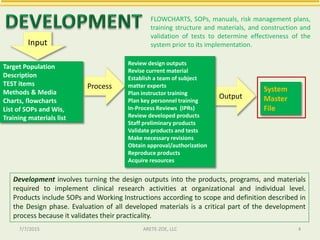
Development involves turning the design outputs into the products, programs, and materials
required to implement clinical research activities at organizational and individual level.
Products include SOPs and Working Instructions according to scope and definition described in
the Design phase. Evaluation of all developed materials is a critical part of the development
process because it validates their practicality.
FLOWCHARTS, SOPs, manuals, risk management plans,
training structure and materials, and construction and
validation of tests to determine effectiveness of the
system prior to its implementation.
7/7/2015 ARETE-ZOE, LLC 4
Review design outputs
Revise current material
Establish a team of subject
matter experts
Plan instructor training
Plan key personnel training
In-Process Reviews (IPRs)
Review developed products
Staff preliminary products
Validate products and tests
Make necessary revisions
Obtain approval/authorization
Reproduce products
Acquire resources
Input
Process
System
Master
File
Output
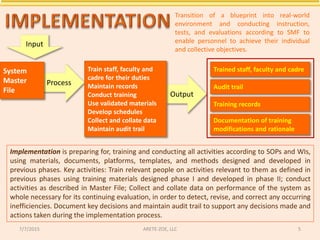
Trained staff, faculty and cadre
Implementation is preparing for, training and conducting all activities according to SOPs and WIs,
using materials, documents, platforms, templates, and methods designed and developed in
previous phases. Key activities: Train relevant people on activities relevant to them as defined in
previous phases using training materials designed phase I and developed in phase II; conduct
activities as described in Master File; Collect and collate data on performance of the system as
whole necessary for its continuing evaluation, in order to detect, revise, and correct any occurring
inefficiencies. Document key decisions and maintain audit trail to support any decisions made and
actions taken during the implementation process.
Transition of a blueprint into real-world
environment and conducting instruction,
tests, and evaluations according to SMF to
enable personnel to achieve their individual
and collective objectives.
7/7/2015 ARETE-ZOE, LLC 5
Train staff, faculty and
cadre for their duties
Maintain records
Conduct training
Use validated materials
Develop schedules
Collect and collate data
Maintain audit trail
Training records
Documentation of training
modifications and rationale
Audit trail
Input
Process
Test Data
Data collected
on performance
of the system
Output
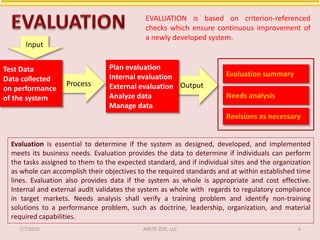
Evaluation summary
Evaluation is essential to determine if the system as designed, developed, and implemented
meets its business needs. Evaluation provides the data to determine if individuals can perform
the tasks assigned to them to the expected standard, and if individual sites and the organization
as whole can accomplish their objectives to the required standards and at within established time
lines. Evaluation also provides data if the system as whole is appropriate and cost effective.
Internal and external audit validates the system as whole with regards to regulatory compliance
in target markets. Needs analysis shall verify a training problem and identify non-training
solutions to a performance problem, such as doctrine, leadership, organization, and material
required capabilities.
EVALUATION is based on criterion-referenced
checks which ensure continuous improvement of
a newly developed system.
7/7/2015 ARETE-ZOE, LLC 6
Plan evaluation
Internal evaluation
External evaluation
Analyze data
Manage data
Revisions as necessary
Needs analysis

Systems Approach to Training

  • 1.
    7/7/2015 ARETE-ZOE, LLC1 EVALUATE ANALYZE DESIGN DEVELOP IMPLEMENT  What to train  Where to train  When to train  How to train  Who to train  How well we trained
  • 2.
    Input Process Evaluation data Changed situation Differentneeds Changed requirements Reorganization Output Roles & Responsibilities Analysis of functional needs is necessary to produce Design of the system as appropriate/relevant for its current and estimated future scope of activities. The products of analysis will be the foundation of what constitutes a successful design. Design translates analysis data into a structure or blueprint of both organization and process. PERFORMANCE data is collected to produce a comprehensive list of tasks and performance requirements, Roles & Responsibilities and draft Training Plan 7/7/2015 ARETE-ZOE, LLC 2 Job analysis Task analysis Performance requirements Responsibilities Determine setting Materials Training Plan MISSION ANALYSIS | COLLECTIVE TASK ANALYSIS | JOB ANALYSIS | INDIVIDUAL TASK ANALYSIS
  • 3.
    The outputs ofthe ANALYSIS Phase become the inputs to the DESIGN Phase. The objective of training is to simulate functioning of the system as closely as possible to the actual environment. Input Process Output Roles & Responsibilities Training Plan Target population Learning objectives Learning analysis hierarchies Sequence training Select training site Learning strategy Learning activities Design test Target population The outputs of the Design phase include: Charts with organizational structure, task list inventory by staff position and function, flowchart describing data flow including all interfaces, a list of SOPs, Working Instructions, and Training Materials which will have to be created including definition of scope and for whom they will be relevant. 7/7/2015 ARETE-ZOE, LLC 3 TARGET POPULATION| LEARNING OBJECTIVES| LEARNING STRATEGIES & METHODS| TESTS Test items Methods, Media Flowcharts, charts List of SOPs, WIs List of TMs
  • 4.
    Input Process Target Population Description TEST items Methods& Media Charts, flowcharts List of SOPs and WIs, Training materials list Output System Master File Development involves turning the design outputs into the products, programs, and materials required to implement clinical research activities at organizational and individual level. Products include SOPs and Working Instructions according to scope and definition described in the Design phase. Evaluation of all developed materials is a critical part of the development process because it validates their practicality. FLOWCHARTS, SOPs, manuals, risk management plans, training structure and materials, and construction and validation of tests to determine effectiveness of the system prior to its implementation. 7/7/2015 ARETE-ZOE, LLC 4 Review design outputs Revise current material Establish a team of subject matter experts Plan instructor training Plan key personnel training In-Process Reviews (IPRs) Review developed products Staff preliminary products Validate products and tests Make necessary revisions Obtain approval/authorization Reproduce products Acquire resources
  • 5.
    Input Process System Master File Output Trained staff, facultyand cadre Implementation is preparing for, training and conducting all activities according to SOPs and WIs, using materials, documents, platforms, templates, and methods designed and developed in previous phases. Key activities: Train relevant people on activities relevant to them as defined in previous phases using training materials designed phase I and developed in phase II; conduct activities as described in Master File; Collect and collate data on performance of the system as whole necessary for its continuing evaluation, in order to detect, revise, and correct any occurring inefficiencies. Document key decisions and maintain audit trail to support any decisions made and actions taken during the implementation process. Transition of a blueprint into real-world environment and conducting instruction, tests, and evaluations according to SMF to enable personnel to achieve their individual and collective objectives. 7/7/2015 ARETE-ZOE, LLC 5 Train staff, faculty and cadre for their duties Maintain records Conduct training Use validated materials Develop schedules Collect and collate data Maintain audit trail Training records Documentation of training modifications and rationale Audit trail
  • 6.
    Input Process Test Data Data collected onperformance of the system Output Evaluation summary Evaluation is essential to determine if the system as designed, developed, and implemented meets its business needs. Evaluation provides the data to determine if individuals can perform the tasks assigned to them to the expected standard, and if individual sites and the organization as whole can accomplish their objectives to the required standards and at within established time lines. Evaluation also provides data if the system as whole is appropriate and cost effective. Internal and external audit validates the system as whole with regards to regulatory compliance in target markets. Needs analysis shall verify a training problem and identify non-training solutions to a performance problem, such as doctrine, leadership, organization, and material required capabilities. EVALUATION is based on criterion-referenced checks which ensure continuous improvement of a newly developed system. 7/7/2015 ARETE-ZOE, LLC 6 Plan evaluation Internal evaluation External evaluation Analyze data Manage data Revisions as necessary Needs analysis