Descriptive Statistics
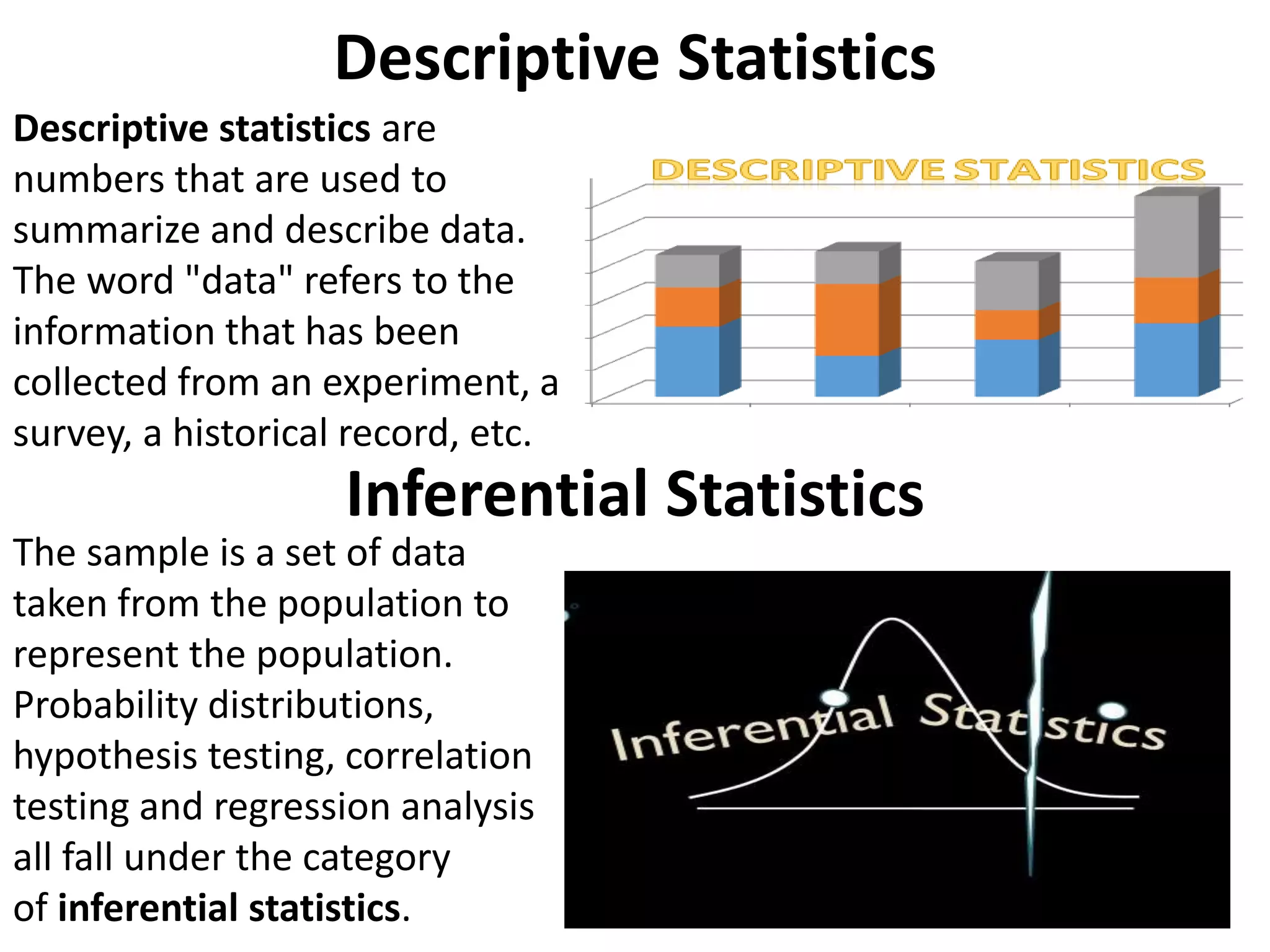
Descriptive statistics are
numbers that are used to
summarize and describe data.
The word "data" refers to the
information that has been
collected from an experiment, a
survey, a historical record, etc.
Inferential Statistics
The sample is a set of data
taken from the population to
represent the population.
Probability distributions,
hypothesis testing, correlation
testing and regression analysis
all fall under the category
of inferential statistics.
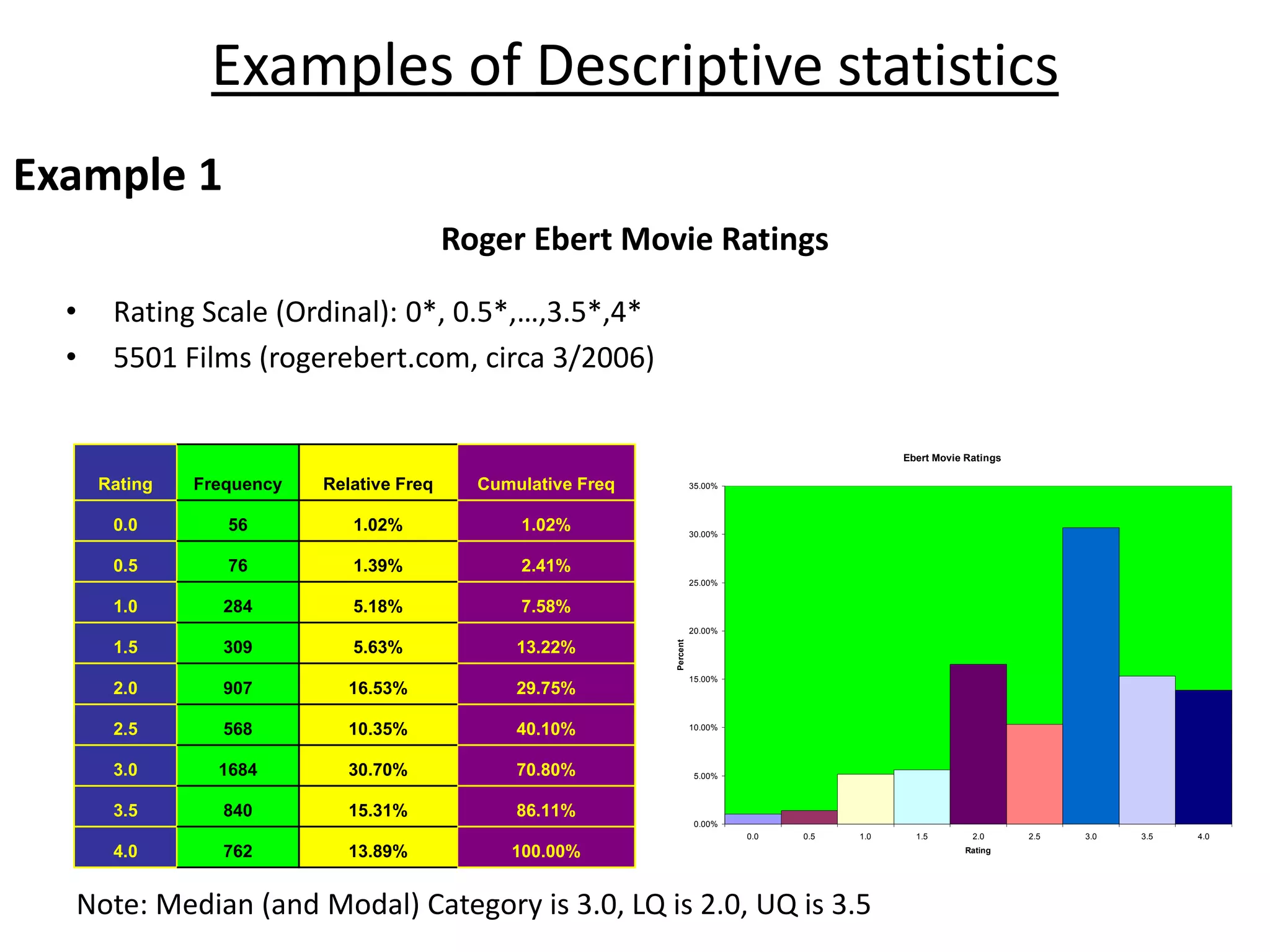
Roger Ebert Movie Ratings
• Rating Scale (Ordinal): 0*, 0.5*,…,3.5*,4*
• 5501 Films (rogerebert.com, circa 3/2006)
Rating Frequency Relative Freq Cumulative Freq
0.0 56 1.02% 1.02%
0.5 76 1.39% 2.41%
1.0 284 5.18% 7.58%
1.5 309 5.63% 13.22%
2.0 907 16.53% 29.75%
2.5 568 10.35% 40.10%
3.0 1684 30.70% 70.80%
3.5 840 15.31% 86.11%
4.0 762 13.89% 100.00%
Ebert Movie Ratings
0.00%
5.00%
10.00%
15.00%
20.00%
25.00%
30.00%
35.00%
0.0 0.5 1.0 1.5 2.0 2.5 3.0 3.5 4.0
Rating
Percent
Note: Median (and Modal) Category is 3.0, LQ is 2.0, UQ is 3.5
Examples of Descriptive statistics
Example 1
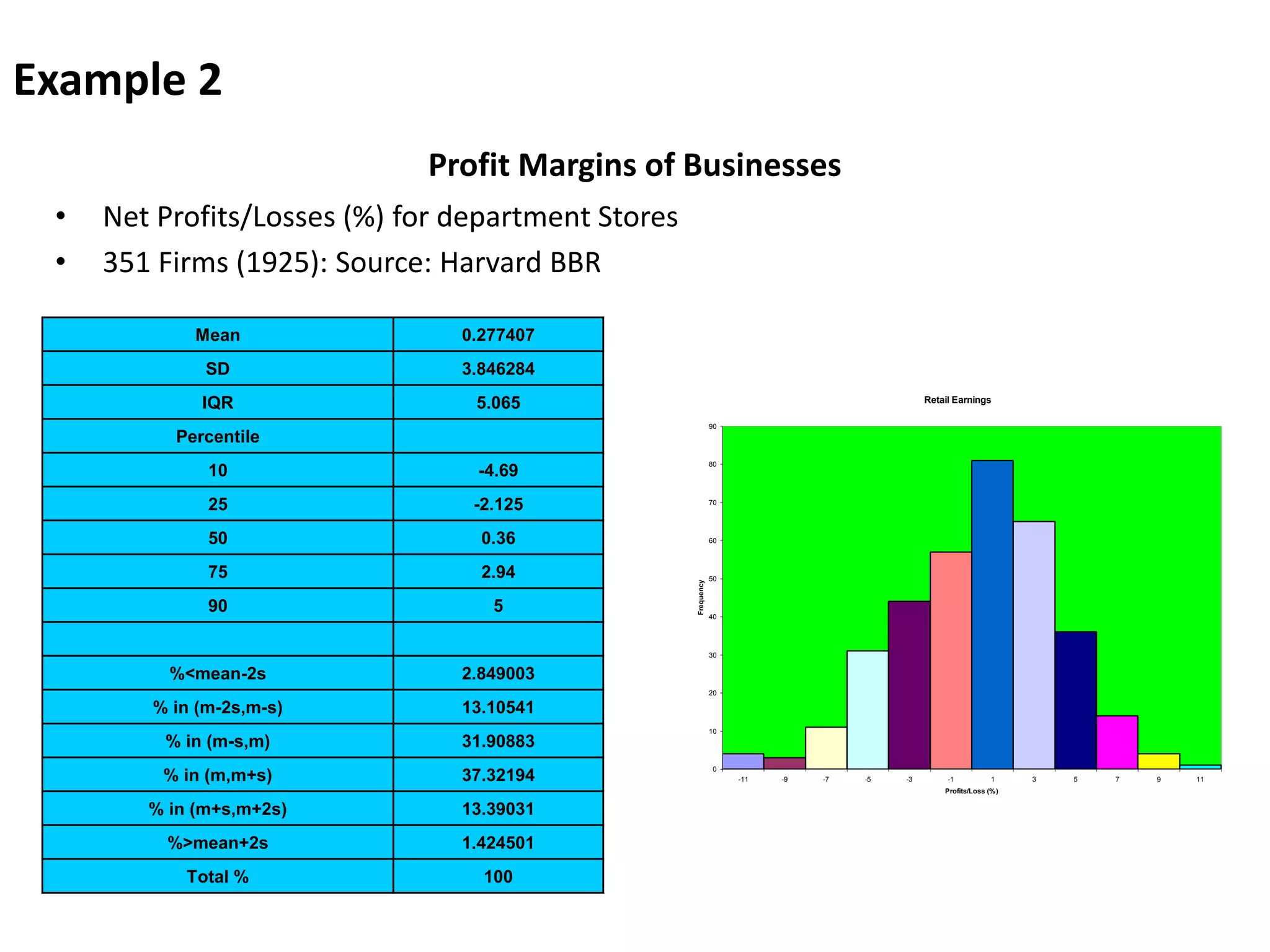
Profit Margins of Businesses
• Net Profits/Losses (%) for department Stores
• 351 Firms (1925): Source: Harvard BBR
Retail Earnings
0
10
20
30
40
50
60
70
80
90
-11 -9 -7 -5 -3 -1 1 3 5 7 9 11
Profits/Loss (%)
Frequency
Mean 0.277407
SD 3.846284
IQR 5.065
Percentile
10 -4.69
25 -2.125
50 0.36
75 2.94
90 5
%<mean-2s 2.849003
% in (m-2s,m-s) 13.10541
% in (m-s,m) 31.90883
% in (m,m+s) 37.32194
% in (m+s,m+2s) 13.39031
%>mean+2s 1.424501
Total % 100
Example 2
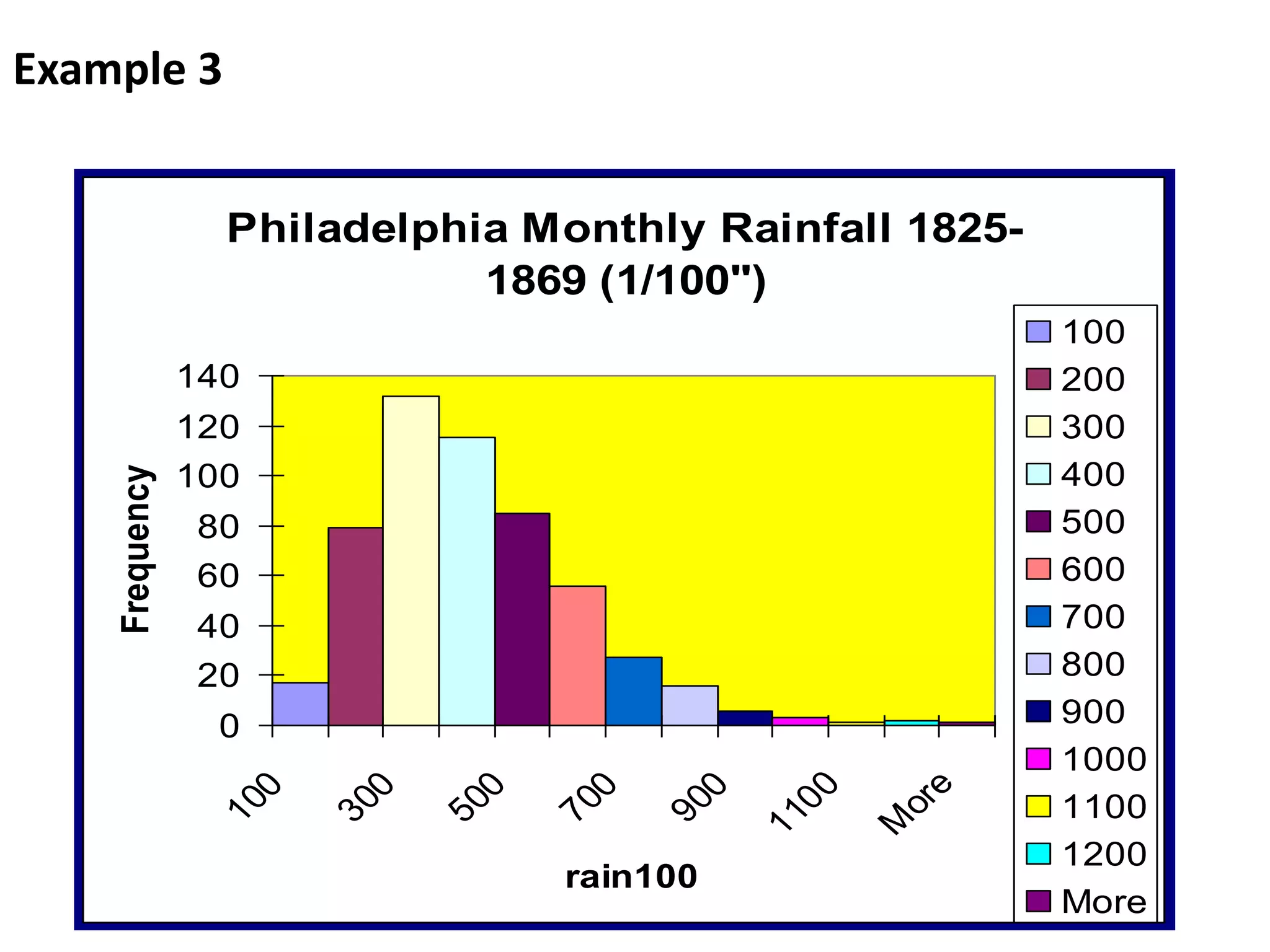
Philadelphia Monthly Rainfall 1825-
1869 (1/100")
0
20
40
60
80
100
120
140
100
300
500
700
900
1100
M
ore
rain100
Frequency
100
200
300
400
500
600
700
800
900
1000
1100
1200
More
Example 3

Descriptive statistics and Inferential Statistics

  • 1.
    Descriptive Statistics Descriptive statisticsare numbers that are used to summarize and describe data. The word "data" refers to the information that has been collected from an experiment, a survey, a historical record, etc. Inferential Statistics The sample is a set of data taken from the population to represent the population. Probability distributions, hypothesis testing, correlation testing and regression analysis all fall under the category of inferential statistics.
  • 2.
    Roger Ebert MovieRatings • Rating Scale (Ordinal): 0*, 0.5*,…,3.5*,4* • 5501 Films (rogerebert.com, circa 3/2006) Rating Frequency Relative Freq Cumulative Freq 0.0 56 1.02% 1.02% 0.5 76 1.39% 2.41% 1.0 284 5.18% 7.58% 1.5 309 5.63% 13.22% 2.0 907 16.53% 29.75% 2.5 568 10.35% 40.10% 3.0 1684 30.70% 70.80% 3.5 840 15.31% 86.11% 4.0 762 13.89% 100.00% Ebert Movie Ratings 0.00% 5.00% 10.00% 15.00% 20.00% 25.00% 30.00% 35.00% 0.0 0.5 1.0 1.5 2.0 2.5 3.0 3.5 4.0 Rating Percent Note: Median (and Modal) Category is 3.0, LQ is 2.0, UQ is 3.5 Examples of Descriptive statistics Example 1
  • 3.
    Profit Margins ofBusinesses • Net Profits/Losses (%) for department Stores • 351 Firms (1925): Source: Harvard BBR Retail Earnings 0 10 20 30 40 50 60 70 80 90 -11 -9 -7 -5 -3 -1 1 3 5 7 9 11 Profits/Loss (%) Frequency Mean 0.277407 SD 3.846284 IQR 5.065 Percentile 10 -4.69 25 -2.125 50 0.36 75 2.94 90 5 %<mean-2s 2.849003 % in (m-2s,m-s) 13.10541 % in (m-s,m) 31.90883 % in (m,m+s) 37.32194 % in (m+s,m+2s) 13.39031 %>mean+2s 1.424501 Total % 100 Example 2
  • 4.
    Philadelphia Monthly Rainfall1825- 1869 (1/100") 0 20 40 60 80 100 120 140 100 300 500 700 900 1100 M ore rain100 Frequency 100 200 300 400 500 600 700 800 900 1000 1100 1200 More Example 3