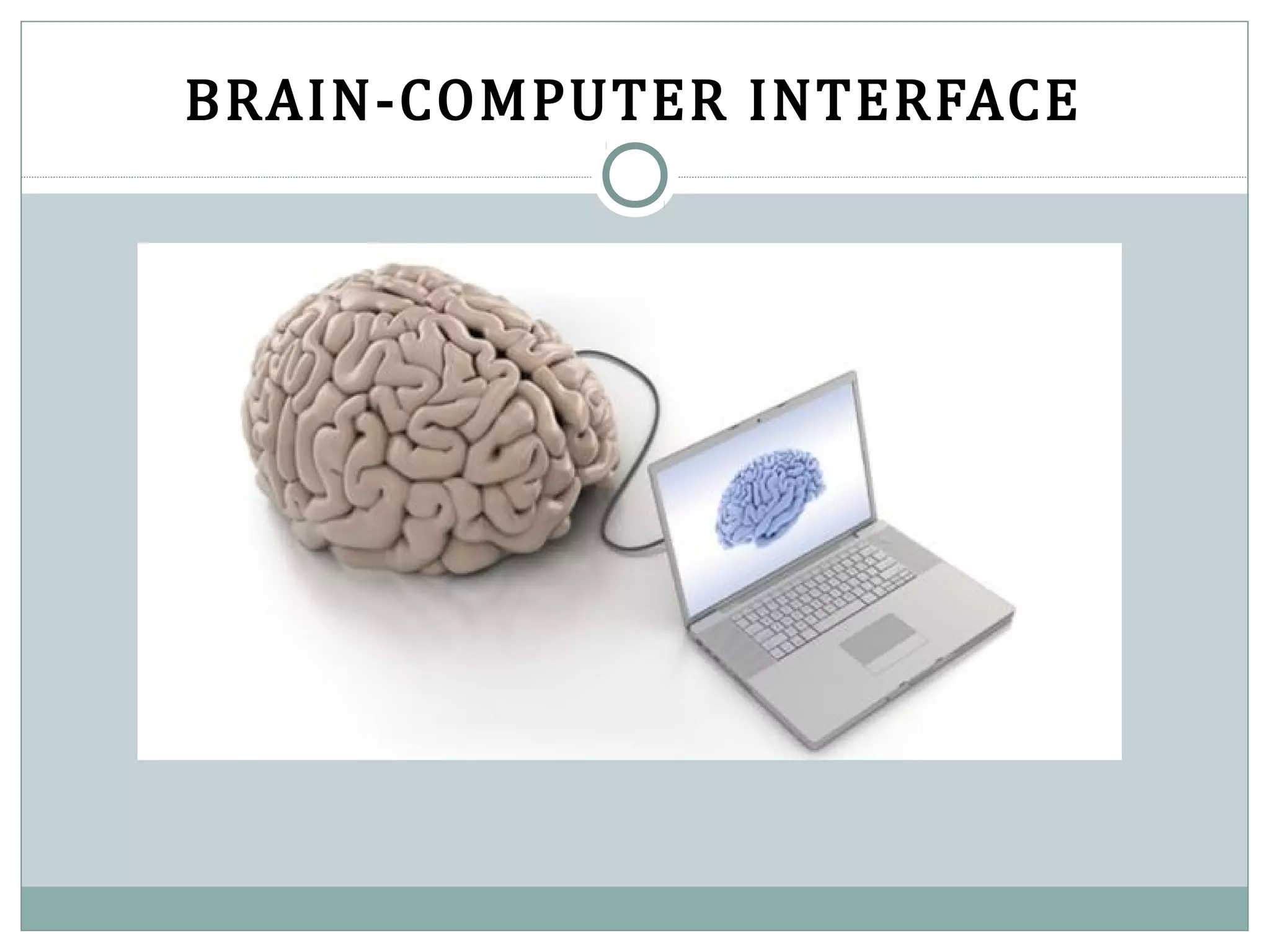
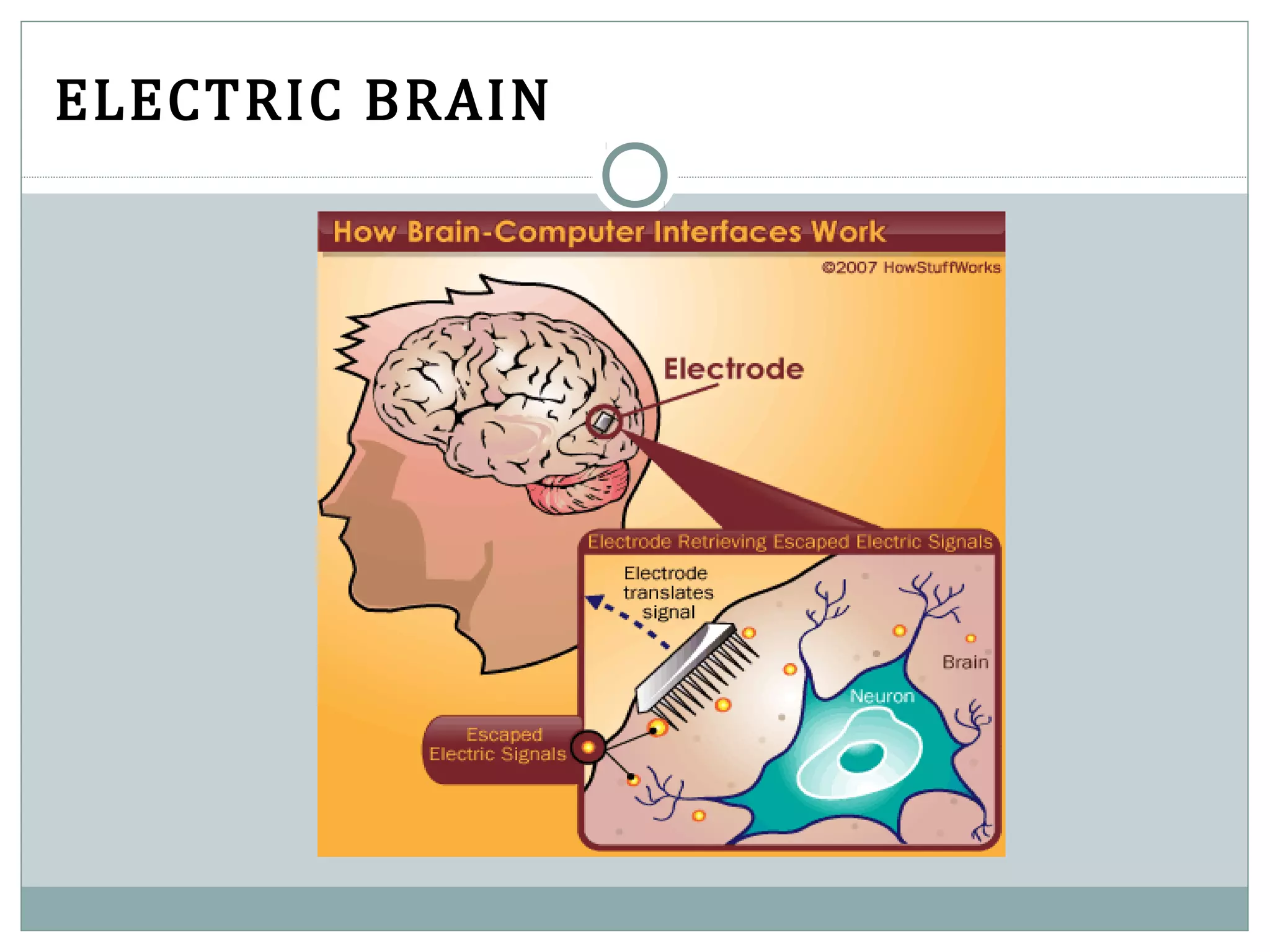
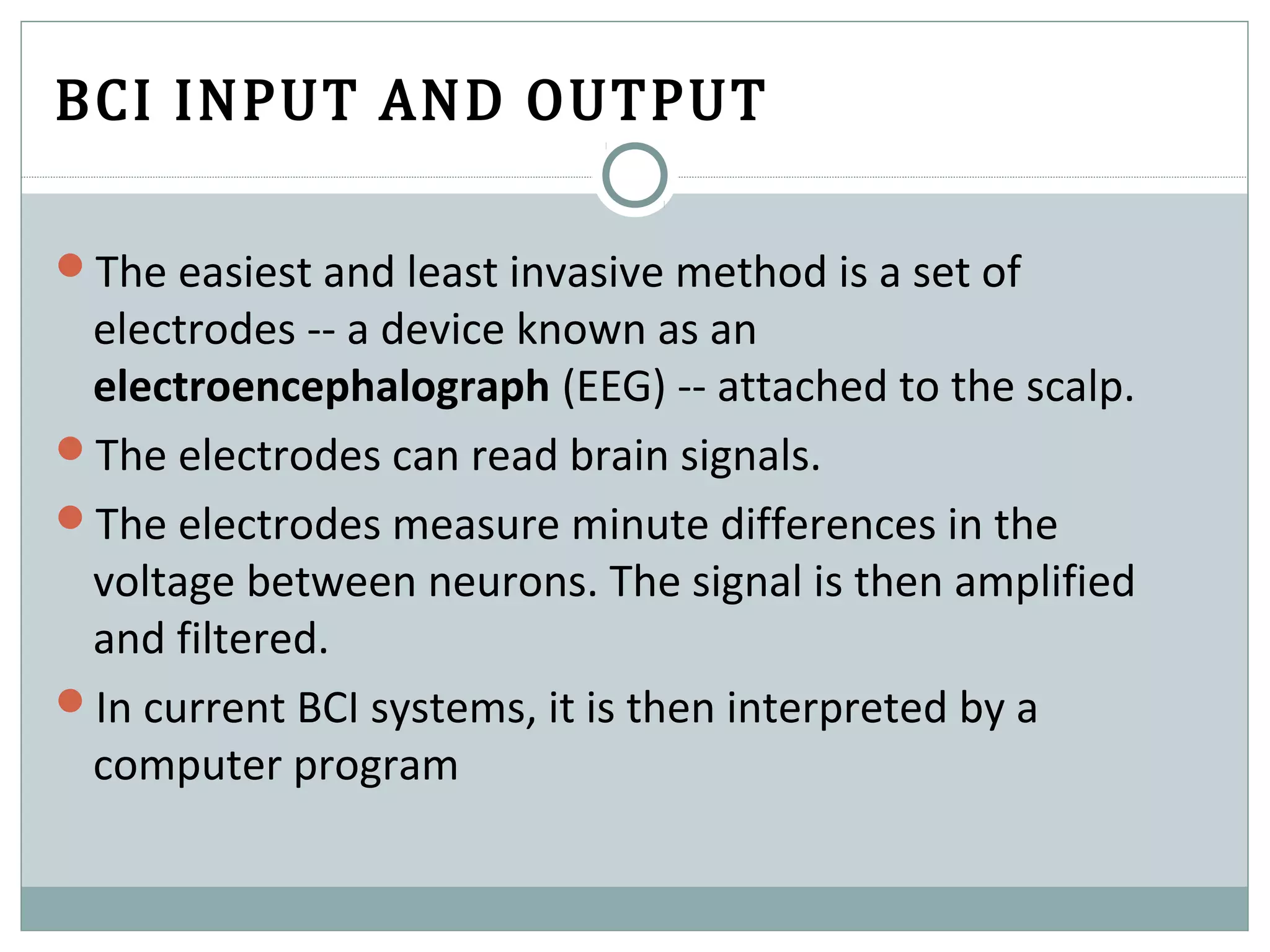
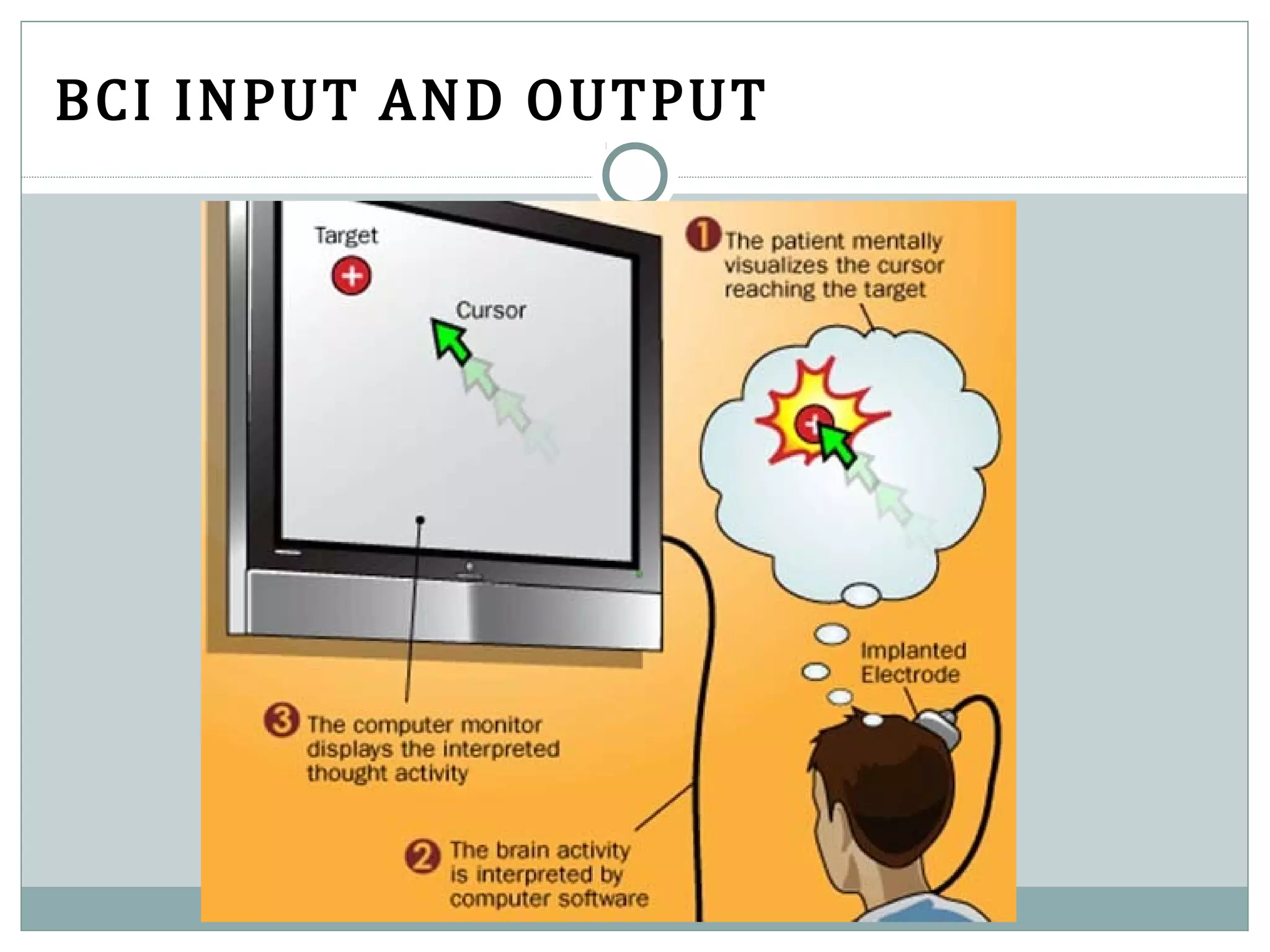
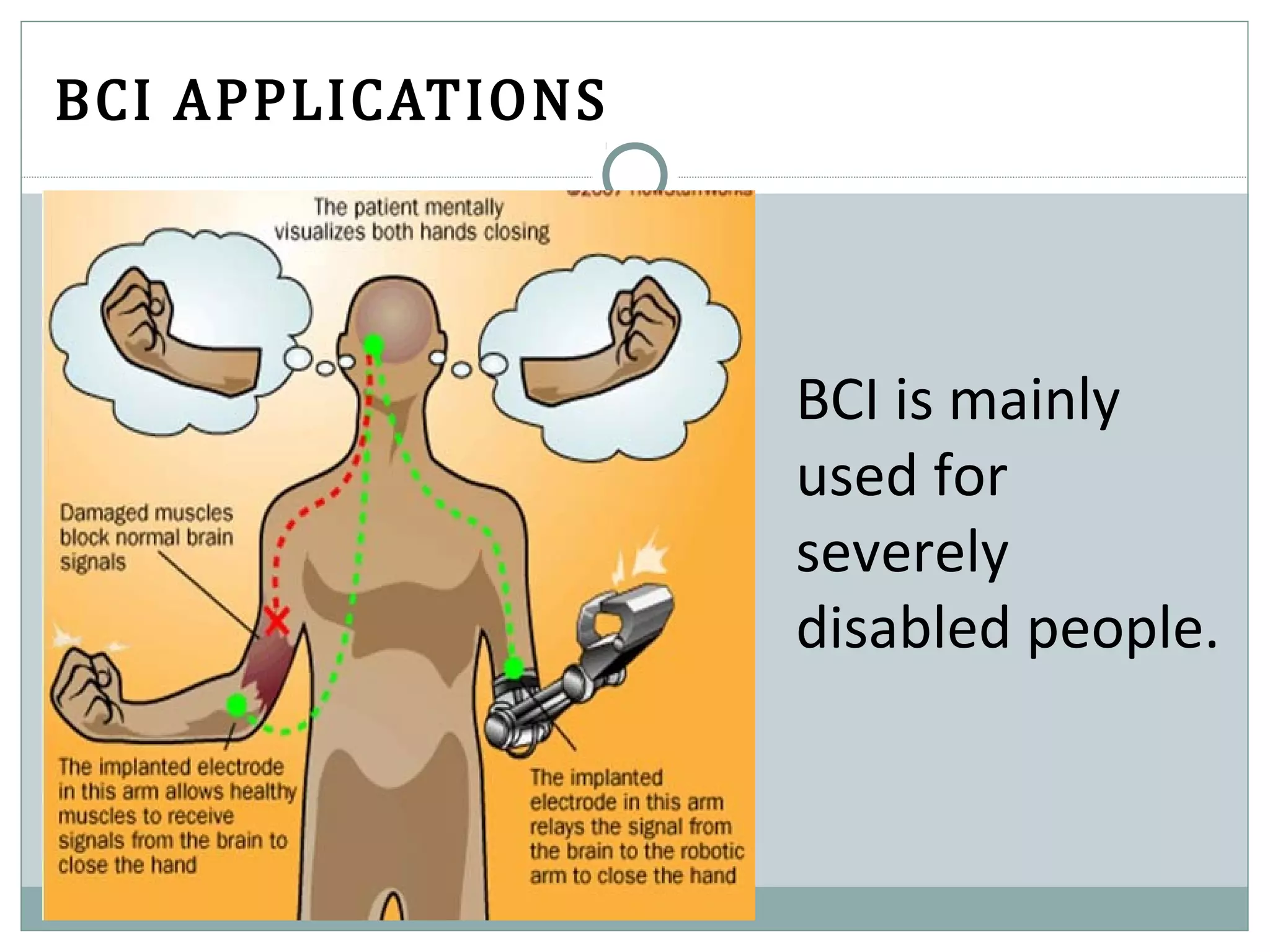
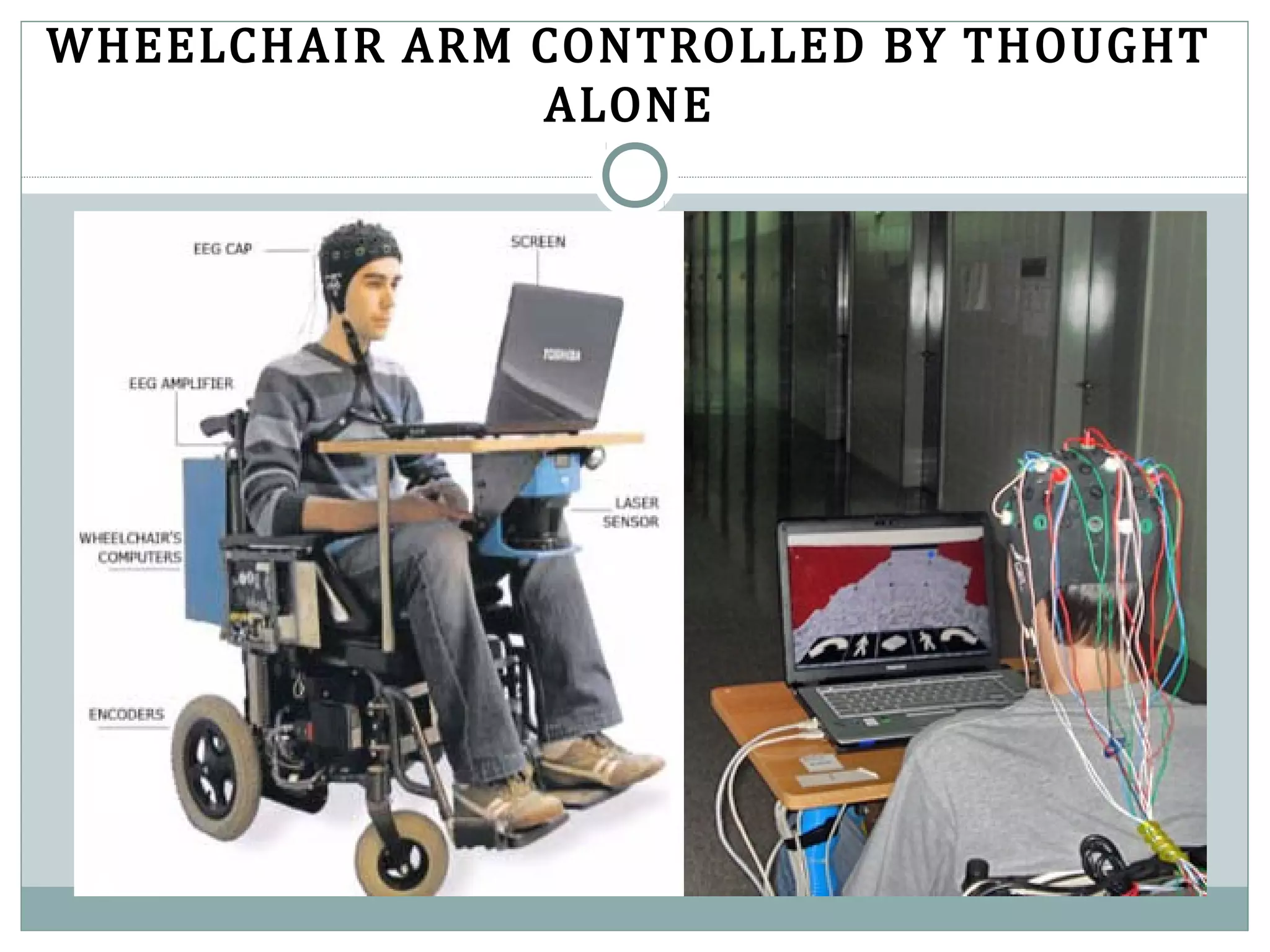
This document discusses brain-computer interfaces (BCI), which allow direct communication between the brain and external devices. It describes different types of BCI, from invasive to implanted in the brain to non-invasive using scalp electrodes. BCI works by reading electric signals in the brain produced during thinking and movement. Current applications include helping disabled people control devices, but BCI may one day be integrated into consumer electronics through thought recognition software.