Downloaded 1,048 times































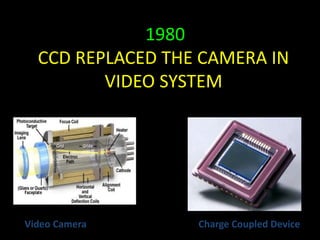
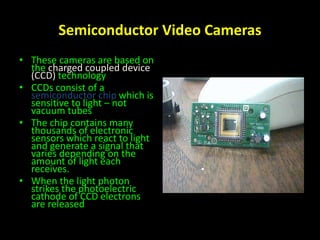



![Horizontal Resolution
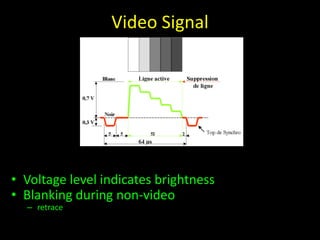
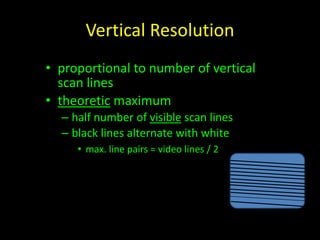
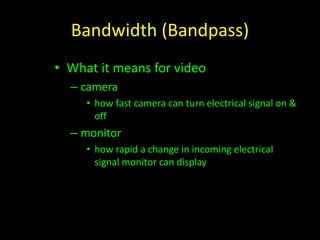
Bandwidth = [Horizontal Resolution] X [Video Lines] X [Frame Rate]
cycles
------------
scan line
lines
---------
frame
frames
---------
sec
cycles
----------
sec
= X X
Bandwidth
[Horizontal Resolution] = -------------------------------------------
[Video Lines] X [Frame Rate]
Frequency of
video signal
525 30
$$$$](https://image.slidesharecdn.com/fluroscopyca-141003084517-phpapp01/85/Fluroscopy-132-320.jpg)










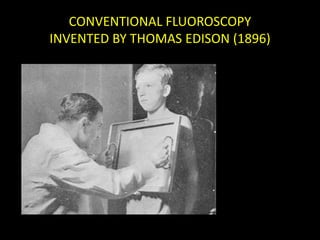
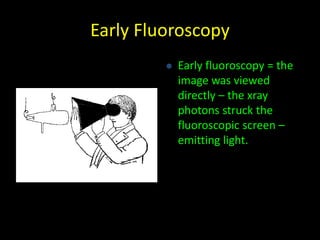
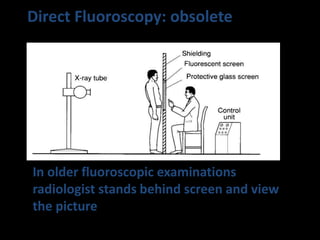
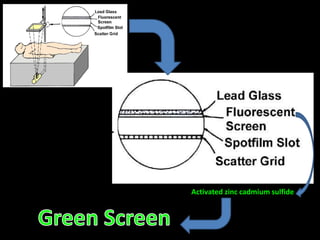
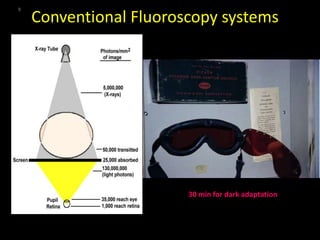
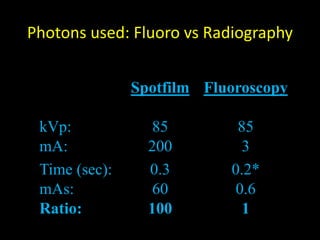
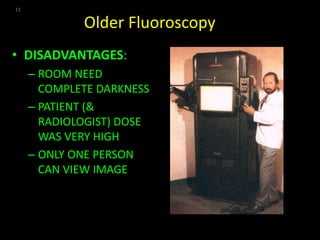
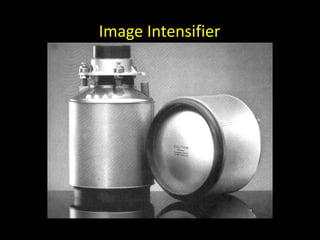
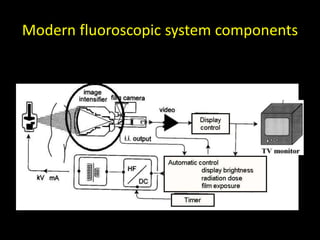
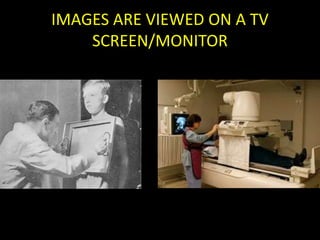
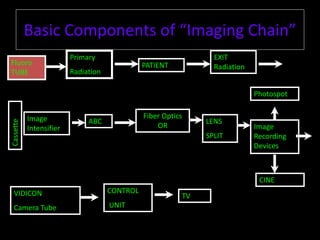
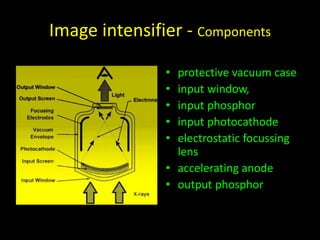
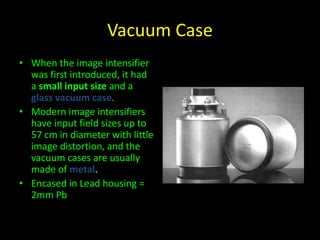
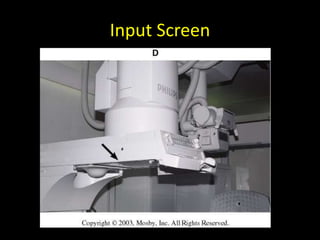
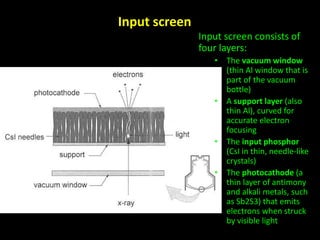
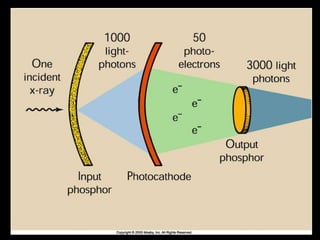
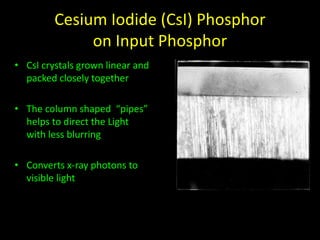
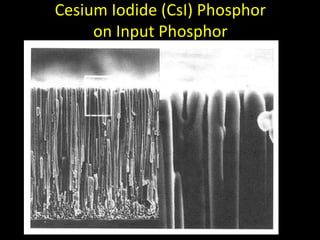
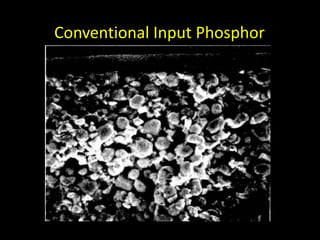
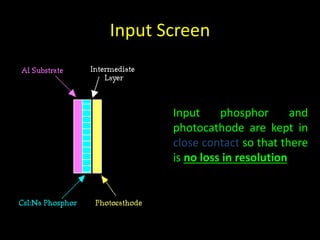
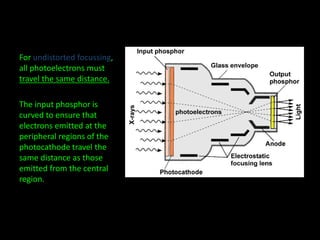
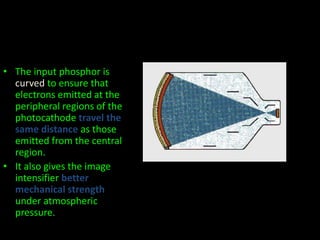
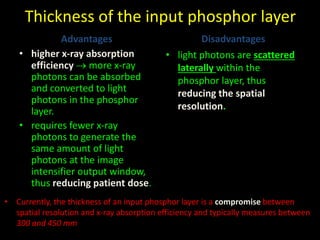
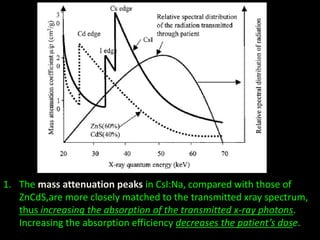
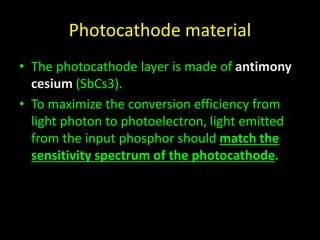
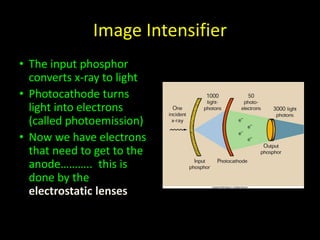
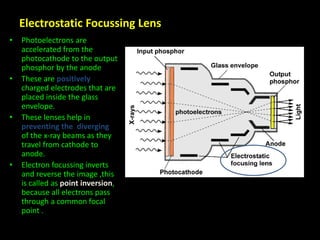
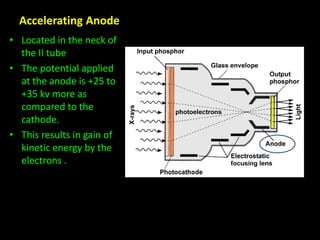
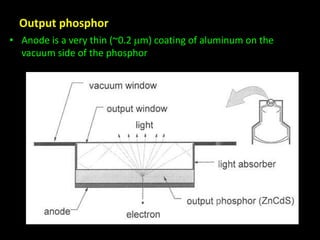
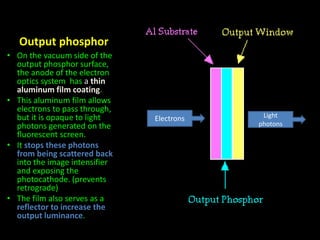
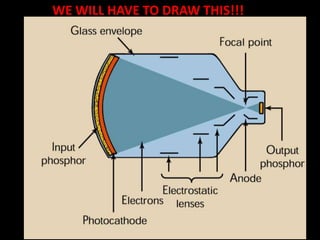
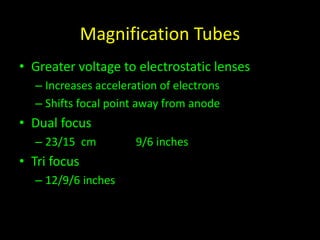
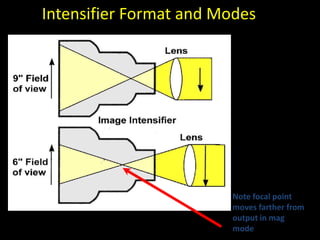
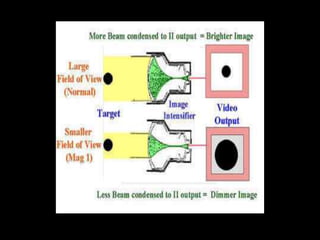
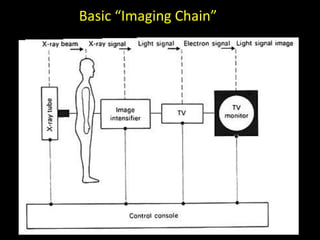
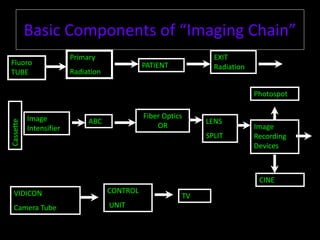
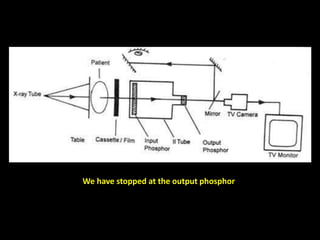
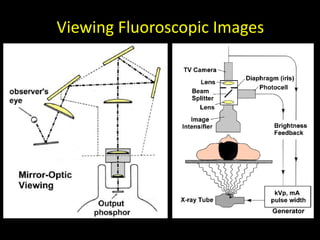
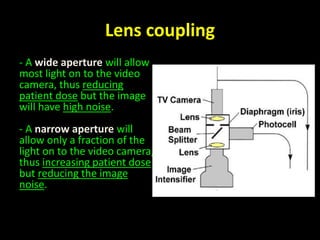
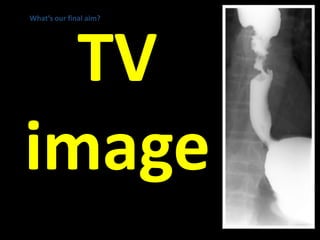
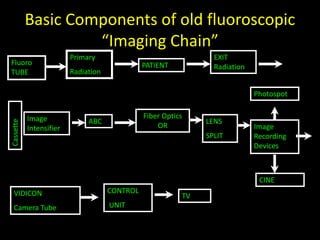
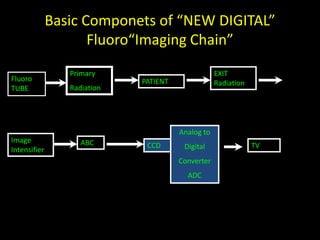
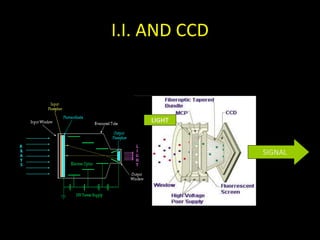
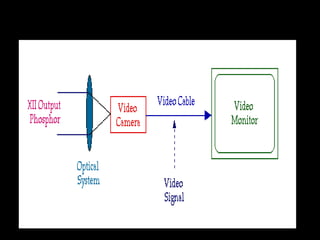
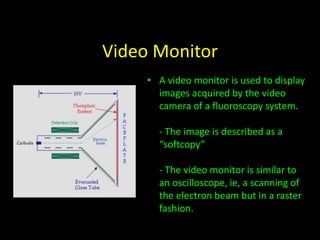
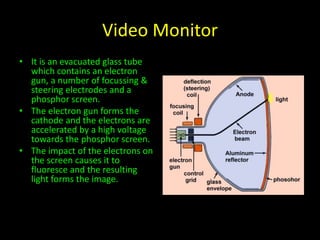
The document discusses the history and components of fluoroscopy systems. Early fluoroscopy required complete darkness as it relied on rod vision, exposing patients and radiologists to high radiation. Modern systems use an image intensifier to amplify images 500-8000x, allowing viewing on a TV screen using cone vision with less radiation exposure. The image intensifier converts x-rays to light through an input phosphor, then light to electrons via a photocathode. Electrostatic lenses accelerate electrons onto an output phosphor, reconverting them to brighter light for display. Cesium iodide replaced earlier phosphors for better x-ray absorption and resolution.


