M U H A M M A D H A M Z A
R I Z W A N A B B A S
BT Cotton
Contents:
 Introduction
 Mechanism
 Pros
 Cons
 Future Perspectives.
M U H A M M A D H A M Z A
Introduction to BT Cotton
History:
 1901:
Shigetane Ishiwatari first isolated the bacterium Bacillus thuringiensis as the
cause of the sotto disease.
 1915:
Berliner reported the existance of a crystal within Bt, but the activity of this
crystal was not discovered until much later.
 1956:
Researchers Hannay, Fitz-James and Angus found that the main insecticidal
activity against moth insects was due to the crystal.
 1958:
In the US, Bt was used commercially.
 1961:
Bt was registered as a pesticide.
 1996:
Bt cotton was introduced into US agriculture.
Basics:
 BT Cotton is the genetically modified organism
cotton variety.
 This produces insecticides against bollworm,
 Bt Cotton is world wide excessively produced by
Monsanto.
 Bt toxins are insecticidal to the larvae of moths
and butterflies, beetles, cotton
bollworms and flies but are harmless to other
forms of life.
What is Bt?
 Bt stands for Bacillus thuringiensis discovered by
Ishiwatari in 1901.
 The bacterium produces an insecticidal crystal
protien (ICP).
 The protein is called as Cry Protein.
 This belongs to the endotoxin class.
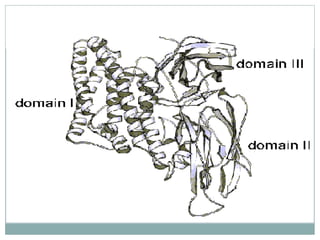
Structure of Cry Protein.
Domain I Has 7 alpha helixes
It helps in membrane insertion.
Domain II Beta Prism of 3 antiparallel B-Sheets .
Helps in recognition of receptor.
Domain III Beta Sandwich of Antiparallel B-Sheets.
R I Z W A N A B B A S
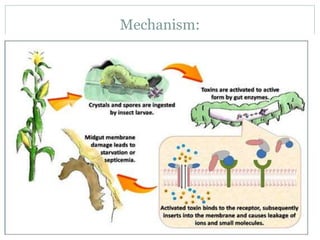
Mechanism:
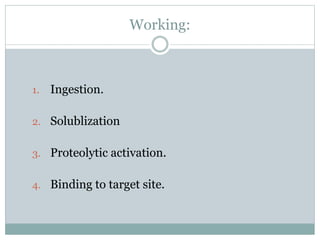
Working:
1. Ingestion.
2. Solublization
3. Proteolytic activation.
4. Binding to target site.
Mechanism:
Methods Of Gene Transfer:
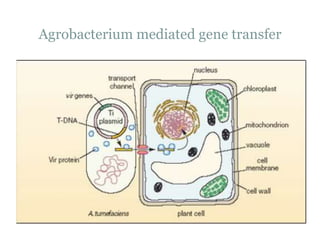
• Agrobacterium mediated gene transfer.
• Particle Gun method.
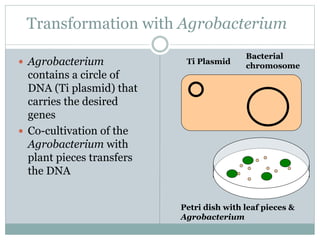
Transformation with Agrobacterium
 Agrobacterium
contains a circle of
DNA (Ti plasmid) that
carries the desired
genes
 Co-cultivation of the
Agrobacterium with
plant pieces transfers
the DNA
Bacterial
chromosome
Ti Plasmid
Petri dish with leaf pieces &
Agrobacterium
Agrobacterium mediated gene transfer
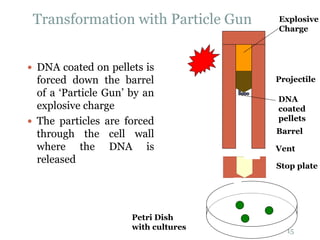
Transformation with Particle Gun
 DNA coated on pellets is
forced down the barrel
of a ‘Particle Gun’ by an
explosive charge
 The particles are forced
through the cell wall
where the DNA is
released
15
Barrel
Explosive
Charge
Vent
Stop plate
Petri Dish
with cultures
Projectile
DNA
coated
pellets
Pros Of Bt cotton
Why we need bt cotton.
 Insect pests causes significant yield losses.
Bollworms occupy a major portion in reduction.
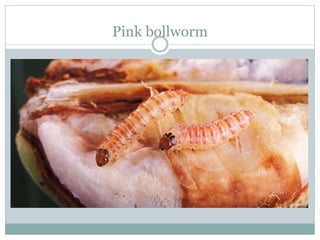
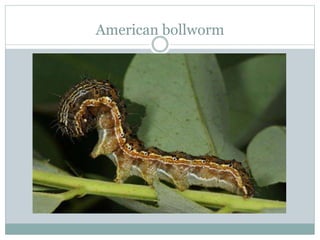
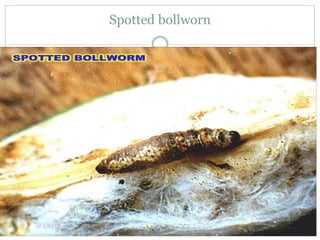
Three type of bollworms.
1. Helicoverpa armigra.
2. Pictinophora gossypiella.
3. Earias vitella
To overcome these consequences we used bt cotton
Pink bollworm
American bollworm
Spotted bollworn
Toxic against bollworms
 Increases yield of cotton due to effective control of
three types of bollworms, viz. American, Spotted and
Pink bollworms.
 Insects belonged to Lepidoptera (Bollworms) are
sensitive to crystalline endotoxic protein produced
by Bt gene which in turn protects cotton from
bollworms.
Environmentally safe
 Bt-modified crops appear to be environmentally
safe. The proteins produced by Bt have no ill effects
on the environment reported.
 The toxicity of each Bt type is limited to one or two
insect orders; it is nontoxic to vertebrates and many
beneficial arthropods, because Bt works by binding
to the appropriate receptor on the surface of midgut
epithelial cells. Any organism that lacks the
appropriate receptors in its gut cannot be affected by
Bt.
 Reduction in environmental pollution by the use of
insecticides rarely
 Bt cotton is ecofriendly and does not have adverse
effect on parasites, predators, beneficial insecticides
and organisms present in soil.
 It promotes multiplication of parasites and predators
which help in controlling the bollworms by feeding
on larvae and eggs of bollworm.
Continue ..
 No health hazards due to rare use of insecticides
 Reduce energy use , less energy is used in
manufacturing , transportation .
 Non toxic to non targeted species.
Potential to improve water quality
 Potential to reduce pesticides runoff
 Potential to reduce concentration of pesticides in
ground and surface water.
Cons Of Bt Cotton:
Disadvantages of Bt-Cotton.
Several advantages with some limitations as well
 High cost of Bt cotton seeds makes not afforded by
small and marginal farmers
 Effectiveness up to 120 days
 Adverse effect on insecticide manufacturing
companies
 Unemployment
 Ineffective against sucking pests like aphids,
whitefly, etc
 Promotes malpractices
Disadvantages of Bt-Cotton.
1-Cross Contamination
Pollens from GMO plants they cross pollinate with
grasses and weeds. This could develop “superweeds”
that have the same resistance properties as the crops.
2-Allergies On The Rise
The amount of childhood food allergies has risen
significantly. The exact link to GMO has not yet been
found, but many believe this is due to insufficient
research in the area.
Disadvantages of Bt-Cotton.
3-Less Effective Antibiotics:
The crops that have been genetically modified have
antibiotic properties put into them in order to make
them immune to certain diseases. When you eat these
foods these properties are left in your body and can
make many antibiotics less effective.
……
4-Not Enough Testing:
There has been very little testing and research done on
genetically modified foods and the long term effects
have not been discovered yet. This makes many people
feel uneasy at the high use of these foods.
Stats and Future Perspectives
Bt cotton in Pakistan
• Pakistan is the 2nd largest cotton producer and
consumer country after India.
• In 2004 Bt cotton was introduced in Pakistan.
• Pakistan has the largest hectarage of cotton and
accounts for approximately one third of the total
cotton are planted in the world.
• For 11th year Bt cotton was planted in Pakistan in
10.8 hectares .
• Decline in insecticide use was from US$160 million
in 2004 to US$25 million in 2010 – an 85%
decrease
• Cotton yield increased from 308kg/ha in 2001-02
to 500kg/ha in 2011-12.
Future prospects of Bt cotton:
• 5 new hybrid cottons are under biosafety
assessment which will be considered for
commercial approval between 2014-16.
• Other traits include drought and salinity tolerance,
disease resistance, insect resistance, leaf curl virus
resistance and other traits related to cotton fiber
quality.

Bt cotton

  • 1.
    M U HA M M A D H A M Z A R I Z W A N A B B A S BT Cotton
  • 2.
    Contents:  Introduction  Mechanism Pros  Cons  Future Perspectives.
  • 3.
    M U HA M M A D H A M Z A Introduction to BT Cotton
  • 4.
    History:  1901: Shigetane Ishiwatarifirst isolated the bacterium Bacillus thuringiensis as the cause of the sotto disease.  1915: Berliner reported the existance of a crystal within Bt, but the activity of this crystal was not discovered until much later.  1956: Researchers Hannay, Fitz-James and Angus found that the main insecticidal activity against moth insects was due to the crystal.  1958: In the US, Bt was used commercially.  1961: Bt was registered as a pesticide.  1996: Bt cotton was introduced into US agriculture.
  • 5.
    Basics:  BT Cottonis the genetically modified organism cotton variety.  This produces insecticides against bollworm,  Bt Cotton is world wide excessively produced by Monsanto.  Bt toxins are insecticidal to the larvae of moths and butterflies, beetles, cotton bollworms and flies but are harmless to other forms of life.
  • 6.
    What is Bt? Bt stands for Bacillus thuringiensis discovered by Ishiwatari in 1901.  The bacterium produces an insecticidal crystal protien (ICP).  The protein is called as Cry Protein.  This belongs to the endotoxin class.
  • 7.
    Structure of CryProtein. Domain I Has 7 alpha helixes It helps in membrane insertion. Domain II Beta Prism of 3 antiparallel B-Sheets . Helps in recognition of receptor. Domain III Beta Sandwich of Antiparallel B-Sheets.
  • 9.
    R I ZW A N A B B A S Mechanism:
  • 10.
    Working: 1. Ingestion. 2. Solublization 3.Proteolytic activation. 4. Binding to target site.
  • 11.
  • 12.
    Methods Of GeneTransfer: • Agrobacterium mediated gene transfer. • Particle Gun method.
  • 13.
    Transformation with Agrobacterium Agrobacterium contains a circle of DNA (Ti plasmid) that carries the desired genes  Co-cultivation of the Agrobacterium with plant pieces transfers the DNA Bacterial chromosome Ti Plasmid Petri dish with leaf pieces & Agrobacterium
  • 14.
  • 15.
    Transformation with ParticleGun  DNA coated on pellets is forced down the barrel of a ‘Particle Gun’ by an explosive charge  The particles are forced through the cell wall where the DNA is released 15 Barrel Explosive Charge Vent Stop plate Petri Dish with cultures Projectile DNA coated pellets
  • 16.
    Pros Of Btcotton
  • 17.
    Why we needbt cotton.  Insect pests causes significant yield losses. Bollworms occupy a major portion in reduction. Three type of bollworms. 1. Helicoverpa armigra. 2. Pictinophora gossypiella. 3. Earias vitella To overcome these consequences we used bt cotton
  • 18.
  • 19.
  • 20.
  • 21.
    Toxic against bollworms Increases yield of cotton due to effective control of three types of bollworms, viz. American, Spotted and Pink bollworms.  Insects belonged to Lepidoptera (Bollworms) are sensitive to crystalline endotoxic protein produced by Bt gene which in turn protects cotton from bollworms.
  • 22.
    Environmentally safe  Bt-modifiedcrops appear to be environmentally safe. The proteins produced by Bt have no ill effects on the environment reported.  The toxicity of each Bt type is limited to one or two insect orders; it is nontoxic to vertebrates and many beneficial arthropods, because Bt works by binding to the appropriate receptor on the surface of midgut epithelial cells. Any organism that lacks the appropriate receptors in its gut cannot be affected by Bt.
  • 23.
     Reduction inenvironmental pollution by the use of insecticides rarely  Bt cotton is ecofriendly and does not have adverse effect on parasites, predators, beneficial insecticides and organisms present in soil.  It promotes multiplication of parasites and predators which help in controlling the bollworms by feeding on larvae and eggs of bollworm.
  • 24.
    Continue ..  Nohealth hazards due to rare use of insecticides  Reduce energy use , less energy is used in manufacturing , transportation .  Non toxic to non targeted species.
  • 25.
    Potential to improvewater quality  Potential to reduce pesticides runoff  Potential to reduce concentration of pesticides in ground and surface water.
  • 26.
    Cons Of BtCotton:
  • 27.
    Disadvantages of Bt-Cotton. Severaladvantages with some limitations as well  High cost of Bt cotton seeds makes not afforded by small and marginal farmers  Effectiveness up to 120 days  Adverse effect on insecticide manufacturing companies  Unemployment  Ineffective against sucking pests like aphids, whitefly, etc  Promotes malpractices
  • 28.
    Disadvantages of Bt-Cotton. 1-CrossContamination Pollens from GMO plants they cross pollinate with grasses and weeds. This could develop “superweeds” that have the same resistance properties as the crops. 2-Allergies On The Rise The amount of childhood food allergies has risen significantly. The exact link to GMO has not yet been found, but many believe this is due to insufficient research in the area.
  • 29.
    Disadvantages of Bt-Cotton. 3-LessEffective Antibiotics: The crops that have been genetically modified have antibiotic properties put into them in order to make them immune to certain diseases. When you eat these foods these properties are left in your body and can make many antibiotics less effective.
  • 30.
    …… 4-Not Enough Testing: Therehas been very little testing and research done on genetically modified foods and the long term effects have not been discovered yet. This makes many people feel uneasy at the high use of these foods.
  • 31.
    Stats and FuturePerspectives
  • 32.
    Bt cotton inPakistan • Pakistan is the 2nd largest cotton producer and consumer country after India. • In 2004 Bt cotton was introduced in Pakistan. • Pakistan has the largest hectarage of cotton and accounts for approximately one third of the total cotton are planted in the world.
  • 33.
    • For 11thyear Bt cotton was planted in Pakistan in 10.8 hectares . • Decline in insecticide use was from US$160 million in 2004 to US$25 million in 2010 – an 85% decrease • Cotton yield increased from 308kg/ha in 2001-02 to 500kg/ha in 2011-12.
  • 34.
    Future prospects ofBt cotton: • 5 new hybrid cottons are under biosafety assessment which will be considered for commercial approval between 2014-16. • Other traits include drought and salinity tolerance, disease resistance, insect resistance, leaf curl virus resistance and other traits related to cotton fiber quality.