


BY:
Varsha chauhan
Genetically Modified crops
 Genetic modification is modern biotechnology
techniques to manipulate the genetic material of
organisms within a species or between different
species.
 Transgenic plants are the results of modern
biotechnology.
 An organism containing a transgene introduced by
technological methods is called transgenic.
 Transgenes are the genetically engineered gene
added to a species. The process of producing
transgenic organism is called transgenesis .
 PLANT TRANSFORMATION METHODS : Transfer
of DNA via a vector: Agrobacterium Direct transfer
of DNA: gene guns electroporation microinjection
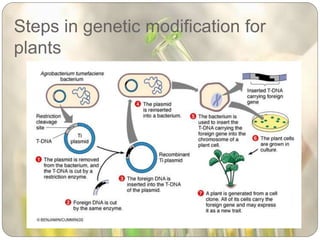
Steps in genetic modification for
plants
Golden
rice
GOLDEN RICE
 Golden rice is a variety of rice (Oryza sativa)
produced through genetic engineering with improved
nutritional quality.
 Golden rice appears golden due to presence of B-
carotene, a precursor of vitamin A in the edible
portions of rice.
 The concept of golden rice was developed by
potrykus and beyerwith the goal of helping children
and pregnant women who suffer from vitamin A
deficiency (VAD) , which was a major source for 1-2
million deaths, 500,000 cases of irreversible blindness
and millions of cases of xerophthalmia annually.
 Growing and consuming golden rice could be
an economical and effective way of overcoming these
 Golden rice was designed to produce beta-
carotene, a precursor of vitamin A, in the edible
part of rice, the endosperm.
 The rice plant can naturally produce beta-
carotene in its leaves, where it is involved
in photosynthesis. However, the plant does not
normally produce the pigment in the endosperm,
where photosynthesis does not occur
HOW DOES IT WORK?
 genetic engineering is used in order to create Golden Rice,
where the method involved is by using a common plant
bacterium which naturally inserts its genes into plant tissue
hosts.
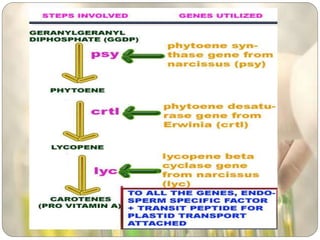
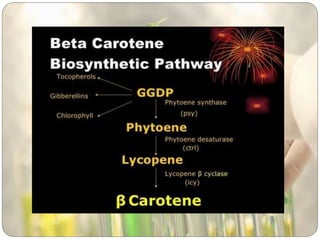
 The addition of 2 genes in the rice genome will
complete the biosynthetic pathway
1. Phytoene synthase (psy) – derived from daffodils (
Narcissus pseudonarcissus )
 Phytoene synthase is a transferase enzyme involved in the
biosynthesis of carotenoids. It catalyzes the conversion of
geranylgerany pyrophosphate to phytoene.
2. lycopene cyclase (crt1) – from soil bacteria Erwinia
uredovora
 Produces enzymes and catalysts for the biosynthesis of
carotenoids ( β -carotene) in the endosperm
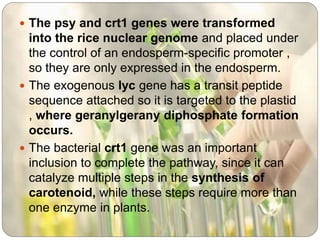
 The psy and crt1 genes were transformed
into the rice nuclear genome and placed under
the control of an endosperm-specific promoter ,
so they are only expressed in the endosperm.
 The exogenous lyc gene has a transit peptide
sequence attached so it is targeted to the plastid
, where geranylgerany diphosphate formation
occurs.
 The bacterial crt1 gene was an important
inclusion to complete the pathway, since it can
catalyze multiple steps in the synthesis of
carotenoid, while these steps require more than
one enzyme in plants.
 The end product of the engineered pathway is
lycopene , but if the plant accumulated lycopene,
the rice would be red.
 Recent analysis has shown the plant's
endogenous enzymes process the lycopene
to beta-carotene in the endosperm, giving the
rice the distinctive yellow color for which it is
named.
 The original golden rice was called SGR1, and
under greenhouse conditions it produced
1.6 µg/g of carotenoids.
DISADVANTA
GE
 Health
 May cause allergies or fail to perform desired effect
 Supply does not provide a substantial quantity as
the recommended daily intake
 Environment
 Loss of Biodiversity. May become a gregarious
weed and endanger the existence of natural rice
plants
 Genetic contamination of natural, global staple
foods
 Culture
 Some people prefer to cultivate and eat only white
rice based on traditional values and spiritual beliefs
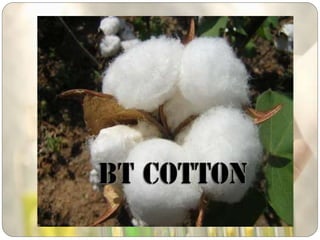
 Bt cotton is an insect resistant transgenic crop
designed to combact the bolloworm infection of
cotton.
 It was created by genetically engineering the cotton
genome to express an insecticidal protoxin produced
by a bacterium bacillus thuringiensis.
 The Bt is a short form Bacillus thuringiensis.
 The bacterium Bacillus thuringiensis (Bt) is a family of
over 200 different proteins which naturally produce
chemicals harmful to selective insects, most notably
the larvae of moths and butterflies, beetles, cotton
bollworms and flies, and harmless to other forms of
life.
 This bacterium forms parasporal crystals during
stationary phase of its growth cycle. The synthesized
crystalline proteins called ‘endotoxins’ are highly toxic
to certain insects.
 They kill the insect by acting on the epithelium
tissues of midgut of caterpillars.
 These bt toxins includes cry I , cry II, cry III and about
200 others that accumulate within the bacterium body
as an inactive precursor. (* cry = crystalline)
 The gene coding for Bt toxin has been inserted into
cotton, causing cotton to produce this natural
insecticide in its tissues.
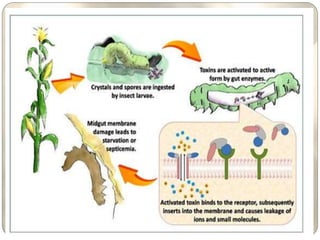
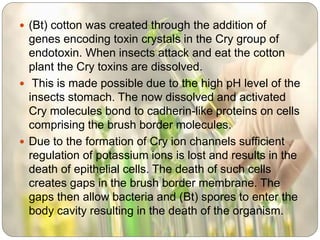
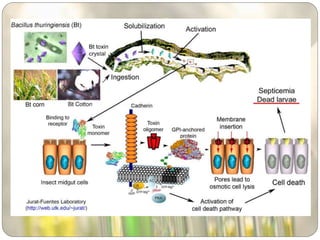
 (Bt) cotton was created through the addition of
genes encoding toxin crystals in the Cry group of
endotoxin. When insects attack and eat the cotton
plant the Cry toxins are dissolved.
 This is made possible due to the high pH level of the
insects stomach. The now dissolved and activated
Cry molecules bond to cadherin-like proteins on cells
comprising the brush border molecules.
 Due to the formation of Cry ion channels sufficient
regulation of potassium ions is lost and results in the
death of epithelial cells. The death of such cells
creates gaps in the brush border membrane. The
gaps then allow bacteria and (Bt) spores to enter the
body cavity resulting in the death of the organism.
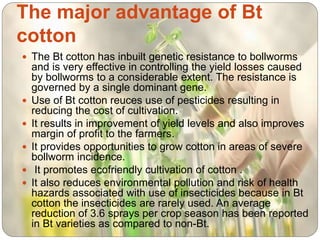
The major advantage of Bt
cotton
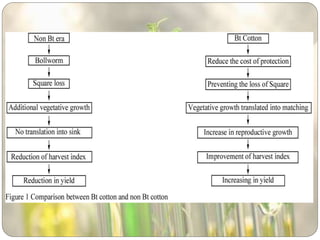
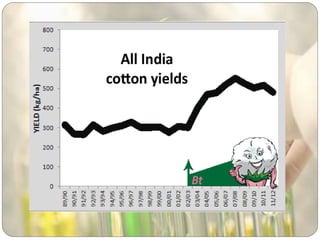
 The Bt cotton has inbuilt genetic resistance to bollworms
and is very effective in controlling the yield losses caused
by bollworms to a considerable extent. The resistance is
governed by a single dominant gene.
 Use of Bt cotton reuces use of pesticides resulting in
reducing the cost of cultivation.
 It results in improvement of yield levels and also improves
margin of profit to the farmers.
 It provides opportunities to grow cotton in areas of severe
bollworm incidence.
 It promotes ecofriendly cultivation of cotton .
 It also reduces environmental pollution and risk of health
hazards associated with use of insecticides because in Bt
cotton the insecticides are rarely used. An average
reduction of 3.6 sprays per crop season has been reported
in Bt varieties as compared to non-Bt.
Effect of Bt cotton on the health of
animals, poultry, human and
environment
 The feeding of Bt cotton seed to animal has not been
reported to have any adverse effect.
 Seed of Bt cotton and its cake do not have any
adverse effect on digestion of animals. Moreover, no
allergic or toxic effect of use of Bt cotton seed and
meal has been reported.
 The oil extracted from the seed of Bt cotton has not
been found to have any adverse effect on human
health.
 No adverse effect of Bt cotton has been reported on
non target beneficial insects so far.
 No adverse effect of Bt cotton on the environment has
Thankyou 

genetic modified crops

  • 1.
  • 2.
     Genetic modificationis modern biotechnology techniques to manipulate the genetic material of organisms within a species or between different species.  Transgenic plants are the results of modern biotechnology.  An organism containing a transgene introduced by technological methods is called transgenic.  Transgenes are the genetically engineered gene added to a species. The process of producing transgenic organism is called transgenesis .  PLANT TRANSFORMATION METHODS : Transfer of DNA via a vector: Agrobacterium Direct transfer of DNA: gene guns electroporation microinjection
  • 3.
    Steps in geneticmodification for plants
  • 4.
  • 5.
    GOLDEN RICE  Goldenrice is a variety of rice (Oryza sativa) produced through genetic engineering with improved nutritional quality.  Golden rice appears golden due to presence of B- carotene, a precursor of vitamin A in the edible portions of rice.  The concept of golden rice was developed by potrykus and beyerwith the goal of helping children and pregnant women who suffer from vitamin A deficiency (VAD) , which was a major source for 1-2 million deaths, 500,000 cases of irreversible blindness and millions of cases of xerophthalmia annually.  Growing and consuming golden rice could be an economical and effective way of overcoming these
  • 6.
     Golden ricewas designed to produce beta- carotene, a precursor of vitamin A, in the edible part of rice, the endosperm.  The rice plant can naturally produce beta- carotene in its leaves, where it is involved in photosynthesis. However, the plant does not normally produce the pigment in the endosperm, where photosynthesis does not occur
  • 7.
    HOW DOES ITWORK?  genetic engineering is used in order to create Golden Rice, where the method involved is by using a common plant bacterium which naturally inserts its genes into plant tissue hosts.  The addition of 2 genes in the rice genome will complete the biosynthetic pathway 1. Phytoene synthase (psy) – derived from daffodils ( Narcissus pseudonarcissus )  Phytoene synthase is a transferase enzyme involved in the biosynthesis of carotenoids. It catalyzes the conversion of geranylgerany pyrophosphate to phytoene. 2. lycopene cyclase (crt1) – from soil bacteria Erwinia uredovora  Produces enzymes and catalysts for the biosynthesis of carotenoids ( β -carotene) in the endosperm
  • 10.
     The psyand crt1 genes were transformed into the rice nuclear genome and placed under the control of an endosperm-specific promoter , so they are only expressed in the endosperm.  The exogenous lyc gene has a transit peptide sequence attached so it is targeted to the plastid , where geranylgerany diphosphate formation occurs.  The bacterial crt1 gene was an important inclusion to complete the pathway, since it can catalyze multiple steps in the synthesis of carotenoid, while these steps require more than one enzyme in plants.
  • 11.
     The endproduct of the engineered pathway is lycopene , but if the plant accumulated lycopene, the rice would be red.  Recent analysis has shown the plant's endogenous enzymes process the lycopene to beta-carotene in the endosperm, giving the rice the distinctive yellow color for which it is named.  The original golden rice was called SGR1, and under greenhouse conditions it produced 1.6 µg/g of carotenoids.
  • 12.
    DISADVANTA GE  Health  Maycause allergies or fail to perform desired effect  Supply does not provide a substantial quantity as the recommended daily intake  Environment  Loss of Biodiversity. May become a gregarious weed and endanger the existence of natural rice plants  Genetic contamination of natural, global staple foods  Culture  Some people prefer to cultivate and eat only white rice based on traditional values and spiritual beliefs
  • 14.
     Bt cottonis an insect resistant transgenic crop designed to combact the bolloworm infection of cotton.  It was created by genetically engineering the cotton genome to express an insecticidal protoxin produced by a bacterium bacillus thuringiensis.  The Bt is a short form Bacillus thuringiensis.  The bacterium Bacillus thuringiensis (Bt) is a family of over 200 different proteins which naturally produce chemicals harmful to selective insects, most notably the larvae of moths and butterflies, beetles, cotton bollworms and flies, and harmless to other forms of life.
  • 15.
     This bacteriumforms parasporal crystals during stationary phase of its growth cycle. The synthesized crystalline proteins called ‘endotoxins’ are highly toxic to certain insects.  They kill the insect by acting on the epithelium tissues of midgut of caterpillars.  These bt toxins includes cry I , cry II, cry III and about 200 others that accumulate within the bacterium body as an inactive precursor. (* cry = crystalline)  The gene coding for Bt toxin has been inserted into cotton, causing cotton to produce this natural insecticide in its tissues.
  • 17.
     (Bt) cottonwas created through the addition of genes encoding toxin crystals in the Cry group of endotoxin. When insects attack and eat the cotton plant the Cry toxins are dissolved.  This is made possible due to the high pH level of the insects stomach. The now dissolved and activated Cry molecules bond to cadherin-like proteins on cells comprising the brush border molecules.  Due to the formation of Cry ion channels sufficient regulation of potassium ions is lost and results in the death of epithelial cells. The death of such cells creates gaps in the brush border membrane. The gaps then allow bacteria and (Bt) spores to enter the body cavity resulting in the death of the organism.
  • 19.
    The major advantageof Bt cotton  The Bt cotton has inbuilt genetic resistance to bollworms and is very effective in controlling the yield losses caused by bollworms to a considerable extent. The resistance is governed by a single dominant gene.  Use of Bt cotton reuces use of pesticides resulting in reducing the cost of cultivation.  It results in improvement of yield levels and also improves margin of profit to the farmers.  It provides opportunities to grow cotton in areas of severe bollworm incidence.  It promotes ecofriendly cultivation of cotton .  It also reduces environmental pollution and risk of health hazards associated with use of insecticides because in Bt cotton the insecticides are rarely used. An average reduction of 3.6 sprays per crop season has been reported in Bt varieties as compared to non-Bt.
  • 22.
    Effect of Btcotton on the health of animals, poultry, human and environment  The feeding of Bt cotton seed to animal has not been reported to have any adverse effect.  Seed of Bt cotton and its cake do not have any adverse effect on digestion of animals. Moreover, no allergic or toxic effect of use of Bt cotton seed and meal has been reported.  The oil extracted from the seed of Bt cotton has not been found to have any adverse effect on human health.  No adverse effect of Bt cotton has been reported on non target beneficial insects so far.  No adverse effect of Bt cotton on the environment has
  • 25.