Dr. MJ Mukhopadhyay
Dr. MJ Mukhopadhyay
Insect
Insect resistant plants
resistant plants
Genetic engineering of plants and
applications
Insect tolerant crops by using Bt
• Bt protein crystal toxic for insect larvae
– Bacillus thuringiensis protein
– Biological crop protection product
– Environmentally friendly
– Toxic for specific group of insects, for
example only for beetles or only for
caterpillars
• Transgenic plant produces Bt-protein
BT
Stewart, 2004. Genetically Modified Planet 2004
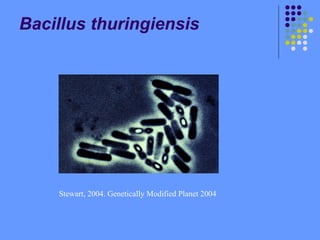
Bacillus thuringiensis
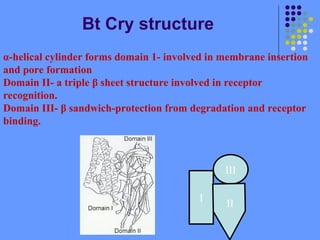
Bt Cry structure
I
III
II
α-helical cylinder forms domain 1- involved in membrane insertion
and pore formation
Domain II- a triple β sheet structure involved in receptor
recognition.
Domain III- β sandwich-protection from degradation and receptor
binding.
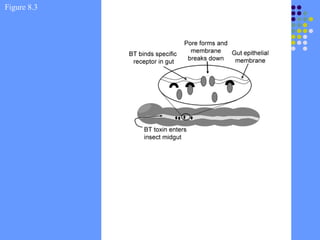
Figure 8.3
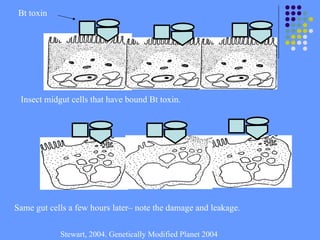
Insect midgut cells that have bound Bt toxin.
Same gut cells a few hours later– note the damage and leakage.
Bt toxin
Stewart, 2004. Genetically Modified Planet 2004
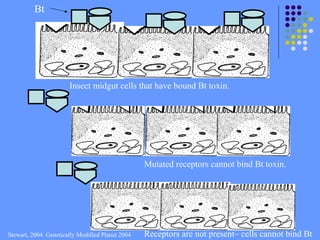
Insect midgut cells that have bound Bt toxin.
Bt
Mutated receptors cannot bind Bt toxin.
Receptors are not present– cells cannot bind Bt
Stewart, 2004. Genetically Modified Planet 2004
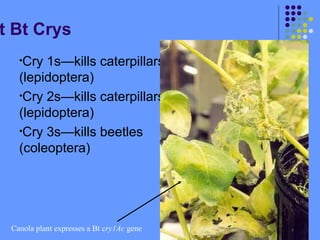
t Bt Crys
•Cry 1s—kills caterpillars
(lepidoptera)
•Cry 2s—kills caterpillars
(lepidoptera)
•Cry 3s—kills beetles
(coleoptera)
Canola plant expresses a Bt cry1Ac gene
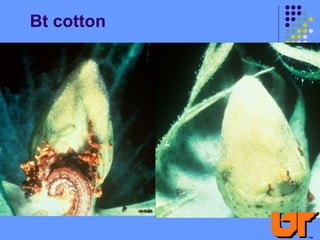
Bt cotton
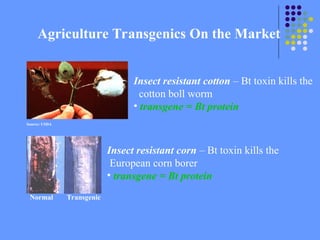
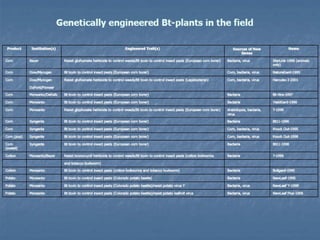
Agriculture Transgenics On the Market
Source: USDA
Insect resistant cotton – Bt toxin kills the
cotton boll worm
• transgene = Bt protein
Insect resistant corn – Bt toxin kills the
European corn borer
• transgene = Bt protein
Normal Transgenic
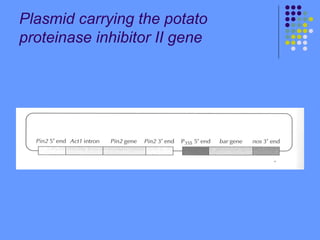
Plasmid carrying the potato
proteinase inhibitor II gene
α- amylase inhibitor gene
• amylase inhibitor - seed proteins of the common bean
• the gene for the α -amylase inhibitor isolated
• under the transcriptional control of the strong seed-specific
promoter for the bean phytohemagglutinin gene
• transform pea plants (Pisum sativum)
• Peas susceptible to cowpea weevils and azuki bean weevils
• transgenic pea plants that expressed the α -amylase inhibitor
resistant to both of these insects
Bacterial cholesterol oxidase gene
• Cholesterol oxidase, present in different bacterial genera
• catalyzes the oxidation of 3-hydroxysteroids to ketosteroids and
hydrogen peroxide
• high level of insecticidal activity against larvae of the boll weevil
(Anthonomus grandis grandis)
• acts by disrupting the insect’s midgut epithelial membrane
• cloned into a vector under the control of a plant virus (figwort mosaic
virus) promoter
• targeted to the tobacco protoplasts, the transformed cells actively
expressed the cholesterol oxidase gene proving to be insect resistant
transgenic plant
22
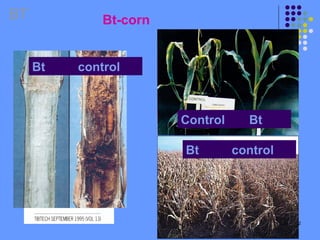
Bt-corn
BT
Bt control
Bt control
Control Bt
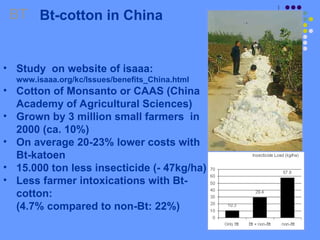
• Study on website of isaaa:
www.isaaa.org/kc/Issues/benefits_China.html
• Cotton of Monsanto or CAAS (China
Academy of Agricultural Sciences)
• Grown by 3 million small farmers in
2000 (ca. 10%)
• On average 20-23% lower costs with
Bt-katoen
• 15.000 ton less insecticide (- 47kg/ha)
• Less farmer intoxications with Bt-
cotton:
(4.7% compared to non-Bt: 22%)
Bt-cotton in China
BT
 Why use it?
 The farmer
 Lower costs for the farmer
 Higher yields
 Less work: no of few spraying needed
 For the environment
 No or low use of insecticides
 Much more target specific than insecticides
BT
 Concerns
 Bt crops may affect some useful insects
 but less than with traditional insecticides
 Large scale cultivation of Bt-crops can enhance the
emergence of resistant insects
BT
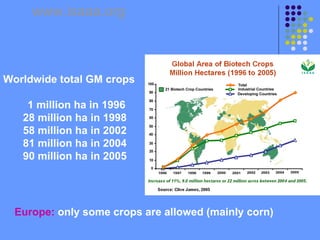
Worldwide total GM crops
1 million ha in 1996
28 million ha in 1998
58 million ha in 2002
81 million ha in 2004
90 million ha in 2005
www.isaaa.org
Europe: only some crops are allowed (mainly corn)
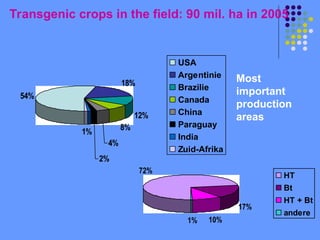
Transgenic crops in the field: 90 mil. ha in 2005
18%
12%
8%
2%
1%
54%
4%
USA
Argentinie
Brazilie
Canada
China
Paraguay
India
Zuid-Afrika
17%
10%
1%
72%
HT
Bt
HT + Bt
andere
Most
important
production
areas
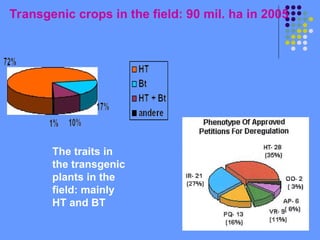
Transgenic crops in the field: 90 mil. ha in 2005
The traits in
the transgenic
plants in the
field: mainly
HT and BT

A presentation on insect_resistance_plants.ppt

  • 1.
    Dr. MJ Mukhopadhyay Dr.MJ Mukhopadhyay Insect Insect resistant plants resistant plants
  • 2.
    Genetic engineering ofplants and applications
  • 4.
    Insect tolerant cropsby using Bt • Bt protein crystal toxic for insect larvae – Bacillus thuringiensis protein – Biological crop protection product – Environmentally friendly – Toxic for specific group of insects, for example only for beetles or only for caterpillars • Transgenic plant produces Bt-protein BT
  • 6.
    Stewart, 2004. GeneticallyModified Planet 2004 Bacillus thuringiensis
  • 7.
    Bt Cry structure I III II α-helicalcylinder forms domain 1- involved in membrane insertion and pore formation Domain II- a triple β sheet structure involved in receptor recognition. Domain III- β sandwich-protection from degradation and receptor binding.
  • 8.
  • 9.
    Insect midgut cellsthat have bound Bt toxin. Same gut cells a few hours later– note the damage and leakage. Bt toxin Stewart, 2004. Genetically Modified Planet 2004
  • 10.
    Insect midgut cellsthat have bound Bt toxin. Bt Mutated receptors cannot bind Bt toxin. Receptors are not present– cells cannot bind Bt Stewart, 2004. Genetically Modified Planet 2004
  • 11.
    t Bt Crys •Cry1s—kills caterpillars (lepidoptera) •Cry 2s—kills caterpillars (lepidoptera) •Cry 3s—kills beetles (coleoptera) Canola plant expresses a Bt cry1Ac gene
  • 12.
  • 13.
    Agriculture Transgenics Onthe Market Source: USDA Insect resistant cotton – Bt toxin kills the cotton boll worm • transgene = Bt protein Insect resistant corn – Bt toxin kills the European corn borer • transgene = Bt protein Normal Transgenic
  • 19.
    Plasmid carrying thepotato proteinase inhibitor II gene
  • 20.
    α- amylase inhibitorgene • amylase inhibitor - seed proteins of the common bean • the gene for the α -amylase inhibitor isolated • under the transcriptional control of the strong seed-specific promoter for the bean phytohemagglutinin gene • transform pea plants (Pisum sativum) • Peas susceptible to cowpea weevils and azuki bean weevils • transgenic pea plants that expressed the α -amylase inhibitor resistant to both of these insects
  • 21.
    Bacterial cholesterol oxidasegene • Cholesterol oxidase, present in different bacterial genera • catalyzes the oxidation of 3-hydroxysteroids to ketosteroids and hydrogen peroxide • high level of insecticidal activity against larvae of the boll weevil (Anthonomus grandis grandis) • acts by disrupting the insect’s midgut epithelial membrane • cloned into a vector under the control of a plant virus (figwort mosaic virus) promoter • targeted to the tobacco protoplasts, the transformed cells actively expressed the cholesterol oxidase gene proving to be insect resistant transgenic plant
  • 22.
  • 23.
    • Study onwebsite of isaaa: www.isaaa.org/kc/Issues/benefits_China.html • Cotton of Monsanto or CAAS (China Academy of Agricultural Sciences) • Grown by 3 million small farmers in 2000 (ca. 10%) • On average 20-23% lower costs with Bt-katoen • 15.000 ton less insecticide (- 47kg/ha) • Less farmer intoxications with Bt- cotton: (4.7% compared to non-Bt: 22%) Bt-cotton in China BT
  • 24.
     Why useit?  The farmer  Lower costs for the farmer  Higher yields  Less work: no of few spraying needed  For the environment  No or low use of insecticides  Much more target specific than insecticides BT
  • 25.
     Concerns  Btcrops may affect some useful insects  but less than with traditional insecticides  Large scale cultivation of Bt-crops can enhance the emergence of resistant insects BT
  • 26.
    Worldwide total GMcrops 1 million ha in 1996 28 million ha in 1998 58 million ha in 2002 81 million ha in 2004 90 million ha in 2005 www.isaaa.org Europe: only some crops are allowed (mainly corn)
  • 27.
    Transgenic crops inthe field: 90 mil. ha in 2005 18% 12% 8% 2% 1% 54% 4% USA Argentinie Brazilie Canada China Paraguay India Zuid-Afrika 17% 10% 1% 72% HT Bt HT + Bt andere Most important production areas
  • 28.
    Transgenic crops inthe field: 90 mil. ha in 2005 The traits in the transgenic plants in the field: mainly HT and BT

Editor's Notes

  • #13 Bt stands for Bacillus thuringiensis, a bacteria that produces a toxin that kills the insects. The gene that encodes the toxin protein was inserted into plants.