
Transformative Learning

      Nathan Loynes
When you first encounter theories?
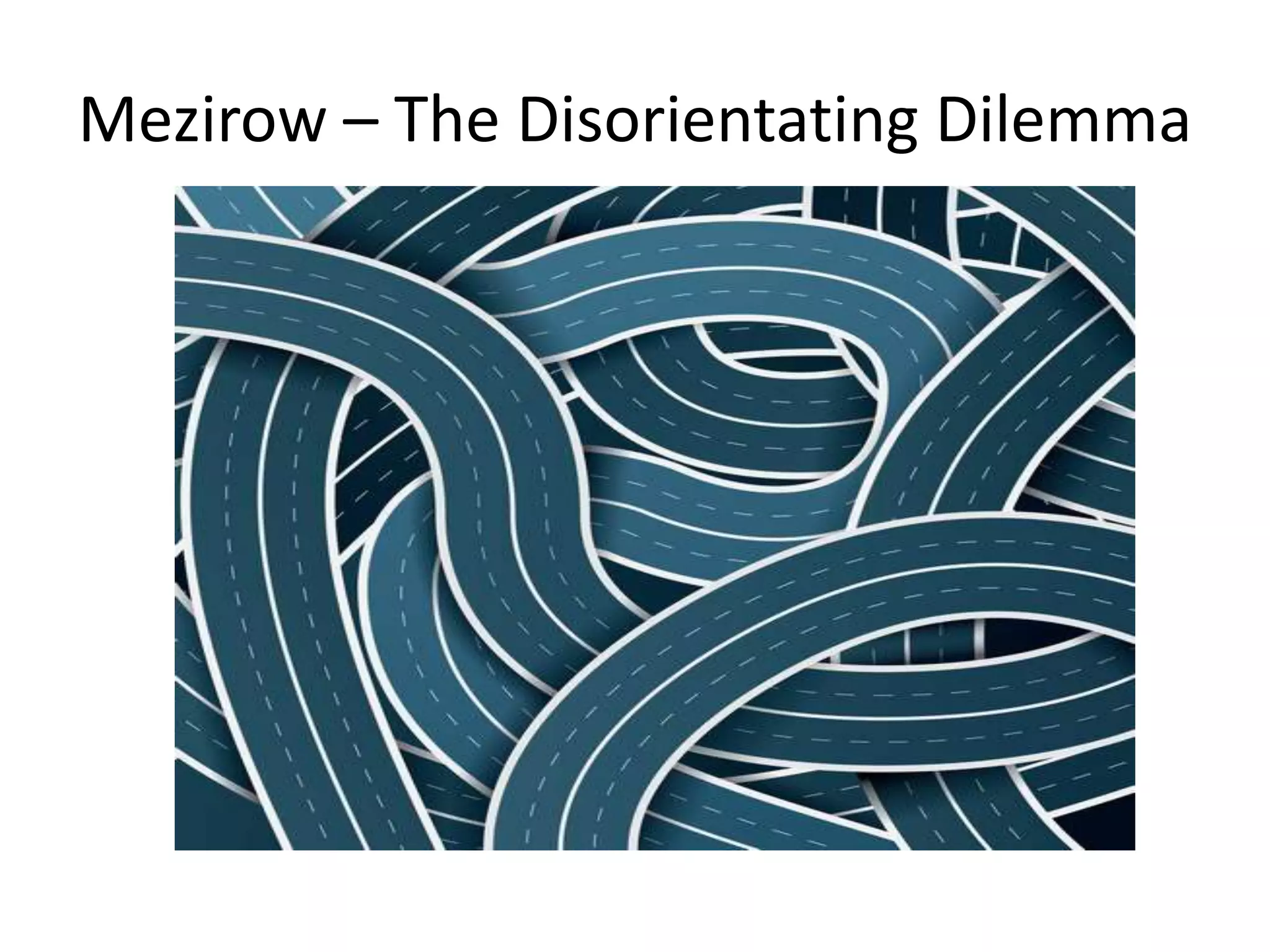
Mezirow – The Disorientating Dilemma
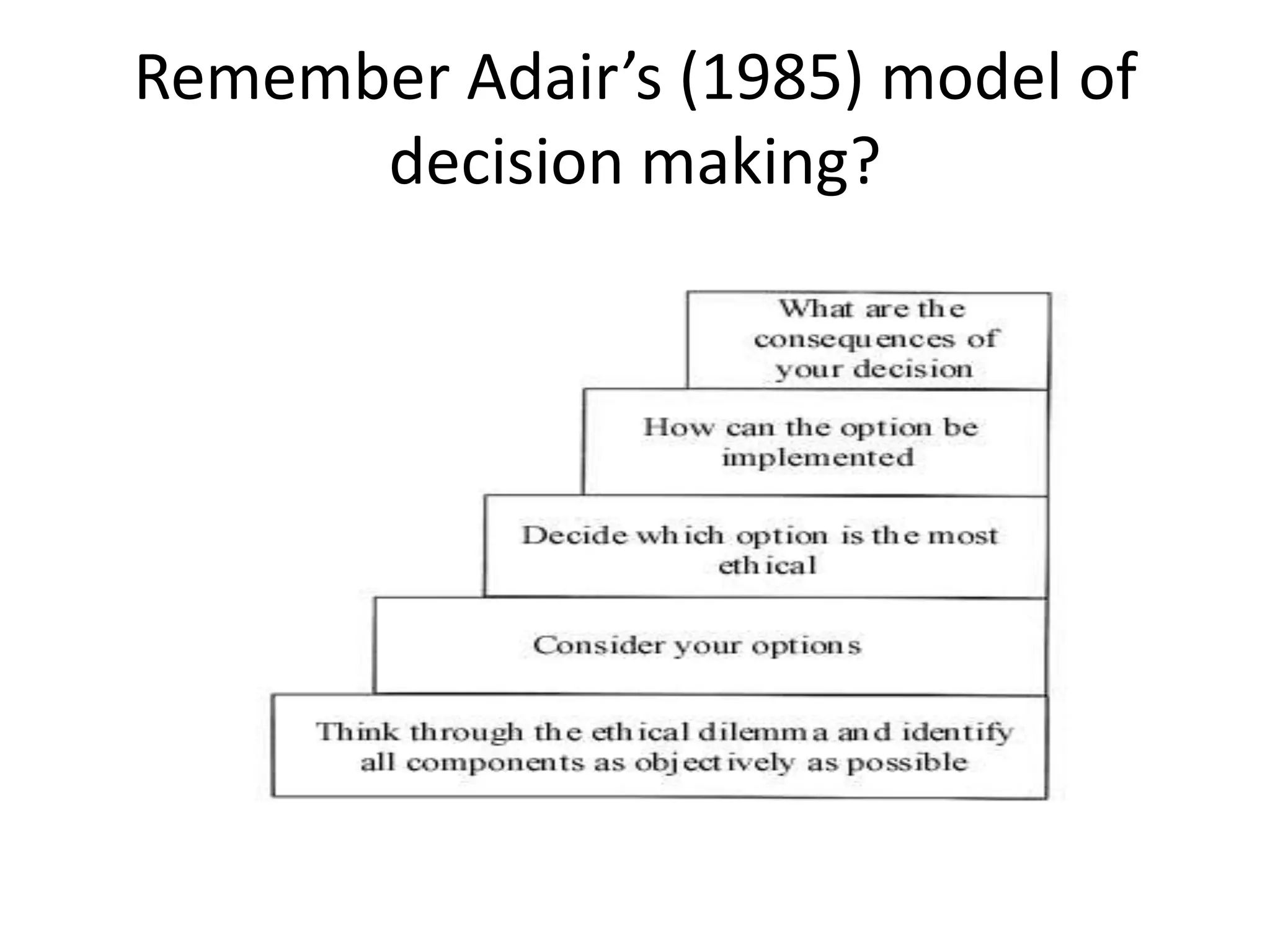
Remember Adair’s (1985) model of
      decision making?
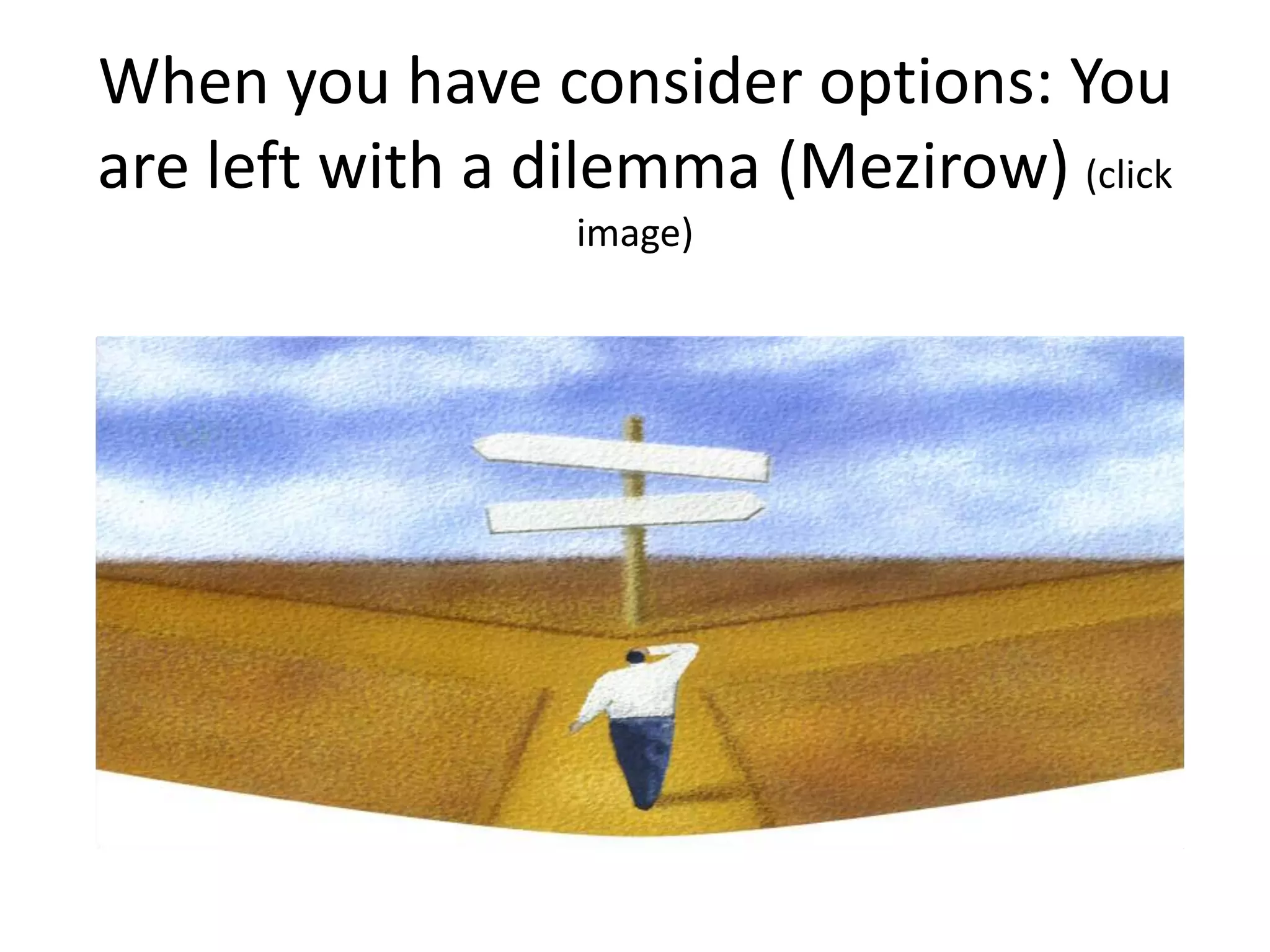
When you have consider options: You
are left with a dilemma (Mezirow) (click
                 image)
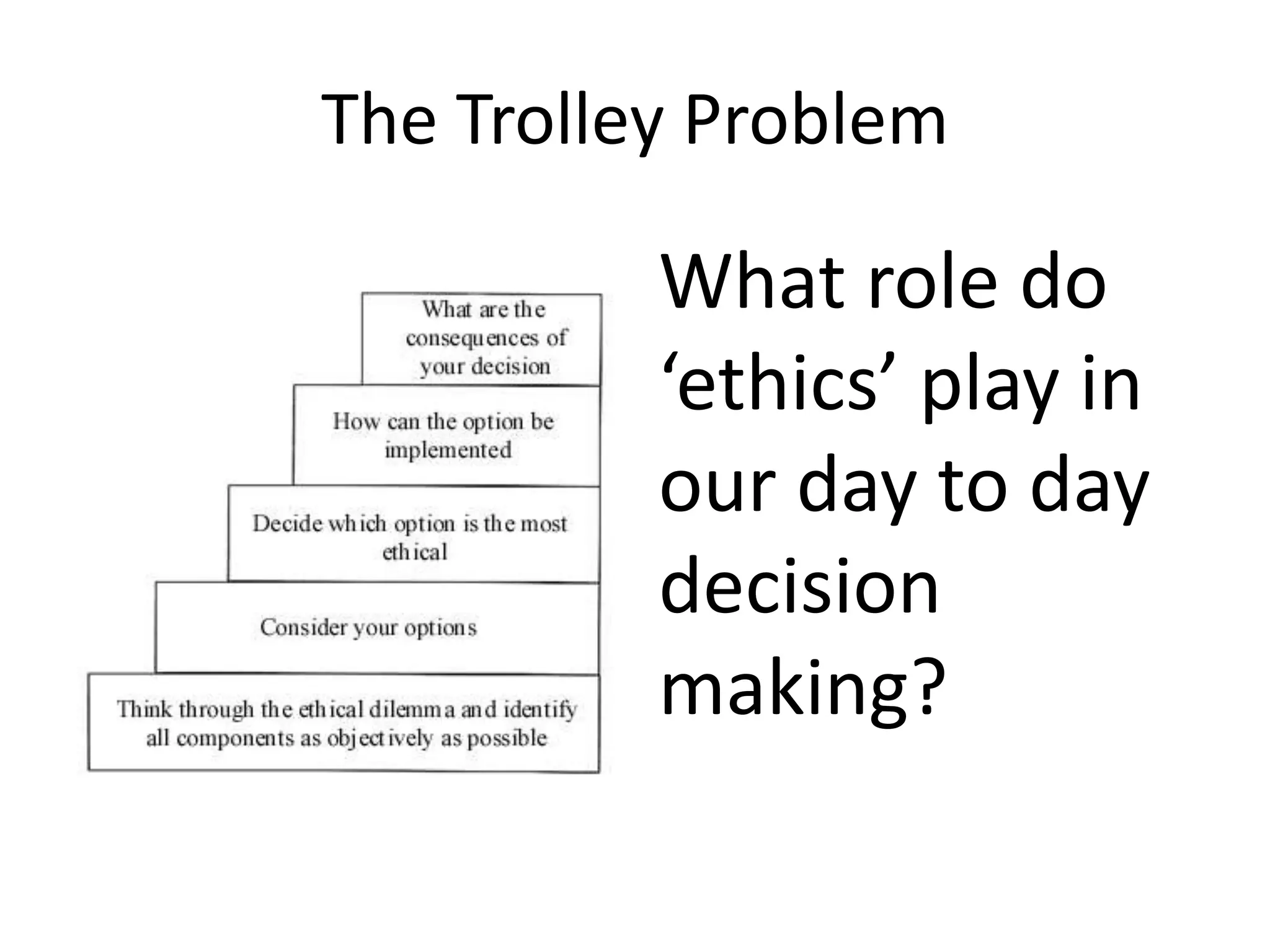
The Trolley Problem

          What role do
          ‘ethics’ play in
          our day to day
          decision
          making?
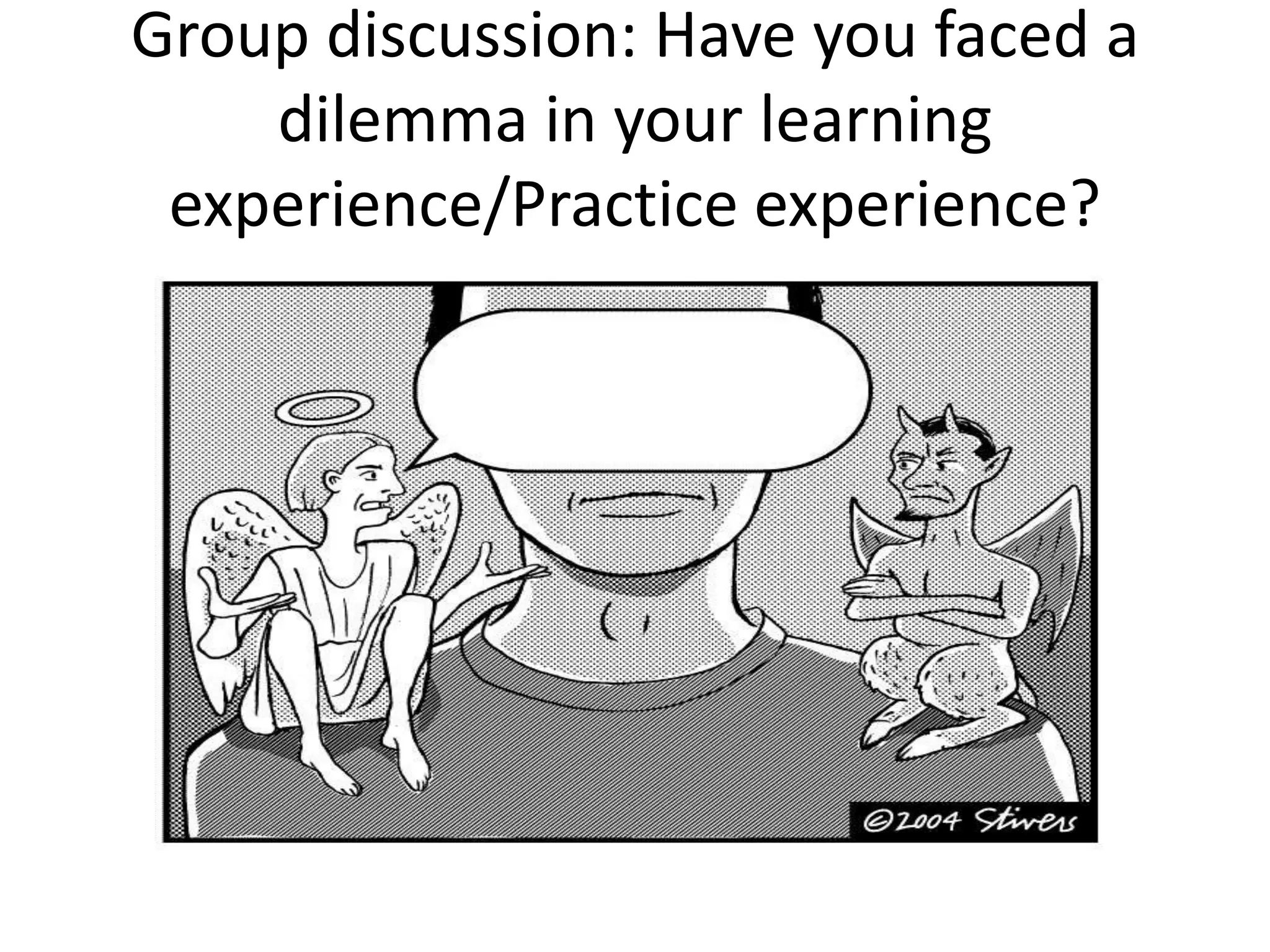
Group discussion: Have you faced a
    dilemma in your learning
 experience/Practice experience?
A disorientating dilemma? (click Image)
1. Can you relate to any
   aspect of the video?
   Does it ‘disorientate’
   your thinking in anyway?
2. How does pro-social
   behaviour impact on
   outcomes?
3. Do you think that your
   working context shares
   any features with the
   experiment?
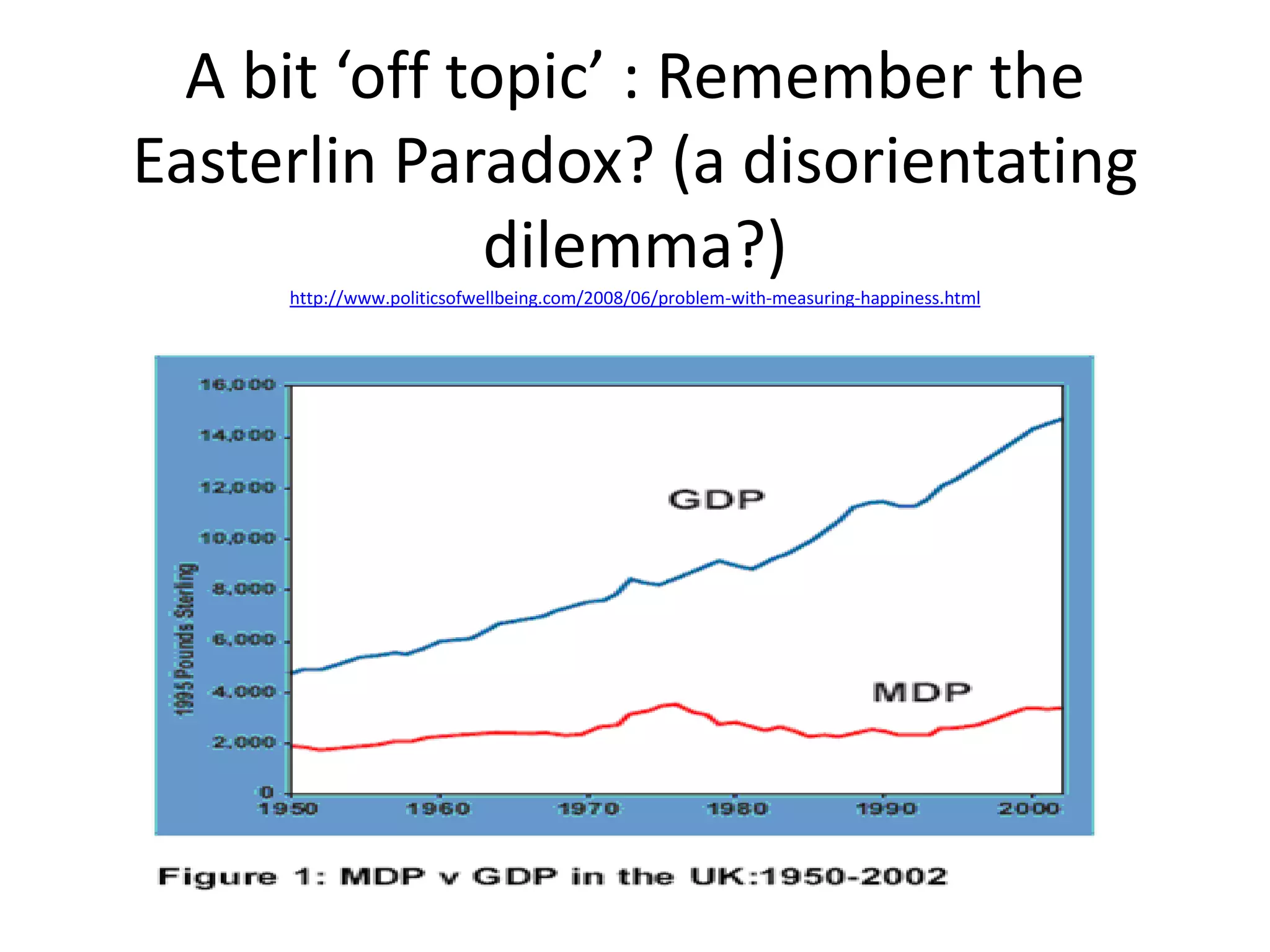
A bit ‘off topic’ : Remember the
Easterlin Paradox? (a disorientating
              dilemma?)
     http://www.politicsofwellbeing.com/2008/06/problem-with-measuring-happiness.html
Mezirow’s transformational theory in
             more detail
• (Taken from part 6 and 7 in your Clarcs Pack)
• Transformation involves changing ‘meaning
  schemes’ (Beliefs, attitudes, emotional reactions).
• Read the final paragraph on page 1-2 of Imel.
  What do you think ‘perspective transformation’
  means?
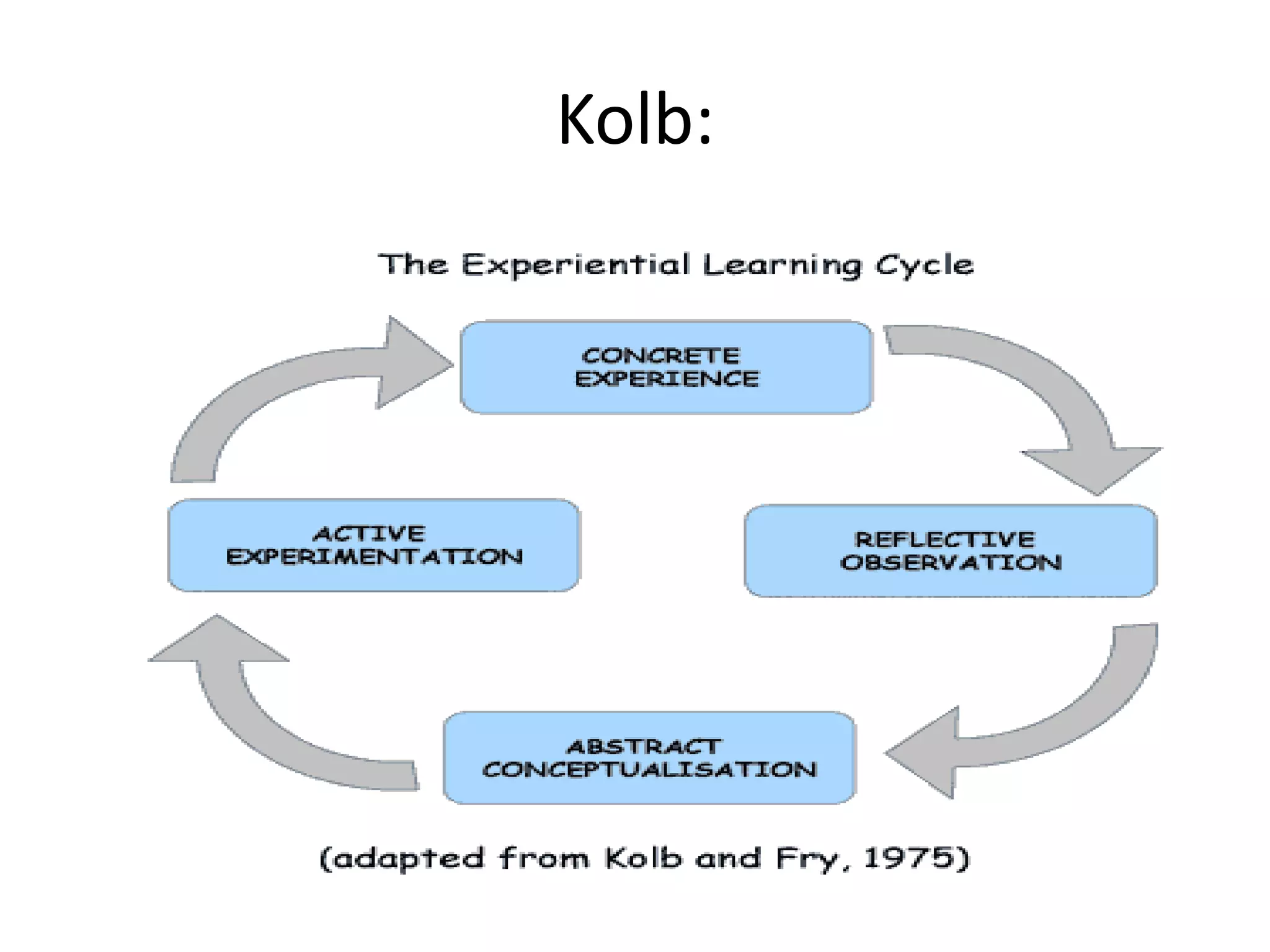
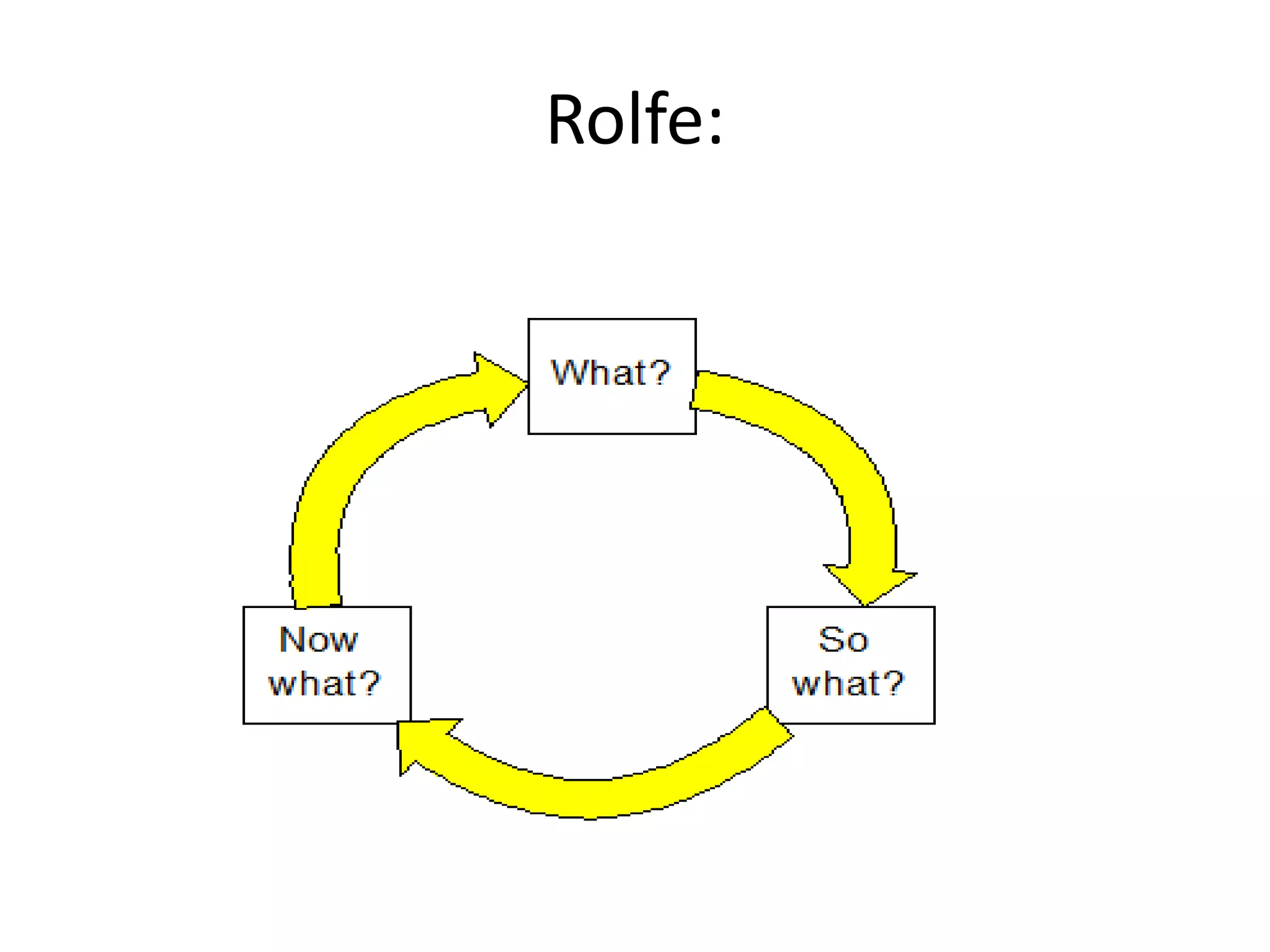
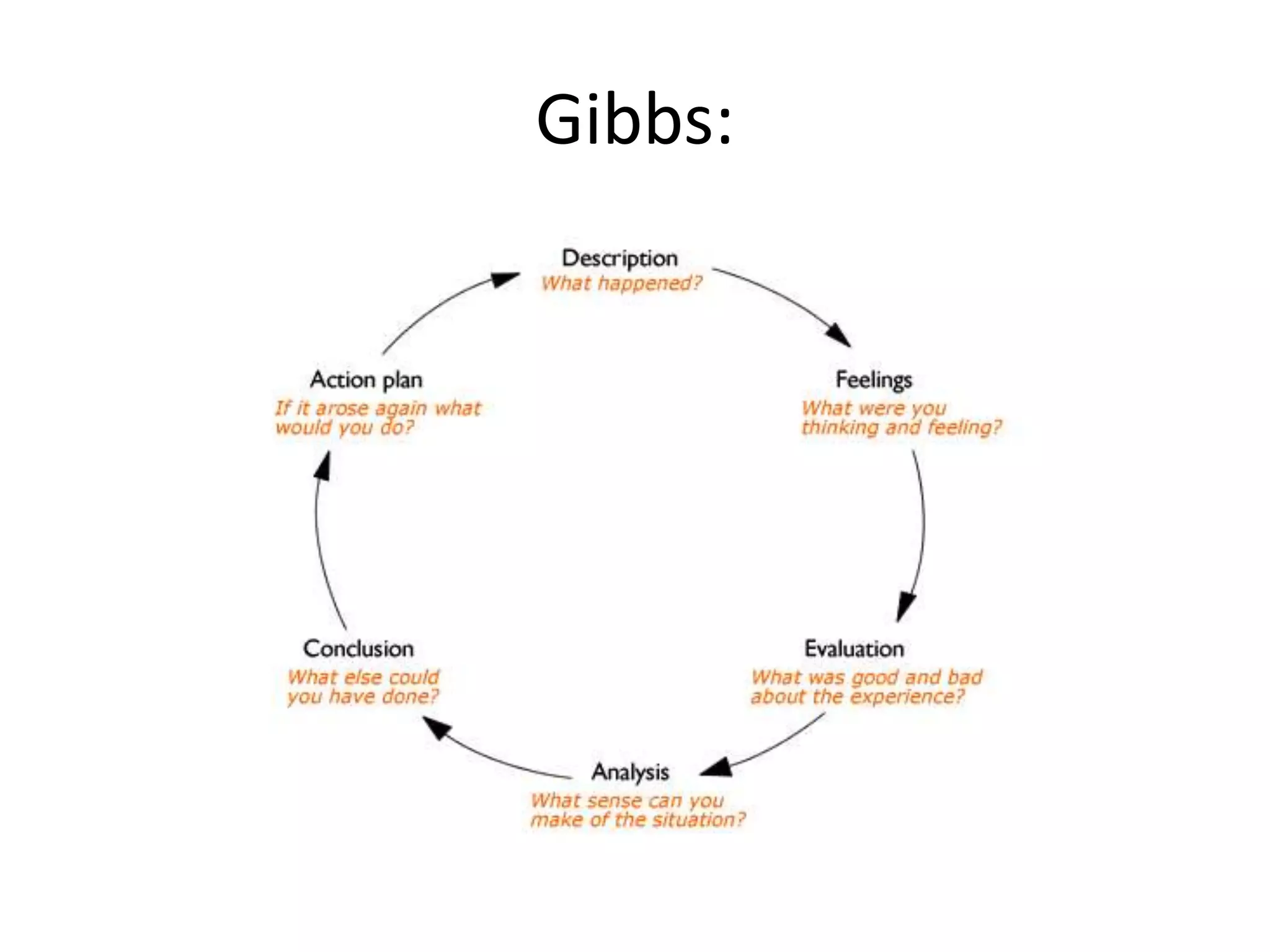
• Consider the following three diagrams – where
  do you think ‘perspective transformation’ might
  take place?
Kolb:
Rolfe:
Gibbs:
Therefore:
• Reflection promotes ‘perspective
  transformation’.
• Perspective Transformation is a type of
  CHANGE.
• We’ll see how we can manage perspective
  transformation with reference to ‘change
  theories’ shortly. (See other presentation)
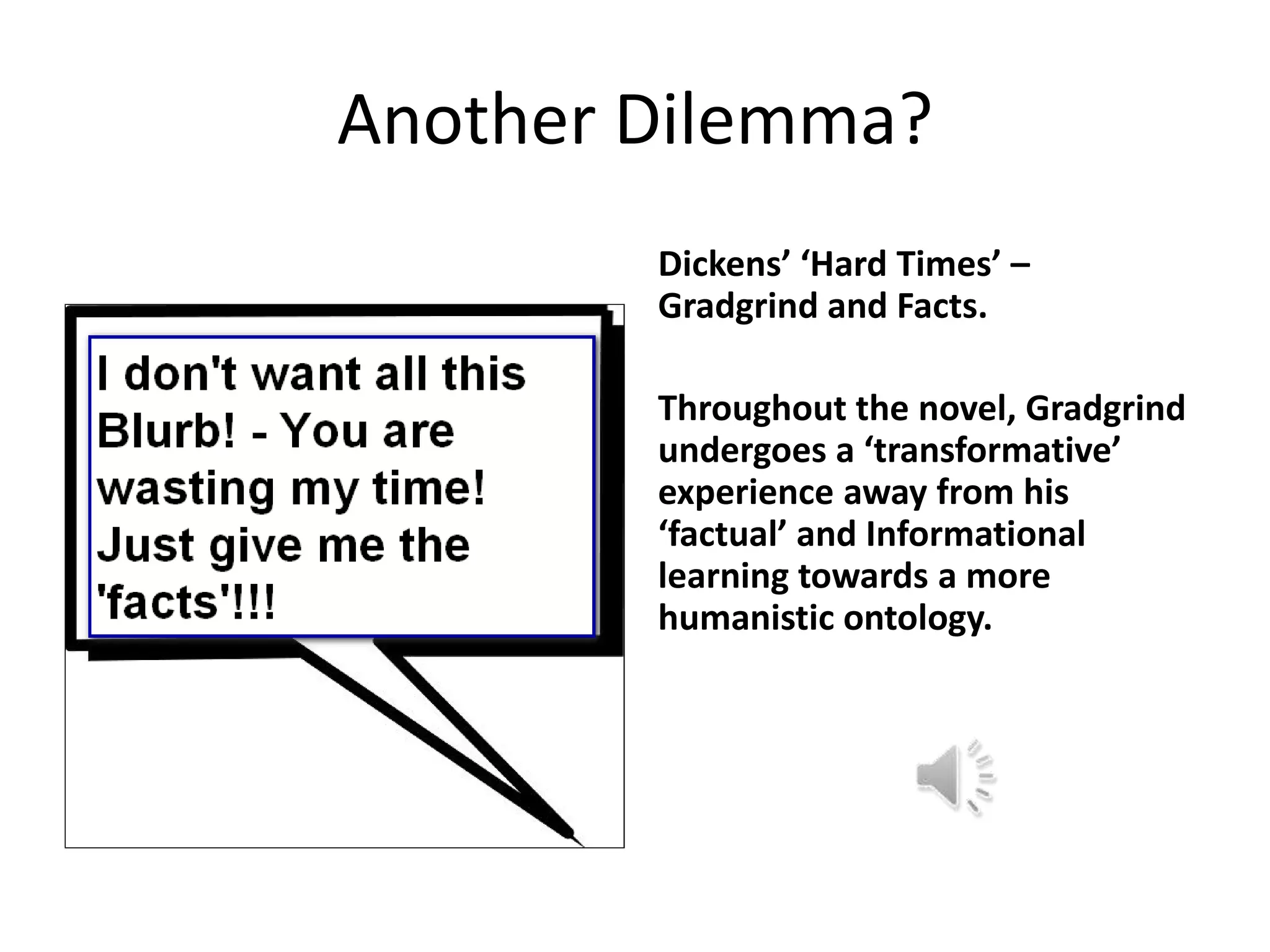
Another Dilemma?
        Dickens’ ‘Hard Times’ –
        Gradgrind and Facts.

        Throughout the novel, Gradgrind
        undergoes a ‘transformative’
        experience away from his
        ‘factual’ and Informational
        learning towards a more
        humanistic ontology.
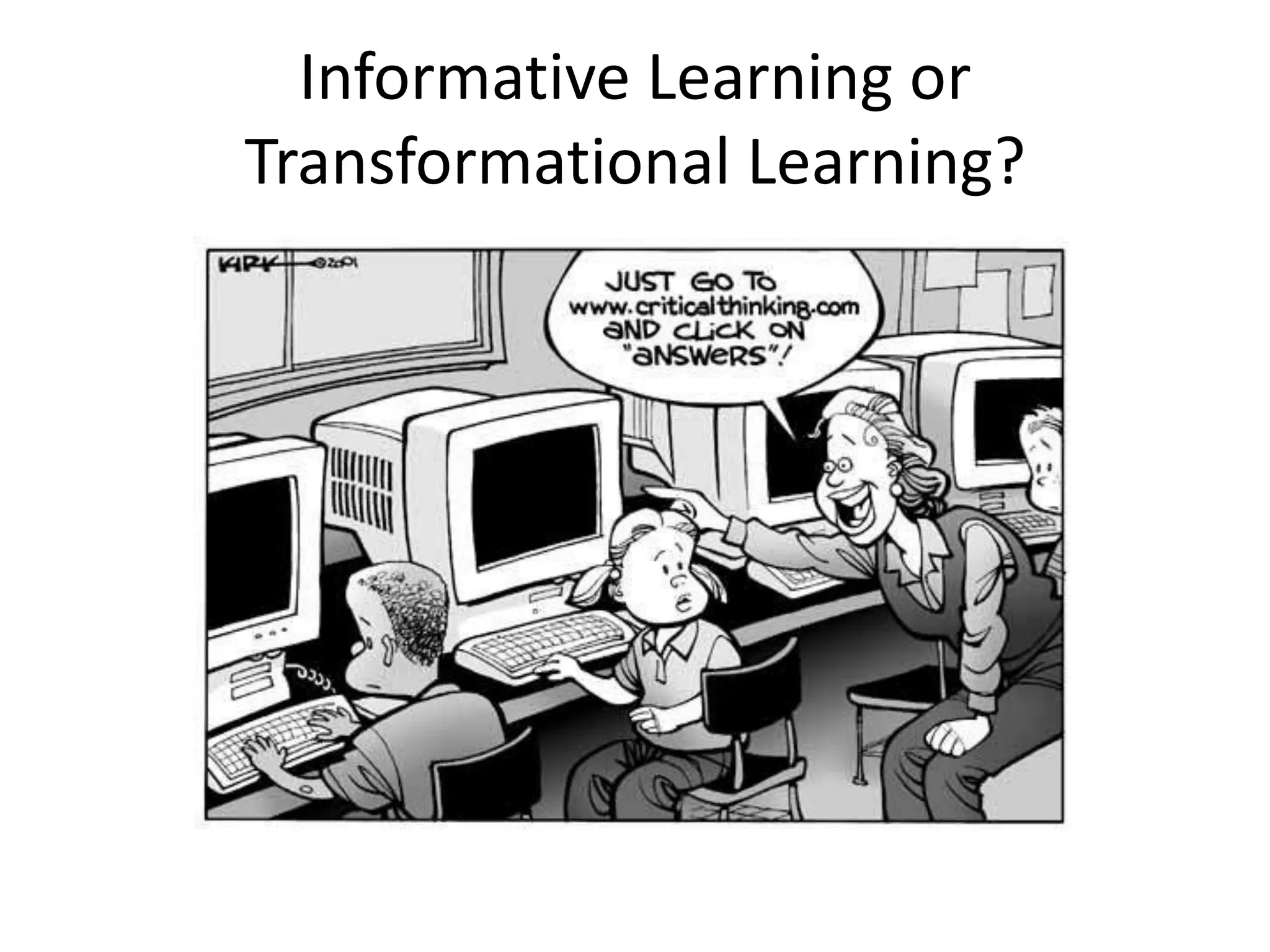
Informative Learning or
Transformational Learning?
Transformative Learning – It’s about
          YOU! (Click Image)
The Individual as ‘The Change Agent’.
              (Click Image)
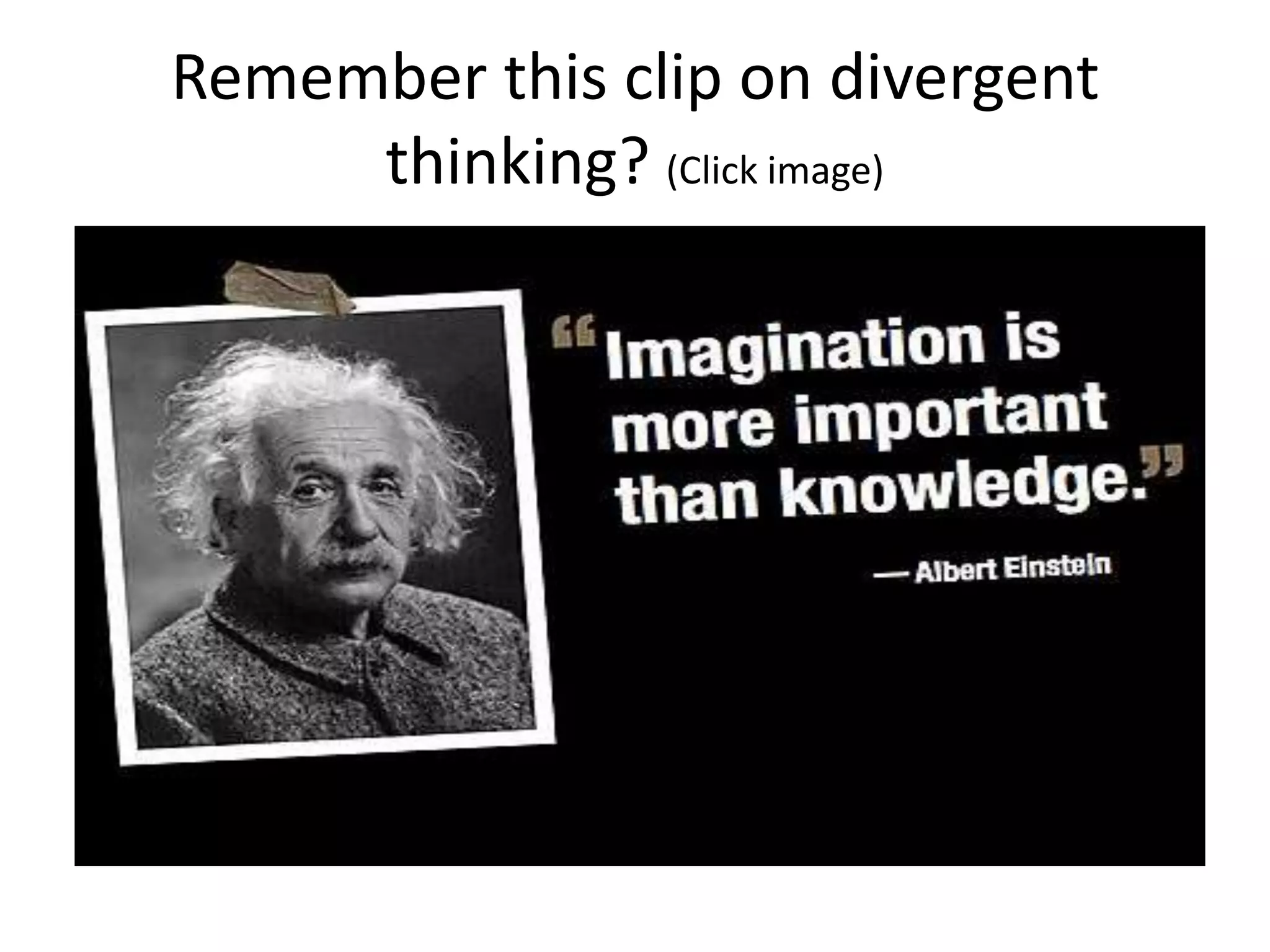
Remember this clip on divergent
     thinking? (Click image)
Is this transformative learning? (click
                 image)
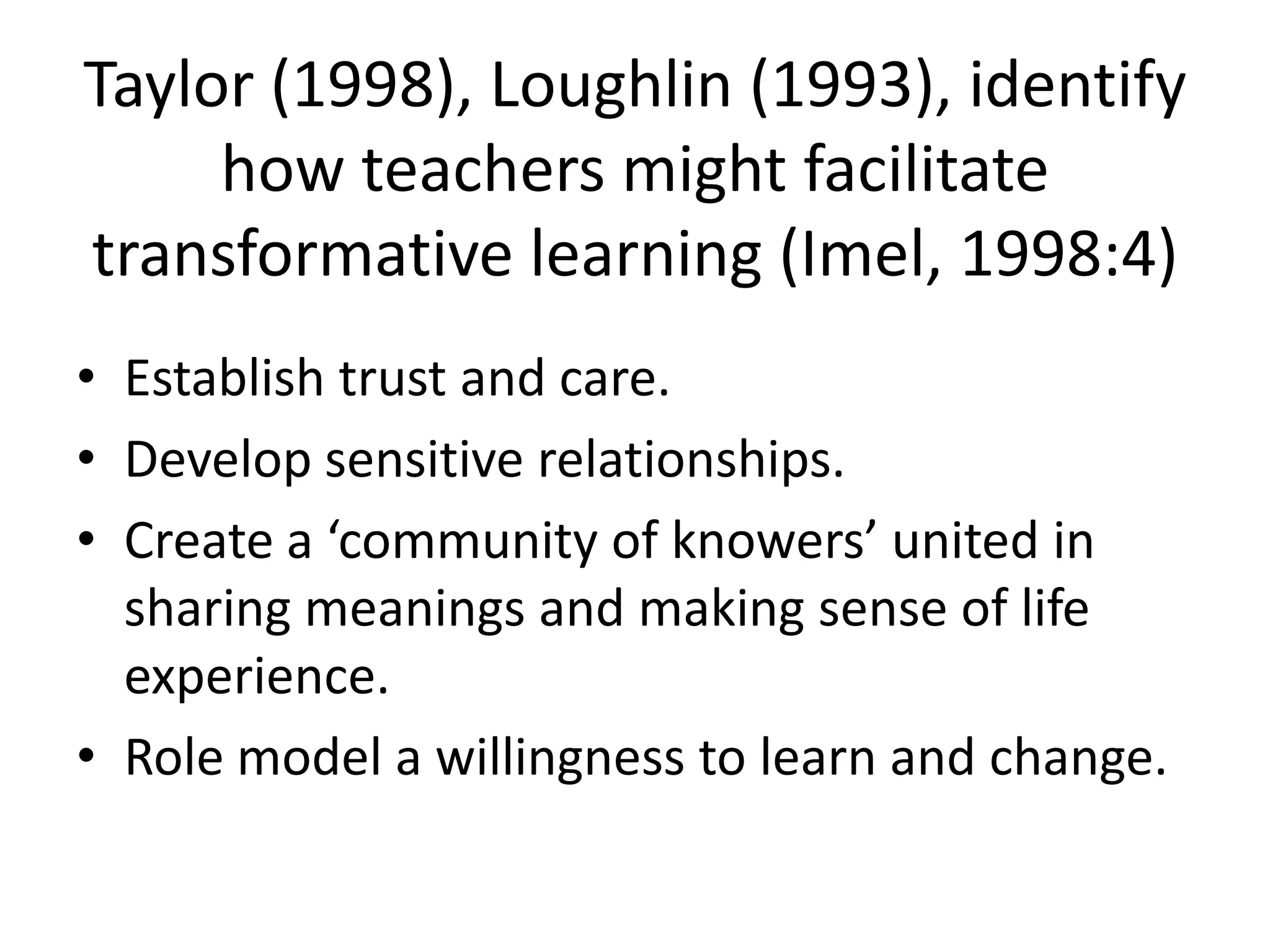
Taylor (1998), Loughlin (1993), identify
     how teachers might facilitate
transformative learning (Imel, 1998:4)
• Establish trust and care.
• Develop sensitive relationships.
• Create a ‘community of knowers’ united in
  sharing meanings and making sense of life
  experience.
• Role model a willingness to learn and change.
And for ‘learners’, Taylor (1998) goes
                  on:
• Too much emphasis placed on role of teacher.
• Participants also have responsibility for
  creating the learning environment.
• Learners create and construct the conditions
  under which transformative learning can
  occur.
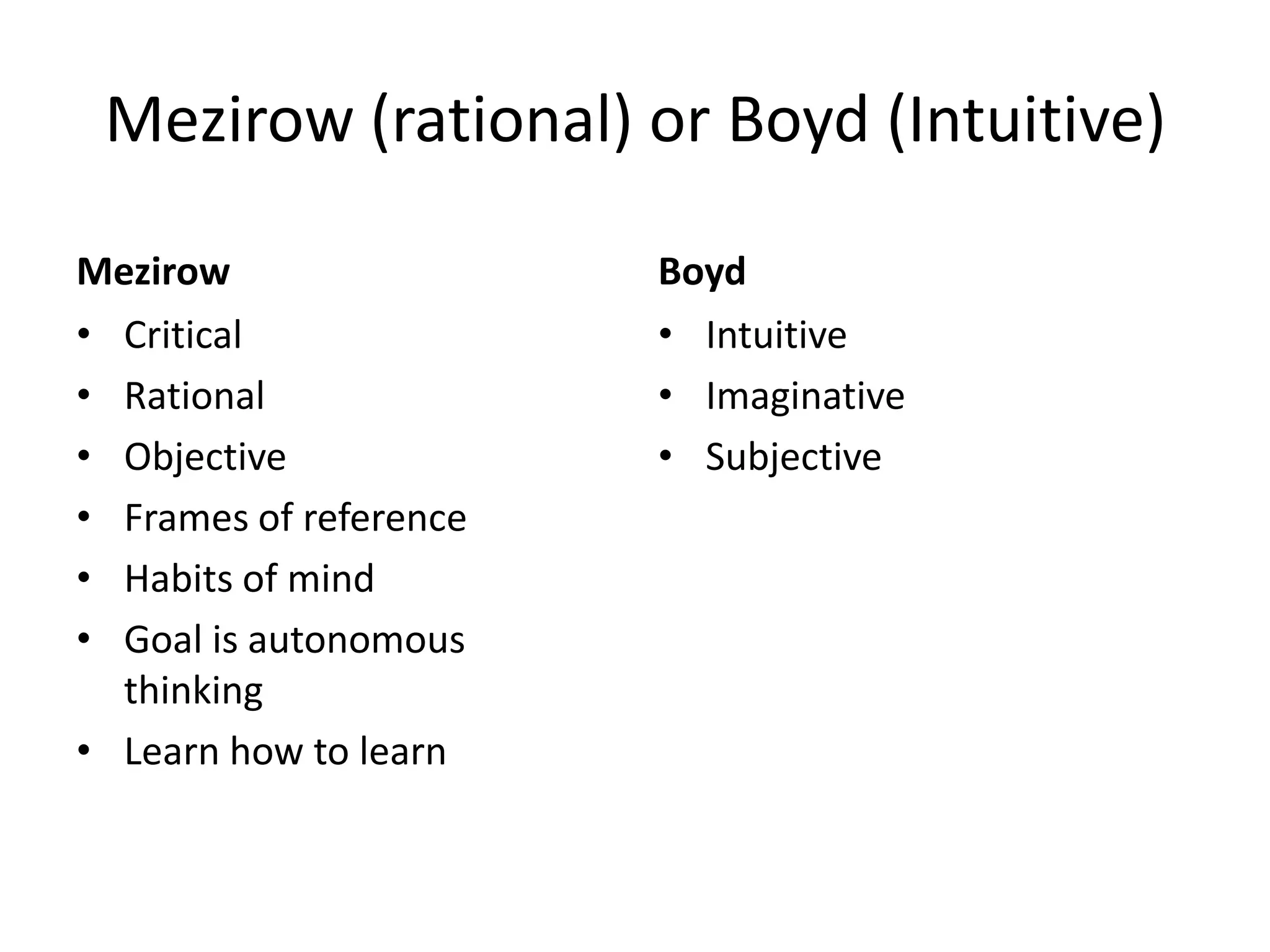
Mezirow (rational) or Boyd (Intuitive)

Mezirow                 Boyd
• Critical              • Intuitive
• Rational              • Imaginative
• Objective             • Subjective
• Frames of reference
• Habits of mind
• Goal is autonomous
  thinking
• Learn how to learn
Conclusions
• Many studies (Mitra, Robinson) demonstrate how
  self directed, self-controlled learning is effective.
• Mezirow and others identify that negotiating
  through dilemmas leads to transformational
  learning. (The role of the adult educator is to
  present dilemmas whilst the student constructs
  the solution; new meaning scheme and
  perspective transformation).
• ‘Change’ is inherent within transformational
  learning.

Transformative learning

  • 1.
  • 2.
    When you firstencounter theories?
  • 3.
    Mezirow – TheDisorientating Dilemma
  • 4.
    Remember Adair’s (1985)model of decision making?
  • 5.
    When you haveconsider options: You are left with a dilemma (Mezirow) (click image)
  • 6.
    The Trolley Problem What role do ‘ethics’ play in our day to day decision making?
  • 7.
    Group discussion: Haveyou faced a dilemma in your learning experience/Practice experience?
  • 8.
    A disorientating dilemma?(click Image) 1. Can you relate to any aspect of the video? Does it ‘disorientate’ your thinking in anyway? 2. How does pro-social behaviour impact on outcomes? 3. Do you think that your working context shares any features with the experiment?
  • 9.
    A bit ‘offtopic’ : Remember the Easterlin Paradox? (a disorientating dilemma?) http://www.politicsofwellbeing.com/2008/06/problem-with-measuring-happiness.html
  • 10.
    Mezirow’s transformational theoryin more detail • (Taken from part 6 and 7 in your Clarcs Pack) • Transformation involves changing ‘meaning schemes’ (Beliefs, attitudes, emotional reactions). • Read the final paragraph on page 1-2 of Imel. What do you think ‘perspective transformation’ means? • Consider the following three diagrams – where do you think ‘perspective transformation’ might take place?
  • 11.
  • 12.
  • 13.
  • 14.
    Therefore: • Reflection promotes‘perspective transformation’. • Perspective Transformation is a type of CHANGE. • We’ll see how we can manage perspective transformation with reference to ‘change theories’ shortly. (See other presentation)
  • 15.
    Another Dilemma? Dickens’ ‘Hard Times’ – Gradgrind and Facts. Throughout the novel, Gradgrind undergoes a ‘transformative’ experience away from his ‘factual’ and Informational learning towards a more humanistic ontology.
  • 16.
  • 17.
    Transformative Learning –It’s about YOU! (Click Image)
  • 18.
    The Individual as‘The Change Agent’. (Click Image)
  • 19.
    Remember this clipon divergent thinking? (Click image)
  • 20.
    Is this transformativelearning? (click image)
  • 21.
    Taylor (1998), Loughlin(1993), identify how teachers might facilitate transformative learning (Imel, 1998:4) • Establish trust and care. • Develop sensitive relationships. • Create a ‘community of knowers’ united in sharing meanings and making sense of life experience. • Role model a willingness to learn and change.
  • 22.
    And for ‘learners’,Taylor (1998) goes on: • Too much emphasis placed on role of teacher. • Participants also have responsibility for creating the learning environment. • Learners create and construct the conditions under which transformative learning can occur.
  • 23.
    Mezirow (rational) orBoyd (Intuitive) Mezirow Boyd • Critical • Intuitive • Rational • Imaginative • Objective • Subjective • Frames of reference • Habits of mind • Goal is autonomous thinking • Learn how to learn
  • 24.
    Conclusions • Many studies(Mitra, Robinson) demonstrate how self directed, self-controlled learning is effective. • Mezirow and others identify that negotiating through dilemmas leads to transformational learning. (The role of the adult educator is to present dilemmas whilst the student constructs the solution; new meaning scheme and perspective transformation). • ‘Change’ is inherent within transformational learning.